Teatro Filarmonico 17 May 2020 - Le Villi ~ Il Tabarro | GoComGo.com

Le Villi ~ Il Tabarro

Teatro Filarmonico, Verona, Italy
All photos (4)
Select date and time
3:30 PM
Request for Tickets
Important Info
Type: Opera
City: Verona, Italy
Starts at: 15:30

E-tickets: Print at home or at the box office of the event if so specified. You will find more information in your booking confirmation email.

You can only select the category, and not the exact seats.
If you order 2 or 3 tickets: your seats will be next to each other.
If you order 4 or more tickets: your seats will be next to each other, or, if this is not possible, we will provide a combination of groups of seats (at least in pairs, for example 2+2 or 2+3).

Overview

Le Villi ~ Il Tabarro is part of the Preview Schools project: Friday 8 May at 16:00. The general test will be preceded by an in-depth conversation that will take place at 2.30 pm in the Sala Filarmonica, for which a reservation is required.

Le Villi ~ Il Tabarro is part of the Return to Theater project, dedicated to the world of school. Tuesday 12 May at 6:00 pm and Thursday 14 May at 7:00 pm the show will be presented in a brief meeting. At the end of the Prelude an aperitif will be offered to those present before attending the performance.

History
Premiere of this production: 31 May 1884, Teatro Dal Verme, Milan

Le Villi (The Willis or The Fairies) is an opera-ballet in two acts (originally one) composed by Giacomo Puccini to an Italian libretto by Ferdinando Fontana, based on the short story Les Willis by Jean-Baptiste Alphonse Karr. Karr's story was in turn based in the Central European legend of the Vila, also used in the ballet Giselle. The opera, in its original one-act version, was first performed at the Teatro Dal Verme, Milan, on 31 May 1884. Le Villi is Puccini's first stage work. It was written for an 1883 competition of one-act operas by the publisher Sonzogno in his periodical Il teatro illustrato, but did not even earn an honourable mention. According to Mosco Carner, this may have been because it was written in such haste that the score was all but illegible. His supporters, who included Arrigo Boito, funded the first production, whose favorable reception led to publication by Giulio Ricordi. Puccini's mother received the following telegram on the night of premiere at the Teatro dal Verme on 31 May 1884: "Theatre packed, immense success; anticipations exceeded; eighteen calls; finale of first act encored thrice"'. Ricordi urged the composer to expand the work, and Puccini did, producing a new version later that year, which was followed by modifications in 1885, and the final version in 1889. A performance typically lasts 64 minutes.

Premiere of this production: 14 December 1918, Metropolitan Opera

Il tabarro (The Cloak) is an opera in one act by Giacomo Puccini to an Italian libretto by Giuseppe Adami, based on Didier Gold's play La houppelande. It is the first of the trio of operas known as Il trittico. The first performance was given on 14 December 1918 at the Metropolitan Opera in New York City.

Synopsis

Place: The Black Forest
Time: Indeterminate

Act 1

Spring

Family and guests dance at a celebration of the engagement in marriage of Roberto and Anna. Roberto must leave before the ceremony to collect an inheritance, and Anna worries that she will never see him again (Aria: Se come voi piccina). Roberto comforts Anna telling her that it will be fine and they will marry when he returns from Mainz. Anna tells Roberto of her dreams of him dying but Roberto tells Anna that she should not worry about his love failing and that she may doubt her God but not his love for her. The crowd returns and Anna is still worried about Roberto leaving. Roberto then asks Guglielmo, Anna's father, to bless them before his journey and Roberto sets off for Mainz.

Intermezzo
Roberto is enchanted by a siren, and forgets Anna. Anna waits through the summer and the autumn and in the winter dies in his absence. The legend of the fairies (Le Villi) is then explained. When a woman dies of a broken heart, the fairies force the heart breaker to dance until death.

Act 2

Winter

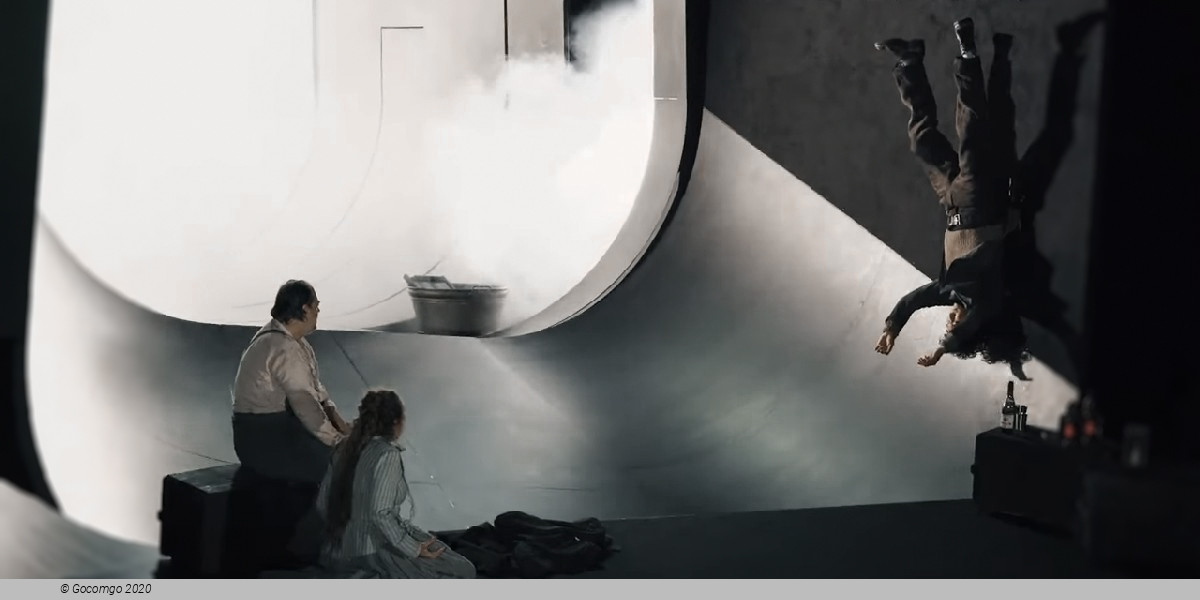
Anna's father, Guglielmo, holds Roberto responsible for Anna's death and calls upon the Villi to take vengeance on Roberto (Aria: Anima santa della figlia mia). The Villi call upon the ghost of Anna and lure Roberto into the forest. Roberto, now penniless and abandoned by the seductress, returns when news of Anna's death reaches him. Hoping that he will be forgiven the Villi stalk Roberto as he mourns the loss of the days of his youth (Aria: Torna ai felici dì). Roberto then finds the one last flower left alive in the winter and tries to find hope that Anna lives but is repelled by the Villi when he tries to knock on the door of Guglielmo's house. Roberto then tries to pray for forgiveness but finds he cannot because of the curse put upon him by the Villi. As Roberto curses his fate Anna appears to him and tells him of the suffering that she had to endure. Roberto begs for forgiveness and he too feels the pain of Anna burning in his heart. But Roberto is not forgiven and Anna calls upon the Villi, who curse Roberto with cries of "traitor." There, the Villi and Anna dance with Roberto until he dies of exhaustion at Anna's feet.

Place: A barge on the Seine in Paris.
Time: 1910.

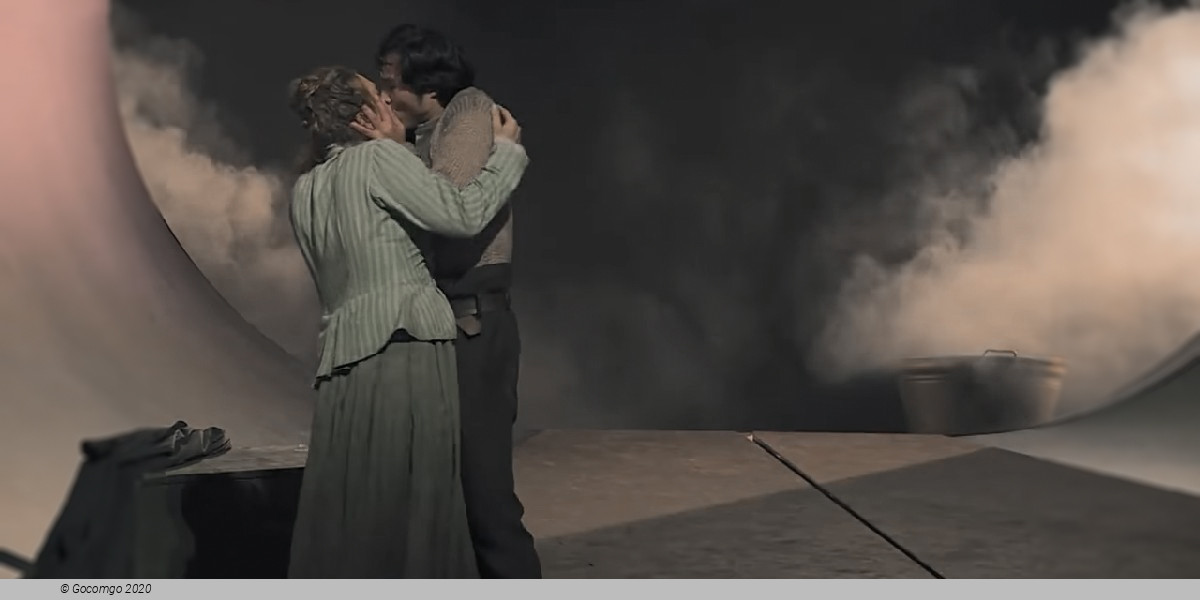
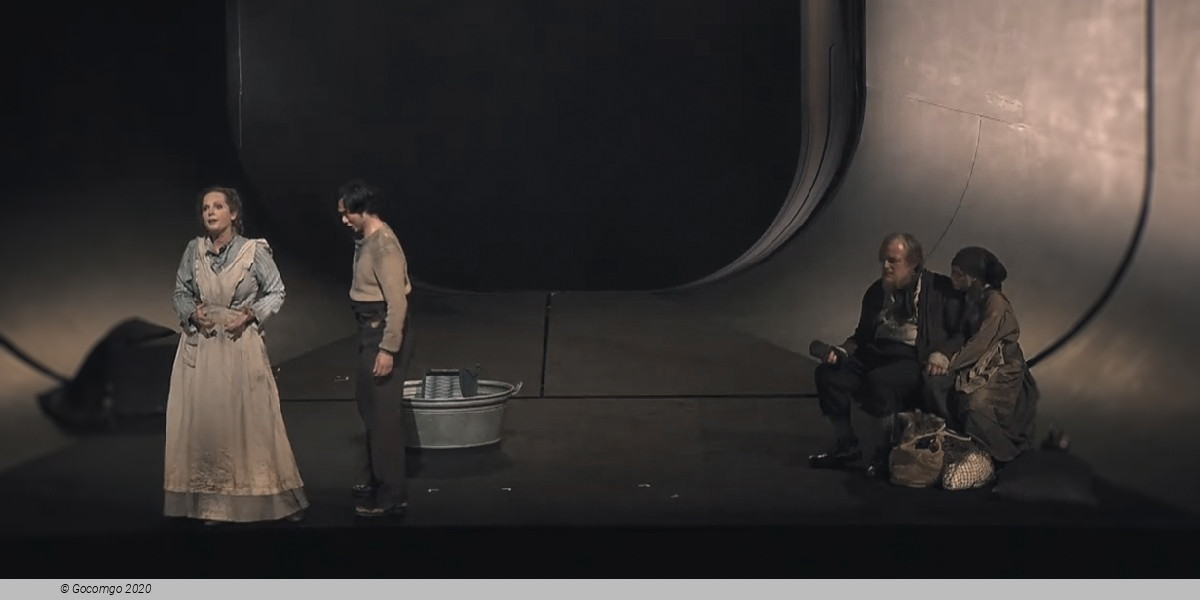
It is close to sundown in Paris, and the stevedores work unloading Michele's barge. Giorgetta, Michele's wife, asks her husband if she can bring wine to the workers. He agrees but does not join them because she refuses his kiss. The stevedores start dancing to the music of a nearby organ grinder and one of them steps on Giorgetta's foot. Luigi, a stevedore, dances with her, and it is evident that there is something between them. Upon hearing of Michele's return the stevedores' gathering breaks up.

Work is getting scarce and Giorgetta and Michele discuss which of the stevedores should be dismissed; she prefers that it be anyone other than Luigi despite him being Michele's first choice. Soon the conversation turns into a fight. La Frugola enters, looking for Talpa, her husband and one of the stevedores. She shows everyone the fruits of her scavenging in Paris and scolds the men for their drinking. Luigi laments his lot in life, and La Frugola sings of her wish to one day buy a house in the country where she and her husband can retire. Giorgetta and Luigi sing a duet about the town where they were both born.

The stevedores depart except for Luigi, who asks Michele to dismiss him and let him off in Rouen, but Michele convinces him against this, saying there is not enough work in Rouen. When they are alone, Giorgetta asks Luigi why he requested to be dismissed; the pair acknowledge their love. They plan to meet later that evening upon the signal of a match being lit on board. By now Luigi seems determined to kill Michele and flee with Giorgetta.

Michele later reminisces with Giorgetta of the days before their child died and how he could cover the two of them under his cloak. He is distressed about being twice her age; she comforts him but she still will not kiss him, and goes off.

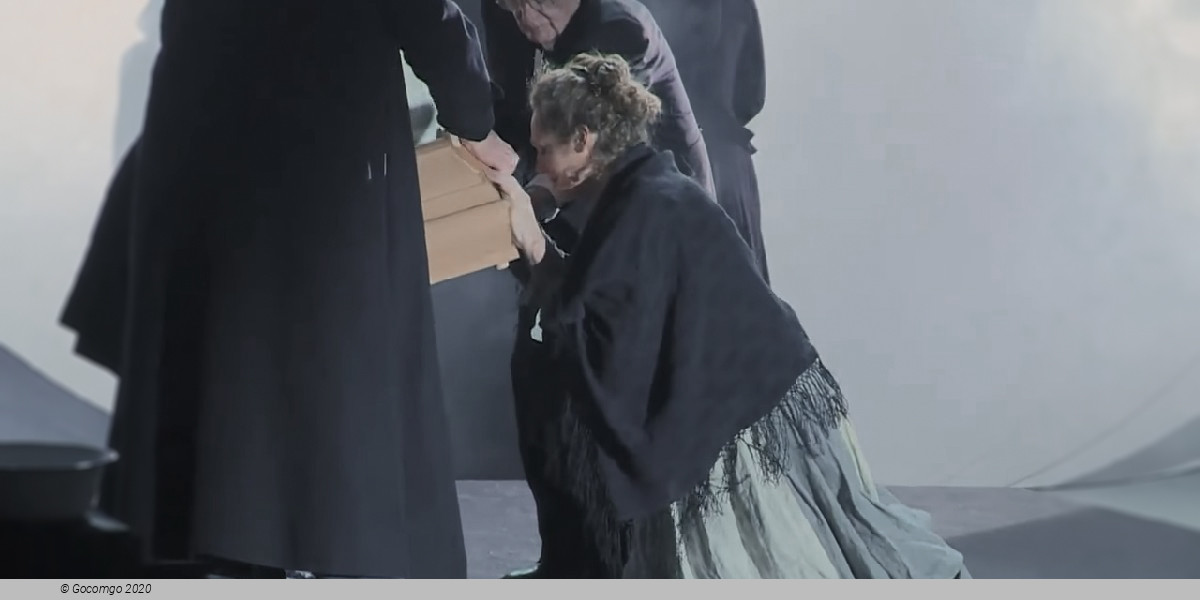
Michele wonders aloud if Giorgetta is still faithful to him and ponders who might have changed her so much. He reviews the list of men who have shared in their lives but dismisses each of them as improbable. Michele lights his pipe and Luigi, seeing it from afar, thinks that it is Giorgetta's signal. He returns to the barge and is confronted by Michele. In the ensuing fight, Michele gets the upper hand and forces Luigi to confess his affair before killing him and hiding the body under his cloak. Giorgetta returns to the barge, feigning remorse, and Michele opens wide the cloak to reveal her dead lover.


Venue Info

Teatro Filarmonico - Verona
Location   Via Roma 4

The Teatro Filarmonico is the main opera theater in Verona, Italy, and is one of the leading Opera Houses in Europe. The Teatro Filarmonico is property of the Accademia Filarmonica di Verona. Having been built in 1716, and later rebuilt after a fire of January 21, 1749, and again after the allied bombing of February 23, 1945.

Verona needed an opera house, so the Accademia Filarmonica di Verona decided in the early 18th century to build a theatre worthy and large. Work began in 1716 and lasted 13 years. Finally, inauguration was on the evening of January 6, 1732, with the pastoral drama La fida ninfa by Antonio Vivaldi, a libretto by Scipio Maffei. The opera season became famous, and the performances led society events. But on January 21, 1749, fire eventually spread in the theatre. Rebuilt, the theater was re-dedicated in 1754 with the opera Lucio Vero by Neapolitan composer Davide Perez. The opera had a limited success. Corsican in the 18th century, during the French invasion, a long series of celebrations were held in the theater, such as the Cantata per la Santa Alleanza ("Cantata for the Holy Alliance") of Gioachino Rossini. The theater hosted international singers, and among its repertoire appear the most famous works of Italian and foreign melodrama.

On the tragic night of February 23, 1945, the theater collapsed under the Anglo-American bombing. The Academy Philharmonic announced that it would try to rebuild the theatre exactly as it had been before. The proceedings lasted a long time: the theatre was inaugurated again in 1975, with the opera Falstaff by Antonio Salieri.

The theatre still hosts opera, ballets and concerts seasons. The operatic repertoire is one of the most famous for Italian operas and international (La sonnambula, The Barber of Seville, Tosca ...) and the works of non-repertoire (A day of the kingdom, Manon Lescaut of Auber, Loreley of Catalani ...).

Important Info
Type: Opera
City: Verona, Italy
Starts at: 15:30
Top of page