ACT I
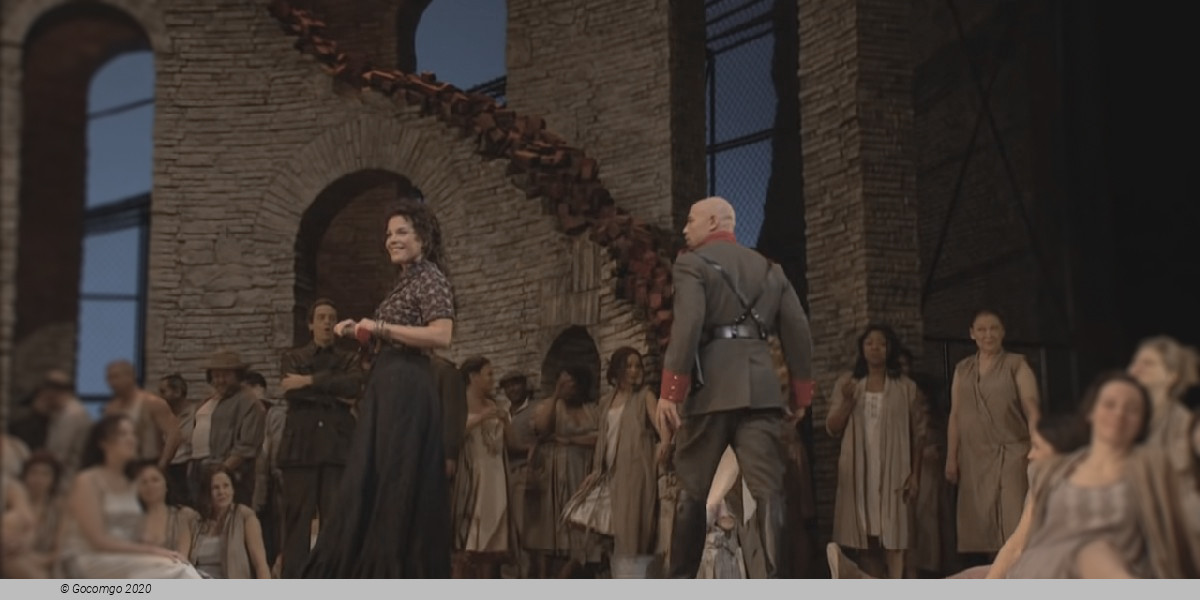
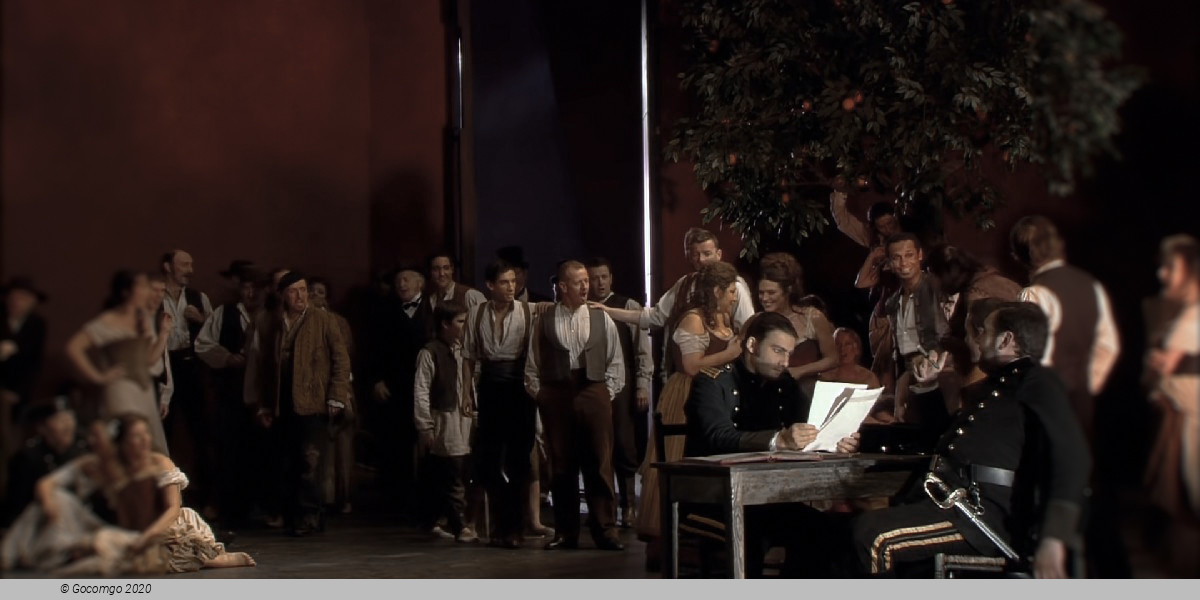
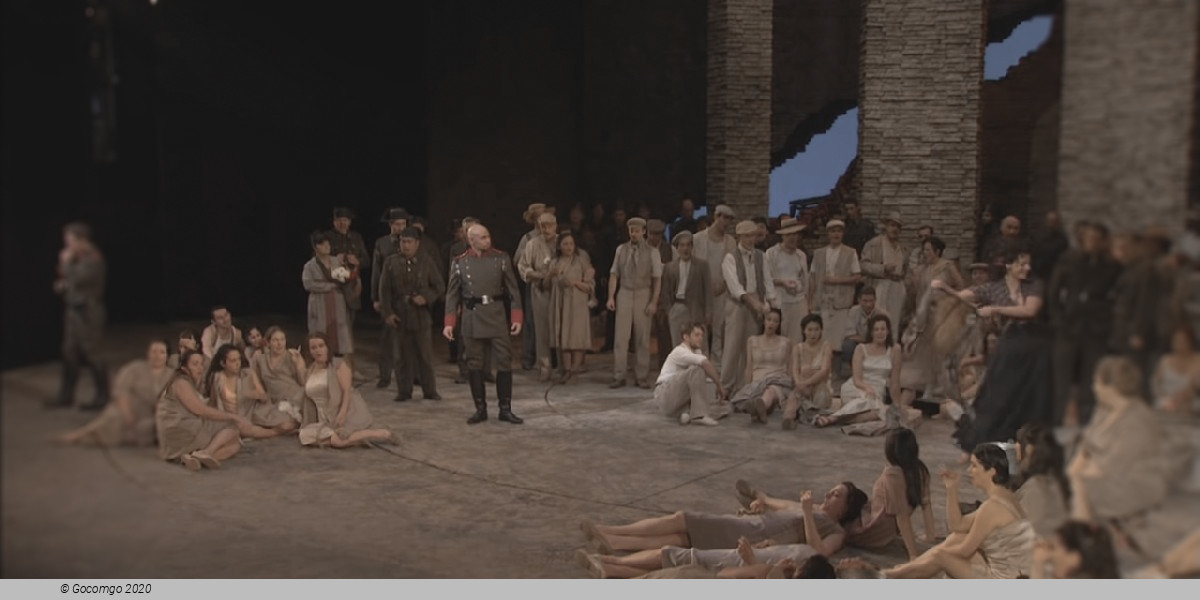
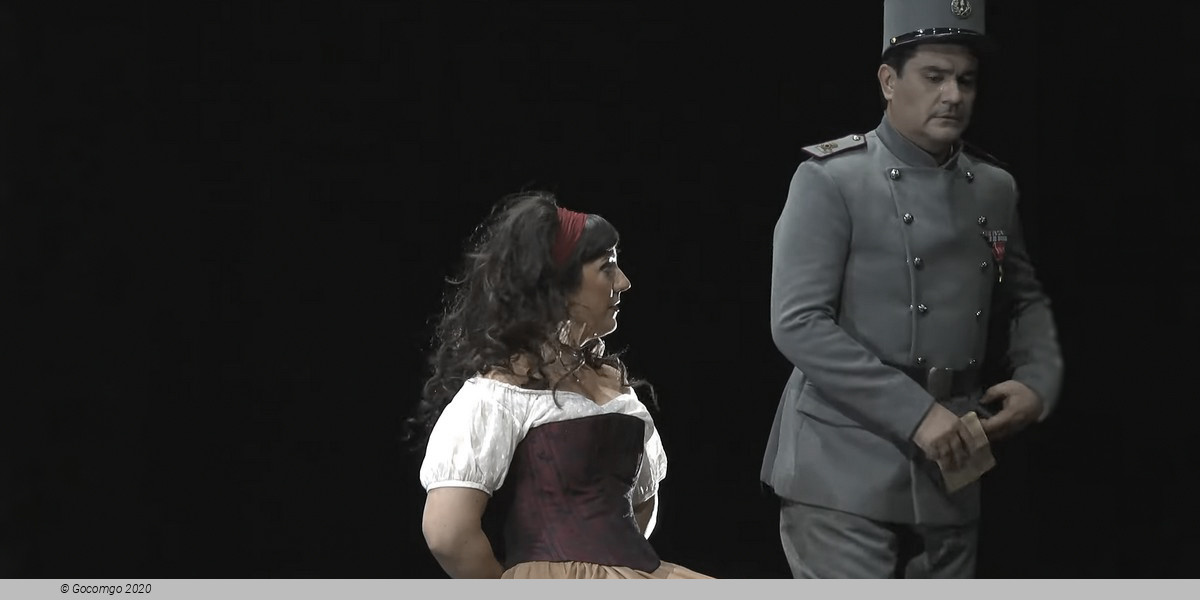
Soldiers from a nearby guard-house at a cigarette factory square in Seville are looking at the pedestrians. Micaëla, a young girl, is asking about her fiancé, Corporal Don José. Having learned from the Commander that the Corporal will arrive with change of the guard, she leaves, without paying attention to the soldiers’ taunts. The bugle sound announces the changing of the guard, and Captain Zuniga and Don José appear on the square. They are talking about the beauty of the women who work in the factory. The factory bell announces a work break: a crowd of women is leaving the gate, including the beautiful Gypsy, Carmen. Surrounded by suitors, she remains indifferent to their attempts. She gives themher own interpretation of love (habanera L’amour est un oiseau rebelle). Her attention is attracted by Don José, who is staying aside of the amusing crowd. She throws provocatively a flower to himon her way back to the factory. Micaëla appears again on the square, bringing a letter of Don José’smother to him, with amother‘s kiss attached (duet Parle-moi de ma mre). Don José is promising to marry Micaëla. At that time, cries are heard from the factory: Carmen quarrelled with her friend and wounded her with a knife. What is worse, she is mocking Captain Zuniga when he is trying to clarify the accident. Zuniga orders that the girl be tied and left under Don José’s guard. The Corporal is bewitched by the Gypsy girl (seguidilla Prs des remparts de Séville) and helps her to escape.
ACT II
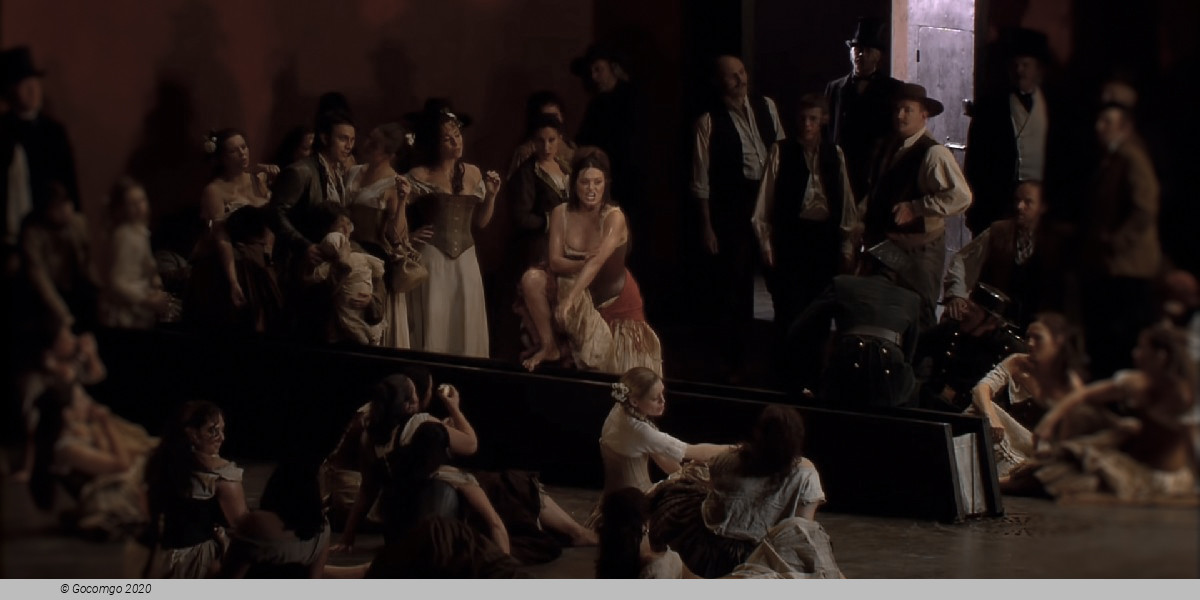
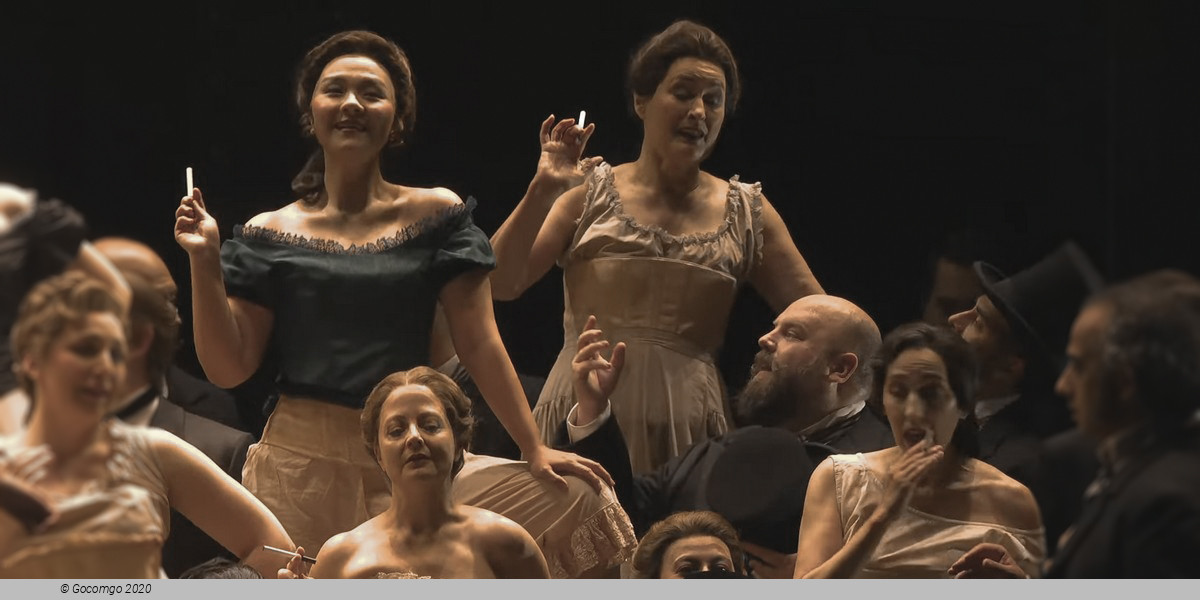
In the tavern owned by Lillas Pastii, Carmen, Frasquita, Mercedes other Gypsies dance for soldiers and smugglers. Carmen is learning from Captain Zuniga, who is also affected by her charms, that Don José, degraded and arrested for freeing Carmen, has done his time. At that time, Escamillo arrives in the tavern triumphantly, talking about the wonderful life of a Toreador (aria Votre toast). Carmen is denying his advances. She also refuses to travel with the smugglers, Doncairo and Remendado. She rather hopes to see Don José, who is heard singing (Halte-là! Qui va là!). She promises to his companions that she will introduce her beloved to the smuggling business. However, Don José refuses to do so. Carmen’s song is mixed with the bugle sound calling the soldiers back to their barracks. To keep Don José, Carmen accuses him that he does not love her. To prove his passion, he shows her the dry flower (aria La fleur que tu m’avais jetée). Captain Zuniga arrives in the tavern. His courting of Carmen make Don José jealous. The Corporal attacks the Captain by which he destroys his career. Now, he has to join the smugglers and escape to the mountains.
ACT III
The smugglers are camping in the mountains for the night. Carmen seems to be bored with her love to Don José, but he cannot imagine to live without her. Frasquita and Mercedes are telling fortunes by kabala, learning of their luck, while Carmen reads rather death from her cards (aria with the cards En vain pour viter). The smugglers leave with the Gypsies whose role is to distract the customs officers. Only Don José remains to guard the camp.Micaëla arrives, searching for her fiancé (Je dis que rien ne m’pouvante). She is scared away by a distant shot.Don José was shooting at an unknown figure. That was Escamillo looking for a certain Gypsy girl.We learn fromtheir conversation that themen are rivals. They start to fight when Carmen and the smugglers arrive. A violent scene between the jealous Don José and Carmen is interrupted by Micaëla who brings the news that Don José’s mother is ill and wants to see her son before death. Don José leaves withMicaëla, noticing Carmen’smocking smile. The Toreador’s song is heard in the background.
ACT IV
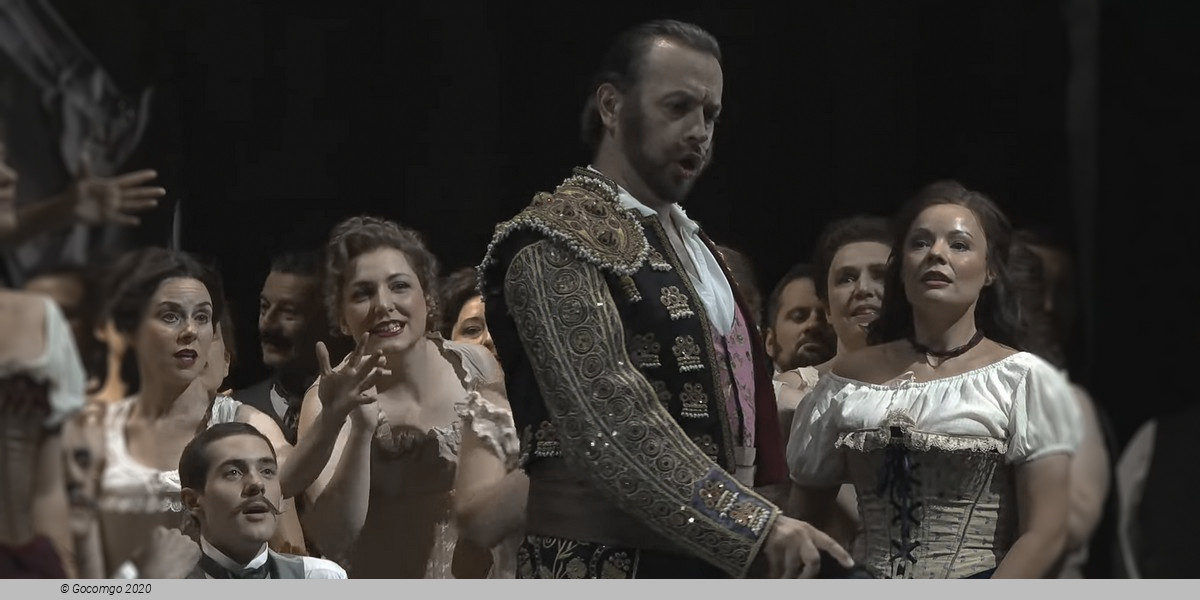
The square before the arena in Seville is filled with a colourful crowd. All welcome Toreador Escamillo, accompanied by Carmen, obviously in love with him. Frasquita and Mercedes warn Carmen against Don José who was seen nearby. The Gypsy neglects warnings. Suddenly, the abandoned lover appears on the empty square, begging Carmen to come back to him (duet C’est toi? C’est moi). Carmen declares that she loves Escamillo, showing impatience since she would rather want to see Escamillo’s victory in a bull fight.When the audience announces the Toreador’s victory, Don José stabs Carmen with a dagger out of despair.
Elżbieta Tosza
Place: Seville, Spain, and surrounding hills
Time: Around 1820
Act 1
A square, in Seville. On the right, a door to the tobacco factory. At the back, a bridge. On the left, a guardhouse.
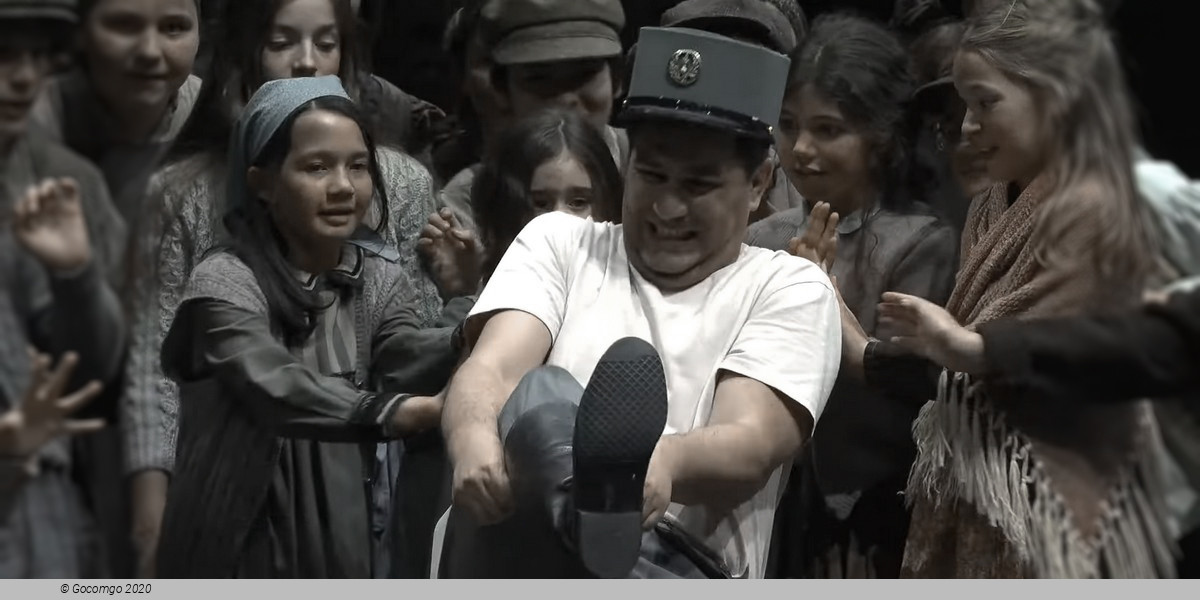
A group of soldiers relaxes in the square, waiting for the changing of the guard and commenting on the passers-by ("Sur la place, chacun passe"). Micaëla appears, seeking José. Moralès tells her that "José is not yet on duty" and invites her to wait with them. She declines, saying she will return later. José arrives with the new guard, who is greeted and imitated by a crowd of urchins ("Avec la garde montante").
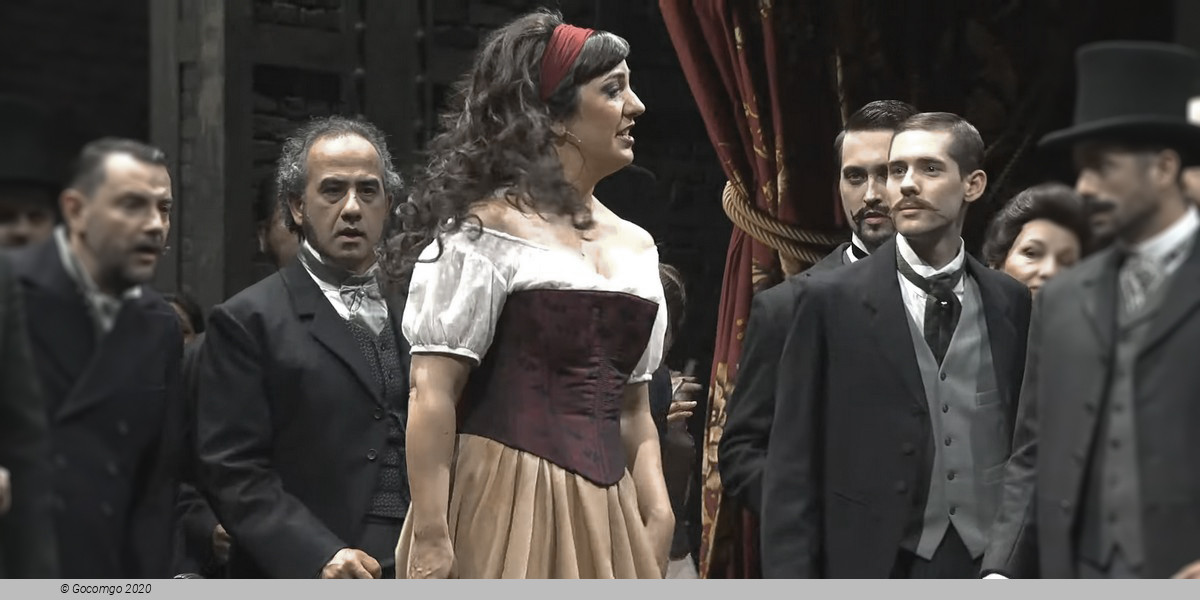
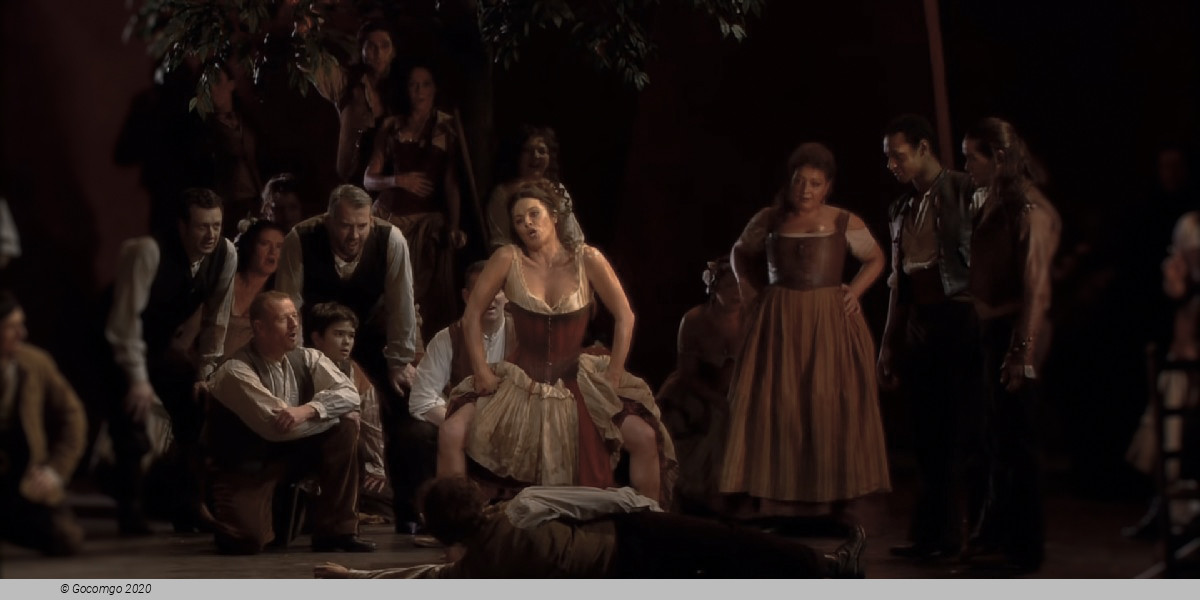
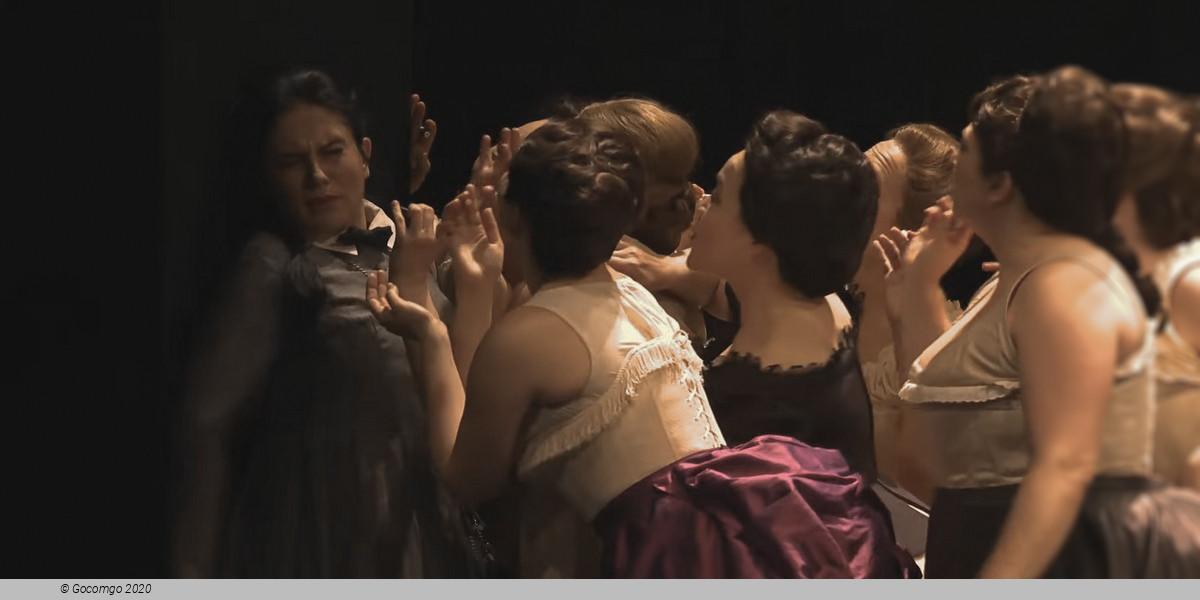
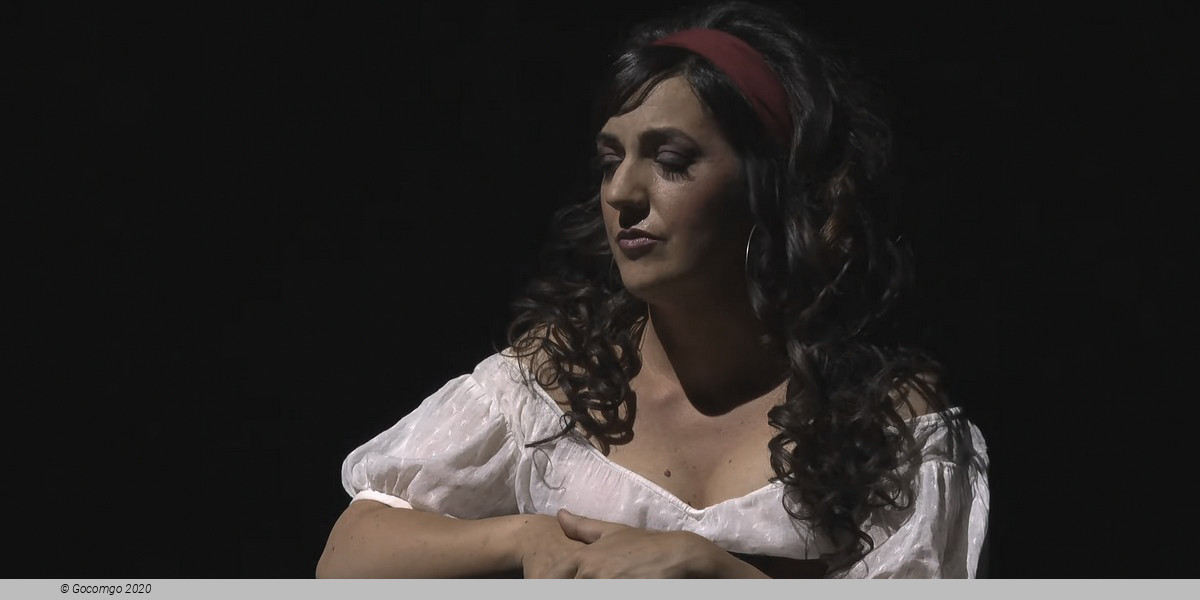
As the factory bell rings, the cigarette girls emerge and exchange banter with young men in the crowd ("La cloche a sonné"). Carmen enters and sings her provocative habanera on the untameable nature of love ("L'amour est un oiseau rebelle"). The men plead with her to choose a lover, and after some teasing she throws a flower to Don José, who thus far has been ignoring her but is now annoyed by her insolence.
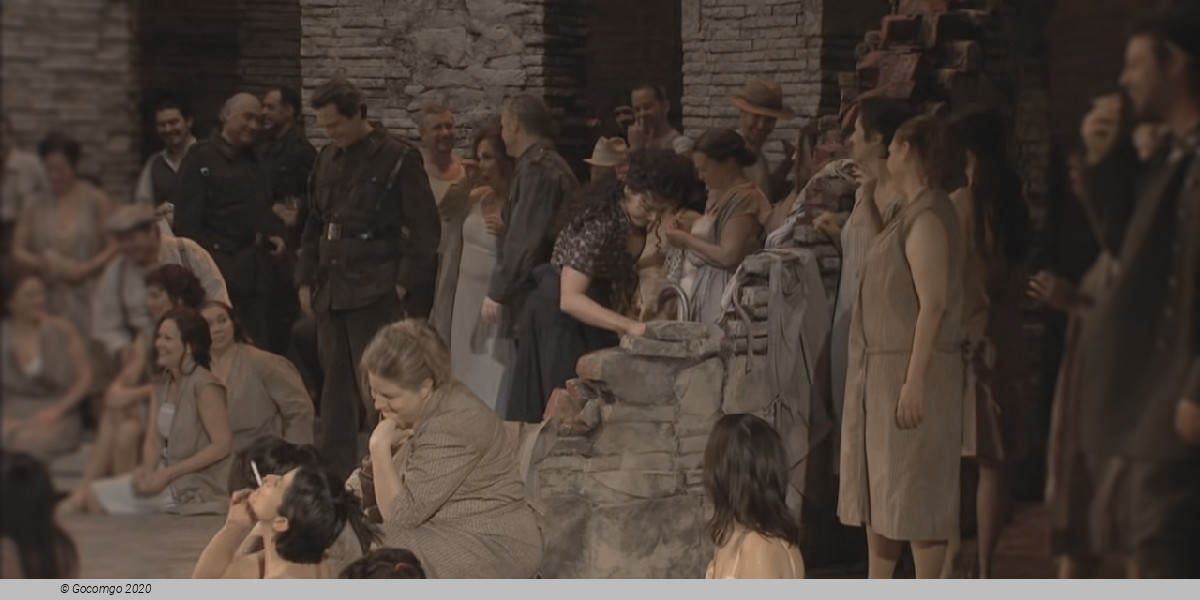
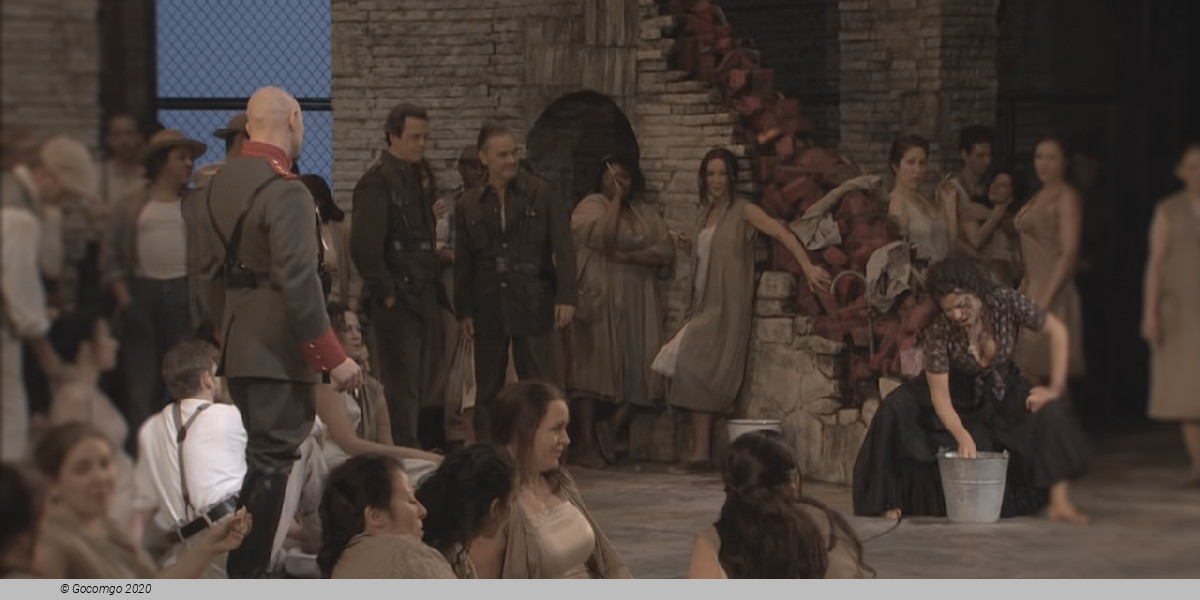
As the women go back to the factory, Micaëla returns and gives José a letter and a kiss from his mother ("Parle-moi de ma mère!"). He reads that his mother wants him to return home and marry Micaëla, who retreats in shy embarrassment on learning this. Just as José declares that he is ready to heed his mother's wishes, the women stream from the factory in great agitation. Zuniga, the officer of the guard, learns that Carmen has attacked a woman with a knife. When challenged, Carmen answers with mocking defiance ("Tra la la... Coupe-moi, brûle-moi"); Zuniga orders José to tie her hands while he prepares the prison warrant. Left alone with José, Carmen beguiles him with a seguidilla, in which she sings of a night of dancing and passion with her lover—whoever that may be—in Lillas Pastia's tavern. Confused yet mesmerised, José agrees to free her hands; as she is led away she pushes her escort to the ground and runs off laughing. José is arrested for dereliction of duty.
Act 2
Lillas Pastia's Inn
Two months have passed. Carmen and her friends Frasquita and Mercédès are entertaining Zuniga and other officers ("Les tringles des sistres tintaient") in Pastia's inn. Carmen is delighted to learn of José's release from two months' detention. Outside, a chorus and procession announces the arrival of the toreador Escamillo ("Vivat, vivat le Toréro"). Invited inside, he introduces himself with the "Toreador Song" ("Votre toast, je peux vous le rendre") and sets his sights on Carmen, who brushes him aside. Lillas Pastia hustles the crowds and the soldiers away.
When only Carmen, Frasquita and Mercédès remain, smugglers Dancaïre and Remendado arrive and reveal their plans to dispose of some recently acquired contraband ("Nous avons en tête une affaire"). Frasquita and Mercédès are keen to help them, but Carmen refuses, since she wishes to wait for José. After the smugglers leave, José arrives. Carmen treats him to a private exotic dance ("Je vais danser en votre honneur ... La la la"), but her song is joined by a distant bugle call from the barracks. When José says he must return to duty, she mocks him, and he answers by showing her the flower that she threw to him in the square ("La fleur que tu m'avais jetée"). Unconvinced, Carmen demands he show his love by leaving with her. José refuses to desert, but as he prepares to depart, Zuniga enters looking for Carmen. He and José fight, and are separated by the returning smugglers, who restrain Zuniga. Having attacked a superior officer, José now has no choice but to join Carmen and the smugglers ("Suis-nous à travers la campagne").
Act 3
A wild spot in the mountains
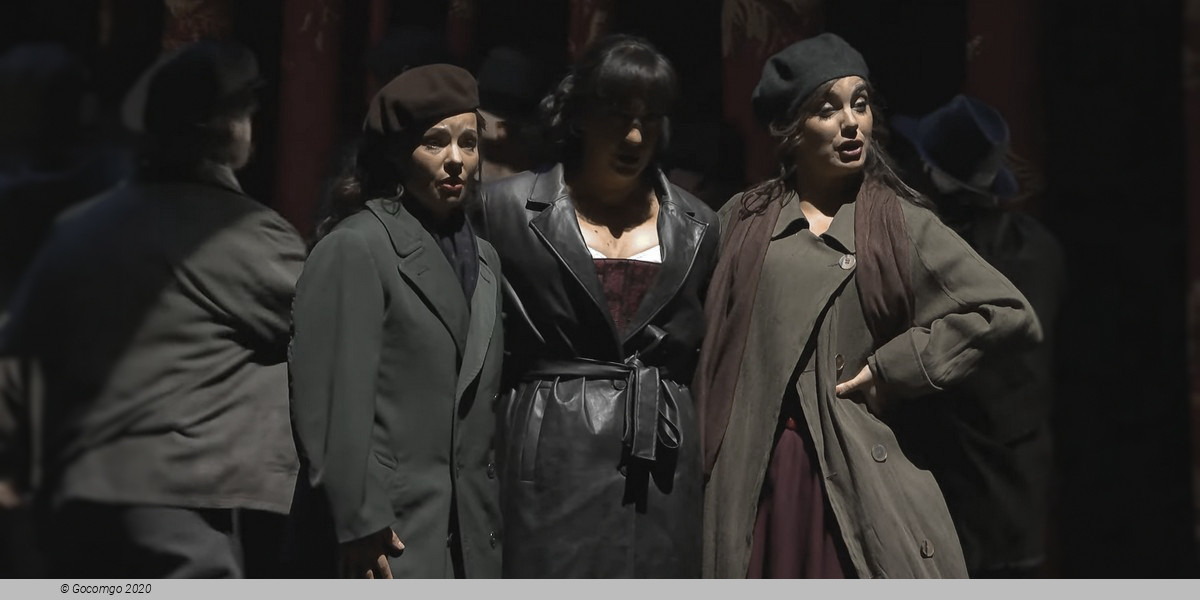
Carmen and José enter with the smugglers and their booty ("Écoute, écoute, compagnons"); Carmen has now become bored with José and tells him scornfully that he should go back to his mother. Frasquita and Mercédès amuse themselves by reading their fortunes from the cards; Carmen joins them and finds that the cards are foretelling her death, and José's. The women depart to suborn the customs officers who are watching the locality. José is placed on guard duty.
Micaëla enters with a guide, seeking José and determined to rescue him from Carmen ("Je dis que rien ne m'épouvante"). On hearing a gunshot she hides in fear; it is José, who has fired at an intruder who proves to be Escamillo. José's pleasure at meeting the bullfighter turns to anger when Escamillo declares his infatuation with Carmen. The pair fight ("Je suis Escamillo, toréro de Grenade"), but are interrupted by the returning smugglers and girls ("Holà, holà José"). As Escamillo leaves he invites everyone to his next bullfight in Seville. Micaëla is discovered; at first, José will not leave with her despite Carmen's mockery, but he agrees to go when told that his mother is dying. As he departs, vowing he will return, Escamillo is heard in the distance, singing the toreador's song.
Act 4
A square in Seville. At the back, the walls of an ancient amphitheatre
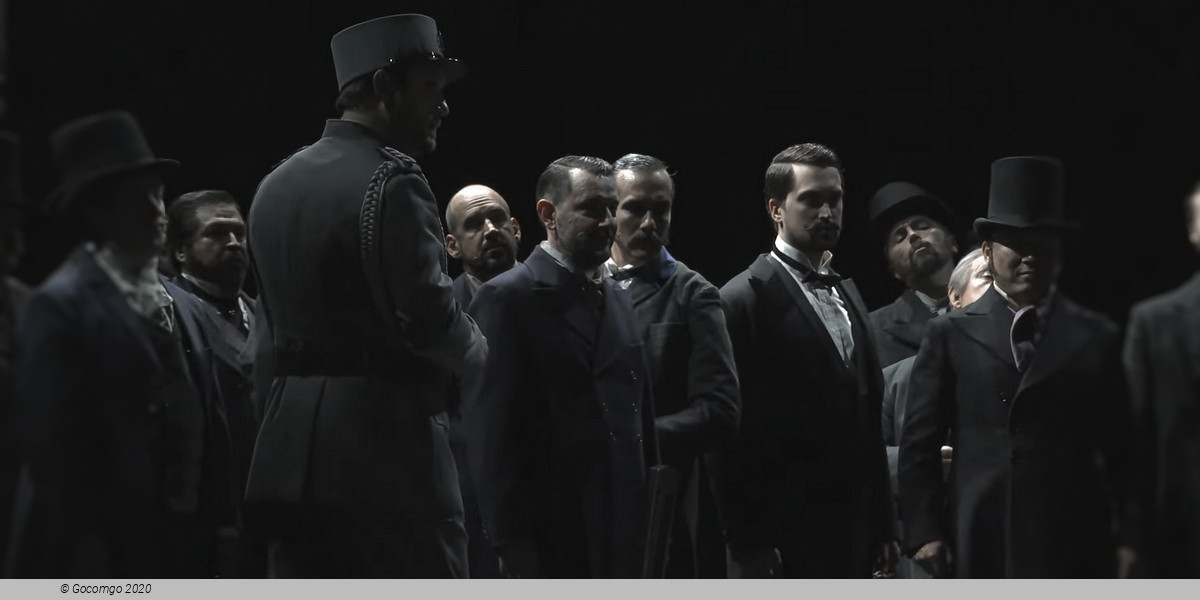
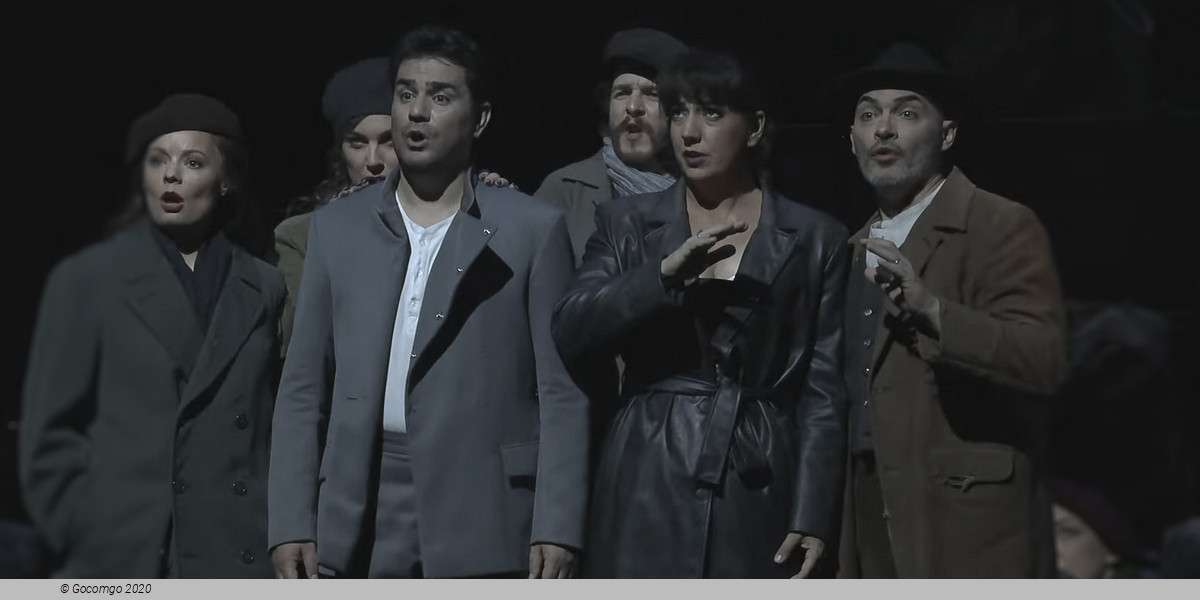
Zuniga, Frasquita and Mercédès are among the crowd awaiting the arrival of the bullfighters ("Les voici ! Voici la quadrille!"). Escamillo enters with Carmen, and they express their mutual love ("Si tu m'aimes, Carmen"). As Escamillo goes into the arena, Frasquita and Mercedes warn Carmen that José is nearby, but Carmen is unafraid and willing to speak to him. Alone, she is confronted by the desperate José ("C'est toi ! C'est moi !"). While he pleads vainly for her to return to him, cheers are heard from the arena. As José makes his last entreaty, Carmen contemptuously throws down the ring he gave her and attempts to enter the arena. He then stabs her, and as Escamillo is acclaimed by the crowds, Carmen dies. José kneels and sings "Ah! Carmen! ma Carmen adorée!"; as the crowd exits the arena, José confesses to killing the woman he loved.







 Lubicz 48