Gallery
About
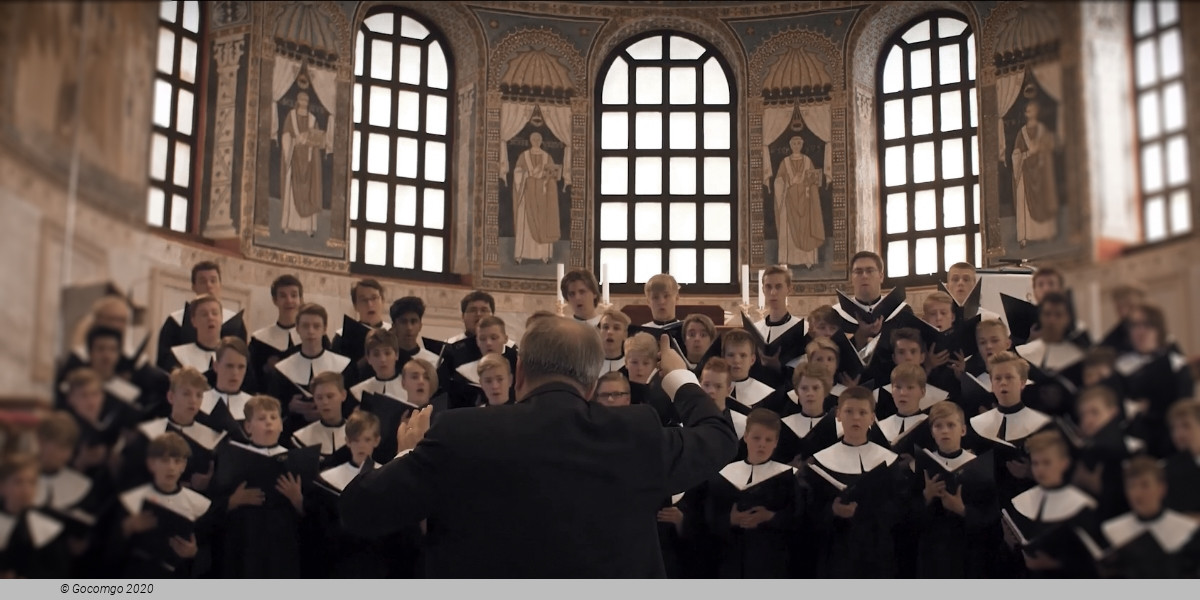
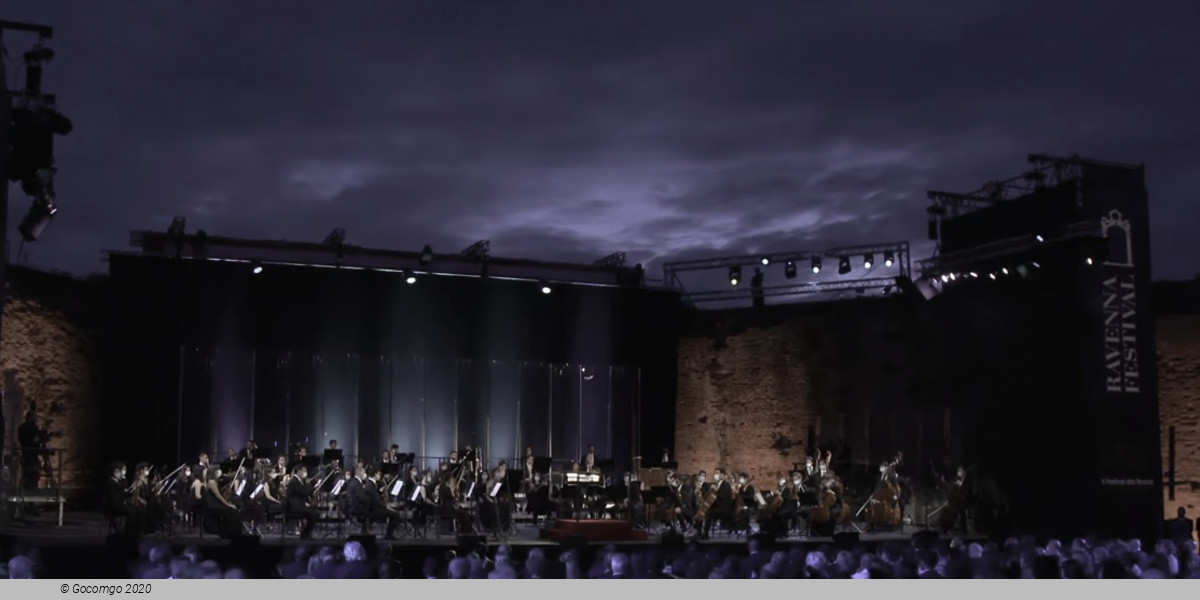
Ravenna Festival 2027 is the main event of the year with the participation of world classical music stars.
If you are interested in this schedule leave a request. As soon as the playbill is announced, we will let you know immediately, and you will be the first to get the tickets.
In each section, you will get the best seats for the same price - centrally located and in front rows.
We provide seats with the best acoustics only.
Even in the world's best concert halls and opera houses, the listening conditions can vary greatly, and some seats are better than others. Sometimes nearby seats have very different viewing and listening conditions.
Usually, these seats are sold out soon and available for early bookers only. We guarantee that you will receive full-view seats only.
Detailed information about the 2026 Festival will be added later.
Please read about the previous Ravenna Festival 2023:
As Italo Calvino depicted his Invisible Cities as experiences, memories and desires rather than real places, the centenary of the writer’s birth provides the Ravenna Festival’s 34th edition with a chance to reflect on the twofold nature of the city as a symbol of both the community and its crises.

Following the double opening on 7 and 8 June, featuring respectively Laurie Anderson and Martha Argerich flanked by Mischa Maisky, the Festival’s narrative unfolds until 23 July. From 15 to 20 December, Riccardo Muti – who will have been on the podium of his Cherubini Orchestra for The Roads of Friendship and a concert with Tamás Varga – conducts a triptych consisting of a Verdi gala and two operas from the Italian repertoire. Foremost in the constellation of soloists of the summer programme are Anne-Sophie Mutter, Leōnidas Kavakos, Yefim Bronfman and Beatrice Rana.

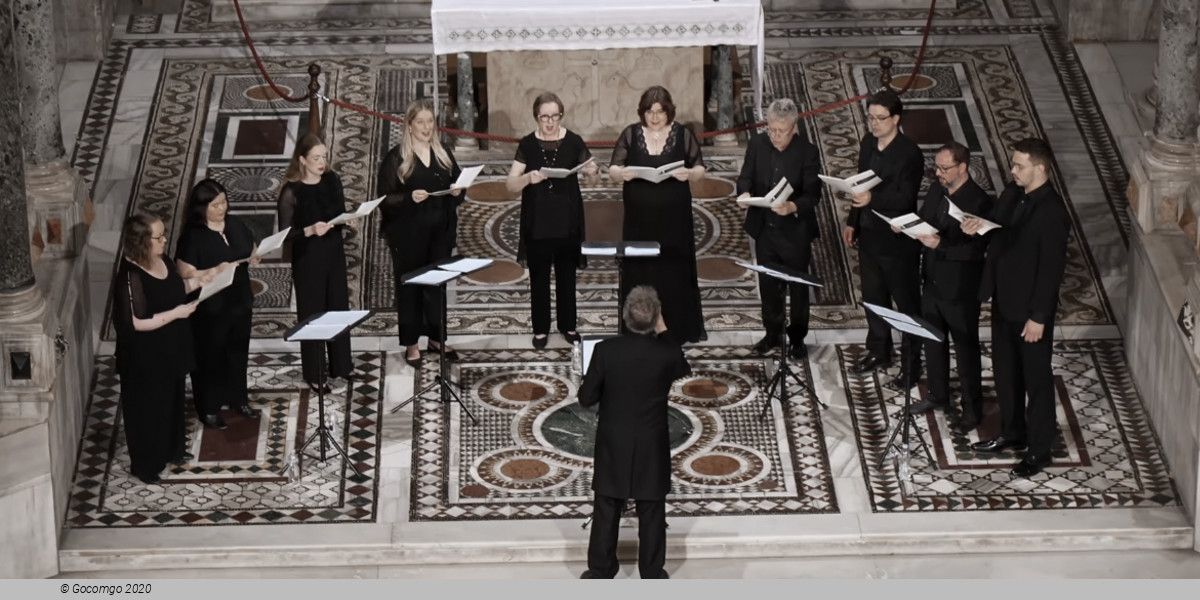
The latter plays Rachmaninov for an evening with ballet stars (the dance programme also includes the world premiere of WE, the EYES by Emio Greco and Pieter C. Scholten). Titles that portray the dark side of civilisation are contrasted with a celebration of dialogue between cultures and genres: from the pacifism of Aristophanes’s Acarnesi to Frank Zappa’s Yellow Shark and Luciano Berio’s Folk Songs. Among the guest artists: Stefano Bollani, Aurora, The Tallis Scholars, Tenebrae Choir, The King’s Singers, Sinfonia Varsovia, Eleonora Abbagnato, Sergio Bernal, Fatoumata Diawara, Mike Stern…

From 21 May to 11 July 2026, Ravenna hosts the 37th edition of Ravenna Festival, titled Nacque al mondo un sole (“A Sun Was Born into the World”), a line from Dante’s Paradiso celebrating Saint Francis of Assisi. Inspired by the Franciscan spirit and its message of fraternity, the festival brings together music, dance and theatre in a programme that ranges from major symphonic events and early music to jazz, contemporary performance and new theatrical productions.
The opening concert on 21 May features violinist Anne-Sophie Mutter with the Royal Philharmonic Orchestra, conducted by Vasily Petrenko, in a programme of Beethoven and Mahler. Other orchestral highlights include the Münchener Kammerorchester under Enrico Onofri, while Riccardo Muti leads the Luigi Cherubini Youth Orchestra in works by Verdi, Manuel de Falla and Ravel on 30 June. The festival also welcomes conductor Kent Nagano and the Orchestra Giovanile Luigi Cherubini.
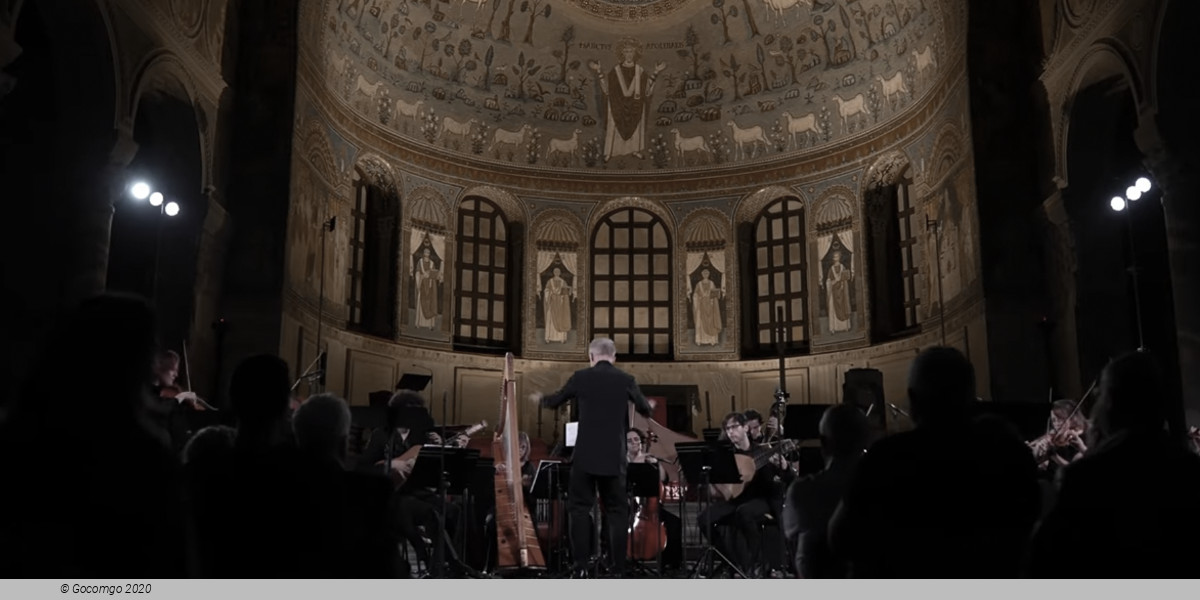
The programme extends well beyond the concert hall. Jazz takes centre stage at Rocca Brancaleone, where Stefano Bollani All Stars, joined by Enrico Rava, Paolo Fresu and other leading musicians, perform on 6 June; Pat Metheny brings his Side-Eye III+ project to the same venue on 3 July. Dance features include Murmuration Level 2, a large-scale choreographic work by Sadeck Berrabah, and a performance by the Sergio Bernal Dance Company. The festival’s international scope is also reflected in appearances by Le Poème Harmonique, conducted by Vincent Dumestre, the Estonian vocal ensemble Vox Clamantis, and the male vocal group Chanticleer.
Opera and music theatre are represented by new commissions and productions, including Il Santo folle, inspired by the encounter between Saint Francis and the Sultan, and Francesco e il lupo, presented in several locations around Ravenna. The festival’s distinctive atmosphere comes in part from its settings: performances take place not only at Palazzo Mauro De André and Teatro Alighieri, but also in historic churches, cloisters, museums and the open-air Rocca Brancaleone.
The wider festival programme includes Romagna in fiore, a series of concerts in natural settings across the region from 1 to 24 May. In November, the traditional Autumn Trilogy returns to Teatro Alighieri with Mozart 1791, a three-part tribute to the composer’s final year, featuring La clemenza di Tito, L’ultimo incanto and the Requiem, under the musical direction of Ottavio Dantone and the artistic direction of Chiara Muti.
About the Ravenna Festival
The Ravenna Festival is a summer festival of opera and classical music (as well as dance, jazz, ethnic, musical theater, ballett, sacred music, electronic music, drama, film, plus conventions and exhibitions) held in the city of Ravenna, Italy and the surrounding area each June and July.

Founded in 1990 by Cristina Mazzavillani Muti, Ravenna Festival has always been characterized by an artistic programme including all types of performing arts: symphonic and chamber music, opera, drama, dance, ballet, musical theatre, jazz, and ethnic music. Every year from May to July, the entire city becomes a stage for two months: its staggering gilded basilicas, encrusted with ancient mosaics, its elegant historical theatres, its cloisters, ancient buildings, the industrial heritage sites, but also its beaches and its pine forest, where Dante was hosted, and further off, the gently rolling hills peeping from the distant horizon…

These extraordinary places – it is worth remembering here that 8 monuments in Ravenna are UNESCO World Heritage sites – and a multidisciplinary vocation are the distinctive features that make the Ravenna Festival unique and contribute to rediscover a city which used to be a crossroad of peoples and cultures. The Artistic Direction yearly defines a rich programme centred on a culturally and artistically relevant theme.

Many topics have already been dealt with and thoroughly examined: from the most specifically musical themes of the very beginnings (“Salieri and the Vienna School” in 1990, “Around Rossini”, “Bellini and Wagner”, etc.) to the more visionary ones, which projected Ravenna – a subject and an object at one and the same time – into new soulscapes: the Mediterranean, the East, the Apocalypse, visions, deserts and pilgrimages, in a mix of popular and fairy tale, sacred and profane…down to the history of the twentieth century. Over the years the Festival has dealt with crucial events such as the First World War or the Russian Revolution, and paid homage to icons such as Nelson Mandela, Martin Luther King, or Dante Alighieri.

Since 1997, the year of the first historic concert in Sarajevo, the route of the Ravenna Festival has been closely intertwined with “The Roads of Friendship”, a series of lay pilgrimages touching on cities wounded by war, re-establishing ancient ties to places that have made history and building “bridges of brotherhood”. Leading on these paths as a cultural ambassador to the world is Riccardo Muti, with orchestras and choirs that, in line with the spirit of brotherhood that animates these concerts and in the name of the universality of music, have regularly welcomed some local musicians and given life to unforgettable events in such symbolic sites as Beirut, Jerusalem, Moscow, Yerevan, Istanbul, New York, Cairo, Damascus, Nairobi, Mirandola, Redipuglia, Otranto, Tokyo, Tehran, Kyiv, and Athens.