








Zurich Opera House 1 December 2022 - The Abduction from the Seraglio | GoComGo.com

The Abduction from the Seraglio

Zurich Opera House, Zurich, Switzerland
All photos (8)
Select date and time
8 PM

E-tickets: Print at home or at the box office of the event if so specified. You will find more information in your booking confirmation email.

You can only select the category, and not the exact seats.
If you order 2 or 3 tickets: your seats will be next to each other.
If you order 4 or more tickets: your seats will be next to each other, or, if this is not possible, we will provide a combination of groups of seats (at least in pairs, for example 2+2 or 2+3).

Important Info
Type: Opera
City: Zurich, Switzerland
Starts at: 20:00
Acts: 3
Duration: 2h 35min
Sung in: German
Titles in: German,English

E-tickets: Print at home or at the box office of the event if so specified. You will find more information in your booking confirmation email.

You can only select the category, and not the exact seats.
If you order 2 or 3 tickets: your seats will be next to each other.
If you order 4 or more tickets: your seats will be next to each other, or, if this is not possible, we will provide a combination of groups of seats (at least in pairs, for example 2+2 or 2+3).

Overview

Riccardo Minasi, whose recent CD recording of Mozart’s final three symphonies cemented his reputation as one of the most exciting and adventurous Mozart interpreters, will be at the podium of the Orchestra La Scintilla, which he also leads artistically. Daniel Behle’s international fame extends far beyond Mozart roles, and this revival brings his return to Zurich to sing Belmonte. Romanian soprano Adela Zaharia makes her Opernhaus debut as Konstanze. Swiss actor Stefan Gubser, whom audiences know as a television "Tatort" detective, takes on the speaking role of Pasha Selim.

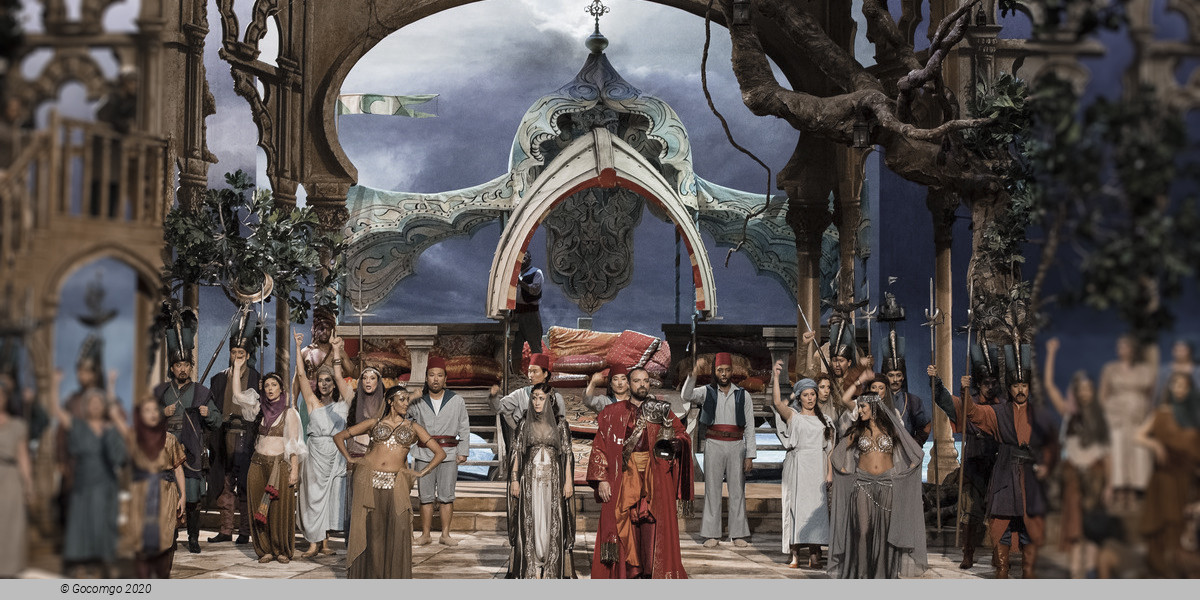
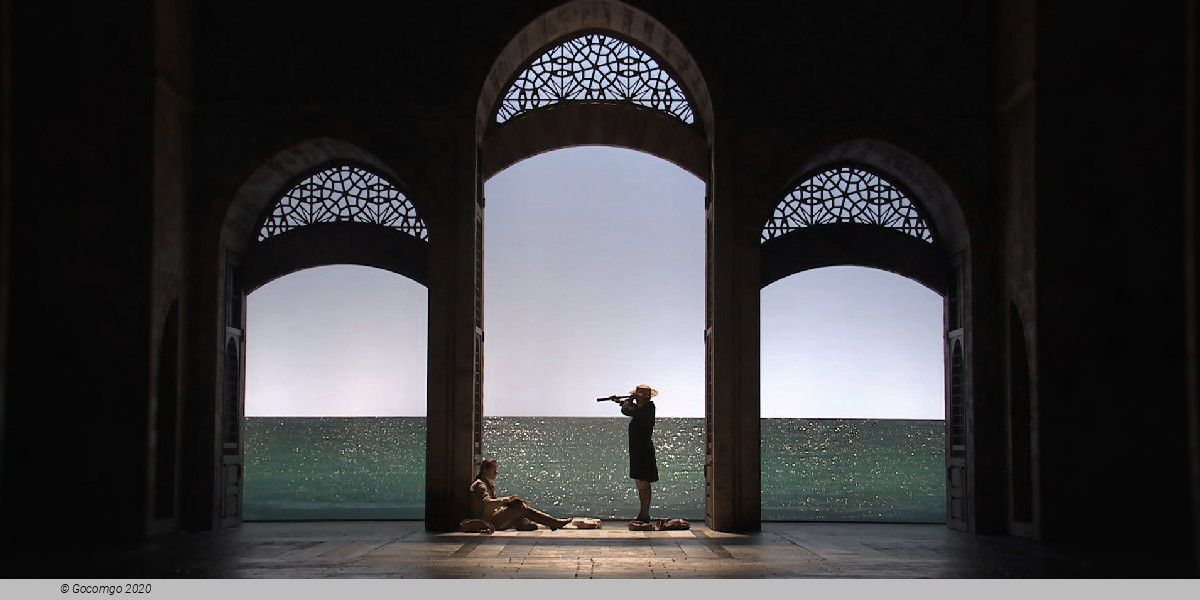
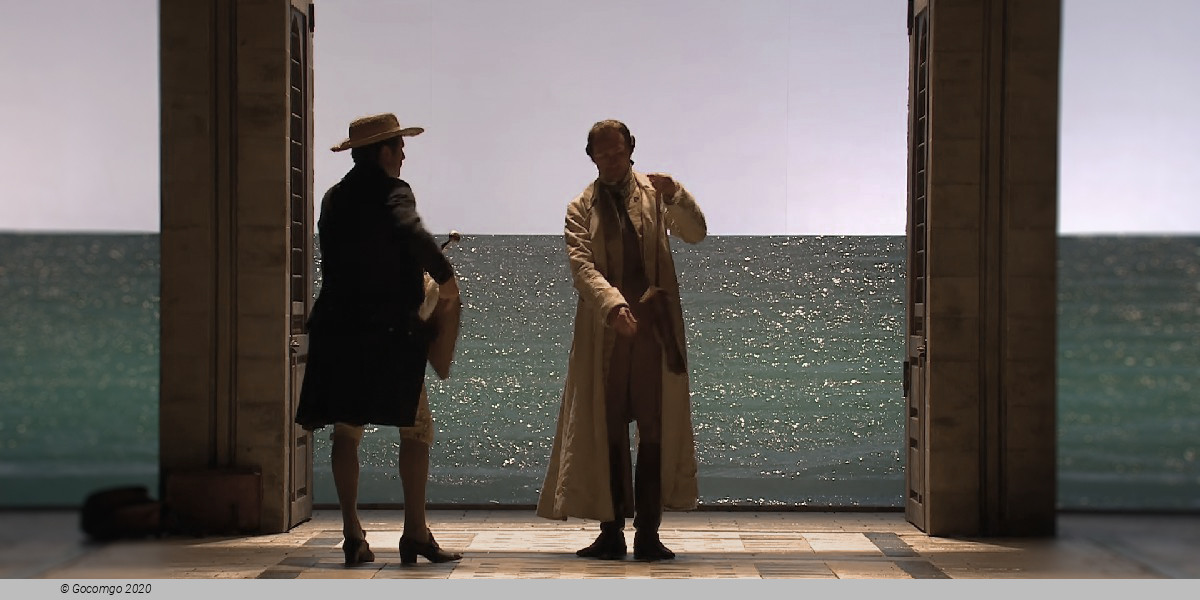
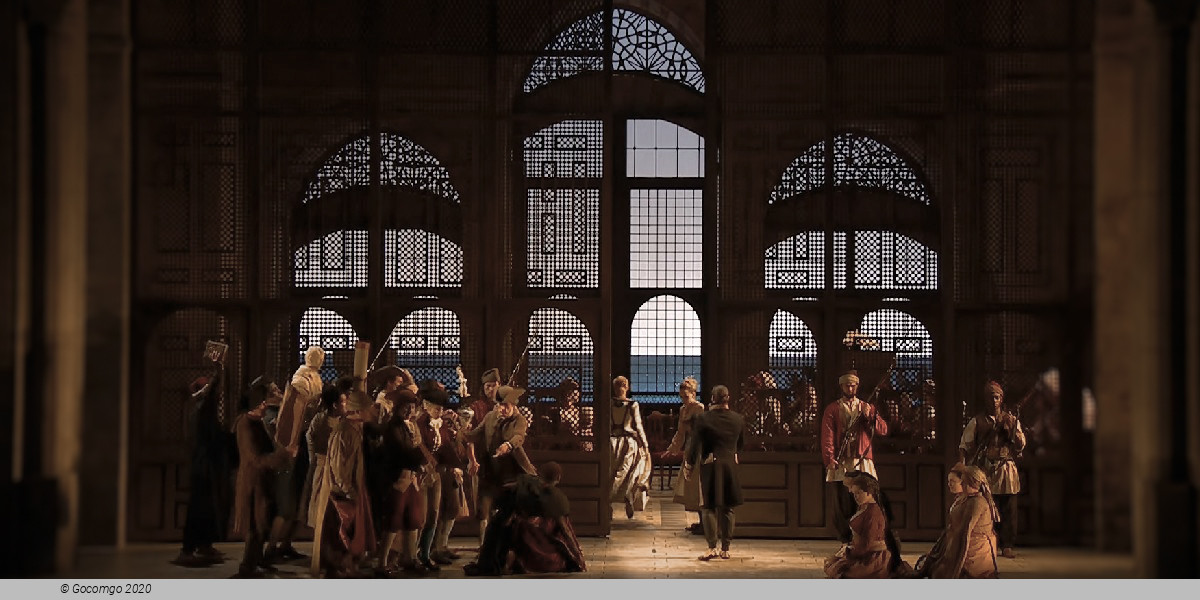
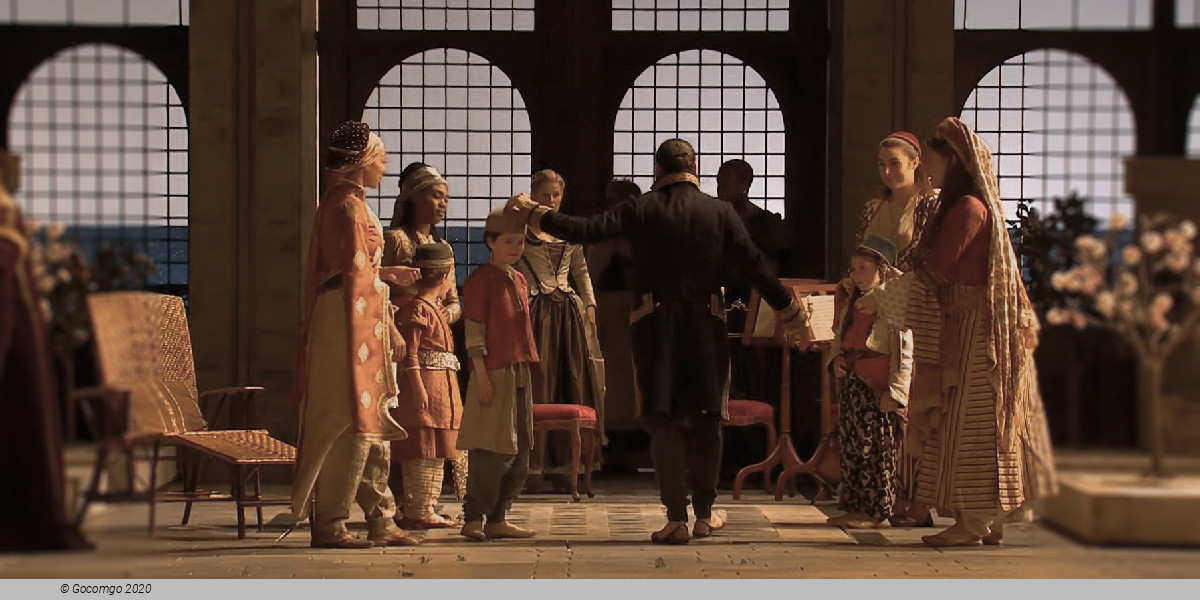
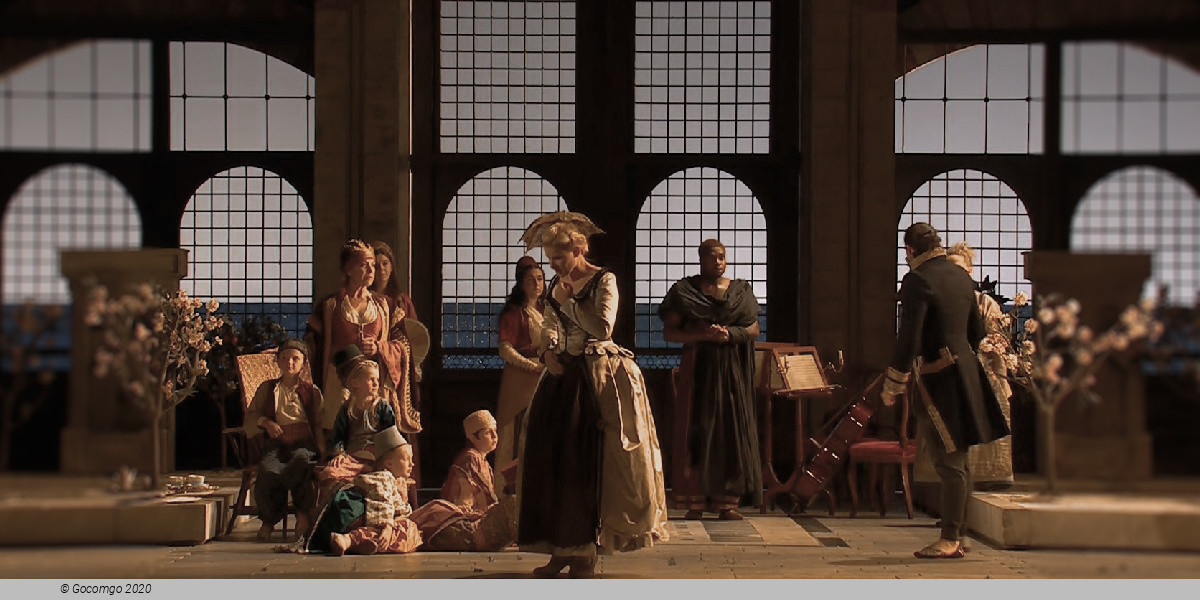
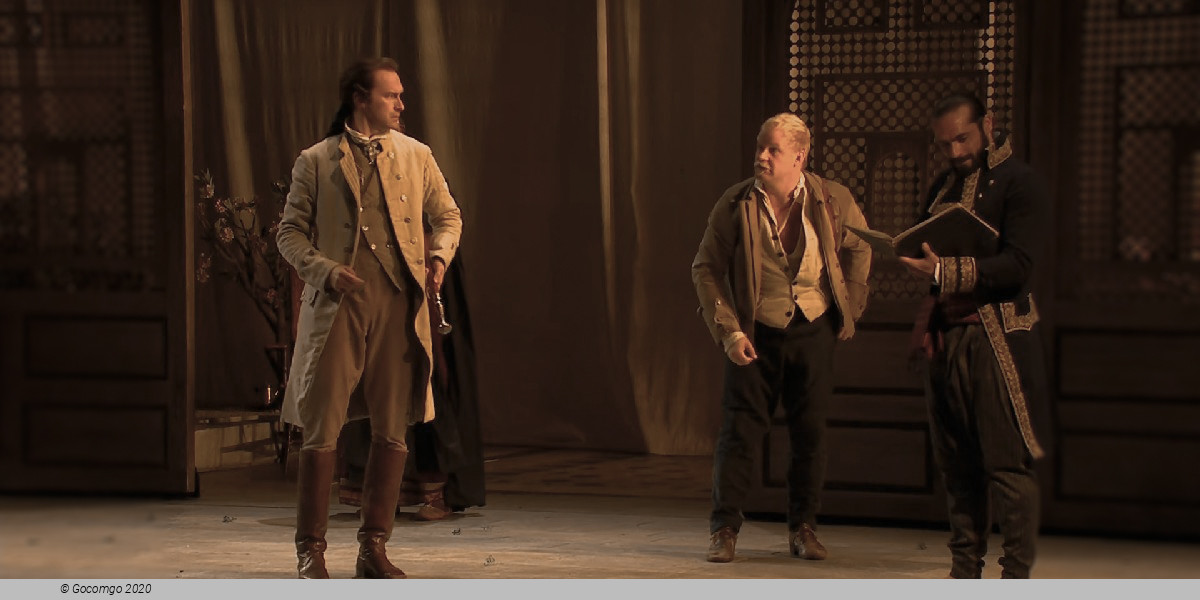
Mozart’s Entführung aus dem Serail is generally considered to be the fresh, optimistic, but rather harmless work of a brilliant composer on the brink of greatness. The plot, which at first glance appears to be quite naïve, is the story of Konstanze, who has been abducted by pirates and is now stranded in Bassa Selim’s seraglio, appears to align with that impression. But Mozart’s music transforms the opera’s characters, who are deeply-rooted in the "Turkish" opera genre popular in the 18th century, into profoundly human figures. Mozart was less concerned with the plot than he was with his characters’ inner conflicts, which he explored in depth through music. Director David Hermann, who stages the action in a completely modern setting, thus interprets Belmonte’s journey of determination to free Konstanze from the seraglio not as an excursion into unknown, external land, but instead as a nightmarish journey into the figure’s own fears and emotional complexities.

History
Premiere of this production: 16 July 1782, Burgtheater, Vienna

Die Entführung aus dem Serail (The Abduction from the Seraglio) is an opera Singspiel in three acts by Wolfgang Amadeus Mozart. The German libretto is by Gottlieb Stephanie, based on Christoph Friedrich Bretzner's Belmont und Constanze, oder Die Entführung aus dem Serail. The plot concerns the attempt of the hero Belmonte, assisted by his servant Pedrillo, to rescue his beloved Konstanze from the seraglio of Pasha Selim. The work premiered on 16 July 1782 at the Vienna Burgtheater, with the composer conducting.

Synopsis

Place: the country house of the Pasha (German "Bassa"), in Turkey
Time: 16th century

Act 1
After a lively overture, Belmonte enters, looking for his betrothed, Konstanze, who with her English servant Blonde has fallen into the hands of pirates and been sold to Pasha Selim (Aria: "Hier soll ich dich denn sehen" – "Here surely I must find her"). Osmin, the Pasha's bad-tempered servant, comes to pluck figs in the garden and contemptuously ignores Belmonte's questions (Aria: "Wer ein Liebchen hat gefunden" – "You may think, you've found a maiden"). Belmonte tries to obtain news of his servant, Pedrillo, who has been captured with the women and is serving as a servant in the Pasha's palace. Osmin replies with insults and abuse (Duet: "Verwünscht seist du samt deinem Liede!" – "The devil take you and your song, sir"). Belmonte leaves in disgust. Pedrillo enters and Osmin rages at him, vowing to get him tortured and killed in many different ways (Aria: "Solche hergelaufne Laffen" – "These young men who go a-spying"). Osmin leaves and Belmonte enters and happily reunites with Pedrillo. Together they resolve to rescue Konstanze and Blonde, who is Pedrillo's fiancée (Aria: "Konstanze, Konstanze, dich wiederzusehen … O wie ängstlich" – "Konstanze, Konstanze, to see thee again … Oh what trembling").

Accompanied by a chorus of Janissaries ("Singt dem großen Bassa Lieder" – "Sing to the mighty Pasha Selim"), Pasha Selim appears with Konstanze, for whose love he strives in vain (Aria of Konstanze: "Ach ich liebte" – "How I loved him"). Pedrillo tricks the Pasha into hiring Belmonte as an architect. When Belmonte and Pedrillo try to enter the palace, Osmin bars their way, but they hurry past him anyway (Terzett: "Marsch! Marsch! Marsch! Trollt euch fort!" – "March! March! March! Clear off!").

Act 2

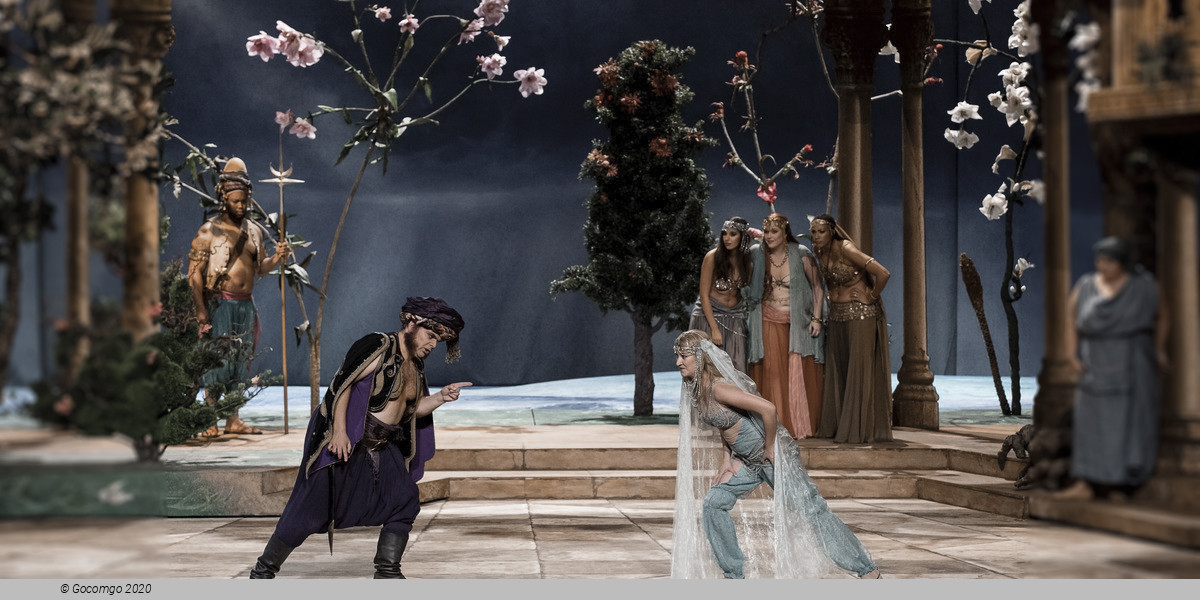
The Pasha has given Blonde to Osmin, to be his slave; however, she defiantly rebuffs her new master's rough lovemaking attempts (Aria: "Durch Zärtlichkeit und Schmeicheln" – "With smiles and kind caresses"), threatens to scratch out his eyes, and chases him out of the room (Duet: "Ich gehe, doch rate ich dir" – "I'm going, but mark what I say"). Konstanze enters and greets Blonde in distress (Aria: "Welcher Wechsel herrscht in meiner Seele … Traurigkeit ward mir zum Lose" – "Oh what sorrow overwhelms my spirit … Endless grief tortures my spirit"). The Pasha enters, demands her love, and threatens to use force, but she resolutely rejects him. (Aria: "Martern aller Arten" – "Tortures unrelenting") Left alone, he muses on her determination to remain chaste, which increases his desire for her.

Pedrillo informs Blonde that Belmonte has come and is planning to rescue them. Blonde is filled with joy. (Aria: "Welche Wonne, welche Lust" – "Oh, the happy, happy day"). After singing a short ditty to boost his courage (Aria: "Frisch zum Kampfe" – "Now Pedrillo, now for battle!"), Pedrillo invites Osmin to drink (Duet: "Vivat Bacchus! Bacchus lebe!" – "Here's to Bacchus, long live Bacchus"). Despite his religious prohibition against alcoholic beverages, Osmin drinks heavily and falls asleep. Konstanze joins Belmonte who declares his love (Aria: "Wenn der Freude Tränen fließen" – "When tears of joy flow"). The two couples reunite (Quartet, Belmonte, Konstanze, Pedrillo, Blonde: "Ach Belmonte! Ach, mein Leben" – "Ah, Belmonte, ah my dear one!"). After their initial expressions of love and joy, Belmonte and Pedrillo both question anxiously whether their respective fiancees have remained faithful during their forced separation; to their delight the women respond with indignation and dismay, and Blonde slaps Pedrillo's face. The two men apologize for their failure of confidence; the women forgive them for the offensive questions.

Act 3

Belmonte and Pedrillo come to the garden with ladders (Aria, Belmonte: "Ich baue ganz auf deine Stärke" – "Love, only love, can now direct me"). Pedrillo gets the attention of the women by singing a ballad about a rescue similar to the one he is planning (Romanze, Pedrillo: "In Mohrenland gefangen war" – "In Moorish lands a maiden fair"). However, Osmin enters, sees the ladders, and rouses the castle. Osmin exults in the prospect of seeing them all hanged (Aria: "O, wie will ich triumphieren" – "My triumphant hour's approaching"). Belmonte pleads for their lives and tells Pasha Selim that his father is a Spanish Grandee and Governor of Oran, named Lostados, and will pay a generous ransom. Unfortunately, Pasha Selim and Lostados are long-standing enemies. The Pasha rejoices in the opportunity to subject his enemy's son to a horrible death. He leaves Belmonte and Konstanze to bid each other a last farewell; they lovingly assure each other that being tortured to death will be a pleasure, so long as they get tortured to death together (Duet: "Welch ein Geschick! O Qual der Seele.... Weh, du soltest für mich sterben" – "What dreadful fate conspires against us.... Woe, you will die because of me"). However, the Pasha decides that he can make a better point against Lostados by showing mercy and releasing Belmonte and his friends. All are set at liberty – much to the dismay of Osmin, who would prefer to see them all brutally executed (Finale: "Nie werd' ich deine Huld verkennen" – "Your noble mercy passes measure").

Venue Info

Zurich Opera House - Zurich
Location   Sechseläutenplatz 1

Zürich Opera House is a main opera house in Zürich and Switzerland. Located at the Sechseläutenplatz, it has been the home of the Zürich Opera since 1891, and also houses the Bernhard-Theater Zürich. It is also home to the Zürich Ballet. The Opera House also holds concerts by its Philharmonia orchestra, matinees, Lieder evenings and events for children. The Zürich Opera Ball is organised every year in March, and is usually attended by prominent names.

The first permanent theatre, the Aktientheater, was built in 1834 and it became the focus of Richard Wagner’s activities during his period of exile from Germany.

The Aktientheater burnt down in 1890. The new Stadttheater Zürich (municipal theatre) was built by the Viennese architects Fellner & Helmer, who changed their previous design for the theatre in Wiesbaden only slightly. It was opened in 1891. It was the city's main performance space for drama, opera, and musical events until 1925, when it was renamed Opernhaus Zürich and a separate theatre for plays was built: The Bernhard Theater opened in 1941, in May 1981 the Esplanada building was demolished, and the present adjoint building opened on 27/28 December 1984 after three years of transition in the Kaufhaus building nearby Schanzengraben.

By the 1970s, the opera house was badly in need of major renovations; when some considered it not worth restoring, a new theatre was proposed for the site. However, between 1982 and 1984, rebuilding took place but not without huge local opposition which was expressed in street riots. The rebuilt theatre was inaugurated with Wagner’s Die Meistersinger von Nürnberg and the world première of Rudolf Kelterborn’s Chekhov opera Der Kirschgarten.

As restored, the theatre is an ornate building with a neo-classical façade of white and grey stone adorned with busts of Weber, Wagner, and Mozart. Additionally, busts of Schiller, Shakespeare, and Goethe are to be found. The auditorium is built in the neo-rococo style and seats approximately 1200 people. During the refurbishment, the issue of sightlines was not adequately addressed. As a result, the theatre has a high number of seats with a limited view, or no view, of the stage. This is unusual in international comparison, where sightlines in historic opera houses have been typically enhanced over time.

Corporate archives and historical library collections are held at the music department of the Predigerkirche Zürich.

The Zürich Opera House is also home of the International Opera Studio (in German: Internationales Opernstudio IOS) which is a educational program for young singers and pianists. The studio was created in 1961 and has renowned artists currently teaching such as Brigitte Fassbaender, Hedwig Fassbender, Andreas Homocki, Rosemary Joshua, Adrian Kelly, Fabio Luisi, Jetske Mijnssen, Ann Murray, Eytan Pessen or Edith Wiens.

Important Info
Type: Opera
City: Zurich, Switzerland
Starts at: 20:00
Acts: 3
Duration: 2h 35min
Sung in: German
Titles in: German,English
Top of page