
Zurich Opera House tickets 2 March 2027 - Romeo and Juliet | GoComGo.com

Romeo and Juliet

Zurich Opera House, Zurich, Switzerland
All photos (7)
Select date and time
8 PM
From
US$ 185

E-tickets: Print at home or at the box office of the event if so specified. You will find more information in your booking confirmation email.

You can only select the category, and not the exact seats.
If you order 2 or 3 tickets: your seats will be next to each other.
If you order 4 or more tickets: your seats will be next to each other, or, if this is not possible, we will provide a combination of groups of seats (at least in pairs, for example 2+2 or 2+3).

Important Info
Type: Opera
City: Zurich, Switzerland
Starts at: 20:00
Duration: 2h 45min
Sung in: French
Titles in: English,German

E-tickets: Print at home or at the box office of the event if so specified. You will find more information in your booking confirmation email.

You can only select the category, and not the exact seats.
If you order 2 or 3 tickets: your seats will be next to each other.
If you order 4 or more tickets: your seats will be next to each other, or, if this is not possible, we will provide a combination of groups of seats (at least in pairs, for example 2+2 or 2+3).

Cast
Performers
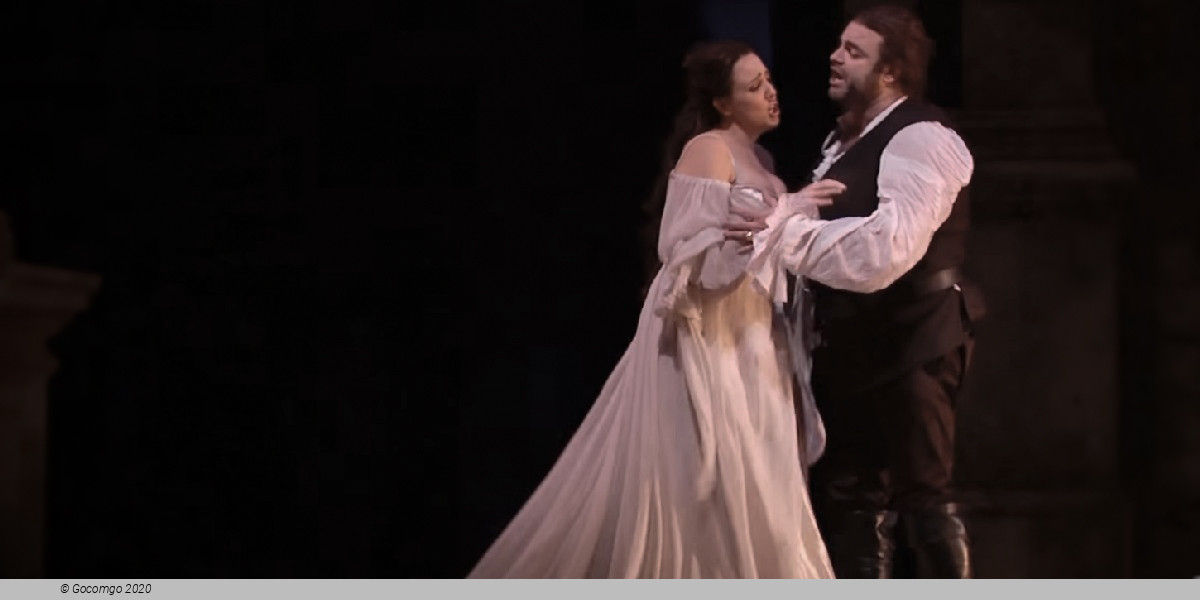
Tenor: Juan Diego Flórez (Roméo)
Conductor: Christopher Franklin
Tenor: Anthony Leon (Tybalt)
Baritone: Gregory Feldmann (Mercutio)
Mezzo-Soprano: Irène Friedli (Gertrude)
Soprano: Juliana Grigoryan (Juliette)
Mezzo-Soprano: Martina Baroni (Stéphano)
Creators
Composer: Charles Gounod
Librettist: Jules Barbier
Librettist: Michel Carré
Director: Ted Huffman
Overview

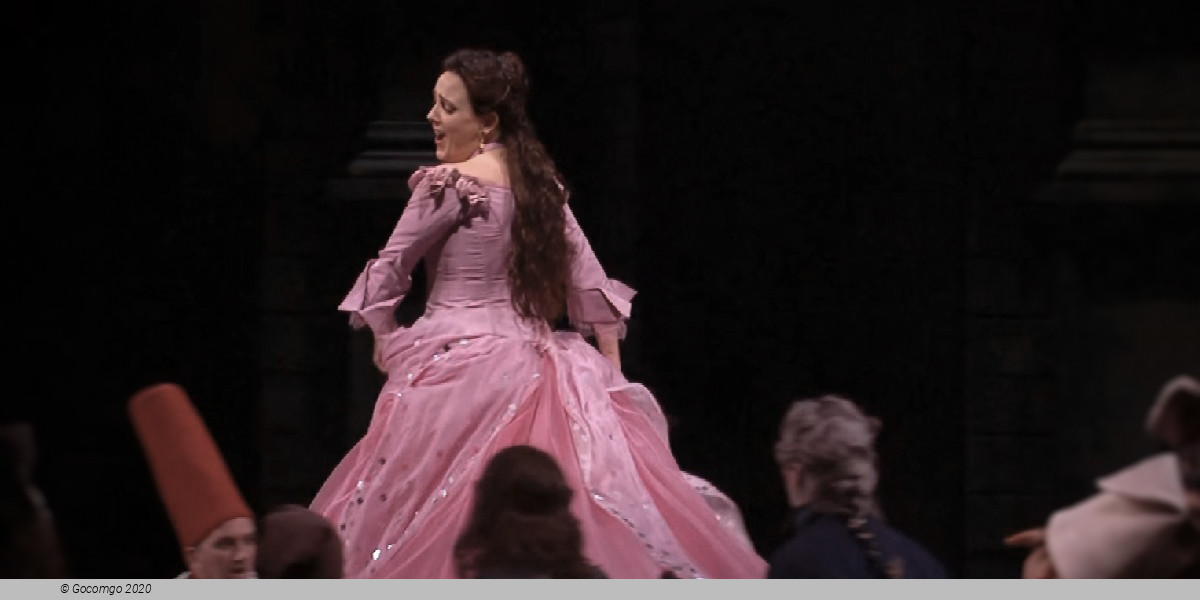
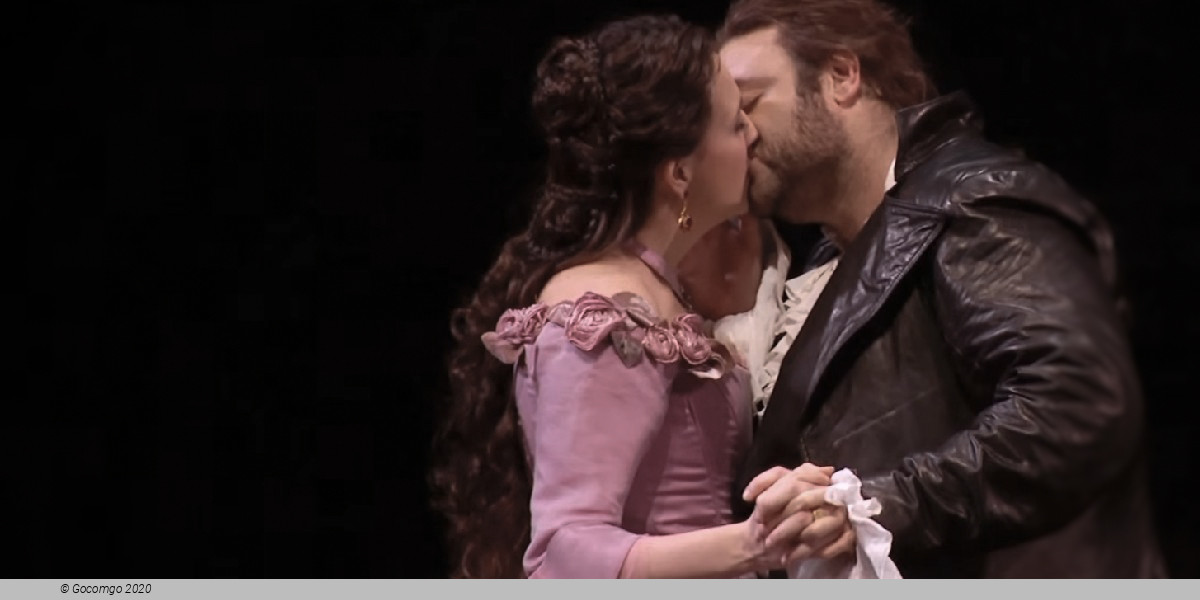
Romeo and Juliet are outsiders in a world of rigid social conventions. In Charles Gounod's French opera, they meet at a ball: Juliet introduces herself with a lively waltz aria, while Romeo has slipped in with friends. From this fleeting moment blossoms love at first sight – and the beginning of a story as passionate as it is fateful. American director Ted Huffman focuses on the essentials, setting the action on a simple dance floor. In doing so, he once again proves himself a "delicate observer of gestures, moods, and glances" (NZZ). The young Armenian soprano Juliana Grigoryan and the star tenor Juan Diego Flórez embody the lovers.


Roméo et Juliette by Charles Gounod is a masterpiece of French Romantic opera, based on the tragedy by William Shakespeare.

The opera focuses on the emotional and intimate aspects of the story, highlighting the love between the two young protagonists. It is especially famous for its series of duets between Roméo and Juliette, which trace the evolution of their relationship—from first attraction to трагическая развязка.

The score is rich in melody and elegance, combining delicate orchestration with expressive vocal lines. Juliette’s waltz aria and Roméo’s lyrical passages are among the most celebrated moments in the operatic repertoire.

At the Zurich Opera House, the production emphasizes both the romantic beauty and the драматическое напряжение of the story, often through visually striking staging and modern interpretive elements.

History
Premiere of this production: 27 April 1867, Théâtre Lyrique (Théâtre-Lyrique Impérial du Châtelet), Paris

Roméo et Juliette (Romeo and Juliet) is an opera in five acts by Charles Gounod to a French libretto by Jules Barbier and Michel Carré, based on Romeo and Juliet by William Shakespeare. It was first performed at the Théâtre Lyrique (Théâtre-Lyrique Impérial du Châtelet), Paris on 27 April 1867. This opera is notable for the series of four duets for the main characters and the waltz song "Je veux vivre" for the soprano.

Synopsis

The libretto follows the story of Shakespeare's play.

Act 1

Overture prologue:

A short chorus sets the scene of the rival families in Verona.

A masked ball in the Capulets’ palace

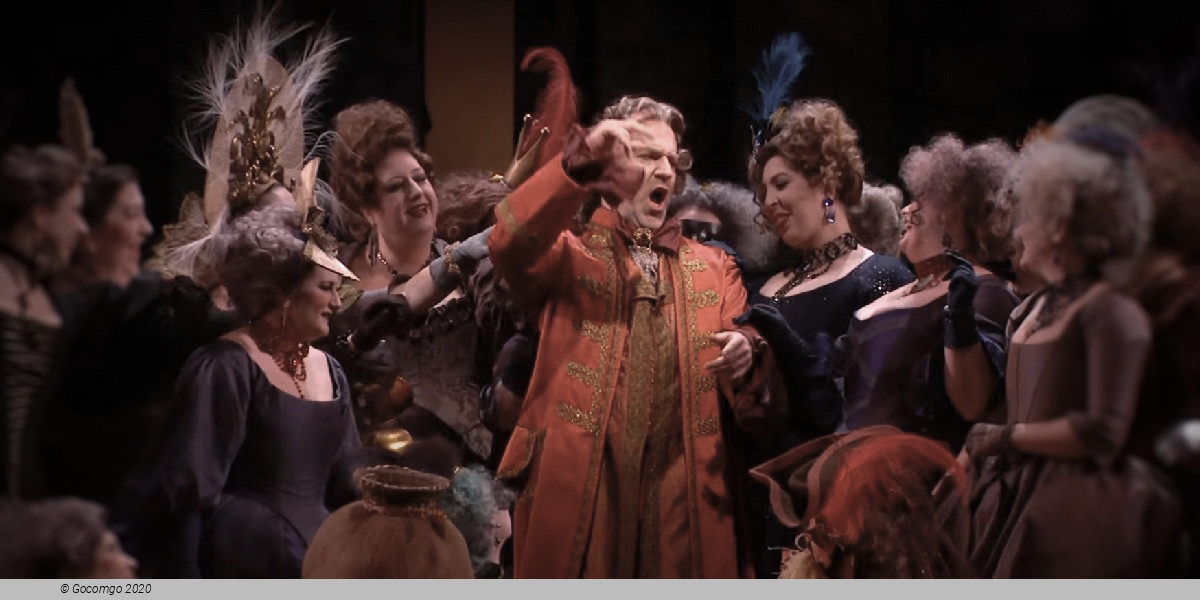
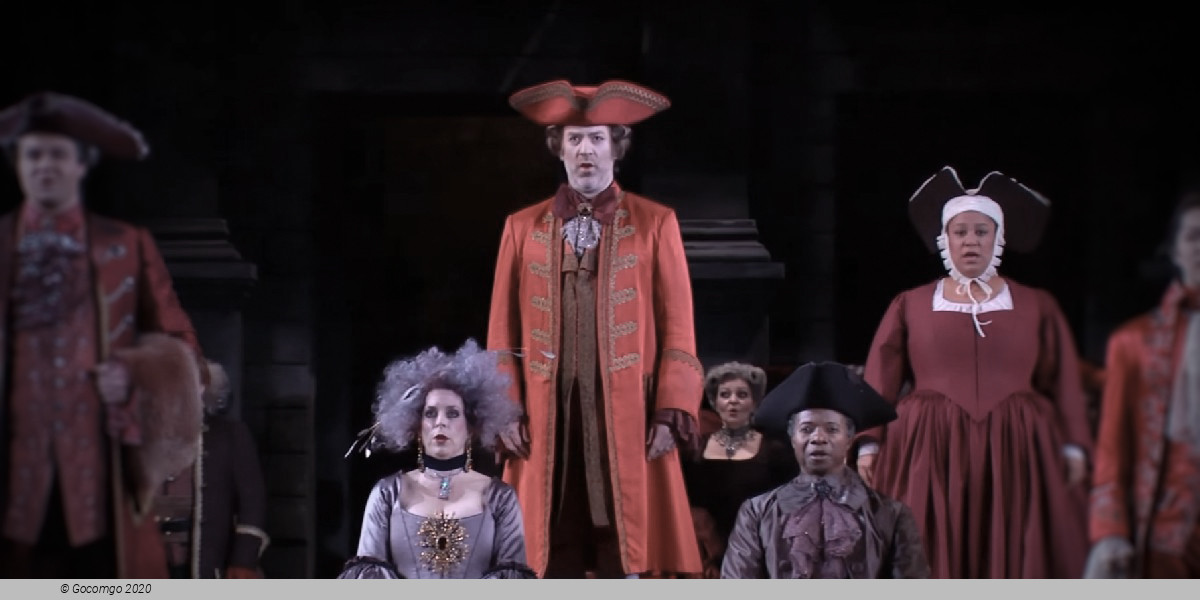
Tybalt talks to Pâris about Juliette, who appears with her father. Roméo, Mercutio, Benvolio and their friends enter, disguised, and Mercutio sings a ballad about Queen Mab, after which Juliette sings a joyful waltz song. The first meeting between Roméo and Juliette takes place, and they fall in love. But Tybalt re-appears and suspects that the hastily re-masked Roméo is his rival. While Tybalt wants immediate revenge, Capulet orders that the ball continue.

Act 2

The Capulets' garden

After Roméo's page Stephano has helped his master gain access, he reveals the two young lovers exchanging their vows of love.

Act 3

Press illustration of Act 3, scene 2, as staged in the original production
Scene 1: Laurent's cell

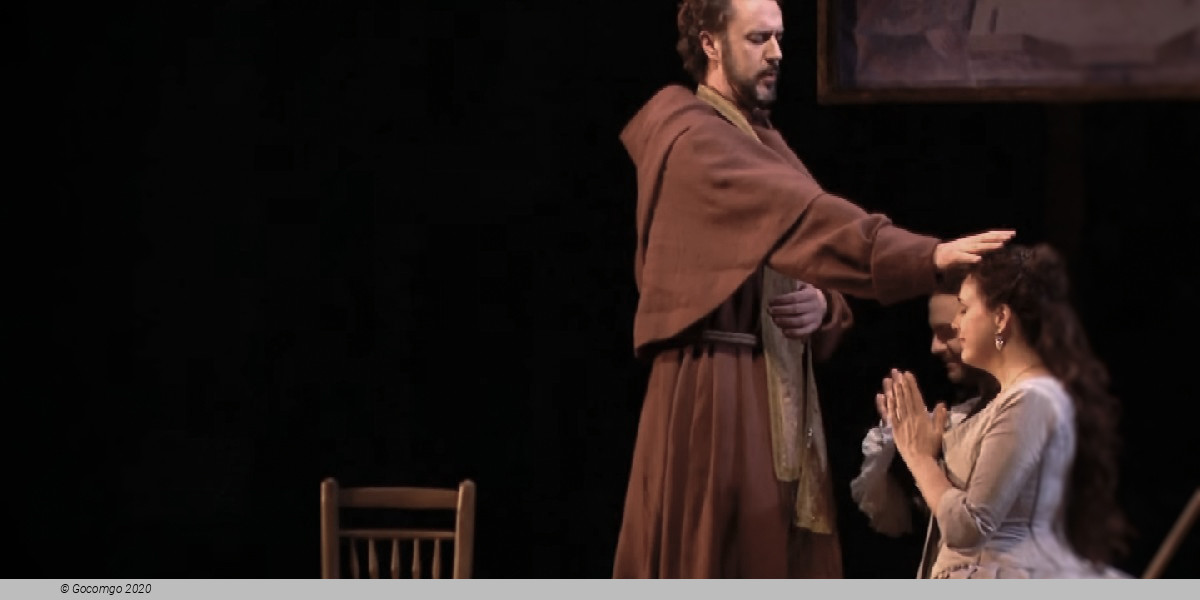
Roméo and Juliette, accompanied by Gertrude, go to the cell, and the wedding takes place. Laurent hopes that reconciliation between the houses of the Montagus and the Capulets may thus take place.

Scene 2: a street near Capulet's palace

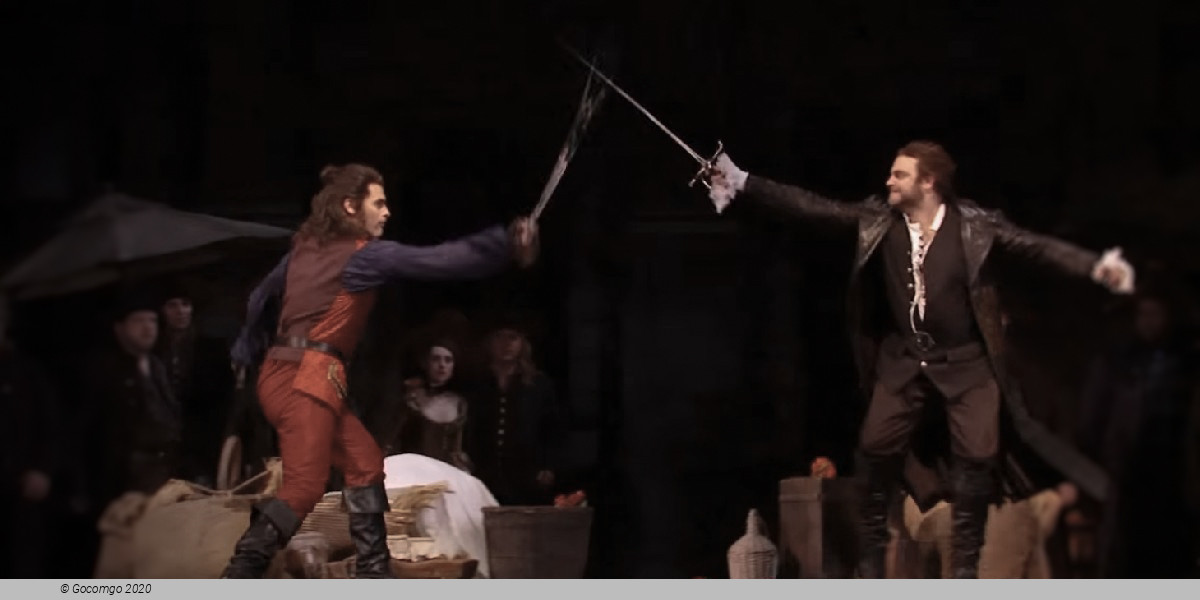
Stephano sings to attract the occupants into the street. Gregoire and Stephano skirmish as men from each family appear. The duel is first between Tybalt and Mercutio, who falls dead, and then between Roméo, determined to avenge his comrade, and Tybalt. Tybalt is killed by Roméo, who is banished by the Duke.

Act 4

Juliet's room at dawn

Roméo and Juliette are together and, after a long duet, Roméo departs for exile. Juliette's father comes to remind her of Tybalt's dying wish for Juliette to marry Count Pâris. The friar gives Juliette a draught which will cause her to sleep, so as to appear as if dead and, after being laid in the family tomb, it is planned that Roméo will awaken her and take her away. 

Act 5

Juliet's tomb

Roméo breaks into the tomb after having taken poison because he believes that Juliette is dead. When she awakes from the friar’s potion, the lovers' last duet is heard before the poison takes effect on Roméo. As her bridegroom weakens Juliette stabs herself, to be united with her lover in death.

Venue Info

Zurich Opera House - Zurich
Location   Sechseläutenplatz 1

Zürich Opera House is a main opera house in Zürich and Switzerland. Located at the Sechseläutenplatz, it has been the home of the Zürich Opera since 1891, and also houses the Bernhard-Theater Zürich. It is also home to the Zürich Ballet. The Opera House also holds concerts by its Philharmonia orchestra, matinees, Lieder evenings and events for children. The Zürich Opera Ball is organised every year in March, and is usually attended by prominent names.

The first permanent theatre, the Aktientheater, was built in 1834 and it became the focus of Richard Wagner’s activities during his period of exile from Germany.

The Aktientheater burnt down in 1890. The new Stadttheater Zürich (municipal theatre) was built by the Viennese architects Fellner & Helmer, who changed their previous design for the theatre in Wiesbaden only slightly. It was opened in 1891. It was the city's main performance space for drama, opera, and musical events until 1925, when it was renamed Opernhaus Zürich and a separate theatre for plays was built: The Bernhard Theater opened in 1941, in May 1981 the Esplanada building was demolished, and the present adjoint building opened on 27/28 December 1984 after three years of transition in the Kaufhaus building nearby Schanzengraben.

By the 1970s, the opera house was badly in need of major renovations; when some considered it not worth restoring, a new theatre was proposed for the site. However, between 1982 and 1984, rebuilding took place but not without huge local opposition which was expressed in street riots. The rebuilt theatre was inaugurated with Wagner’s Die Meistersinger von Nürnberg and the world première of Rudolf Kelterborn’s Chekhov opera Der Kirschgarten.

As restored, the theatre is an ornate building with a neo-classical façade of white and grey stone adorned with busts of Weber, Wagner, and Mozart. Additionally, busts of Schiller, Shakespeare, and Goethe are to be found. The auditorium is built in the neo-rococo style and seats approximately 1200 people. During the refurbishment, the issue of sightlines was not adequately addressed. As a result, the theatre has a high number of seats with a limited view, or no view, of the stage. This is unusual in international comparison, where sightlines in historic opera houses have been typically enhanced over time.

Corporate archives and historical library collections are held at the music department of the Predigerkirche Zürich.

The Zürich Opera House is also home of the International Opera Studio (in German: Internationales Opernstudio IOS) which is a educational program for young singers and pianists. The studio was created in 1961 and has renowned artists currently teaching such as Brigitte Fassbaender, Hedwig Fassbender, Andreas Homocki, Rosemary Joshua, Adrian Kelly, Fabio Luisi, Jetske Mijnssen, Ann Murray, Eytan Pessen or Edith Wiens.

Important Info
Type: Opera
City: Zurich, Switzerland
Starts at: 20:00
Duration: 2h 45min
Sung in: French
Titles in: English,German
Top of page