
Zurich Opera House 5 February 2023 - Premiere Roberto Devereux Premiere | GoComGo.com

Premiere
Roberto Devereux Premiere

Zurich Opera House, Zurich, Switzerland
All photos (7)
Select date and time
7 PM

E-tickets: Print at home or at the box office of the event if so specified. You will find more information in your booking confirmation email.

You can only select the category, and not the exact seats.
If you order 2 or 3 tickets: your seats will be next to each other.
If you order 4 or more tickets: your seats will be next to each other, or, if this is not possible, we will provide a combination of groups of seats (at least in pairs, for example 2+2 or 2+3).

Important Info
Type: Opera
City: Zurich, Switzerland
Starts at: 19:00
Acts: 3

E-tickets: Print at home or at the box office of the event if so specified. You will find more information in your booking confirmation email.

You can only select the category, and not the exact seats.
If you order 2 or 3 tickets: your seats will be next to each other.
If you order 4 or more tickets: your seats will be next to each other, or, if this is not possible, we will provide a combination of groups of seats (at least in pairs, for example 2+2 or 2+3).

Overview

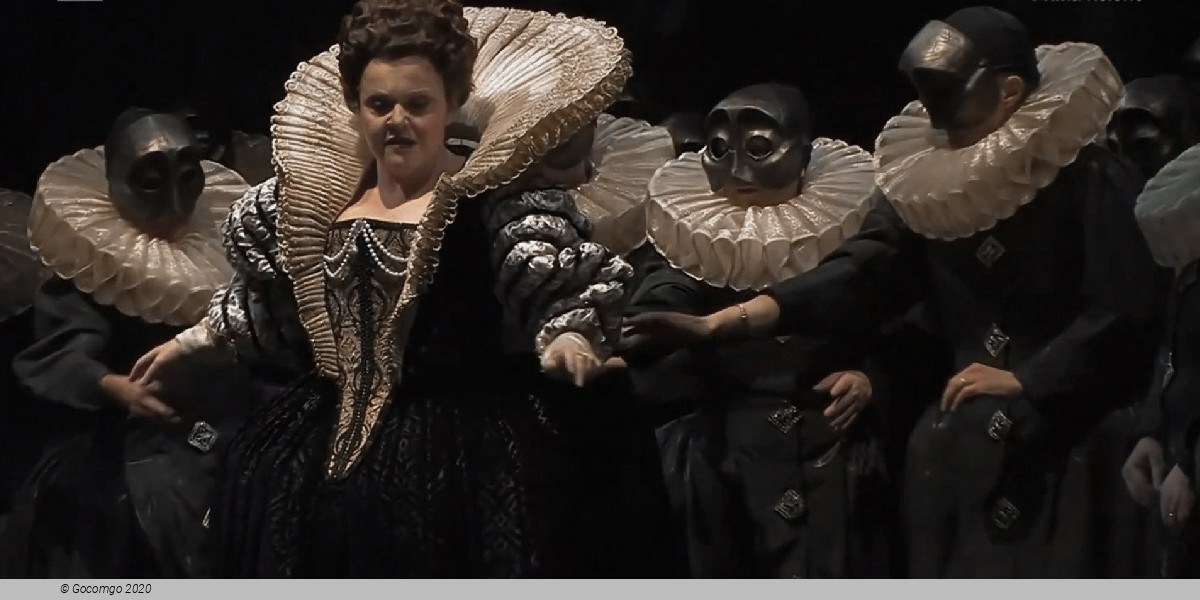
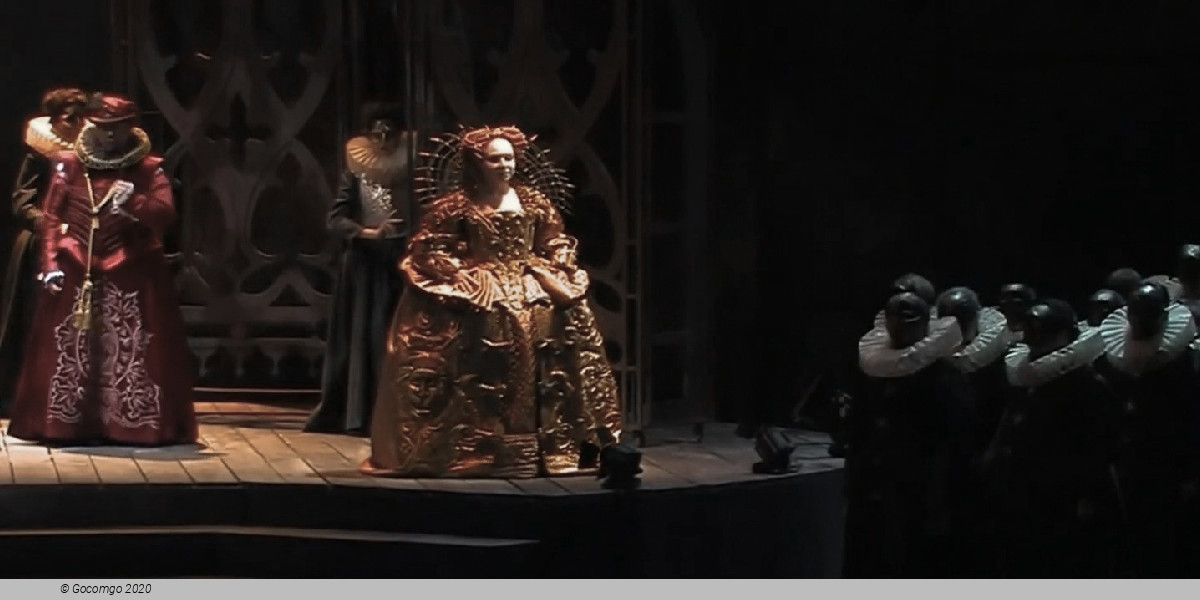
Following productions of Anna Bolena and Maria Stuarda, American director David Alden returns with Roberto Devereux to complete the trilogy of Donizetti’s Tudor queens.

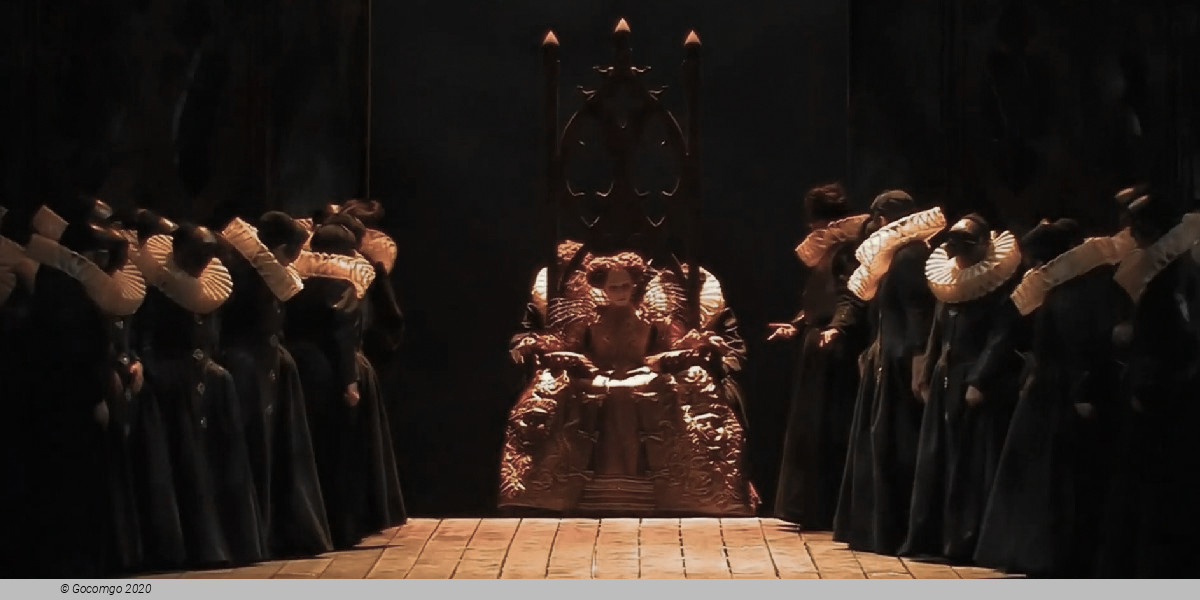
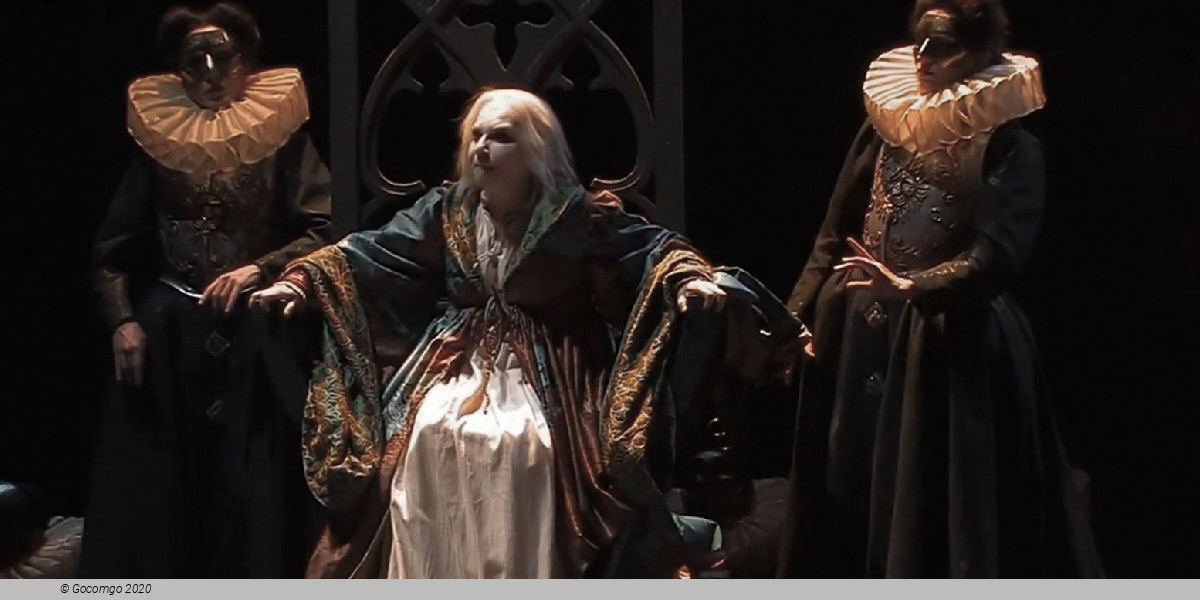
Gaetano Donizetti was in the middle of his greatest personal crisis when he wrote his tragedia lirica Roberto Devereux. In the space of only a year, he lost his parents, his two children, and his wife. Yet he still mustered the strength to create his 57th opera. It is a work that ranks among the highlights of his entire oeuvre, with a score bursting with melodic ingenuity. Its dramatic punches and emotional urgency would influence Giuseppe Verdi’s later musical works for the stage. The interlacing of political power and a ruler’s personal interests holds tragic potential, as was the case in the opera’s two predecessors Anna Bolena and Maria Stuarda – which together with Roberto Devereux form Donizetti’s "Tudor Queens Trilogy". At the center of this opera is the relationship between the aging Queen Elizabeth I of England (Elisabetta) and her young favorite, Roberto Devereux. He’s threatened by a trial for treason. Elisabetta stays the verdict out of love for Devereux, but when she learns of Devereux’s relationship with Sara, Duchess of Nottingham, she signs his death warrant. Too late, she learns of the scope of her decision. Bitterly, she must now recognize that she has sown nothing but destruction – "non regno, non vivo". The Tudor dynasty will die out with her, the "virgin queen".
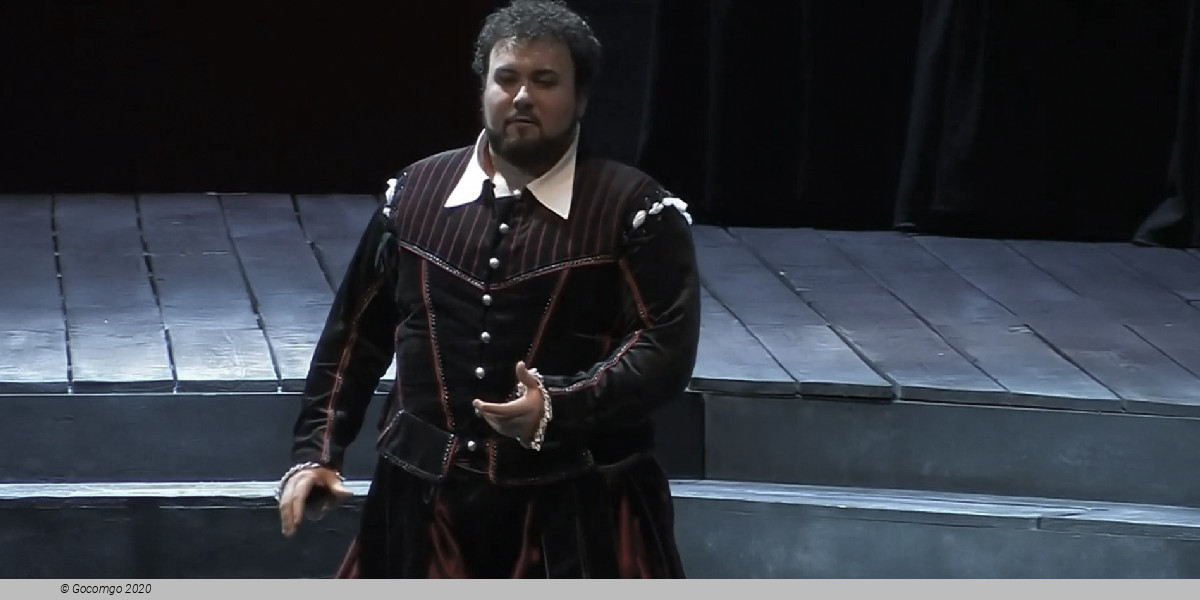
Donizetti gave his female protagonist – whose tragic fate bears a notable resemblance to that of Norma or Lady Macbeth – a richly-faceted psychological profile. Latvian soprano Inga Kalna, who is equally at home in bel canto repertoire as she is in virtuosic Baroque repertoire, will take on the challenge of portraying her in our new production. The role of Roberto Devereaux also poses massive vocal demands, and will be sung here by tenor Stephen Costello, who has previously appeared at the Opernhaus in Verdi’s Requiem. The Opernhaus are especially pleased to welcome the return of French mezzo Stéphanie D’Oustrac as Duchess Sara.

History
Premiere of this production: 28 October 1837, Teatro San Carlo, Naples

Roberto Devereux (or Roberto Devereux, ossia Il conte di Essex [Robert Devereux, or the Earl of Essex]) is a tragedia lirica, or tragic opera, by Gaetano Donizetti. Salvadore Cammarano wrote the Italian libretto after François Ancelot's tragedy Elisabeth d'Angleterre (1829), and based as well on the Historie secrete des amours d'Elisabeth et du comte d'Essex (1787) by Jacques Lescéne des Maisons, although Devereux was the subject of at least two other French plays: Le Comte d'Essex by Thomas Corneille and Le Comte d'Essex by Gauthier de Costes, seigneur de la Calprenède.

Synopsis

Place: London, England
Time: 1601, during the reign of Queen Elizabeth I

Robert Devereux, 2nd Earl of Essex, favorite of Queen Elisabeth, has been removed from office as Governor of Ireland because, acting on his own initiative, he has agreed to a ceasefire with the rebels. Following an attempted uprising, he is awaiting his trial for high treason in London.

Act 1
Scene 1: The Great Hall at Westminster

Sara, Duchess of Nottingham, is trying in vain to hide her tears from the eyes of the Court, as she reads the sad story of Fair Rosamond, the unfortunate lover of King Henry II of England, and therein recognizes a very similar situation to her own. She is in love with Robert Devereux, her husband's closest friend. The Ladies of the court express concern, but she replies that she is happy, while privately revealing her sadness (All'afflitto è dolce il pianto). Elizabeth enters and states that, at the insistence of Nottingham, she has agreed to see Robert once again, now that he has returned from Ireland accused of treason (Duchessa..Alle fervide preci). The Queen is willing to release him without charges if she can be sure of his continued loyalty. To Sara's gradual dismay, the Queen reveals her love for Robert (L'amor suo mi fe' beata). Cecil enters and announces that Parliament is waiting for an answer from the Queen regarding the charges against Robert, since it considers her as being too lenient towards him, but she refuses to sign the death warrant proposed by the Royal Council.

Robert enters and, in a conversation overheard by the increasingly distraught Sara, Elizabeth declares her love for him. Now alone together, Elizabeth promises Robert that the ring she once gave him will always be the pledge of his safety should he ever return it to her. The dream of bygone happy days is shattered by an inappropriate comment by Robert, who assumes that Elizabeth knows the secret of his love for Sara. The Queen, increasingly jealous, demands that Robert name the woman he loves. He denies that he loves anyone (Nascondi, frena i palpiti), and then the Queen leaves.

Nottingham, Robert's friend and supporter, enters and the two men discuss Robert's situation and Nottingham's concerns about his wife's behaviour after he has observed her embroidering a blue shawl (Forse in quel cor sensible, Qui ribelle ognum ti chiama). The two men are interrupted by Cecil demanding that Nottingham attend a meeting of the Peers of the Realm.

Scene 2: Sara's Apartments at Nottingham House

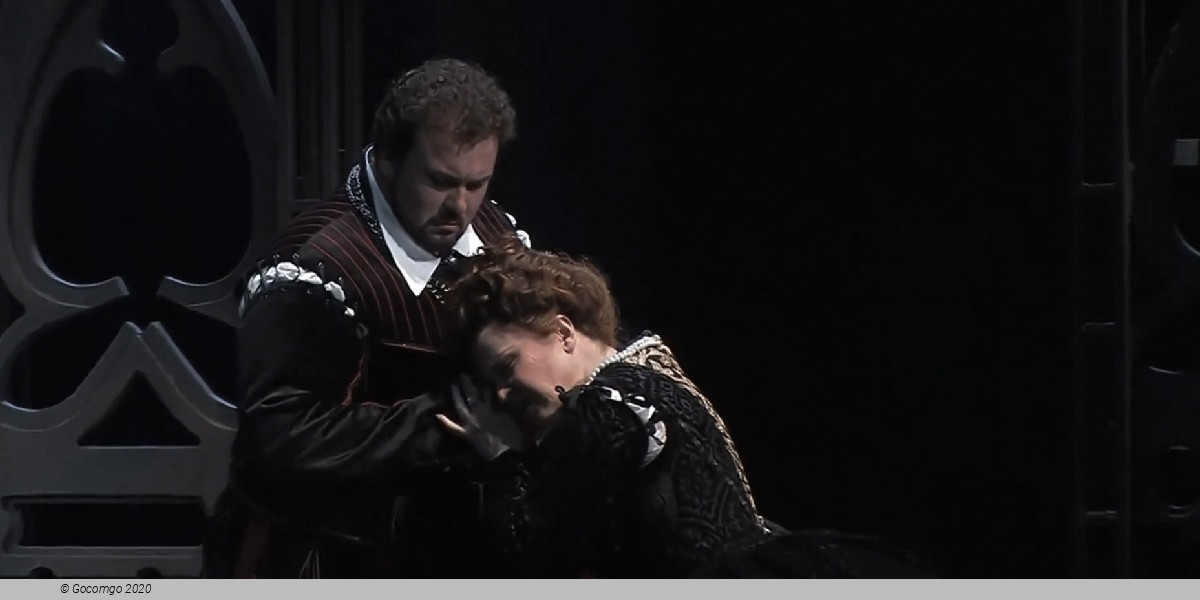
Sara is alone when Robert enters, declaring her to be faithless because she has married Nottingham while he was in Ireland. She defends herself saying that it was the Queen's idea and that she was forced to do her bidding. At the same time, seeing the ring on Robert's finger, she assumes it to be a love token from the Queen, and tells him that they must never see each other again, giving him the blue shawl as a love token. In a final duet (Dacchè tornasti, ahi misera) each declares love for the other and they accept that they must say goodbye. Robert makes plans to escape.

Act 2
The Great Hall at Westminster

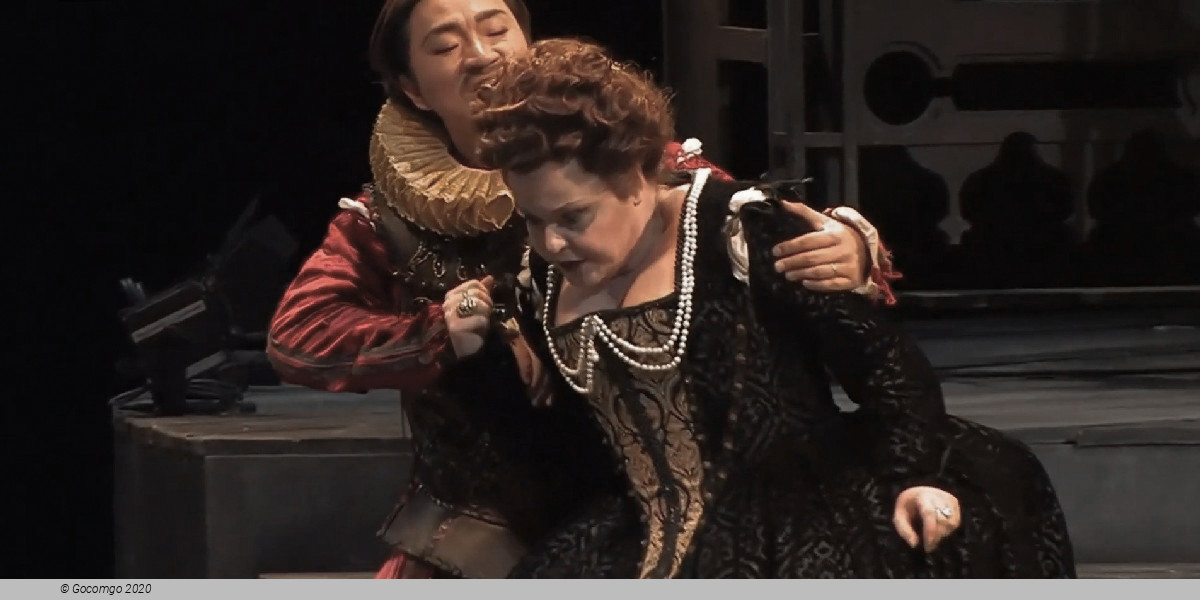
The Queen approaches Cecil to find out what has been decided. Cecil declares that the sentence is death. The Queen, asking Raleigh why the whole process took so long, learns that Robert had a shawl in his possession which he resisted giving over. It is handed to her. Nottingham enters and pleads for Robert's life (Non venni mai si mesto), insisting that he is innocent, but the Queen continues to describe how she knows that Robert has been unfaithful and, when he is brought in, confronts him, showing him the scarf. Nottingham sees it as well and recognizes it. Furious, he declares that he will have vengeance; while at the same time, Elizabeth offers Robert his freedom if he reveals the name of her rival. He refuses and she signs the death warrant, announcing that a cannon shot will be heard as the axe falls. Nottingham fumes that the axe is not a suitable punishment.

Act 3
Scene 1: Sara's Apartments

Alone, Sara receives Robert's ring along with a letter from him. In it, he tells her to take the ring to Elizabeth and beg for mercy. Before she can leave, Nottingham arrives and reads the letter (Non sai che un nume vindice). Although she protests her innocence, he prevents her from leaving. They both hear the funeral march for Robert as he is led to the Tower, and Nottingham leaves to exact his revenge on Robert. She faints.

Scene 2: The Tower of London

In his cell, Robert ponders as to why it appears that his ring has not been received by the Queen. But he refuses to betray Sara (Come uno spirto angelico... Bagnato il sen di lagrime), and when Cecil arrives at the door of the cell, it is not to free Robert but to take him to his execution. He is led away.

Scene 3: The Great Hall at Westminster

Elizabeth is mournful about the pending death of her lover and wonders why Sara is not there to give her comfort (Vivi ingrato, a lei d'accanto). Cecil announces that Robert is on his way to the block, and Sara arrives disheveled. She gives Elizabeth the ring along with confessing her guilt at being the Queen's rival. In vain, the Queen tries to stop the execution, but they hear the cannon announcing Robert's death. After Nottingham has arrived, Elizabeth demands to know why he prevented the ring from being brought to her. He replies: "Blood I wanted, and blood I got!" Elizabeth is haunted by the headless corpse of Robert, and longs for her own death, announcing that James VI of Scotland (son of Mary Queen of Scots) will be king. Alone, she kisses Robert's ring.

Venue Info

Zurich Opera House - Zurich
Location   Sechseläutenplatz 1

Zürich Opera House is a main opera house in Zürich and Switzerland. Located at the Sechseläutenplatz, it has been the home of the Zürich Opera since 1891, and also houses the Bernhard-Theater Zürich. It is also home to the Zürich Ballet. The Opera House also holds concerts by its Philharmonia orchestra, matinees, Lieder evenings and events for children. The Zürich Opera Ball is organised every year in March, and is usually attended by prominent names.

The first permanent theatre, the Aktientheater, was built in 1834 and it became the focus of Richard Wagner’s activities during his period of exile from Germany.

The Aktientheater burnt down in 1890. The new Stadttheater Zürich (municipal theatre) was built by the Viennese architects Fellner & Helmer, who changed their previous design for the theatre in Wiesbaden only slightly. It was opened in 1891. It was the city's main performance space for drama, opera, and musical events until 1925, when it was renamed Opernhaus Zürich and a separate theatre for plays was built: The Bernhard Theater opened in 1941, in May 1981 the Esplanada building was demolished, and the present adjoint building opened on 27/28 December 1984 after three years of transition in the Kaufhaus building nearby Schanzengraben.

By the 1970s, the opera house was badly in need of major renovations; when some considered it not worth restoring, a new theatre was proposed for the site. However, between 1982 and 1984, rebuilding took place but not without huge local opposition which was expressed in street riots. The rebuilt theatre was inaugurated with Wagner’s Die Meistersinger von Nürnberg and the world première of Rudolf Kelterborn’s Chekhov opera Der Kirschgarten.

As restored, the theatre is an ornate building with a neo-classical façade of white and grey stone adorned with busts of Weber, Wagner, and Mozart. Additionally, busts of Schiller, Shakespeare, and Goethe are to be found. The auditorium is built in the neo-rococo style and seats approximately 1200 people. During the refurbishment, the issue of sightlines was not adequately addressed. As a result, the theatre has a high number of seats with a limited view, or no view, of the stage. This is unusual in international comparison, where sightlines in historic opera houses have been typically enhanced over time.

Corporate archives and historical library collections are held at the music department of the Predigerkirche Zürich.

The Zürich Opera House is also home of the International Opera Studio (in German: Internationales Opernstudio IOS) which is a educational program for young singers and pianists. The studio was created in 1961 and has renowned artists currently teaching such as Brigitte Fassbaender, Hedwig Fassbender, Andreas Homocki, Rosemary Joshua, Adrian Kelly, Fabio Luisi, Jetske Mijnssen, Ann Murray, Eytan Pessen or Edith Wiens.

Important Info
Type: Opera
City: Zurich, Switzerland
Starts at: 19:00
Acts: 3
Top of page