Zurich Opera House 23 May 2023 - Orphée et Euridice | GoComGo.com

Orphée et Euridice

Zurich Opera House, Zurich, Switzerland
All photos (7)
Select date and time
7 PM

E-tickets: Print at home or at the box office of the event if so specified. You will find more information in your booking confirmation email.

You can only select the category, and not the exact seats.
If you order 2 or 3 tickets: your seats will be next to each other.
If you order 4 or more tickets: your seats will be next to each other, or, if this is not possible, we will provide a combination of groups of seats (at least in pairs, for example 2+2 or 2+3).

Important Info
Type: Opera
City: Zurich, Switzerland
Starts at: 19:00
Acts: 4
Duration: 1h 35min
Sung in: French
Titles in: German,English

E-tickets: Print at home or at the box office of the event if so specified. You will find more information in your booking confirmation email.

You can only select the category, and not the exact seats.
If you order 2 or 3 tickets: your seats will be next to each other.
If you order 4 or more tickets: your seats will be next to each other, or, if this is not possible, we will provide a combination of groups of seats (at least in pairs, for example 2+2 or 2+3).

Overview

The history of opera began 400 years ago, with the first musical setting of the story of Orpheus, the singer who used the power of his voice to bring his beloved Eurydice back from the realm of the dead. Since then, countless composers have returned to the myth. One of the most successful Orpheus retellings was by Christoph Willibald Gluck, who began his series of reform operas with Orfeo ed Euridice in 1762. In an effort to redefine a genre reeking of artificiality that had congealed into a vehicle for virtuoso singing, Gluck re-focused his writing on human passion and naturally flowing melodies.

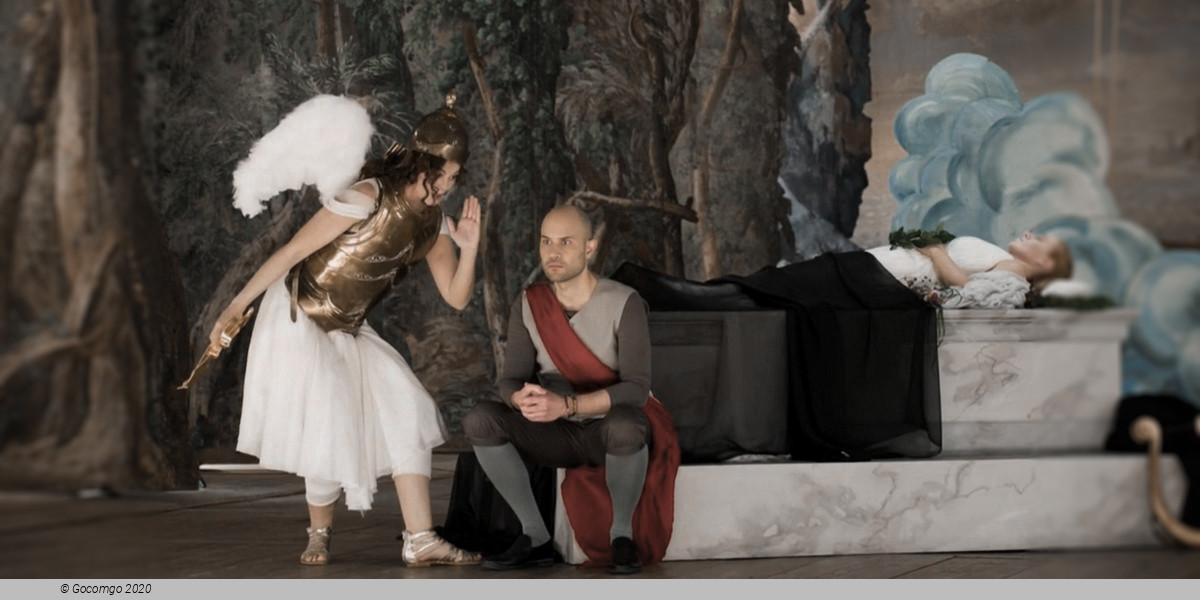
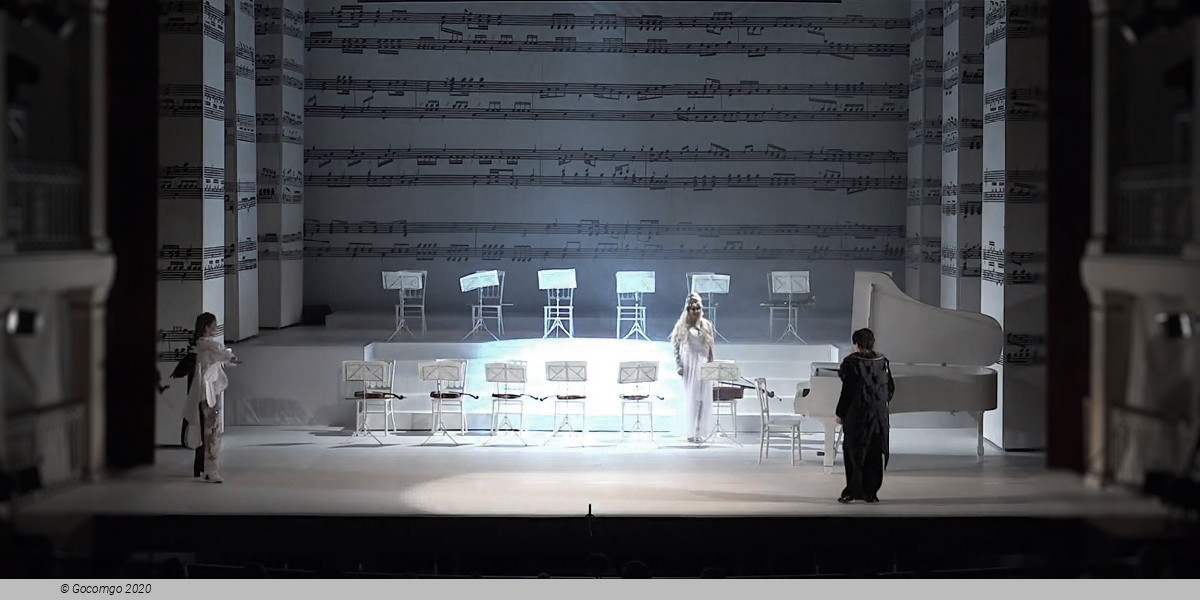
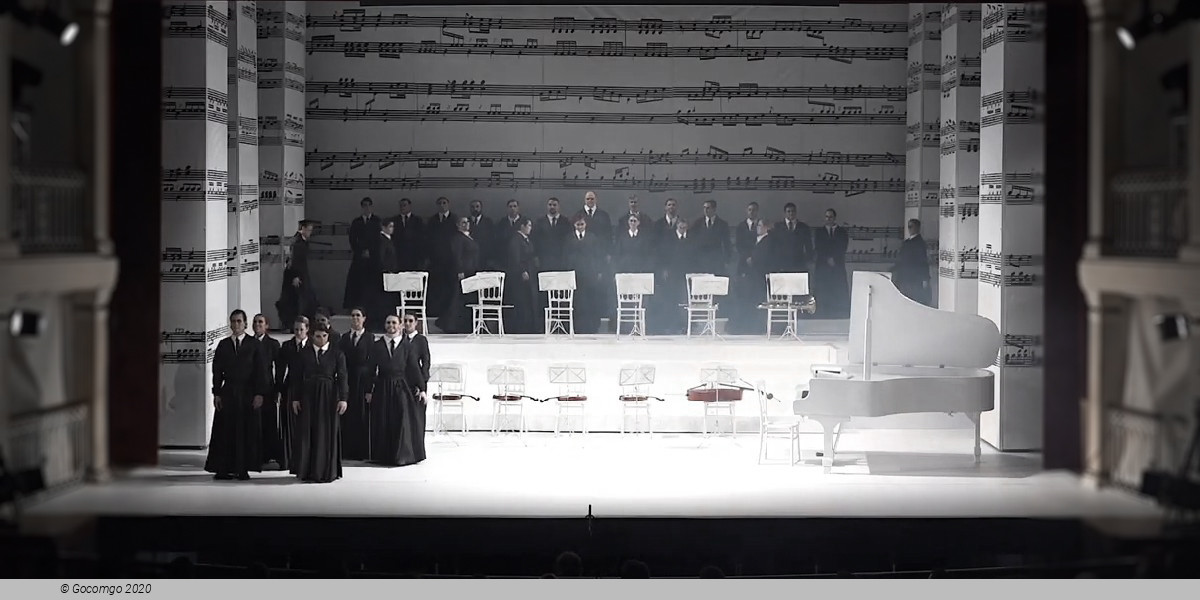
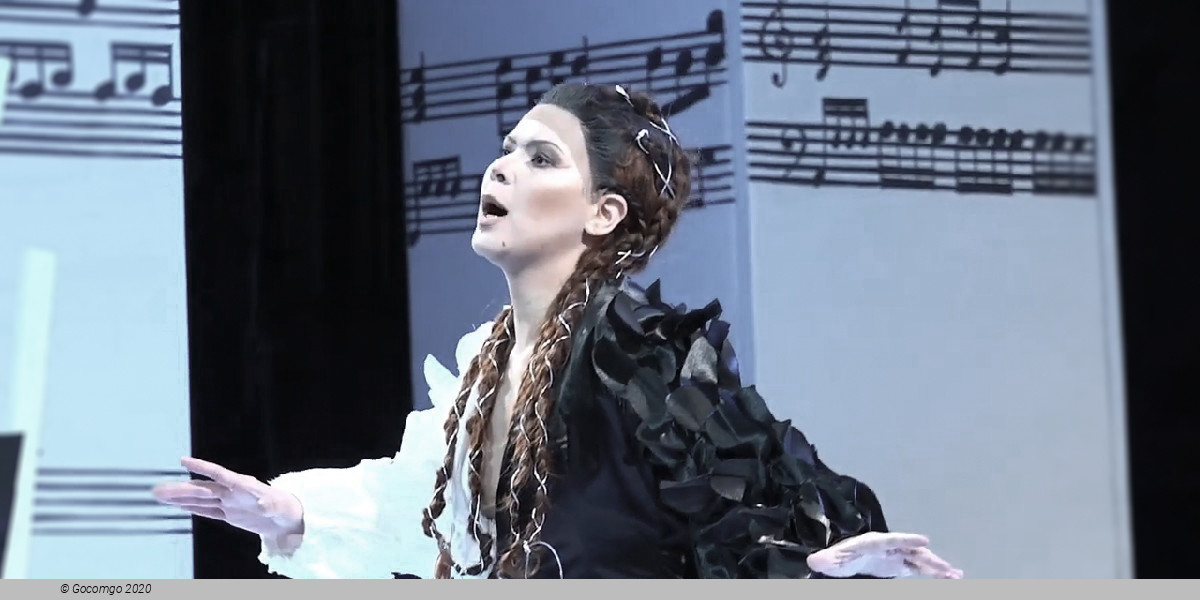
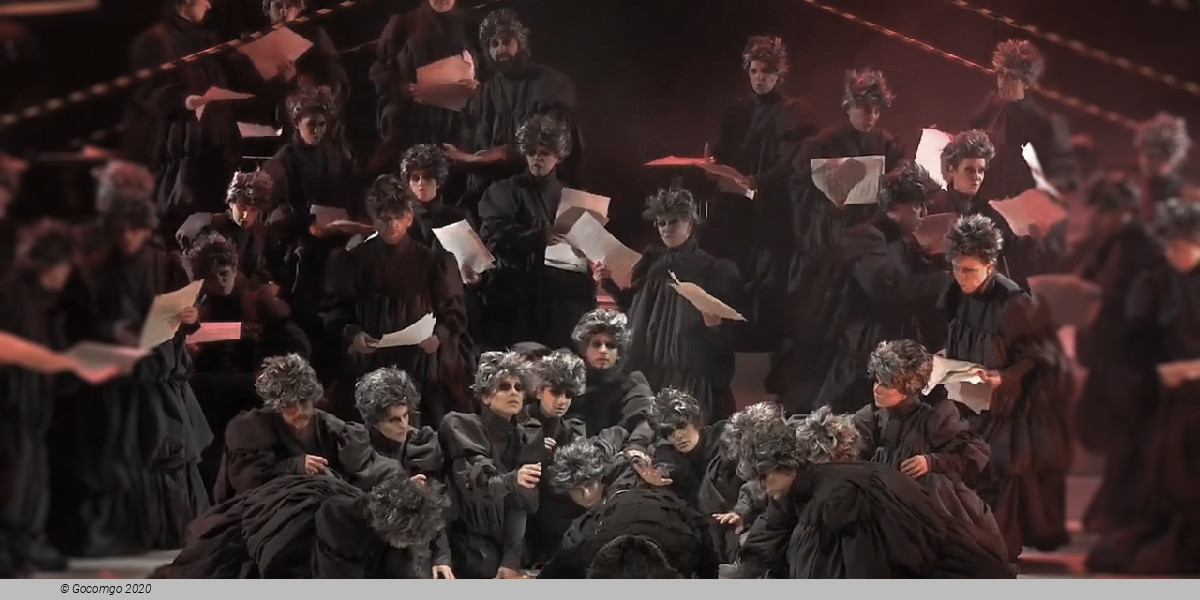
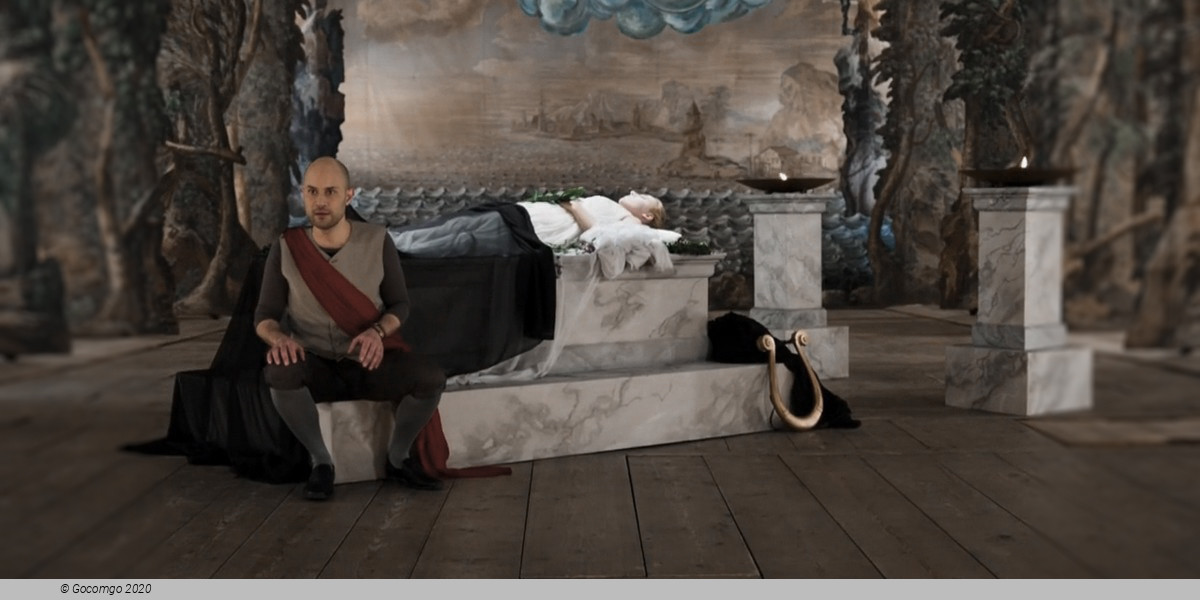
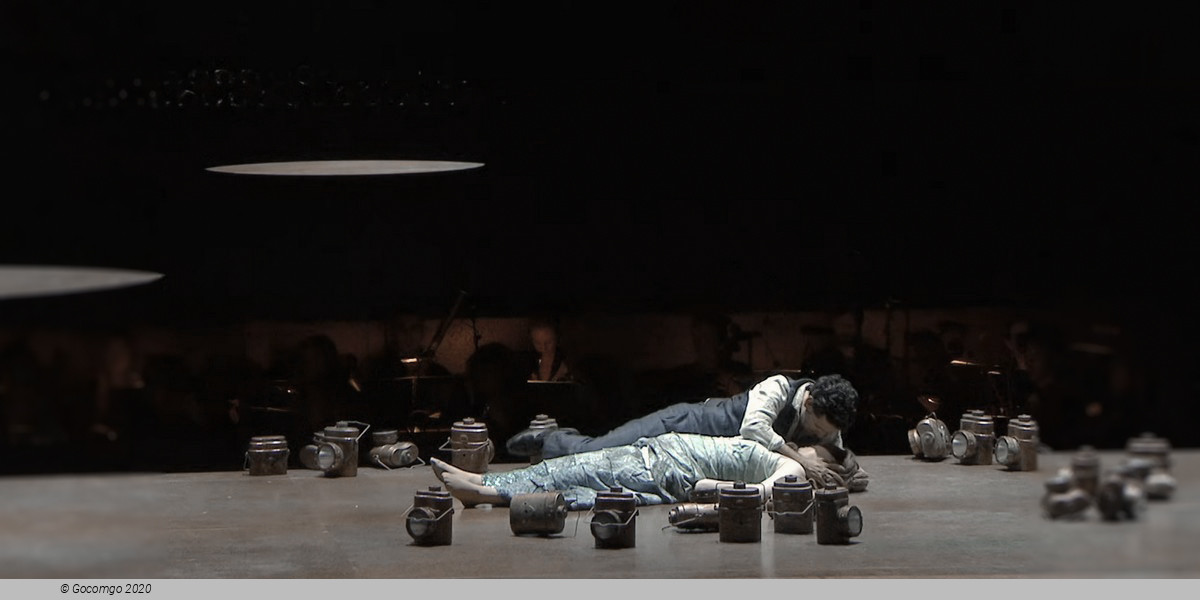
This production by Christoph Marthaler was developed in the middle of the pandemic in 2021, and has thus far only been seen as a livestream online. For his staging, Marthaler was completely at ease with the pandemic’s distancing regulations: emotional closeness and distance is a central theme of his work in general, and of this opera. Together with stage designer Anna Viebrock, he takes a closer look into the dark corners of the myth. Which heavenly beings are at work when Orpheus leaves this world and descends to the underworld? Is it really only Jupiter who is in charge, or is there a more obscure system that thinks and directs than at first glance? Viebrock’s set is no less enigmatic, with its doors and secret entrances, where figures can move about as if in a long-ago film noir. The fundamental question of the Orpheus narrative – namely, why do people sing instead of speak? – is addressed by Marthaler and Viebrock in almost all of their joint works. Together, they have found a variety of answers. One of them, perhaps the most essential of them all, is this: By singing, one can penetrate more deeply into one’s own being than one can with the help of mere words. At long last, this revival brings live performances by Nadezhda Karyazina (Orphée), Chiara Skerath (Eurydice), and Alice Duport-Percier (Amour). They’re joined by other performers, and together they complete Marthaler’s wonderfully whimsical "resurrection training". As with the premiere run, the opera is presented in the version by Berlioz, and is musically led by Stefano Montanari.

Version by Hector Berlioz (1859)

History
Premiere of this production: 05 October 1762, Burgtheater in Vienna

Orfeo ed Euridice is an opera composed by Christoph Willibald Gluck, based on the myth of Orpheus and set to a libretto by Ranieri de' Calzabigi. It belongs to the genre of the azione teatrale, meaning an opera on a mythological subject with choruses and dancing.

Synopsis

The first lines of arias, choruses, etc., are given in Italian (1762 version) and French (1774 version).

Act 1

A chorus of nymphs and shepherds join Orfeo around the tomb of his wife Euridice in a solemn chorus of mourning; Orfeo is only able to utter Euridice's name (Chorus and Orfeo: "Ah, se intorno"/"Ah! Dans ce bois"). Orfeo sends the others away and sings of his grief in the aria "Chiamo il mio ben"/"Objet de mon amour", the three verses of which are preceded by expressive recitatives. This technique was extremely radical at the time and indeed proved overly so for those who came after Gluck: Mozart chose to retain the unity of the aria. Amore (Cupid) appears, telling Orfeo that he may go to the Underworld and return with his wife on the condition that he not look at her until they are back on earth (1774 only: aria by Amour, "Si les doux accords"). As encouragement, Amore informs Orfeo that his present suffering shall be short-lived with the aria "Gli sguardi trattieni"/"Soumis au silence". Orfeo resolves to take on the quest. In the 1774 version only he delivers an ariette ("L'espoir renaît dans mon âme") in the older, showier, Italian style, originally composed for an occasional entertainment, Il Parnaso confuso (1765), and subsequently re-used in another one, Le feste d'Apollo (1769).

Act 2

In a rocky landscape, the Furies refuse to admit Orfeo to the Underworld, and sing of Cerberus, its canine guardian ("Chi mai dell’Erebo"/"Quel est l'audacieux"). When Orfeo, accompanied by his lyre (represented in the opera by a harp), begs for pity in the aria "Deh placatevi con me"/"Laissez-vous toucher", he is at first interrupted by cries of "No!"/"Non!" from the Furies, but they are eventually softened by the sweetness of his singing in the arias "Mille pene"/"Ah! La flamme" and "Men tiranne"/"La tendresse", and let him in ("Ah, quale incognito affetto"/"Quels chants doux"). In the 1774 version, the scene ends with the "Dance of the Furies" (No. 28).

The second scene opens in Elysium. The brief ballet of 1762 became the four-movement "Dance of the Blessed Spirits" (with a prominent part for solo flute) in 1774. This is followed (1774 only) by a solo which celebrates happiness in eternal bliss ("Cet asile"), sung by either an unnamed Spirit or Euridice, and repeated by the chorus. Orfeo arrives and marvels at the purity of the air in an arioso ("Che puro ciel"/"Quel nouveau ciel"). But he finds no solace in the beauty of the surroundings, for Euridice is not yet with him. He implores the spirits to bring her to him, which they do (Chorus: "Torna, o bella"/"Près du tendre objet").

Act 3

On the way out of Hades, Euridice is delighted to be returning to earth, but Orfeo, remembering the condition related by Amore in act 1, lets go of her hand and refusing to look at her, does not explain anything to her. She does not understand his action and reproaches him, but he must suffer in silence (Duet: "Vieni, appaga il tuo consorte"/"Viens, suis un époux"). Euridice takes this to be a sign that he no longer loves her, and refuses to continue, concluding that death would be preferable. She sings of her grief at Orfeo's supposed infidelity in the aria "Che fiero momento"/"Fortune ennemie" (in 1774, there is a brief duet before the reprise). Unable to take any more, Orfeo turns and looks at Euridice; again, she dies. Orfeo sings of his grief in the famous aria "Che farò senza Euridice?"/"J’ai perdu mon Eurydice" ("What shall I do without Euridice?"/"I have lost my Euridice") Orfeo decides he will kill himself to join Euridice in Hades, but Amore returns to stop him (1774 only: Trio: "Tendre Amour"). In reward for Orfeo's continued love, Amore returns Euridice to life, and she and Orfeo are reunited. After a four-movement ballet, all sing in praise of Amore ("Trionfi Amore"). In the 1774 version, the chorus ("L’Amour triomphe") precedes the ballet, to which Gluck had added three extra movements.

Venue Info

Zurich Opera House - Zurich
Location   Sechseläutenplatz 1

Zürich Opera House is a main opera house in Zürich and Switzerland. Located at the Sechseläutenplatz, it has been the home of the Zürich Opera since 1891, and also houses the Bernhard-Theater Zürich. It is also home to the Zürich Ballet. The Opera House also holds concerts by its Philharmonia orchestra, matinees, Lieder evenings and events for children. The Zürich Opera Ball is organised every year in March, and is usually attended by prominent names.

The first permanent theatre, the Aktientheater, was built in 1834 and it became the focus of Richard Wagner’s activities during his period of exile from Germany.

The Aktientheater burnt down in 1890. The new Stadttheater Zürich (municipal theatre) was built by the Viennese architects Fellner & Helmer, who changed their previous design for the theatre in Wiesbaden only slightly. It was opened in 1891. It was the city's main performance space for drama, opera, and musical events until 1925, when it was renamed Opernhaus Zürich and a separate theatre for plays was built: The Bernhard Theater opened in 1941, in May 1981 the Esplanada building was demolished, and the present adjoint building opened on 27/28 December 1984 after three years of transition in the Kaufhaus building nearby Schanzengraben.

By the 1970s, the opera house was badly in need of major renovations; when some considered it not worth restoring, a new theatre was proposed for the site. However, between 1982 and 1984, rebuilding took place but not without huge local opposition which was expressed in street riots. The rebuilt theatre was inaugurated with Wagner’s Die Meistersinger von Nürnberg and the world première of Rudolf Kelterborn’s Chekhov opera Der Kirschgarten.

As restored, the theatre is an ornate building with a neo-classical façade of white and grey stone adorned with busts of Weber, Wagner, and Mozart. Additionally, busts of Schiller, Shakespeare, and Goethe are to be found. The auditorium is built in the neo-rococo style and seats approximately 1200 people. During the refurbishment, the issue of sightlines was not adequately addressed. As a result, the theatre has a high number of seats with a limited view, or no view, of the stage. This is unusual in international comparison, where sightlines in historic opera houses have been typically enhanced over time.

Corporate archives and historical library collections are held at the music department of the Predigerkirche Zürich.

The Zürich Opera House is also home of the International Opera Studio (in German: Internationales Opernstudio IOS) which is a educational program for young singers and pianists. The studio was created in 1961 and has renowned artists currently teaching such as Brigitte Fassbaender, Hedwig Fassbender, Andreas Homocki, Rosemary Joshua, Adrian Kelly, Fabio Luisi, Jetske Mijnssen, Ann Murray, Eytan Pessen or Edith Wiens.

Important Info
Type: Opera
City: Zurich, Switzerland
Starts at: 19:00
Acts: 4
Duration: 1h 35min
Sung in: French
Titles in: German,English
Top of page