
Zurich Opera House 23 April 2023 - Viva la mamma | GoComGo.com

Viva la mamma

Zurich Opera House, Zurich, Switzerland
All photos (4)
Select date and time
7 PM

E-tickets: Print at home or at the box office of the event if so specified. You will find more information in your booking confirmation email.

You can only select the category, and not the exact seats.
If you order 2 or 3 tickets: your seats will be next to each other.
If you order 4 or more tickets: your seats will be next to each other, or, if this is not possible, we will provide a combination of groups of seats (at least in pairs, for example 2+2 or 2+3).

Important Info
Type: Opera
City: Zurich, Switzerland
Starts at: 19:00
Acts: 1
Duration: 1h 45min
Sung in: Italian
Titles in: German,English

E-tickets: Print at home or at the box office of the event if so specified. You will find more information in your booking confirmation email.

You can only select the category, and not the exact seats.
If you order 2 or 3 tickets: your seats will be next to each other.
If you order 4 or more tickets: your seats will be next to each other, or, if this is not possible, we will provide a combination of groups of seats (at least in pairs, for example 2+2 or 2+3).

Overview

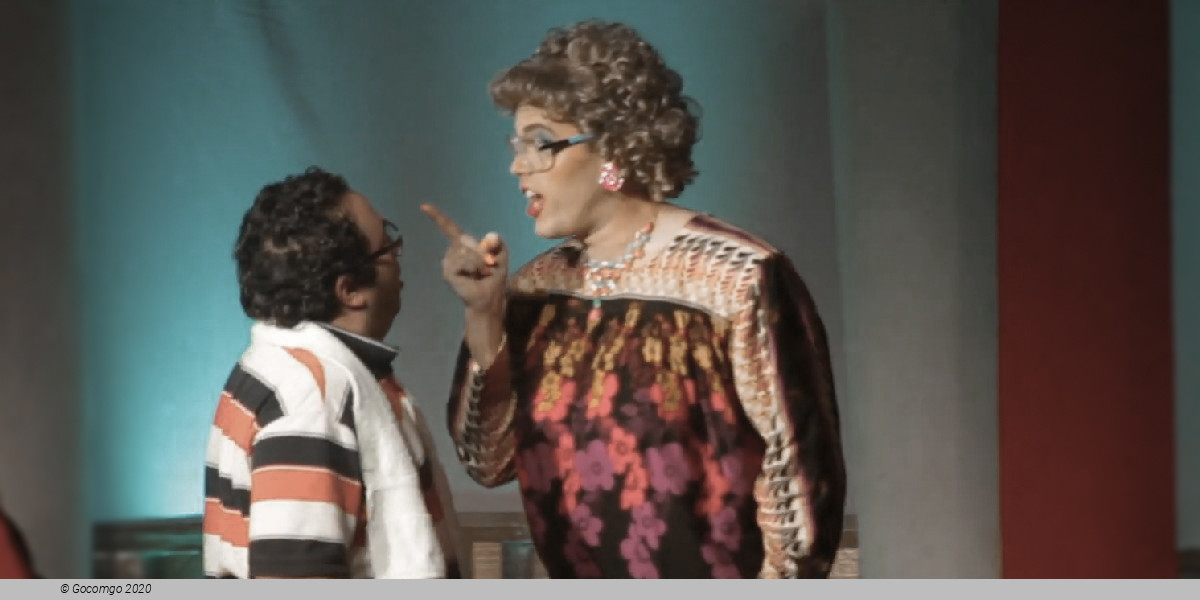
Italian baritone Ambrogio Maestri is celebrated worldwide for his interpretation of Verdi’s Falstaff, a role he’s also sung to great acclaim at the Opernhaus Zürich. Now he returns in the title role of Gaetano Donizetti’s farce about the theater, Viva la mamma. The vocally- and theatrically-challenging role of the quirky artist’s mother, Mamma Agata – who brings the already-zany business of putting on a show to a full boil – fits Maestri to a T.

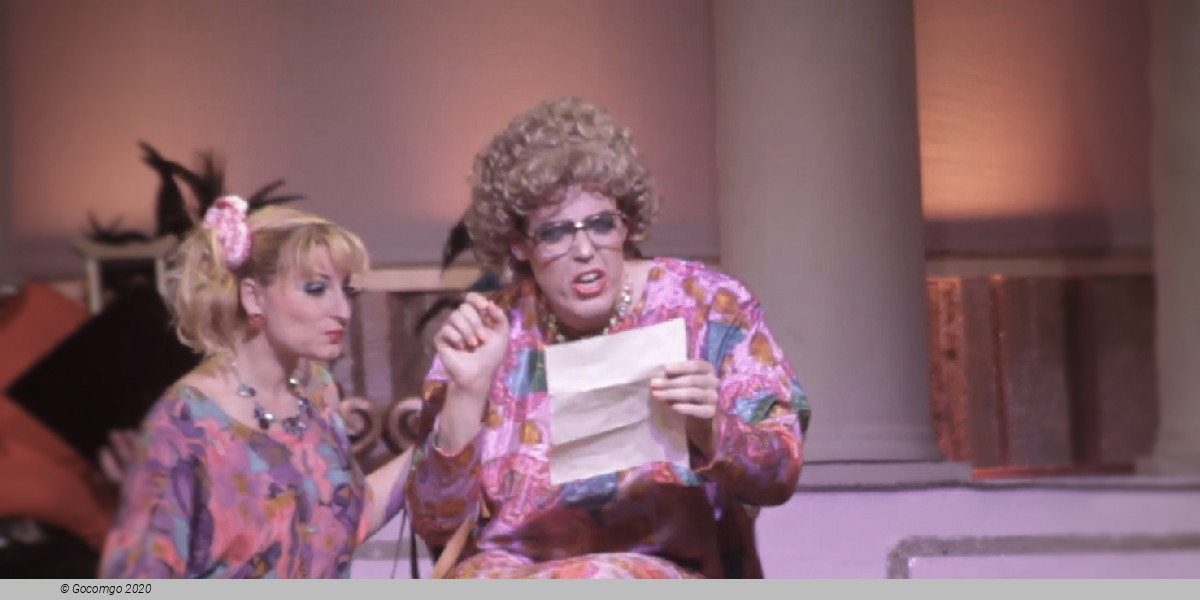
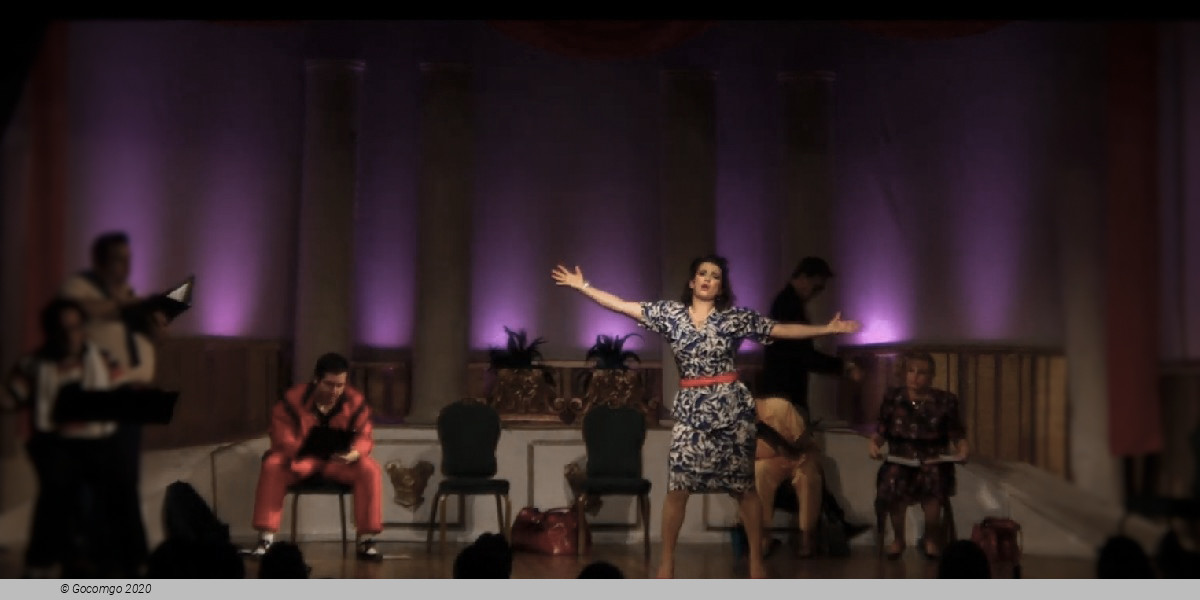
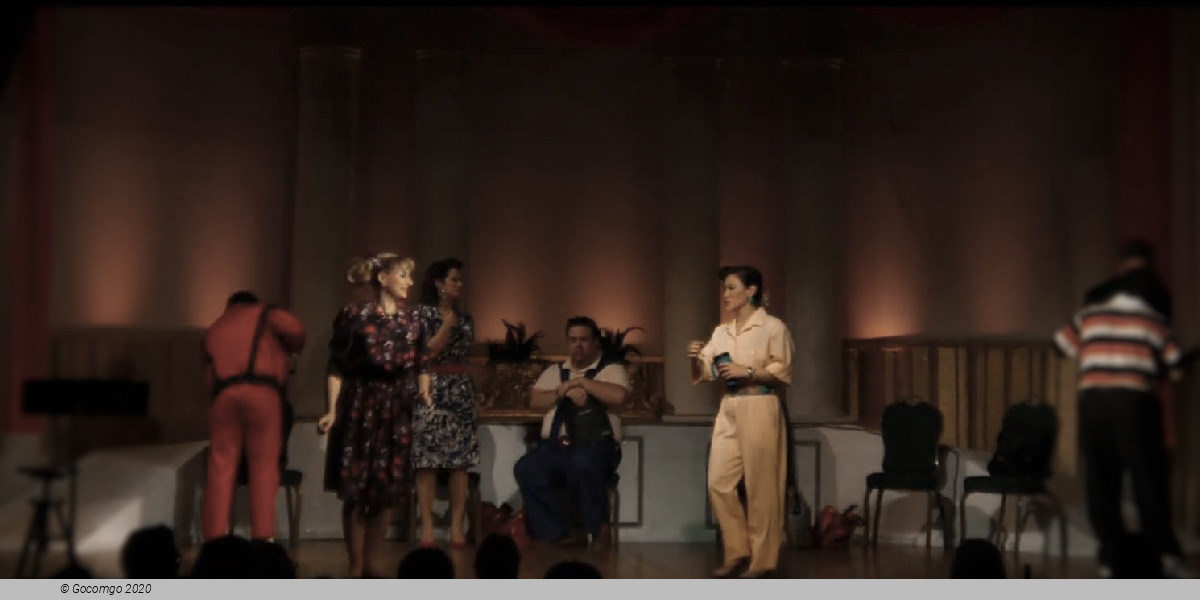
But why have a baritone sing the role of a mother? Swiss director Mélanie Huber and author Stephan Teuwissen found an answer to that question, and have brought Donizetti’s opera to the stage in their own way. In their interpretation, the composer, frazzled by fever and madness, also makes an appearance. Gaetano – who tends towards the dramatic, but is still a poetic and inspired dreamer – gets a junior-grade devil to grant him one last wish just before his death: a performance of his opera pastiche Sitten und Unsitten des Theaters – or, Conventions and Unconventions of the Theater. The devil decides to get in on the action, and before he knows it, he’s been saddled with the leading role of Mamma Agata. Opposite her are a smug prima donna with a pushy husband, a few second- and third-rate singers, a German tenor, and three gentlemen from the theater management who are desperately trying to keep the threads of fate, and the opera, in their hands. As one might expect, the rehearsals get completely derailed, and poor Gaetano must watch as his work devolves into a hectic devil’s kitchen.

"Opernwelt" magazine wrote that Mélanie Huber "places the performers in humorous costumes that recall Donizetti’s time, and lets them loose on each other in well-managed chaos". This marks the first operatic production by the Swiss director, which was premiered by the International Opernstudio in Winterthur. Now, this successful production heads to the main stage of the Opernhaus Zürich.

History
Premiere of this production: 21 November 1827, Teatro Nuovo of Naples

Le convenienze ed inconvenienze teatrali (Conventions and Inconveniences of the Stage), also known as Viva la mamma, is a dramma giocoso, or opera, in two acts by Gaetano Donizetti. The Italian libretto was written by Domenico Gilardoni, adapted from Antonio Simeone Sografi's plays Le convenienze teatrali (1794) and Le inconvenienze teatrali (1800).

Synopsis

Time: 18th century
Place: "A provincial Italian theatre"

A regional (and mediocre) operatic troupe is rehearsing a new work—Romulus and Ersilia—and faces numerous obstacles. The prima donna acts every bit the diva, refusing to rehearse. The German tenor cannot master either the lyrics or melodies. In the midst of much quarrelling, various singers threaten to walk out. The situation turns more dire with the arrival of Mamma Agata (a baritone role), the mother of the seconda donna. She insists on a solo for her daughter and even issues detailed demands on the musical arrangement of the aria. When the German tenor refuses to go on, he is replaced by the prima donna's husband. The show eventually collapses, and rather than pay back all the investors (whose money has already been spent), the company flees the town under cover of night.

Venue Info

Zurich Opera House - Zurich
Location   Sechseläutenplatz 1

Zürich Opera House is a main opera house in Zürich and Switzerland. Located at the Sechseläutenplatz, it has been the home of the Zürich Opera since 1891, and also houses the Bernhard-Theater Zürich. It is also home to the Zürich Ballet. The Opera House also holds concerts by its Philharmonia orchestra, matinees, Lieder evenings and events for children. The Zürich Opera Ball is organised every year in March, and is usually attended by prominent names.

The first permanent theatre, the Aktientheater, was built in 1834 and it became the focus of Richard Wagner’s activities during his period of exile from Germany.

The Aktientheater burnt down in 1890. The new Stadttheater Zürich (municipal theatre) was built by the Viennese architects Fellner & Helmer, who changed their previous design for the theatre in Wiesbaden only slightly. It was opened in 1891. It was the city's main performance space for drama, opera, and musical events until 1925, when it was renamed Opernhaus Zürich and a separate theatre for plays was built: The Bernhard Theater opened in 1941, in May 1981 the Esplanada building was demolished, and the present adjoint building opened on 27/28 December 1984 after three years of transition in the Kaufhaus building nearby Schanzengraben.

By the 1970s, the opera house was badly in need of major renovations; when some considered it not worth restoring, a new theatre was proposed for the site. However, between 1982 and 1984, rebuilding took place but not without huge local opposition which was expressed in street riots. The rebuilt theatre was inaugurated with Wagner’s Die Meistersinger von Nürnberg and the world première of Rudolf Kelterborn’s Chekhov opera Der Kirschgarten.

As restored, the theatre is an ornate building with a neo-classical façade of white and grey stone adorned with busts of Weber, Wagner, and Mozart. Additionally, busts of Schiller, Shakespeare, and Goethe are to be found. The auditorium is built in the neo-rococo style and seats approximately 1200 people. During the refurbishment, the issue of sightlines was not adequately addressed. As a result, the theatre has a high number of seats with a limited view, or no view, of the stage. This is unusual in international comparison, where sightlines in historic opera houses have been typically enhanced over time.

Corporate archives and historical library collections are held at the music department of the Predigerkirche Zürich.

The Zürich Opera House is also home of the International Opera Studio (in German: Internationales Opernstudio IOS) which is a educational program for young singers and pianists. The studio was created in 1961 and has renowned artists currently teaching such as Brigitte Fassbaender, Hedwig Fassbender, Andreas Homocki, Rosemary Joshua, Adrian Kelly, Fabio Luisi, Jetske Mijnssen, Ann Murray, Eytan Pessen or Edith Wiens.

Important Info
Type: Opera
City: Zurich, Switzerland
Starts at: 19:00
Acts: 1
Duration: 1h 45min
Sung in: Italian
Titles in: German,English
Top of page