
Zurich Opera House 15 April 2023 - Lakmé (Concert performance) | GoComGo.com

Lakmé (Concert performance)

Zurich Opera House, Zurich, Switzerland
All photos (11)
Select date and time
7 PM

E-tickets: Print at home or at the box office of the event if so specified. You will find more information in your booking confirmation email.

You can only select the category, and not the exact seats.
If you order 2 or 3 tickets: your seats will be next to each other.
If you order 4 or more tickets: your seats will be next to each other, or, if this is not possible, we will provide a combination of groups of seats (at least in pairs, for example 2+2 or 2+3).

Important Info
Type: Opera
City: Zurich, Switzerland
Starts at: 19:00
Acts: 3
Sung in: French
Titles in: German,English

E-tickets: Print at home or at the box office of the event if so specified. You will find more information in your booking confirmation email.

You can only select the category, and not the exact seats.
If you order 2 or 3 tickets: your seats will be next to each other.
If you order 4 or more tickets: your seats will be next to each other, or, if this is not possible, we will provide a combination of groups of seats (at least in pairs, for example 2+2 or 2+3).

Overview

Perhaps the most famous opera duet of all times comes from Léo Delibes’ opera Lakmé: The "Flower Duet" for soprano and mezzo-soprano is a favorite not just in concert halls, but has proven to be a hit in commercials and films.

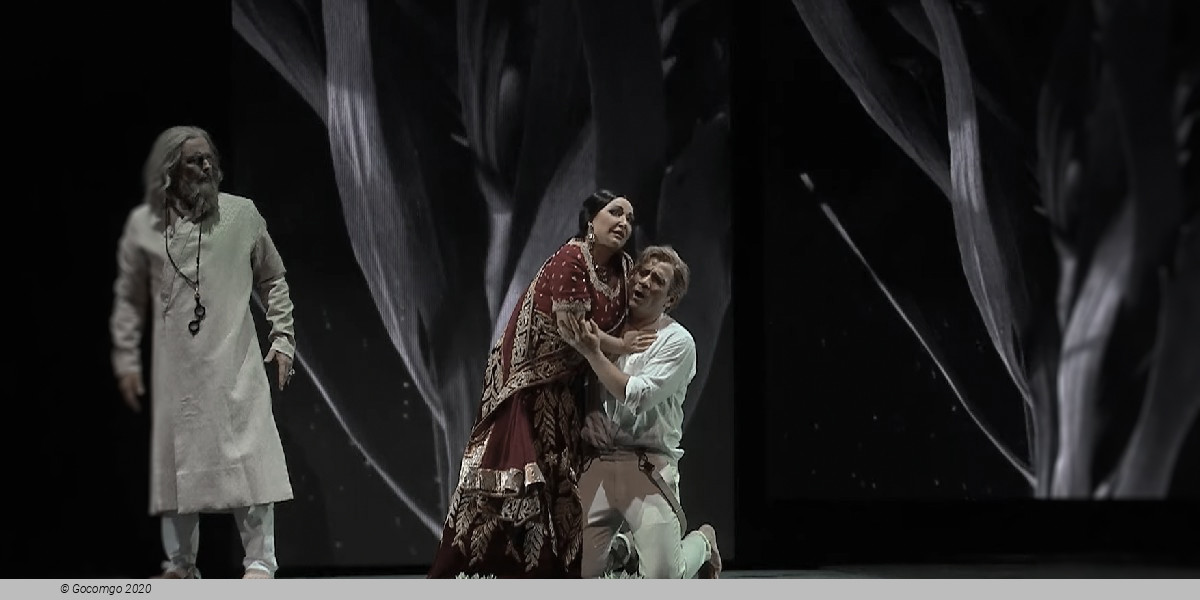
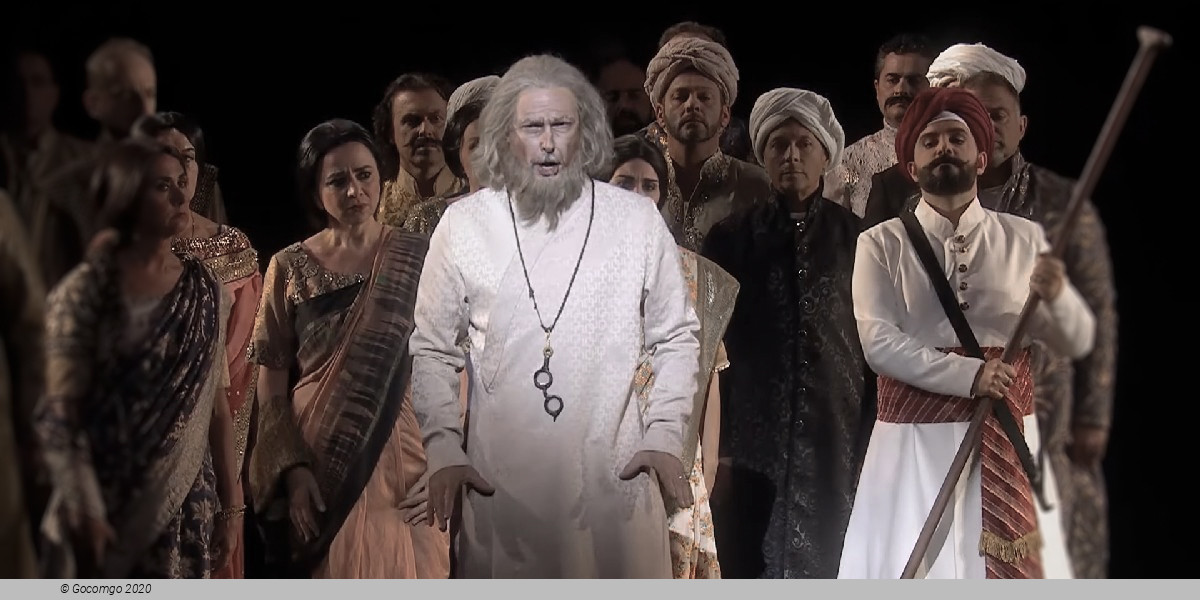
And Lakmé’s "Bell Song" is a favorite showpiece for soprano virtuosos. The title role is ideal for one of the most exciting French voices of our time: Sabine Devieilhe. Her soprano combines the lightness of crystal-clear coloratura with warm, colorful lyricism. Devieilhe has previously thrilled at the Opernhaus Zürich as the title role in Donizetti’s Fille du regiment, and as Sophie in Strauss’ Rosenkavalier. Her 2017 album Mirages, which took listeners on a tour of late 19th century composers who had been inspired by the musical colors of distant lands, included highlights from Delibes’ Lakmé. Leo Délibes enjoyed success in Paris as a ballet composer with Coppélia and for Lakmé, his best-known opera. It premiered in 1883 at the Opéra Comique, and is about the unhappy union between British officer Gérald and Lakmé, the daughter of Nilakantha, a Brahmin priest fighting against the colonial rulers. Alongside Sabine Devieilhe, this concert performance features Edgardo Rocha. He is a highly acclaimed bel canto tenor, who has appeared numerous times at the Opernhaus Zürich in a variety of Rossini roles, including the title role in Le Comte Ory, Narciso in Il turco in Italia, and Cavaliere Belfiore in Il viaggio a Reims. The cast is rounded out by bass-baritone Philippe Sly as Nilakantha and baritone Björn Bürger as Frédéric, two promising young singers making their debut appearances at the Opernhaus Zürich.

History
Premiere of this production: 14 April 1883, Opéra-Comique, Paris

Lakmé is an opera in three acts by Léo Delibes to a French libretto by Edmond Gondinet and Philippe Gille. Set in British India in the mid-19th century, Lakmé is based on Théodore Pavie's story "Les babouches du Brahmane" and novel Le Mariage de Loti by Pierre Loti. Gondinet proposed it as a vehicle for the American soprano Marie van Zandt.

Synopsis

Place: India
Time: Late nineteenth century, during the British Raj.

Act 1
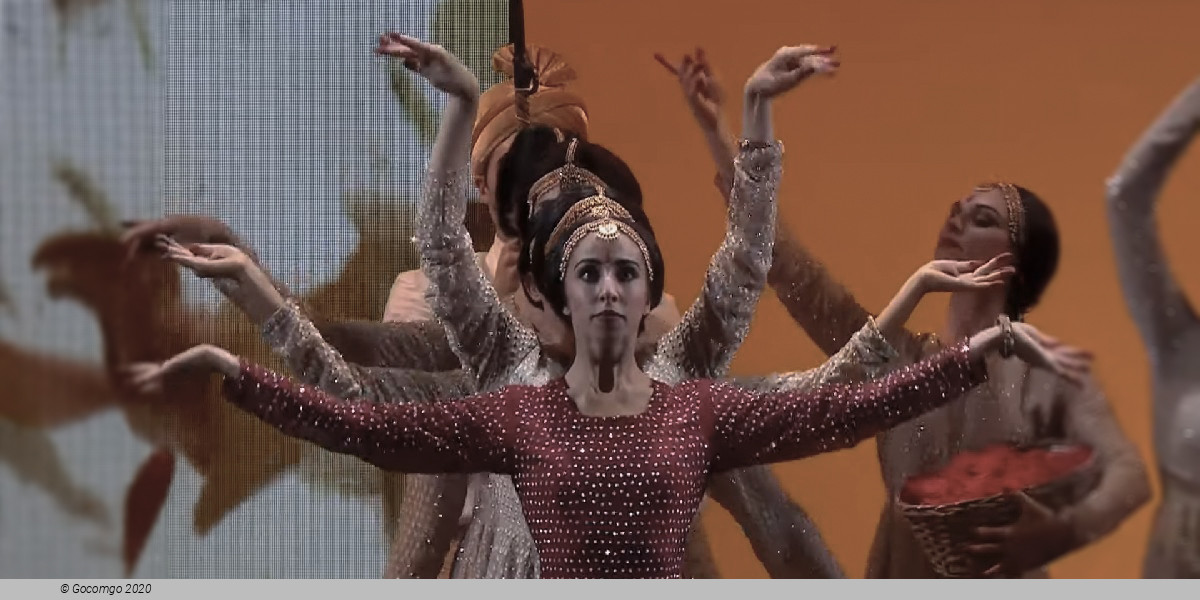
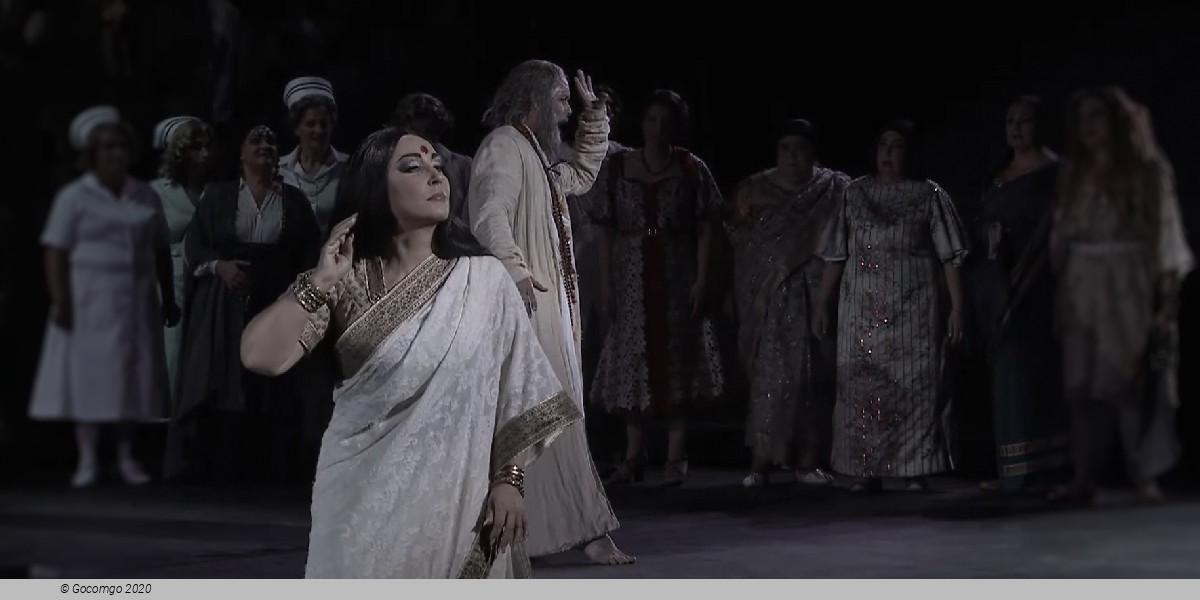
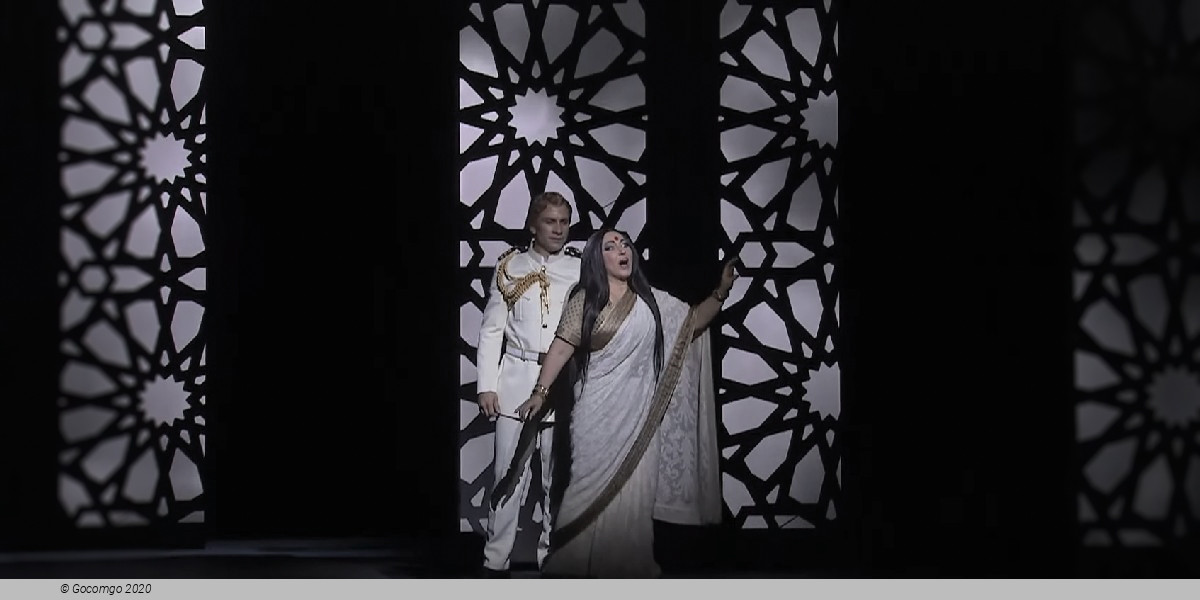
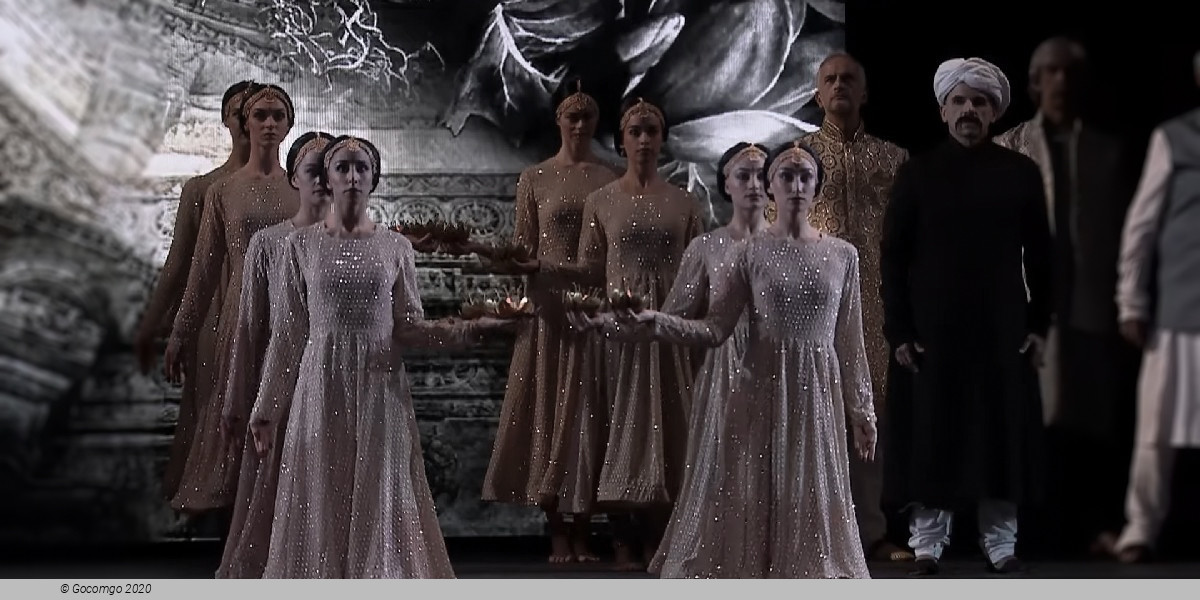
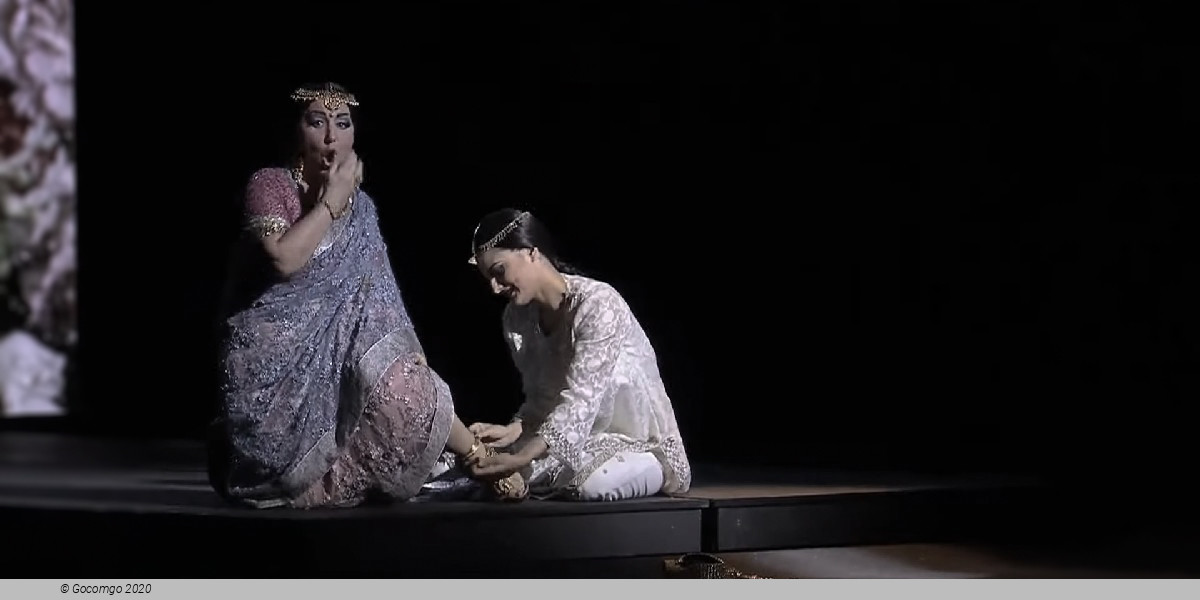
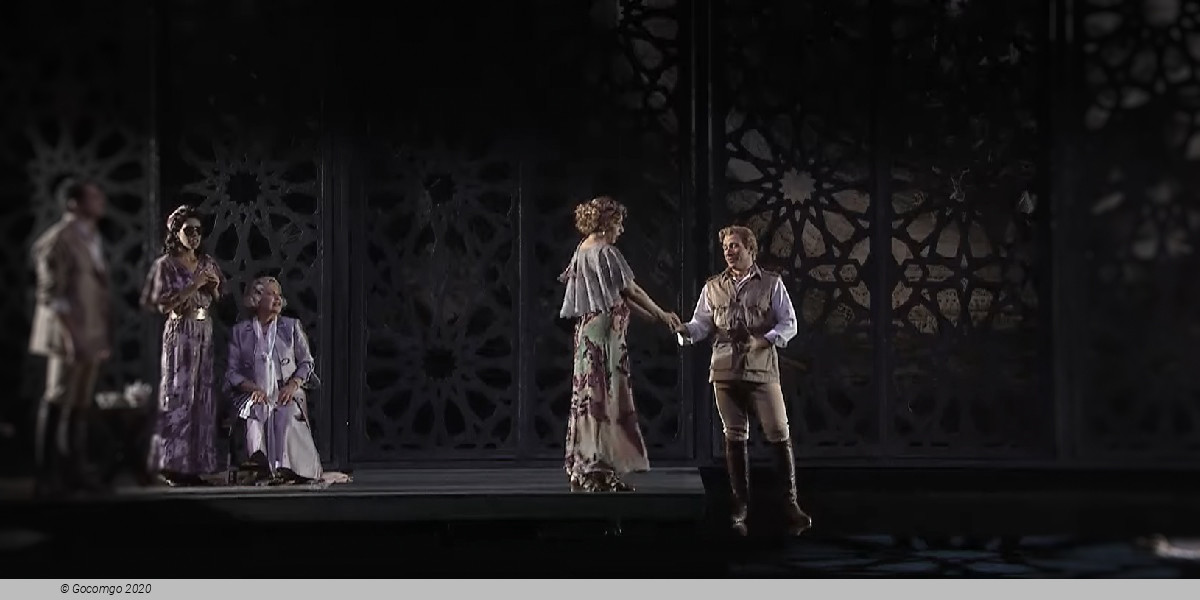
The Hindus go to perform their rites in a sacred Brahmin temple under the high priest, Nilakantha. Nilakantha's daughter Lakmé (which derives from the Sanskrit Lakshmi), and her servant Mallika, are left behind and go down to the river to gather flowers where they sing together the Flower Duet. As they approach the water at the river bank, Lakmé removes her jewellery and places it on a bench. Two British officers, Frederic and Gérald (Delibes uses Frenchified versions of the then common English names Frederick and Gerald), arrive nearby on a picnic with two British girls and their governess. The British girls see the jewellery and, impressed with it, request sketches of it; Gérald volunteers to stay and make sketches of the jewellery. He spots Lakmé and Mallika returning and hides. Mallika leaves Lakmé for a while; while alone Lakmé sees Gérald and, frightened by the foreigner's incursion, cries out for help. However, simultaneously, she is also intrigued by him and so she sends away those who had responded to her call for help when they come to her aid. Lakmé and Gérald begin to fall in love with each other. Nilakantha returns and learns of the British officer's trespassing, vowing revenge on him for what he assumes to be an affront to Lakmé's honour.

Act 2
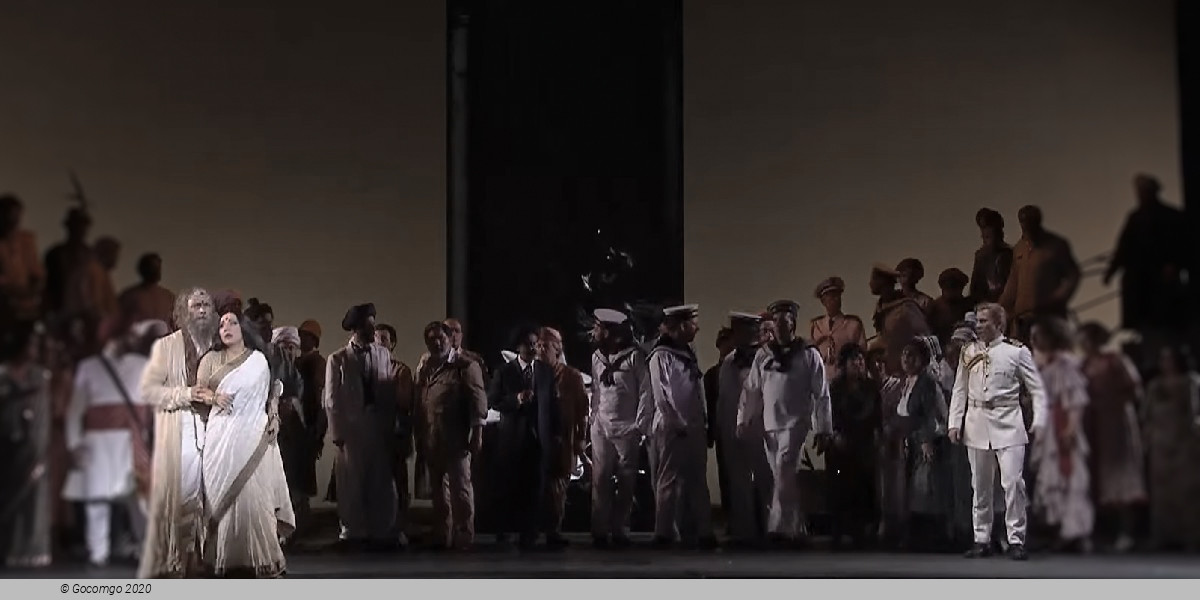
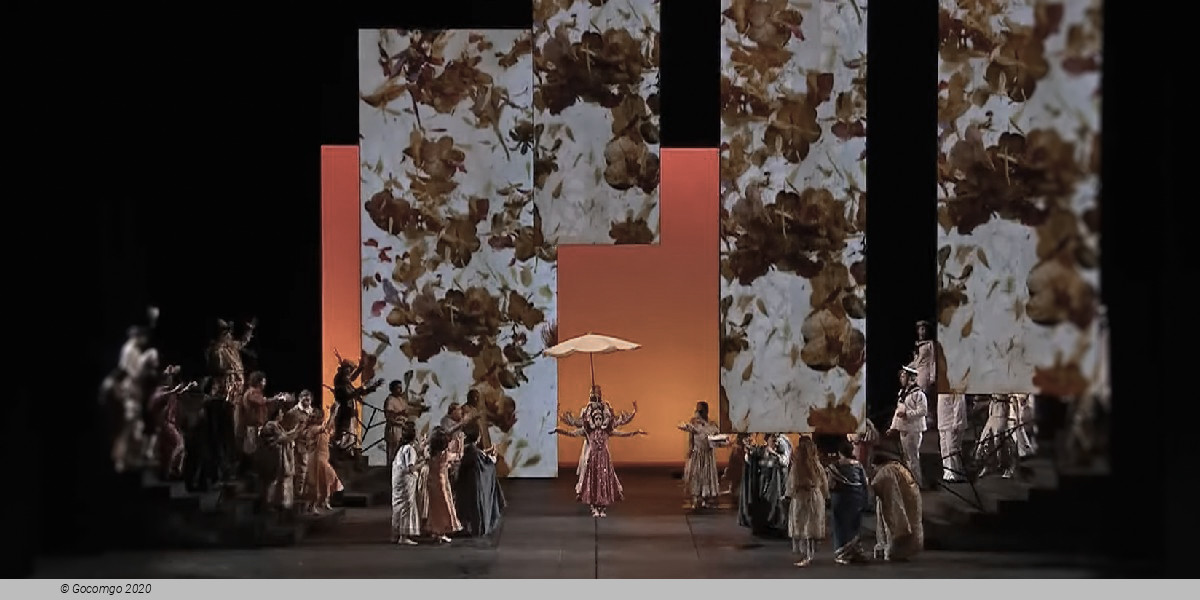
At a busy bazaar, Nilakantha forces Lakmé to sing (the Bell Song) in order to lure the trespasser into identifying himself. When Gérald steps forward, Lakmé faints, thus giving him away. Nilakantha stabs Gérald, wounding him. Lakmé takes Gérald to a secret hideout in the forest, where she lovingly nurses him back to health.

Act 3
While Lakmé fetches sacred water that will confirm the vows of the lovers, Fréderic, Gérald's fellow British officer, appears before Gérald and reminds him of his military duty to his regiment. Gérald sadly accepts that his colleague is correct. After Lakmé returns, she senses the change in Gérald and realises that she has lost him. She dies with honour, rather than live with dishonour, killing herself by eating the poisonous datura leaf.

Venue Info

Zurich Opera House - Zurich
Location   Sechseläutenplatz 1

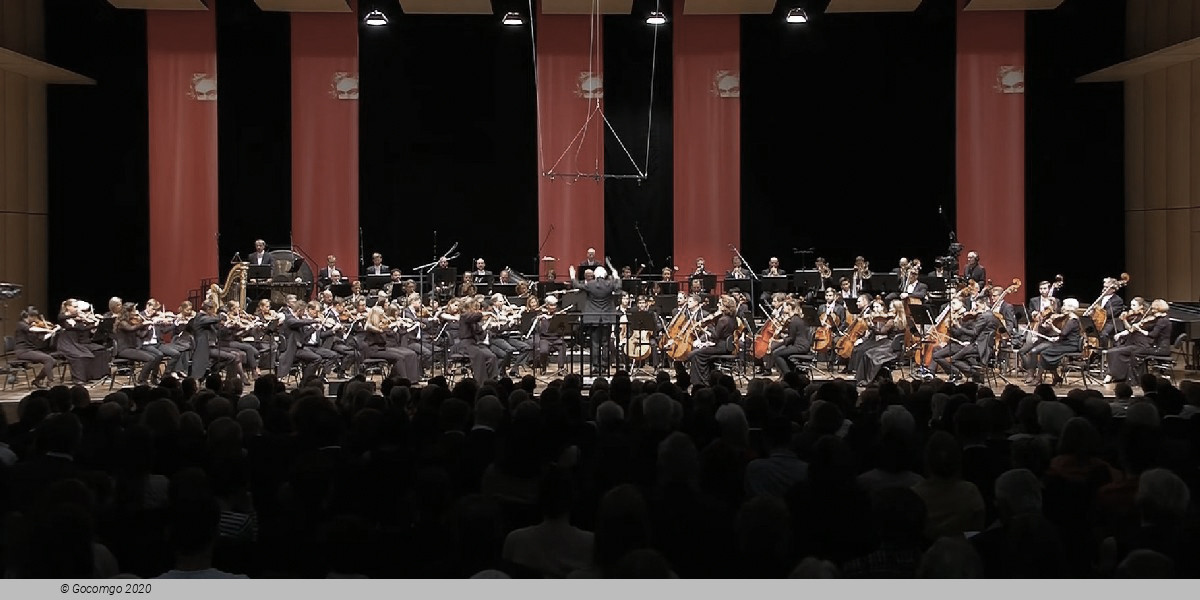
Zürich Opera House is a main opera house in Zürich and Switzerland. Located at the Sechseläutenplatz, it has been the home of the Zürich Opera since 1891, and also houses the Bernhard-Theater Zürich. It is also home to the Zürich Ballet. The Opera House also holds concerts by its Philharmonia orchestra, matinees, Lieder evenings and events for children. The Zürich Opera Ball is organised every year in March, and is usually attended by prominent names.

The first permanent theatre, the Aktientheater, was built in 1834 and it became the focus of Richard Wagner’s activities during his period of exile from Germany.

The Aktientheater burnt down in 1890. The new Stadttheater Zürich (municipal theatre) was built by the Viennese architects Fellner & Helmer, who changed their previous design for the theatre in Wiesbaden only slightly. It was opened in 1891. It was the city's main performance space for drama, opera, and musical events until 1925, when it was renamed Opernhaus Zürich and a separate theatre for plays was built: The Bernhard Theater opened in 1941, in May 1981 the Esplanada building was demolished, and the present adjoint building opened on 27/28 December 1984 after three years of transition in the Kaufhaus building nearby Schanzengraben.

By the 1970s, the opera house was badly in need of major renovations; when some considered it not worth restoring, a new theatre was proposed for the site. However, between 1982 and 1984, rebuilding took place but not without huge local opposition which was expressed in street riots. The rebuilt theatre was inaugurated with Wagner’s Die Meistersinger von Nürnberg and the world première of Rudolf Kelterborn’s Chekhov opera Der Kirschgarten.

As restored, the theatre is an ornate building with a neo-classical façade of white and grey stone adorned with busts of Weber, Wagner, and Mozart. Additionally, busts of Schiller, Shakespeare, and Goethe are to be found. The auditorium is built in the neo-rococo style and seats approximately 1200 people. During the refurbishment, the issue of sightlines was not adequately addressed. As a result, the theatre has a high number of seats with a limited view, or no view, of the stage. This is unusual in international comparison, where sightlines in historic opera houses have been typically enhanced over time.

Corporate archives and historical library collections are held at the music department of the Predigerkirche Zürich.

The Zürich Opera House is also home of the International Opera Studio (in German: Internationales Opernstudio IOS) which is a educational program for young singers and pianists. The studio was created in 1961 and has renowned artists currently teaching such as Brigitte Fassbaender, Hedwig Fassbender, Andreas Homocki, Rosemary Joshua, Adrian Kelly, Fabio Luisi, Jetske Mijnssen, Ann Murray, Eytan Pessen or Edith Wiens.

Important Info
Type: Opera
City: Zurich, Switzerland
Starts at: 19:00
Acts: 3
Sung in: French
Titles in: German,English
Top of page