
Zurich Opera House 29 September 2023 - Iphigénie en Tauride | GoComGo.com

Iphigénie en Tauride

Zurich Opera House, Zurich, Switzerland
All photos (4)
Select date and time
8 PM

E-tickets: Print at home or at the box office of the event if so specified. You will find more information in your booking confirmation email.

You can only select the category, and not the exact seats.
If you order 2 or 3 tickets: your seats will be next to each other.
If you order 4 or more tickets: your seats will be next to each other, or, if this is not possible, we will provide a combination of groups of seats (at least in pairs, for example 2+2 or 2+3).

Important Info
Type: Opera
City: Zurich, Switzerland
Starts at: 20:00
Acts: 4
Duration: 1h 45min
Sung in: French
Titles in: English,German

E-tickets: Print at home or at the box office of the event if so specified. You will find more information in your booking confirmation email.

You can only select the category, and not the exact seats.
If you order 2 or 3 tickets: your seats will be next to each other.
If you order 4 or more tickets: your seats will be next to each other, or, if this is not possible, we will provide a combination of groups of seats (at least in pairs, for example 2+2 or 2+3).

Overview

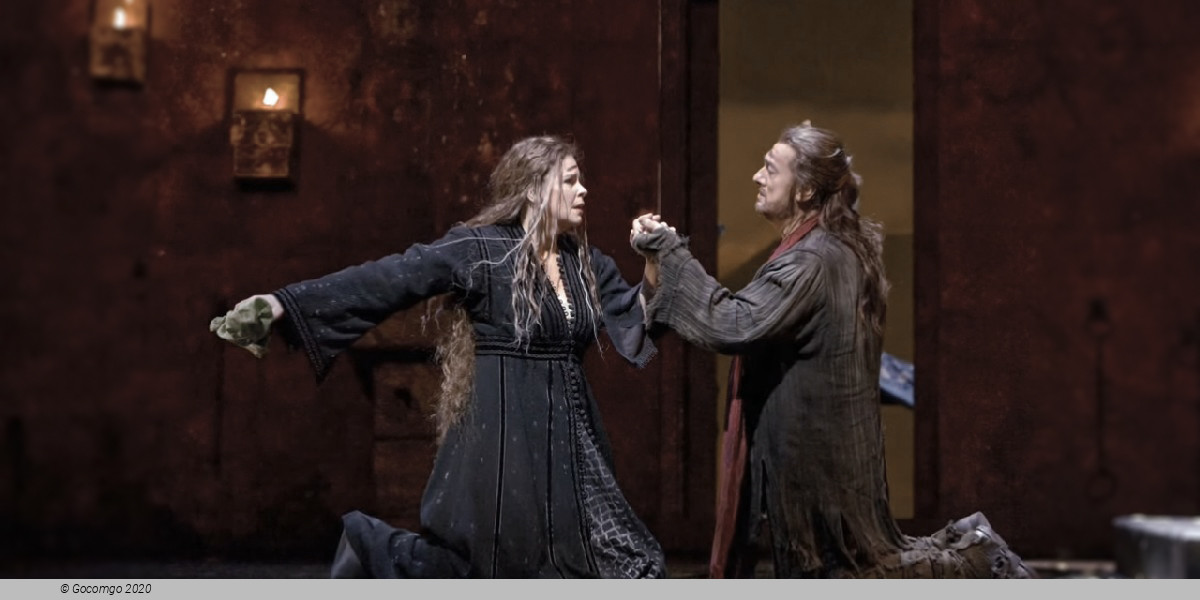
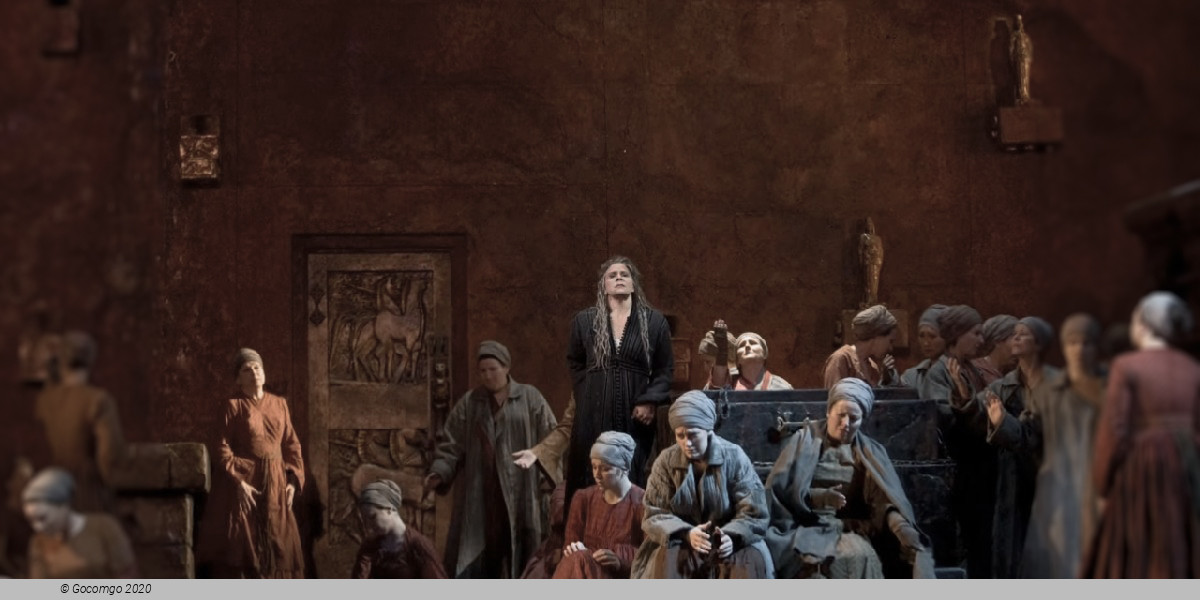
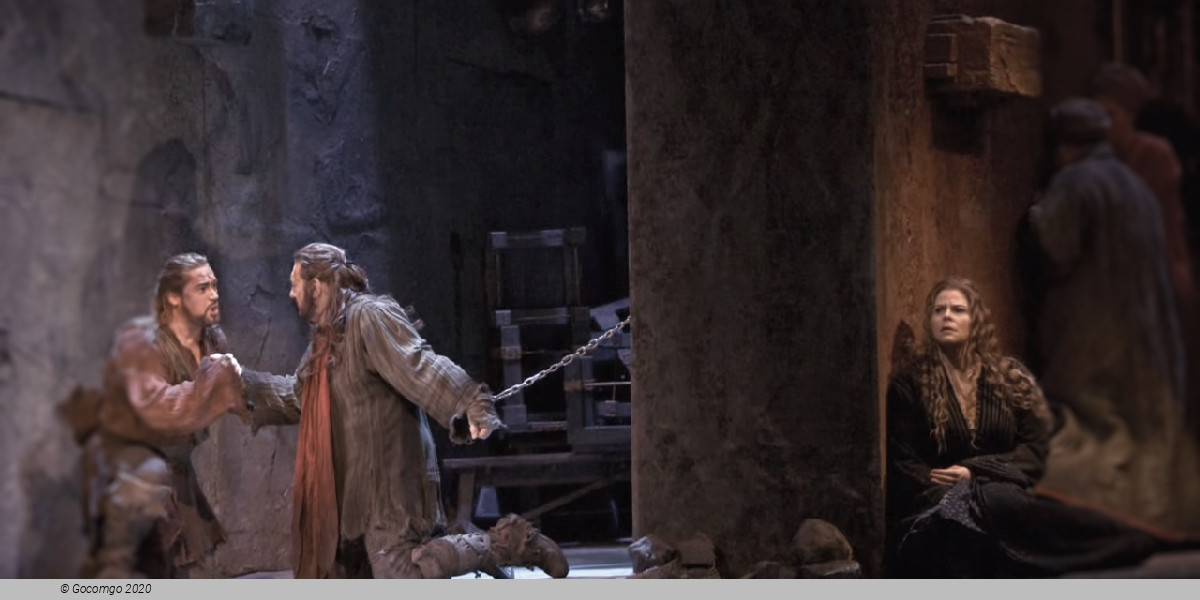
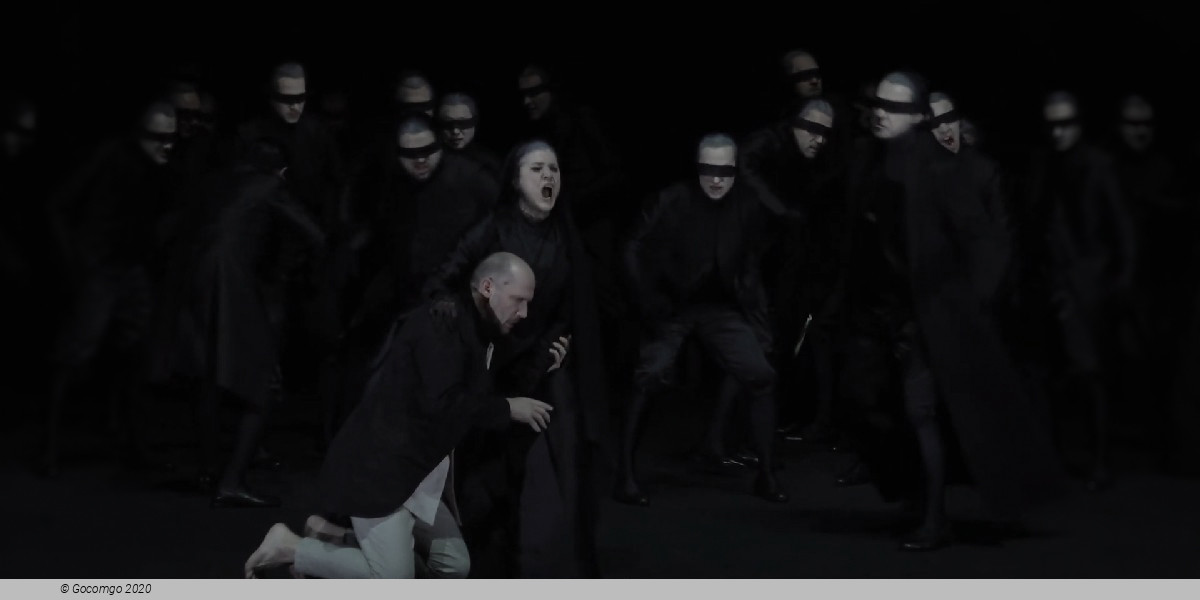
Andreas Homoki’s lauded, concentrated production puts the characters’ emotions at the center of the story – first among them the conflict between Iphigenia’s feelings for her brother and her duty as a priestess, and her nearly superhuman strength to forgive. The title role is played by Birgitte Christensen, who also appeared in the premiere series. In the pit is our Orchestra La Scintilla, playing on period instruments. The production is musically led by Greek conductor George Petrou, who knows the early classical repertoire very well.

The ancient story of Iphigenia is part of a cycle of violence from which there is no escape. It once began with Agamemnon’s willingness to sacrifice his own daughter Iphigenia in order to make the goddess Diana sympathetic to his entry into the Trojan War. Iphigenia’s mother, Clytemnestra, avenged her daughter by killing her husband Agamemnon upon his return from the war. In turn, Orest, Iphigenia’s brother, avenged his father's murder by killing his own mother. Since then, Orest has been tormented by the Eumenides, the goddesses of vengeance. According to the oracle of Delphi, he will only find relief by traveling to Tauris, from where he is to bring the statue of Diana back to Greece. Iphigenia, who was saved by Diana at the last moment before she was sacrificed, lives in Tauris as her priestess. When she is to sacrifice Orest – as she does every stranger who arrives on the island – to Diana, the siblings recognize each other, and Iphigenia refuses to kill again. Thus, the bloody cycle is finally broken.
Gluck, the great reformer, transformed the static French operatic genre of the 18th century into a lively drama of human passions, providing spectacular musical expression for his protagonists’ inner conflicts.

History
Premiere of this production: 18 May 1779, Paris Opéra

Iphigénie en Tauride (Iphigenia in Tauris) is a 1779 opera by Christoph Willibald Gluck in four acts. It was his fifth opera for the French stage. The libretto was written by Nicolas-François Guillard. The drama is ultimately based on the play Iphigenia in Tauris by the ancient Greek dramatist Euripides which deals with stories concerning the family of Agamemnon in the aftermath of the Trojan War.

Synopsis

Act 1
Scene: The entrance hall of the temple of Diana in Tauris.

There is no overture; the opera begins with a short passage evoking calm before turning into a depiction of a great storm at sea. Iphigenia, sister of Orestes, is the high priestess of Diana in the temple of Tauris, having been transported there magically by the goddess when her father Agamemnon attempted to offer her as a sacrifice. Iphigenia and her priestesses beg the gods to protect them from the storm (Grands dieux! soyez nous secourables).

Although the storm dies down, Iphigenia remains troubled by a dream she has had, in which she envisioned her mother Clytaemnestra murdering her father, then her brother Orestes killing her mother, and finally her own hand stabbing her brother. She prays to Diana to reunite her with Orestes (Ô toi qui prolongeas mes jours). Thoas, King of Tauris, enters. He too is obsessed with dark thoughts (De noirs pressentiments): the oracles, he tells her, predict doom for him if a single stranger escapes with his life. (The custom of the Scythians, who inhabit Tauris, is to ritually sacrifice any who are shipwrecked on their shores).

A chorus of Scythians comes bringing news of two young Greeks who have just been found shipwrecked, demanding their blood (Il nous fallait du sang). After Iphigenia and the priestesses depart, Thoas brings in the Greeks, who turn out to be Orestes and his friend Pylades. After asking them for what purpose they came (they have come to retrieve Diana's statue and return it to Greece, though they do not divulge this), Thoas promises them death and has them taken away.

Act 2
Scene: An inner chamber of the temple

Orestes and Pylades languish in chains. Orestes berates himself for causing the death of his dear friend (Dieux qui me poursuivez), but Pylades assures him that he does not feel dispirited because they will die united (Unis dès la plus tendre enfance). A minister of the sanctuary comes to remove Pylades. Orestes half falls asleep (Le calme rentre dans mon coeur), but he is tormented by visions of the Furies, who wish to avenge his slaying of his mother (whom Orestes killed for murdering his father Agamemnon).

Iphigenia enters and, although the two do not recognize each other, Orestes sees an astonishing likeness between her and the slain Clytaemnestra seen in his dream. She questions him further, asking him the fate of Agamemnon and all Greece, and he tells her of Agamemnon's murder by his wife, and the wife's murder by her son. In agitation, she asks of the fate of the son, and Orestes says that the son found the death he had long sought, and that only their sister Electra remains alive. Iphigenia sends Orestes away and with her priestesses laments the destruction of her country and the supposed death of her brother (Ô malheureuse Iphigénie). She and the priestesses perform a funeral ceremony for Orestes (Contemplez ces tristes apprêts).

Act 3
Scene: Iphigenia's chamber

Iphigenia is drawn to the stranger who reminds her of her brother Orestes (D'une image, hélas! trop chérie). She tells Orestes and Pylades she can persuade Thoas to save one of them from the sacrifice (Je pourrais du tyran tromper la barbarie) and asks the one who is spared to carry word of her fate to her sister Electra in Argos. Both men readily agree, and Iphigenia chooses Orestes to survive.

But on her exit, Orestes insists that Pylades agree to switch places with him as Orestes cannot bear the thought of his friend's death and sees dying as an escape from his own madness; Pylades, on the contrary, is glad at the thought of dying so Orestes can live (Duet: Et tu prétends encore que tu m'aimes and aria for Pylades: Ah! mon ami, j'implore ta pitié!). When Iphigenia returns, Orestes insists that she reverse her decision, threatening to kill himself before her eyes if she does not. Reluctantly, she agrees to spare Pylades instead and sends him to carry her message to Electra. Everyone but Pylades departs, and he closes the act by promising to do everything possible to save Orestes (Divinité des grandes âmes!).

Act 4
Scene: Inside the temple of Diana

Iphigenia wonders how she can ever carry out the killing of Orestes, since somehow her soul shrinks from the thought of it. She asks the goddess Diana to help her steel herself for the task (Je t'implore et je tremble). The priestesses bring in Orestes, who has been prepared for sacrifice (Chorus: Ô Diane, sois nous propice). He tells her not to lament him, but to strike, telling her it is the will of the gods. The priestesses sing a hymn to Diana as they lead Orestes to the altar (Chorus: Chaste fille de Latone). While she wields the knife, Orestes exclaims Iphigenia's name, leading her and the priestesses to recognize him and stop the ritual slaughter.

The happy reunion of sister and brother is cut short at news that Thoas is coming, having heard that one of the captives was released and intent on the blood of the other. The king enters wildly, ordering his guards to seize Orestes and promising to sacrifice both him and his sister. At that moment Pylades enters with a band of Greeks, cutting down Thoas where he stands.

The resulting rout of the Scythians by the Greeks is halted by a dea ex machina appearance of Diana, who commands the Scythians to restore her statue to Greece (Arrêtez! Écoutez mes décrets éternels). She also issues pardon to Orestes for murdering his mother, sending him to be king over Mycenae and bidding him restore Iphigenia to her country. As Diana is carried back into the clouds, everyone sings a concluding chorus of rejoicing at having the favor of earth and heaven restored to them (Les dieux, longtemps en courroux).

Venue Info

Zurich Opera House - Zurich
Location   Sechseläutenplatz 1

Zürich Opera House is a main opera house in Zürich and Switzerland. Located at the Sechseläutenplatz, it has been the home of the Zürich Opera since 1891, and also houses the Bernhard-Theater Zürich. It is also home to the Zürich Ballet. The Opera House also holds concerts by its Philharmonia orchestra, matinees, Lieder evenings and events for children. The Zürich Opera Ball is organised every year in March, and is usually attended by prominent names.

The first permanent theatre, the Aktientheater, was built in 1834 and it became the focus of Richard Wagner’s activities during his period of exile from Germany.

The Aktientheater burnt down in 1890. The new Stadttheater Zürich (municipal theatre) was built by the Viennese architects Fellner & Helmer, who changed their previous design for the theatre in Wiesbaden only slightly. It was opened in 1891. It was the city's main performance space for drama, opera, and musical events until 1925, when it was renamed Opernhaus Zürich and a separate theatre for plays was built: The Bernhard Theater opened in 1941, in May 1981 the Esplanada building was demolished, and the present adjoint building opened on 27/28 December 1984 after three years of transition in the Kaufhaus building nearby Schanzengraben.

By the 1970s, the opera house was badly in need of major renovations; when some considered it not worth restoring, a new theatre was proposed for the site. However, between 1982 and 1984, rebuilding took place but not without huge local opposition which was expressed in street riots. The rebuilt theatre was inaugurated with Wagner’s Die Meistersinger von Nürnberg and the world première of Rudolf Kelterborn’s Chekhov opera Der Kirschgarten.

As restored, the theatre is an ornate building with a neo-classical façade of white and grey stone adorned with busts of Weber, Wagner, and Mozart. Additionally, busts of Schiller, Shakespeare, and Goethe are to be found. The auditorium is built in the neo-rococo style and seats approximately 1200 people. During the refurbishment, the issue of sightlines was not adequately addressed. As a result, the theatre has a high number of seats with a limited view, or no view, of the stage. This is unusual in international comparison, where sightlines in historic opera houses have been typically enhanced over time.

Corporate archives and historical library collections are held at the music department of the Predigerkirche Zürich.

The Zürich Opera House is also home of the International Opera Studio (in German: Internationales Opernstudio IOS) which is a educational program for young singers and pianists. The studio was created in 1961 and has renowned artists currently teaching such as Brigitte Fassbaender, Hedwig Fassbender, Andreas Homocki, Rosemary Joshua, Adrian Kelly, Fabio Luisi, Jetske Mijnssen, Ann Murray, Eytan Pessen or Edith Wiens.

Important Info
Type: Opera
City: Zurich, Switzerland
Starts at: 20:00
Acts: 4
Duration: 1h 45min
Sung in: French
Titles in: English,German
Top of page