
Zurich Opera House 3 October 2023 - Il turco in Italia | GoComGo.com

Il turco in Italia

Zurich Opera House, Zurich, Switzerland
All photos (8)
Select date and time
7 PM

E-tickets: Print at home or at the box office of the event if so specified. You will find more information in your booking confirmation email.

You can only select the category, and not the exact seats.
If you order 2 or 3 tickets: your seats will be next to each other.
If you order 4 or more tickets: your seats will be next to each other, or, if this is not possible, we will provide a combination of groups of seats (at least in pairs, for example 2+2 or 2+3).

Important Info
Type: Opera
City: Zurich, Switzerland
Starts at: 19:00
Acts: 2
Intervals: 1
Duration: 2h 50min
Sung in: Italian
Titles in: English,German

E-tickets: Print at home or at the box office of the event if so specified. You will find more information in your booking confirmation email.

You can only select the category, and not the exact seats.
If you order 2 or 3 tickets: your seats will be next to each other.
If you order 4 or more tickets: your seats will be next to each other, or, if this is not possible, we will provide a combination of groups of seats (at least in pairs, for example 2+2 or 2+3).

Overview

When a Turk comes to Italy, the married women roll their eyes in delight, their rival lovers lose out, and the husbands rage with jealousy. These may be silly clichés, but they are the subject of this dramma buffo. The composer Gioachino Rossini plays with them – quite deliberately. 

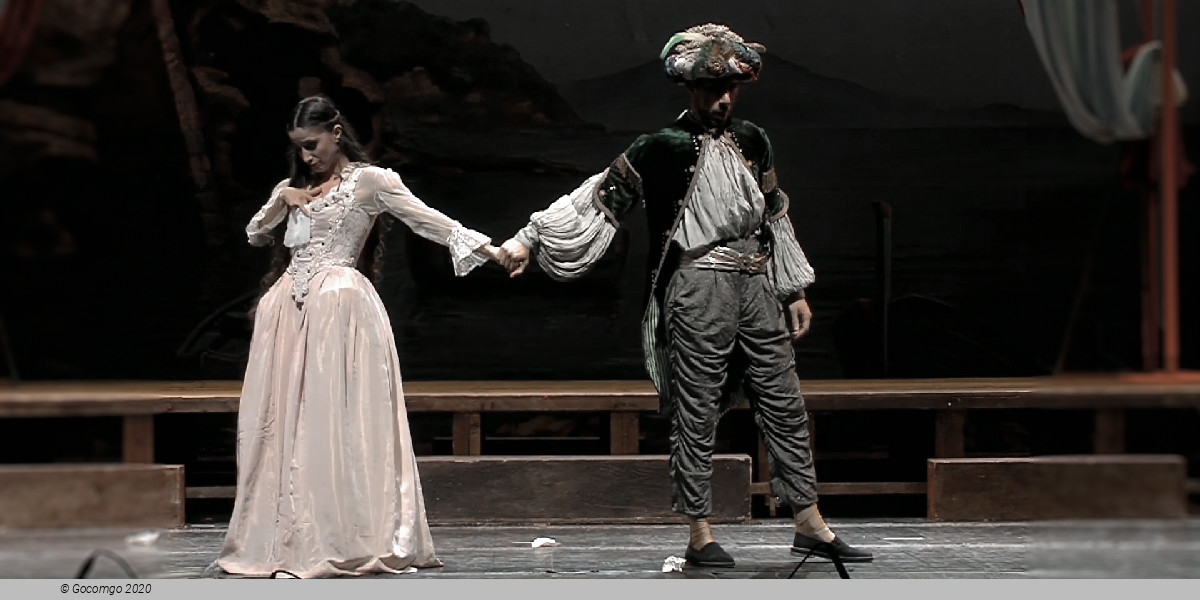
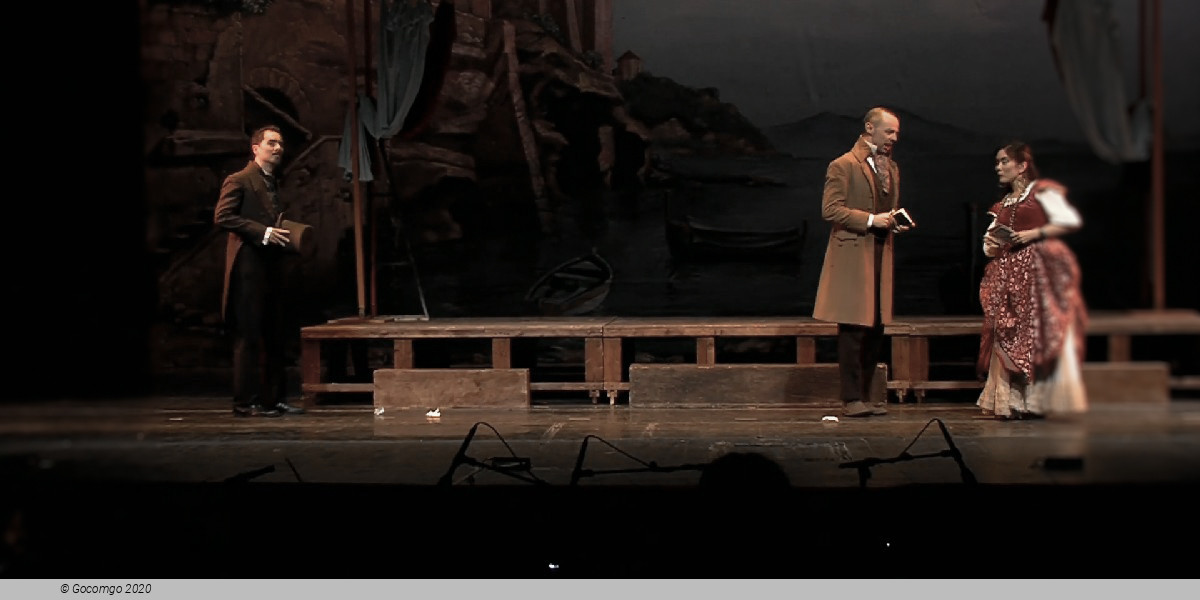
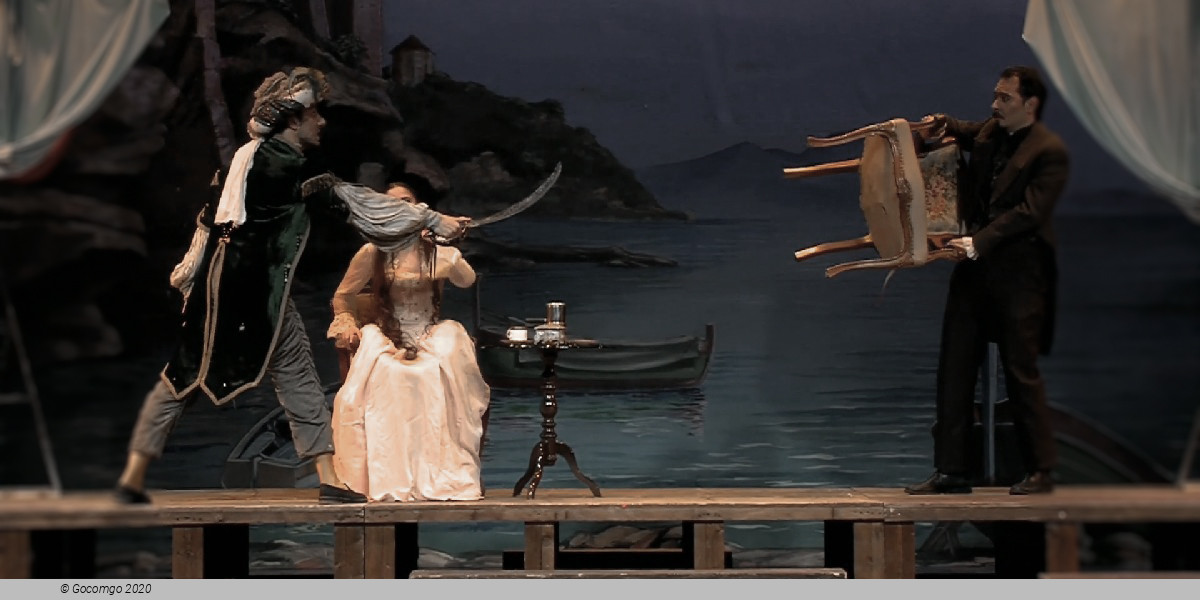
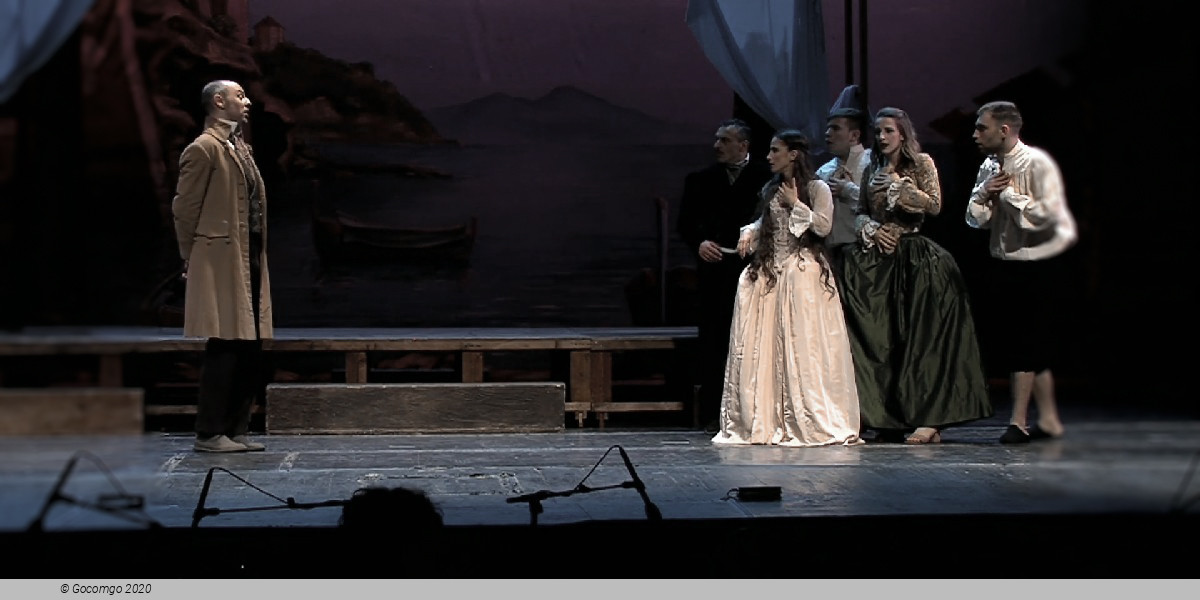
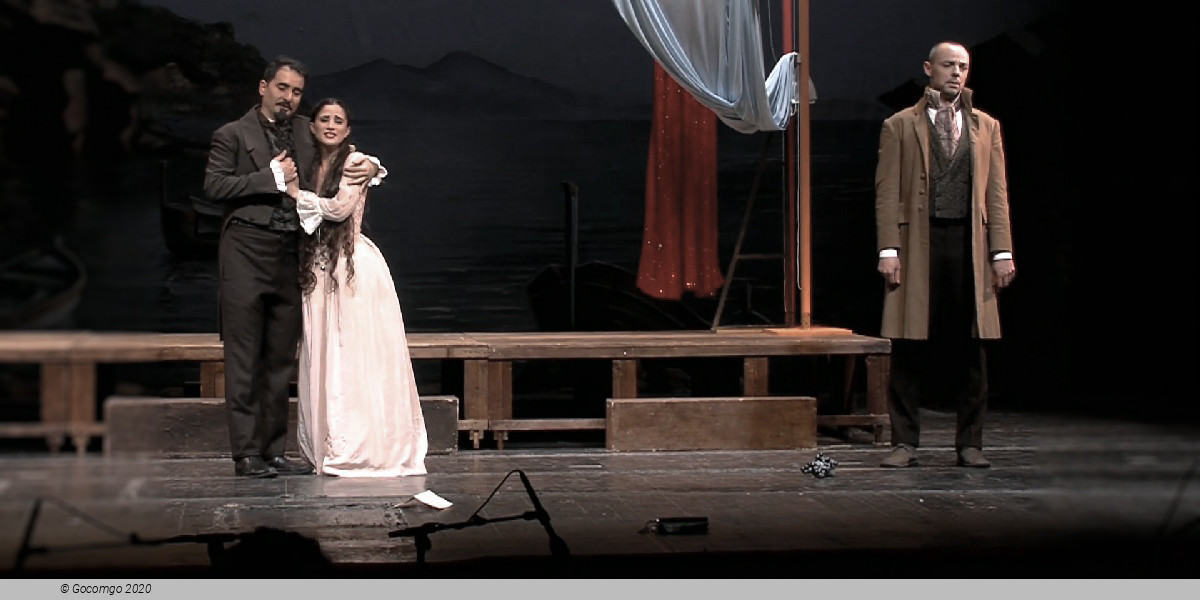
Gioachino Rossini’s dramma buffo Il turco in Italia, staged here by von Jan Philipp Gloger, is one of the funniest and most fast-paced productions in the Opernhaus Zürich's repertoire. The production really outdoes itself with fast-paced music, breakneck virtuoso arias, situational comedy and duplicitous directorial ideas. Gloger transfers this work from the genre of the so-called Turkish operas (which were very popular in Rossini's time) to the present day, and sets it in the narrow apartments, hallways, and entrances of a petty bourgeois tenement, built hyper-realistically on a revolving stage by set designer Ben Baur. In it, Gloger sparks an enigmatic game about genuine and feigned feelings and the omnipresent misunderstandings that arise in the clash of oriental and western-modern culture.

Of course, such raucous buffa fun only works if it is accompanied by a nimble orchestra and spirited vocal soloists. This is ensured in the current revival by Olga Peretyatko in the vocally highly demanding role of Fiorilla, Nahuel Di Pierro as the charmingly modern "Turk" Selim, and Rossini-tested character actors like Pietro Spagnoli and Renato Girolami. On the podium is the young Italian conductor Daniele Squeo.

History
Premiere of this production: 14 August 1814, La Scala, Milan

Il turco in Italia (The Turk in Italy) is an opera in two acts by Gioachino Rossini. The Italian-language libretto was written by Felice Romani. It was a re-working of a libretto by Caterino Mazzolà set as an opera (with the same title) by the German composer Franz Seydelmann in 1788.

Synopsis

Time: 18th Century
Place: In and around Naples

Act 1

By the sea shore near Naples

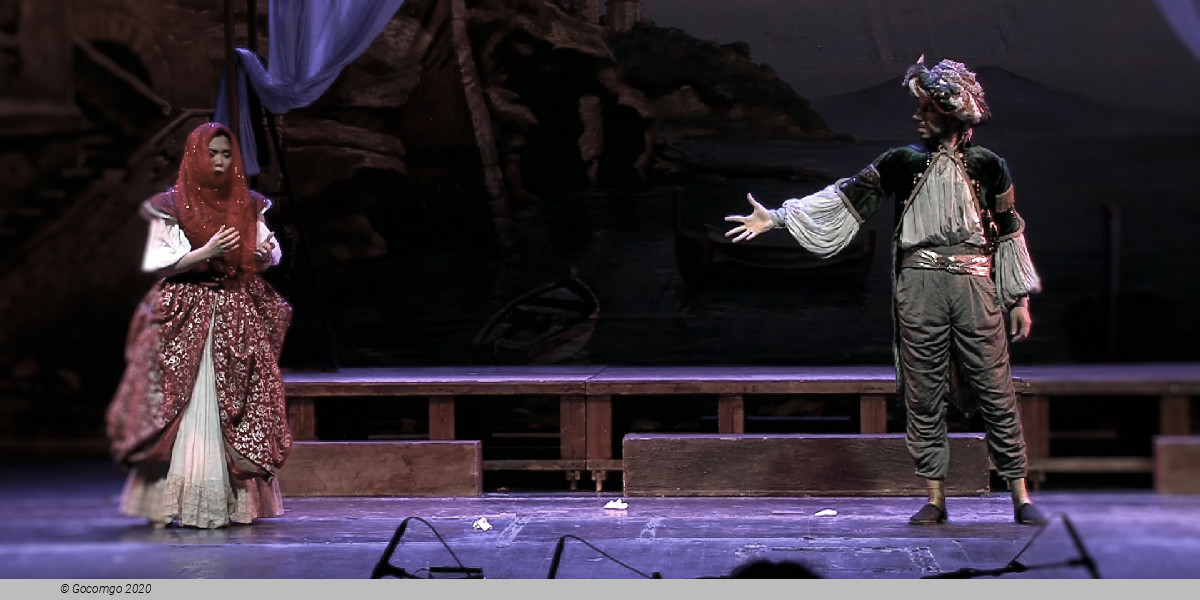
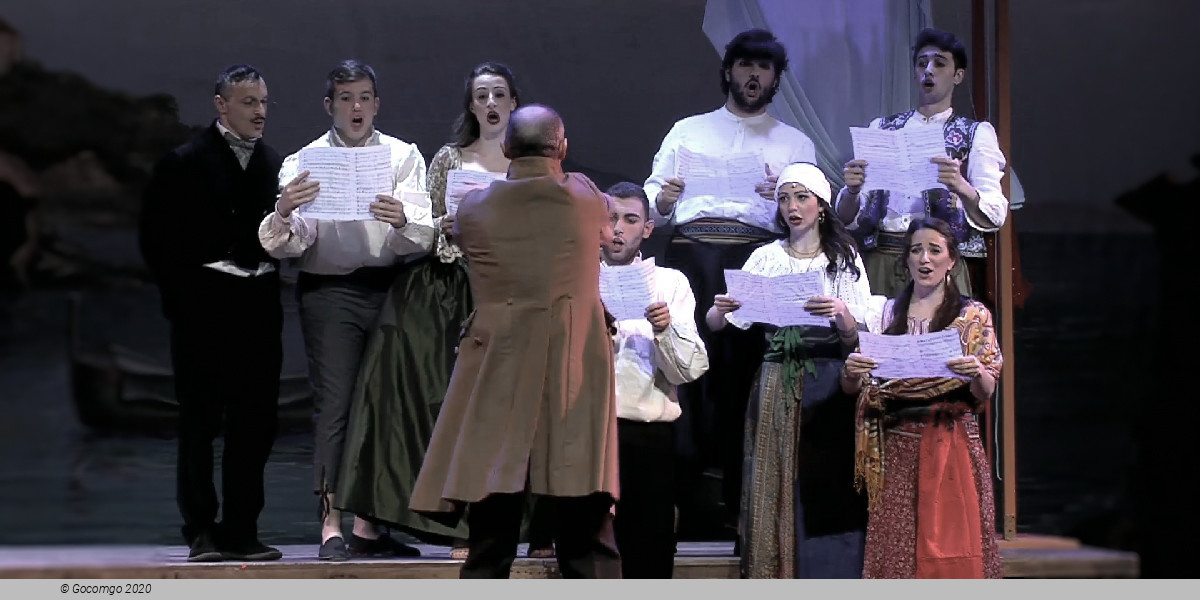
The poet Prosdocimo (baritone) is searching for a plot for a drama buffo. He meets a band of Gypsies, including the beautiful but unhappy Zaida (mezzo-soprano) and her confidant Albazar (tenor). Perhaps the Gypsies can provide some ideas? Prosdocimo's friend, the obstinate and sometimes foolish Geronio (bass), is looking for a fortune teller to advise him on his marital problems, but the Gypsies tease him. Zaida tells Prosdocimo that she is from a Turkish harem. She and her master, Prince Selim, were in love, but jealous rivals accused her of infidelity and she had to flee for her life, accompanied by Albazar. Nevertheless, she still loves only one man and that man is Selim. Prosdocimo knows that a Turkish prince will shortly be arriving in Italy. Perhaps he can help? Geronio's capricious young wife Fiorilla (soprano) enters singing (in contrast to Zaida) of the joys of free and unfettered love. A Turkish ship arrives and the prince disembarks. It is Selim (bass) himself. Fiorilla is immediately attracted to the handsome Turk, and a romance rapidly develops. Narciso (tenor) appears in her pursuit. He is an ineffectual admirer of Fiorilla posing as a friend of her husband. Geronio follows, horrified to learn that Fiorilla is taking the Turk home to drink his coffee!

Geronio's house

Fiorilla and Selim are flirting. Geronio enters timidly and Selim is initially impressed by his unexpected meekness, however Narciso noisily scolds Geronio. The domestic menage irritates Selim and he leaves after quietly arranging to meet Fiorilla again by his ship. Geronio tells Fiorilla he will not allow any more Turks - or Italians - in his house. She sweetly undermines his complaints, and then, when he softens, threatens to punish him by enjoying herself even more wildly.

The sea shore at night

Selim is waiting for Fiorilla. Instead he meets Zaida. The former lovers are shocked and delighted, and declare once more their mutual love. Narciso re-appears, followed by Fiorilla in disguise, with Geronio in pursuit. Selim confuses the veiled Fiorilla with Zaida and the two women come suddenly face to face. Fiorilla accuses Selim of betrayal. Zaida confronts Fiorilla. Geronio tells his wife to go home. There is a stormy finale.

Act 2

At an inn

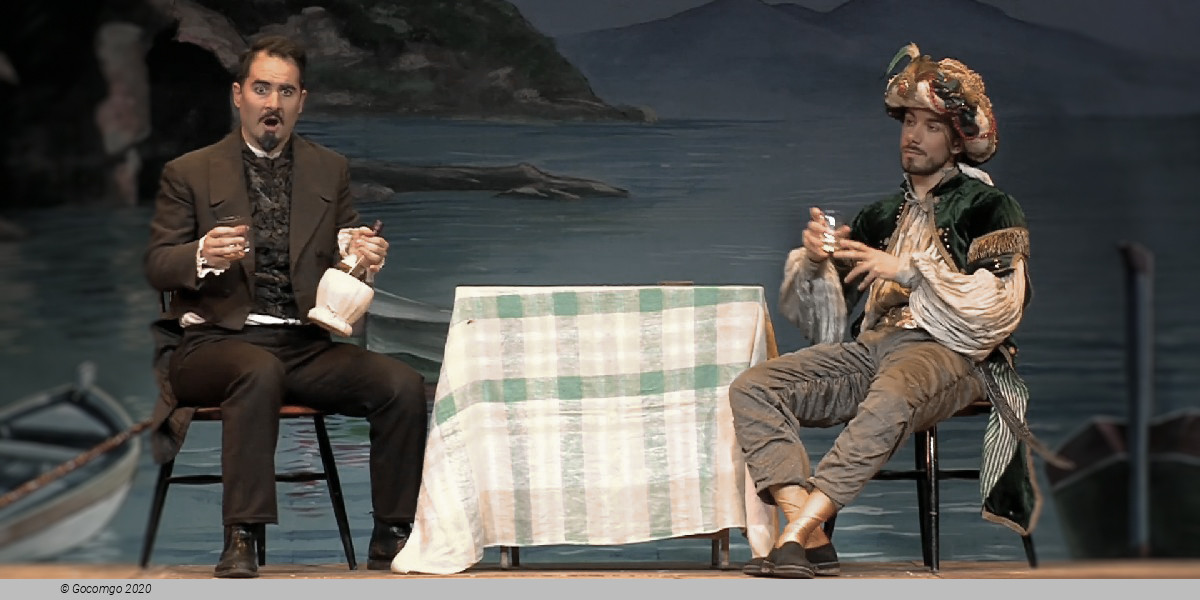
Selim approaches Geronio amicably, offering to buy Fiorilla. That way Geronio can be rid of his problems and also make some money. Geronio refuses. Selim vows to steal her instead. After they leave, Fiorilla and a group of her friends appear, followed by Zaida. Fiorilla has set up a meeting between them and Selim, so that the Turk will be forced to decide between the two women. In the event he is indecisive, not wishing to lose either of them. Zaida leaves in disgust. Selim and Fiorilla quarrel but are eventually reconciled. As the poet tells Geronio, there is going to be a party. Fiorilla will be there to meet Selim, who will be masked. Geronio should also go - disguised as a Turk! Narciso overhears this, and decides to take advantage of the situation to take Fiorilla himself, in revenge for her former indifference. Geronio laments his destiny, that he should have such a terrible, crazy wife. Albazar passes by holding a costume - for Zaida!

A ballroom with masqueraders and dancers

Fiorilla mistakes Narciso for Selim and Narciso leads her away. Meanwhile, Selim enters with Zaida, under the impression that she is Fiorilla. Geronio is in utter despair at finding two couples and two Fiorillas! Narciso and Selim both entreat their partners to leave with them. Confused and angry, Geronio attempts to stop both couples, but they eventually escape.

Back at the inn

Prosdocimo meets Geronio. They now know that Selim was with Zaida and guess that Fiorilla was with Narciso. Albazar confirms that Selim will definitely stay with Zaida. Prosdocimo advises Geronio to have his revenge on Fiorilla by pretending to divorce her and threatening to send her back to her family.

Having discovered Narciso's deception, Fiorilla tries to find Selim, but he has already left with Zaida. She returns home only to find the divorce letter, and her belongings being removed from the house. She is devastated by shame, and promptly deserted by her friends.

The beach

Selim and Zaida are about to set sail for Turkey, while Fiorilla is looking for a boat to take her back to her home town. Geronio finds and forgives her. They are affectionately reconciled. Both couples are now reunited and Prosdocimo is delighted with his happy ending.

Venue Info

Zurich Opera House - Zurich
Location   Sechseläutenplatz 1

Zürich Opera House is a main opera house in Zürich and Switzerland. Located at the Sechseläutenplatz, it has been the home of the Zürich Opera since 1891, and also houses the Bernhard-Theater Zürich. It is also home to the Zürich Ballet. The Opera House also holds concerts by its Philharmonia orchestra, matinees, Lieder evenings and events for children. The Zürich Opera Ball is organised every year in March, and is usually attended by prominent names.

The first permanent theatre, the Aktientheater, was built in 1834 and it became the focus of Richard Wagner’s activities during his period of exile from Germany.

The Aktientheater burnt down in 1890. The new Stadttheater Zürich (municipal theatre) was built by the Viennese architects Fellner & Helmer, who changed their previous design for the theatre in Wiesbaden only slightly. It was opened in 1891. It was the city's main performance space for drama, opera, and musical events until 1925, when it was renamed Opernhaus Zürich and a separate theatre for plays was built: The Bernhard Theater opened in 1941, in May 1981 the Esplanada building was demolished, and the present adjoint building opened on 27/28 December 1984 after three years of transition in the Kaufhaus building nearby Schanzengraben.

By the 1970s, the opera house was badly in need of major renovations; when some considered it not worth restoring, a new theatre was proposed for the site. However, between 1982 and 1984, rebuilding took place but not without huge local opposition which was expressed in street riots. The rebuilt theatre was inaugurated with Wagner’s Die Meistersinger von Nürnberg and the world première of Rudolf Kelterborn’s Chekhov opera Der Kirschgarten.

As restored, the theatre is an ornate building with a neo-classical façade of white and grey stone adorned with busts of Weber, Wagner, and Mozart. Additionally, busts of Schiller, Shakespeare, and Goethe are to be found. The auditorium is built in the neo-rococo style and seats approximately 1200 people. During the refurbishment, the issue of sightlines was not adequately addressed. As a result, the theatre has a high number of seats with a limited view, or no view, of the stage. This is unusual in international comparison, where sightlines in historic opera houses have been typically enhanced over time.

Corporate archives and historical library collections are held at the music department of the Predigerkirche Zürich.

The Zürich Opera House is also home of the International Opera Studio (in German: Internationales Opernstudio IOS) which is a educational program for young singers and pianists. The studio was created in 1961 and has renowned artists currently teaching such as Brigitte Fassbaender, Hedwig Fassbender, Andreas Homocki, Rosemary Joshua, Adrian Kelly, Fabio Luisi, Jetske Mijnssen, Ann Murray, Eytan Pessen or Edith Wiens.

Important Info
Type: Opera
City: Zurich, Switzerland
Starts at: 19:00
Acts: 2
Intervals: 1
Duration: 2h 50min
Sung in: Italian
Titles in: English,German
Top of page