
Zurich Opera House 6 May 2020 - Il mondo della luna | GoComGo.com

Il mondo della luna

Zurich Opera House, Zurich, Switzerland
All photos (8)
Select date and time
7:30 PM
Request for Tickets
Important Info
Type: Opera
City: Zurich, Switzerland
Starts at: 19:30
Acts: 3
Sung in: Italian
Titles in: German

E-tickets: Print at home or at the box office of the event if so specified. You will find more information in your booking confirmation email.

You can only select the category, and not the exact seats.
If you order 2 or 3 tickets: your seats will be next to each other.
If you order 4 or more tickets: your seats will be next to each other, or, if this is not possible, we will provide a combination of groups of seats (at least in pairs, for example 2+2 or 2+3).

Overview

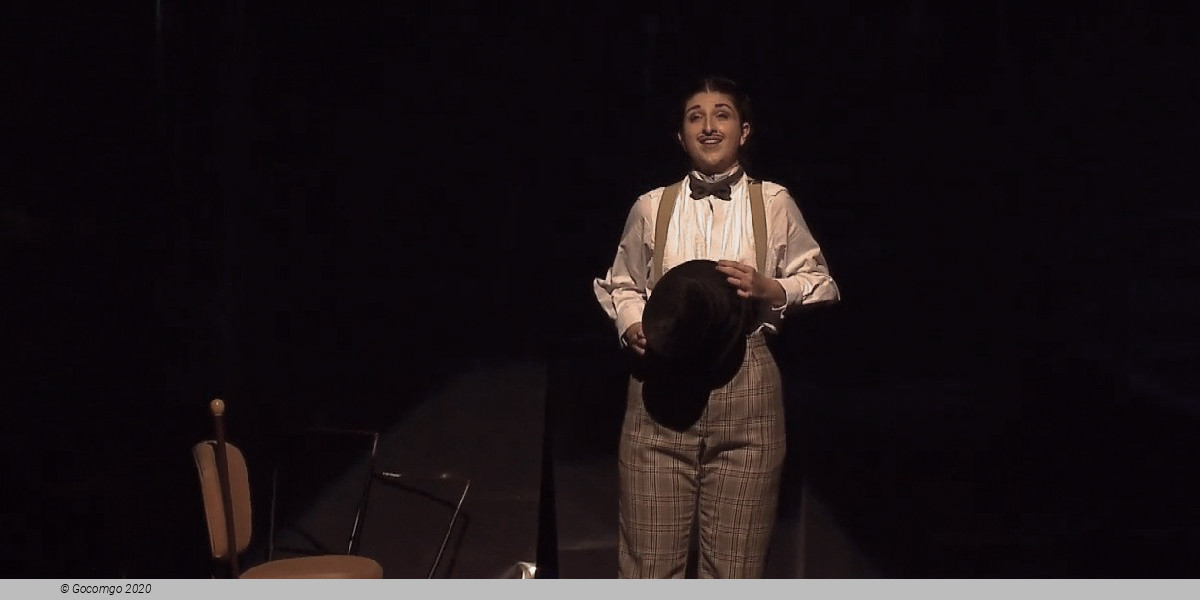
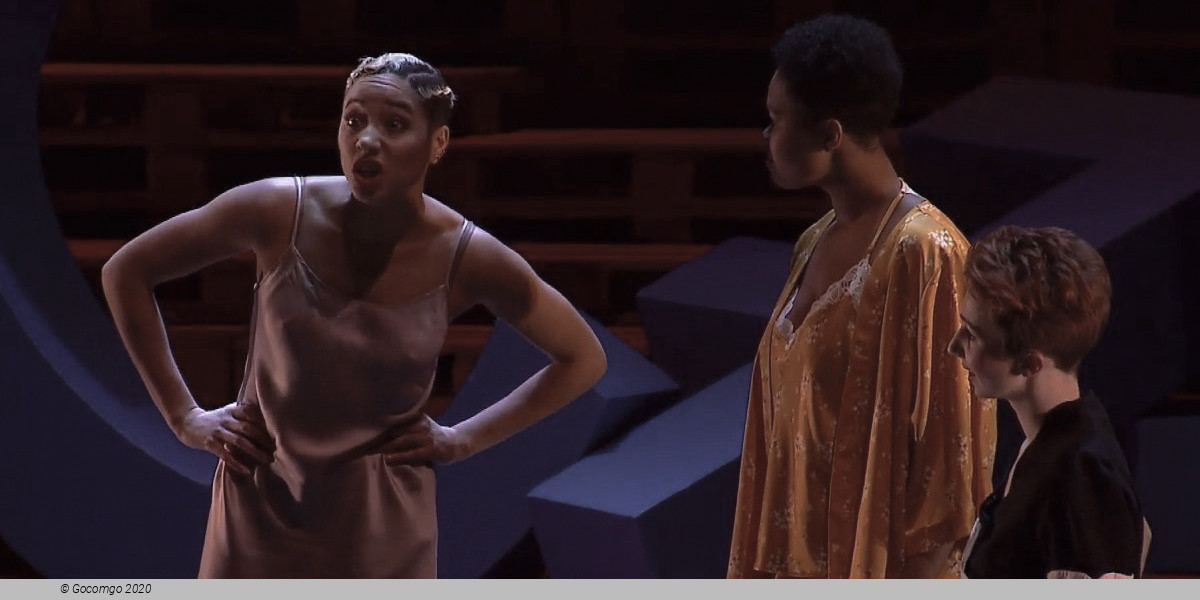
This International Opera Studio production, which will again be première at the Theater Winterthur, will be staged by the young Japanese director Tomo Sugao and conducted by the promising young conductor Joseph Bastian, winner of the Neeme Järvi Prize at the Gstaad Menuhin Festival.

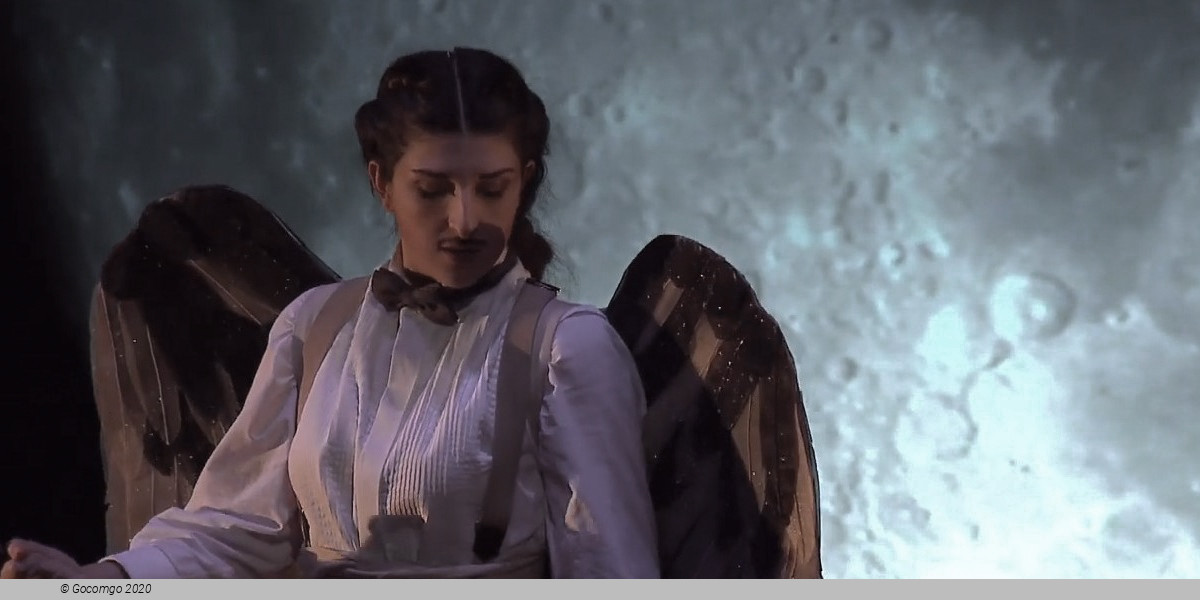
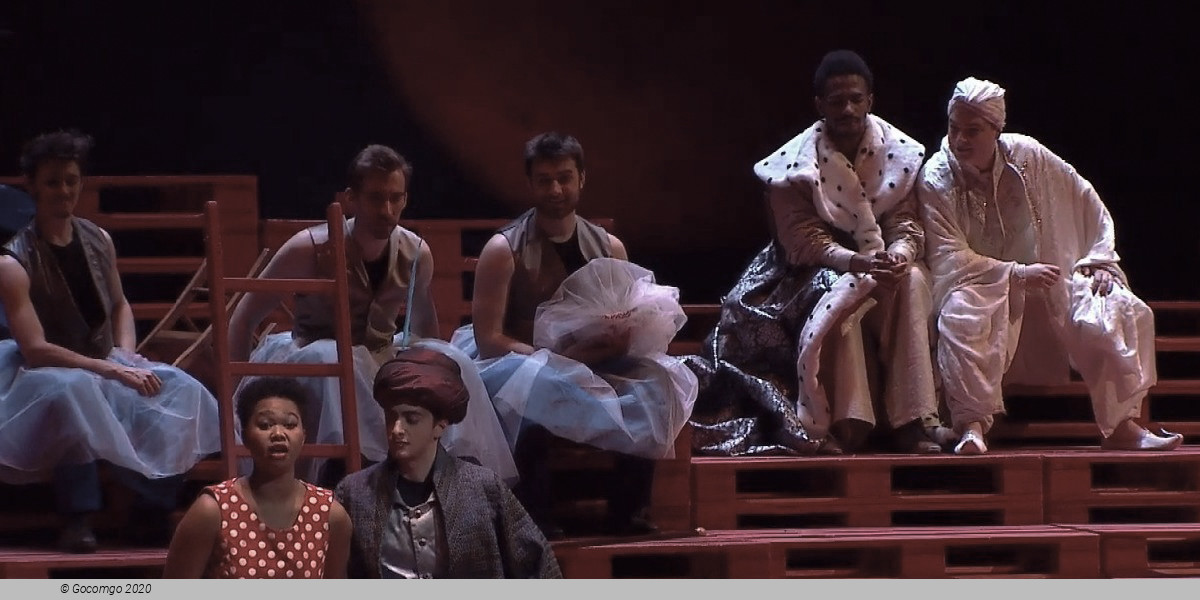
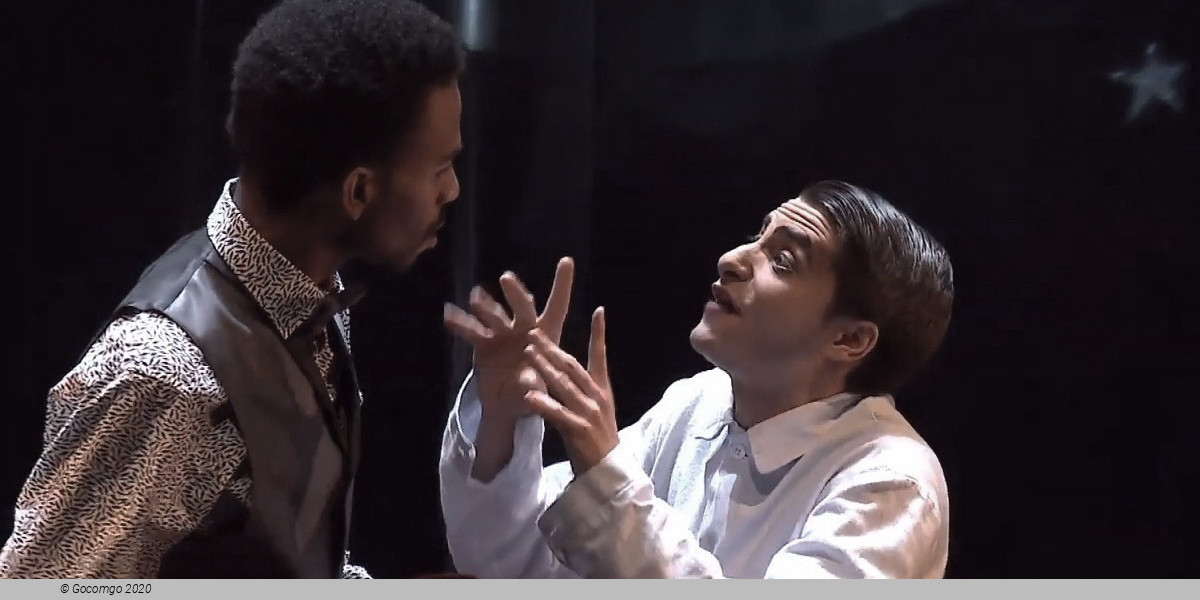
"Luna, lena, lino, lana, lana, lino, lunala / Burlicchete, burlacchete, brugnocchete e cucù." The moon has its own language, an emperor and extremely lax attitudes when it comes to matters of love. Bonafede, lover of astronomy, is able to convince himself of this through personal experience – two centuries before Neil Armstrong’s spectacular moon landing. Joseph Haydn’s last opera buffa, Il mondo della luna, was premièred during the princely wedding celebrations at Schloss Esterházy in 1777. Based on a comedy by Carlo Goldoni, Haydn’s opera, which sparkles with musical inspiration, is an outlandish, ludicrous expedition into the infinite expanse of the imagination. However, for the “credulous” Bonafede – as his name clearly indicates – the landing on the moon is only staged: the swindler Ecclitico and his friend Ernesto administer a sleeping potion in order to get their hands on Bonafede’s daughters, whom he protects like the apple of his eye. Initiated in the intrigue, his daughters assist the pair in leading him to believe that he has entered a lunar paradise. Changed by his experiences on the moon, in the end Bonafede himself endeavours to bring the couples together.

History
Premiere of this production: 03 August 1777, Eszterháza

Il mondo della luna (The World on the Moon) is an opera buffa by Joseph Haydn with a libretto written by Carlo Goldoni in 1750, first performed at Eszterháza, Hungary, on 3 August 1777.

Synopsis

Act 1

A terrace in the house of the bogus astronomer Ecclitico; an observatory tower with a telescope. A starlit night, with full moon

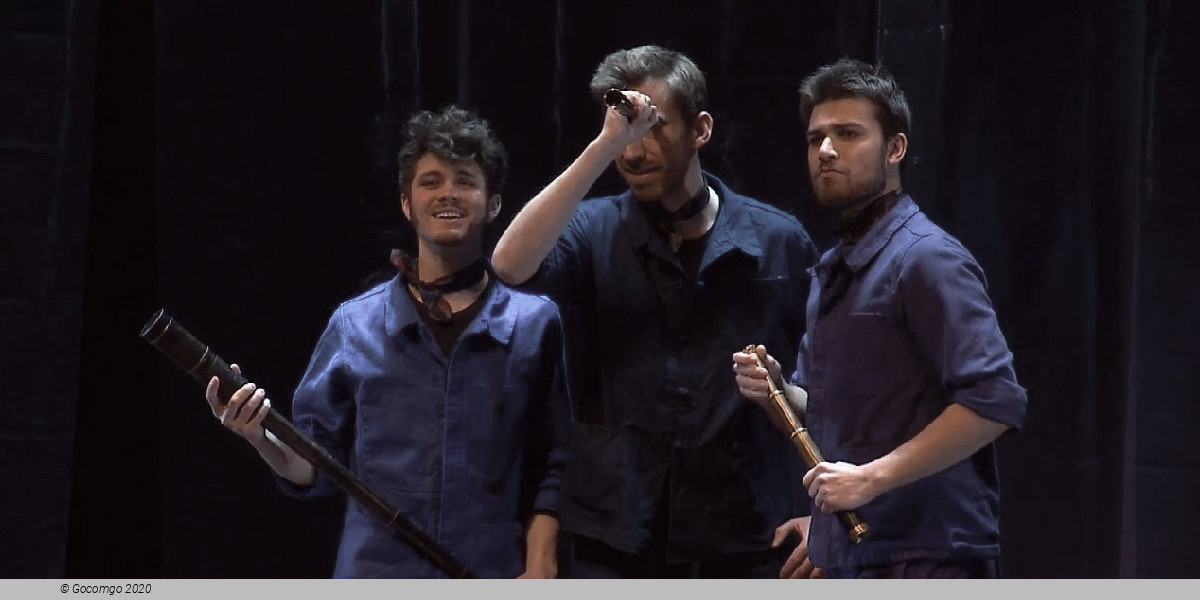
Ecclitico and his four students sing a hymn to the Moon, and Ecclitico boasts of how he can dupe the foolish – such as Buonafede, who now appears. Buonafede does not have a clue what the Moon is. Ecclitico explains to him that through his powerful telescope he will be able to see the Moon's transparent surface all the way through the houses and able to spy on ladies as they undress before going to bed. Buonafede then attempts to view the Moon through Ecclitico's telescope while Ecclitico's servants move caricatures in front of the telescope's lens. The trick works: Buonafede describes what he thinks he has seen: a very beautiful young girl caressing an old man, a husband ready to punish his wife for her infidelity, and a man who completely dominates his female lover. He rewards Ecclitico with some coins and leaves.

Alone, Ecclitico muses that it is not the old man's money he wants, but to wed his daughter Clarice. Ernesto, a nobleman who is in love with Clarice's sister Flaminia, and his servant Cecco (in love with Buonafede's servant, Lisetta) now join Ecclitico. Buonafede intends to marry the sisters off to rich suitors.

Ecclitico assures Ernesto and Cecco that with a little money all their difficulties will be solved. In a more serious aria ("Begli occhi vezzosi"), Ernesto sings of Flaminia's eyes and awaits impatiently the moment in which the two of them will spend their lives together. Cecco, for his part, is convinced that everyone's playing games and insistently points out the comic side of life.

A room in Buonafede's house

The sisters Clarice and Flaminia dream of escaping their tyrannical father. In a long aria, Flaminia recognises that even if reason is to dominate the soul, when love intervenes it takes control of everything. Buonafede mocks Clarice's stubbornness but she answers back, threatening him that she will find a husband for herself if he is not capable of providing one for her. The two sisters are clearly differentiated: Clarice is down to earth and her arias are full of determined pragmatism. Buonafede invites Lisetta (his daughters' maid) to share the wonders he has seen through the telescope, in an attempt to win her over. Interested in his money, she reassures him of her love for him, her fidelity and her virtues, none of which is true. Ecclitico arrives and tells Buonafede that the Emperor of the Moon has invited him to his court. By drinking an elixir he will be transported to the Moon. Buonafede is tempted to travel with him and, therefore, asks for some of the liquor. Ecclitico agrees and, pretending to drink half of it, gives the rest to Buonafede who drinks it, falls asleep, and dreams of flying to the Moon. Clarice and Lisetta believe at first that he is dead, then console themselves with the inheritance they will be getting.

Act 2

Ecclitico's garden, decorated so as to convince Buonafede that he is on the Moon

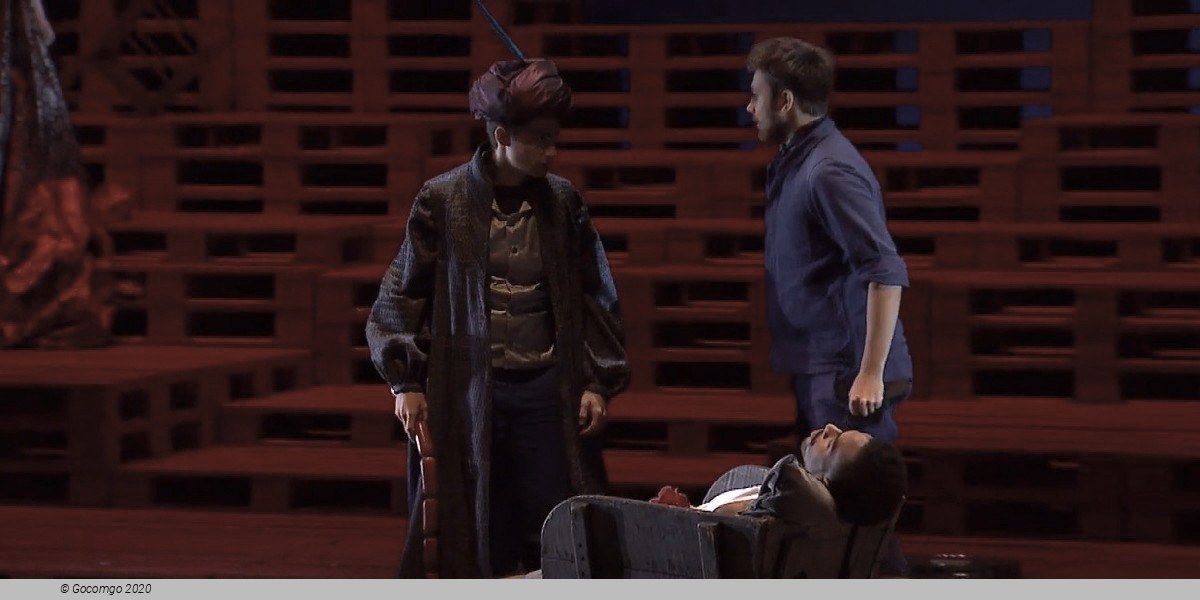
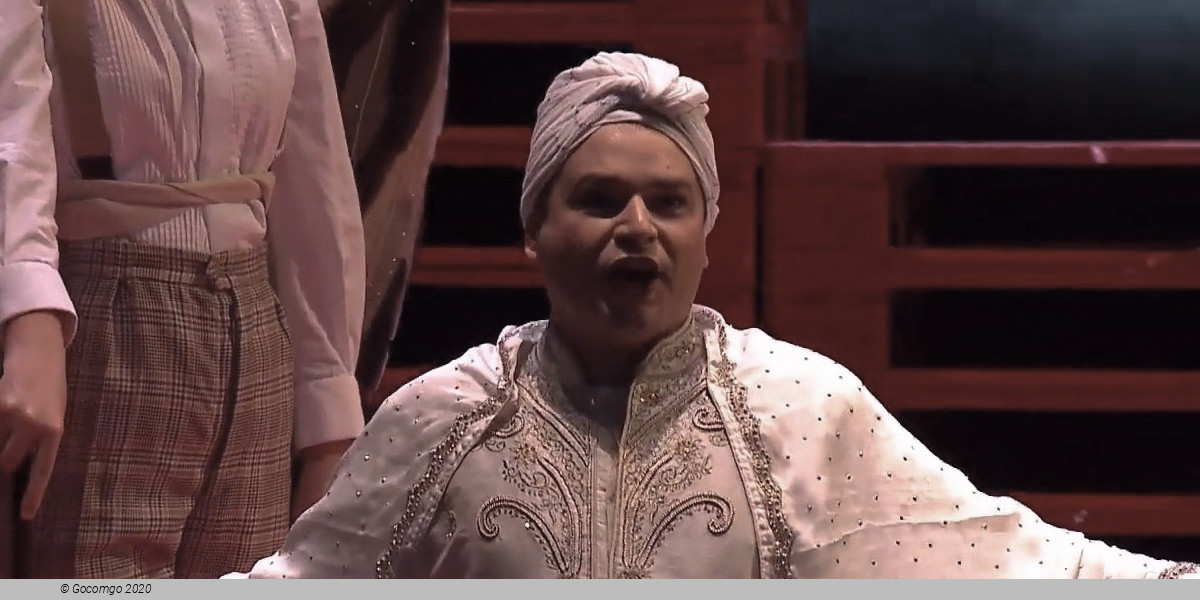
Ecclitico and Ernesto discuss the progress of their plot, and when Buonafede awakens he is convinced he is on the Moon. He is entertained by a ballet and clothed in elegant gowns. Ecclitico tells him that he will be joined by his daughters and servant. According to lunar custom the women will be meek. Cecco appears disguised as the Emperor of the Moon, with Ernesto as the star Hesperus. Buonafede, delighted with life on the Moon, is entertained by another ballet. When Lisetta enters, Buonafede tries to court her, but Cecco asks her to become Empress of the Moon. Lisetta, not fully aware of the plot, is at first puzzled. The two daughters arrive and pay homage to the Emperor in a nonsense ceremony. Flaminia goes off with Ernesto and Clarice with Ecclitico, while Cecco prepares to crown Lisetta as Empress. In the confusion of the masquerade, Buonafede is tricked into consenting to the three marriages, only realising that he has been duped when it is too late.

Act 3

A room in Ecclitico's house

The conspirators, back in normal dress, have locked Buonafede in his own house – the price of his freedom will be forgiveness for his daughters and their dowries. At last he yields.

A starlit night with a full moon

Clarice and Ecclitico sing of their love. Buonafede repents of his previous strictness and there is general rejoicing and celebration.

Venue Info

Zurich Opera House - Zurich
Location   Sechseläutenplatz 1

Zürich Opera House is a main opera house in Zürich and Switzerland. Located at the Sechseläutenplatz, it has been the home of the Zürich Opera since 1891, and also houses the Bernhard-Theater Zürich. It is also home to the Zürich Ballet. The Opera House also holds concerts by its Philharmonia orchestra, matinees, Lieder evenings and events for children. The Zürich Opera Ball is organised every year in March, and is usually attended by prominent names.

The first permanent theatre, the Aktientheater, was built in 1834 and it became the focus of Richard Wagner’s activities during his period of exile from Germany.

The Aktientheater burnt down in 1890. The new Stadttheater Zürich (municipal theatre) was built by the Viennese architects Fellner & Helmer, who changed their previous design for the theatre in Wiesbaden only slightly. It was opened in 1891. It was the city's main performance space for drama, opera, and musical events until 1925, when it was renamed Opernhaus Zürich and a separate theatre for plays was built: The Bernhard Theater opened in 1941, in May 1981 the Esplanada building was demolished, and the present adjoint building opened on 27/28 December 1984 after three years of transition in the Kaufhaus building nearby Schanzengraben.

By the 1970s, the opera house was badly in need of major renovations; when some considered it not worth restoring, a new theatre was proposed for the site. However, between 1982 and 1984, rebuilding took place but not without huge local opposition which was expressed in street riots. The rebuilt theatre was inaugurated with Wagner’s Die Meistersinger von Nürnberg and the world première of Rudolf Kelterborn’s Chekhov opera Der Kirschgarten.

As restored, the theatre is an ornate building with a neo-classical façade of white and grey stone adorned with busts of Weber, Wagner, and Mozart. Additionally, busts of Schiller, Shakespeare, and Goethe are to be found. The auditorium is built in the neo-rococo style and seats approximately 1200 people. During the refurbishment, the issue of sightlines was not adequately addressed. As a result, the theatre has a high number of seats with a limited view, or no view, of the stage. This is unusual in international comparison, where sightlines in historic opera houses have been typically enhanced over time.

Corporate archives and historical library collections are held at the music department of the Predigerkirche Zürich.

The Zürich Opera House is also home of the International Opera Studio (in German: Internationales Opernstudio IOS) which is a educational program for young singers and pianists. The studio was created in 1961 and has renowned artists currently teaching such as Brigitte Fassbaender, Hedwig Fassbender, Andreas Homocki, Rosemary Joshua, Adrian Kelly, Fabio Luisi, Jetske Mijnssen, Ann Murray, Eytan Pessen or Edith Wiens.

Important Info
Type: Opera
City: Zurich, Switzerland
Starts at: 19:30
Acts: 3
Sung in: Italian
Titles in: German
Top of page