
Zurich Opera House 11 January 2020 - Forsythe | GoComGo.com

Forsythe

Zurich Opera House, Zurich, Switzerland
All photos (4)
Select date and time
7 PM
Request for Tickets
Important Info
Type: Ballet
City: Zurich, Switzerland
Starts at: 19:00
Duration:

E-tickets: Print at home or at the box office of the event if so specified. You will find more information in your booking confirmation email.

You can only select the category, and not the exact seats.
If you order 2 or 3 tickets: your seats will be next to each other.
If you order 4 or more tickets: your seats will be next to each other, or, if this is not possible, we will provide a combination of groups of seats (at least in pairs, for example 2+2 or 2+3).

Overview

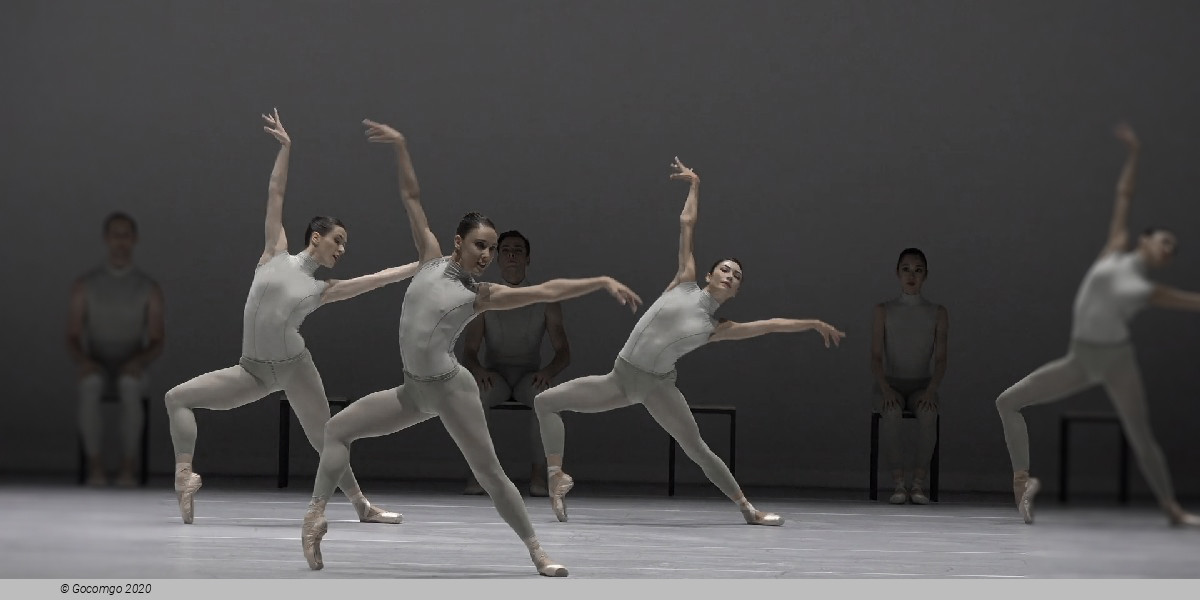
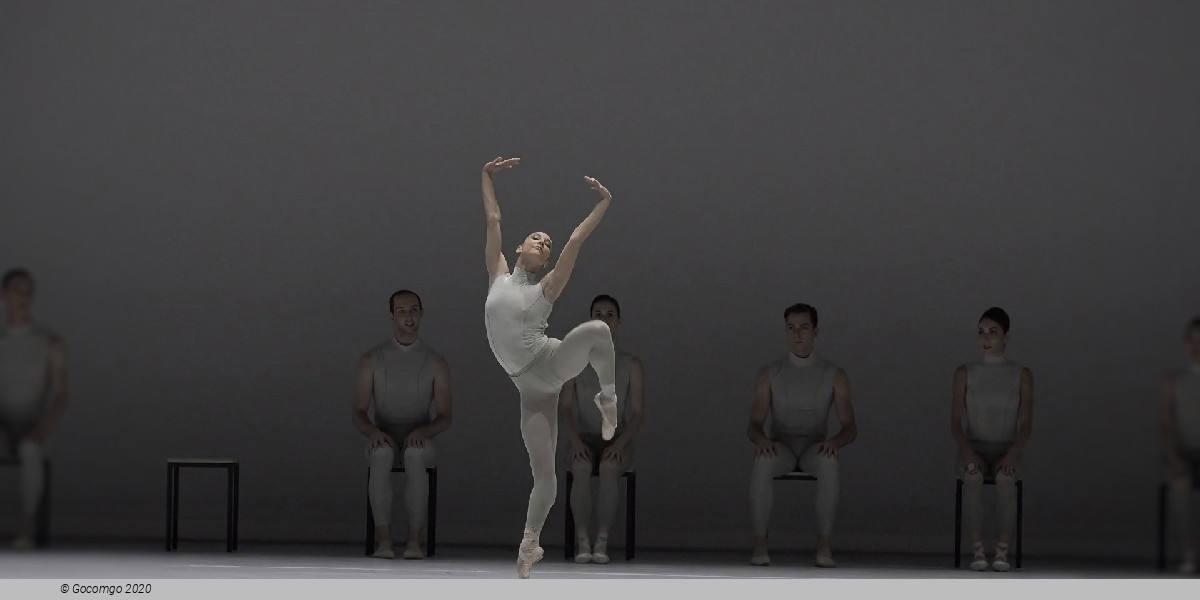
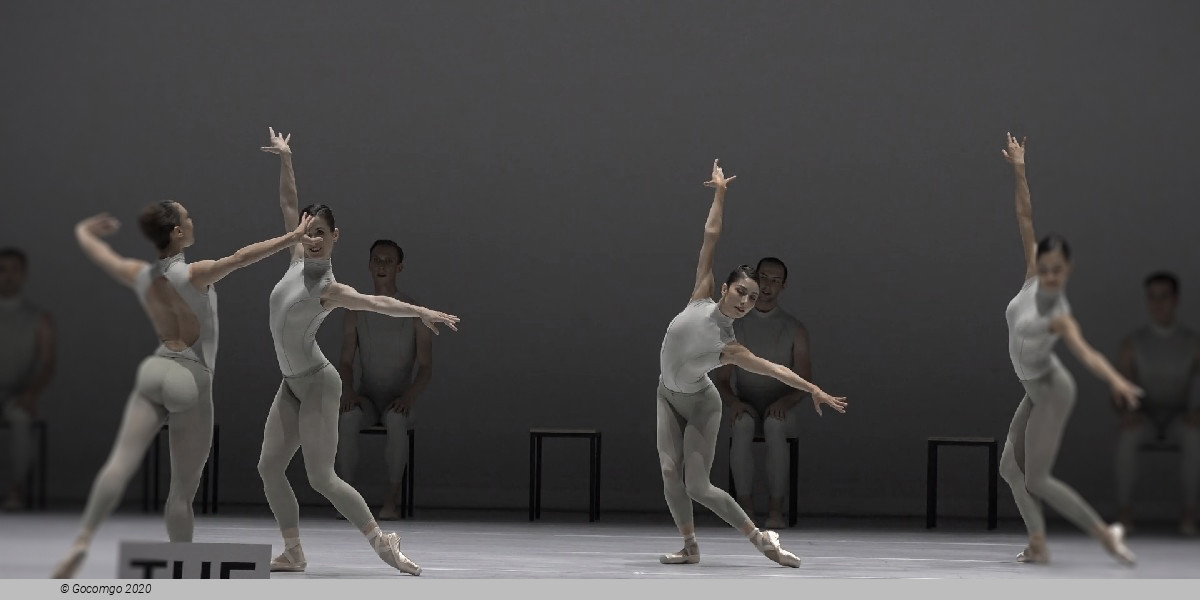
William Forsythe celebrates his 70th birthday on 30 December 2019. He is treasured all over the world as one of the most creative and intelligent innovators of the dance tradition. As long ago as the 1970s, Forsythe revolutionised dance with an unexpected development of academic ballet by completely liberating the human body from the traditional formulae of classical ballet. He enriched the vocabulary of dance with forms that had hitherto been considered incorrect. Movements were fascinatingly distorted, twisted, dismantled and – reassembled – set in a new space. The Ballett Zürich continues its intensive exploration of William Forsythe’s work and celebrates the American choreographer with a homage consisting of three pioneering pieces.

The Second Detail, created for the National Ballet of Canada in 1991, entered the repertoire of many classical companies as one of Forsythe’s early works. An analytical experiment with the geometry of classical dance, which takes the protagonists to the limits of their sense of balance and agility, unfurls against a pulsating, electronic soundscape by Thom Willems.

Innocently exaggerating, then wittily shuffling academic pas, Forsyth pokes fun at the manners of classical artists. Above their habit, carefully settle in fifth position before starting the movement; above the business walk - from the heel, which they proudly removed from the center of the class scene after the successful execution of a particularly sophisticated combination; purely industrial relations between partners; over the ability to subordinate himself to the corps de ballet flock and at the same time the desire to stand out from the masses. Each of the 14 participants is allowed to stand out: in a series of lightning fast solos and duets flashing among the measured accompaniment of disciplined luminaries, considerable risks are inherent - a sudden and sharp deflection during large tours; a zigzag of the case, which exorbitantly complicates the rotation; throwing legs along a lawless trajectory and other voluntaristic escapades.

In the minimalist Approximate Sonata of 1996, Forsythe uses four couples to question the validity of the classical pas de deux. Ballett Zürich will be performing the piece in the new version created by Forsythe for the Ballet of the Opéra de Paris in 2016.

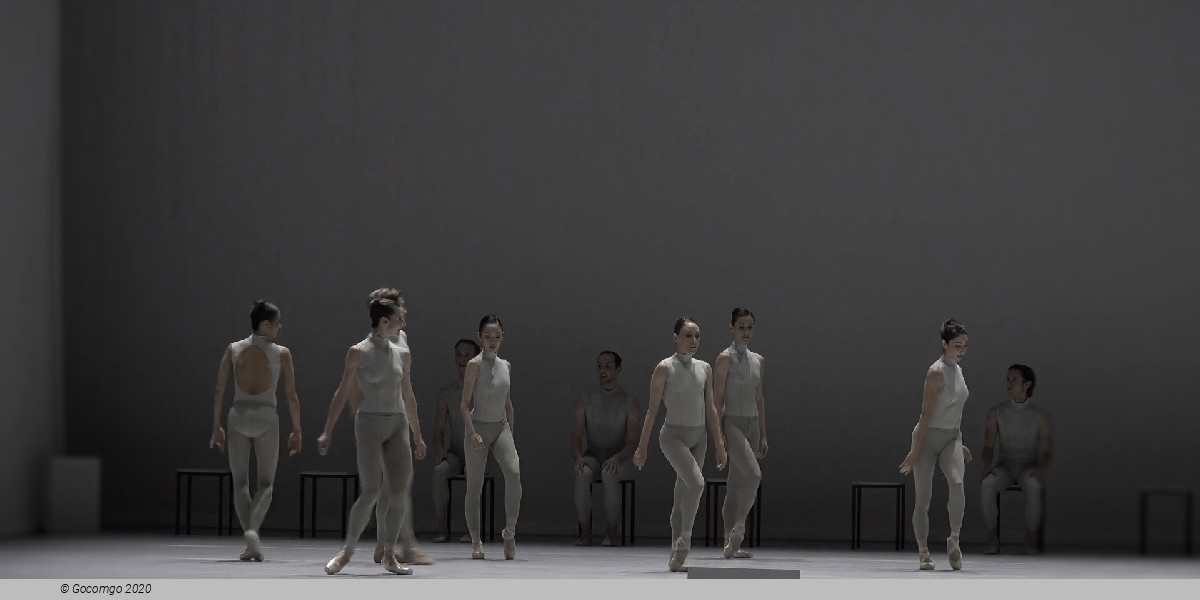
One Flat Thing, reproduced – premièred with Ballett Frankfurt in 2000 – is the final piece in this three-part ballet evening, and adds another facet to the spectrum of Forsythe’s ballet research: inspired by books on expeditions to the South Pole, Forsythe develops an increasingly compact choreography that reaches its climax in the apparent chaos of bodies amidst 20 initially perfectly arranged tables. The choreographer compares these tables with ice – smooth and unpredictably dangerous. Again set to music by Thom Willems, One Flat Thing, reproduced is a breath-taking choreography of pulsation and oblivion.

William Forsythe’s One Flat Thing, reproduced caused a stir when it premiered at Pacific Northwest Ballet in March 2008. Set to a rumbling sound construction by the choreographer’s frequent collaborator, composer Thom Willems, and performed by fourteen dancers on and around twenty metal tables, One Flat Thing thrilled many, challenged others, and, for some, called into question the definitions of “ballet” and “dance.”

Forsythe’s eclectic, intellectual starting point was a consideration of the risk and adventure of Robert Scott’s Antarctic expeditions, during which explorers relied on each other for survival, juxtaposed with his own interest in the idea of a “baroque machinery,” an ornamental, highly organized construct that runs like clockwork. The melding of these thoughts manifested itself in the collaborative development of a movement vocabulary involving high-speed choreography performed within the confines of a tightly spaced set of tables, with the requirement that the dancers play off each other, rather than a musical score, in timing their moves. The result is a thrilling sequence of team choreography, a “baroque machinery” running dangerously close to reckless abandon.

Venue Info

Zurich Opera House - Zurich
Location   Sechseläutenplatz 1

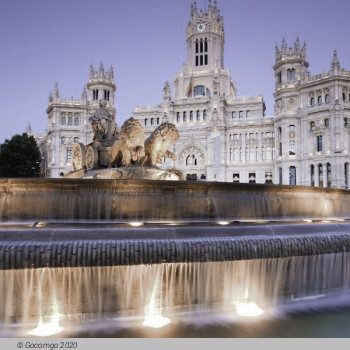
Zürich Opera House is a main opera house in Zürich and Switzerland. Located at the Sechseläutenplatz, it has been the home of the Zürich Opera since 1891, and also houses the Bernhard-Theater Zürich. It is also home to the Zürich Ballet. The Opera House also holds concerts by its Philharmonia orchestra, matinees, Lieder evenings and events for children. The Zürich Opera Ball is organised every year in March, and is usually attended by prominent names.

The first permanent theatre, the Aktientheater, was built in 1834 and it became the focus of Richard Wagner’s activities during his period of exile from Germany.

The Aktientheater burnt down in 1890. The new Stadttheater Zürich (municipal theatre) was built by the Viennese architects Fellner & Helmer, who changed their previous design for the theatre in Wiesbaden only slightly. It was opened in 1891. It was the city's main performance space for drama, opera, and musical events until 1925, when it was renamed Opernhaus Zürich and a separate theatre for plays was built: The Bernhard Theater opened in 1941, in May 1981 the Esplanada building was demolished, and the present adjoint building opened on 27/28 December 1984 after three years of transition in the Kaufhaus building nearby Schanzengraben.

By the 1970s, the opera house was badly in need of major renovations; when some considered it not worth restoring, a new theatre was proposed for the site. However, between 1982 and 1984, rebuilding took place but not without huge local opposition which was expressed in street riots. The rebuilt theatre was inaugurated with Wagner’s Die Meistersinger von Nürnberg and the world première of Rudolf Kelterborn’s Chekhov opera Der Kirschgarten.

As restored, the theatre is an ornate building with a neo-classical façade of white and grey stone adorned with busts of Weber, Wagner, and Mozart. Additionally, busts of Schiller, Shakespeare, and Goethe are to be found. The auditorium is built in the neo-rococo style and seats approximately 1200 people. During the refurbishment, the issue of sightlines was not adequately addressed. As a result, the theatre has a high number of seats with a limited view, or no view, of the stage. This is unusual in international comparison, where sightlines in historic opera houses have been typically enhanced over time.

Corporate archives and historical library collections are held at the music department of the Predigerkirche Zürich.

The Zürich Opera House is also home of the International Opera Studio (in German: Internationales Opernstudio IOS) which is a educational program for young singers and pianists. The studio was created in 1961 and has renowned artists currently teaching such as Brigitte Fassbaender, Hedwig Fassbender, Andreas Homocki, Rosemary Joshua, Adrian Kelly, Fabio Luisi, Jetske Mijnssen, Ann Murray, Eytan Pessen or Edith Wiens.

Important Info
Type: Ballet
City: Zurich, Switzerland
Starts at: 19:00
Duration:
Top of page