Zurich Opera House 29 October 2022 - Faust | GoComGo.com

Faust

Zurich Opera House, Zurich, Switzerland
All photos (4)
Select date and time
7:30 PM

E-tickets: Print at home or at the box office of the event if so specified. You will find more information in your booking confirmation email.

You can only select the category, and not the exact seats.
If you order 2 or 3 tickets: your seats will be next to each other.
If you order 4 or more tickets: your seats will be next to each other, or, if this is not possible, we will provide a combination of groups of seats (at least in pairs, for example 2+2 or 2+3).

Important Info
Type: Opera
City: Zurich, Switzerland
Starts at: 19:30
Acts: 5
Intervals: 1
Duration: 3h
Sung in: French
Titles in: English,German

E-tickets: Print at home or at the box office of the event if so specified. You will find more information in your booking confirmation email.

You can only select the category, and not the exact seats.
If you order 2 or 3 tickets: your seats will be next to each other.
If you order 4 or more tickets: your seats will be next to each other, or, if this is not possible, we will provide a combination of groups of seats (at least in pairs, for example 2+2 or 2+3).

Overview

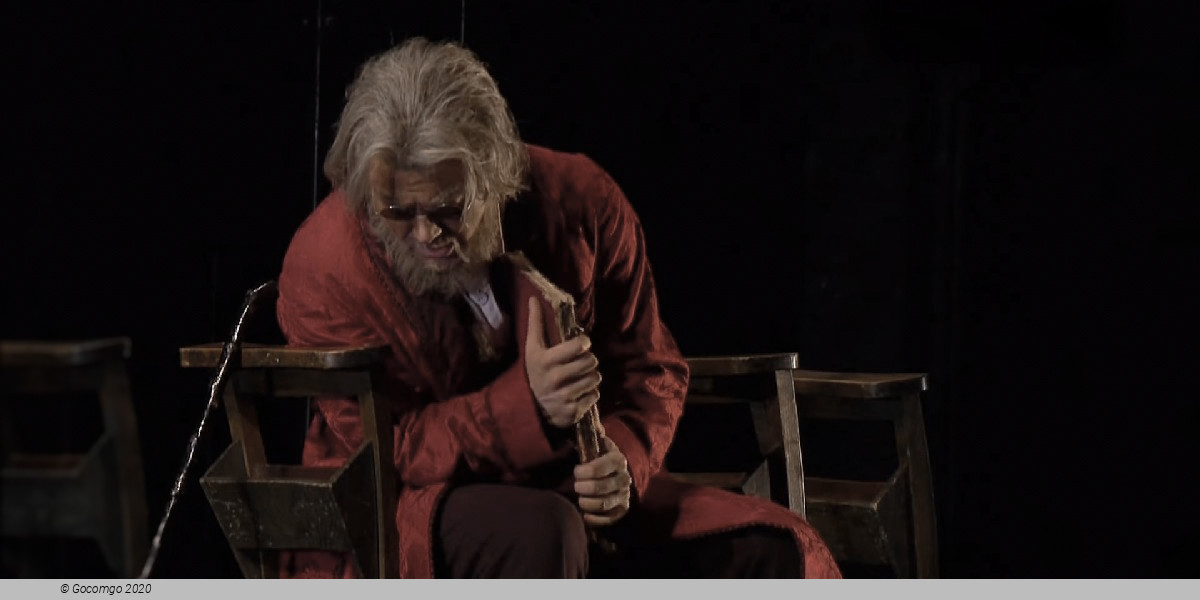
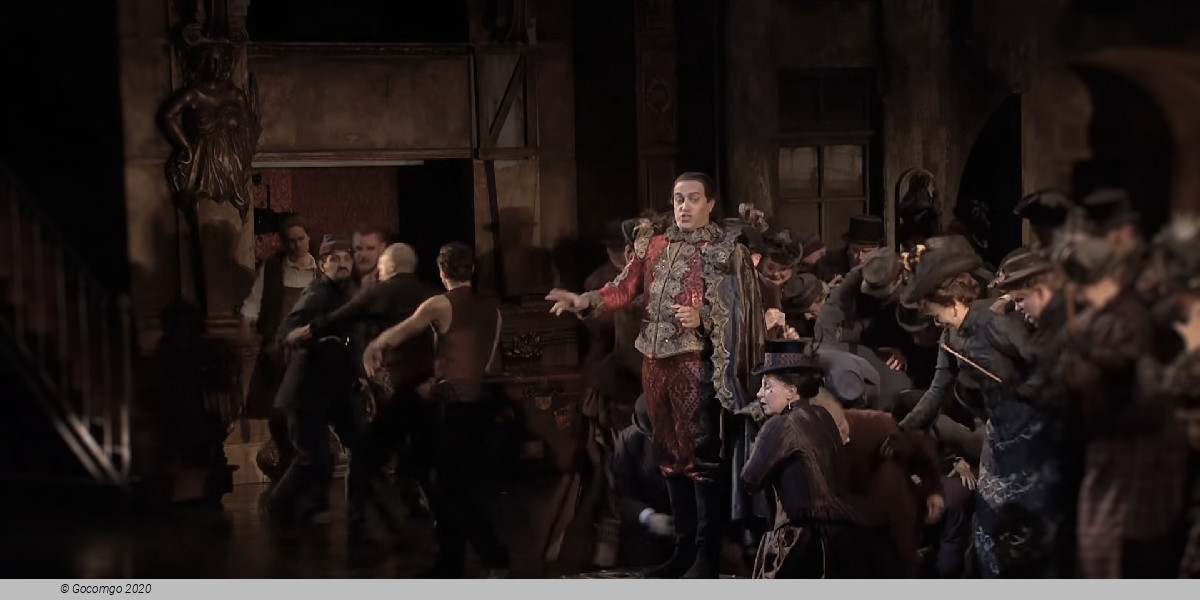
In the drama of Faust, the most fascinating, popular role with performers and audiences alike – contrary to expectations – is not the principal role, but the cunning, intelligent and vicious devil, Mephisto: Ildebrando d’Arcangelo, one of the most sought-after bass-baritones of our time and an extremely enthusiastic and diabolically seductive performer, is to return to Zurich Opera House for our revival production.

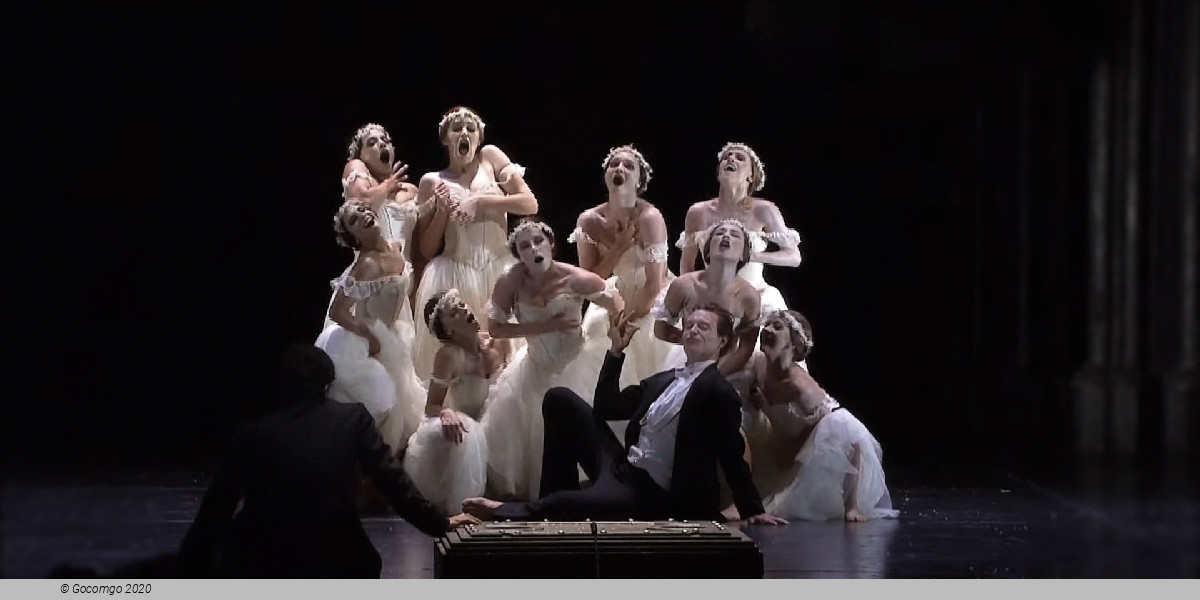
The tenor Saimir Pirgu, most recently celebrated as Pinkerton in Puccini’s Madama Butterfly, will be heard in the title role. Soprano Anita Hartig, member of the ensemble at the Vienna State Opera, will play Marguerite, singing the waltz-like jewel aria, for example, as in our last Faust revival. The American conductor Ryan McAdams will give his début at the rostrum of the Philharmonia Zurich. "Nothing" is the first word of Gounod’s opera. This is the conclusion that Faust draws about his life thus far: it has been uneventful and uninteresting, futile and wasted. To be young again, to indulge in pleasures once more! This is his greatest wish. At that moment, the Devil appears and promises to provide him with all this if Faust gives him his soul in exchange. The pact is signed, and Faust hurls himself into a passionate affair with Marguerite. However, when she becomes pregnant, he prefers to leave her alone. The abandoned girl kills her child and is executed. Goethe’s Gretchen tragedy served Charles Gounod as the material for a precise portrait of the society of his time – the Second Empire, with its unscrupulous hedonism – a portrait that in many aspects is astonishingly similar to our own time.

History
Premiere of this production: 19 March 1859, Théâtre Lyrique , Paris

Faust is an opera in five acts by Charles Gounod to a French libretto by Jules Barbier and Michel Carré from Carré's play Faust et Marguerite, in turn loosely based on Johann Wolfgang von Goethe's Faust, Part One. It debuted at the Théâtre Lyrique on the Boulevard du Temple in Paris on 19 March 1859, with influential sets designed by Charles-Antoine Cambon and Joseph Thierry, Jean Émile Daran, Édouard Desplechin, and Philippe Chaperon.

Synopsis

Place: Germany
Time: 16th century

Act 1

Faust's cabinet

Faust, an aging scholar, determines that his studies have come to nothing and have only caused him to miss out on life and love (Rien! En vain j'interroge). He attempts to kill himself (twice) with poison but stops each time when he hears a choir. He curses hope and faith, and asks for infernal guidance. Méphistophélès appears (duet: Me voici) and, with a tempting image of Marguerite at her spinning wheel, persuades Faust to buy Méphistophélès's services on earth in exchange for Faust's in Hell. Faust's goblet of poison is magically transformed into an elixir of youth, making the aged doctor a handsome young gentleman; the strange companions then set out into the world.

Act 2

At the city gates

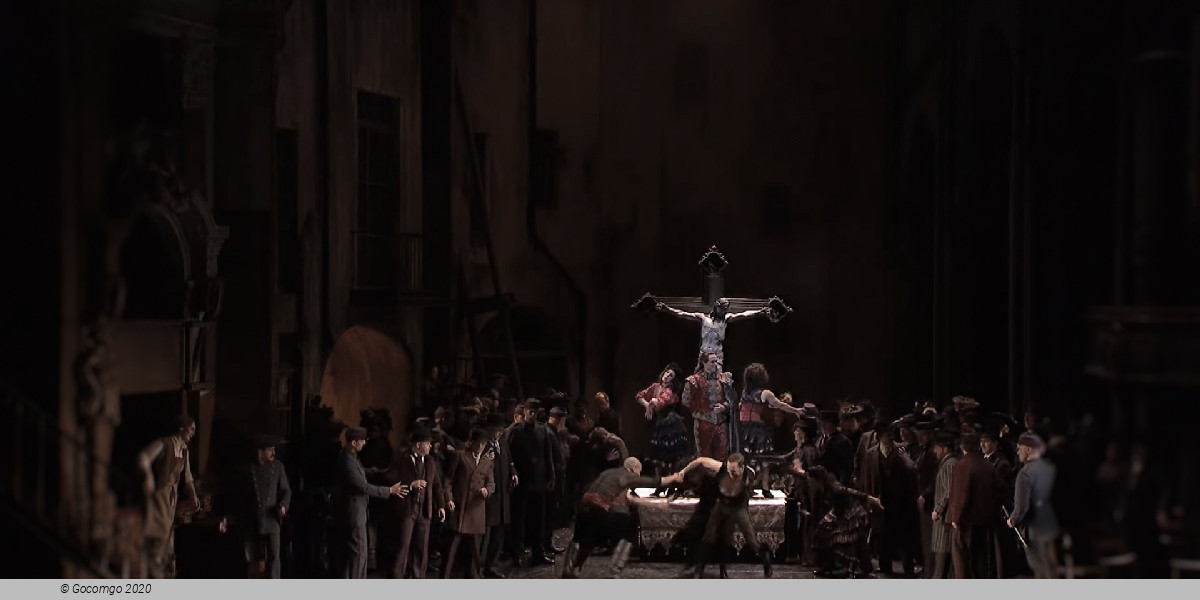
A chorus of students, soldiers and villagers sings a drinking song (Vin ou Bière). Valentin, leaving for war with his friend Wagner, entrusts the care of his sister Marguerite to his youthful friend Siébel (O sainte médaille ... Avant de quitter ces lieux). Méphistophélès appears, provides the crowd with wine, and sings a rousing, irreverent song about the Golden Calf (Le veau d'or). Méphistophélès maligns Marguerite, and Valentin tries to strike him with his sword, which shatters in the air. Valentin and friends use the cross-shaped hilts of their swords to fend off what they now know is an infernal power (chorus: De l'enfer). Méphistophélès is joined by Faust and the villagers in a waltz (Ainsi que la brise légère). Marguerite appears and Faust declares his admiration, but she refuses Faust's arm out of modesty, a quality that makes him love her even more.

Act 3

Marguerite's garden

The lovesick boy Siébel leaves a bouquet for Marguerite (Faites-lui mes aveux). Faust sends Méphistophélès in search of a gift for Marguerite and sings a cavatina (Salut, demeure chaste et pure) idealizing Marguerite as a pure child of nature. Méphistophélès brings in a decorated box containing exquisite jewelry and a hand mirror and leaves it on Marguerite's doorstep, next to Siébel's flowers. Marguerite enters, pondering her encounter with Faust at the city gates, and sings a melancholy ballad about the King of Thule (Il était un roi de Thulé). Marthe, Marguerite's neighbour, notices the jewellery and says it must be from an admirer. Marguerite tries on the jewels and is captivated by how they enhance her beauty, as she sings in the famous aria, the Jewel Song (Ah! je ris de me voir si belle en ce miroir). Méphistophélès and Faust join the women in the garden and romance them. Marguerite allows Faust to kiss her (Laisse-moi, laisse-moi contempler ton visage), but then asks him to go away. She sings at her window for his quick return, and Faust, listening, returns to her. Under the watchful eye and malevolent laughter of Méphistophélès, it is clear that Faust's seduction of Marguerite will be successful.

Act 4

Marguerite's room / A public square outside her house / A cathedral

[Note: The scenes of acts 4 and 5 are sometimes given in a different order and portions are sometimes shortened or cut in performance.]

After being made pregnant and seemingly abandoned by Faust, Marguerite has given birth and is a social outcast. She sings an aria at her spinning wheel (Il ne revient pas). Siébel stands by her. The scene shifts to the square outside Marguerite's house. Valentin's company returns from the war to a military march (Deposons les armes and Gloire immortelle de nos aïeux, the well-known "soldiers' chorus"). Siébel asks Valentin to forgive Marguerite. Valentin rushes to her cottage. While he is inside Faust and Méphistophélès appear, and Méphistophélès, knowing that Marguerite is not in there alone, sings a mocking burlesque of a lover's serenade under Marguerite's window (Vous qui faites l'endormie). Valentin takes the bait and comes out of the cottage, now knowing that Faust has debauched his sister. The two men fight, but Faust is reluctant to hurt the brother of the woman he adores. Méphistophélès blocks Valentin's sword, allowing Faust to make the fatal thrust. With his dying breath Valentin blames Marguerite for his death and condemns her to Hell before the assembled townspeople (Ecoute-moi bien Marguerite). Marguerite goes to the church and tries to pray there but is stopped, first by the sadistic Méphistophélès and then by a choir of devils. She finishes her prayer but faints when she is cursed again by Méphistophélès.

Act 5

The Harz mountains on Walpurgis Night / A cavern / The interior of a prison

Méphistophélès and Faust are surrounded by witches (Un, deux et trois). Faust is transported to a cave of queens and courtesans, and Méphistophélès promises to provide Faust with the love of the greatest and most beautiful women in history. An orgiastic ballet suggests the revelry that continues throughout the night. As dawn approaches, Faust sees a vision of Marguerite and calls for her. Méphistophélès helps Faust enter the prison where Marguerite is being held for killing her child. They sing a love duet (Oui, c'est toi que j'aime). Méphistophélès states that only a mortal hand can deliver Marguerite from her fate, and Faust offers to rescue her from the hangman, but she prefers to trust her fate to God and His angels (Anges purs, anges radieux). At the end she asks why Faust's hands are covered in blood, pushes him away, and falls down motionless. Méphistophélès curses, as a voice on high sings "Sauvée!" ("Saved!"). The bells of Easter sound and a chorus of angels sings "Christ est ressuscité!" ('"Christ is risen!"). The walls of the prison open, and Marguerite's soul rises to heaven. In despair Faust follows it with his eyes; he falls to his knees and prays. Méphistophélès is turned away by the shining sword of the archangel.


Venue Info

Zurich Opera House - Zurich
Location   Sechseläutenplatz 1

Zürich Opera House is a main opera house in Zürich and Switzerland. Located at the Sechseläutenplatz, it has been the home of the Zürich Opera since 1891, and also houses the Bernhard-Theater Zürich. It is also home to the Zürich Ballet. The Opera House also holds concerts by its Philharmonia orchestra, matinees, Lieder evenings and events for children. The Zürich Opera Ball is organised every year in March, and is usually attended by prominent names.

The first permanent theatre, the Aktientheater, was built in 1834 and it became the focus of Richard Wagner’s activities during his period of exile from Germany.

The Aktientheater burnt down in 1890. The new Stadttheater Zürich (municipal theatre) was built by the Viennese architects Fellner & Helmer, who changed their previous design for the theatre in Wiesbaden only slightly. It was opened in 1891. It was the city's main performance space for drama, opera, and musical events until 1925, when it was renamed Opernhaus Zürich and a separate theatre for plays was built: The Bernhard Theater opened in 1941, in May 1981 the Esplanada building was demolished, and the present adjoint building opened on 27/28 December 1984 after three years of transition in the Kaufhaus building nearby Schanzengraben.

By the 1970s, the opera house was badly in need of major renovations; when some considered it not worth restoring, a new theatre was proposed for the site. However, between 1982 and 1984, rebuilding took place but not without huge local opposition which was expressed in street riots. The rebuilt theatre was inaugurated with Wagner’s Die Meistersinger von Nürnberg and the world première of Rudolf Kelterborn’s Chekhov opera Der Kirschgarten.

As restored, the theatre is an ornate building with a neo-classical façade of white and grey stone adorned with busts of Weber, Wagner, and Mozart. Additionally, busts of Schiller, Shakespeare, and Goethe are to be found. The auditorium is built in the neo-rococo style and seats approximately 1200 people. During the refurbishment, the issue of sightlines was not adequately addressed. As a result, the theatre has a high number of seats with a limited view, or no view, of the stage. This is unusual in international comparison, where sightlines in historic opera houses have been typically enhanced over time.

Corporate archives and historical library collections are held at the music department of the Predigerkirche Zürich.

The Zürich Opera House is also home of the International Opera Studio (in German: Internationales Opernstudio IOS) which is a educational program for young singers and pianists. The studio was created in 1961 and has renowned artists currently teaching such as Brigitte Fassbaender, Hedwig Fassbender, Andreas Homocki, Rosemary Joshua, Adrian Kelly, Fabio Luisi, Jetske Mijnssen, Ann Murray, Eytan Pessen or Edith Wiens.

Important Info
Type: Opera
City: Zurich, Switzerland
Starts at: 19:30
Acts: 5
Intervals: 1
Duration: 3h
Sung in: French
Titles in: English,German
Top of page