
Volksoper Vienna 16 April 2024 - The Merry Wives of Windsor | GoComGo.com

The Merry Wives of Windsor

Volksoper Vienna, Volksoper, Vienna, Austria
All photos (5)
Select date and time
7 PM

E-tickets: Print at home or at the box office of the event if so specified. You will find more information in your booking confirmation email.

You can only select the category, and not the exact seats.
If you order 2 or 3 tickets: your seats will be next to each other.
If you order 4 or more tickets: your seats will be next to each other, or, if this is not possible, we will provide a combination of groups of seats (at least in pairs, for example 2+2 or 2+3).

Important Info
Type: Opera
City: Vienna, Austria
Starts at: 19:00
Acts: 3
Intervals: 1
Duration: 3h
Sung in: German
Titles in: German

E-tickets: Print at home or at the box office of the event if so specified. You will find more information in your booking confirmation email.

You can only select the category, and not the exact seats.
If you order 2 or 3 tickets: your seats will be next to each other.
If you order 4 or more tickets: your seats will be next to each other, or, if this is not possible, we will provide a combination of groups of seats (at least in pairs, for example 2+2 or 2+3).

Overview

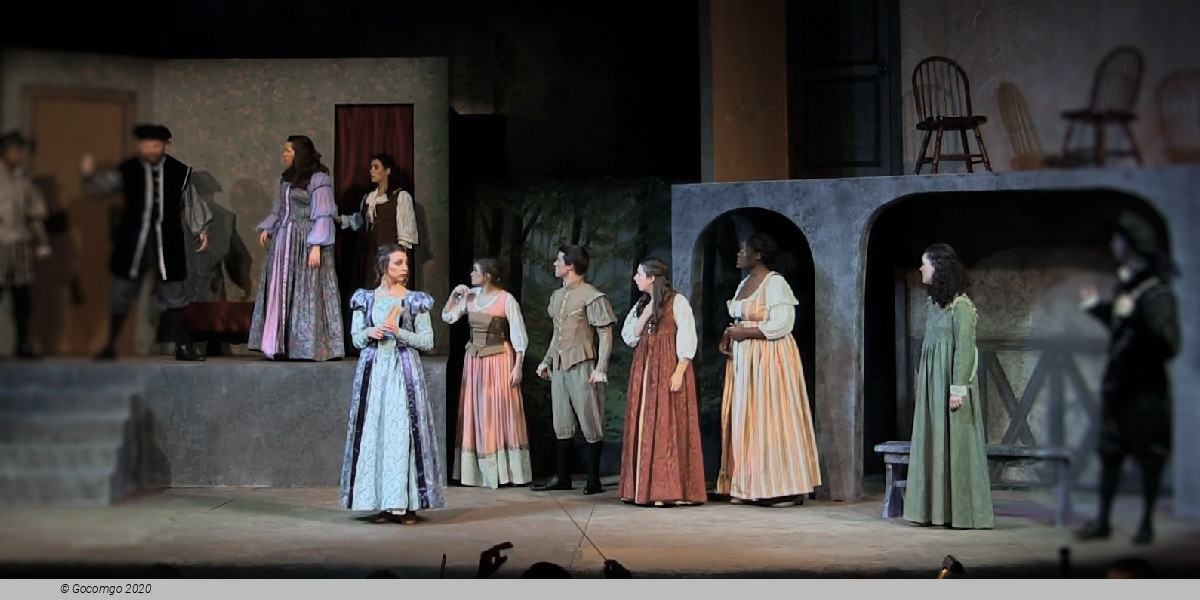
More than 40 years before Verdi, Otto Nicolai and librettist Salomon Hermann Mosenthal used Shakespeare's play The Merry Wives of Windsor for their opera. Was it a romantic comedy the two had in mind, or can we even detect an influence from the revolutionary movements of 1848? Confident bourgeois women taking up the fight with aristocracy?

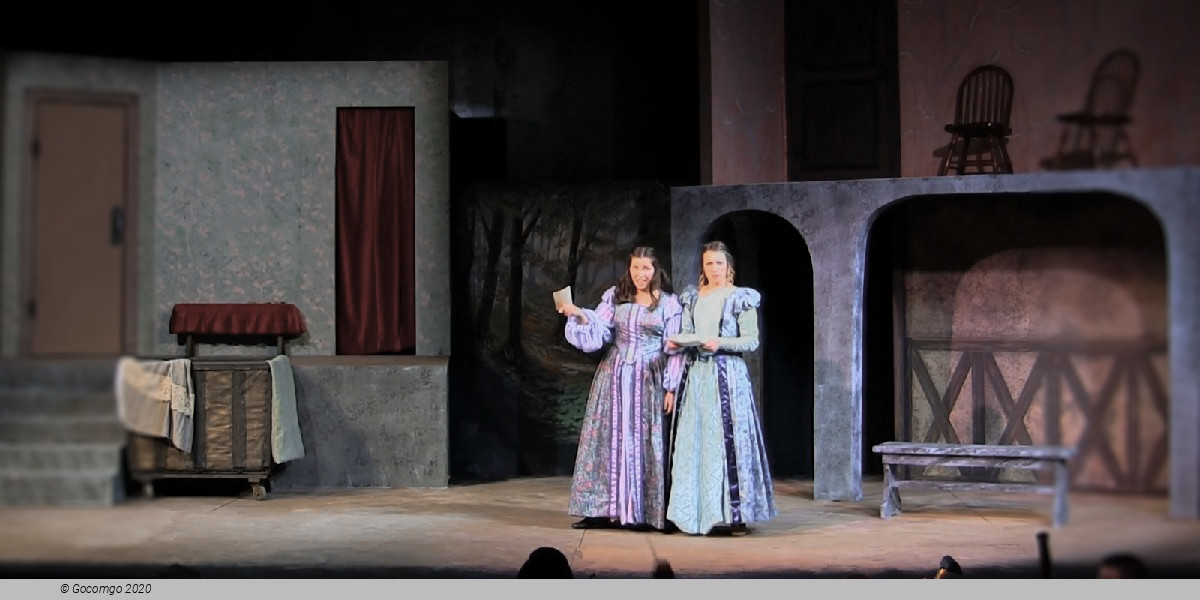
Ms. Fluth and Ms. Reich, two married ladies, receive love letters from the impoverished nobleman Falstaff at the same time. They decide to teach him a lesson. At the same time, three cavaliers want to marry Anna, the daughter of Ms. Reich: Dr. Cajus, a French beau, is her mother's favourite, but her father prefers the shy Junker Spärlich, and Anna herself is in love with the penniless Fenton. Plenty of material for countless complications and entanglements.

In any case, if failed ambition is considered one of the driving forces of drama, The Merry Wives of Windsor provides the best example. And in this case it is not gods or fate that cause ambition to fail, it is the women who trim male ambition down to nothing but empty words. The production is in the hands of the highly accomplished Dutch director Nina Spijkers, who has already subjected numerous theatre classics to a critical reading and will be working with set designer and Tony Award winner Rae Smith for her first work at the Volksoper. "I am drawn to stories in which women form a strong community," says Spijkers of her interest in Nicolai's opera.

History
Premiere of this production: 09 March 1849, Königliches Opernhaus Berlin

The Merry Wives of Windsor (German: Die lustigen Weiber von Windsor) is an opera in three acts by Otto Nicolai to a German libretto by Salomon Hermann Mosenthal based on the play The Merry Wives of Windsor by William Shakespeare.

Synopsis

Act 1
Scene 1

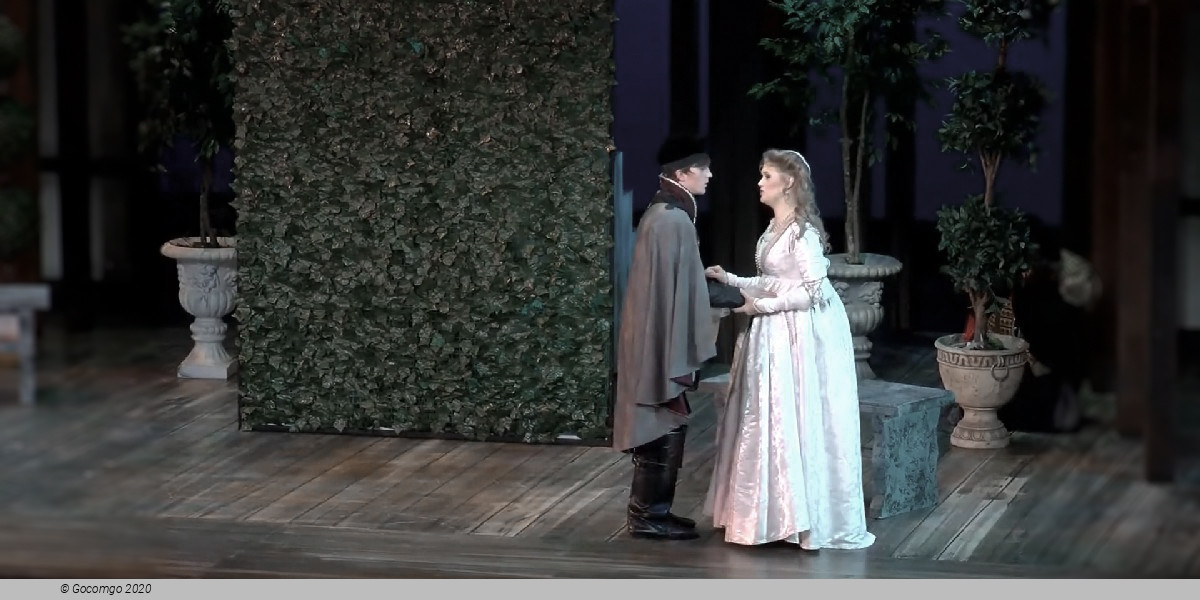
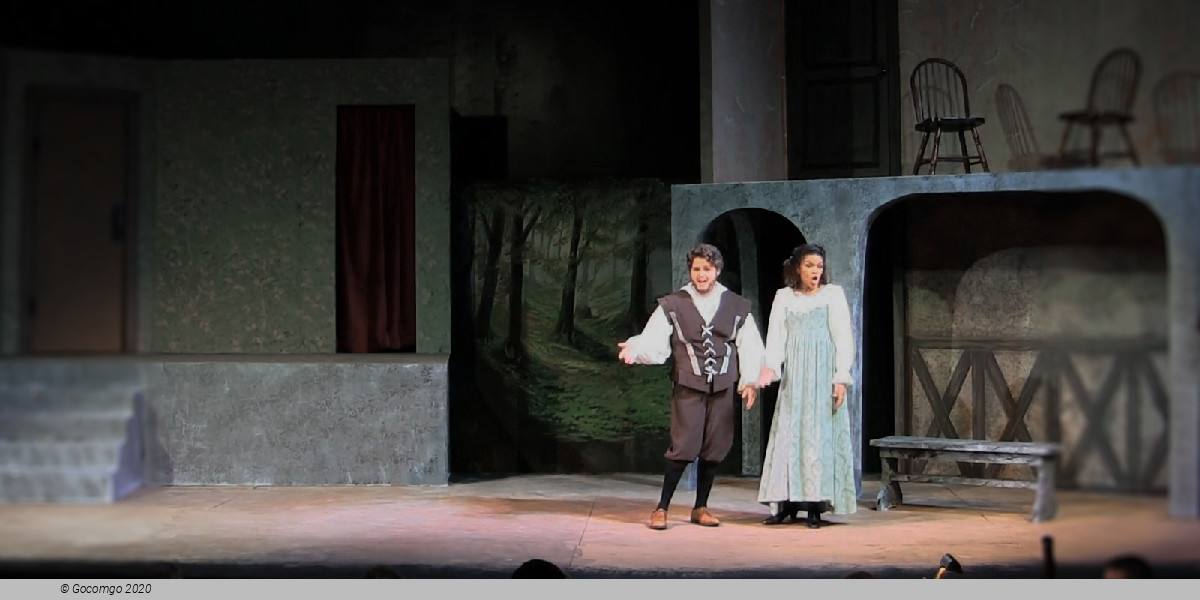
Two married ladies, Frau Fluth and Frau Reich, discover that they both received love letters from the impoverished nobleman Falstaff at the same time. They decide to teach him a lesson and withdraw to hatch a plan. Now the husbands of Frau Fluth and Frau Reich come in. Anna, Frau Reich's daughter, is of marriageable age and three gentlemen seek her hand in marriage: Dr. Cajus, a French beau, is her mother's favorite, and her father wants the shy nobleman Spärlich as his son-in-law, but Anna is in love with the penniless Fenton.

Scene 2

Frau Fluth has invited Falstaff to a supposed tryst, and he enters with grand romantic gestures and clumsily attempts to ensnare her. As Frau Reich reports the return of the distrustful Herr Fluth, which had been previously arranged, the old gentleman is hidden in a laundry basket, the contents of which are quickly emptied into a ditch. Herr Fluth has searched the whole house in the meantime without success and is forced to believe his wife, who protests her innocence.

Act 2
Scene 1

At the inn, Falstaff has recovered from his bath and sings bawdy drinking songs. A messenger brings him a letter, in which Frau Fluth proposes another rendezvous. Her husband appears in disguise and presents himself as Herr Bach to get Falstaff to talk about his trysts. He unsuspectingly brags about his affair with Frau Fluth, which provokes her husband's rage.

Scene 2

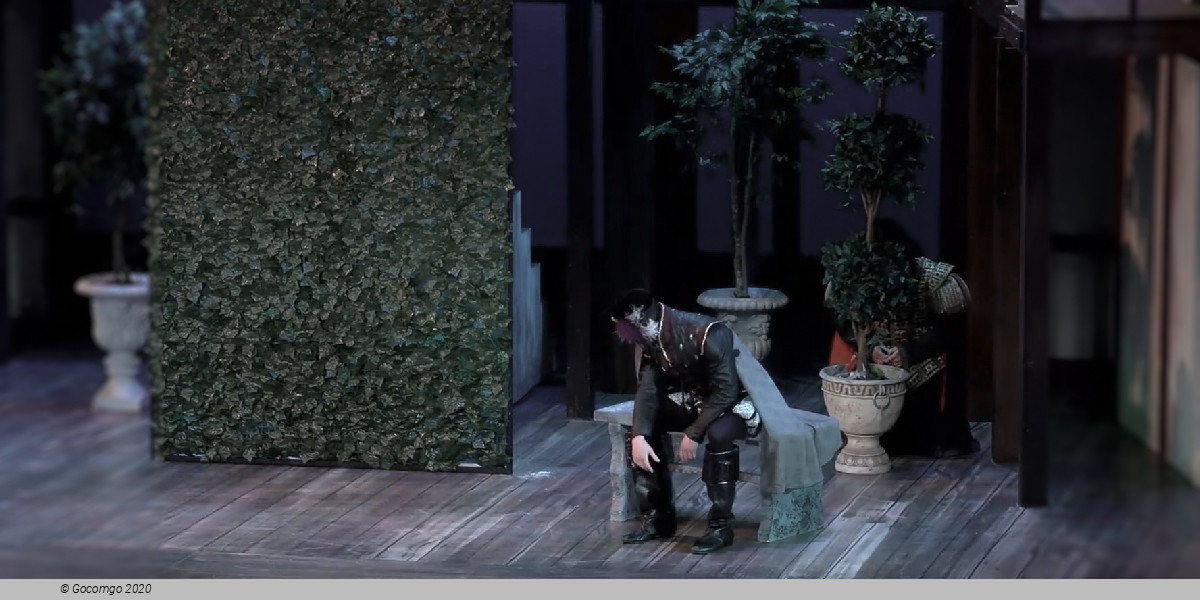
Spärlich and Cajus sneak around Anna's window, but before they attempt to go near, they hear Fenton's serenade and hide in the bushes. From there they observe a passionate love scene between the two lovers.

Scene 3

Falstaff is again with Frau Fluth, and Frau Reich again warns them both that Herr Fluth is on his way home. This time they dress the fat knight in women's clothes to try and pass him off as the maid. Herr Fluth enters and finds only the old maid, whom he angrily throws out of the house.

Act 3
Scene 1

Fluth and Reich are finally let in on the plan by their wives and the four of them decide to take Falstaff for a ride one last time. The knight is expected to show up at a grand masked ball in Windsor Forest. Additionally, Herr and Frau Reich each plan to take advantage of the confusion to marry Anna off to their preferred suitor. Instead, however, she has arranged a nighttime meeting with Fenton in the forest.

Scene 2

After the moonrise, depicted by the choir and orchestra, the masked ball in the forest begins. At first, Falstaff, disguised as Ritter Herne, is lured by the two women, but then he is frightened by various other guests disguised as ghosts, elves, and insects. After the masks are removed and Falstaff is mocked by everyone, Anna and Fenton, who got married in the forest chapel, appear. In a cheerful closing number all of the parties are reconciled.

Venue Info

Volksoper Vienna - Vienna
Location   Währinger Strasse 78

The Vienna Volksoper is a major opera house in Vienna, Austria. It produces three hundred performances of twenty-five German language productions during an annual season which runs from September through June.

Volksoper Vienna was built in 1898 as the Kaiserjubiläum-Stadttheater (Kaiser's Jubilee Civic Theatre), originally producing only plays. Because of the very brief construction period (10 months) the first director Adam Müller-Gutenbrunn had to start with debts of 160,000 gulden. After this inauspicious startup the Kaiserjubiläum-Stadttheater had to declare bankruptcy five years later in 1903.

On 1 September 1903 Rainer Simons took over the house and renamed it the Kaiserjubiläum-Stadttheater - Volksoper (public opera). His intention was to continue the production of plays but also establish series of opera and operetta. The first Viennese performances of Tosca and Salome were given at the Volksoper in 1907 and 1910 respectively. World-famous singers such as Maria Jeritza, Leo Slezak and Richard Tauber appeared there; the conductor Alexander Zemlinsky became the first bandmaster in 1906.

In the years up to and through the First World War the Volksoper attained a position as Vienna's second prestige opera house. In 1919, Felix Weingartner became Artistic Director and Principal Conductor. He was followed as Director by Hugo Gruder-Guntram. After 1929, it focused on light opera, and under Gruder-Guntram undertook a number of summer tours to Abbazia in 1935, Cairo and Alexandria in 1937 and throughout Italy in 1938, with guest appearances from Richard Tauber. After the Second World War, the Vienna Volksoper became the alternative venue to the devastated Vienna State Opera. In 1955 the Volksoper returned to its former role of presenting opera, operetta, and musicals.

From September 1991 to June 1996 the Vienna Volksoper was under a collective leadership with the Vienna State Opera. In 1999 the Volksoper became a 100% subsidiary of the Bundestheater-Holding. Since 1 September 2007 Robert Meyer has headed the Volksoper as artistic director together with the business manager Christoph Ladstätter. Each season includes about 25 productions, a total of approximately 300 performances—a performance almost every day. In addition to opera, operetta, musicals and ballet, there are special performances and children's programs.

Important Info
Type: Opera
City: Vienna, Austria
Starts at: 19:00
Acts: 3
Intervals: 1
Duration: 3h
Sung in: German
Titles in: German
Top of page