Act 1
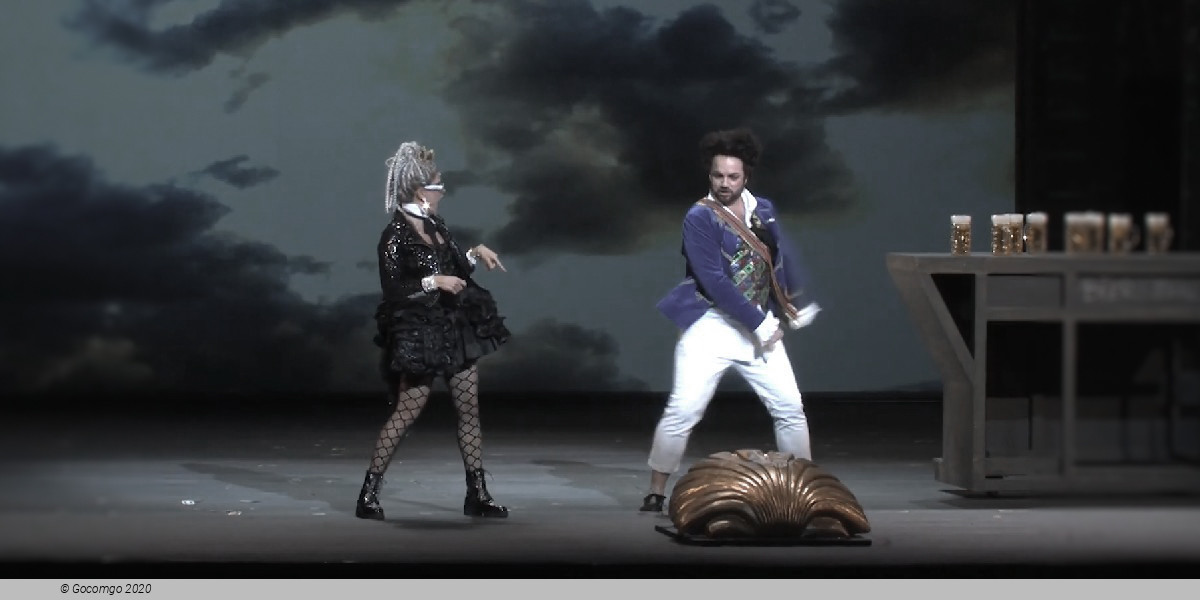
The market square in Krokodyne. Prince Fridolin XXIV of Krokodyne is a lousy sovereign. His marriage to Princess Cunégonde from neighbouring Krackhausen is supposed to restore his ruined treasury. Robin, a good spirit with magical powers whom we first see disguised as a student, wants to make a decent ruler out of him. Fridolin takes a good look at Cunégonde incognito at their first meeting. He is delighted by her worldly manners – she is very much the Parisienne ... He announces to his Cabinet that he wants to marry her.
A tower room in the castle. Rosée-du-Soir, the daughter of a count, is being held prisoner by the witch Kalebasse. Rosée is in love with Fridolin, whom she knows only from seeing him through the window of her prison. Kalebasse is planning to depose Fridolin in order to avenge herself against his father, who had found her guilty of “unclean practices”, for which she was punished by having her magical powers taken away for ten years. The ten-year period is due to end today, and Kalebasse has a replacement king ready and waiting. Robin joins forces with her in order in order to further Fridolin’s education and frees Rosée from her prison with the help of a ball of magic wool.
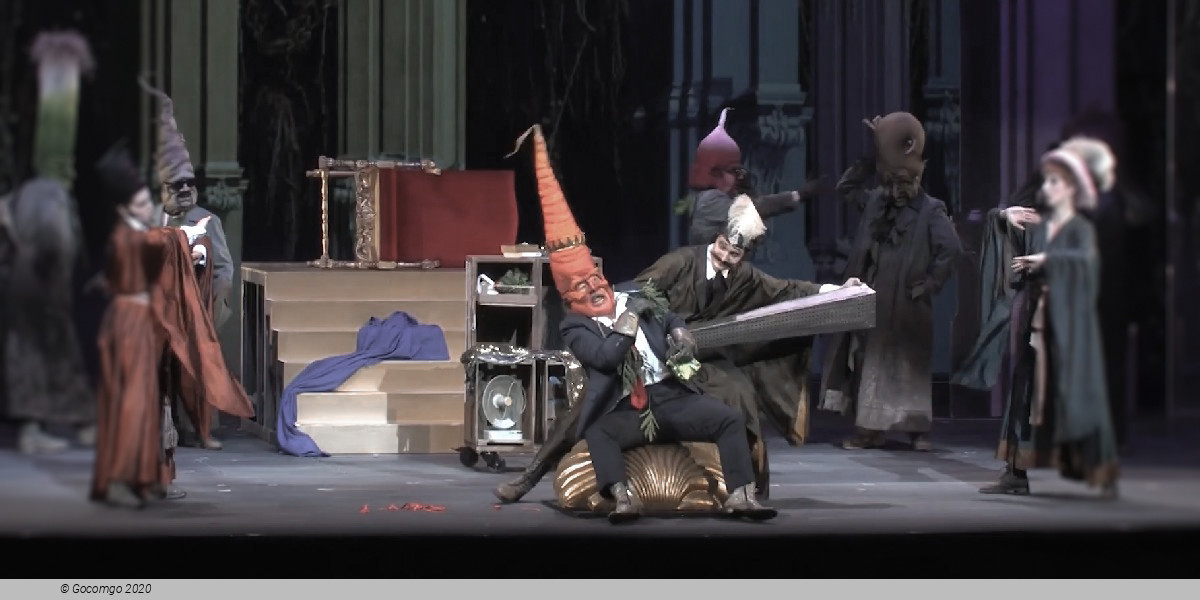
The royal vegetable garden. Kalebasse rouses King Carrot and the vegetables.
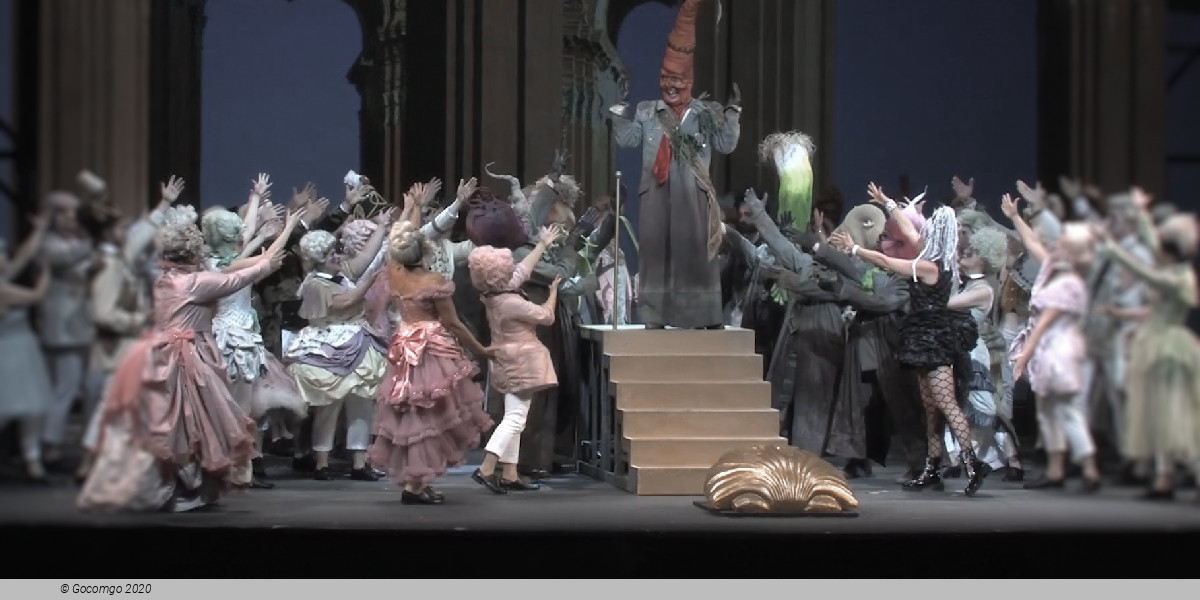
The palace. Cunégonde impatiently waits to be presented to her future husband. The grand reception is interrupted by the arrival of King Carrot and his retinue. Kalebasse casts a spell on the entire court and also Cunégonde: King Carrot is hailed as the new ruler, while Fridolin gets the blame for King Carrot’s outrageous behaviour. Even the suits of armour of Fridolin’s ancestors curse the dishonoured Prince. Fridolin makes his escape. Only the royal black magician Truck and Robin remain loyal to him; the remainder of the Cabinet has switched sides.
Act 2
The escape. Rosée, disguised as a page, joins Fridolin. King Carrot’s troops, led by the renegade ministers, are pursuing the escapees. Pipertrunck, the Chief of Police, deserts to Fridolin’s side.
The magician’s workshop. Robin leads them to the old magician Quiribibi. Quiribibi chastens Fridolin for his behaviour, but he does know a way of breaking Kalebasse’s spell: the ring of King Solomon. Following the conquest of Jerusalem, this ring came into the possession of a Roman soldier in Pompeii. With a somewhat unusual “rejuvenation cure”, the companions thank Quiribibi and with the aid of a magic lamp proceed to Pompeii in the year AD 79.
Pompeii. The quintet of adventurers succeed in finding the soldier and gaining possession of the magic ring – and they also acquaint the people of Pompeii with the blessings of modern technology. They make their escape just as Vesuvius erupts.
Interval
Act 3
The palace. King Carrot is admired by the court ladies, but he is more interested in jam. The ministers who have stayed with King Carrot make their report. Some peddlers offering goods from the Far East are announced: they are Robin, Rosée and Pipertrunck in disguise. In the meantime Fridolin has found Cunégonde. She succeeds in deceiving Fridolin and representing herself as a victim. Fridolin allows her to take Solomon’s ring from him. Cunégonde triumphantly calls for Kalebasse. At the last moment, Fridolin and Truck are rescued by Robin. He and Rosée disappear into a forest.
In the forest. Rosée is given a magic four-leaf clover – the last thing that can save Fridolin – which places a great responsibility on her: she can pick off three leaves in succession and make a wish, but the fourth wish – although it will be fulfilled – will bring about her death. Rosée pulls off the first leaf: she wants to see Fridolin and so she is transported to the...
Kingdom of Ants. The brigade leader releases Fridolin and Truck and is willing to help them in the fight against Kalebasse. When Kalebasse appears, the ants take her prisoner, and Rosée tears off the second clover leaf in order to escape with Fridolin, Robin and Truck.
Act 4
The island of monkeys. Rosée uses the third clover leaf to save them from a shipwreck and bring them to the island of monkeys. Fridolin recognises Rosée as a young woman and discovers in her his true love. Truck gets to know one of the monkeys – this is an important part of Robin’s plan in the fight against King Carrot.
The palace. King Carrot’s good days on earth are coming to an end. He is rapidly fading away. The ministers, with the aid of Cunégonde, try to revive him.
The market place. The citizens are furious about the wretched state of the kingdom under King Carrot’s rule. Truck scatters some “quarrelling powder”, and almost immediately a revolt breaks out. Fridolin, Robin, Rosée and Truck encourage the rioters. Soon the Cabinet and the military are on the side of the insurgents, and everyone marches in the direction of the castle.
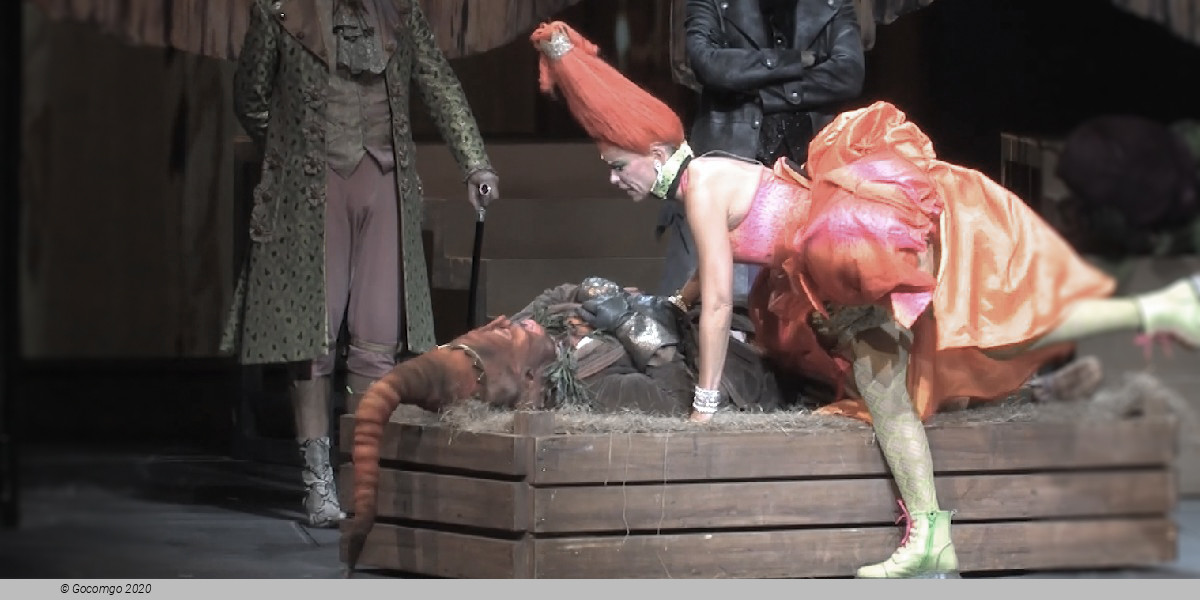
The vegetable garden. Kalebasse knows how to restore the drooping King Carrot’s spirits: no human hand, she reminds him, has power over his life. She brings Rosée (who only has one last clover leaf left to save Fridolin) into her power. But there is still the monkey ...
The palace. The whole dreadful episode is over. King Carrot and his vegetables disappear. Fridolin returns to his throne and marries Rosée.
The libretto is in three acts.
Act I.
Scene 1.
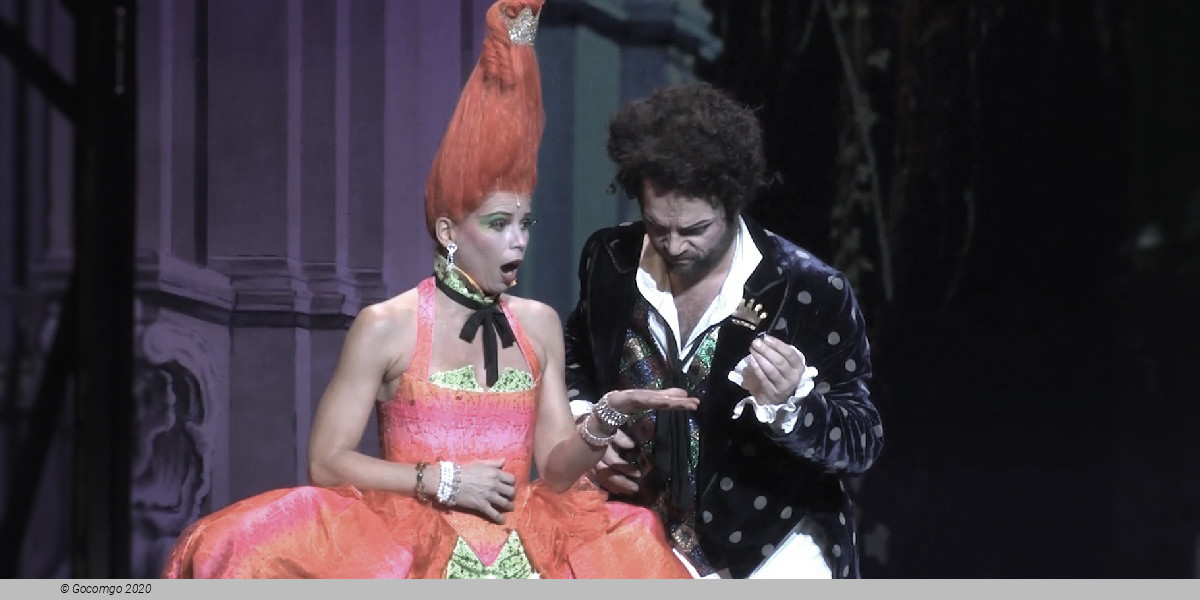
It is sundown. At a brasserie, King Fridolin XXIV, disguised as a student, explains to his chief ministers that the frivolous behaviour of his youth has all but bankrupted the kingdom. He therefore plans to wed Cunégonde, the princess of another kingdom. Uncertain whether she is at all attractive, he hopes to observe her arrival surreptitiously. Robin-Luron, a student, sings about the dissolute pleasures of student life. Fridolin asks Robin-Luron what he thinks of the king and his government. Robin-Luron responds with mockery. He knows of Fridolin's need to marry for money and, when he at last recognizes Fridolin, offers to purchase all the armor in the king's palace. As Fridolin considers his offer, Cunégonde arrives, traveling incognito in hopes of glimpsing Fridolin surreptitiously before agreeing to marry him. Fridolin and Cunégonde flirt and she asks his opinion of the king, whom Fridolin praises. She sings an aria describing her life since leaving the convent and learning the ways of Parisian society. He decides he will marry her and she leaves for the palace anticipating life in a kingdom that governs its people by festivities and spectacles. Fridolin and his ministers discuss whether his collection of armor is under a spell or if his old palace is haunted. Night has fallen as they march off to inspect it.
Scene 2.
In the garret of the witch Coloquinte. Rosée du soir, daughter of the paladin of Moravia, is waking. She has been dreaming of Fridolin, whom she has loved while being held captive here six years. Robin-Luron arrives, claiming students have secret knowledge of hidden places, and magically completes her embroidery work. They plan her escape. Coloquinte enters and she and Robin-Luron argue about their magic powers and rival allegiances. He leaves and Coloquinte scolds Rosée du soir for letting him visit. Rosée du soir, alone, dreams of her escape.
Scene 3.
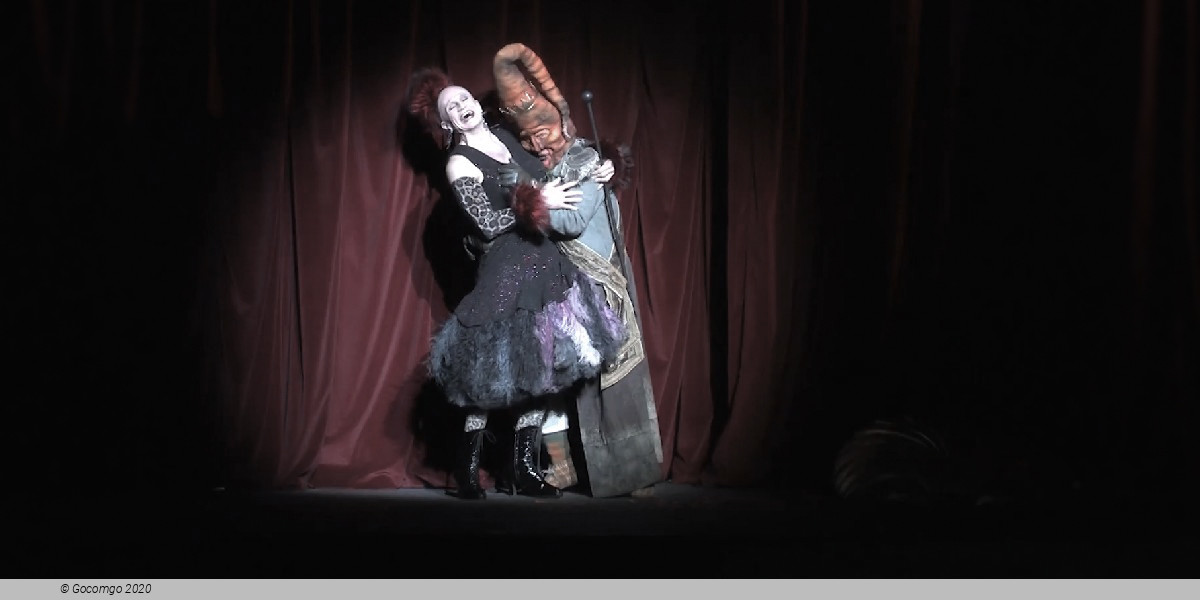
The gardens of the royal palace. Cunégonde is welcomed with a fanfare. Fridolin enters late and presents himself to Cunégonde as the king. They continue their flirtation and everyone prepares to dance until the scene is interrupted by the entrance of a stranger with a large escort accompanied by bizarre music. King Carotte and his court of dancing vegetables enter. Robin-Luron recognizes Carotte as a rival sorcerer, while Fridolin is amused. Coloquinte, unseen by the royal court, waves her magic wand and controls the crowd's movements. First the women generally and then Cunégonde are entranced by Carotte. Carotte sings an aria explaining his nature, the sovereign of a subterranean realm, who enjoys himself by making fools of mankind. Cunégonde is in awe of Carotte, who sneezes once and sets Fridolin sneezing. He drinks and Fridolin appears drunk. Fridolin tries to dance to prove he is sober but makes a fool of himself. The crowd is stunned by a strange sound. The royal collection of antique armor is marching, cursing Fridolin. The crowd calls for Fridolin's death but Robin-Luron protects Fridolin. The crowd praises Carotte, who replaces Fridolin as king, as Cunégonde falls into his arms.
Act II
Fridolin, accompanied by his faithful followers Truck, Pipertrunck, Rosée du soir and Robin-Luron, reaches the old magician Kiribibi to ask for his assistance in breaking Coloquinte's spell. The magician asks them to kill him to release a curse. They do so and he reappears as a young man. Then he sends them off to ancient Pompeii to find an enchanted ring that will allow them to defeat Carotte.
They leave for Pompeii and arrive just before the eruption of Vesuvius. After singing a quartet about the eventual collapse of all civilisations, they go off again, thanks to a magic lamp, and arrive at Pompeii. By use of a depiction of railway trains, they trick Pompeii's gladiators and senators and depart with the magic ring.
Act III
King Carotte is met by some peddlers (Robin-Luron, Pipertrunck and Rosée du soir in disguise) looking for Fridolin, who has disappeared, but they cannot find him in the palace.
Cunégonde meets Fridolin and steals the magic ring to prevent him from destroying Carotte. The witch sends Fridolin to the land of insects where, after a swift triumph, he finds himself alone again.
Fridolin and his band find themselves in the middle of an uprising against King Carotte because of rising prices and injustice. The crowd recognises Fridolin and restores him to the throne. Carotte is carried off by the witch. Fridolin marries Rosée du soir as the populace rejoice.






 Währinger Strasse 78