Act 1
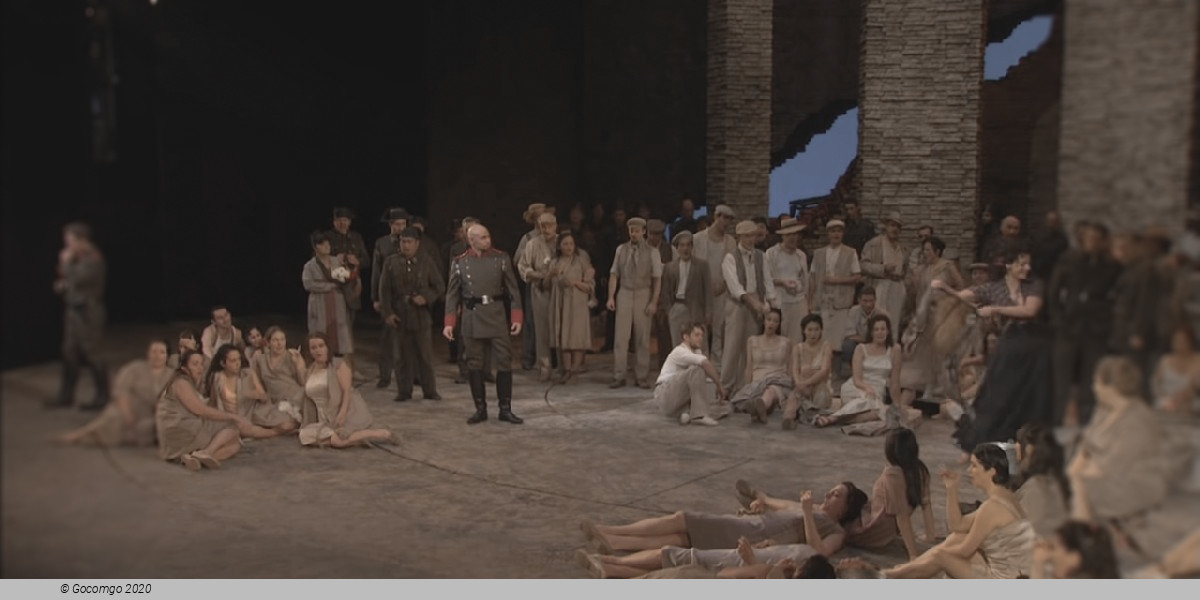
A square in Seville. The soldiers are killing time looking at the passers-by. Suddenly the brigadier Moralès catches sight of Micaëla, Don Jose’s childhood sweetheart. He speaks to her and she tells him that she is looking for the brigadier Don José. Moralès replies that José belongs to the company that will shortly arrive to take over the watch. He tries in the meantime to persuade Micaëla to stay with them, but she refuses.
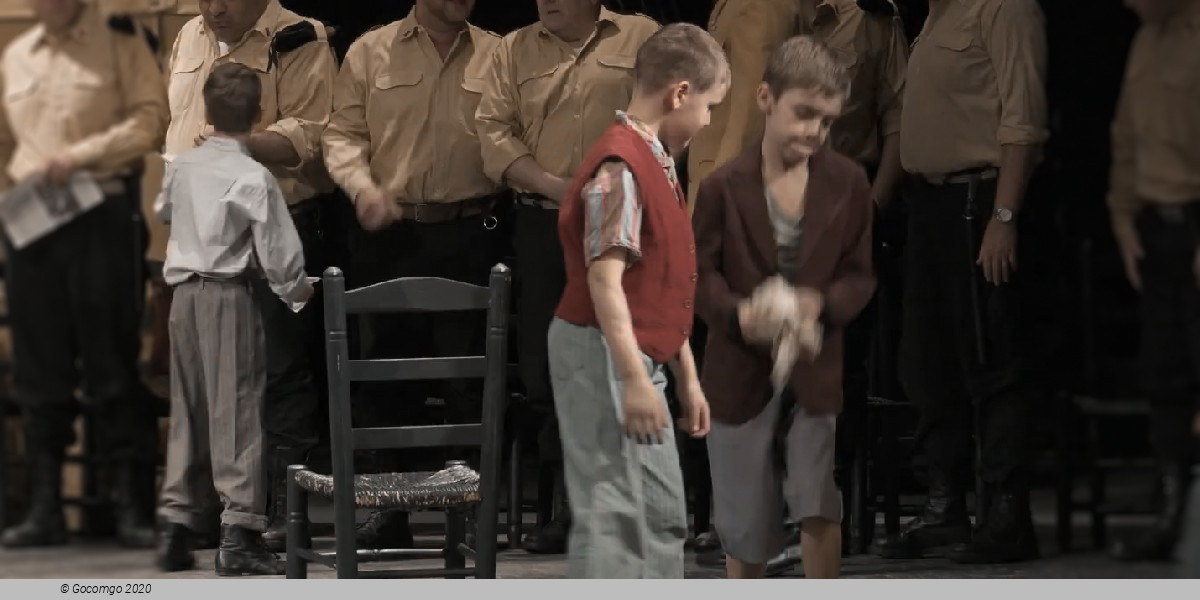
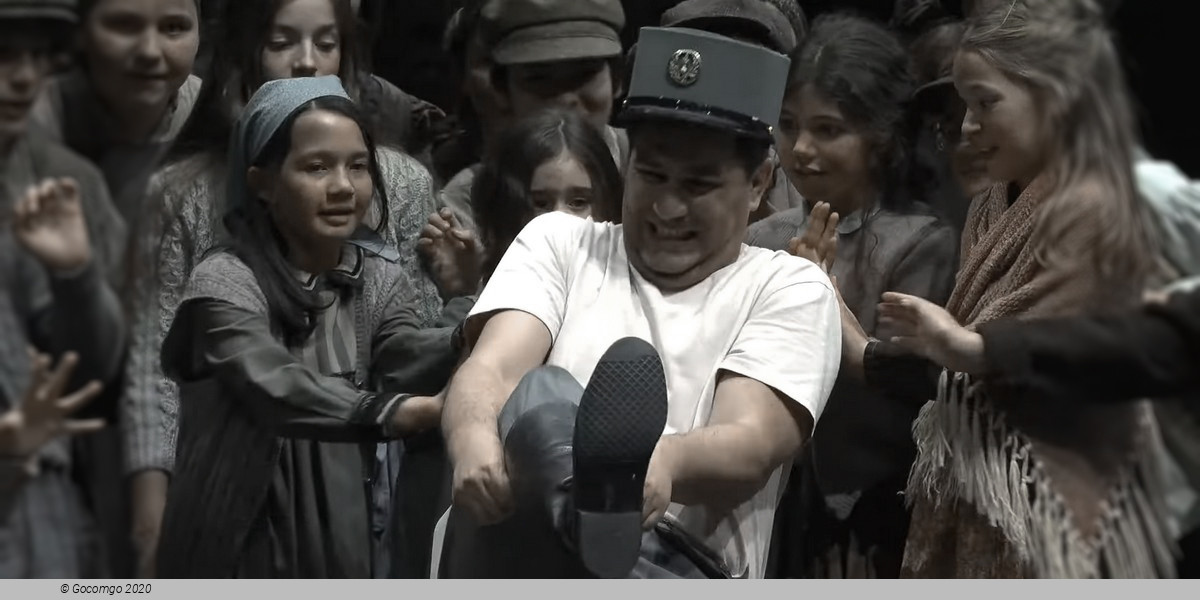
The soldiers of the relieving guard are preceded by a group of children playing.
The officer Zuniga stands at the front of Don José’s company and drives the children away. Moralès tells Don José that there is a girl who is looking for him. Don José realises that it must be Micaëla.
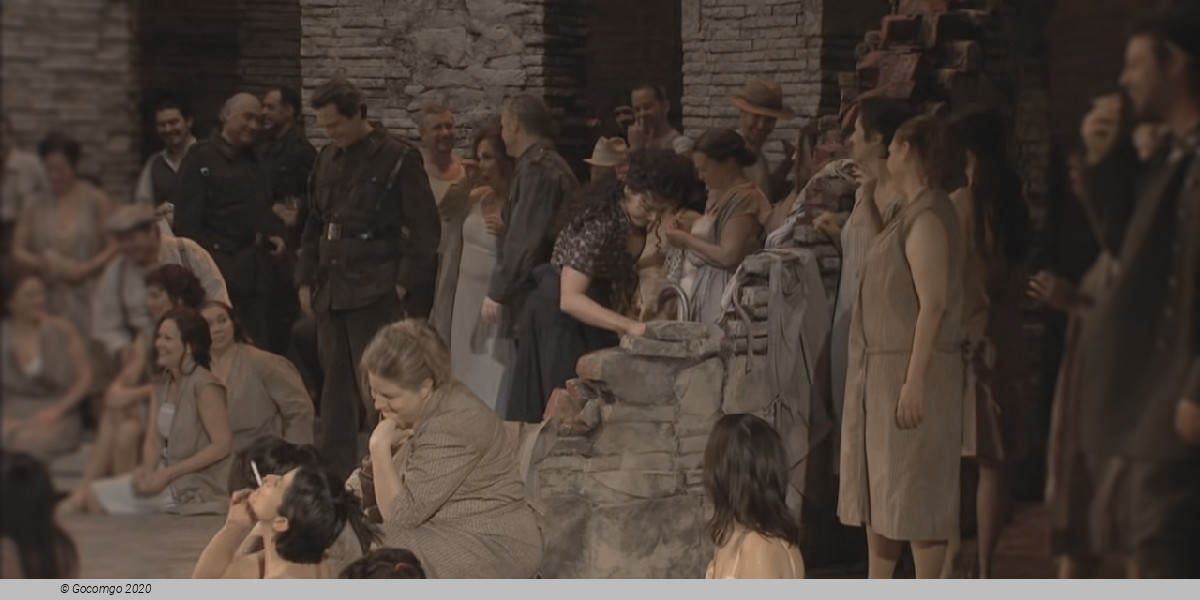
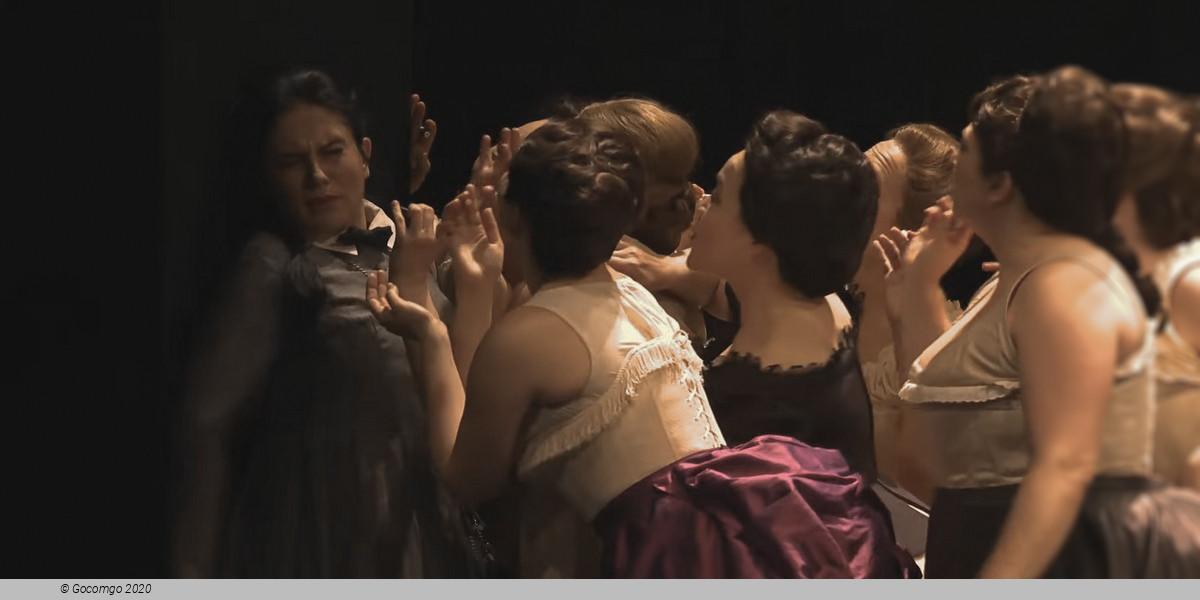
The bell from the cigarette factory on the square begins to ring. The cigarette-girls come out of the factory and are surrounded by young men who are trying to win their favours. The young men have not yet seen Carmen, whom they greatly desire, and they wonder where she could be.
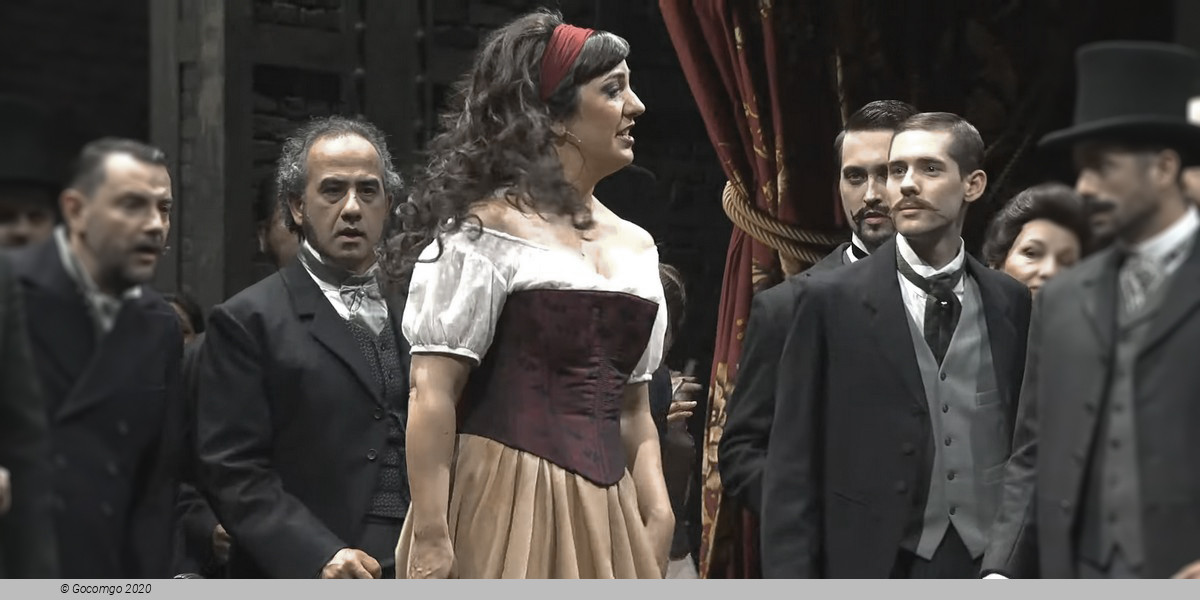
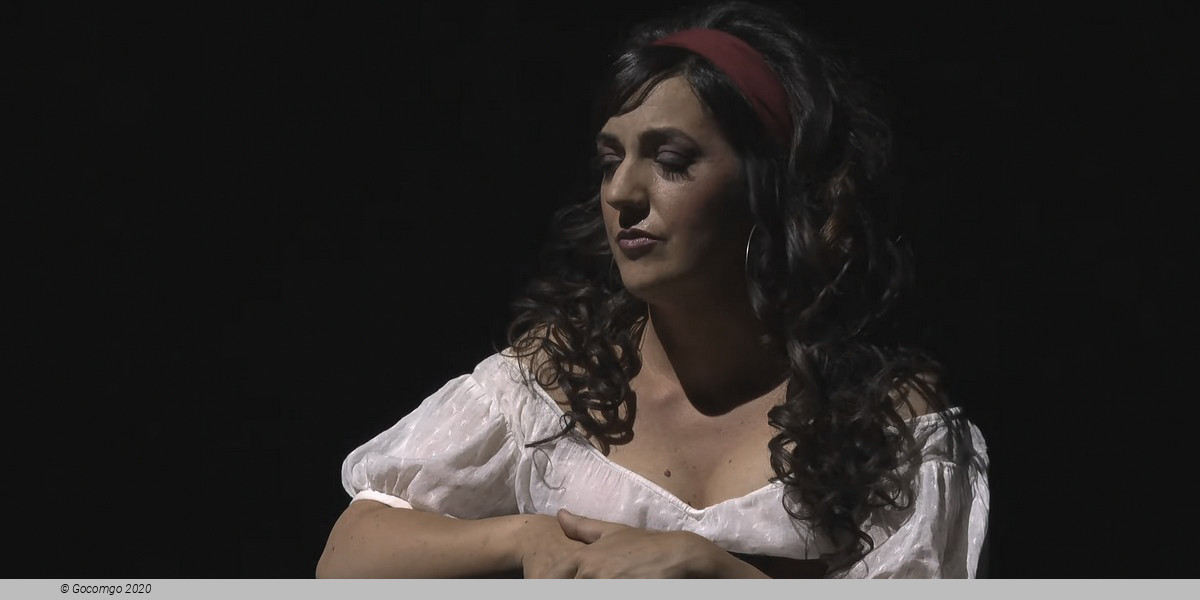
Carmen appears at the end of the group. She sings about love and refuses all the young men’s advances. Don José alone seems to awaken her special interest, since he has remained totally indifferent to her arrival.
The young men attempt once more to seduce Carmen, but she is only interested in Don José. She throws him a flower. The young men and women laugh and follow Carmen off.
Don José is left alone on the stage. Micaëla comes up to him and talks to him about his mother, giving him a letter from her. José’s mother had also asked Micaëla to give José a kiss from her. They think nostalgically of the little town of their birth.
Micaëla leaves before Don José can read the letter. He reads it and finds his mother’s suggestion that he marry Micaëla.
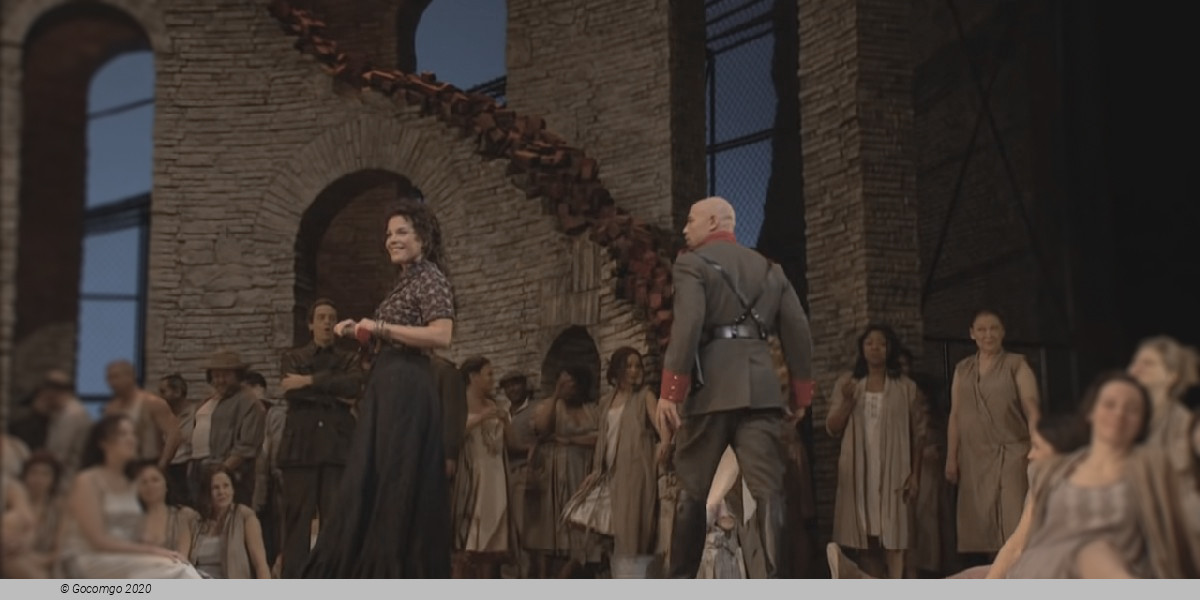
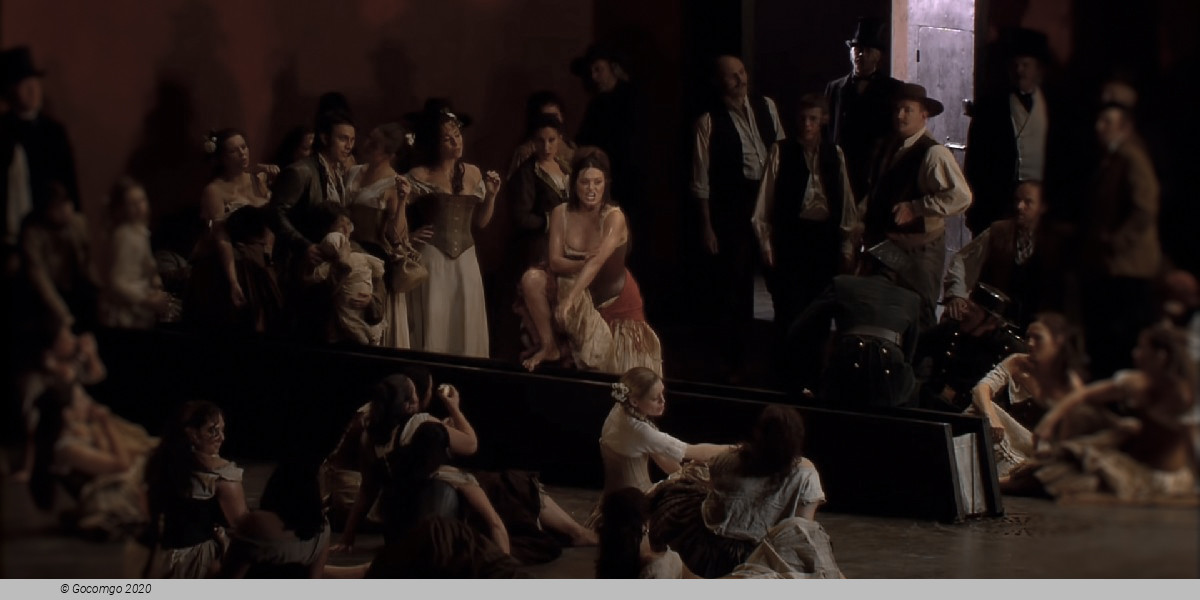
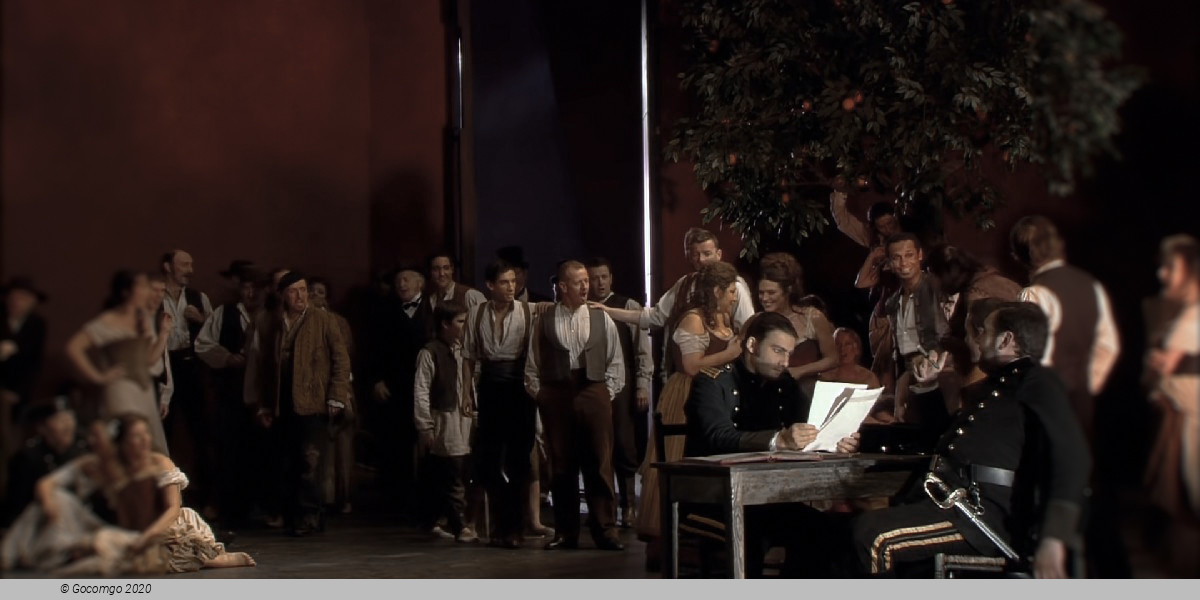
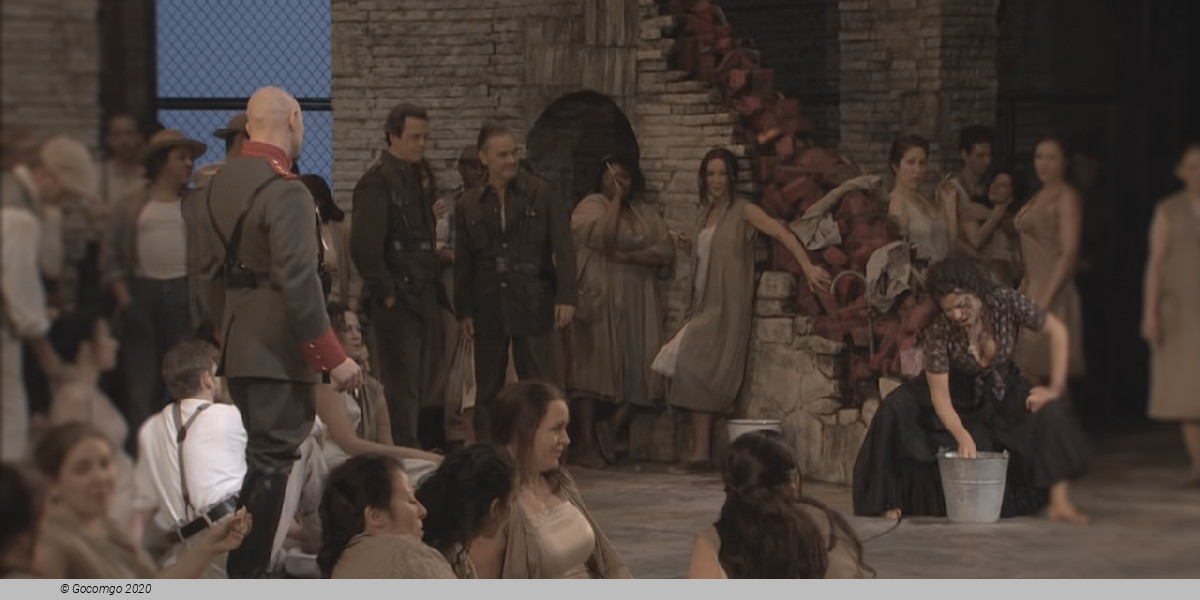
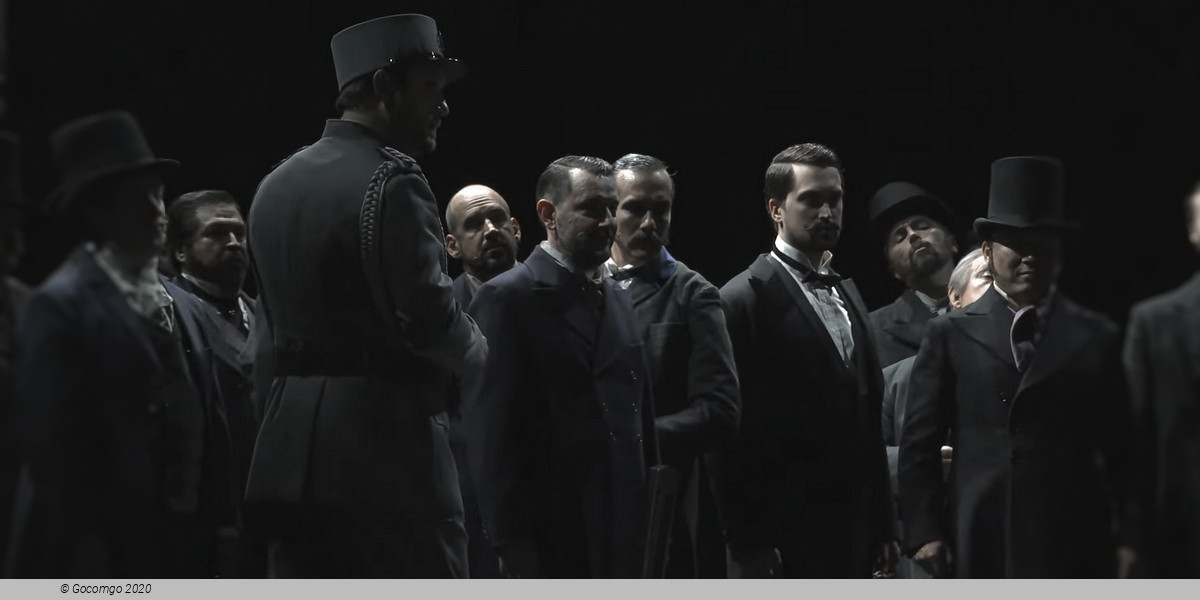
A row breaks out in the cigarette-factory. The girls come running out quarrelling. They say that Carmen flew at the cigarette-girl Manuelita after Manuelita had insulted her. Zuniga quietens things down with the help of his soldiers. Zuniga asks Don José to tell him exactly what happened in the factory. Don José says that Carmen had attacked Manuelita with a knife.
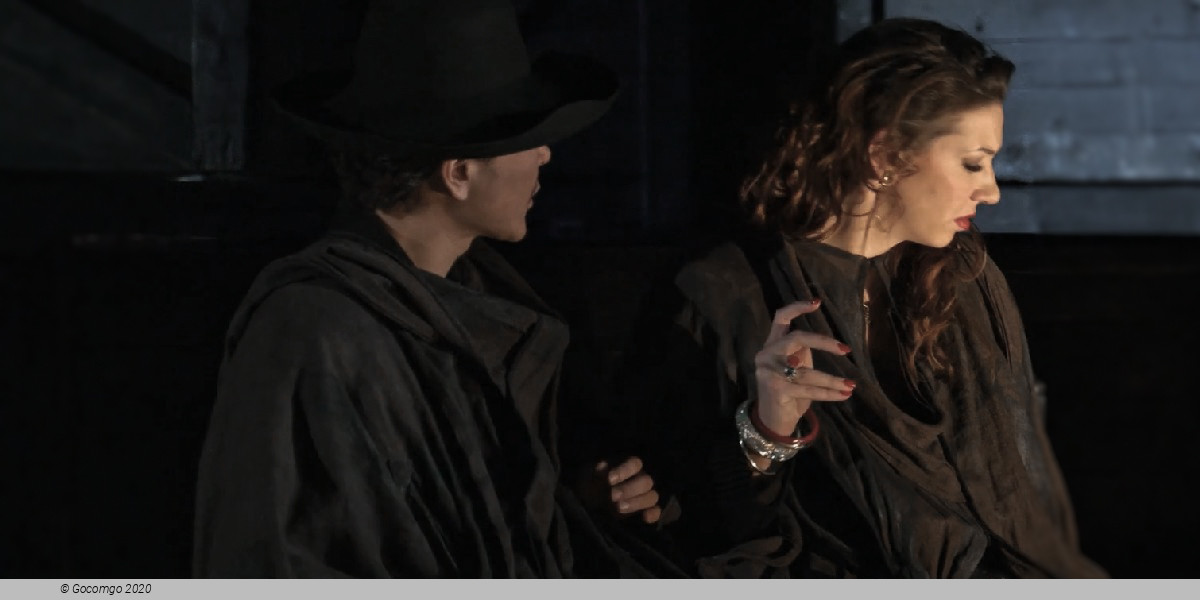
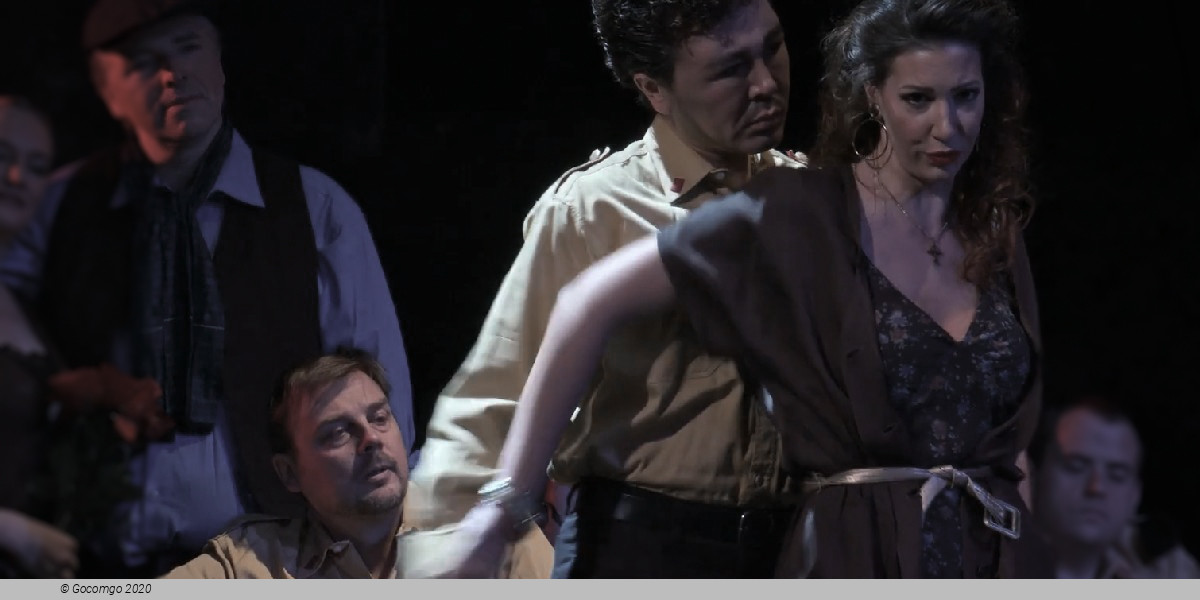
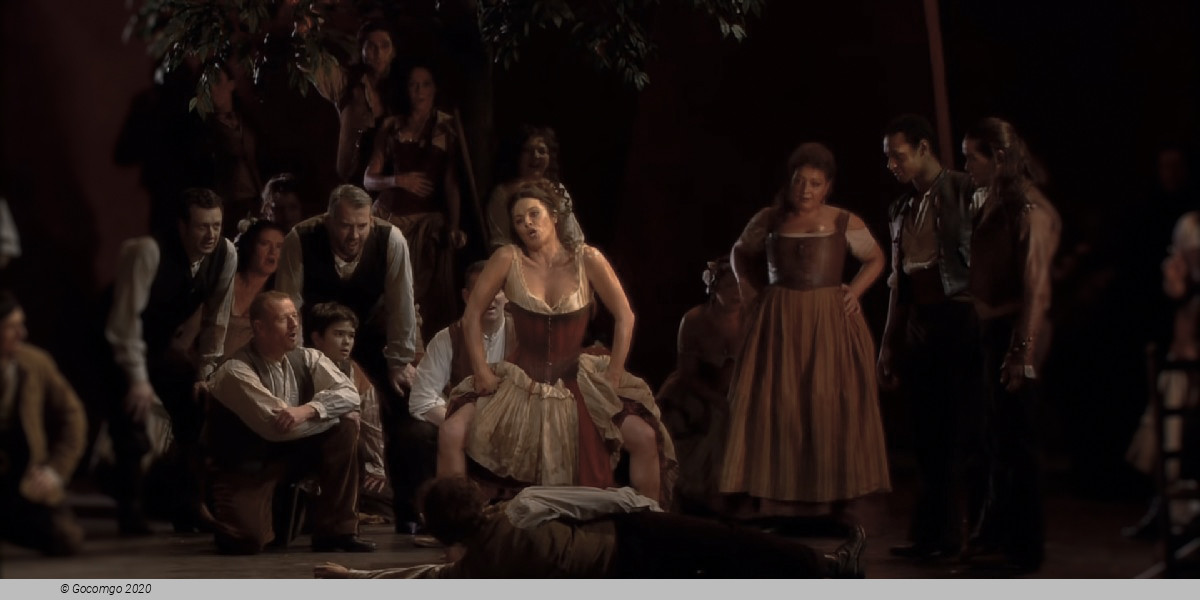
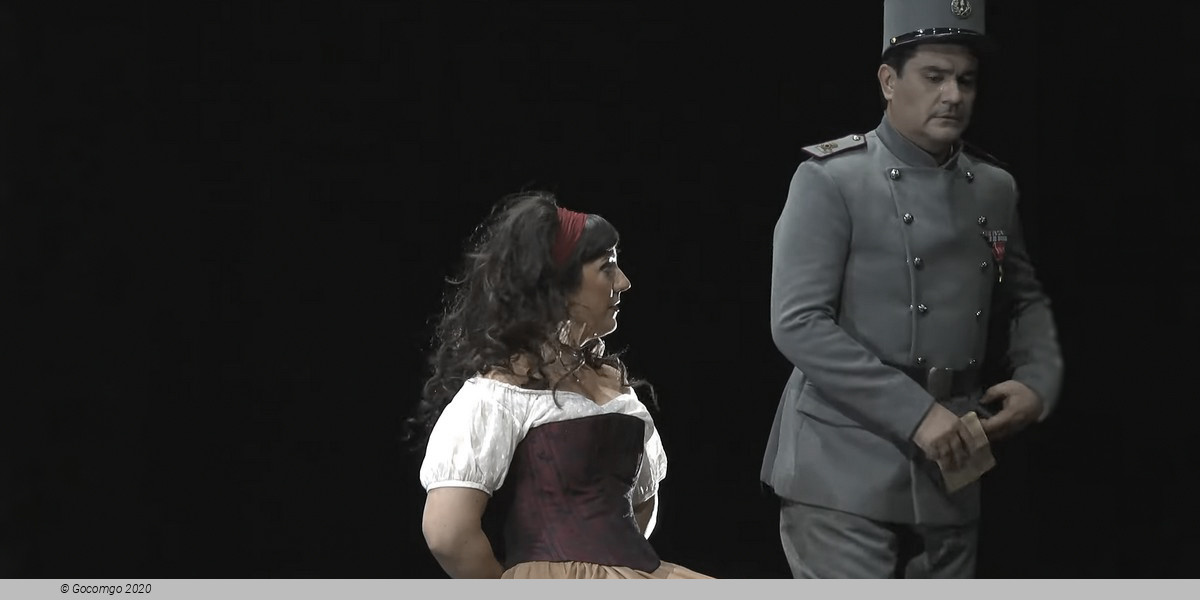
Carmen is brought before Zuniga and he asks her to tell him what really happened. She evades his questioning and answers him with a song. Carmen is arrested and Don José is ordered to take her away. Before Don José takes her away to prison, Carmen tries to seduce him and suggests that he let her escape. Don José resists her with difficulty.
To give her seduction of José more power, Carmen sings to him. Don José surrenders to her and unties her hands.
Zuniga returns with the warrant of arrest, but Carmen breaks free and flees.
Act 2
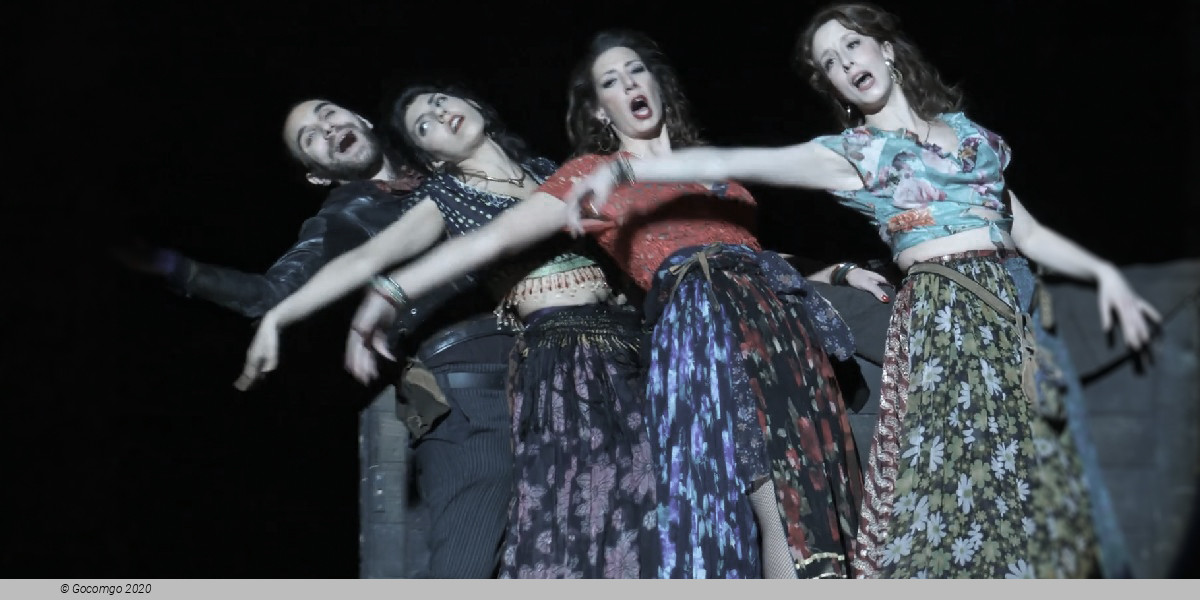
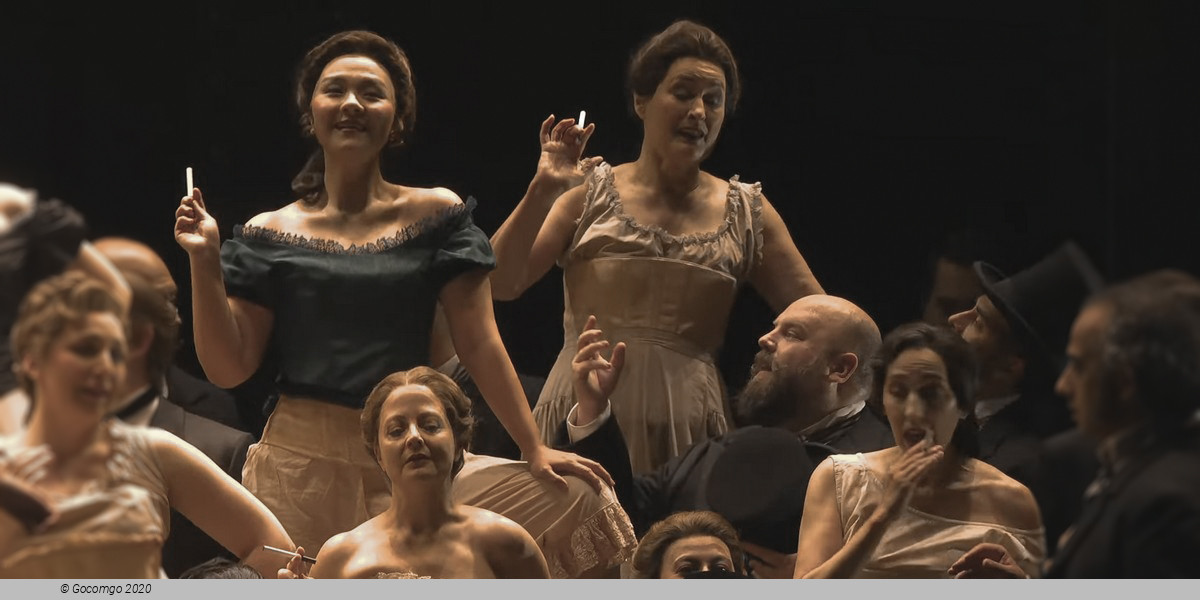
Carmen and her two friends Frasquita and Mercedès are sitting at a table in Lillas Pastia’s tavern. Zuniga and some other officers come in and are surrounded by the girls. There is much music and drinking.
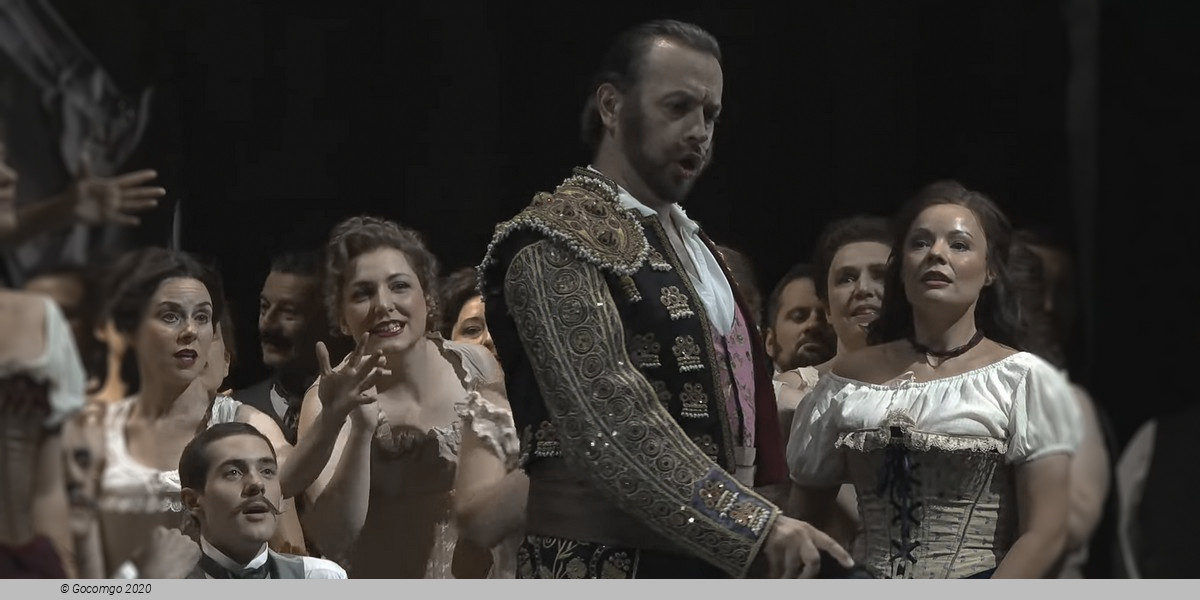
The toreador has watched what is happening from his table. He drinks a toast to the officers and sings a song about bullfighting that is token up by all present.
Escamillo’s glance falls on Carmen. He asks her name and promises that he will wait for her until she loves him. Lillas Pastia interrupts this brief idyll and tells the officers that it is time for them to leave his tavern; it is late.
All present salute the toreador one lost time. Escamillo, accomponied by the officers, leaves the tavern.
Lillas Pastia’s real reason for sending the officers away is that he is expecting Dancaïro and Remendado, the leaders of the smugglers’ band. They are coming to explain their new plans. The gang leaders need the women’s help to make their plan succeed, but Carmen says that she will not take part straight away; she is in love, and this time duty will have to give way to love.
Suddenly they hear someone singing. Carmen recognises Don José’s voice. The gang leaders suggest to Carmen that she talk him into joining them in their plans. They withdraw, leaving Carmen alone on the stage.
Don José enters and says that it is scarcely two hours since he was released from prison. He had been jailed because he had let Carmen escape. Carmen had sent him a file and money to help him escape, but he had made use of neither; he did not want to go through life as a deserter. Carmen tells him that she danced for the officers, and Don José becomes jealous. She agrees to dance for him now. The music of her dance is interrupted from time to time by trumpets in the distance that are sounding the roll-call. Don José gets up to return to barracks and arouses Carmen’s ire. She tries to persuade him to go with her and to become one of the smuggler’s gang. Don José refuses, in spite of the love that he has for her. He must leave.
Their lovers’ quarrel is interrupted by a loud thumping on the door. Zuniga rushes in and catches Don José with Carmen. He orders José to return to barracks. A fight develops between Zuniga and Don José. Carmen calls for help and the other members of the gang appear and overpower Zuniga. Don José has no other option but to abandon his career as a soldier and to join up with the smugglers’ gang.
Act 3
In the mountains, in a storage-dump belonging to the smugglers. The new recruit is brought inside by the gang’s helpers. All are tired from their heavy work.
Don José tries in vain to make peace with Carmen.
To pass the time Mercedès and Frasquita tell their fortunes in the cards. They predict happiness for the girls, but Death appears each time that Carmen turns a card over.
Dancaïro and Remendado come back, having found a way to break into the town.
The whole gang prepares to take advantage of the moment and they go back to work. Don José is given the task of guarding their hiding-place.
Micaëla has also found her way to the smuggler’s den in her search for Don José. She is afraid and prays to God for help. She sees Don José. Don José firest at a stranger who is approaching the smugglers’ lair. The stranger turns out to be Escamillo, who is also looking for his beloved. He does not know who Don José is and tells him about his beloved, the gypsy-girl Carmen, and how she was once in love with a cashiered soldier. Don José recognises himself in the story and bursts out in rage. He seizes his knife and challenges Escamillo to a duel.
This disturbance in their hide-out makes the smugglers and their girls return. Carmen sees her former lover opposite her new hero, Escamillo. The struggling pair are separated by Dancaïro and Remendado. As the band prepares to leave, Remendado discovers Micaëla. She begs Don José to return home to his mother, but he wants to stay with Carmen. Micaëla tells him that his mother is on the point of death, at which José calms down and leaves the smugglers’ lair with Micaëla. He threatens Carmen that he will return.
Act 4
Seville, a square in front of the bullring. The spectators are watching for the arrival of the bullfighters. They all applaud Escamillo when they see him. Carmen is standing at his side, for she has become his new mistress. Escamillo enters the ring and leaves Carmen outside. Frasquita warns Carmen that Don José is in the neighbourhood, but Carmen does not fear him.
Don José and Carmen stand facing each other. He accosts her one last time, but his plea for her love is hopeless. Carmen tells him that he must either let her go or kill her. Amidst the cheering that proclaims Escamillo’s victory, Don José decides upon the latter and stabs her.
Place: Seville, Spain, and surrounding hills
Time: Around 1820
Act 1
A square, in Seville. On the right, a door to the tobacco factory. At the back, a bridge. On the left, a guardhouse.
A group of soldiers relaxes in the square, waiting for the changing of the guard and commenting on the passers-by ("Sur la place, chacun passe"). Micaëla appears, seeking José. Moralès tells her that "José is not yet on duty" and invites her to wait with them. She declines, saying she will return later. José arrives with the new guard, who is greeted and imitated by a crowd of urchins ("Avec la garde montante").
As the factory bell rings, the cigarette girls emerge and exchange banter with young men in the crowd ("La cloche a sonné"). Carmen enters and sings her provocative habanera on the untameable nature of love ("L'amour est un oiseau rebelle"). The men plead with her to choose a lover, and after some teasing she throws a flower to Don José, who thus far has been ignoring her but is now annoyed by her insolence.
As the women go back to the factory, Micaëla returns and gives José a letter and a kiss from his mother ("Parle-moi de ma mère!"). He reads that his mother wants him to return home and marry Micaëla, who retreats in shy embarrassment on learning this. Just as José declares that he is ready to heed his mother's wishes, the women stream from the factory in great agitation. Zuniga, the officer of the guard, learns that Carmen has attacked a woman with a knife. When challenged, Carmen answers with mocking defiance ("Tra la la... Coupe-moi, brûle-moi"); Zuniga orders José to tie her hands while he prepares the prison warrant. Left alone with José, Carmen beguiles him with a seguidilla, in which she sings of a night of dancing and passion with her lover—whoever that may be—in Lillas Pastia's tavern. Confused yet mesmerised, José agrees to free her hands; as she is led away she pushes her escort to the ground and runs off laughing. José is arrested for dereliction of duty.
Act 2
Lillas Pastia's Inn
Two months have passed. Carmen and her friends Frasquita and Mercédès are entertaining Zuniga and other officers ("Les tringles des sistres tintaient") in Pastia's inn. Carmen is delighted to learn of José's release from two months' detention. Outside, a chorus and procession announces the arrival of the toreador Escamillo ("Vivat, vivat le Toréro"). Invited inside, he introduces himself with the "Toreador Song" ("Votre toast, je peux vous le rendre") and sets his sights on Carmen, who brushes him aside. Lillas Pastia hustles the crowds and the soldiers away.
When only Carmen, Frasquita and Mercédès remain, smugglers Dancaïre and Remendado arrive and reveal their plans to dispose of some recently acquired contraband ("Nous avons en tête une affaire"). Frasquita and Mercédès are keen to help them, but Carmen refuses, since she wishes to wait for José. After the smugglers leave, José arrives. Carmen treats him to a private exotic dance ("Je vais danser en votre honneur ... La la la"), but her song is joined by a distant bugle call from the barracks. When José says he must return to duty, she mocks him, and he answers by showing her the flower that she threw to him in the square ("La fleur que tu m'avais jetée"). Unconvinced, Carmen demands he show his love by leaving with her. José refuses to desert, but as he prepares to depart, Zuniga enters looking for Carmen. He and José fight, and are separated by the returning smugglers, who restrain Zuniga. Having attacked a superior officer, José now has no choice but to join Carmen and the smugglers ("Suis-nous à travers la campagne").
Act 3
A wild spot in the mountains
Carmen and José enter with the smugglers and their booty ("Écoute, écoute, compagnons"); Carmen has now become bored with José and tells him scornfully that he should go back to his mother. Frasquita and Mercédès amuse themselves by reading their fortunes from the cards; Carmen joins them and finds that the cards are foretelling her death, and José's. The women depart to suborn the customs officers who are watching the locality. José is placed on guard duty.
Micaëla enters with a guide, seeking José and determined to rescue him from Carmen ("Je dis que rien ne m'épouvante"). On hearing a gunshot she hides in fear; it is José, who has fired at an intruder who proves to be Escamillo. José's pleasure at meeting the bullfighter turns to anger when Escamillo declares his infatuation with Carmen. The pair fight ("Je suis Escamillo, toréro de Grenade"), but are interrupted by the returning smugglers and girls ("Holà, holà José"). As Escamillo leaves he invites everyone to his next bullfight in Seville. Micaëla is discovered; at first, José will not leave with her despite Carmen's mockery, but he agrees to go when told that his mother is dying. As he departs, vowing he will return, Escamillo is heard in the distance, singing the toreador's song.
Act 4
A square in Seville. At the back, the walls of an ancient amphitheatre
Zuniga, Frasquita and Mercédès are among the crowd awaiting the arrival of the bullfighters ("Les voici ! Voici la quadrille!"). Escamillo enters with Carmen, and they express their mutual love ("Si tu m'aimes, Carmen"). As Escamillo goes into the arena, Frasquita and Mercedes warn Carmen that José is nearby, but Carmen is unafraid and willing to speak to him. Alone, she is confronted by the desperate José ("C'est toi ! C'est moi !"). While he pleads vainly for her to return to him, cheers are heard from the arena. As José makes his last entreaty, Carmen contemptuously throws down the ring he gave her and attempts to enter the arena. He then stabs her, and as Escamillo is acclaimed by the crowds, Carmen dies. José kneels and sings "Ah! Carmen! ma Carmen adorée!"; as the crowd exits the arena, José confesses to killing the woman he loved.







 Währinger Strasse 78