
Teatro Alla Scala 15 November 2022 - The Tempest | GoComGo.com

The Tempest

Teatro Alla Scala, Milan, Italy
All photos (7)
Select date and time
8 PM

E-tickets: Print at home or at the box office of the event if so specified. You will find more information in your booking confirmation email.

You can only select the category, and not the exact seats.
If you order 2 or 3 tickets: your seats will be next to each other.
If you order 4 or more tickets: your seats will be next to each other, or, if this is not possible, we will provide a combination of groups of seats (at least in pairs, for example 2+2 or 2+3).

Important Info
Type: Opera
City: Milan, Italy
Starts at: 20:00

E-tickets: Print at home or at the box office of the event if so specified. You will find more information in your booking confirmation email.

You can only select the category, and not the exact seats.
If you order 2 or 3 tickets: your seats will be next to each other.
If you order 4 or more tickets: your seats will be next to each other, or, if this is not possible, we will provide a combination of groups of seats (at least in pairs, for example 2+2 or 2+3).

Overview

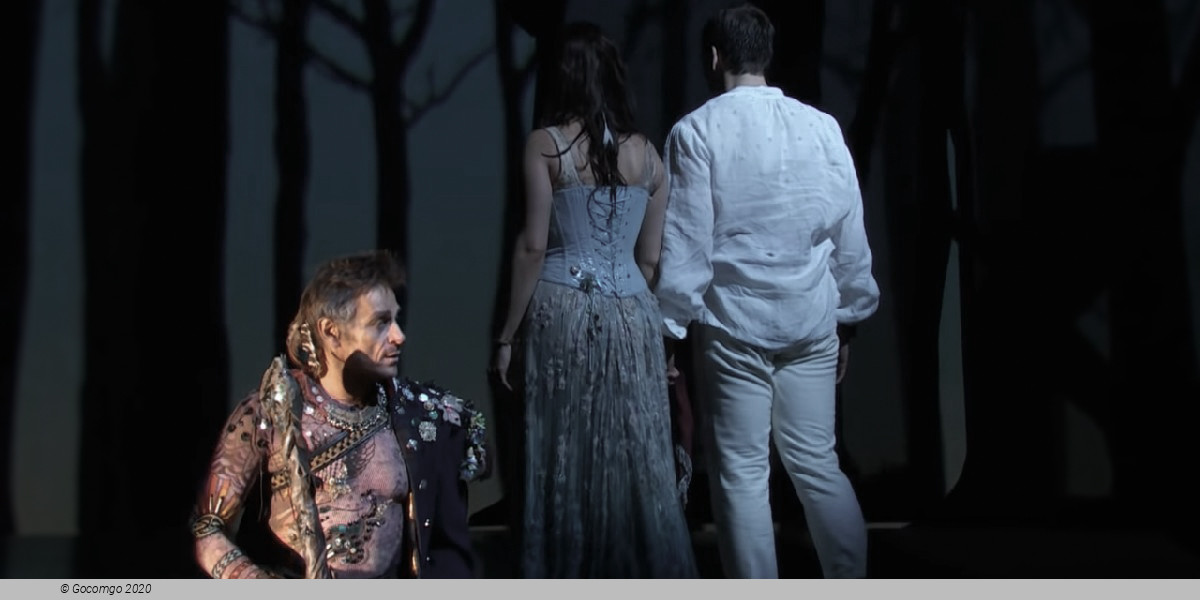
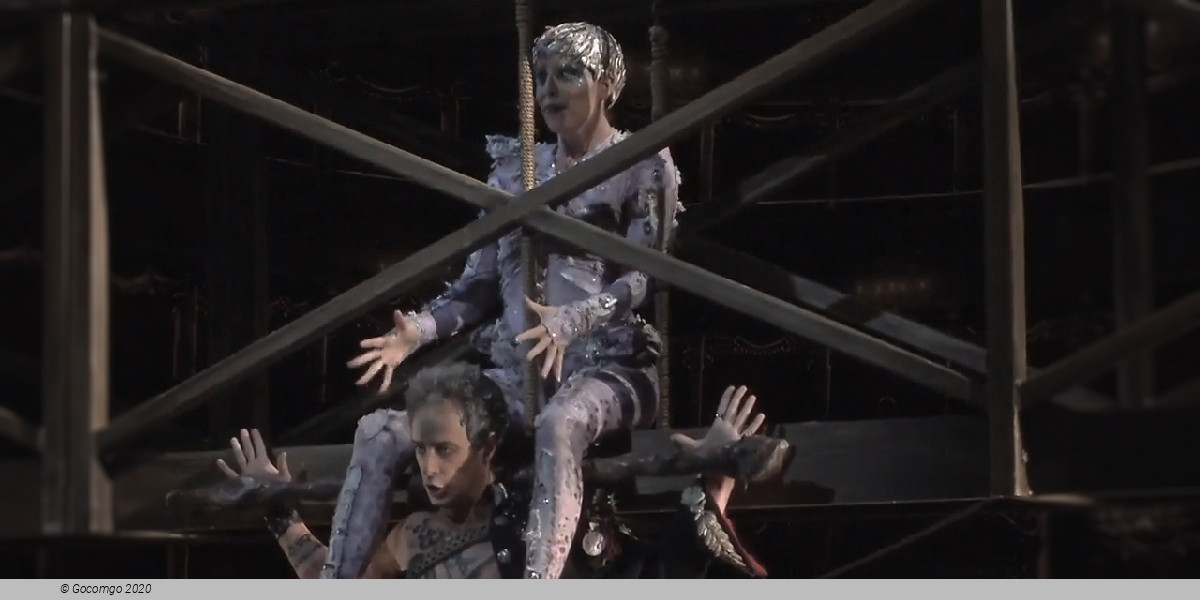
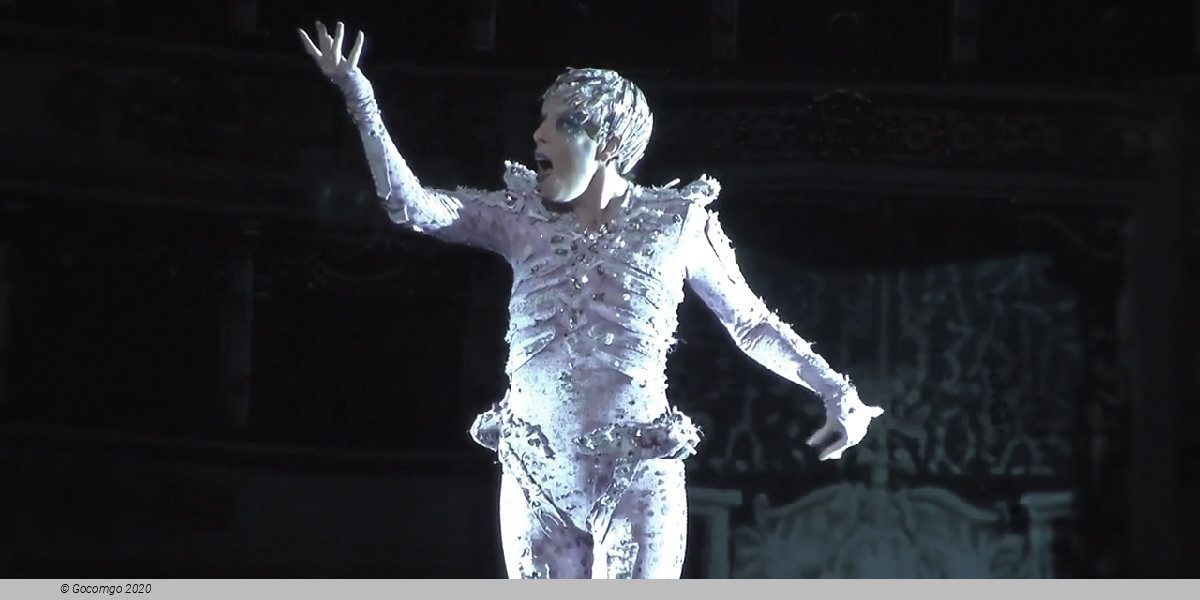
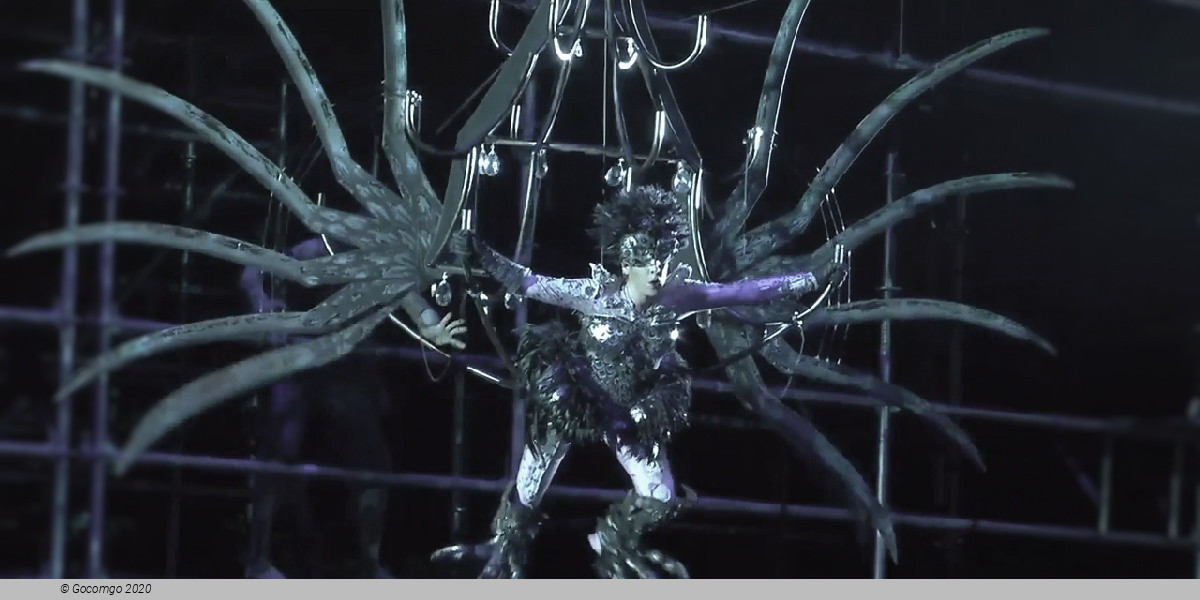
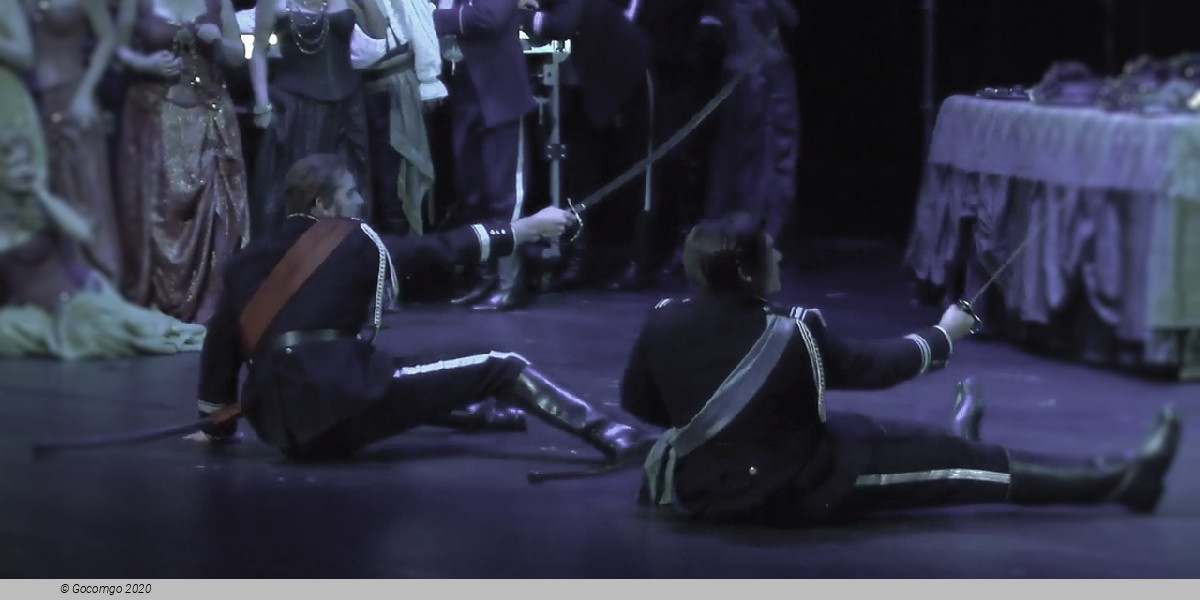
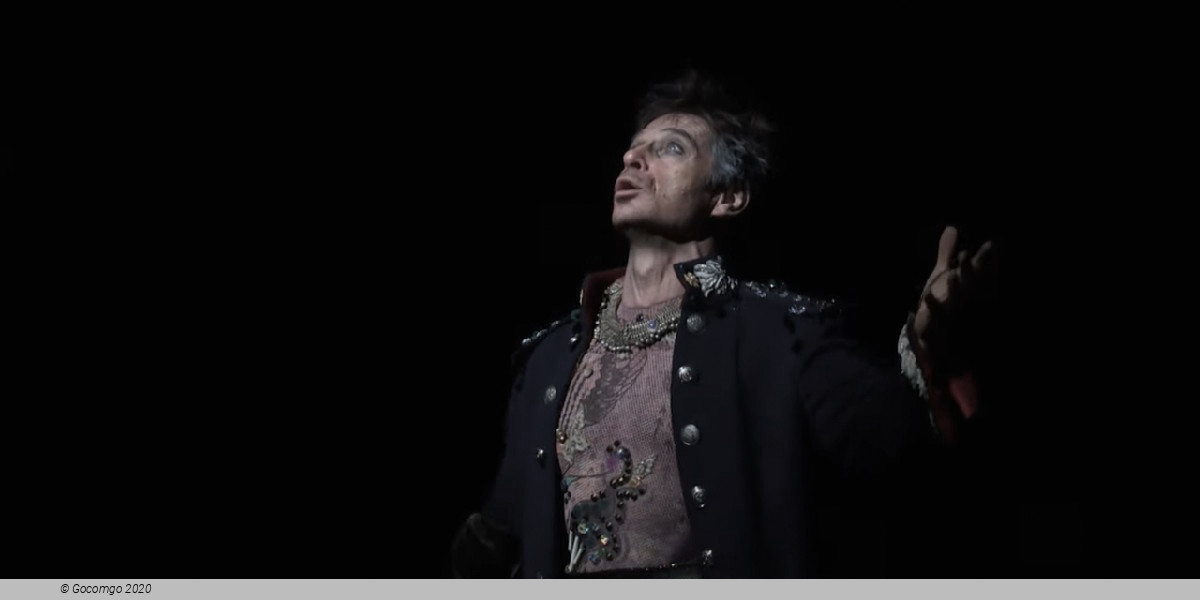
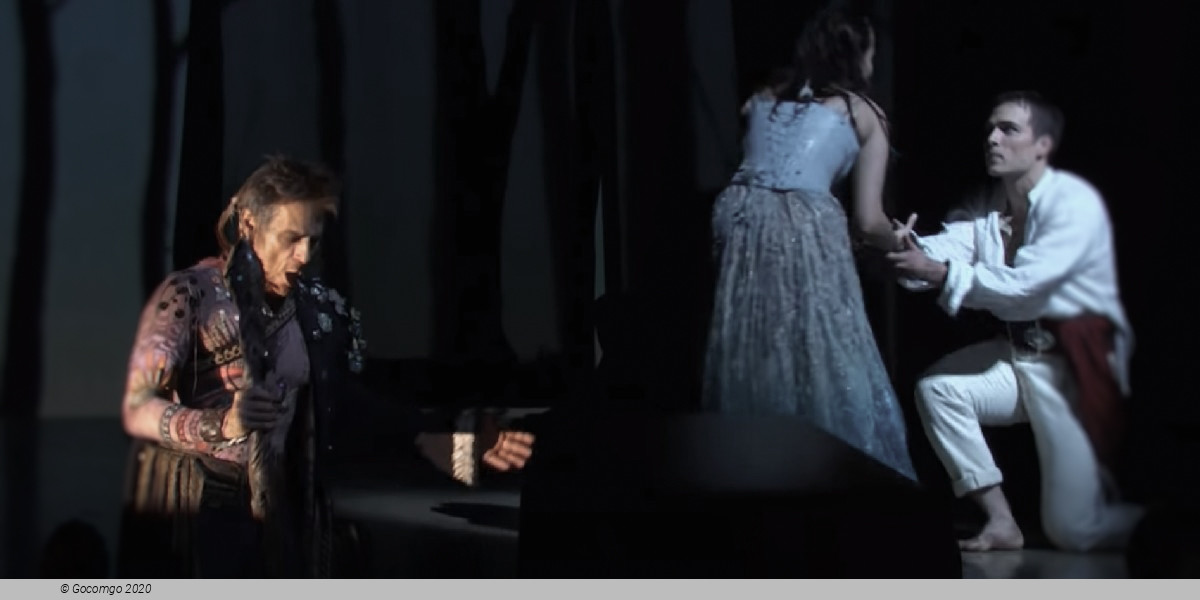
Teatro alla Scala expands its contemporary repertory by presenting for the first time one of the most famous and frequently performed operas by Thomas Adès. Putting the magical arts of Prospero, the betrayed Duke of Milan, to music, The Tempest premieres in Italy at La Scala in the imagerich production of Robert Lepage, whose stage sets allude precisely to Piermarini’s loges. A unique experience in sound and vision that gives us great reason to believe in the future of opera.

Wiener Staatsoper, The Metropolitan Opera, L’Opéra de Québec Coproduction.

In collaboration with Ex Machina

History
Premiere of this production: 10 February 2004, Royal Opera House, London

The Tempest is an opera by English composer Thomas Adès with a libretto in English by Meredith Oakes based on the play The Tempest by William Shakespeare.

Synopsis

Quotations below come from the published libretto by Meredith Oakes.

Act 1
Scene 1: The court

Using his magical powers, Prospero has created a huge storm during which the ship carrying his brother Antonio (who has usurped his position as Duke of Milan) along with King Alonso, Duke of Naples, Alonso's son Ferdinand, and their courts is wrecked. Offstage the court is heard.

Scene 2: Miranda and Prospero

Miranda is horrified at the destruction which her father has caused, but Prospero explains how his brother usurped his position and how they were cast away on a small boat twelve years before, surviving with only the help of a faithful courtier, Gonzalo. Prospero sends Miranda to sleep.

Scene 3: Ariel and Prospero

Ariel explains that she has carried out Prospero's orders, and he further instructs her to restore the shipwrecked group with "Not a hair perished/ On their clothes no blemish". "I'll clean them and dry them/ And set them on the island" she obeys.

Scene 4: Caliban and Prospero (Miranda asleep)

Caliban appears and immediately questions why Prospero has caused such distress. Prospero dismisses him – "Abhorrent slave/ Go to your cave" – as he recalls Ariel.

Scene 5: Prospero and Ariel (Miranda asleep)

Ariel tells Prospero that she has obeyed his commands. He then orders her to bring the King's son, Ferdinand, to this part of the island. While loyal to Prospero, Ariel questions when she will be freed from his service and she is assured that after twelve years, this will happen. The pair then hides, leaving Miranda sleeping on the beach.

Scene 6: Ferdinand and Miranda (with Prospero and Ariel unseen)

Ferdinand arrives on the island to find Miranda asleep. At first he thinks that she is a spirit and, as she wakes up, she wonders who he is: "I never saw/ Your like before". They are immediately attracted to each other, but Prospero appears, confronts Ferdinand, tells him of Alonso's deeds, and immobilizes the young man. Ferdinand declares his love for Miranda and accepts anything which Prospero will do to him, but Prospero declares him unworthy of Miranda and then orders Ariel to bring Alonso and his party to him.

Act 2
Scene 1: The King, and the court on the island. (Prospero and Ariel are unseen)

The chorus is amazed at how they come through the storm and shipwreck so unscathed. From his hidden vantage point, Prospero orders Ariel to "Taunt them, haunt them/ Goad and tease/ Prick them, trick them/ Give them no peace". The king laments the loss of his son and Gonzalo attempts to comfort him, but Ariel's trickery begins and, impersonating the voices of the group to confuse them and divide them, they begin to squabble. Conflict is avoided by the arrival of Caliban.

Scene 2: Caliban with the court

They confront each other in amazement and soon Trincolo and Stefano begin to ply Caliban with drink. As Ariel's trickery continues, he assures the group not to be afraid, that "the island's full of noises" and explains his presence there, but, before he can reveal Prospero's name, he is silenced and leaves the group. Confused, the King and Gonzalo leave to search the island with Prospero working his magic to send them to "search/ Where there's no path/ Go in circles/ Drink the salt marsh".

Scene 3: Caliban, Stefano, and Trincolo

Briefly, they plot to restore Caliban to his former position as head of the island.

Scene 4: Ferdinand, Miranda, (and Prospero unseen)

The couple expresses their love for each other and Miranda frees Ferdinand leaving Prospero to accept the loss of his daughter: "Miranda/ I've lost her/ I cannot rule their minds/ My child has conquered me/ A stronger power than mine/ Has set the young man free".

Act 3
Scene 1: Caliban, Trincolo, and Stefano all drunk

The trio cavorts across the island proclaiming the coming moment when Stefano will be King of the island and Caliban will be free.

Scene 2: Prospero and Ariel, followed by the arrival of the court

Ariel explains that she has led the court around the island and, once more, asks to be freed. The King and the court arrive exhausted and ready to collapse; quickly all but Antonio and Sebastian fall asleep. The two begin to plot to kill the King but are interrupted by the unseen Ariel's plea to the sleepers to wake up. Creating a banquet out of thin air, she just as quickly causes it to disappear and then leads the group away into further confusion. Prospero comments on his power over his enemies.

Scene 3: Miranda and Ferdinand, return to Prospero

The couple tells Prospero that they are married and Ariel arrives with her good wishes in addition to telling the young man that his father is actually alive. As he causes Ariel to vanish, Prospero announces that he is ending the magic: "Our revels are ended/ Why do you stare?/ He's melted into air/ So cities will perish/ Palaces vanish/ The globe itself/ Dissolve/ Nothing stay/ All will fade". Caliban, Trincolo and Stefano return, the former re-affirming his lust for Miranda with whom "We'll have Calibans/ Many and strong". In disgust, Prospero makes them disappear, Ariel re-appears and is promised her freedom within an hour.

Scene 4: Everyone except Caliban

Prospero reveals himself to the King and his court, and reveals Ferdinand and Miranda to Alonso. With the re-appearance of Stefano and Trincolo the court is joyously reunited; "Bless this isle/ Where Prospero found his dukedom/ Ferdinand his bride/ And Naples Ferdinand" says Gonzalo as all make their way to their restored ship. Prospero makes his peace with the King, forgives his brother, and breaks his staff as Ariel departs. Her voice is heard offstage.

Scene 5: Caliban alone, with Ariel offstage

Caliban stands alone on the island musing on the changes: "Who was here/ Have they disappeared?". Ariel's voice is heard off stage.

Venue Info

Teatro Alla Scala - Milan
Location   Via Filodrammatici, 2

Teatro Alla Scala is an opera house in Milan. Most of Italy's greatest operatic artists, and many of the finest singers from around the world, have appeared at La Scala. The theatre is regarded as one of the leading opera and ballet theatres globally. It is home to the La Scala Theatre Chorus, La Scala Theatre Ballet, La Scala Theatre Orchestra, and the Filarmonica della Scala orchestra.

The Teatro alla Scala was founded, under the auspices of the Empress Maria Theresa of Austria, to replace the Royal Ducal Theatre, which was destroyed by fire on 26 February 1776 and had until then been the home of opera in Milan. The cost of building the new theatre was borne by the owners of the boxes at the Ducal, in exchange for possession of the land on which stood the church of Santa Maria alla Scala (hence the name) and for renewed ownership of their boxes. Designed by the great neoclassical architect Giuseppe Piermarini, La Scala opened on 3 August 1778 with Antonio Salieri's opera L'Europa riconosciuta, to a libretto by Mattia Verazi.

With the advent of Rossini in 1812 (La pietra del paragone), the Teatro alla Scala was to become the appointed place of Italian opera seria: of its history dating back more than a century and of its subsequent tradition up till the present. The catalogue of Rossini's works performed until 1825 included: Il turco in Italia, La Cenerentola, Il barbiere di Siviglia, La donna del lago, Otello, Tancredi, Semiramide and Mosé. During that period the choreographies of Salvatore Viganò (1769-181) and of Carlo Blasis (1795-1878) also widened the theatre's artistic supremacy to include ballet.

An exceptional new season of serious opera opened between 1822 and 1825, with Chiara e Serafina by Gaetano Donizetti (1797-1848) and Il pirata by Vincenzo Bellini (1801-1835). The later operas of Donizetti performed at La Scala were (until 1850) Anna Bolena, Lucrezia Borgia, Torquato Tasso, La fille du régiment, La favorita, Linda di Chamonix, Don Pasquale, and Poliuto. These were followed (until 1836) by Bellini's I Capuleti e i Montecchi, Norma, La sonnambula, Beatrice di Tenda and I puritani.

In 1839 Oberto Conte di San Bonifacio inaugurated the cycle of operas by Giuseppe Verdi (1813-1901), the composer whose name is linked more than any other to the history of La Scala. After the dismal failure of Un giorno di regno, Nabucco was performed in 1842. It was the first, decisive triumph of Verdi's career. At the same time, the strong patriotic feelings stirred by Nabucco founded the "popularity" of opera seria and identified its image with the Scala.

Arturo Toscanini (1867-1957) became the artistic director and introduced radical reform into the theatre, both in its organisational aspects and in its relations with the public. Toscanini, one of the greatest conductors of all time, took up Verdi's musical inheritance and launched a tradition of interpretation that continued uninterruptedly and was renewed during the twentieth century. It was he who reappraised and regularly performed at the Scala the works of Richard Wagner (hitherto only belatedly and inadequately recognised). He also firmly extended the Scala's orchestral repertoire to include symphonic music.

In 1948 maestro Guido Cantelli (1920-1956) made his debut and established himself as one of the leading postwar conductors. Numerous opera performances productions (the Wagnerian cycle conducted in 1950 by Wilhelm Furtwängler, the Verdi repertoire by Victor De Sabata, etc), concerts (Herbert von Karajan, Dimitri Mitropoulos, Bruno Walter, etc), singers (Maria Callas, Renata Tebaldi, Giuseppe Di Stefano, Mario Del Monaco, etc), ballet performances (Margot Fonteyn, Serge Lifar, Maya Plissetskaya, Rudolf Nureyev), and productions (Luchino Visconti, Giorgio Strehler) belong not only to the history of the Scala, but to that of the history of musical theatre since the war.

In 1965 Claudio Abbado made his début at the Scala and in 1972 was named conductor of the Scala Orchestra. Until 1986 he directed among other works Il barbiere di Siviglia, Cenerentola, L'Italiana in Algeri by Rossini, Simon Boccanegra, Macbeth and Don Carlo by Verdi, the recent Al gran sole carico d'amore by Luigi Nono, and Pelléas et Mélisande by Claude Debussy. He also conducted numerous concerts. The chorus-master was Romano Gandolfi. In 1975 the ballet dancer Oriella Dorella debuted at La Scala. Among other contemporary composers, up till 1986 the Theatre continued to give works by Luciano Berio (La vera storia), Franco Donatoni (Atem) and Karlheinz Stockhausen (Samstag aus Licht).

In 1981 Riccardo Muti debuted at the Scala as an opera conductor (Mozart, Le nozze di Figaro). Giulio Bertola was appointed to direct the Chorus. In 1982 the Orchestra Filarmonica della Scala was established. In 1985 Alessandra Ferri made her debut at the Scala. In 1986 Riccardo Muti was appointed musical director. From 1989 to 1998 he reintroduced the best-loved works (Rigoletto, La traviata, Macbeth, La forza del destino) and numerous other titles by Verdi including Falstaff and Don Carlo.

In 1991 Roberto Gabbiani took over the directorship of the chorus. In 1997 La Scala was converted into a Foundation under private ownership, thus opening a decisive phase of modernisation.

On 7 December 2001 a new production of Otello, conducted by Muti, concluded the Verdi Year and, for the time being, performances at Piermarini’s original building in Piazza Scala. Major restoration and modernisation works of the Theatre began in January 2002.

The 2005-2006 Season, dedicated to the 250th anniversary of Mozart’s birth, was inaugurated by Idomeneo conducted by Daniel Harding. The 2006/07 season saw the return on 7 December of an opera by Verdi, Aida, conducted by Riccardo Chailly, and the launch of the Celebrations for the 50th Anniversary of Arturo Toscanini’s Death. On 7 December 2007 the 2007/08 season opened with Tristan und Isolde conducted by Daniel Barenboim. The opera marked the beginning of a closer collaboration between the Teatro alla Scala and the Israeli-Argentinian Maestro.

Important Info
Type: Opera
City: Milan, Italy
Starts at: 20:00
Top of page