
Teatro Alla Scala 2 March 2022 - Thaïs | GoComGo.com

Thaïs

Teatro Alla Scala, Milan, Italy
All photos (6)
Select date and time
8 PM

E-tickets: Print at home or at the box office of the event if so specified. You will find more information in your booking confirmation email.

You can only select the category, and not the exact seats.
If you order 2 or 3 tickets: your seats will be next to each other.
If you order 4 or more tickets: your seats will be next to each other, or, if this is not possible, we will provide a combination of groups of seats (at least in pairs, for example 2+2 or 2+3).

Important Info
Type: Opera
City: Milan, Italy
Starts at: 20:00

E-tickets: Print at home or at the box office of the event if so specified. You will find more information in your booking confirmation email.

You can only select the category, and not the exact seats.
If you order 2 or 3 tickets: your seats will be next to each other.
If you order 4 or more tickets: your seats will be next to each other, or, if this is not possible, we will provide a combination of groups of seats (at least in pairs, for example 2+2 or 2+3).

Overview

Teatro alla Scala New Production

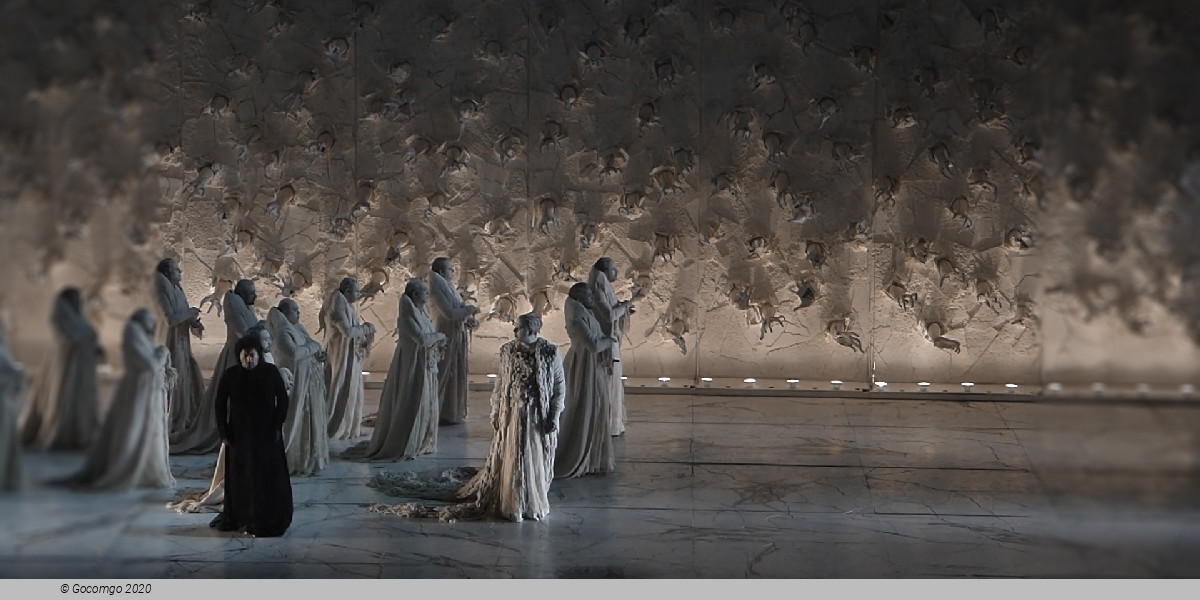
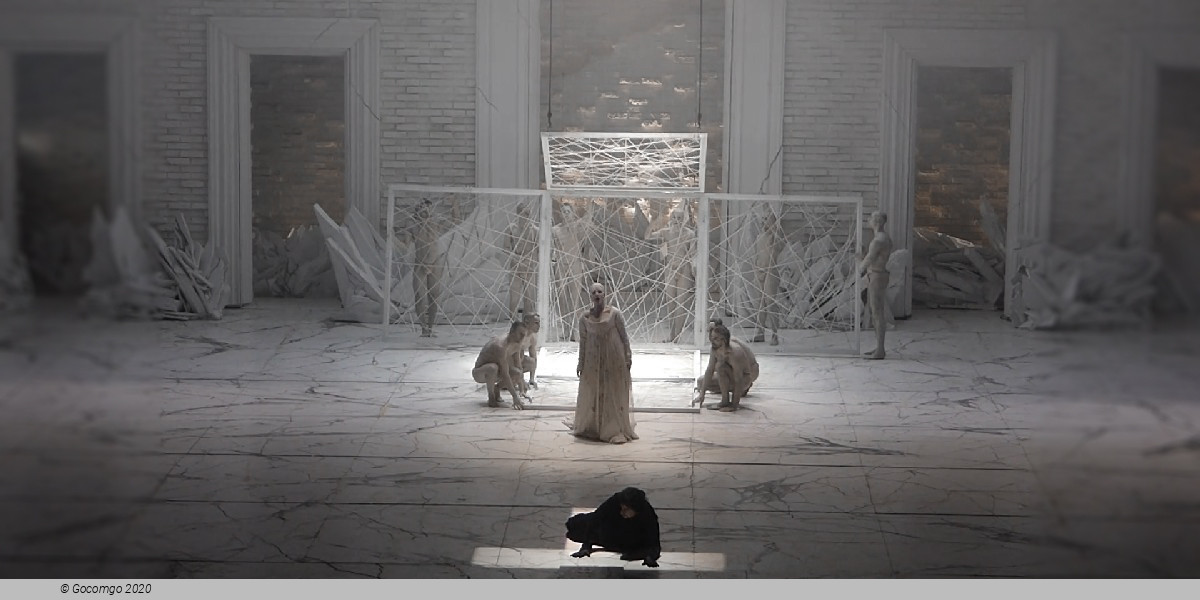
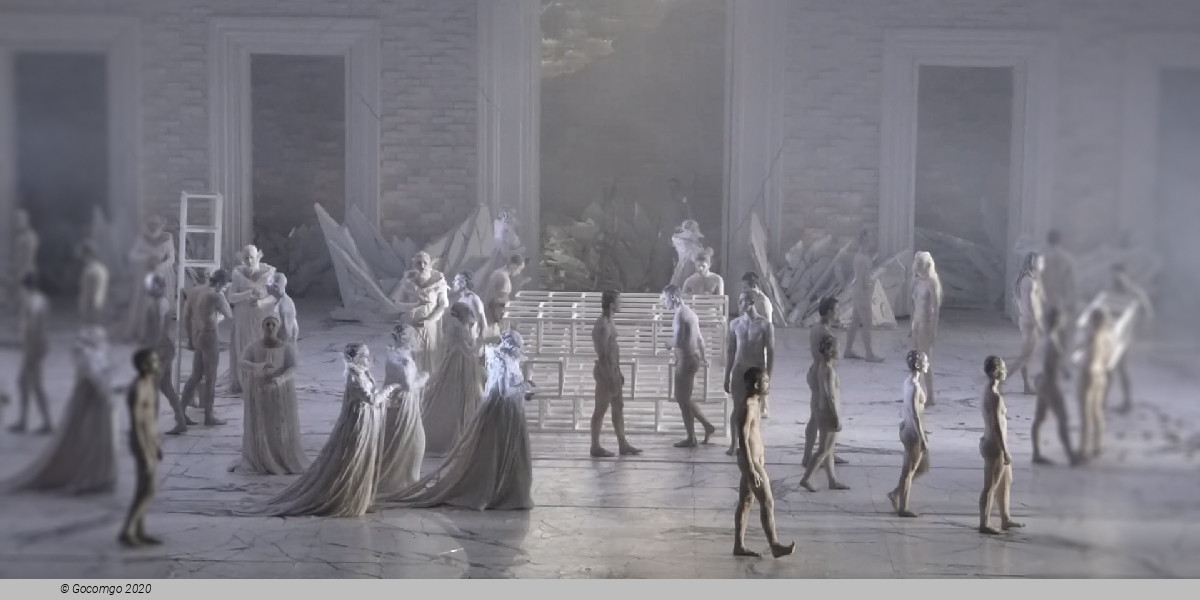
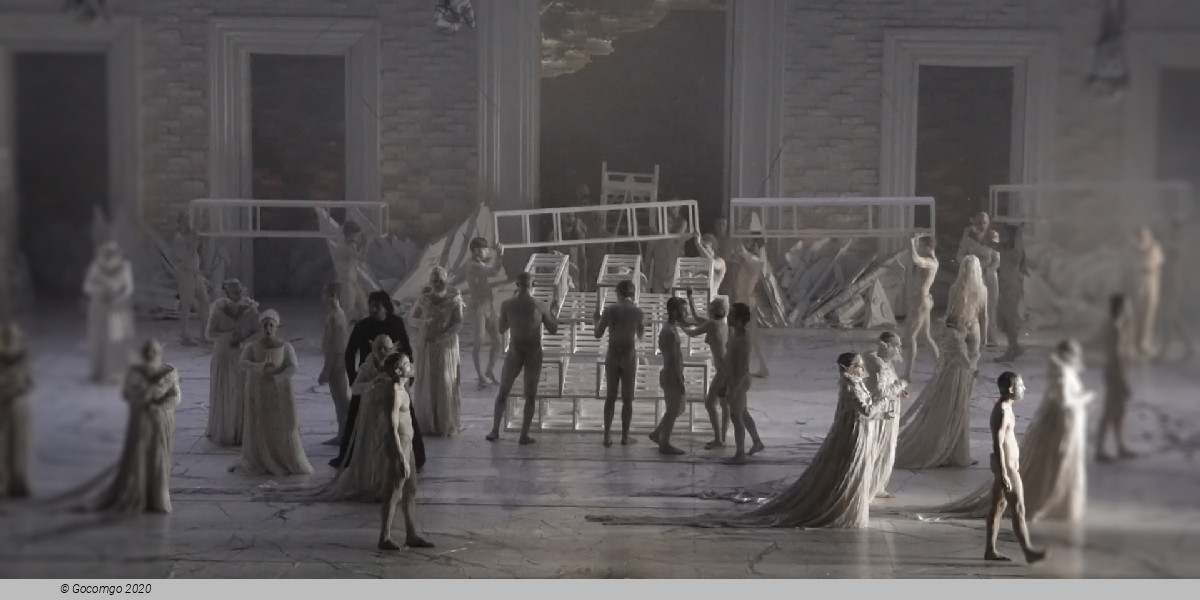
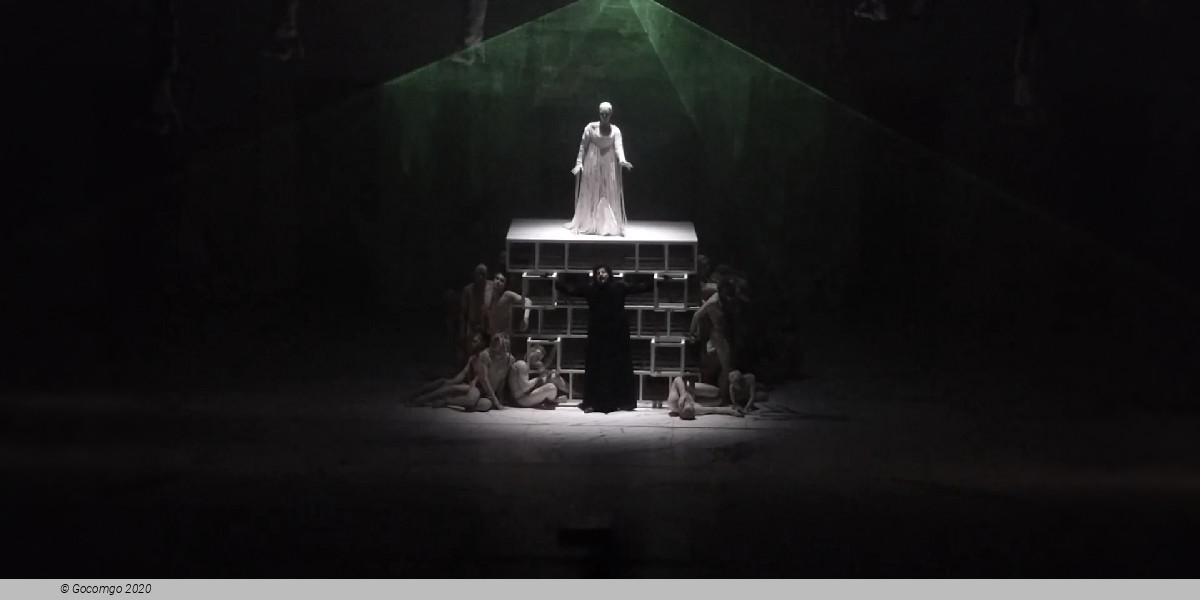
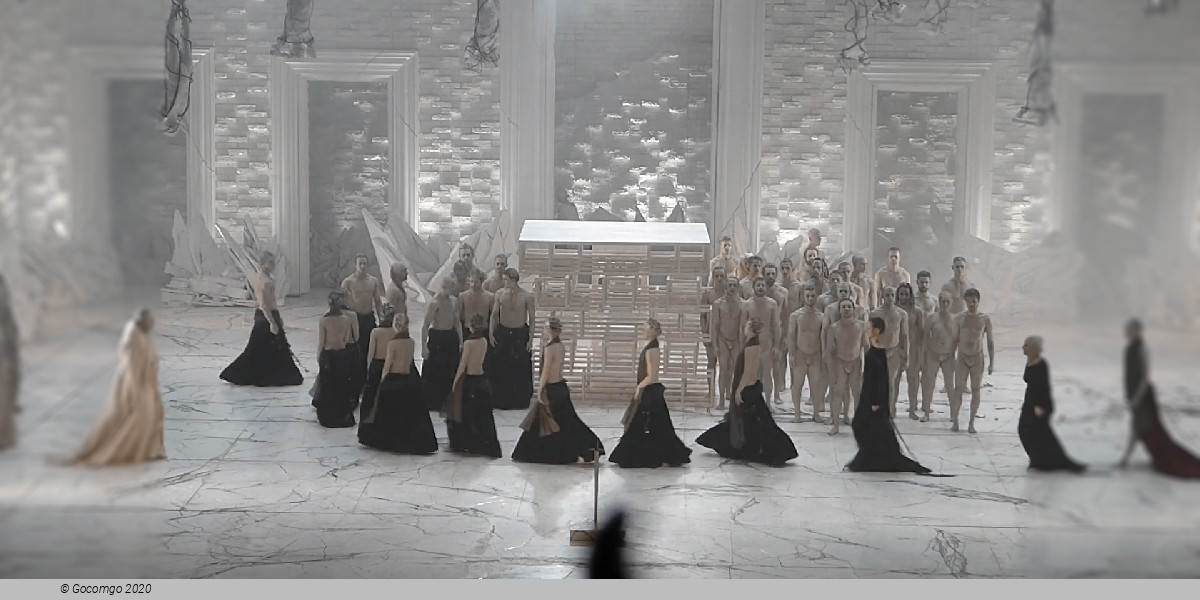
Thaïs, inspired by Anatole France’s novel, staged for the first time at the Palais Garnier in 1894, has never been performed at La Scala. Massenet’s refined and exquisite score aptly evokes the literary source, inflecting the dialectic of sin and redemption in a spectacular exercise in style combining erudition, exoticism, and sensuality. Lorenzo Viotti continues the exploration of French music that began with Roméo et Juliette in 2020, featuring one of the most dynamic stage directors in Europe, Olivier Py.

History
Premiere of this production: 16 March 1894, Opéra Garnier, Paris

Thaïs is an opera, a comédie lyrique in three acts and seven tableaux, by Jules Massenet to a French libretto by Louis Gallet, based on the novel Thaïs by Anatole France. It was first performed at the Opéra Garnier in Paris on 16 March 1894, starring the American soprano Sibyl Sanderson, for whom Massenet had written the title role. The original production was directed by Alexandre Lapissida, with costumes designed by Charles Bianchini and sets by Marcel Jambon (act 1, scene 1; act 3) and Eugène Carpezat (act 1, scene 2; act 2). The opera was later revised by the composer and was premiered at the same opera house on 13 April 1898.

Synopsis

Act 1

Scene 1

A group of Cenobite monks go about their daily business. Athanaël, the most rigorous ascetic of them all, enters and confesses to the senior monk, Palémon, that he has lately been disturbed by visions of a courtesan and priestess of Venus named Thaïs, whom he had seen many years ago in his native city of Alexandria. Believing these visions to be a sign from God, he resolves, against Palémon's advice, to return to Alexandria, convert Thaïs to Christianity, and persuade her to enter a convent.

Scene 2

Athanaël arrives in Alexandria and visits his old friend Nicias, a wealthy voluptuary. Nicias welcomes him with open arms and reveals himself to be Thaïs's current lover. Upon hearing Athanaël's plan, he laughs and warns him that the revenge of Venus can be terrible. Nevertheless, he procures clothing for his friend in preparation for a feast that evening at which Thaïs will appear. His slaves, Crobyle and Myrtale, dress Athanaël and mock his prudery.

The feast begins. Thaïs arrives and sings a bittersweet love duet with Nicias: this is their last night together. She then asks him about Athanaël, who overhears her and tells her that he has come to teach her "contempt for the flesh and love of pain." Not tempted by this proposition, she offends his sense of propriety with a seductive song. He leaves, angrily promising to come back later, while she taunts him with a parting shot: "Dare to come, you who defy Venus!" and begins to disrobe as the curtain falls.

Act 2

Scene 1

Exhausted after the feast, Thaïs expresses dissatisfaction with her empty life and muses on the fact that one day, old age will destroy her beauty. Athanaël enters at this vulnerable moment, praying to God to conceal her beauty from him. He tells her that he loves her according to the spirit rather than the flesh, and that his love will last forever instead of a single night. Intrigued, she asks him to teach her the ways of this love. He nearly succumbs to her physical charm, but succeeds in explaining to her that if she converts, she will gain eternal life. She nearly succumbs to his eloquence, but then reasserts her nihilistic worldview and drives him away. However, after a long meditation she changes her mind.

Scene 2

Thaïs has joined Athanaël and resolved to follow him into the desert. He orders her to burn down her house and possessions in order to destroy all traces of her wicked past. She agrees, but asks if she can keep a statuette of Eros, the god of love, explaining to Athanaël that she sinned against love rather than through it. When he hears that Nicias gave it to her, however, Athanaël demands that she destroy it. Nicias appears with a group of revelers, who see Athanaël taking Thaïs away. Furious, they begin to stone him. Although Nicias is astonished at Thaïs' decision to leave, he respects it and throws handfuls of money to distract the crowd. Thaïs and Athanaël escape.

Act 3

Scene 1

Thaïs and Athanaël travel on foot through the desert. Thaïs is exhausted, but Athanaël forces her to keep going and thus do penance for her sins. They reach a spring, where Athanaël begins to feel pity rather than disgust for her, and they share a few moments of idyllic, platonic companionship as they rest. Shortly afterwards, they reach the convent where Thaïs is to stay. Placing her in the care of Mother Superior Albine, Athanaël realizes that he has accomplished his mission — and that he will never see her again.

Scene 2

The Cenobite monks express anxiety over Athanaël's asocial and morose behavior since his return from Alexandria. Athanaël enters and confesses to Palémon that he has begun to experience sexual longing for Thaïs. Palémon castigates him for having attempted to convert her in the first place. Athanaël falls into a depressed sleep and has an erotic vision of Thaïs. He tries to seize her, but she laughingly evades him. Then, a second vision tells him that Thaïs is dying.

Scene 3

Feeling that existence is worth nothing without her, he repudiates all his vows and rushes off to find her. He reaches the convent and finds her on her deathbed. He tells her that all he taught her was a lie, that "nothing is true but life and the love of human beings", and that he loves her. Blissfully unaware, she describes the heavens opening and the angels welcoming her into their midst. She dies, and Athanaël collapses in despair.

Venue Info

Teatro Alla Scala - Milan
Location   Via Filodrammatici, 2

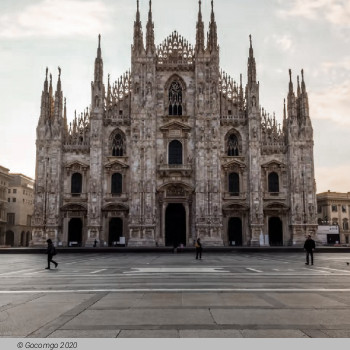
Teatro Alla Scala is an opera house in Milan. Most of Italy's greatest operatic artists, and many of the finest singers from around the world, have appeared at La Scala. The theatre is regarded as one of the leading opera and ballet theatres globally. It is home to the La Scala Theatre Chorus, La Scala Theatre Ballet, La Scala Theatre Orchestra, and the Filarmonica della Scala orchestra.

The Teatro alla Scala was founded, under the auspices of the Empress Maria Theresa of Austria, to replace the Royal Ducal Theatre, which was destroyed by fire on 26 February 1776 and had until then been the home of opera in Milan. The cost of building the new theatre was borne by the owners of the boxes at the Ducal, in exchange for possession of the land on which stood the church of Santa Maria alla Scala (hence the name) and for renewed ownership of their boxes. Designed by the great neoclassical architect Giuseppe Piermarini, La Scala opened on 3 August 1778 with Antonio Salieri's opera L'Europa riconosciuta, to a libretto by Mattia Verazi.

With the advent of Rossini in 1812 (La pietra del paragone), the Teatro alla Scala was to become the appointed place of Italian opera seria: of its history dating back more than a century and of its subsequent tradition up till the present. The catalogue of Rossini's works performed until 1825 included: Il turco in Italia, La Cenerentola, Il barbiere di Siviglia, La donna del lago, Otello, Tancredi, Semiramide and Mosé. During that period the choreographies of Salvatore Viganò (1769-181) and of Carlo Blasis (1795-1878) also widened the theatre's artistic supremacy to include ballet.

An exceptional new season of serious opera opened between 1822 and 1825, with Chiara e Serafina by Gaetano Donizetti (1797-1848) and Il pirata by Vincenzo Bellini (1801-1835). The later operas of Donizetti performed at La Scala were (until 1850) Anna Bolena, Lucrezia Borgia, Torquato Tasso, La fille du régiment, La favorita, Linda di Chamonix, Don Pasquale, and Poliuto. These were followed (until 1836) by Bellini's I Capuleti e i Montecchi, Norma, La sonnambula, Beatrice di Tenda and I puritani.

In 1839 Oberto Conte di San Bonifacio inaugurated the cycle of operas by Giuseppe Verdi (1813-1901), the composer whose name is linked more than any other to the history of La Scala. After the dismal failure of Un giorno di regno, Nabucco was performed in 1842. It was the first, decisive triumph of Verdi's career. At the same time, the strong patriotic feelings stirred by Nabucco founded the "popularity" of opera seria and identified its image with the Scala.

Arturo Toscanini (1867-1957) became the artistic director and introduced radical reform into the theatre, both in its organisational aspects and in its relations with the public. Toscanini, one of the greatest conductors of all time, took up Verdi's musical inheritance and launched a tradition of interpretation that continued uninterruptedly and was renewed during the twentieth century. It was he who reappraised and regularly performed at the Scala the works of Richard Wagner (hitherto only belatedly and inadequately recognised). He also firmly extended the Scala's orchestral repertoire to include symphonic music.

In 1948 maestro Guido Cantelli (1920-1956) made his debut and established himself as one of the leading postwar conductors. Numerous opera performances productions (the Wagnerian cycle conducted in 1950 by Wilhelm Furtwängler, the Verdi repertoire by Victor De Sabata, etc), concerts (Herbert von Karajan, Dimitri Mitropoulos, Bruno Walter, etc), singers (Maria Callas, Renata Tebaldi, Giuseppe Di Stefano, Mario Del Monaco, etc), ballet performances (Margot Fonteyn, Serge Lifar, Maya Plissetskaya, Rudolf Nureyev), and productions (Luchino Visconti, Giorgio Strehler) belong not only to the history of the Scala, but to that of the history of musical theatre since the war.

In 1965 Claudio Abbado made his début at the Scala and in 1972 was named conductor of the Scala Orchestra. Until 1986 he directed among other works Il barbiere di Siviglia, Cenerentola, L'Italiana in Algeri by Rossini, Simon Boccanegra, Macbeth and Don Carlo by Verdi, the recent Al gran sole carico d'amore by Luigi Nono, and Pelléas et Mélisande by Claude Debussy. He also conducted numerous concerts. The chorus-master was Romano Gandolfi. In 1975 the ballet dancer Oriella Dorella debuted at La Scala. Among other contemporary composers, up till 1986 the Theatre continued to give works by Luciano Berio (La vera storia), Franco Donatoni (Atem) and Karlheinz Stockhausen (Samstag aus Licht).

In 1981 Riccardo Muti debuted at the Scala as an opera conductor (Mozart, Le nozze di Figaro). Giulio Bertola was appointed to direct the Chorus. In 1982 the Orchestra Filarmonica della Scala was established. In 1985 Alessandra Ferri made her debut at the Scala. In 1986 Riccardo Muti was appointed musical director. From 1989 to 1998 he reintroduced the best-loved works (Rigoletto, La traviata, Macbeth, La forza del destino) and numerous other titles by Verdi including Falstaff and Don Carlo.

In 1991 Roberto Gabbiani took over the directorship of the chorus. In 1997 La Scala was converted into a Foundation under private ownership, thus opening a decisive phase of modernisation.

On 7 December 2001 a new production of Otello, conducted by Muti, concluded the Verdi Year and, for the time being, performances at Piermarini’s original building in Piazza Scala. Major restoration and modernisation works of the Theatre began in January 2002.

The 2005-2006 Season, dedicated to the 250th anniversary of Mozart’s birth, was inaugurated by Idomeneo conducted by Daniel Harding. The 2006/07 season saw the return on 7 December of an opera by Verdi, Aida, conducted by Riccardo Chailly, and the launch of the Celebrations for the 50th Anniversary of Arturo Toscanini’s Death. On 7 December 2007 the 2007/08 season opened with Tristan und Isolde conducted by Daniel Barenboim. The opera marked the beginning of a closer collaboration between the Teatro alla Scala and the Israeli-Argentinian Maestro.

Important Info
Type: Opera
City: Milan, Italy
Starts at: 20:00
Top of page