
Teatro Alla Scala 2 October 2019 - Quartett - Preview for young people | GoComGo.com

Quartett - Preview for young people

Teatro Alla Scala, Milan, Italy
All photos (1)
Select date and time
8 PM
Request for Tickets
Important Info
Type: Opera
City: Milan, Italy
Starts at: 20:00
Duration:

E-tickets: Print at home or at the box office of the event if so specified. You will find more information in your booking confirmation email.

You can only select the category, and not the exact seats.
If you order 2 or 3 tickets: your seats will be next to each other.
If you order 4 or more tickets: your seats will be next to each other, or, if this is not possible, we will provide a combination of groups of seats (at least in pairs, for example 2+2 or 2+3).

Overview

2011 saw the world premiere at the Scala in Milan of an opera that has since been taking the world by storm: 45 performances in three different full productions and in concert form. Luca Francesconi's eighth music theatre work, jointly commissioned by Teatro alla Scala, Wiener Festwochen and Ircam, is entitled Quartett and is based on a text by Heiner Müller drawn in its turn from Pierre Choderlos de Laclos's Les liaisons dangereuses. The title is in German, as in Müller's work, while the libretto has been elaborated by the composer himself in English from the original text: "Because the English language, even in its most beautiful and elegant form, is by now a kind of Esperanto. And because it is the language that best fits in with the syncretisms of European music, jazz, folk, popular music and electronics that have long been present in my scores"

Quartet, sometimes written as Quartett, is a 1980 play written by the (formerly East) German playwright Heiner Müller.

Its subject matter rendered it unlikely for production under the GDR's repressive cultural policies, but Müller's status as the nation's most eminent playwright after the death of Berthold Brecht allowed him great leeway for travel, and so when the progressive director of the prestigious Schauspielhaus Bochum offered him and his director B. K. Tragelehn the chance to premier the work there, the GDR's cultural czars offered no objection. The casting was stellar: despite the profusion of eminent actors in the Bochum company, one of the leading actresses of the even more eminent Berliner Schaubühne Libgart Schwarz was asked to play "Merteuil" to the "Valmont" of the peripatetic Fassbinder collaborator Fritz Schediwy.

The play is in Müller's highly laconic late style: there no stage directions; punctuation is sparse, giving the text a bald, telegraphic affect despite the elaborate rhetoric of the often long speeches. No setting or time period are mentioned in the text, although the Bochum program book does offer the rubric "Time/place: salon before the French Revolution/bunker after the III World War". The undescribed "action" of the play compresses the main plot turns of Choderlos de Laclos's 1782 epistolary novel Les liaisons dangereuses into a little more than an hour of "theater games" in which the two performers take turns playing Laclos's characters of weary rouė, scheming adulteress, virtuous wife, and innocent virgin. (Although the roles are usually played by man and woman, other productions have chosen to cast same-sex couples. or even an operatic version for single performer.

Despite its challenges to performers (and audiences), the play's strange balance between austerity and flamboyance has rendered it much the most performed of Müller's plays. The almost unlimited interpretive freedom offered by the text has made the work a favorite of adventurous and radical directors (among them Michael Haneke and Robert Wilson) while the virtuosity of the roles, combined with the lurid language and vivid imagery, has made the piece a party piece for star performers, particularly in one-shot festival settings.

In 2011, the play was made into an opera, Quartett, by Italian composer Luca Francesconi. Francesconi adapted the libretto faithfully from Müller's text, however, the opera is in English.

Themes
The impact of any one production of the play varies considerably with the interpretive choices of the artists involved in it. It can safely be said that any serious staging will heavily emphasize one of the author's abiding concerns: the inherent cruelty of human existence, the way all relationships ultimately come down to struggles for possession and defeat of "the other." The play has also provided the mulch for a florid garden of critical, psychological,and philosophical disquisition.

Performance

  • 1982 Schauspielhaus Bochum, premiered on April 7, director BK Tragelehn (with Libgart Schwarz and Fritz Schediwy)[4]
  • 1983 Vienna Schauspielhaus, Austrian premiere on February 5, Staging: Hans Gratzer (with Erni Mangold and Joachim Unmack )
  • 1983 New City Theatre, Seattle, Washington USA, English-language premiere, September 8. Translator: Roger Downey, Staging: Carlo Scandiuzzi (with Lori Larsen and Rex McDowell)[5]
  • 1985 Schauspielhaus Cologne, Director: Dimiter Gotscheff
  • 1987 Schlosstheater Ludwigsburg, Staging Robert Wilson
  • 1987 Theater am Turm Frankfurt, Director: Michael Haneke (with Elke Lang and Rüdiger Hacker )
  • 1992 Fremont Palace, Seattle, Washington, director Roger Downey (with Leslie Law and Christopher Evan Welch)[6]
  • 1993 Primitive Science London, staging Marc Henning
  • 1994 Berliner Ensemble, Director: Heiner Müller (with Marianne Hoppe and Martin Wuttke )
  • 1994 Theater cooperation Solingen, Man in the Moon Theatre London, Staging: Andreas Schäfer (with Claudia Gahrke and Gerlinde Valtin )
  • 1995 Free Theatre Bozen, staging Reinhard Auer (with Gabriele Long and Thomas Radleff )
  • 1999 Theater in the Square Hall, Staging: Christoph Meier beer (with Anke Tornow and Sigurd Bemme)
  • 2006 Schauspielhaus Wien (co-production with Toneelhuis Antwerp), Director: Peter Misotten
  • 2007 Salzburg Festival, staging Barbara Frey, with Barbara Sukowa and Jeroen Willems
  • 2009 Staatsoper Stuttgart, Director: Thomas Bischoff, Music: FM unit
  • 2010 Hamburger Sprechwerk, Premiere February 24, 2010, Director: Erik Fiebiger, With: Julia Dilg & Wolfgang Hartmann
  • 2010 Berne City Theatre, director: Erich Sidler (with Heidi Maria Glössner, Andri Schenardi, Mike Svoboda (trombone), Philip Zoubek ( prepared piano ), Philipp Ludwig Stangl (video, composition & live electronics ))
  • 2011 theater laboratory Bremen, Premiere June 5, 2011, Director: Andreas Menzel (with Kathrin Steinweg, Alexander Abramyan and Anna Ewald (flute))
  • 2013 German National Theatre, Premiere October 22, 2013, directed by Enrico Stolzenburg (with Elke Wieditz and Bernd Lange)
  • 2013 Anhalt Theatre Dessau, Premiere December 7, 2013, Director: Axel Sichrovsky (with Natalie Hünig and Sebastian Müller-Stahl)
  • 2014 Theater in der Josefstadt, Premiere 6 February 2014, directed by Hans Neuenfels (with Elisabeth Trissenaar and Helmuth Lohner)
  • 2016 Célestins Lyon, Première January 6, 2016 Director: Michel Raskine (with Marief Guittier et Thomas Perregaux)
  • 2016 Wuppertal Opera, Premiere February 4, 2016, directed by Uwe Dreysel (Solo for Uwe Dreysel)
  • 2018 Trafó Budapest, directed by Anna Lengyel (with Anna Gulyás and Mark Lakatos)
History
Premiere of this production: Scala in Milan

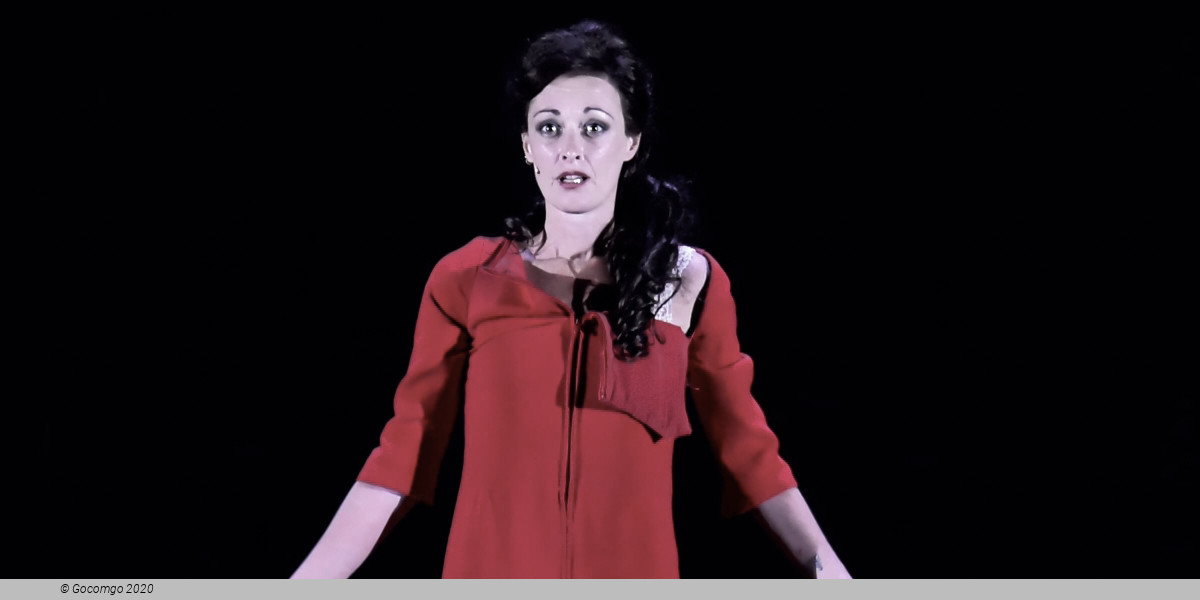
2011 saw the world premiere at the Scala in Milan of an opera that has since been taking the world by storm: 45 performances in three different full productions and in concert form. Luca Francesconi's eighth music theatre work, jointly commissioned by Teatro alla Scala, Wiener Festwochen and Ircam, is entitled Quartett and is based on a text by Heiner Müller drawn in its turn from Pierre Choderlos de Laclos's Les liaisons dangereuses. The title is in German, as in Müller's work, while the libretto has been elaborated by the composer himself in English from the original text: "Because the English language, even in its most beautiful and elegant form, is by now a kind of Esperanto. And because it is the language that best fits in with the syncretisms of European music, jazz, folk, popular music and electronics that have long been present in my scores". The opera has a single act, thirteen scenes, and lasts a total of an hour and twenty minutes. Only two characters on stage, a small orchestra in the orchestra pit, a large orchestra and choir off-stage (available as a recording effected at the Scala in Milan), and electronics (Studio Ircam, Serge Lemouton: live and pre-recorded sounds). The stage direction at the Scala was entrusted to Alex Olle of La Fura dels Baus, who concentrated the action in a huge box suspended twelve metres above the stage, projecting onto the full breadth of the backdrop videos representing the outside world. Allison Cook, mezzo-soprano, interpreted the Marquise de Merteuil, alternating with Sinead Mulhern; Robin Adams, baritone, was Vicomte de Valmont. The conductor was Susanna Mälkki. This production was revived in 2012 in Vienna (Wiener FestWochen: conductor: Peter Rundel), in 2013 at the Nederlandse Opera in Amsterdam (the opening of the Holland Festival; conductor: Susanna Mälkki) and at the Opera di Lille (Ensemble Ictus: conductor: Georges-Elie Octors), and in 2014 in Lisbon (Gulbenkian Foundation: conductor: Susanna Mälkki).

Venue Info

Teatro Alla Scala - Milan
Location   Via Filodrammatici, 2

Teatro Alla Scala is an opera house in Milan. Most of Italy's greatest operatic artists, and many of the finest singers from around the world, have appeared at La Scala. The theatre is regarded as one of the leading opera and ballet theatres globally. It is home to the La Scala Theatre Chorus, La Scala Theatre Ballet, La Scala Theatre Orchestra, and the Filarmonica della Scala orchestra.

The Teatro alla Scala was founded, under the auspices of the Empress Maria Theresa of Austria, to replace the Royal Ducal Theatre, which was destroyed by fire on 26 February 1776 and had until then been the home of opera in Milan. The cost of building the new theatre was borne by the owners of the boxes at the Ducal, in exchange for possession of the land on which stood the church of Santa Maria alla Scala (hence the name) and for renewed ownership of their boxes. Designed by the great neoclassical architect Giuseppe Piermarini, La Scala opened on 3 August 1778 with Antonio Salieri's opera L'Europa riconosciuta, to a libretto by Mattia Verazi.

With the advent of Rossini in 1812 (La pietra del paragone), the Teatro alla Scala was to become the appointed place of Italian opera seria: of its history dating back more than a century and of its subsequent tradition up till the present. The catalogue of Rossini's works performed until 1825 included: Il turco in Italia, La Cenerentola, Il barbiere di Siviglia, La donna del lago, Otello, Tancredi, Semiramide and Mosé. During that period the choreographies of Salvatore Viganò (1769-181) and of Carlo Blasis (1795-1878) also widened the theatre's artistic supremacy to include ballet.

An exceptional new season of serious opera opened between 1822 and 1825, with Chiara e Serafina by Gaetano Donizetti (1797-1848) and Il pirata by Vincenzo Bellini (1801-1835). The later operas of Donizetti performed at La Scala were (until 1850) Anna Bolena, Lucrezia Borgia, Torquato Tasso, La fille du régiment, La favorita, Linda di Chamonix, Don Pasquale, and Poliuto. These were followed (until 1836) by Bellini's I Capuleti e i Montecchi, Norma, La sonnambula, Beatrice di Tenda and I puritani.

In 1839 Oberto Conte di San Bonifacio inaugurated the cycle of operas by Giuseppe Verdi (1813-1901), the composer whose name is linked more than any other to the history of La Scala. After the dismal failure of Un giorno di regno, Nabucco was performed in 1842. It was the first, decisive triumph of Verdi's career. At the same time, the strong patriotic feelings stirred by Nabucco founded the "popularity" of opera seria and identified its image with the Scala.

Arturo Toscanini (1867-1957) became the artistic director and introduced radical reform into the theatre, both in its organisational aspects and in its relations with the public. Toscanini, one of the greatest conductors of all time, took up Verdi's musical inheritance and launched a tradition of interpretation that continued uninterruptedly and was renewed during the twentieth century. It was he who reappraised and regularly performed at the Scala the works of Richard Wagner (hitherto only belatedly and inadequately recognised). He also firmly extended the Scala's orchestral repertoire to include symphonic music.

In 1948 maestro Guido Cantelli (1920-1956) made his debut and established himself as one of the leading postwar conductors. Numerous opera performances productions (the Wagnerian cycle conducted in 1950 by Wilhelm Furtwängler, the Verdi repertoire by Victor De Sabata, etc), concerts (Herbert von Karajan, Dimitri Mitropoulos, Bruno Walter, etc), singers (Maria Callas, Renata Tebaldi, Giuseppe Di Stefano, Mario Del Monaco, etc), ballet performances (Margot Fonteyn, Serge Lifar, Maya Plissetskaya, Rudolf Nureyev), and productions (Luchino Visconti, Giorgio Strehler) belong not only to the history of the Scala, but to that of the history of musical theatre since the war.

In 1965 Claudio Abbado made his début at the Scala and in 1972 was named conductor of the Scala Orchestra. Until 1986 he directed among other works Il barbiere di Siviglia, Cenerentola, L'Italiana in Algeri by Rossini, Simon Boccanegra, Macbeth and Don Carlo by Verdi, the recent Al gran sole carico d'amore by Luigi Nono, and Pelléas et Mélisande by Claude Debussy. He also conducted numerous concerts. The chorus-master was Romano Gandolfi. In 1975 the ballet dancer Oriella Dorella debuted at La Scala. Among other contemporary composers, up till 1986 the Theatre continued to give works by Luciano Berio (La vera storia), Franco Donatoni (Atem) and Karlheinz Stockhausen (Samstag aus Licht).

In 1981 Riccardo Muti debuted at the Scala as an opera conductor (Mozart, Le nozze di Figaro). Giulio Bertola was appointed to direct the Chorus. In 1982 the Orchestra Filarmonica della Scala was established. In 1985 Alessandra Ferri made her debut at the Scala. In 1986 Riccardo Muti was appointed musical director. From 1989 to 1998 he reintroduced the best-loved works (Rigoletto, La traviata, Macbeth, La forza del destino) and numerous other titles by Verdi including Falstaff and Don Carlo.

In 1991 Roberto Gabbiani took over the directorship of the chorus. In 1997 La Scala was converted into a Foundation under private ownership, thus opening a decisive phase of modernisation.

On 7 December 2001 a new production of Otello, conducted by Muti, concluded the Verdi Year and, for the time being, performances at Piermarini’s original building in Piazza Scala. Major restoration and modernisation works of the Theatre began in January 2002.

The 2005-2006 Season, dedicated to the 250th anniversary of Mozart’s birth, was inaugurated by Idomeneo conducted by Daniel Harding. The 2006/07 season saw the return on 7 December of an opera by Verdi, Aida, conducted by Riccardo Chailly, and the launch of the Celebrations for the 50th Anniversary of Arturo Toscanini’s Death. On 7 December 2007 the 2007/08 season opened with Tristan und Isolde conducted by Daniel Barenboim. The opera marked the beginning of a closer collaboration between the Teatro alla Scala and the Israeli-Argentinian Maestro.

Important Info
Type: Opera
City: Milan, Italy
Starts at: 20:00
Duration:
Top of page