








Teatro Alla Scala tickets 22 January 2027 - Premiere Les Pêcheurs de perles | GoComGo.com

Premiere
Les Pêcheurs de perles

Teatro Alla Scala, Milan, Italy
All photos (9)
Select date and time
8 PM
From
US$ 236

E-tickets: Print at home or at the box office of the event if so specified. You will find more information in your booking confirmation email.

You can only select the category, and not the exact seats.
If you order 2 or 3 tickets: your seats will be next to each other.
If you order 4 or more tickets: your seats will be next to each other, or, if this is not possible, we will provide a combination of groups of seats (at least in pairs, for example 2+2 or 2+3).

Important Info
Type: Opera
City: Milan, Italy
Starts at: 20:00

E-tickets: Print at home or at the box office of the event if so specified. You will find more information in your booking confirmation email.

You can only select the category, and not the exact seats.
If you order 2 or 3 tickets: your seats will be next to each other.
If you order 4 or more tickets: your seats will be next to each other, or, if this is not possible, we will provide a combination of groups of seats (at least in pairs, for example 2+2 or 2+3).

Cast
Performers
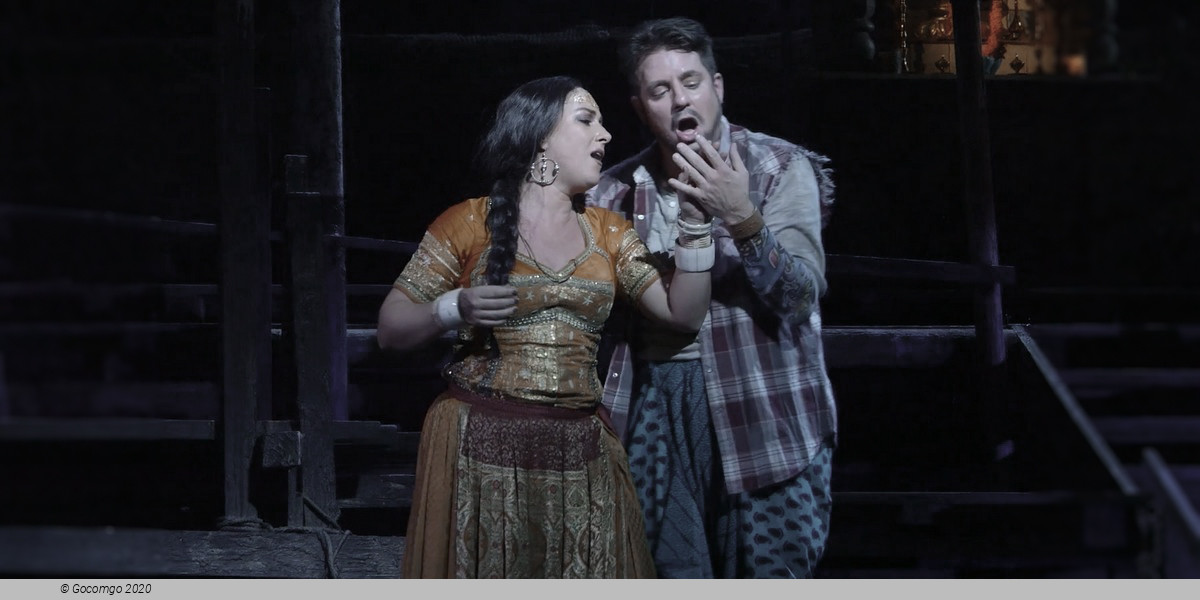
Tenor: Dmitry Korchak (Nadir)
Soprano: Olga Peretyatko (Leïla)
Baritone: Igor Golovatenko (Zurga)
Bass: Nicolas Courjal (Nourabad)
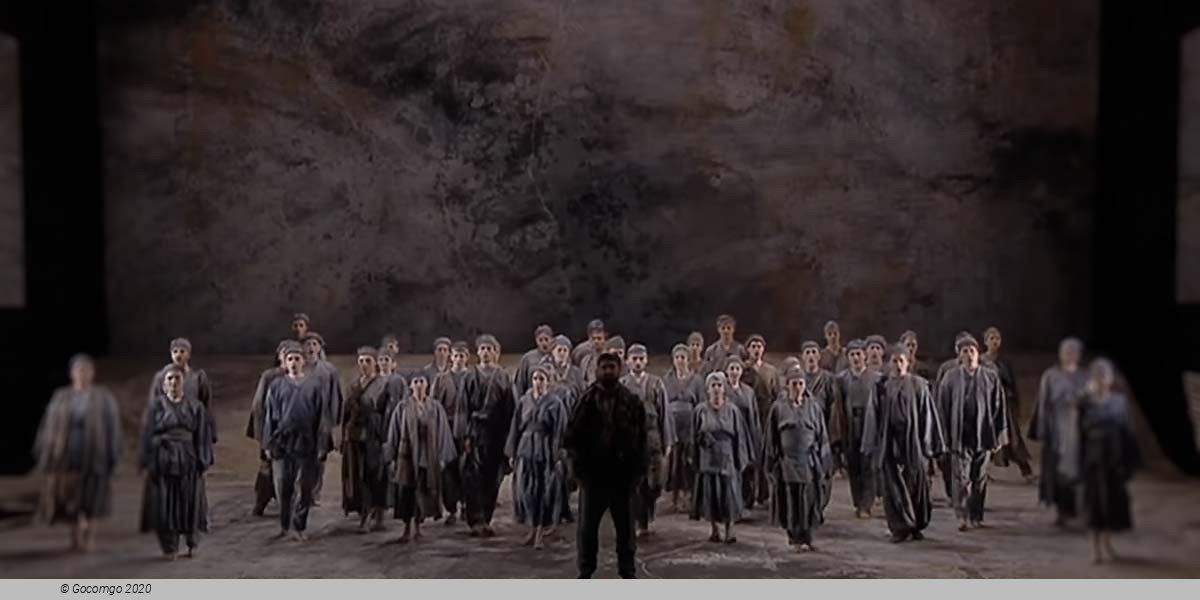
Choir: Teatro alla Scala Chorus
Creators
Composer: Georges Bizet
Sets: Alessandro Camera
Stage Director: Arnaud Bernard
Costume designer: Carla Ricotti
Librettist: Eugène Cormon
Lighting Designer: Marco Filibeck
Librettist: Michel Carré
Fight director: Ran Arthur Braun
Video designer: Roland Horvath
Overview
History
Premiere of this production: 30 September 1863, Théâtre Lyrique, Paris

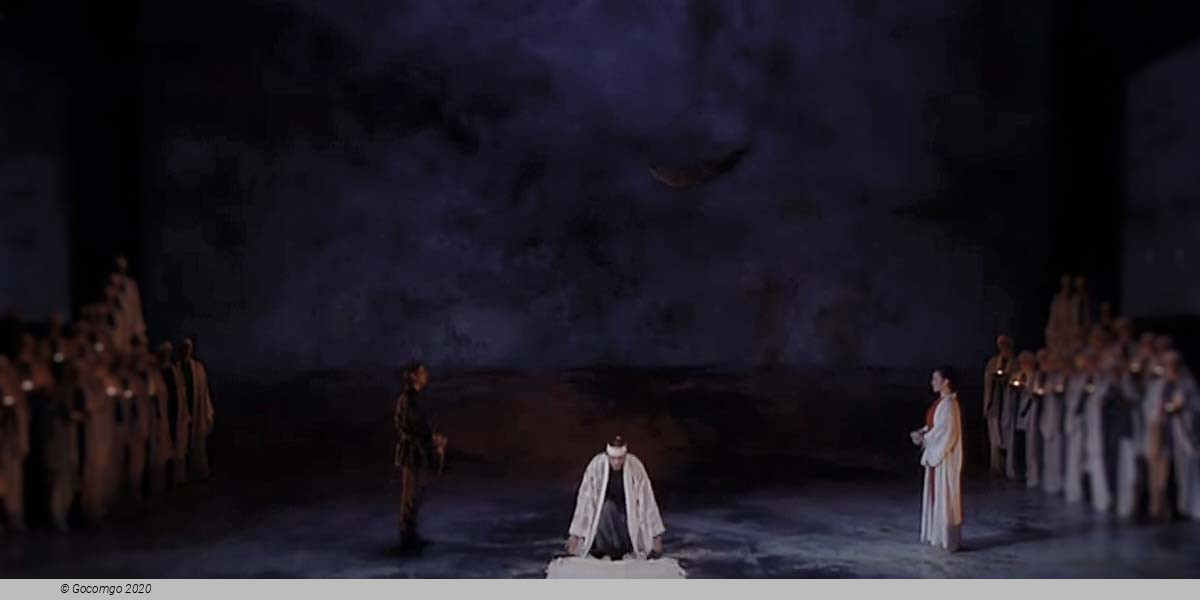
Les pêcheurs de perles (The Pearl Fishers) is an opera in three acts by the French composer Georges Bizet, to a libretto by Eugène Cormon and Michel Carré. It was premiered on 30 September 1863 at the Théâtre Lyrique in Paris, and was given 18 performances in its initial run. Set in ancient times on the island of Ceylon (Sri Lanka), the opera tells the story of how two men's vow of eternal friendship is threatened by their love for the same woman, whose own dilemma is the conflict between secular love and her sacred oath as a priestess. The friendship duet "Au fond du temple saint", generally known as "The Pearl Fishers Duet", is one of the best-known in Western opera.

Synopsis

Place: Ceylon
Time: Ancient times

Act 1
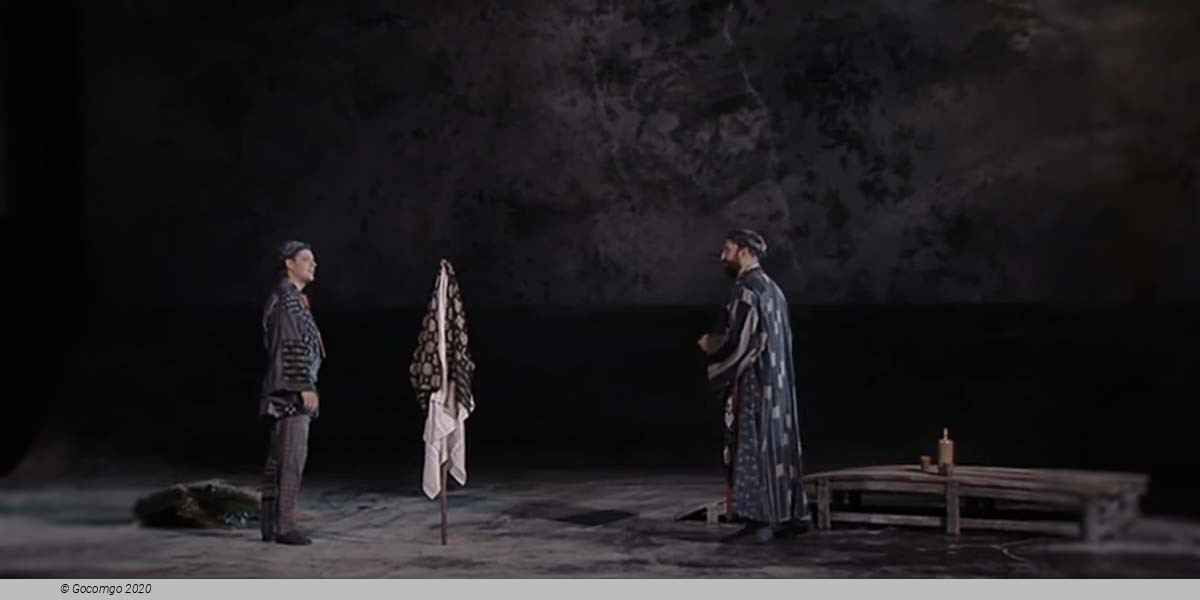
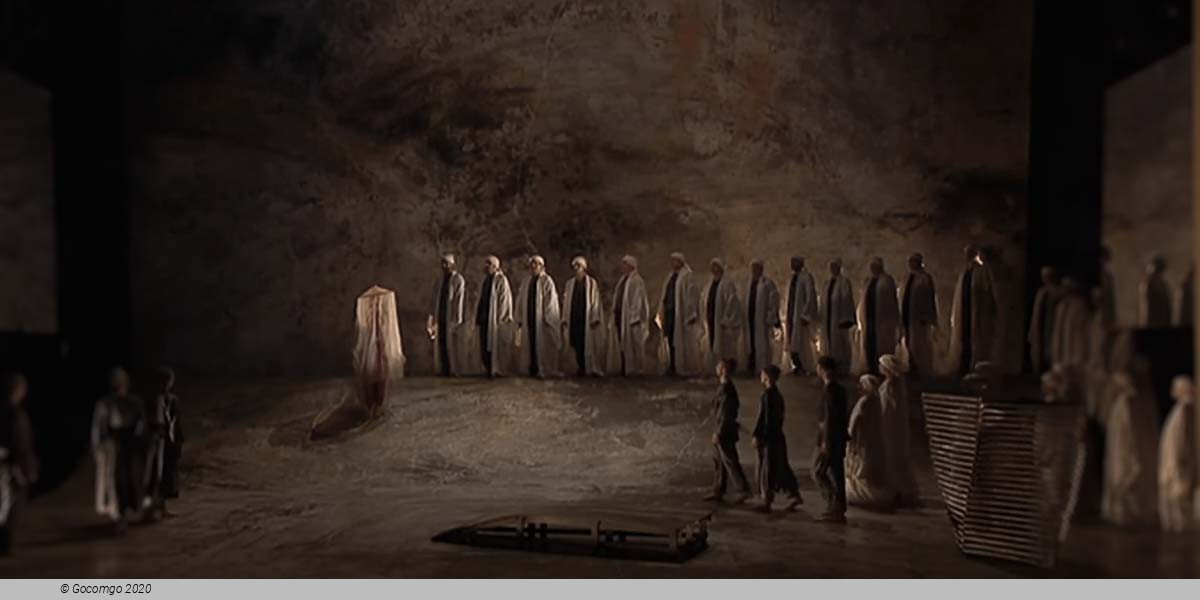
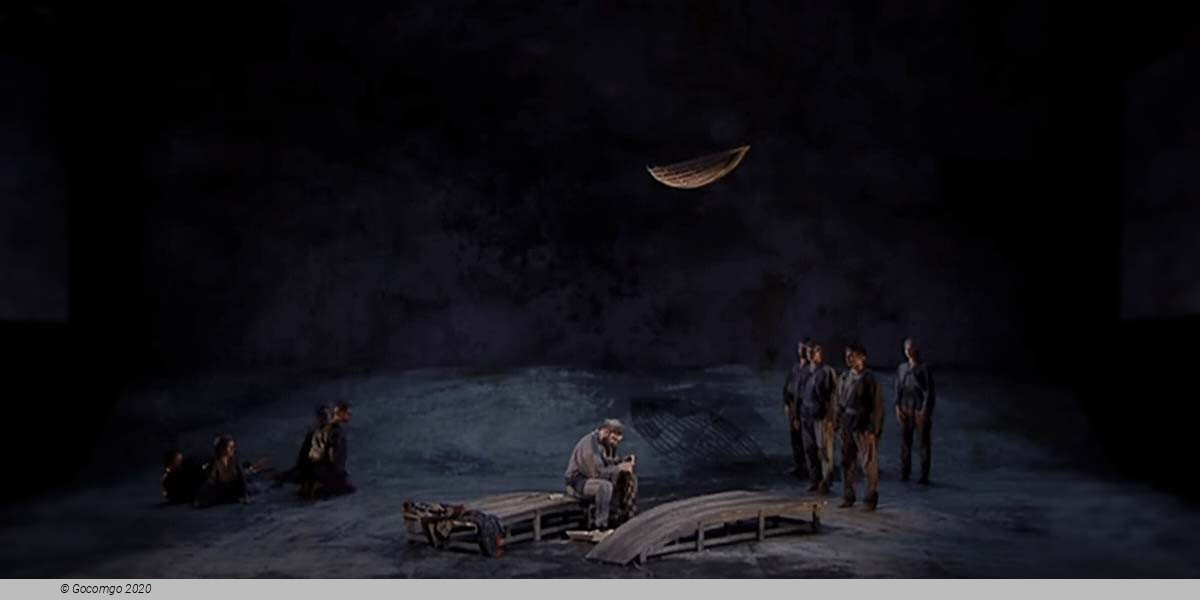
The scene is a desolate seashore, with the ruins of a Hindu temple in the background. A chorus of pearl fishermen sing of the dangerous tasks that lie ahead ("Sur la grève en feu"), and perform ritual dances to drive away evil spirits. They then elect one of their number, Zurga, as their leader, or "king". Nadir enters, and is hailed by Zurga as a long-lost friend. Left alone, the pair reminisce about their past in the city of Kandy, where their friendship was nearly destroyed by their mutual love of a young priestess whose beauty they had glimpsed briefly. They had each renounced their love for this stranger and had sworn to remain true to each other. Now, reunited, they affirm once again that they will be faithful until death ("Au fond du temple saint").

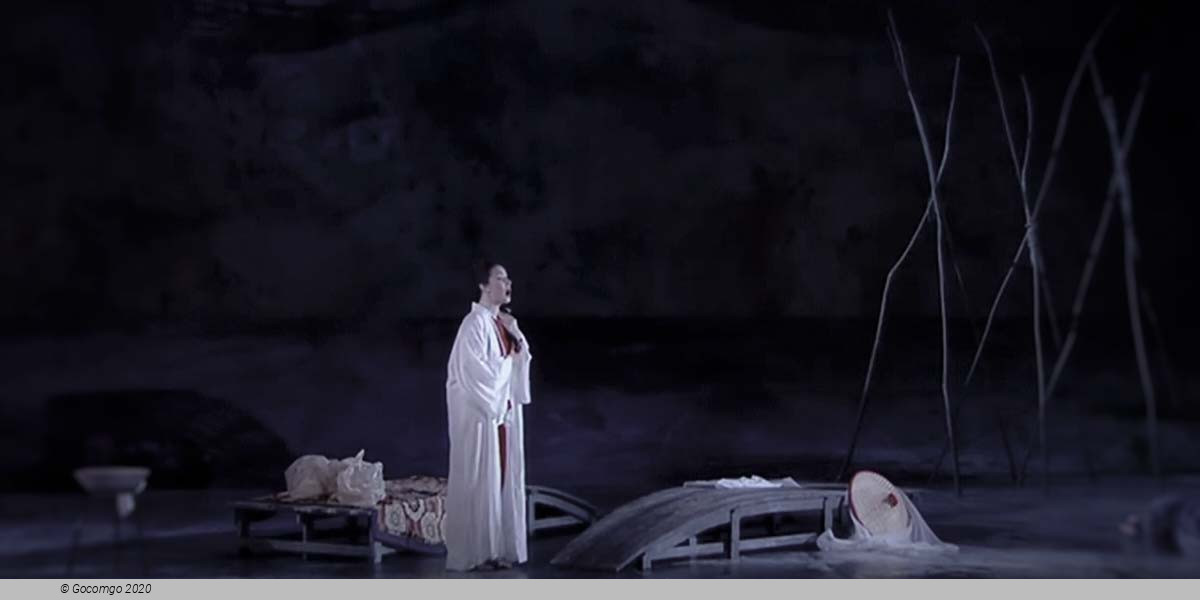
A boat draws up on the beach bearing the veiled figure of Leila, the virgin priestess whose prayers are required to ensure the safety of the fishermen. Although neither Nadir nor Zurga recognises her, she is the woman from Kandy with whom both had been in love. As Zurga is explaining her duties, she recognises Nadir, but she says nothing and shortly afterwards is led up to the temple by the high priest Nourabad. Zurga and the fishermen go down to the sea, leaving Nadir alone. In a troubled soliloquy before he sleeps he recalls how, in Kandy, he had broken his vows to Zurga and pursued his love for the veiled woman ("Je crois entendre encore"). It was the rumour that she might be found in this place that brought him here. Alone in the temple, Leila prays and sings. Nadir wakes and, recognising the voice of his long-desired lover, traces it to the temple. Leila briefly draws her veil aside, he sees it is she and the pair declare their renewed passion. On the beach, the fishermen plead with her to continue protecting them, but she tells Nadir she will sing for him alone ("O Dieu Brahma").

Act 2
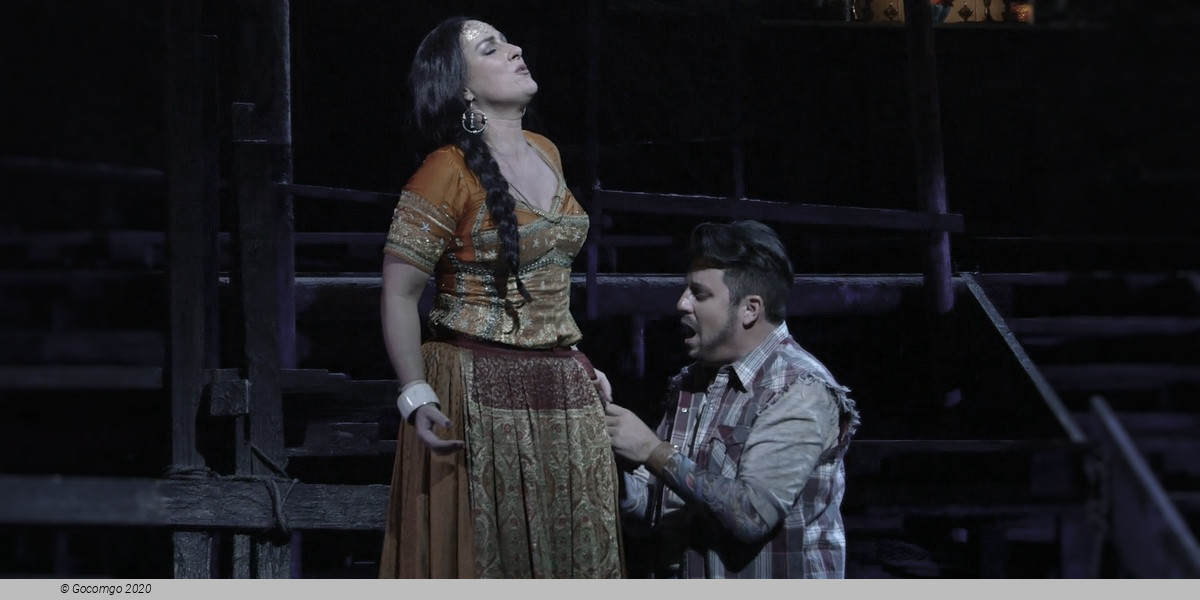
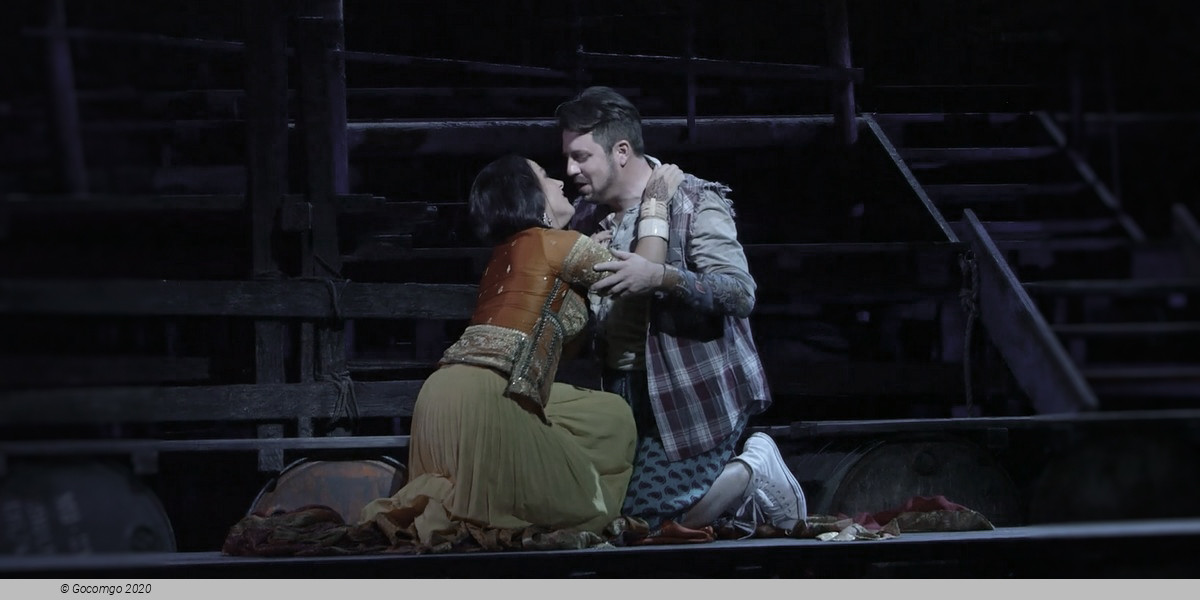
In the temple with Nourabad, Leila expresses fear at being left alone, but Nourabad exhorts her to be brave and to fulfil her vows to Brahma on pain of her own death. She tells him of the courage she once displayed when, as a child, she had hidden a fugitive from his enemies and refused to give him up even when threatened with death ("J'étais encore enfant"). The fugitive had rewarded her with a necklace that he asked her always to wear. She had kept this promise, as she would her vows. On the priest's departure, Leila quietly muses on the former times when she and Nadir would meet together secretly ("Comme autrefois dans la nuit sombre"). Nadir then enters; in her fear of Nourabad's threats Leila begs him to leave, but he remains and the two declare their love in a passionate duet ("Léïla! Léïla!...Dieu puissant, le voilà!"). He goes, promising to return next night, but as he leaves he is captured by the fishermen and brought back to the temple. Zurga, as the fishermen's leader, at first resists the fishermen's calls for Nadir's execution and advocates mercy. However, after Nourabad removes Leila's veil, Zurga recognises her as his former love; consumed by jealousy and rage, he orders that both Nadir and Leila be put to death. A violent storm erupts, as the fishermen unite in singing a hymn to Brahma ("Brahma divin Brahma!").

Act 3
In his tent on the beach, Zurga notes that the storm has abated, as has his rage; he now feels remorse for his anger towards Nadir ("L'orage s'est calmé"). Leila is brought in; Zurga is captivated by her beauty as he listens to her pleas for Nadir's life, but his jealousy is rekindled. He confesses his love for her, but refuses mercy ("Je suis jaloux"). Nourabad and some of the fishermen enter to report that the funeral pyre is ready. As Leila is taken away, Zurga observes her giving one of the fishermen her necklace, asking for its return to her mother. With a shout, Zurga rushes out after the group and seizes the necklace.

Outside the temple, Nadir waits beside the funeral pyre as the crowd, singing and dancing, anticipates the dawn and the coming double execution ("Dès que le soleil"). He is joined by Leila; resigned now to their deaths, the pair sing of how their souls will soon be united in heaven. A glow appears in the sky, and Zurga rushes in to report that the fishermen's camp is ablaze. As the men hurry away to save their homes, Zurga frees Leila and Nadir. He returns the necklace to Leila, and reveals that he is the man she saved when she was a child. He recognises now that his love for her is in vain, and tells her and Nadir to flee. As the couple depart, singing of the life of love that awaits them, Zurga is left alone, to await the fishermen's return ("Plus de crainte...Rêves d'amour, adieu!").

(In the revised version of the ending introduced after the opera's 1886 revival, Nourabad witnesses Zurga's freeing of the prisoners and denounces him to the fishermen, one of whom stabs Zurga to death as the last notes sound of Leila and Nadir's farewell song. In some variations Zurga meets his death in other ways, and his body is consigned to the pyre.)

Venue Info

Teatro Alla Scala - Milan
Location   Via Filodrammatici, 2

Teatro Alla Scala is an opera house in Milan. Most of Italy's greatest operatic artists, and many of the finest singers from around the world, have appeared at La Scala. The theatre is regarded as one of the leading opera and ballet theatres globally. It is home to the La Scala Theatre Chorus, La Scala Theatre Ballet, La Scala Theatre Orchestra, and the Filarmonica della Scala orchestra.

The Teatro alla Scala was founded, under the auspices of the Empress Maria Theresa of Austria, to replace the Royal Ducal Theatre, which was destroyed by fire on 26 February 1776 and had until then been the home of opera in Milan. The cost of building the new theatre was borne by the owners of the boxes at the Ducal, in exchange for possession of the land on which stood the church of Santa Maria alla Scala (hence the name) and for renewed ownership of their boxes. Designed by the great neoclassical architect Giuseppe Piermarini, La Scala opened on 3 August 1778 with Antonio Salieri's opera L'Europa riconosciuta, to a libretto by Mattia Verazi.

With the advent of Rossini in 1812 (La pietra del paragone), the Teatro alla Scala was to become the appointed place of Italian opera seria: of its history dating back more than a century and of its subsequent tradition up till the present. The catalogue of Rossini's works performed until 1825 included: Il turco in Italia, La Cenerentola, Il barbiere di Siviglia, La donna del lago, Otello, Tancredi, Semiramide and Mosé. During that period the choreographies of Salvatore Viganò (1769-181) and of Carlo Blasis (1795-1878) also widened the theatre's artistic supremacy to include ballet.

An exceptional new season of serious opera opened between 1822 and 1825, with Chiara e Serafina by Gaetano Donizetti (1797-1848) and Il pirata by Vincenzo Bellini (1801-1835). The later operas of Donizetti performed at La Scala were (until 1850) Anna Bolena, Lucrezia Borgia, Torquato Tasso, La fille du régiment, La favorita, Linda di Chamonix, Don Pasquale, and Poliuto. These were followed (until 1836) by Bellini's I Capuleti e i Montecchi, Norma, La sonnambula, Beatrice di Tenda and I puritani.

In 1839 Oberto Conte di San Bonifacio inaugurated the cycle of operas by Giuseppe Verdi (1813-1901), the composer whose name is linked more than any other to the history of La Scala. After the dismal failure of Un giorno di regno, Nabucco was performed in 1842. It was the first, decisive triumph of Verdi's career. At the same time, the strong patriotic feelings stirred by Nabucco founded the "popularity" of opera seria and identified its image with the Scala.

Arturo Toscanini (1867-1957) became the artistic director and introduced radical reform into the theatre, both in its organisational aspects and in its relations with the public. Toscanini, one of the greatest conductors of all time, took up Verdi's musical inheritance and launched a tradition of interpretation that continued uninterruptedly and was renewed during the twentieth century. It was he who reappraised and regularly performed at the Scala the works of Richard Wagner (hitherto only belatedly and inadequately recognised). He also firmly extended the Scala's orchestral repertoire to include symphonic music.

In 1948 maestro Guido Cantelli (1920-1956) made his debut and established himself as one of the leading postwar conductors. Numerous opera performances productions (the Wagnerian cycle conducted in 1950 by Wilhelm Furtwängler, the Verdi repertoire by Victor De Sabata, etc), concerts (Herbert von Karajan, Dimitri Mitropoulos, Bruno Walter, etc), singers (Maria Callas, Renata Tebaldi, Giuseppe Di Stefano, Mario Del Monaco, etc), ballet performances (Margot Fonteyn, Serge Lifar, Maya Plissetskaya, Rudolf Nureyev), and productions (Luchino Visconti, Giorgio Strehler) belong not only to the history of the Scala, but to that of the history of musical theatre since the war.

In 1965 Claudio Abbado made his début at the Scala and in 1972 was named conductor of the Scala Orchestra. Until 1986 he directed among other works Il barbiere di Siviglia, Cenerentola, L'Italiana in Algeri by Rossini, Simon Boccanegra, Macbeth and Don Carlo by Verdi, the recent Al gran sole carico d'amore by Luigi Nono, and Pelléas et Mélisande by Claude Debussy. He also conducted numerous concerts. The chorus-master was Romano Gandolfi. In 1975 the ballet dancer Oriella Dorella debuted at La Scala. Among other contemporary composers, up till 1986 the Theatre continued to give works by Luciano Berio (La vera storia), Franco Donatoni (Atem) and Karlheinz Stockhausen (Samstag aus Licht).

In 1981 Riccardo Muti debuted at the Scala as an opera conductor (Mozart, Le nozze di Figaro). Giulio Bertola was appointed to direct the Chorus. In 1982 the Orchestra Filarmonica della Scala was established. In 1985 Alessandra Ferri made her debut at the Scala. In 1986 Riccardo Muti was appointed musical director. From 1989 to 1998 he reintroduced the best-loved works (Rigoletto, La traviata, Macbeth, La forza del destino) and numerous other titles by Verdi including Falstaff and Don Carlo.

In 1991 Roberto Gabbiani took over the directorship of the chorus. In 1997 La Scala was converted into a Foundation under private ownership, thus opening a decisive phase of modernisation.

On 7 December 2001 a new production of Otello, conducted by Muti, concluded the Verdi Year and, for the time being, performances at Piermarini’s original building in Piazza Scala. Major restoration and modernisation works of the Theatre began in January 2002.

The 2005-2006 Season, dedicated to the 250th anniversary of Mozart’s birth, was inaugurated by Idomeneo conducted by Daniel Harding. The 2006/07 season saw the return on 7 December of an opera by Verdi, Aida, conducted by Riccardo Chailly, and the launch of the Celebrations for the 50th Anniversary of Arturo Toscanini’s Death. On 7 December 2007 the 2007/08 season opened with Tristan und Isolde conducted by Daniel Barenboim. The opera marked the beginning of a closer collaboration between the Teatro alla Scala and the Israeli-Argentinian Maestro.

Important Info
Type: Opera
City: Milan, Italy
Starts at: 20:00
Top of page