
Teatro Alla Scala 1 February 2023 - I Vespri siciliani | GoComGo.com

I Vespri siciliani

Teatro Alla Scala, Milan, Italy
All photos (8)
Select date and time
7 PM

E-tickets: Print at home or at the box office of the event if so specified. You will find more information in your booking confirmation email.

You can only select the category, and not the exact seats.
If you order 2 or 3 tickets: your seats will be next to each other.
If you order 4 or more tickets: your seats will be next to each other, or, if this is not possible, we will provide a combination of groups of seats (at least in pairs, for example 2+2 or 2+3).

Important Info
Type: Opera
City: Milan, Italy
Starts at: 19:00
Acts: 5

E-tickets: Print at home or at the box office of the event if so specified. You will find more information in your booking confirmation email.

You can only select the category, and not the exact seats.
If you order 2 or 3 tickets: your seats will be next to each other.
If you order 4 or more tickets: your seats will be next to each other, or, if this is not possible, we will provide a combination of groups of seats (at least in pairs, for example 2+2 or 2+3).

Overview

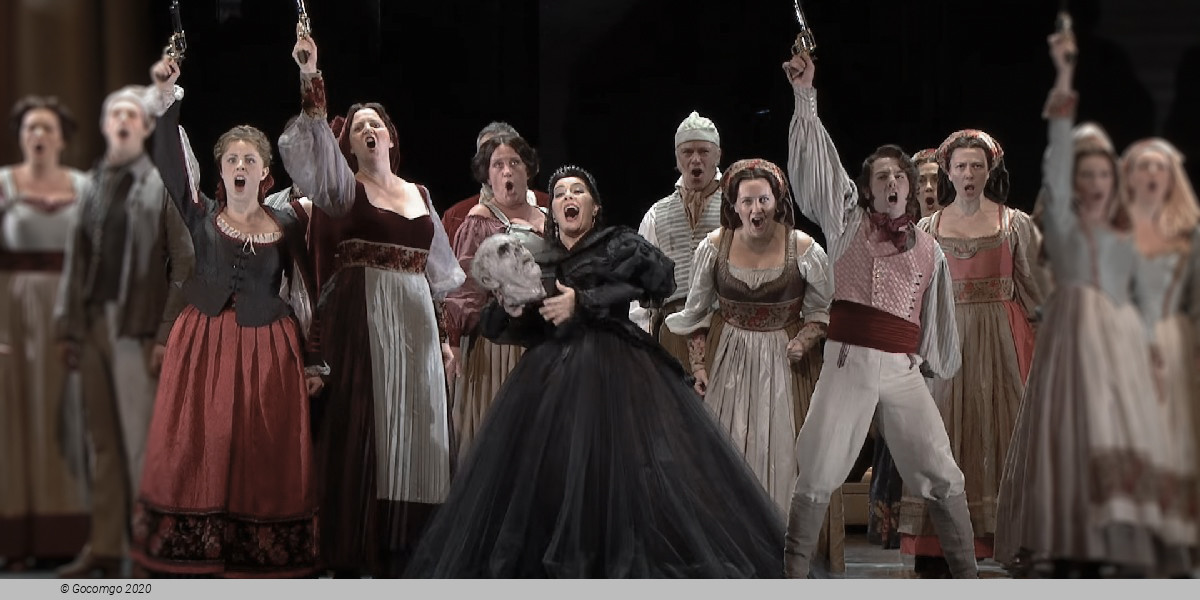
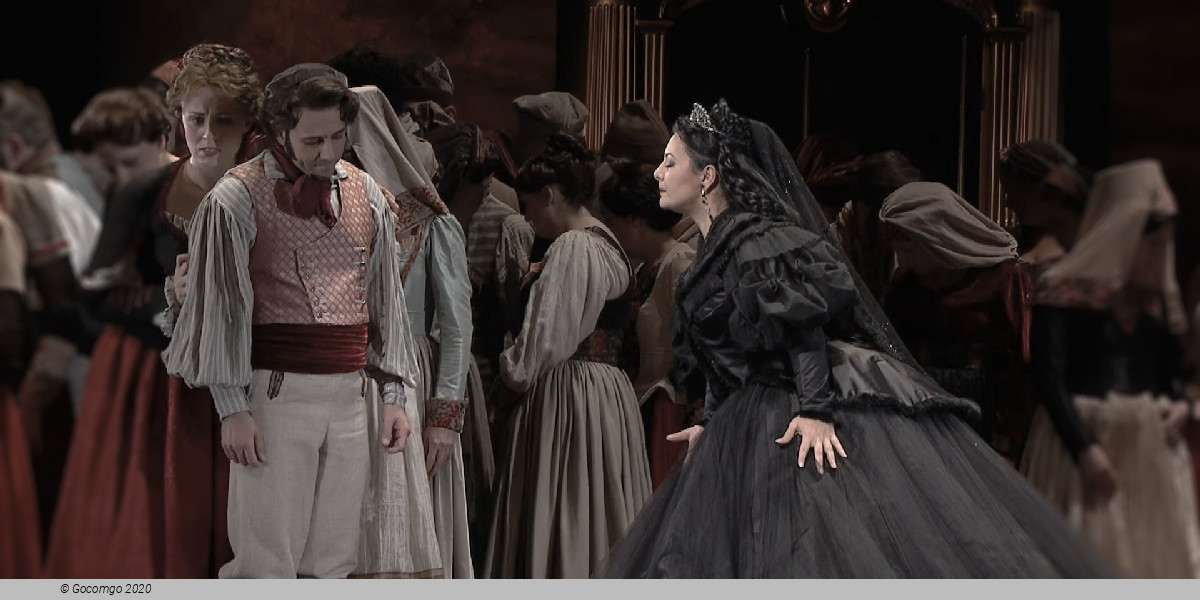
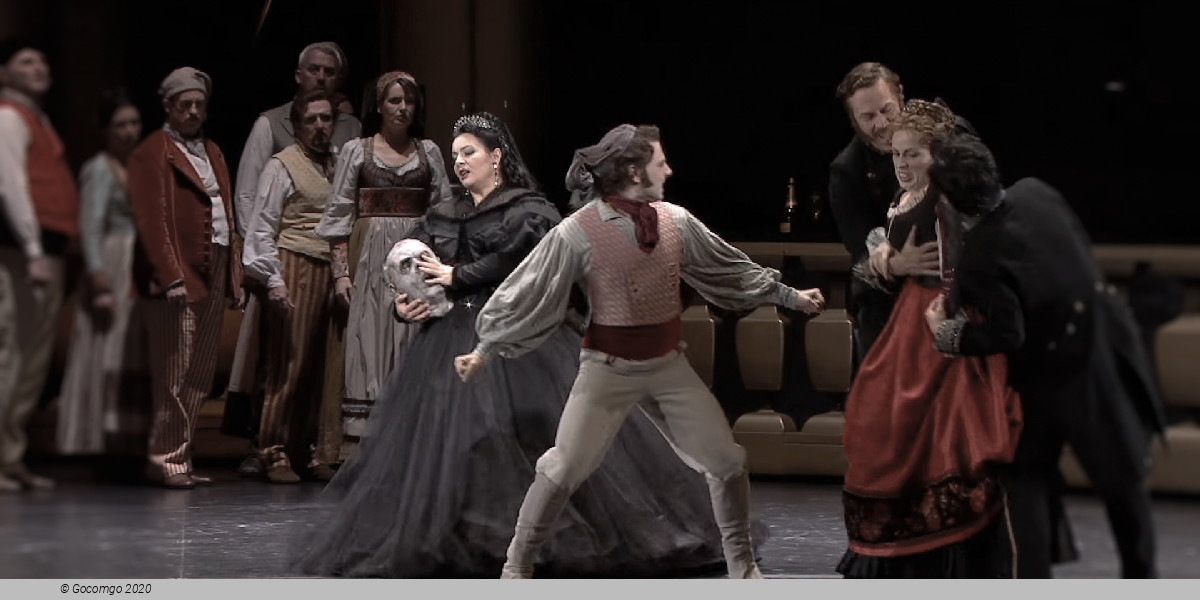
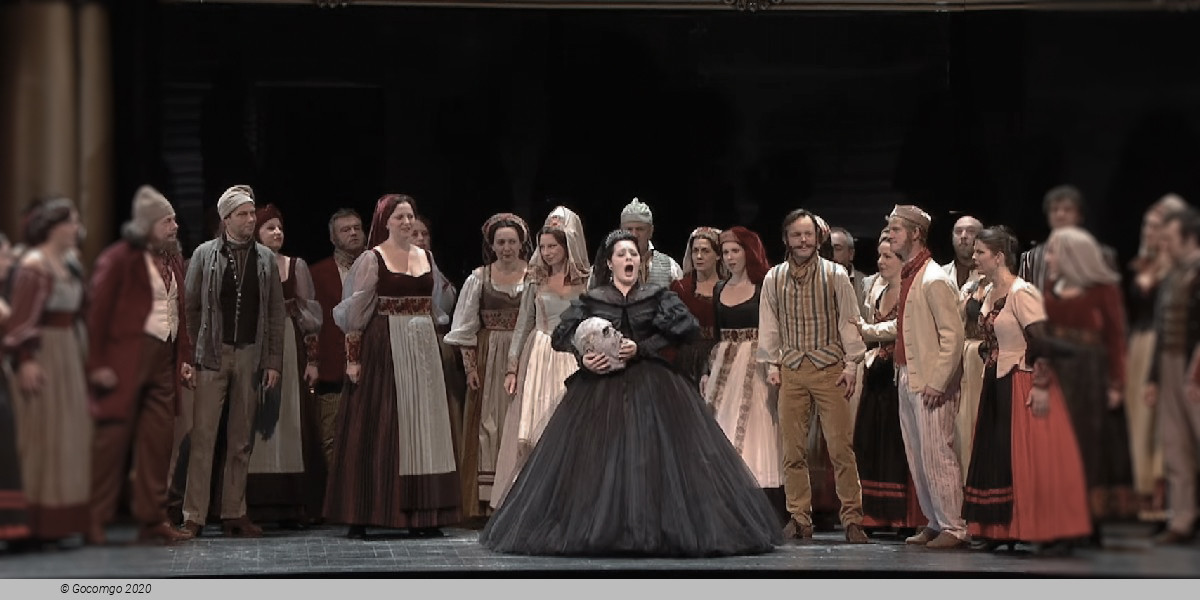
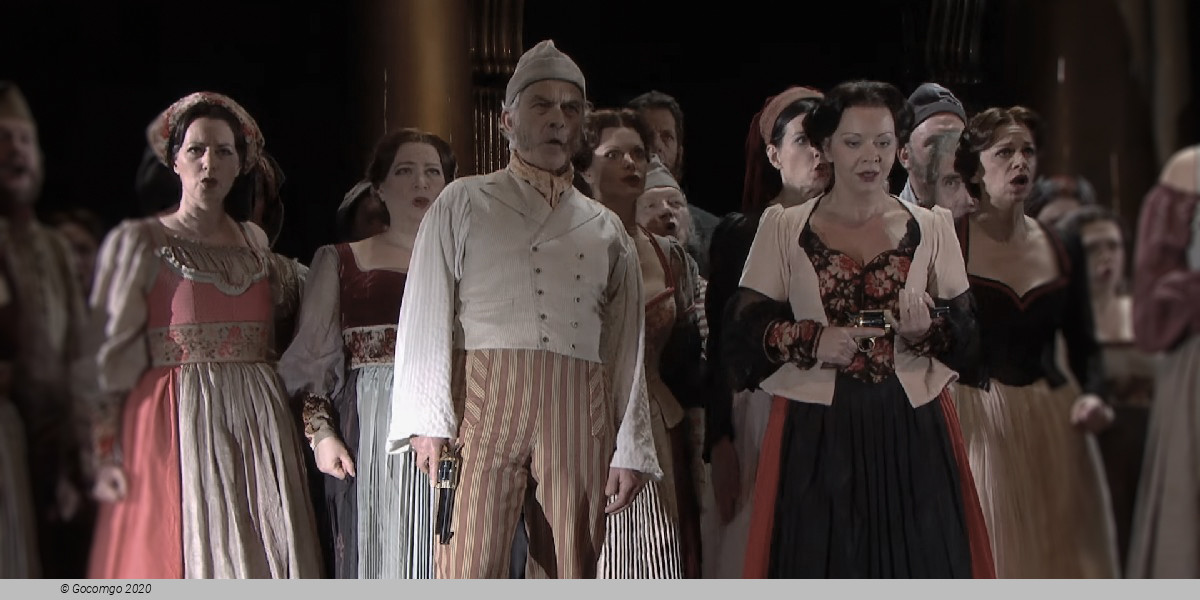
For his sixth opera at Teatro alla Scala, Fabio Luisi conducts Verdi’s masterpiece of the Risorgimento, a title that has not been performed on Piermarini’s stage since it opened the 1898-1990 season. The new sumptuous production features stage direction, scenes, and costumes by Hugo de Ana, master at imbuing period settings with visionary flights of fancy. Two extraordinary lead players take turns on the stage, Marina Rebeka and Angela Meade, together with Piero Pretti, Luca Micheletti and Roman Burdenko.

History
Premiere of this production: 26 December 1855, Teatro Regio, Parma

I vespri siciliani (Les vêpres siciliennes) is a five-act Italian opera originally written in French for the Paris Opéra by the Italian romantic composer Giuseppe Verdi and translated into Italian shortly after its premiere in June 1855. The story is loosely based on a historical event, the Sicilian Vespers of 1282, using material drawn from the medieval Sicilian tract Lu rebellamentu di Sichilia.

Synopsis

Place: Palermo, Italy
Time: 1282

Act 1

Palermo's main square

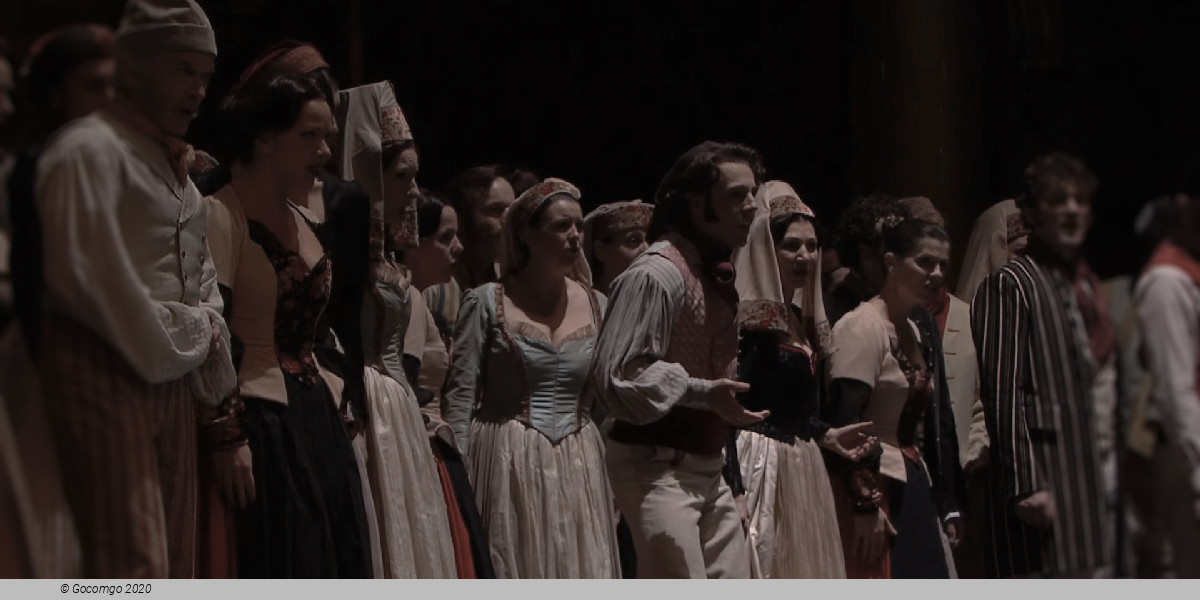
Tebaldo, Roberto, and other French soldiers have gathered in front of the Governor's palace. As they offer a toast to their homeland, they are observed by the local Sicilians, unhappy with the occupation.

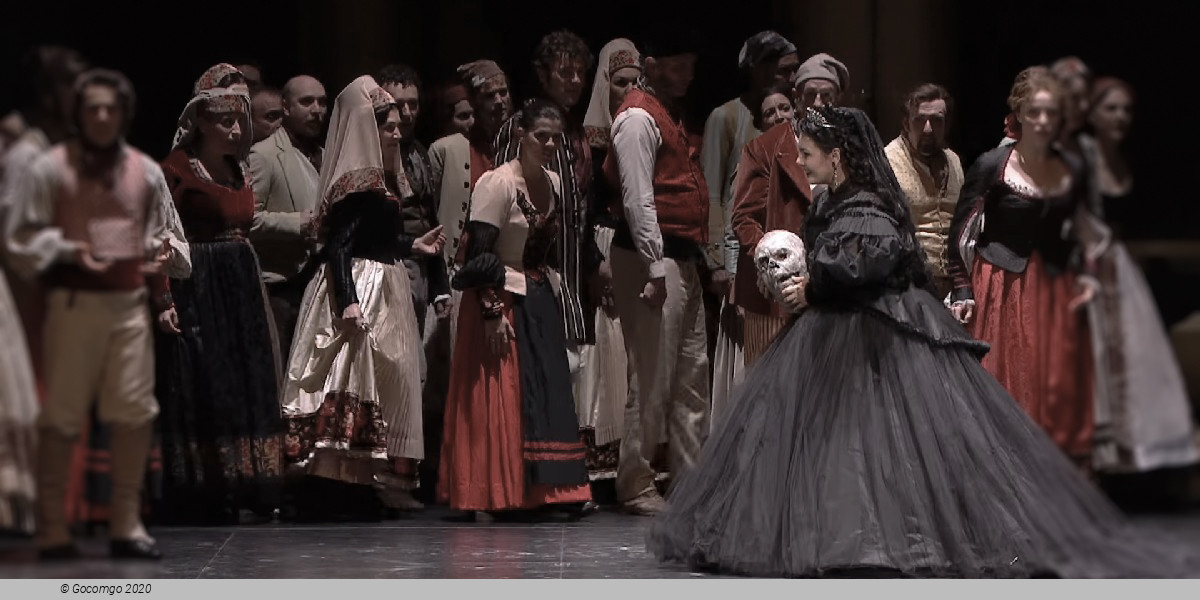
Elena enters dressed in mourning for her executed brother. Somewhat drunk, Roberto demands that she sing and she calmly agrees. Her song, about the perils of seamen and God's cry of "let dangers be scorned", (Deh! tu calma, o Dio possente / "Pray, O mighty God, calm with thy smile both sky and sea"), only incites the Sicilians to rebellion against the occupiers. When the governor, Montforte, enters the crowd calms down. Then Arrigo announces that he has been released from prison. Alone with Arrigo, Montforte offers him a position with the French as long as he stays away from Elena. He refuses, and immediately follows Elena into the palace.

Act 2

Beside the sea

Procida lands on the shore from a small fishing boat. It is clear that he is returning from exile and he expresses his joy at returning to his native land and city: O tu Palermo / "O thou Palermo, adored land...". He is surrounded by Manfredo and other companions and he quickly orders his men to bring Elena and Arrigo to him (Nell'ombra e nel silenzio / "In darkness and in silence"). The three make plans for an uprising during the impending festivities leading to the marriages of a group of young people. After Procida leaves, Elena asks Arrigo what reward he seeks. Swearing that he will avenge her brother's death, he asks for nothing but her love.

Bethune arrives with an invitation from Montforte to attend a ball. Arrigo refuses and is arrested and dragged off. Led by Roberto, a group of French soldiers arrive and Procida returns and sees that it is too late to save Arrigo, since the young people have come into the square and have begun to dance. As the dance becomes more lively, Roberto signals to his men, who seize many of the young women, dragging them off in spite of the protests of the young Sicilian men. The dejected young men witness a passing boat filled with French nobles and Sicilian women, all bound for the ball. Procida and others determine to gain entrance to the ball and seek their revenge.

Act 3

Scene 1: Montforte's palace

Montforte reads a paper from the woman whom he abducted, which reveals that Arrigo is his son: Si, m'abboriva ed a ragion! / "Yes, she despised me, and rightly!". Bethune tells him that Arrigo has been brought by force, but Montforte exalts in the fact that his son is close by: In braccio alle dovizie / "Given over to riches, surrounded by honors, an immense, horrid void...". The two men confront one another and Arrigo is somewhat puzzled by the way he is being treated. Finally, Montforte reveals the letter written by Arrigo's mother. Taken aback but still defiant, Arrigo insults his father who reacts in anger as the younger man rushes out: Parole fatale, Insulto mortale / "Fatal word!, Mortal insult! The joy has vanished...".

Scene 2: A ball at Montforte's palace

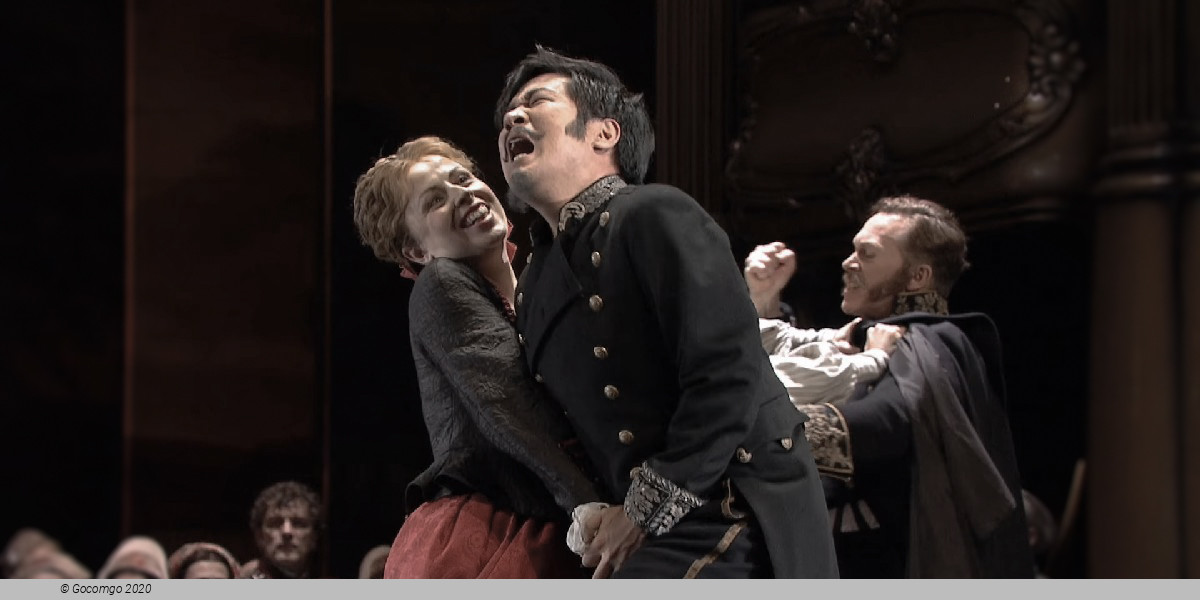
When Montforte enters, he gives the signal for the ballet to begin. In the crowd, but disguised, are Elena, Arrigo, and Procida. Arrigo is surprised when the two reveal themselves and they declare that their purpose is to save the young man. However, he is disturbed to hear that they intend to kill Montforte and when the father approaches the son, there is a hint of warning given. As approaching assassins close in, Arrigo leaps in front of his father just as Elena approaches. The Sicilians are horrified to see that Arrigo is being spared as the ensemble contemplates the situation. Elena, Procida, Danieli and the Sicilians curse Arrigo as they are dragged away, while he wants to follow, but is restrained by Montforte.

Act 4

A prison

Arrigo arrives at the prison gate and, on Montforte's orders, waits to be admitted. He contemplates the situation that his friends are in: Giorno di pianto / "Day of weeping, of fierce sorrow!". Elena is brought out and confronts him. Finally, he admits that Montforte is his father and she begins to be willing to sympathise: Arrigo! Ah, parli a un core... / "Arrigo! Ah, you speak to a heart already prepared to forgive." Not seeing Arrigo, Procida approaches Elena and reveals a letter telling him of awaiting freedom. But Montforte arrives and orders a priest and the execution of the prisoners while Procida is amazed to discover the truth of Arrigo's situation. Arrigo begs for mercy for his friends and Montforte confronts him with one thing: Dimme sol, di "Mio padre / "Say to me only, say "My father...". Arrigo says nothing as the executioner appears and the couple are led away, followed by Arrigo. Montforte steps in to prevent him from joining them. As Elena is led towards the executioner, Montforte steps in and announces a pardon for the Sicilians. Furthermore, he agrees to the marriage of Elena and Arrigo and announces to the crowd: "I find a son again!". There is general rejoicing.

Act 5

The gardens of Montforte's palace

As Knight and maidens gather, Elena gives thanks to all: Mercé, dilette amiche / "Thank you, beloved friends". Arrigo arrives, exclaiming his joy: La brezza aleggia intorno / "La brise souffle au loin" / "The breeze hovers about...". He leaves to find his father, but Procida arrives, announcing a plan to outwit his enemies with their massacre to take place at the foot of the altar after the vows have been said. She is torn, the more so following Arrigo's return, between her love and her duty: Sorte fata! Oh, fier cimento! / "Fatal destiny! Oh, fierce conflict!". Finally, she can go no further and she tells Arrigo that they cannot be married. Both men are furious with her for her seeming betrayal. Then Montforte arrives, takes the couple's hands, joins them together, and pronounces them married as the bells begin to ring. This is the signal for the Sicilians to rush in and hurl themselves upon Montforte and the French.

Venue Info

Teatro Alla Scala - Milan
Location   Via Filodrammatici, 2

Teatro Alla Scala is an opera house in Milan. Most of Italy's greatest operatic artists, and many of the finest singers from around the world, have appeared at La Scala. The theatre is regarded as one of the leading opera and ballet theatres globally. It is home to the La Scala Theatre Chorus, La Scala Theatre Ballet, La Scala Theatre Orchestra, and the Filarmonica della Scala orchestra.

The Teatro alla Scala was founded, under the auspices of the Empress Maria Theresa of Austria, to replace the Royal Ducal Theatre, which was destroyed by fire on 26 February 1776 and had until then been the home of opera in Milan. The cost of building the new theatre was borne by the owners of the boxes at the Ducal, in exchange for possession of the land on which stood the church of Santa Maria alla Scala (hence the name) and for renewed ownership of their boxes. Designed by the great neoclassical architect Giuseppe Piermarini, La Scala opened on 3 August 1778 with Antonio Salieri's opera L'Europa riconosciuta, to a libretto by Mattia Verazi.

With the advent of Rossini in 1812 (La pietra del paragone), the Teatro alla Scala was to become the appointed place of Italian opera seria: of its history dating back more than a century and of its subsequent tradition up till the present. The catalogue of Rossini's works performed until 1825 included: Il turco in Italia, La Cenerentola, Il barbiere di Siviglia, La donna del lago, Otello, Tancredi, Semiramide and Mosé. During that period the choreographies of Salvatore Viganò (1769-181) and of Carlo Blasis (1795-1878) also widened the theatre's artistic supremacy to include ballet.

An exceptional new season of serious opera opened between 1822 and 1825, with Chiara e Serafina by Gaetano Donizetti (1797-1848) and Il pirata by Vincenzo Bellini (1801-1835). The later operas of Donizetti performed at La Scala were (until 1850) Anna Bolena, Lucrezia Borgia, Torquato Tasso, La fille du régiment, La favorita, Linda di Chamonix, Don Pasquale, and Poliuto. These were followed (until 1836) by Bellini's I Capuleti e i Montecchi, Norma, La sonnambula, Beatrice di Tenda and I puritani.

In 1839 Oberto Conte di San Bonifacio inaugurated the cycle of operas by Giuseppe Verdi (1813-1901), the composer whose name is linked more than any other to the history of La Scala. After the dismal failure of Un giorno di regno, Nabucco was performed in 1842. It was the first, decisive triumph of Verdi's career. At the same time, the strong patriotic feelings stirred by Nabucco founded the "popularity" of opera seria and identified its image with the Scala.

Arturo Toscanini (1867-1957) became the artistic director and introduced radical reform into the theatre, both in its organisational aspects and in its relations with the public. Toscanini, one of the greatest conductors of all time, took up Verdi's musical inheritance and launched a tradition of interpretation that continued uninterruptedly and was renewed during the twentieth century. It was he who reappraised and regularly performed at the Scala the works of Richard Wagner (hitherto only belatedly and inadequately recognised). He also firmly extended the Scala's orchestral repertoire to include symphonic music.

In 1948 maestro Guido Cantelli (1920-1956) made his debut and established himself as one of the leading postwar conductors. Numerous opera performances productions (the Wagnerian cycle conducted in 1950 by Wilhelm Furtwängler, the Verdi repertoire by Victor De Sabata, etc), concerts (Herbert von Karajan, Dimitri Mitropoulos, Bruno Walter, etc), singers (Maria Callas, Renata Tebaldi, Giuseppe Di Stefano, Mario Del Monaco, etc), ballet performances (Margot Fonteyn, Serge Lifar, Maya Plissetskaya, Rudolf Nureyev), and productions (Luchino Visconti, Giorgio Strehler) belong not only to the history of the Scala, but to that of the history of musical theatre since the war.

In 1965 Claudio Abbado made his début at the Scala and in 1972 was named conductor of the Scala Orchestra. Until 1986 he directed among other works Il barbiere di Siviglia, Cenerentola, L'Italiana in Algeri by Rossini, Simon Boccanegra, Macbeth and Don Carlo by Verdi, the recent Al gran sole carico d'amore by Luigi Nono, and Pelléas et Mélisande by Claude Debussy. He also conducted numerous concerts. The chorus-master was Romano Gandolfi. In 1975 the ballet dancer Oriella Dorella debuted at La Scala. Among other contemporary composers, up till 1986 the Theatre continued to give works by Luciano Berio (La vera storia), Franco Donatoni (Atem) and Karlheinz Stockhausen (Samstag aus Licht).

In 1981 Riccardo Muti debuted at the Scala as an opera conductor (Mozart, Le nozze di Figaro). Giulio Bertola was appointed to direct the Chorus. In 1982 the Orchestra Filarmonica della Scala was established. In 1985 Alessandra Ferri made her debut at the Scala. In 1986 Riccardo Muti was appointed musical director. From 1989 to 1998 he reintroduced the best-loved works (Rigoletto, La traviata, Macbeth, La forza del destino) and numerous other titles by Verdi including Falstaff and Don Carlo.

In 1991 Roberto Gabbiani took over the directorship of the chorus. In 1997 La Scala was converted into a Foundation under private ownership, thus opening a decisive phase of modernisation.

On 7 December 2001 a new production of Otello, conducted by Muti, concluded the Verdi Year and, for the time being, performances at Piermarini’s original building in Piazza Scala. Major restoration and modernisation works of the Theatre began in January 2002.

The 2005-2006 Season, dedicated to the 250th anniversary of Mozart’s birth, was inaugurated by Idomeneo conducted by Daniel Harding. The 2006/07 season saw the return on 7 December of an opera by Verdi, Aida, conducted by Riccardo Chailly, and the launch of the Celebrations for the 50th Anniversary of Arturo Toscanini’s Death. On 7 December 2007 the 2007/08 season opened with Tristan und Isolde conducted by Daniel Barenboim. The opera marked the beginning of a closer collaboration between the Teatro alla Scala and the Israeli-Argentinian Maestro.

Important Info
Type: Opera
City: Milan, Italy
Starts at: 19:00
Acts: 5
Top of page