
Teatro Alla Scala 12 September 2019 - Prima delle Prime - Giselle | GoComGo.com

Prima delle Prime - Giselle

Teatro Alla Scala, Milan, Italy
All photos (20)
Select date and time
6 PM
Request for Tickets
Important Info
Type: Ballet
City: Milan, Italy
Starts at: 18:00
Duration:

E-tickets: Print at home or at the box office of the event if so specified. You will find more information in your booking confirmation email.

You can only select the category, and not the exact seats.
If you order 2 or 3 tickets: your seats will be next to each other.
If you order 4 or more tickets: your seats will be next to each other, or, if this is not possible, we will provide a combination of groups of seats (at least in pairs, for example 2+2 or 2+3).

Overview

"Vitalità di un capolavoro"

(with videos)

“Prima delle Prime” is La Scala's cycle of public talks. Offered as a means of introducing and preparing audiences for playbill performances, talks are held several days before the first performance of ballets or operas in the Arturo Toscanini foyer, and feature discussions with field experts about the works in question, providing a great opportunity to find out more about lesser-known works and examine the most famous in greater detail.

The “Prima delle Prime” cycle is organised and made possible by the Amici della Scala (“Friends of La Scala”), a not-for-profit association that supports La Scala's fringe activities.
 
Under the banner of the “Prima delle Prime” series, the La Scala Ballet also organises conferences, with video screenings, to introduce the season's ballets. These talks are also held in the Arturo Toscanini foyer, with the same start time and the same conditions of entry.
 
No tickets are required to access the Arturo Toscanini foyer: members of the audience are simply requested to present themselves at the theatre's main entrance in good time. For health and safety reasons, numbers are limited to 150 attendees and entry is regulated by ushers.
 
“A. Toscanini” boxes foyer
Teatro alla Scala in collaboration with Amici della Scala
 
Free entrance until the maximum seating capacity of the foyer (150) is reached

In Paris, Heine earned money working as the French correspondent for one of Cotta's newspapers, the Allgemeine Zeitung. The first event he covered was the Salon of 1831. His articles were eventually collected in a volume entitled Französische Zustände ("Conditions in France"). Heine saw himself as a mediator between Germany and France. If the two countries understood one another there would be progress. To further this aim he published De l'Allemagne ("On Germany") in French (begun 1833). In its later German version, the book is divided into two: Zur Geschichte der Religion und Philosophie in Deutschland ("On the History of Religion and Philosophy in Germany") and Die romantische Schule ("The Romantic School").

Les Orientales is a collection of poems by Victor Hugo, inspired by the Greek War of Independence. They were first published in January 1829.

Of the forty-one poems, thirty-six were written during 1828. They offer a series of highly coloured tableaux depicting scenes from the eastern Mediterranean that, reflecting the cultural and political bias of the French public, underscore the contrast between freedom-loving Greeks and imperialist Ottoman Turks. The fashionable subject ensured the book's success.

Although Hugo described it as "this impractical book of pure poetry" (ce livre inutile de poesie pure), the general theme of the poems is a celebration of liberty, linking the Ancient Greeks with the modern world, freedom in politics with freedom in art, and reflecting the evolution of Hugo's political views from the royalism of his early twenties to a rediscovery of the Napoleonic enthusiasms of his childhood (for example, see the fortieth, Lui). The poems are also intended to undermine the classicists' exclusive claim on antiquity.

The depiction of Turks in Les Orientales mixes condemnation, idealisation, and crude envy. It is often cited as an example of the "Orientalist" attitudes typical of French literature.

The thirty-fourth poem of Les Orientales is "Mazeppa". This poem, written in May 1828, deals with the legendary story of Ivan Mazeppa who was punished because he was caught in a love affair with a Polish nobleman's wife. The poem is organized in two parts: the first one is about Mazeppa's physical travel across the plains of Russia, strapped naked on the horse's back, until its death. The second part is about his spiritual travel to get back to life, and has been described as a kind of allegory of the creative process: "He races, he flies, he falls. He rises again, king". The poem cites Lord Byron (author of the narrative poem Mazeppa (poem) and is dedicated to Louis Boulanger, who painted Byron's version. All the works ultimately derive from the cultural legacy of Mazeppa.

History
Premiere of this production: 28 June 1841, Salle Le Peletier, Paris, France

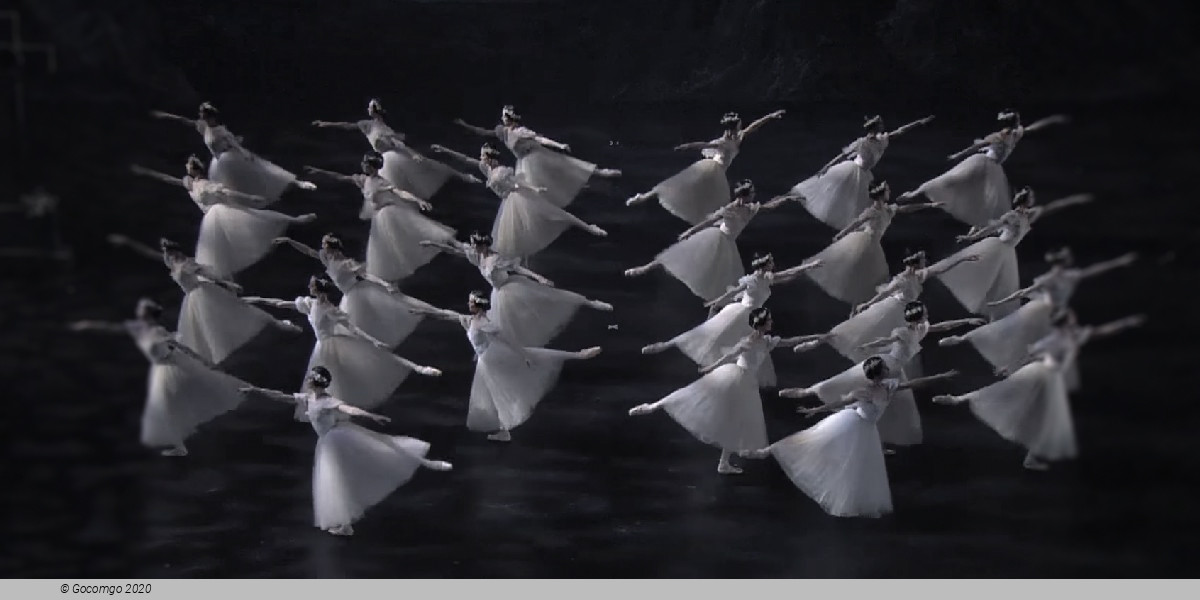
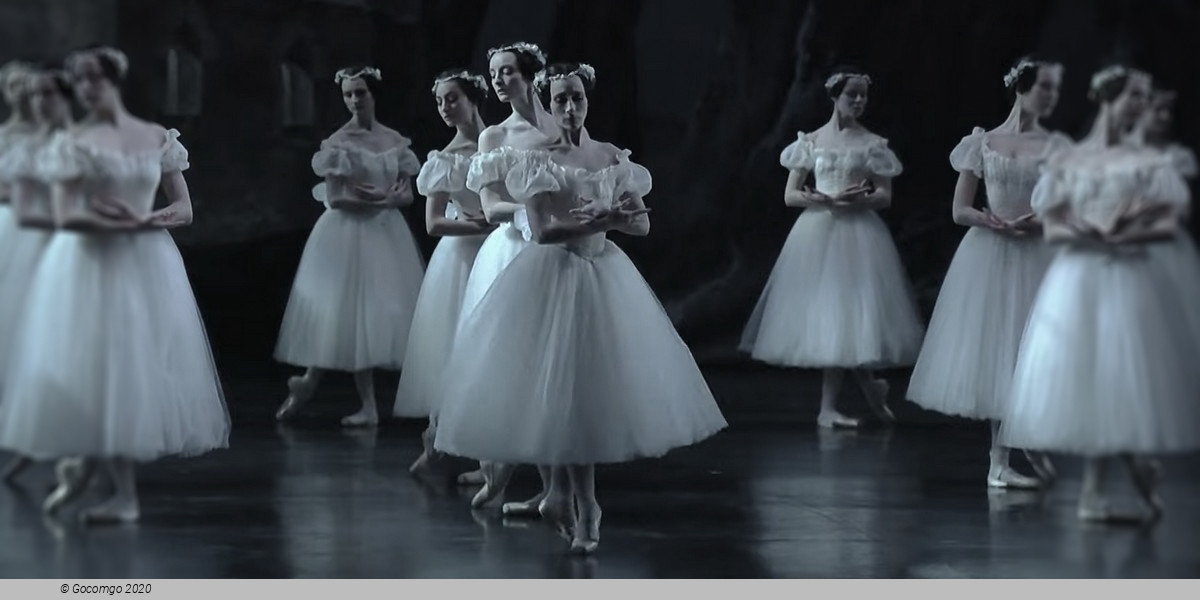
Giselle is a romantic ballet in two acts. It was first performed by the Ballet du Théâtre de l'Académie Royale de Musique at the Salle Le Peletier in Paris, France on 28 June 1841, with Italian ballerina Carlotta Grisi as Giselle. The ballet was an unqualified triumph. Giselle became hugely popular and was staged at once across Europe, Russia, and the United States. The traditional choreography that has been passed down to the present day derives primarily from the revivals staged by Marius Petipa during the late 19th and early 20th centuries for the Imperial Ballet in St. Petersburg.


Synopsis

Act I

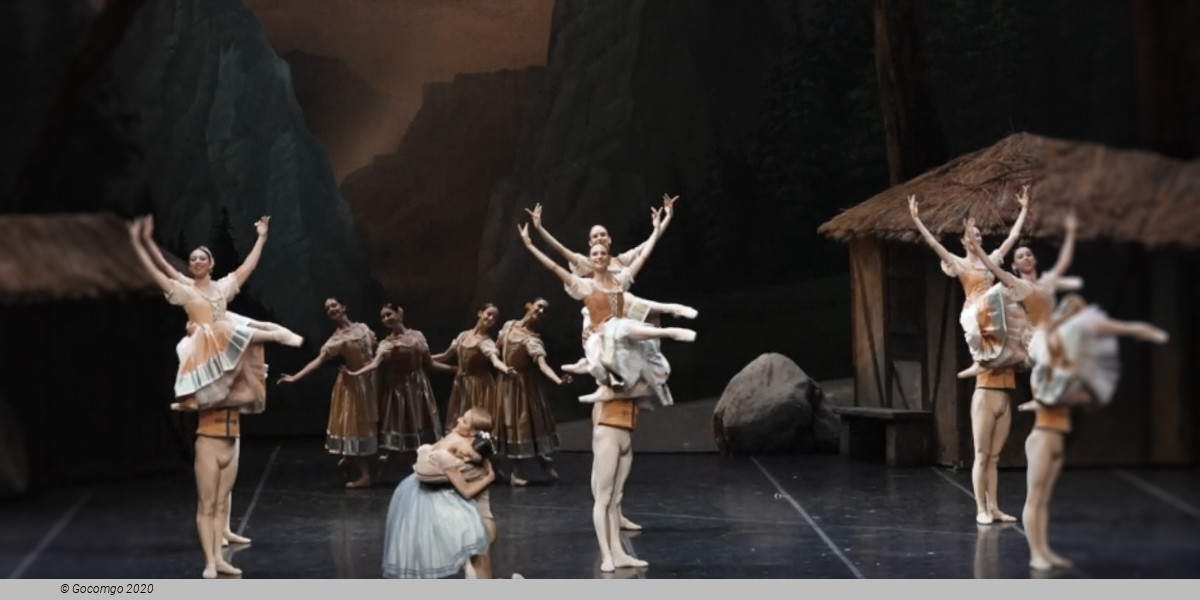
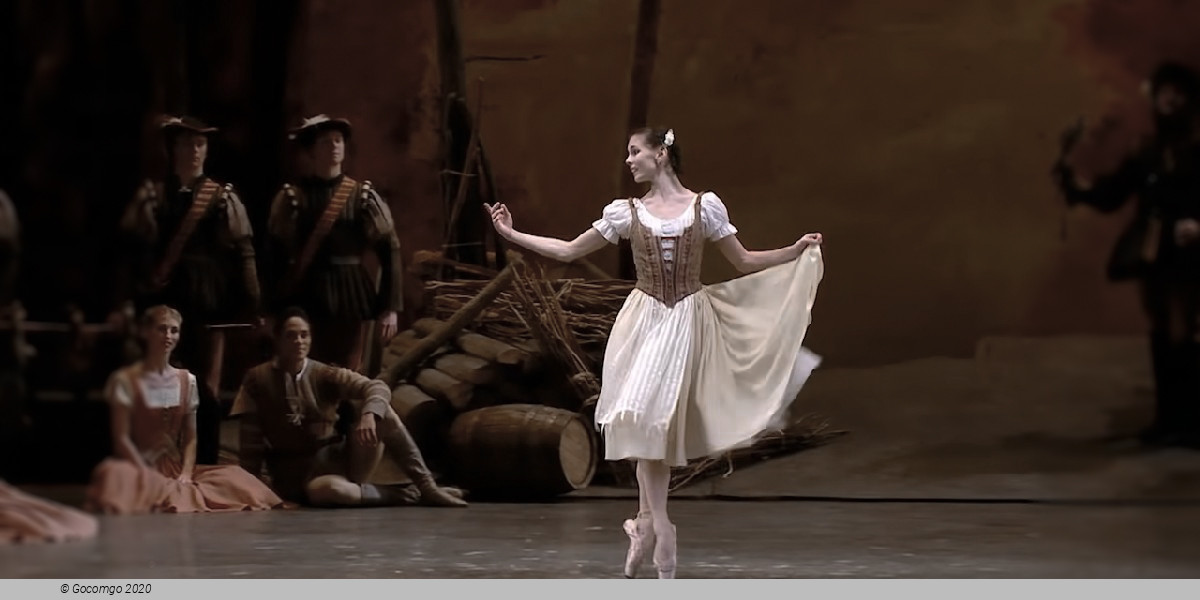
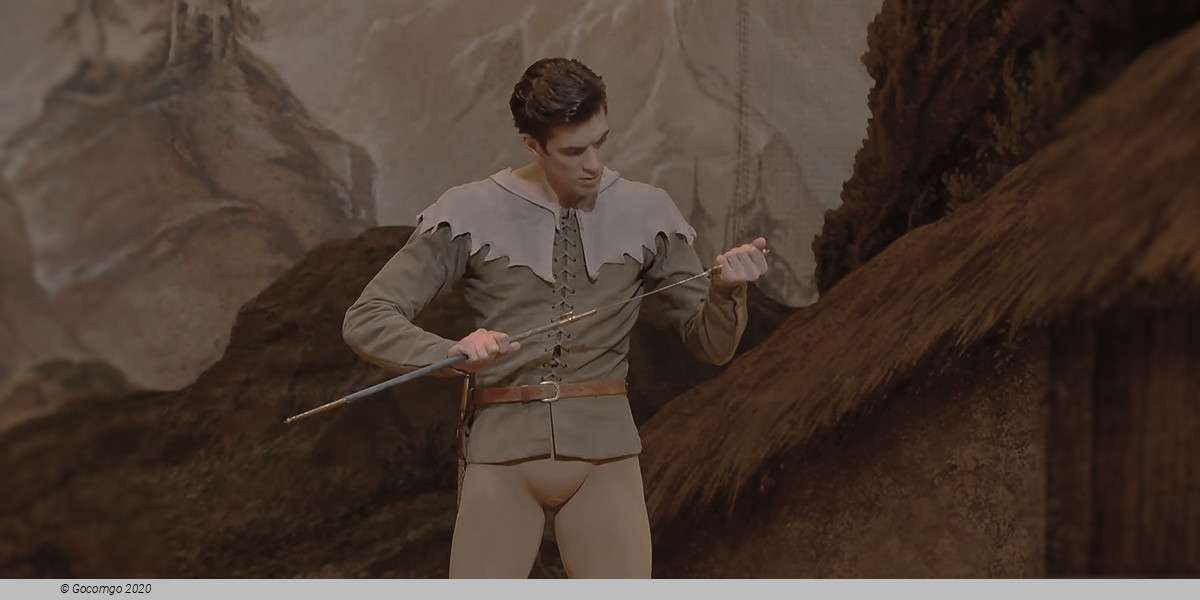
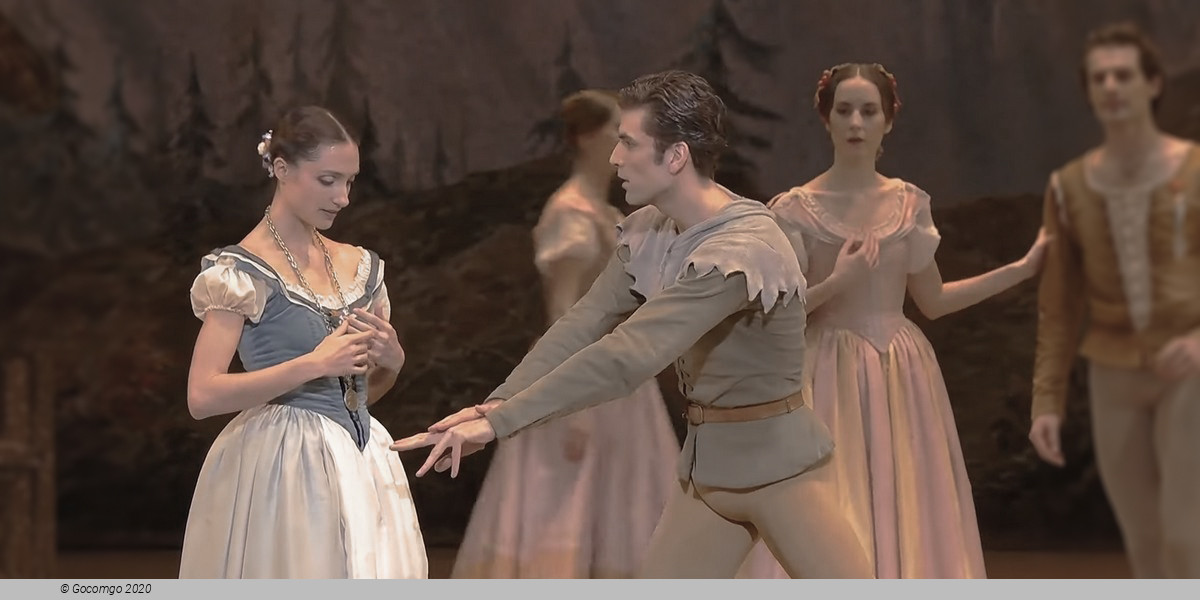
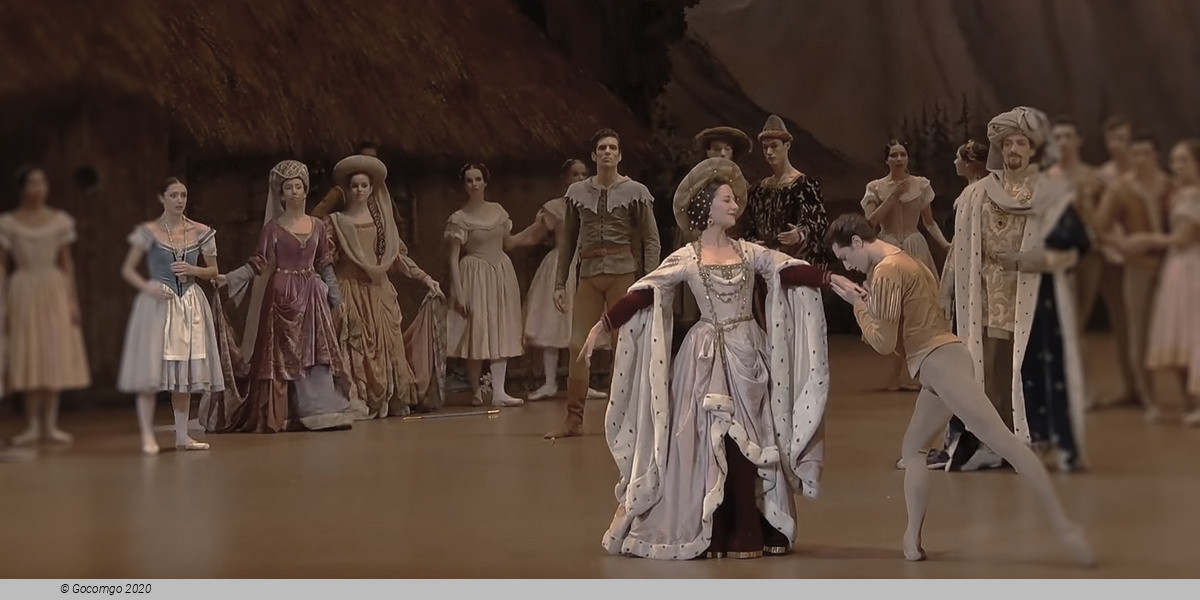
The ballet opens on a sunny autumnal morning in the Rhineland during the Middle Ages. The grape harvest is in progress. Duke Albrecht of Silesia, a young nobleman, has fallen in love with a shy, beautiful peasant girl, Giselle, despite being betrothed to Bathilde, the daughter of the Duke of Courland. Albrecht disguises himself as a humble villager called "Loys" in order to court the enchanting and innocent Giselle, who knows nothing of his true identity. With the help of his squire, Albrecht hides his fine attire, hunting horn, and sword before coaxing Giselle out of her house to romance her as the harvest festivities begin.

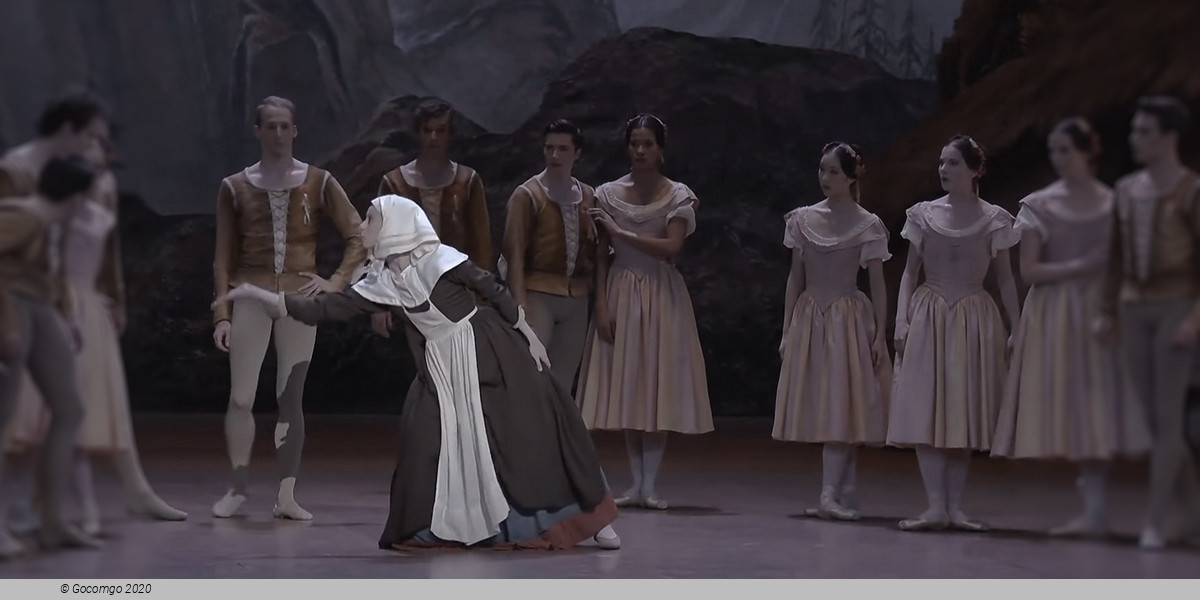
Hilarion, a local gamekeeper, is also in love with Giselle and is highly suspicious of the newcomer who has won Giselle's affections. He tries to convince the naive Giselle that her beau cannot be trusted, but she ignores his warnings. Giselle's mother, Berthe, is very protective of her daughter, as Giselle has a weak heart that leaves her in delicate health. She discourages a relationship between Giselle and Loys, thinking Hilarion would be a better match, and disapproves of Giselle's fondness for dancing, due to the strain on her heart.

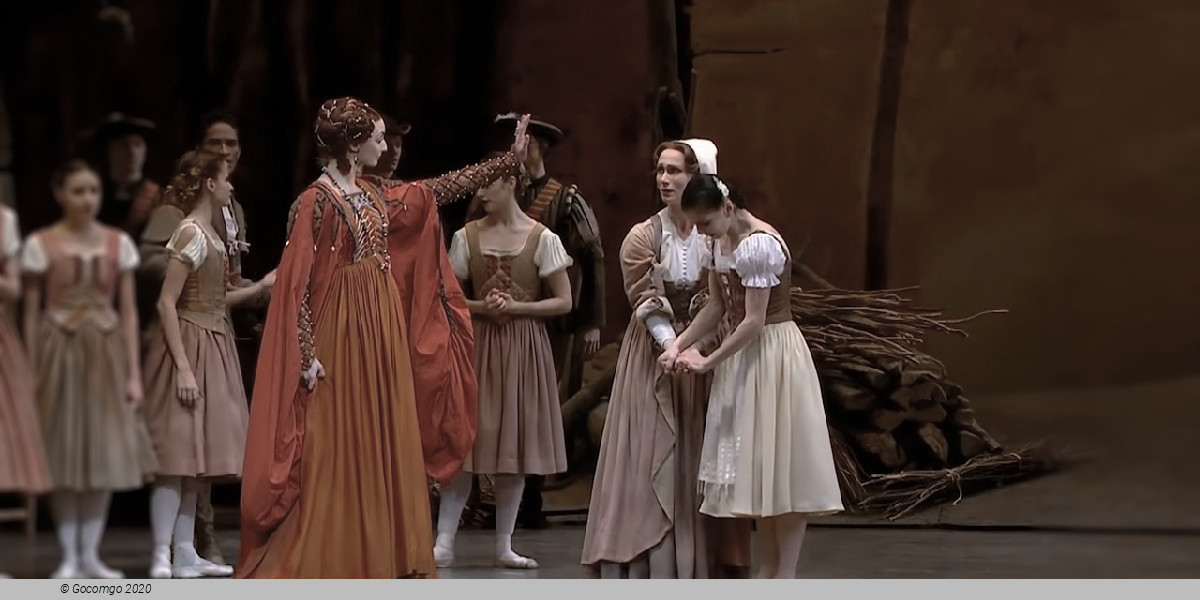
A party of noblemen seeking refreshment following the rigors of the hunt arrive in the village, Albrecht's betrothed, Bathilde, among them. Albrecht hurries away, knowing he would be recognized and greeted by Bathilde, exposing him as a nobleman. The villagers welcome the party, offer them drinks, and perform several dances. Bathilde is charmed with Giselle's sweet and demure nature, not knowing of her relationship with Albrecht. Giselle is honored when the beautiful and regal stranger offers her a necklace as a gift before the group of nobles depart.

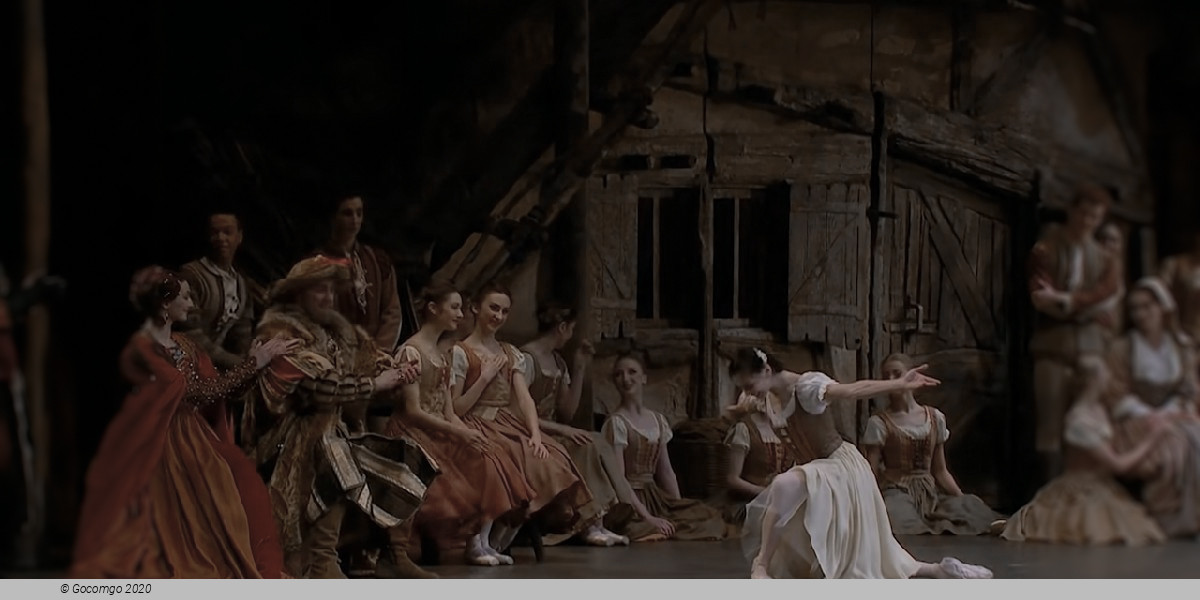
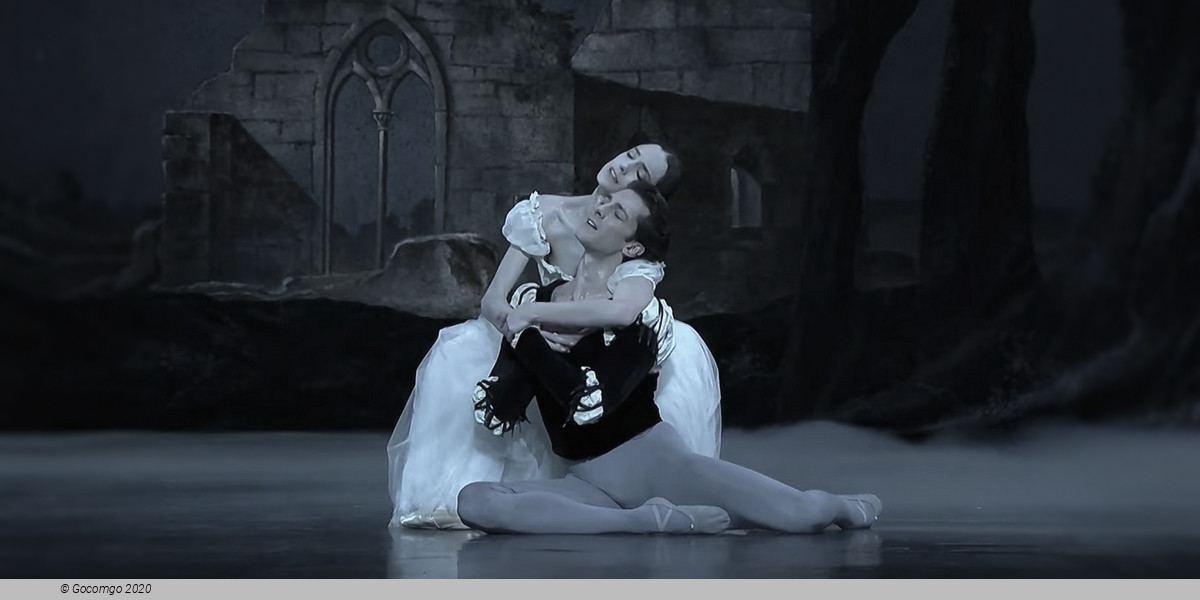
The villagers continue the harvest festivities, and Albrecht emerges again to dance with Giselle, who is named the Harvest Queen. Hilarion interrupts the festivities. He has discovered Albrecht's finely made sword and presents it as proof that the lovesick peasant boy is really a nobleman who is promised to another woman. Using Albrecht's hunting horn, Hilarion calls back the party of noblemen. Albrecht has no time to hide and has no choice but to greet Bathilde as his betrothed. All are shocked by the revelation, but none more than Giselle, who becomes inconsolable when faced with her lover's deception. Knowing that they can never be together, Giselle flies into a mad fit of grief in which all the tender moments she shared with "Loys" flash before her eyes. She begins to dance wildly and erratically, ultimately causing her weak heart to give out. She collapses before dying in Albrecht's arms. Hilarion and Albrecht turn on each other in rage before Albrecht flees the scene in misery. The curtain closes as Berthe weeps over her daughter's body.

In the original version, taken up again recently by a production of the ROB, Giselle stabs herself with Albrecht's sword, which explains why her body is laid to rest in the forest, in unhallowed ground, where the Wilis have the power to summon her. Most modern versions are sanitized and have edited out the suicide.

Act II

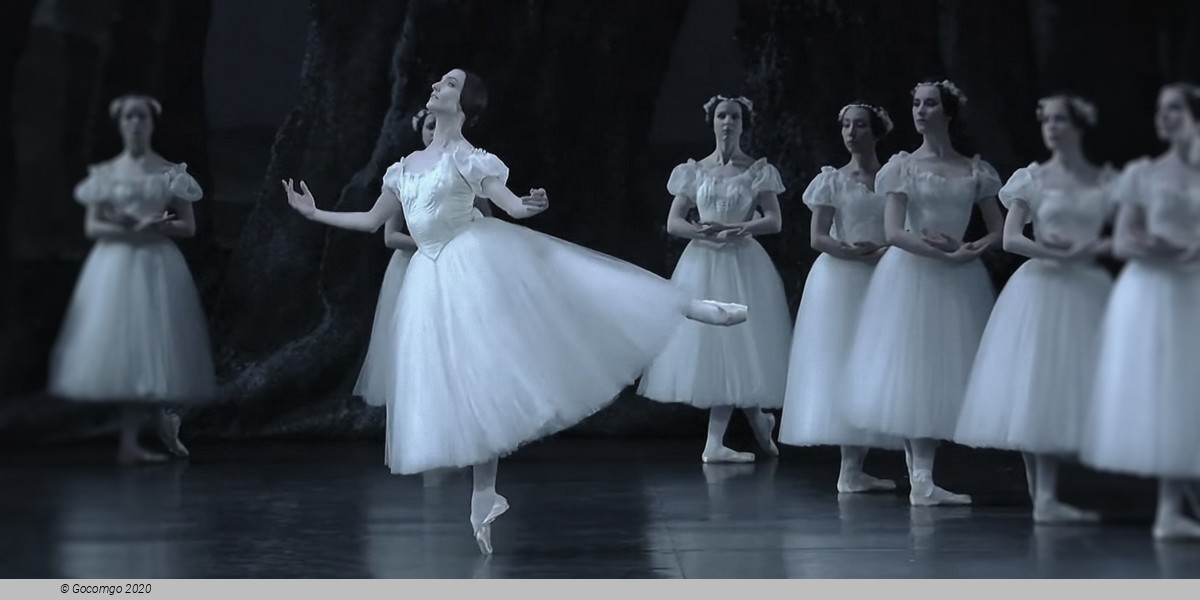
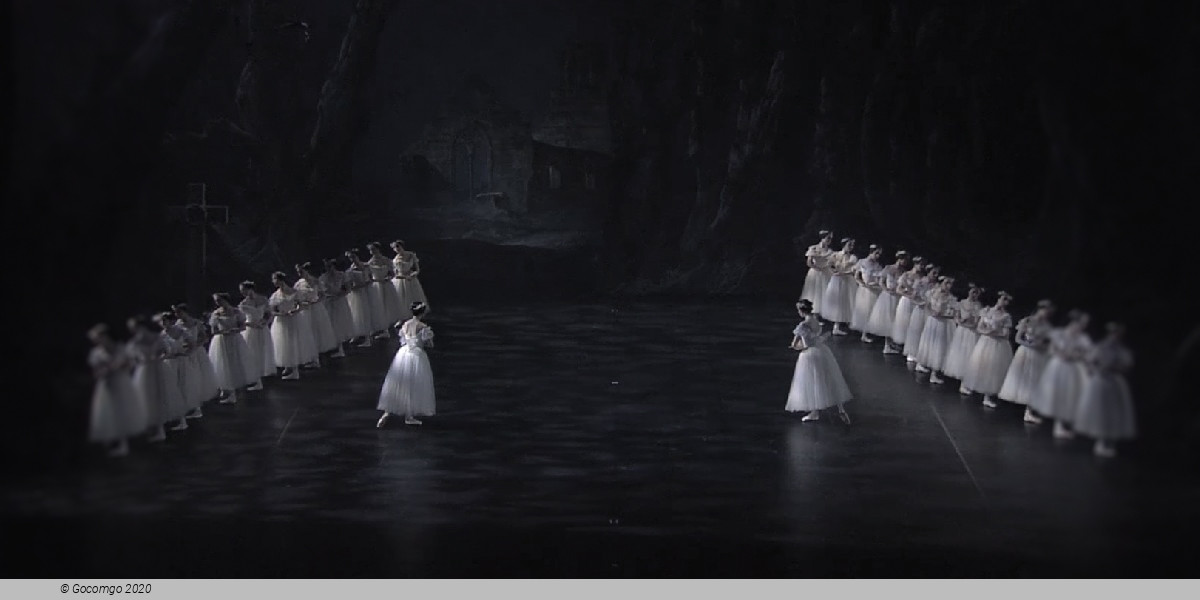
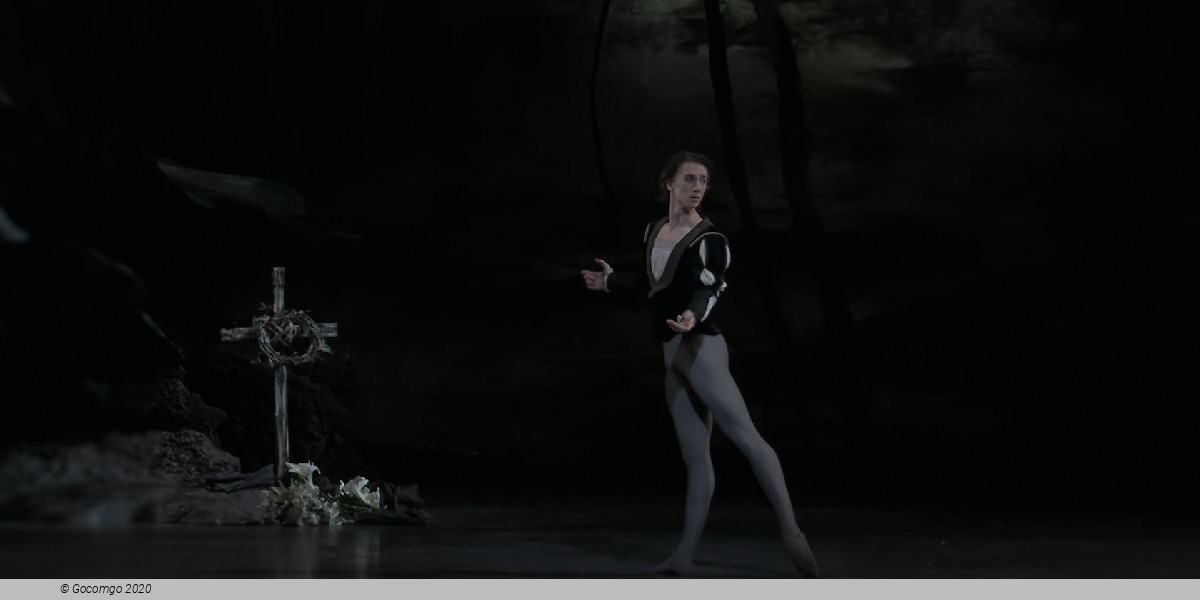
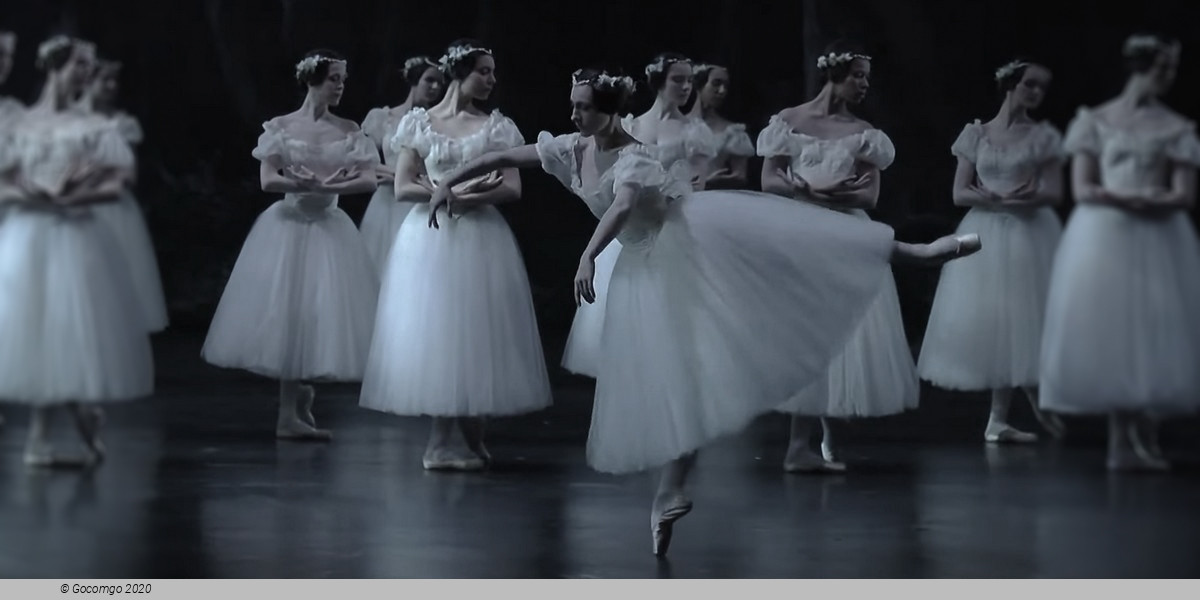
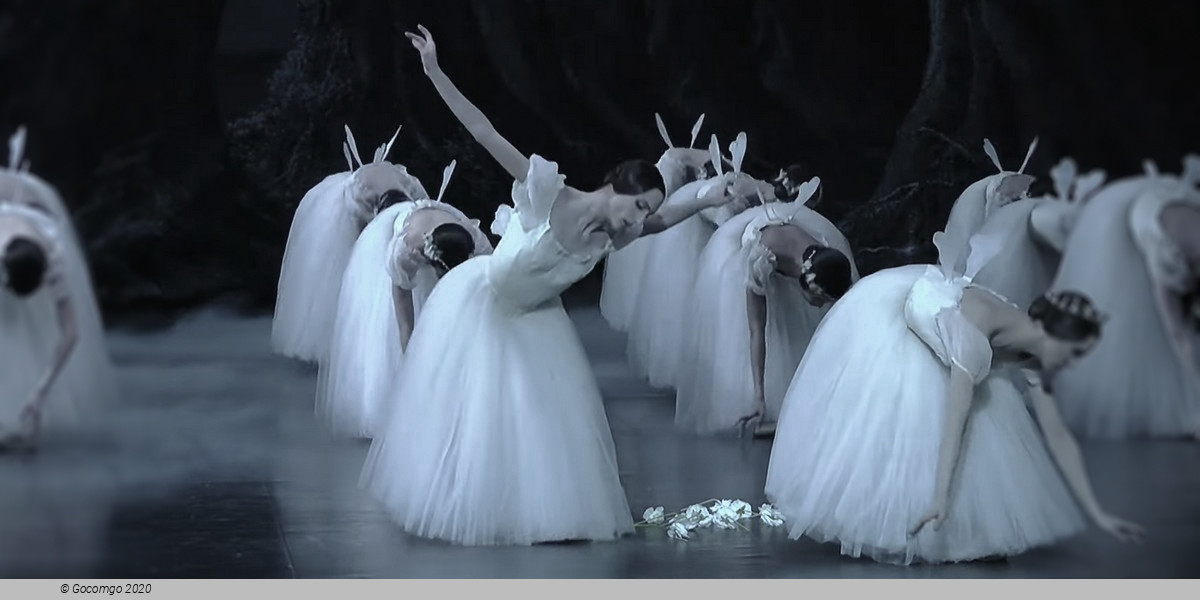
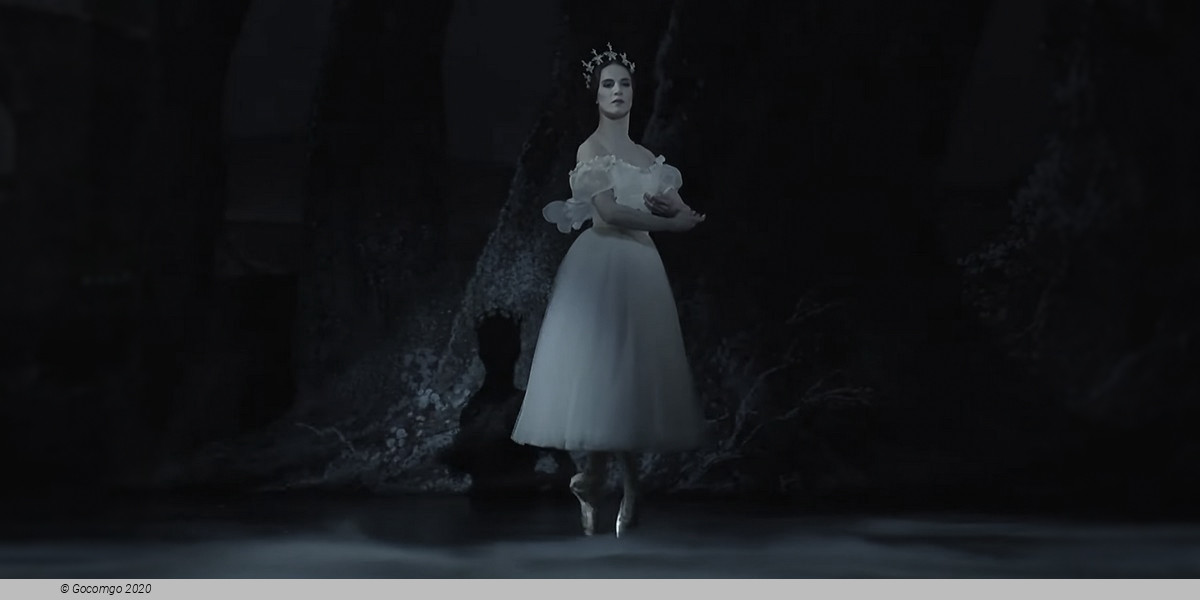
Late at night, Hilarion mourns at Giselle's forest grave, but is frightened away by the arrival of the Wilis, the ghostly spirits of maidens betrayed by their lovers. Many Wili were abandoned on their wedding days, and all died of broken hearts. The Wilis, led by their merciless queen Myrtha, dance and haunt the forest at night to exact their revenge on any man they encounter, regardless of who he may be, forcing their victims to dance until they die of exhaustion.

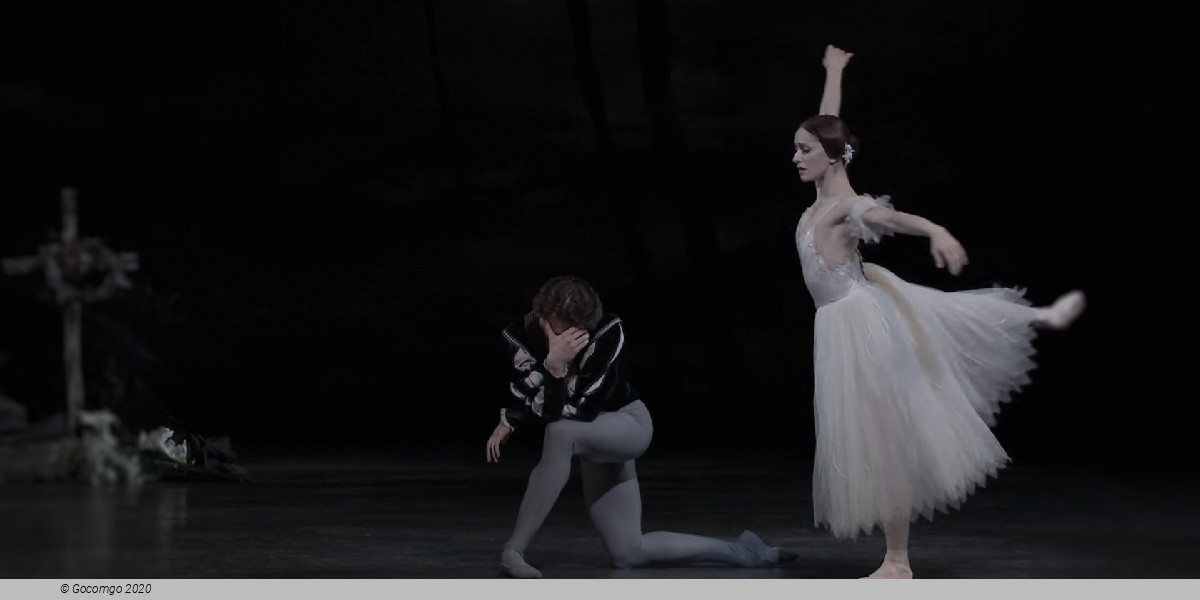
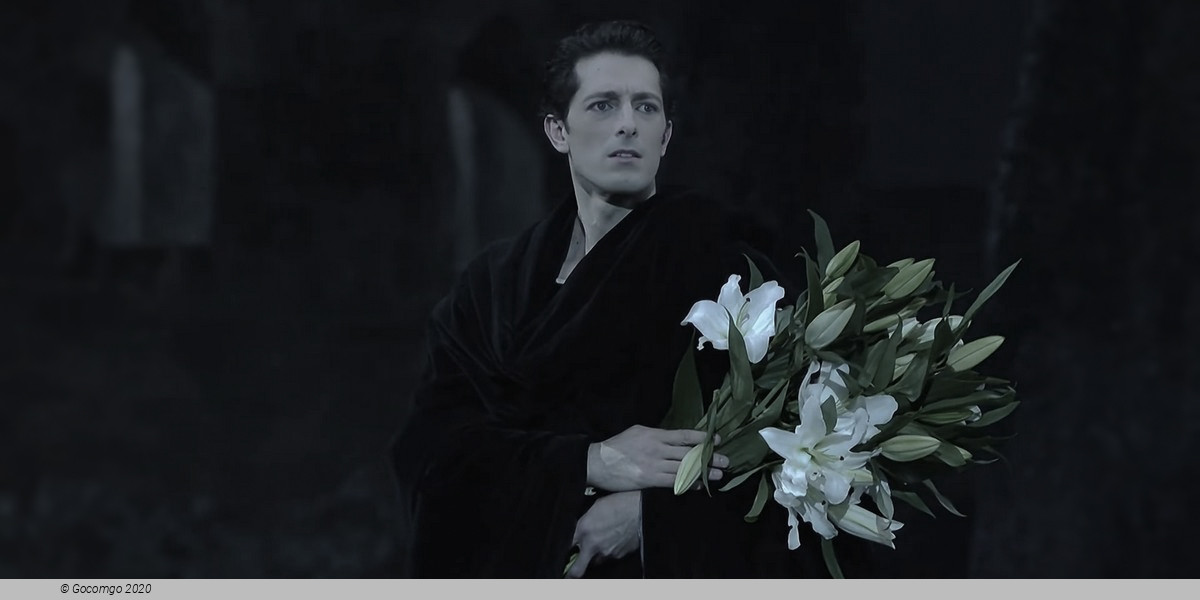
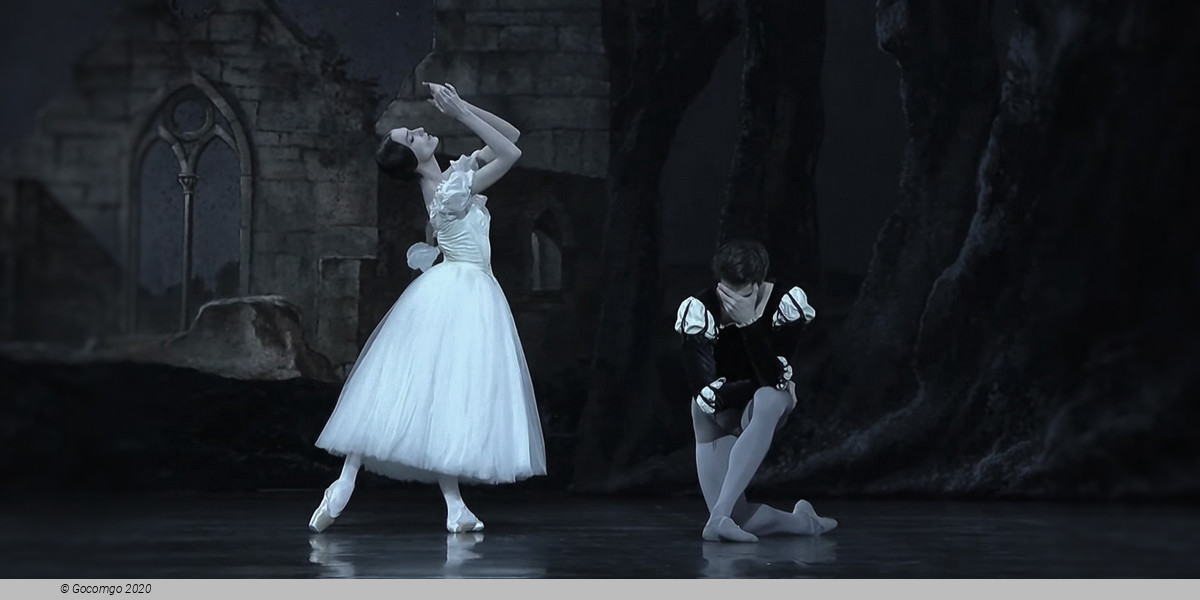
Myrtha and the Wilis rouse Giselle's spirit from her grave and induct her into their clan before disappearing into the forest. Albrecht arrives to lay flowers on Giselle's grave and he weeps with guilt over her death. Giselle's spirit appears and Albrecht begs her forgiveness. Giselle, her love undiminished unlike her vengeful sisters, gently forgives him. She disappears to join the rest of the Wilis and Albrecht desperately follows her.

Meanwhile, the Wilis have cornered a terrified Hilarion. They use their magic to force him to dance until he is nearly dead, and then drown him in a nearby lake. Then they spy Albrecht, and turn on him, sentencing him to death as well. He pleads to Myrtha for his life, but she coldly refuses. Giselle's pleas are also dismissed and Albrecht is forced to dance until sunrise. However, the power of Giselle's love counters the Wilis' magic and spares his life. The other spirits return to their graves at daybreak, but Giselle has broken through the chains of hatred and vengeance that control the Wilis, and is thus released from their powers and will haunt the forest no longer. After bidding a tender farewell to Albrecht, Giselle returns to her grave to rest in peace.

Venue Info

Teatro Alla Scala - Milan
Location   Via Filodrammatici, 2

Teatro Alla Scala is an opera house in Milan. Most of Italy's greatest operatic artists, and many of the finest singers from around the world, have appeared at La Scala. The theatre is regarded as one of the leading opera and ballet theatres globally. It is home to the La Scala Theatre Chorus, La Scala Theatre Ballet, La Scala Theatre Orchestra, and the Filarmonica della Scala orchestra.

The Teatro alla Scala was founded, under the auspices of the Empress Maria Theresa of Austria, to replace the Royal Ducal Theatre, which was destroyed by fire on 26 February 1776 and had until then been the home of opera in Milan. The cost of building the new theatre was borne by the owners of the boxes at the Ducal, in exchange for possession of the land on which stood the church of Santa Maria alla Scala (hence the name) and for renewed ownership of their boxes. Designed by the great neoclassical architect Giuseppe Piermarini, La Scala opened on 3 August 1778 with Antonio Salieri's opera L'Europa riconosciuta, to a libretto by Mattia Verazi.

With the advent of Rossini in 1812 (La pietra del paragone), the Teatro alla Scala was to become the appointed place of Italian opera seria: of its history dating back more than a century and of its subsequent tradition up till the present. The catalogue of Rossini's works performed until 1825 included: Il turco in Italia, La Cenerentola, Il barbiere di Siviglia, La donna del lago, Otello, Tancredi, Semiramide and Mosé. During that period the choreographies of Salvatore Viganò (1769-181) and of Carlo Blasis (1795-1878) also widened the theatre's artistic supremacy to include ballet.

An exceptional new season of serious opera opened between 1822 and 1825, with Chiara e Serafina by Gaetano Donizetti (1797-1848) and Il pirata by Vincenzo Bellini (1801-1835). The later operas of Donizetti performed at La Scala were (until 1850) Anna Bolena, Lucrezia Borgia, Torquato Tasso, La fille du régiment, La favorita, Linda di Chamonix, Don Pasquale, and Poliuto. These were followed (until 1836) by Bellini's I Capuleti e i Montecchi, Norma, La sonnambula, Beatrice di Tenda and I puritani.

In 1839 Oberto Conte di San Bonifacio inaugurated the cycle of operas by Giuseppe Verdi (1813-1901), the composer whose name is linked more than any other to the history of La Scala. After the dismal failure of Un giorno di regno, Nabucco was performed in 1842. It was the first, decisive triumph of Verdi's career. At the same time, the strong patriotic feelings stirred by Nabucco founded the "popularity" of opera seria and identified its image with the Scala.

Arturo Toscanini (1867-1957) became the artistic director and introduced radical reform into the theatre, both in its organisational aspects and in its relations with the public. Toscanini, one of the greatest conductors of all time, took up Verdi's musical inheritance and launched a tradition of interpretation that continued uninterruptedly and was renewed during the twentieth century. It was he who reappraised and regularly performed at the Scala the works of Richard Wagner (hitherto only belatedly and inadequately recognised). He also firmly extended the Scala's orchestral repertoire to include symphonic music.

In 1948 maestro Guido Cantelli (1920-1956) made his debut and established himself as one of the leading postwar conductors. Numerous opera performances productions (the Wagnerian cycle conducted in 1950 by Wilhelm Furtwängler, the Verdi repertoire by Victor De Sabata, etc), concerts (Herbert von Karajan, Dimitri Mitropoulos, Bruno Walter, etc), singers (Maria Callas, Renata Tebaldi, Giuseppe Di Stefano, Mario Del Monaco, etc), ballet performances (Margot Fonteyn, Serge Lifar, Maya Plissetskaya, Rudolf Nureyev), and productions (Luchino Visconti, Giorgio Strehler) belong not only to the history of the Scala, but to that of the history of musical theatre since the war.

In 1965 Claudio Abbado made his début at the Scala and in 1972 was named conductor of the Scala Orchestra. Until 1986 he directed among other works Il barbiere di Siviglia, Cenerentola, L'Italiana in Algeri by Rossini, Simon Boccanegra, Macbeth and Don Carlo by Verdi, the recent Al gran sole carico d'amore by Luigi Nono, and Pelléas et Mélisande by Claude Debussy. He also conducted numerous concerts. The chorus-master was Romano Gandolfi. In 1975 the ballet dancer Oriella Dorella debuted at La Scala. Among other contemporary composers, up till 1986 the Theatre continued to give works by Luciano Berio (La vera storia), Franco Donatoni (Atem) and Karlheinz Stockhausen (Samstag aus Licht).

In 1981 Riccardo Muti debuted at the Scala as an opera conductor (Mozart, Le nozze di Figaro). Giulio Bertola was appointed to direct the Chorus. In 1982 the Orchestra Filarmonica della Scala was established. In 1985 Alessandra Ferri made her debut at the Scala. In 1986 Riccardo Muti was appointed musical director. From 1989 to 1998 he reintroduced the best-loved works (Rigoletto, La traviata, Macbeth, La forza del destino) and numerous other titles by Verdi including Falstaff and Don Carlo.

In 1991 Roberto Gabbiani took over the directorship of the chorus. In 1997 La Scala was converted into a Foundation under private ownership, thus opening a decisive phase of modernisation.

On 7 December 2001 a new production of Otello, conducted by Muti, concluded the Verdi Year and, for the time being, performances at Piermarini’s original building in Piazza Scala. Major restoration and modernisation works of the Theatre began in January 2002.

The 2005-2006 Season, dedicated to the 250th anniversary of Mozart’s birth, was inaugurated by Idomeneo conducted by Daniel Harding. The 2006/07 season saw the return on 7 December of an opera by Verdi, Aida, conducted by Riccardo Chailly, and the launch of the Celebrations for the 50th Anniversary of Arturo Toscanini’s Death. On 7 December 2007 the 2007/08 season opened with Tristan und Isolde conducted by Daniel Barenboim. The opera marked the beginning of a closer collaboration between the Teatro alla Scala and the Israeli-Argentinian Maestro.

Important Info
Type: Ballet
City: Milan, Italy
Starts at: 18:00
Duration:
Top of page