
Teatro Alla Scala 6 May 2023 - Andrea Chénier | GoComGo.com

Andrea Chénier

Teatro Alla Scala, Milan, Italy
All photos (10)
Select date and time
8 PM

E-tickets: Print at home or at the box office of the event if so specified. You will find more information in your booking confirmation email.

You can only select the category, and not the exact seats.
If you order 2 or 3 tickets: your seats will be next to each other.
If you order 4 or more tickets: your seats will be next to each other, or, if this is not possible, we will provide a combination of groups of seats (at least in pairs, for example 2+2 or 2+3).

Important Info
Type: Opera
City: Milan, Italy
Starts at: 20:00
Acts: 4
Duration: 2h 25min

E-tickets: Print at home or at the box office of the event if so specified. You will find more information in your booking confirmation email.

You can only select the category, and not the exact seats.
If you order 2 or 3 tickets: your seats will be next to each other.
If you order 4 or more tickets: your seats will be next to each other, or, if this is not possible, we will provide a combination of groups of seats (at least in pairs, for example 2+2 or 2+3).

Overview

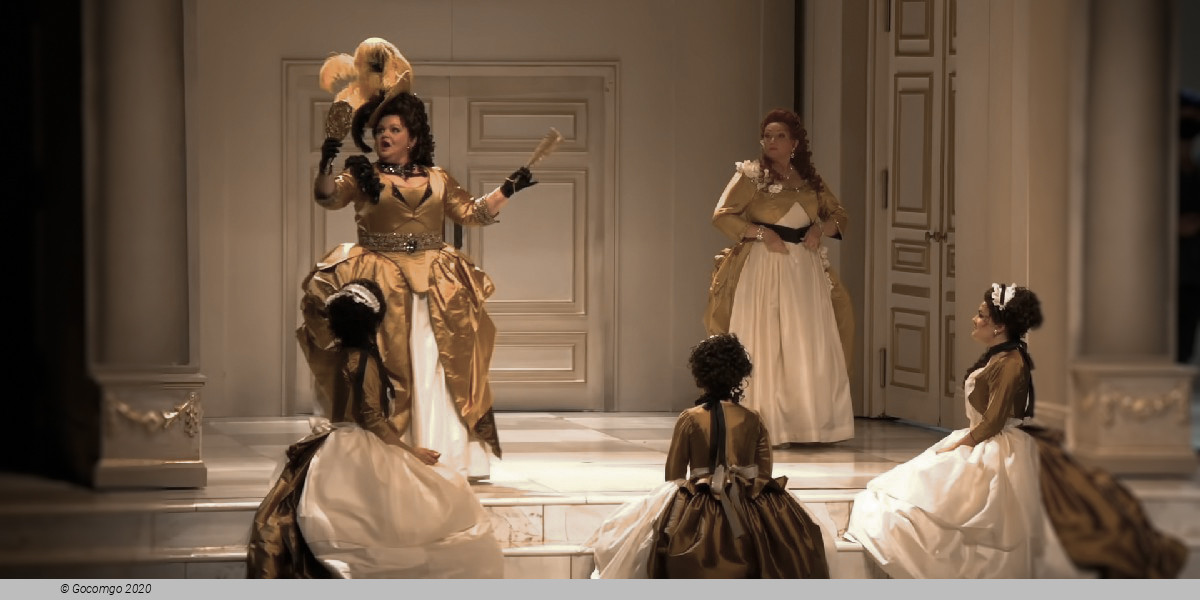
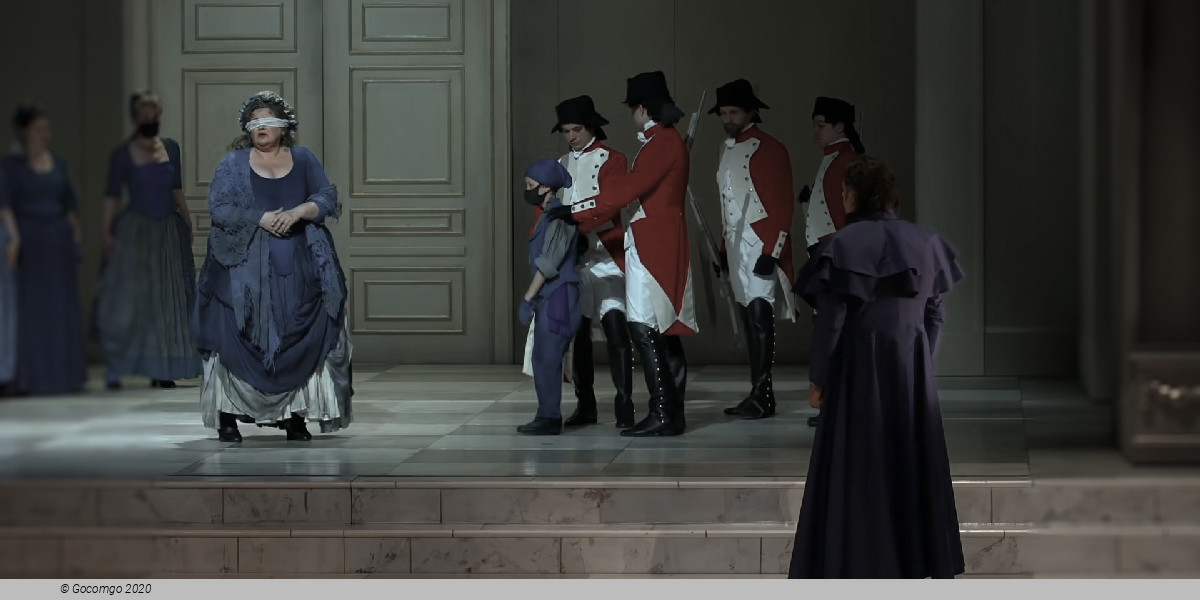
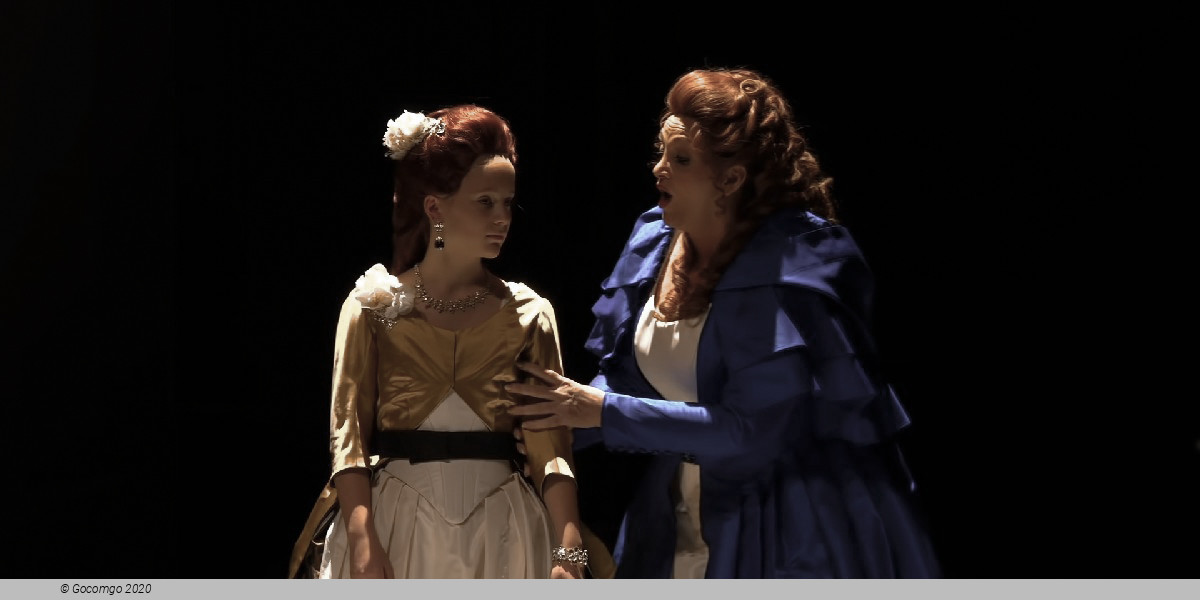
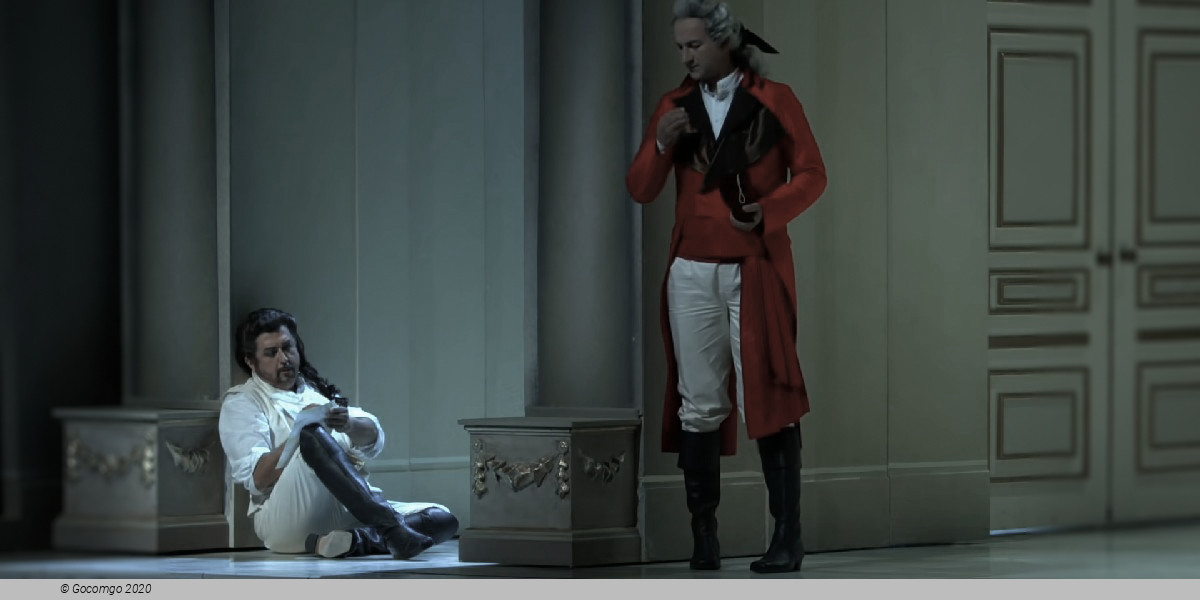
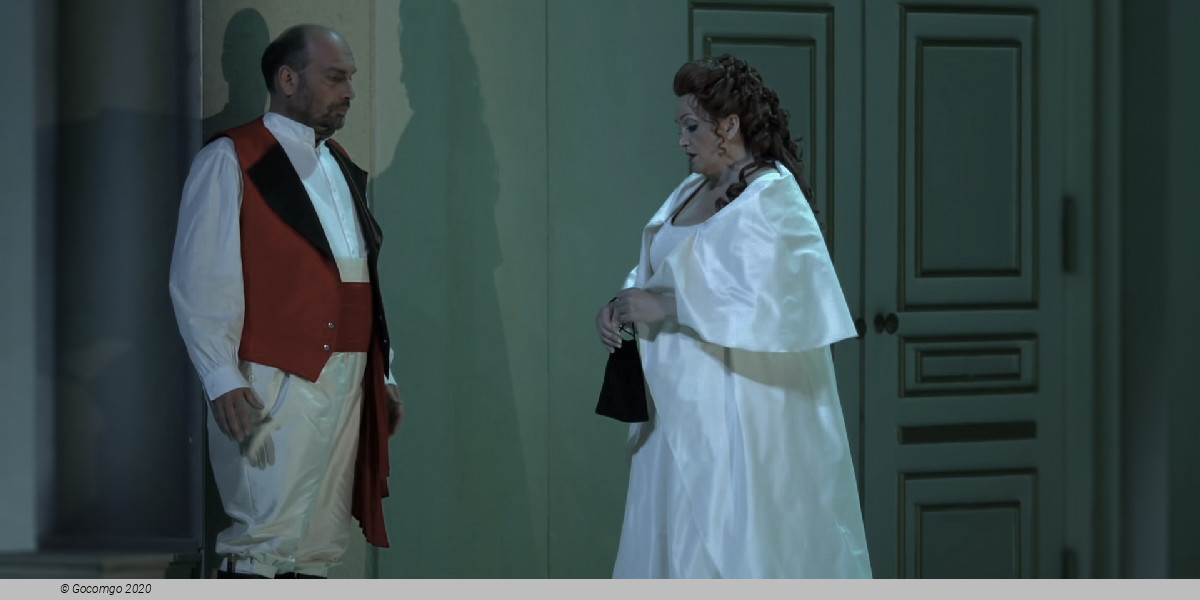
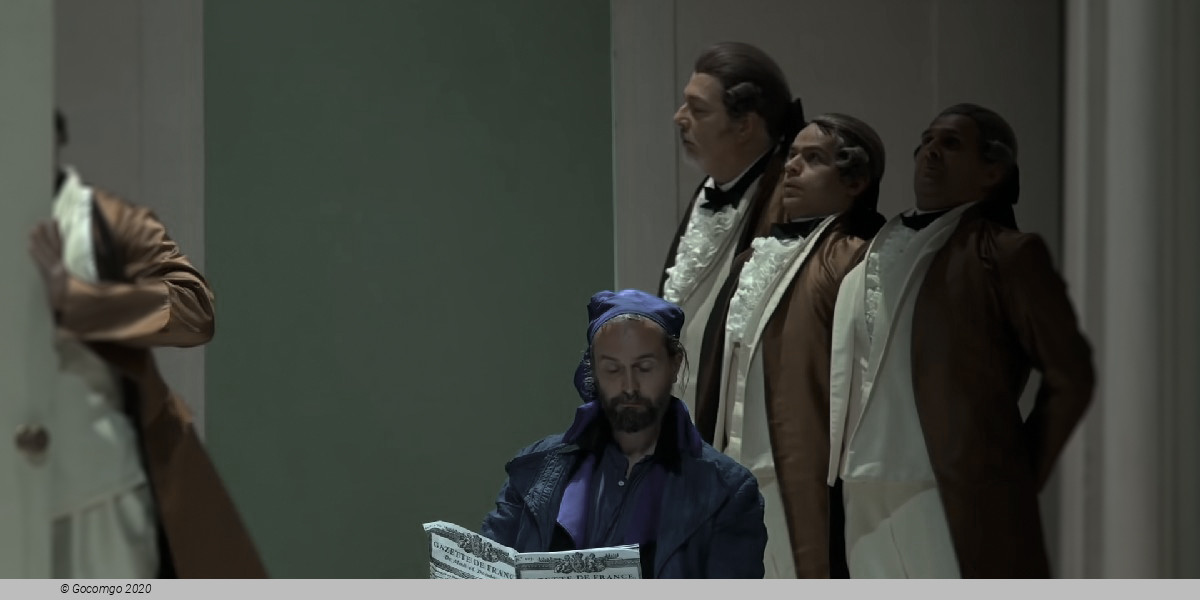
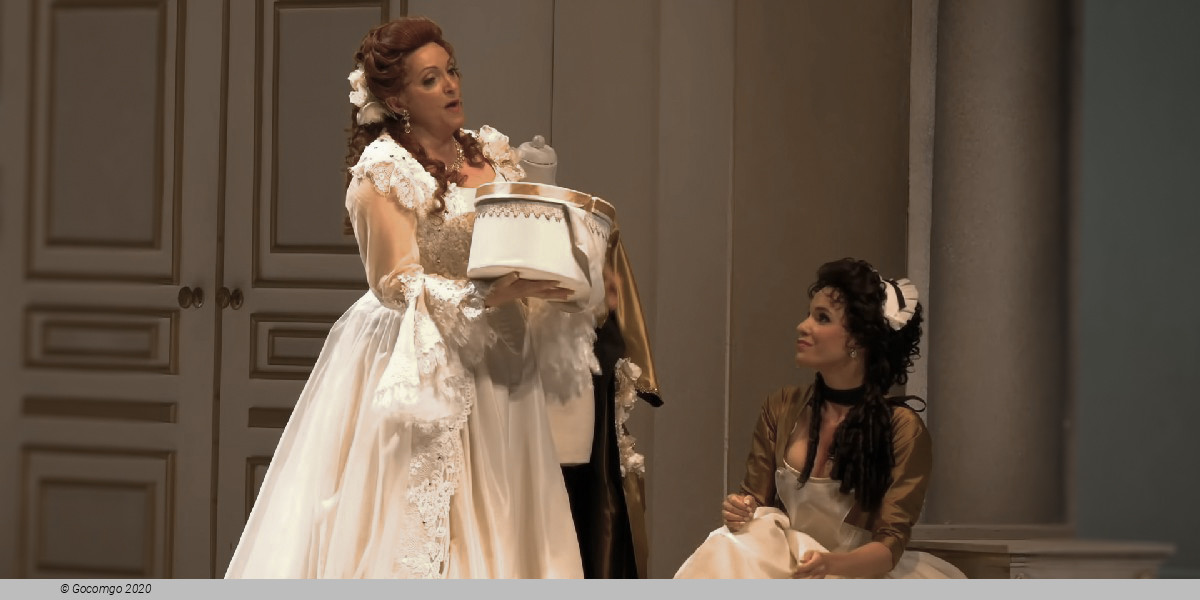
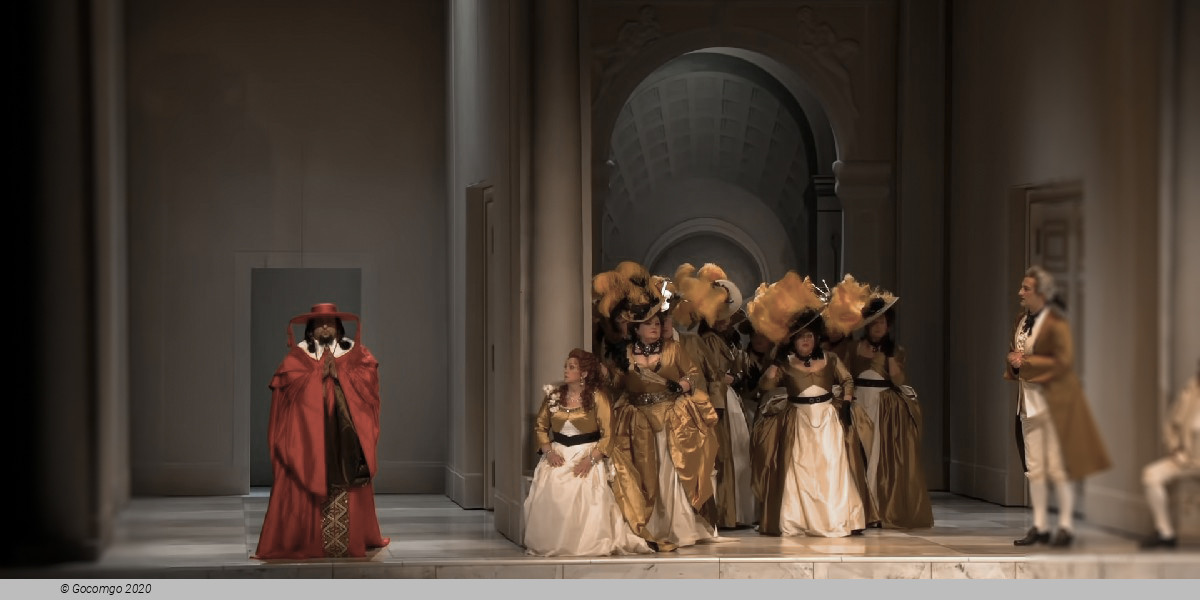
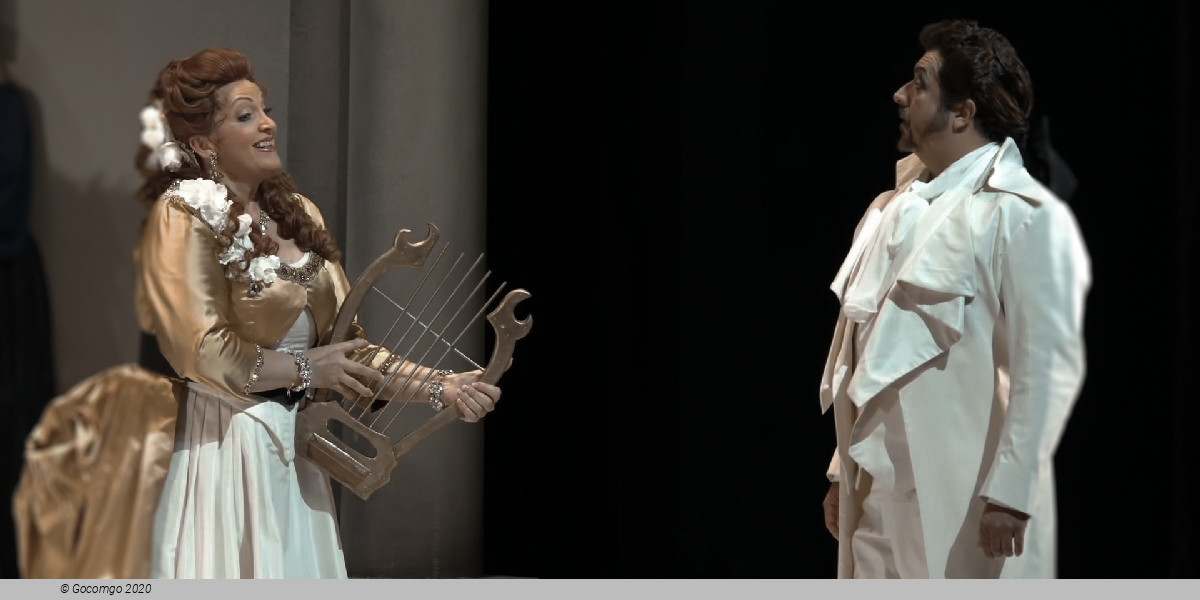
The much acclaimed opera that opened the 2017-2018 season in historical costumes directed by Mario Martone and featuring fascinating rotating scenery designed by Margherita Palli returns to the stage under the expert musical direction of Marco Armiliato, who will be making his debut in the La Scala pit. Umberto Giordano’s grand choral fresco of the hopes of the French Revolution betrayed by the fanatism of the Reign of Terror has a new prima donna in Sonya Yoncheva, while the role of the doomed poet is shared by Yusif Eyvazov and Jonas Kaufmann. The cast is completed by Ambrogio Maestri and Amartuvshin Enkhbat as Carlo Gérard.

History
Premiere of this production: 28 March 1896, La Scala, Milan

Andrea Chénier is a verismo opera in four acts by Umberto Giordano, set to an Italian libretto by Luigi Illica, and first performed on 28 March 1896 at La Scala, Milan. The story is based loosely on the life of the French poet André Chénier (1762–1794), who was executed during the French Revolution. The character Carlo Gérard is partly based on Jean-Lambert Tallien, a leading figure in the Revolution. It remains popular with audiences, though less frequently performed than in the first half of the 20th century. One reason for its survival in the repertoire is the lyrical-dramatic music provided by Giordano for the tenor lead, which gives a talented singer opportunities to demonstrate his histrionic skill and flaunt his voice. Giuseppe Borgatti's triumph in the title role at the first performance immediately propelled him to the front rank of Italian opera singers. He went on to become Italy's greatest Wagnerian tenor, rather than a verismo-opera specialist.

Synopsis

Time: 1789–94.
Place: In and around Paris.

Act 1
Palace of the Countess of Coigny Servants are preparing the Palace for a ball. Carlo Gérard, the majordomo, is filled with indignation at the sight of his aged father, worn out by long years of heavy labour for their noble masters. Only the Countess' daughter Maddalena escapes his hatred, since he is besotted with her. Maddalena jokes with Bersi, her mulatto servant girl. The Countess rebukes Maddalena for dallying around when she should be dressing for the ball.

The guests arrive. Among them is an Abbé who has come from Paris with news about the poor decisions of King Louis XVI's government. Also among the guests is the dashing and popular poet, Andrea Chénier.

The soirée begins with a "pastoral" performance. A chorus of shepherds and shepherdesses sing idealised rustic music and a ballet mimics a rural love story in stately court fashion. The Countess asks Chénier to improvise a poem but he says that inspiration has abandoned him. Maddelena asks Chénier to recite a verse, but he refuses her also, saying that "Fantasy is not commanded on cue." The laughter of the girls draws the Countess' attention, and Maddelena explains mockingly that the Muse of poetry is absent from the party. Chénier now becomes angry and improvises a poem about the suffering of the poor, ending with a tirade against those in power in church and state, shocking the guests. Maddalena begs forgiveness.

The guests dance a gavotte, which is interrupted by a crowd of ragged people who ask for food, Gérard ushers them in announcing that "Her Greatness, Misery" has arrived to the party. The Countess confronts Gérard who repudiates his service and throws his livery at the feet of the Countess, taking his father with him, who threw himself at the feet of the Countess. She orders them all out, and comforts herself by thoughts of her gifts to charity. The ball continues as if nothing had happened.

Act 2
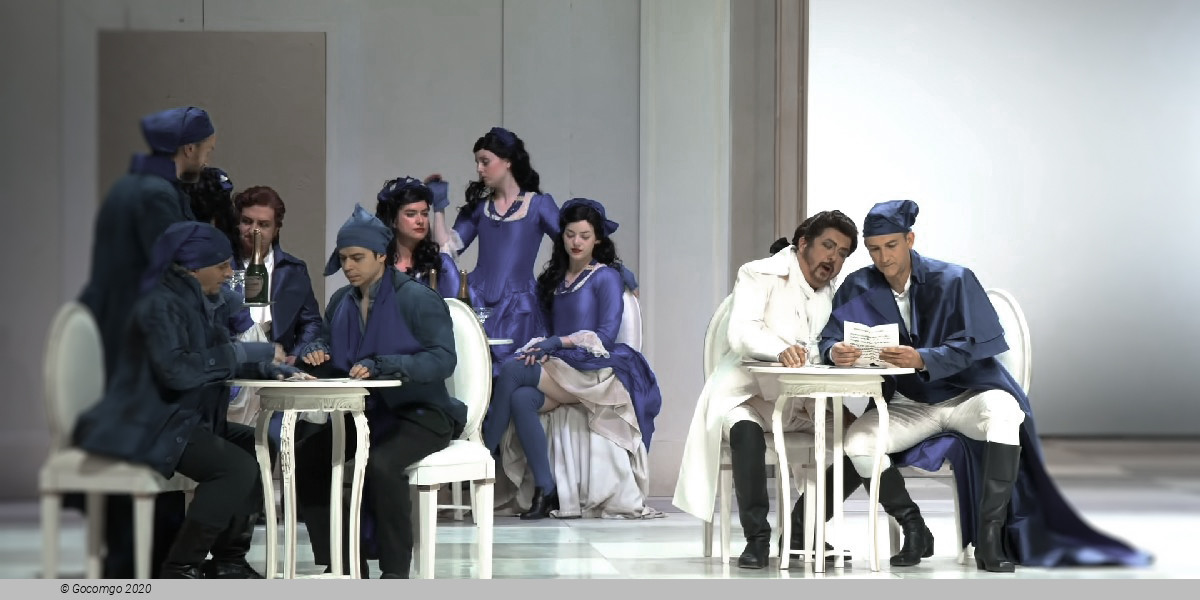
Café Hottot in Paris, during the Reign of Terror

Bersi, now a merveilleuse, chats with an incroyable. She asks him if he is a spy for Robespierre, but he says that he is a mere "observer of the public spirit". Bersi asserts she has nothing to hide as "a child of the Revolution".

A tumbrel passes, bearing condemned prisoners to the guillotine, mocked by the crowd. Bersi leaves. The Incroyable notes that she was with a blonde woman he is looking for; he also notes that Chénier is at a nearby table waiting nervously and that Bersi had made signs at him.

Chénier's friend Roucher enters. He reminds Chénier that he is under suspicion for his association with disgraced General Dumoriez and urges him to flee. He offers Chénier a false passport. Chénier refuses: his destiny is love; he has been waiting for a mysterious woman who has sent him letters. Roucher sees the last letter, and dismisses it as from a prostitute and he warns Chénier that love is dangerous during the Révolution. He persuades Chénier to take the passport.

A procession of revolutionary leaders passes, including Robespierre and Gérard, who enters the café. The Incroyable reports to him about Bersi and the possible connection with the blonde, whom Gérard has been seeking, saying that she will come to the café that night. Bersi returns, and pleads with Roucher to keep Chénier there. She leaves for a dance with the Incroyable. Roucher persuades Chénier to leave, but the old woman Madelon tells Chénier to wait for a woman called "Speranza" (Hope); all leave, except the Incroyable, who returns and hides.

A hooded woman enters. It is "Speranza". She uncovers herself, and Chénier recognizes her as Maddalena de Coigny. The Incroyable leaves to tell Gérard. Despite the danger, Chénier and Maddalena proclaim their love in a passionate duet.

As they prepare to leave they are discovered by Gérard. Chénier sends Maddalena away with Roucher and wounds Gérard in a sword fight. Believing he is dying, Gérard warns Chénier to flee from the wrath of the prosecutor Fouquier-Tinville, Chénier's enemy, and asks him to protect Maddalena. The Incroyable returns with soldiers and a crowd, but Gérard tells them that his assailant is unknown to him. All blame the Girondists.

Act 3
The Revolutionary Tribunal

The sans-culotte Mathieu calls on the people to give money for the army of the Revolution, but they refuse. Gérard, who has recovered, enters and renews the appeal and the people react with enthusiasm. A blind woman comes in with her grandson, whom she gives to be a soldier of the Revolution. The crowd disperses.

The Incroyable reports to Gérard that Chénier has been arrested in the Parisian suburb of Passy and interned in the Luxembourg Palace, and it is only a matter of time before Maddalena will come for him. He urges Gérard to write down the charges against Chénier for his trial. Gérard hesitates but the Incroyable convinces him that a conviction by the Tribunal will only secure Maddalena's appearance. Alone, he muses that his Revolutionary ideals are being betrayed by his false charges, therefore he is still a slave: formerly of the nobles, now of his own lust. Finally desire triumphs and he signs the indictment in a mood of cynicism. (Gérard: "Nemico della patria?!") The Incroyable takes it to the Tribunal.

Maddalena enters to plead for Chénier's life. Gérard admits that he had Chénier arrested to control Maddalena. He has been in love with her since they were children and he remembers the time when they were allowed to play together in the fields of her house, how when he was handed his first livery, he watched in secret Maddalena learning to dance at the time when he was in charge of opening doors, but now he is a powerful man and will have his way. Maddalena refuses: she will shout out her name in the streets and be executed as an aristocrat, but if her virtue is the price for Chénier's life, then Gérard can have her body.

Gérard is about to take her but recoils when he realizes the love that she professes for Chénier. Maddalena sings how the mob murdered her mother and burned her palace, how she escaped, and how Bersi became a prostitute to support them both. She laments how she brings disgrace to all that she loves and finally how Chénier was the force that gave life back to her.

Gérard searches for the indictment to cancel it, but it has already gone. He pledges to save Chénier's life even at the cost of his own. A clerk presents the list of accused persons, including Chénier. A crowd of spectators enter, then the judges, presided over by Fouquier-Tinville, then the prisoners. One by one, the prisoners are hastily condemned. When Chénier is tried, he denies all the charges, and proclaims his honour.

Chénier's plea has moved everyone and Fouquier-Tinville is forced to take up witnesses. Gérard approaches the Tribunal and confesses to the falsity of his indictment but Fouquier-Tinville takes up the charges himself. Gérard defies the Tribunal: justice has become Tyranny, and "we murder our poets."

Chénier embraces Gérard, who points out Maddalena in the crowd. The Tribunal condemns Chénier to death and he is led off with the other prisoners.

Act 4
St. Lazare Prison

Chénier awaits his execution with Roucher, writing verses of his faith in truth and beauty. Roucher leaves, as Mathieu sings the Marseillaise outside.

Maddalena enters with Gérard for a last meeting with Chénier. Maddalena bribes the jailer Schmidt to let her change places with a condemned noblewoman. Gérard leaves to make a last appeal to Robespierre.

The lovers sing about their love and their deliverance from this world after death. As dawn approaches, Schmidt calls their names. They go to face the guillotine joined in love.

Venue Info

Teatro Alla Scala - Milan
Location   Via Filodrammatici, 2

Teatro Alla Scala is an opera house in Milan. Most of Italy's greatest operatic artists, and many of the finest singers from around the world, have appeared at La Scala. The theatre is regarded as one of the leading opera and ballet theatres globally. It is home to the La Scala Theatre Chorus, La Scala Theatre Ballet, La Scala Theatre Orchestra, and the Filarmonica della Scala orchestra.

The Teatro alla Scala was founded, under the auspices of the Empress Maria Theresa of Austria, to replace the Royal Ducal Theatre, which was destroyed by fire on 26 February 1776 and had until then been the home of opera in Milan. The cost of building the new theatre was borne by the owners of the boxes at the Ducal, in exchange for possession of the land on which stood the church of Santa Maria alla Scala (hence the name) and for renewed ownership of their boxes. Designed by the great neoclassical architect Giuseppe Piermarini, La Scala opened on 3 August 1778 with Antonio Salieri's opera L'Europa riconosciuta, to a libretto by Mattia Verazi.

With the advent of Rossini in 1812 (La pietra del paragone), the Teatro alla Scala was to become the appointed place of Italian opera seria: of its history dating back more than a century and of its subsequent tradition up till the present. The catalogue of Rossini's works performed until 1825 included: Il turco in Italia, La Cenerentola, Il barbiere di Siviglia, La donna del lago, Otello, Tancredi, Semiramide and Mosé. During that period the choreographies of Salvatore Viganò (1769-181) and of Carlo Blasis (1795-1878) also widened the theatre's artistic supremacy to include ballet.

An exceptional new season of serious opera opened between 1822 and 1825, with Chiara e Serafina by Gaetano Donizetti (1797-1848) and Il pirata by Vincenzo Bellini (1801-1835). The later operas of Donizetti performed at La Scala were (until 1850) Anna Bolena, Lucrezia Borgia, Torquato Tasso, La fille du régiment, La favorita, Linda di Chamonix, Don Pasquale, and Poliuto. These were followed (until 1836) by Bellini's I Capuleti e i Montecchi, Norma, La sonnambula, Beatrice di Tenda and I puritani.

In 1839 Oberto Conte di San Bonifacio inaugurated the cycle of operas by Giuseppe Verdi (1813-1901), the composer whose name is linked more than any other to the history of La Scala. After the dismal failure of Un giorno di regno, Nabucco was performed in 1842. It was the first, decisive triumph of Verdi's career. At the same time, the strong patriotic feelings stirred by Nabucco founded the "popularity" of opera seria and identified its image with the Scala.

Arturo Toscanini (1867-1957) became the artistic director and introduced radical reform into the theatre, both in its organisational aspects and in its relations with the public. Toscanini, one of the greatest conductors of all time, took up Verdi's musical inheritance and launched a tradition of interpretation that continued uninterruptedly and was renewed during the twentieth century. It was he who reappraised and regularly performed at the Scala the works of Richard Wagner (hitherto only belatedly and inadequately recognised). He also firmly extended the Scala's orchestral repertoire to include symphonic music.

In 1948 maestro Guido Cantelli (1920-1956) made his debut and established himself as one of the leading postwar conductors. Numerous opera performances productions (the Wagnerian cycle conducted in 1950 by Wilhelm Furtwängler, the Verdi repertoire by Victor De Sabata, etc), concerts (Herbert von Karajan, Dimitri Mitropoulos, Bruno Walter, etc), singers (Maria Callas, Renata Tebaldi, Giuseppe Di Stefano, Mario Del Monaco, etc), ballet performances (Margot Fonteyn, Serge Lifar, Maya Plissetskaya, Rudolf Nureyev), and productions (Luchino Visconti, Giorgio Strehler) belong not only to the history of the Scala, but to that of the history of musical theatre since the war.

In 1965 Claudio Abbado made his début at the Scala and in 1972 was named conductor of the Scala Orchestra. Until 1986 he directed among other works Il barbiere di Siviglia, Cenerentola, L'Italiana in Algeri by Rossini, Simon Boccanegra, Macbeth and Don Carlo by Verdi, the recent Al gran sole carico d'amore by Luigi Nono, and Pelléas et Mélisande by Claude Debussy. He also conducted numerous concerts. The chorus-master was Romano Gandolfi. In 1975 the ballet dancer Oriella Dorella debuted at La Scala. Among other contemporary composers, up till 1986 the Theatre continued to give works by Luciano Berio (La vera storia), Franco Donatoni (Atem) and Karlheinz Stockhausen (Samstag aus Licht).

In 1981 Riccardo Muti debuted at the Scala as an opera conductor (Mozart, Le nozze di Figaro). Giulio Bertola was appointed to direct the Chorus. In 1982 the Orchestra Filarmonica della Scala was established. In 1985 Alessandra Ferri made her debut at the Scala. In 1986 Riccardo Muti was appointed musical director. From 1989 to 1998 he reintroduced the best-loved works (Rigoletto, La traviata, Macbeth, La forza del destino) and numerous other titles by Verdi including Falstaff and Don Carlo.

In 1991 Roberto Gabbiani took over the directorship of the chorus. In 1997 La Scala was converted into a Foundation under private ownership, thus opening a decisive phase of modernisation.

On 7 December 2001 a new production of Otello, conducted by Muti, concluded the Verdi Year and, for the time being, performances at Piermarini’s original building in Piazza Scala. Major restoration and modernisation works of the Theatre began in January 2002.

The 2005-2006 Season, dedicated to the 250th anniversary of Mozart’s birth, was inaugurated by Idomeneo conducted by Daniel Harding. The 2006/07 season saw the return on 7 December of an opera by Verdi, Aida, conducted by Riccardo Chailly, and the launch of the Celebrations for the 50th Anniversary of Arturo Toscanini’s Death. On 7 December 2007 the 2007/08 season opened with Tristan und Isolde conducted by Daniel Barenboim. The opera marked the beginning of a closer collaboration between the Teatro alla Scala and the Israeli-Argentinian Maestro.

Important Info
Type: Opera
City: Milan, Italy
Starts at: 20:00
Acts: 4
Duration: 2h 25min
Top of page