
Teatro Real 12 February 2023 - Arabella | GoComGo.com

Arabella

Teatro Real, Main Auditorium, Madrid, Spain
All photos (5)
Select date and time
6 PM

E-tickets: Print at home or at the box office of the event if so specified. You will find more information in your booking confirmation email.

You can only select the category, and not the exact seats.
If you order 2 or 3 tickets: your seats will be next to each other.
If you order 4 or more tickets: your seats will be next to each other, or, if this is not possible, we will provide a combination of groups of seats (at least in pairs, for example 2+2 or 2+3).

Important Info
Type: Opera
City: Madrid, Spain
Starts at: 18:00
Acts: 3

E-tickets: Print at home or at the box office of the event if so specified. You will find more information in your booking confirmation email.

You can only select the category, and not the exact seats.
If you order 2 or 3 tickets: your seats will be next to each other.
If you order 4 or more tickets: your seats will be next to each other, or, if this is not possible, we will provide a combination of groups of seats (at least in pairs, for example 2+2 or 2+3).

Overview

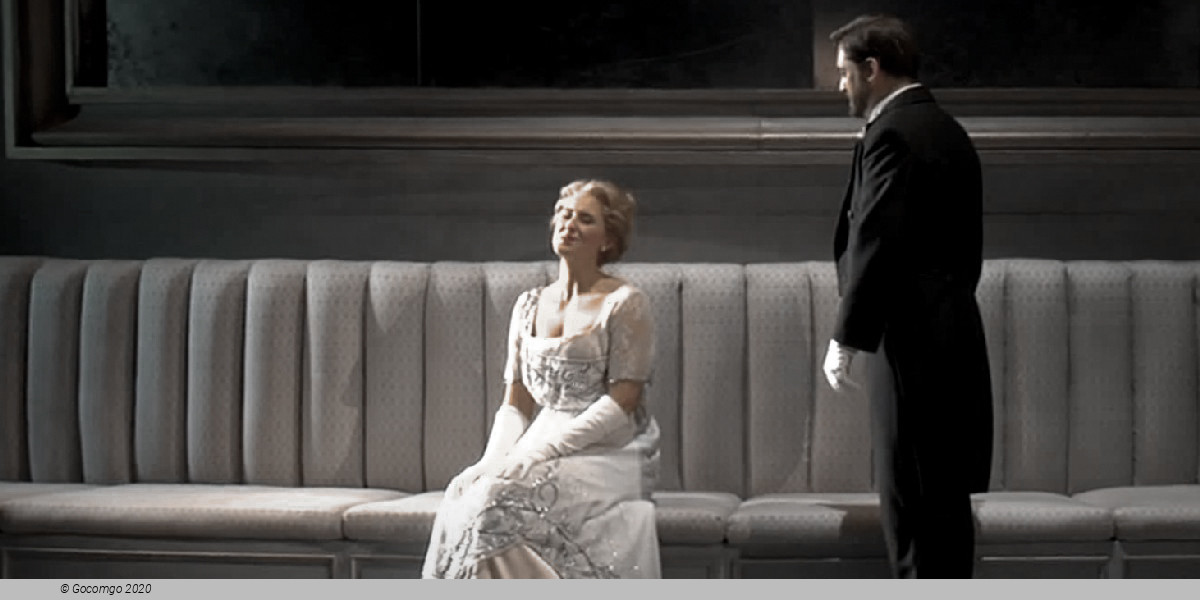
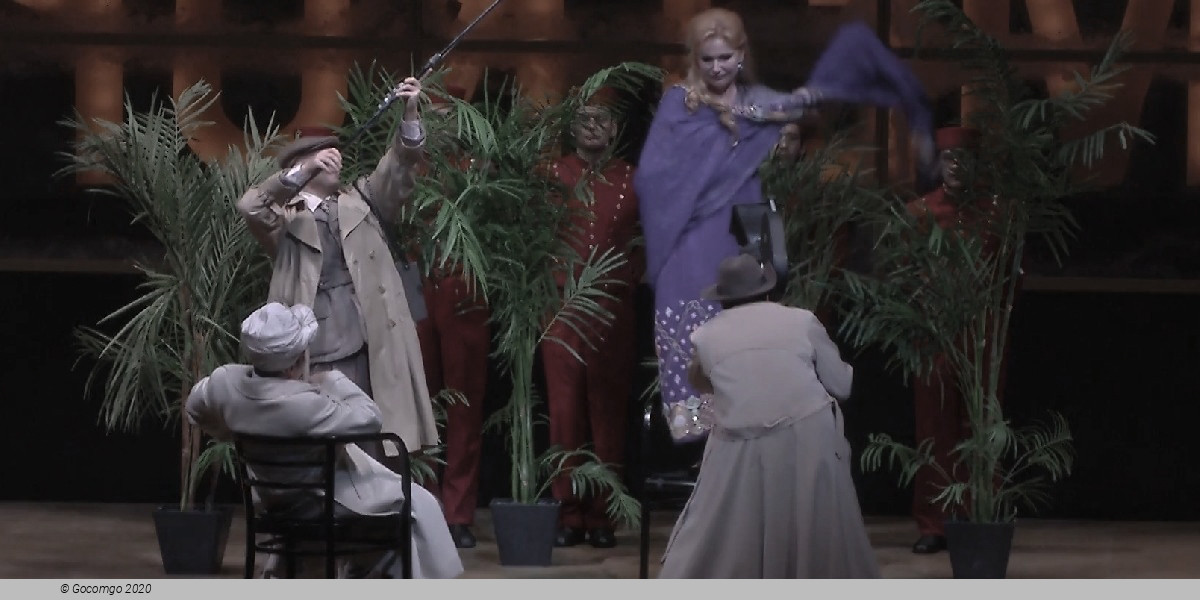
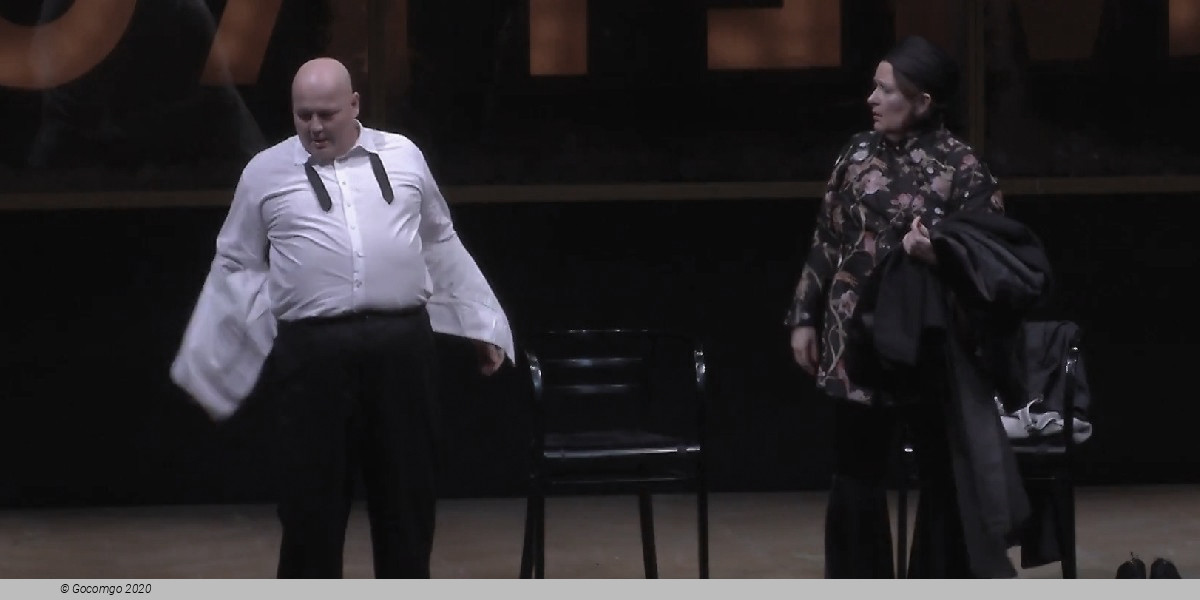
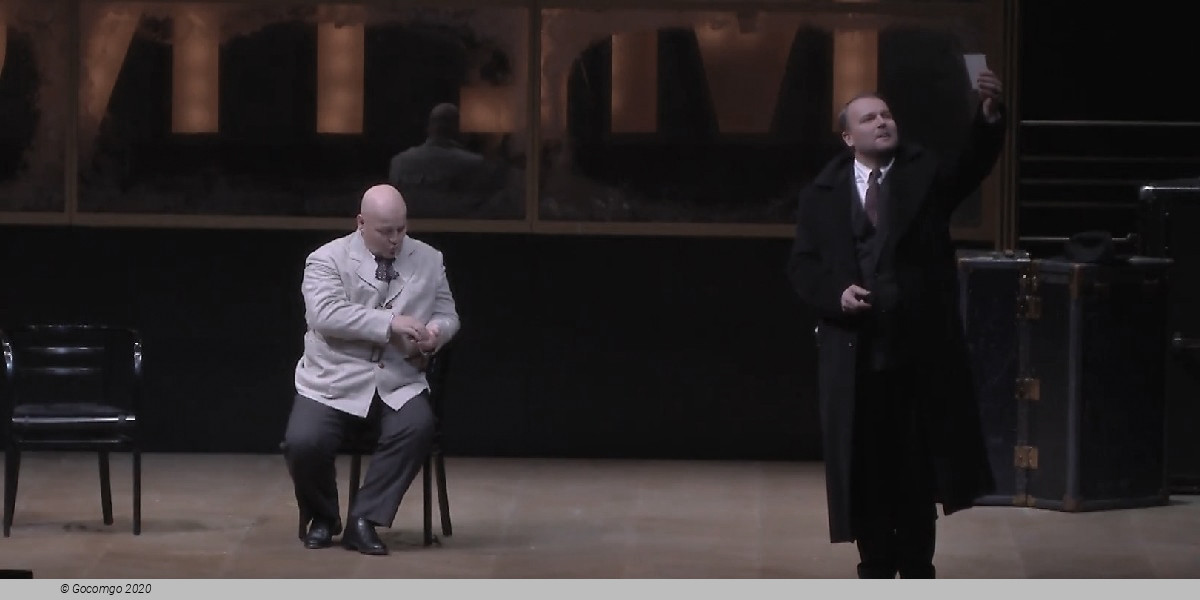
In spite of the unfortunate list of the unexpected, this is a worthy heiress of the Rosenkavalier, with shades of the frivolous world of Die Fledermaus. Large doses proliferate, especially in the magical third act, of the aging composer’s artistry. The production by Christof Loy - who signed Capriccio three seasons ago -, is, as well, the absolute premiere of the opera in Madrid.

In 1927, Strauss wrote to Hugo von Hofmannsthal - his librettist since the time of Elektra – asking him for a “second Rosenkavalier”. That is, a  romantic comedy in Viennese surroundings with the idea of renewing one of the greatest successes of his career, The work was born with  the worst omens: Hoffmansthal died of a heart attack  as an after effect of his son’s suicide, without  having finished the revision of the last two acts; conductor Fritz Busch, who was to premiere the opera, was fired from the Dresden Staatsoper once Hitler came to power; and finally, the coincidence of the  date of the work’s premiere with a Nazi convention in the city, in July 1933, meant that Arabella was presented to the public in a theatre filled with green shirts.

New production of the Teatro Real, from Oper Frankfurt

History
Premiere of this production: 01 July 1933, Sächsisches Staatstheater, Dresden

Arabella is a lyric comedy, or opera, in three acts by Richard Strauss to a German libretto by Hugo von Hofmannsthal, their sixth and last operatic collaboration.

Synopsis

Time: 1860s
Place: Vienna

Act 1

In a hotel in Vienna

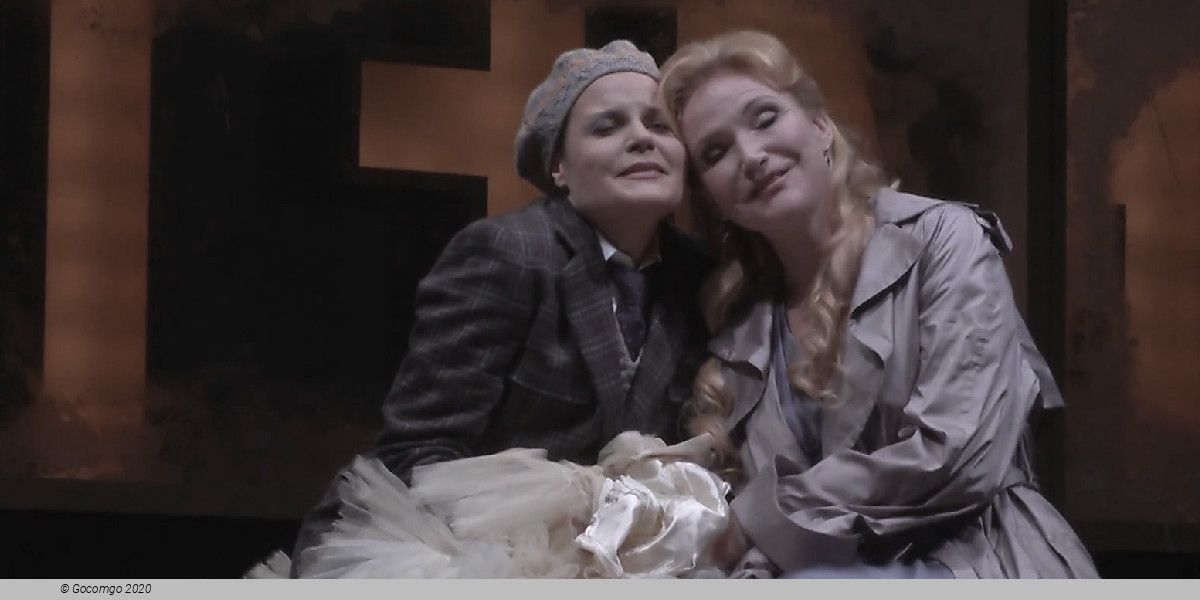
As the curtain opens, Countess Adelaide is having her fortune told. The fortune teller predicts Arabella will marry a man from far away, but that trouble may be in store. The Waldners have a second daughter, Zdenka, but since they cannot afford two daughters marrying, they have indulged her tomboyishness by pretending she is a boy, whom they present as "Zdenko." Zdenka secretly loves Matteo, a penniless officer who loves Arabella. To prevent him from committing suicide, Zdenka writes him love letters she signs with Arabella's name. Zdenka reproaches Arabella for her unsympathetic treatment of Matteo, but Arabella says that she is hoping for the "Right Man," to whom she can give her heart completely. Meanwhile, Arabella is wooed by three suitors, Elemer, Dominik and Lamoral, and acknowledges that she may have to accept one of them, but has fallen in love at first sight with a stranger she passed in the street.

Count Waldner, in dire straits, has written to all his friends for financial help, to no avail. He was hopeful for an answer from an old and immensely wealthy Croatian friend of his, Mandryka, even sending him a portrait of Arabella in hopes of a marriage. A visitor announced as Mandryka arrives and Waldner is surprised to see that it is not his friend. The man explains he is Mandryka's nephew, also named Mandryka. His uncle is dead, and as his only heir, he has acquired his fortune; he also received the letter and portrait. From seeing the portrait, he has fallen in love with Arabella. He offers to marry her and gives Waldner money.

A carnival ball is to be held that night. Matteo asks "Zdenko," his supposedly male friend, when he will receive another letter from Arabella; "Zdenko" answers that he will have one that very evening at the ball. Arabella continues to muse about the strange man she noticed, but when Count Elemer arrives to be her escort for the evening, she tries to banish these thoughts and look forward to the excitement of the Fasching.

Act 2

In a ballroom (The Coachman's Ball)

Arabella meets Mandryka, who turns out to be her fascinating stranger. Mandryka tells her about his life and his country's customs, in which young women offer their fiancés a glass of water as a token of agreeing to be married. Mandryka tells Arabella that she will be mistress of all the things he owns, and that she will be the only thing ranked above him besides the Emperor himself; Arabella happily agrees to marry him, saying, "I give myself to you, for eternity." Then Mandryka agrees to Arabella's request that she be allowed to stay for another hour to say farewell to her girlhood, during which she thanks her suitors for their interest in her and bids them goodbye.

Meanwhile, Zdenka gives Matteo a letter with the key to the room next to Arabella's, saying that it is Arabella's room and promising that Arabella will meet him there that night. Mandryka overhears this conversation and, mad with jealousy and disappointment (after first trying to evade these feelings), raises a commotion, flirting with the Fiakermilli, the ball's mascot. Since Arabella is nowhere to be found, the Waldners insist that he meet Arabella to talk things out, and they head for the hotel.

Act 3

A lobby in the hotel

A passionate orchestral prelude depicts the lovemaking of Matteo and Zdenka.

Arabella enters the lobby and comes across Matteo. As Matteo is in love with Arabella and thinks it is she with whom he has just made love in a darkened room, their conversation is at once confused and emotional. The Count, the Countess, and Mandryka arrive and further the misunderstanding. After Mandryka accuses Arabella of infidelity and plans to go back to his land, Zdenka rushes in, no longer in disguise and in her negligee (making it clear that it was she who had the encounter with Matteo). She declares her intention to drown herself in disgrace. The situation is finally cleared up. Matteo learns that the letters were forged by Zdenka and that it was she and not Arabella in the room. He suddenly realizes he is in love with Zdenka, whom he agrees to marry. Mandryka begs forgiveness, and Arabella tells him they will think no more of the night's events. Arabella asks his servant to bring her a glass of water, and Mandryka thinks she has requested it for her refreshment. Arabella goes upstairs and Mandryka, ruminating on his indecorous behavior and blaming himself, stays downstairs. Arabella comes down the stairs and, seeing that he has stayed and having forgiven him, offers him the glass of water, signifying reconciliation and marriage. They happily kiss and Arabella goes up the stairs to her room.

Venue Info

Teatro Real - Madrid
Location   Isabel II Square, s / n.

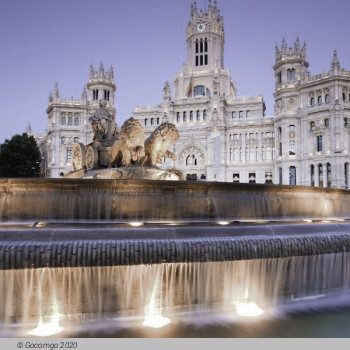
Teatro Real is a major opera house located in Madrid. Today the Teatro Real opera is one of the great theaters of Europe hosting large productions involving leading international figures in opera singing, musical direction, stage direction, and dance. Founded in 1818 and inaugurated on 19 November 1850, it closed in 1925 and reopened in 1966. Beginning in 1988 it underwent major refurbishing and renovation works and finally reopened in 1997 with a capacity of 1,746 seats. The theater offers visitors guided tours in several languages, including the auditorium, stage, workshops, and rehearsal rooms.

Founded by King Ferdinand VII in 1818, and after thirty-two years of planning and construction, a Royal Order on 7 May 1850 decreed the immediate completion of the "Teatro de Oriente" and the building works were finished within five months. The Opera House, located just in front of the Palacio Real, the official residence of the Queen who ordered the construction of the theatre, Isabel II, was finally inaugurated on 19 November 1850, with Donizetti's La Favorite.

The Teatro soon became one of the most prestigious opera houses in Europe. For over five decades it hosted the most renowned singers and composers of the time. In the early period, it saw famous opera singers such as Alboni, Frezzolini, Marietta Gazzaniga, Rosina Penco, Giulia Grisi, Giorgio Ronconi, Italo Gardoni, Mario de Candia and Antonio Selva among many others. In 1863, Giuseppe Verdi visited the theatre for the Spanish premiere of his La Forza del Destino. At its peak, in the last quarter of the 19th century, the Teatro hosted world renowned artists such as Adela Borghi, Marie Sasse, Adelina Patti, Christina Nilsson, Luisa Tetrazzini, Mattia Battistini, Julián Gayarre, Angelo Masini, Francesco Tamagno and Enrico Tamberlick. In 1925, the Ballets Russes of Diaghilev performed in the theatre with the presence of Nijinsky and Stravinsky.

From 1867 to 1925 the Teatro Real also housed the Madrid Royal Conservatory. In December of 1925 a Royal Order ordered its activities to be discontinued owing to the damage that the construction of the Metro de Madrid had caused to the building. The government set out to restore it and ordered numerous projects to be drawn out for its renovation, such as that from architect Urdanpilleta Flórez, who proposed a monumental remodeling of the building. However, financial difficulties prevented the completion of these projects and led to a simple restoration, sponsored by the Juan March Institute, and carried out first by the architect Manuel Gonzalez Valcárcel, and later by architects Miguel Verdú Belmonte and Francisco Rodriguez Partearroyo.

The theatre reopened in 1966 as a concert hall as well as the main concert venue for the Spanish National Orchestra and the RTVE Symphony Orchestra. The reopening was celebrated with a concert of the Spanish National Orchestra conducted by Rafael Frühbeck de Burgos, and the Orfeón Donostiarra. In 1969, the 14th Eurovision Song Contest was held at the theatre, featuring an onstage metal sculpture created by surrealist Spanish artist Salvador Dalí.

Important Info
Type: Opera
City: Madrid, Spain
Starts at: 18:00
Acts: 3
Top of page