
Teatro Massimo 14 April 2024 - Premiere Les pêcheurs de perles | GoComGo.com

Premiere
Les pêcheurs de perles

Teatro Massimo, Palermo, Italy
All photos (9)
Select date and time
8 PM

E-tickets: Print at home or at the box office of the event if so specified. You will find more information in your booking confirmation email.

You can only select the category, and not the exact seats.
If you order 2 or 3 tickets: your seats will be next to each other.
If you order 4 or more tickets: your seats will be next to each other, or, if this is not possible, we will provide a combination of groups of seats (at least in pairs, for example 2+2 or 2+3).

Important Info
Type: Opera
City: Palermo, Italy
Starts at: 20:00
Acts: 3
Duration: 2h 50min

E-tickets: Print at home or at the box office of the event if so specified. You will find more information in your booking confirmation email.

You can only select the category, and not the exact seats.
If you order 2 or 3 tickets: your seats will be next to each other.
If you order 4 or more tickets: your seats will be next to each other, or, if this is not possible, we will provide a combination of groups of seats (at least in pairs, for example 2+2 or 2+3).

Overview

A production of the Opéra national du Capitole de Toulouse

History
Premiere of this production: 30 September 1863, Théâtre Lyrique, Paris

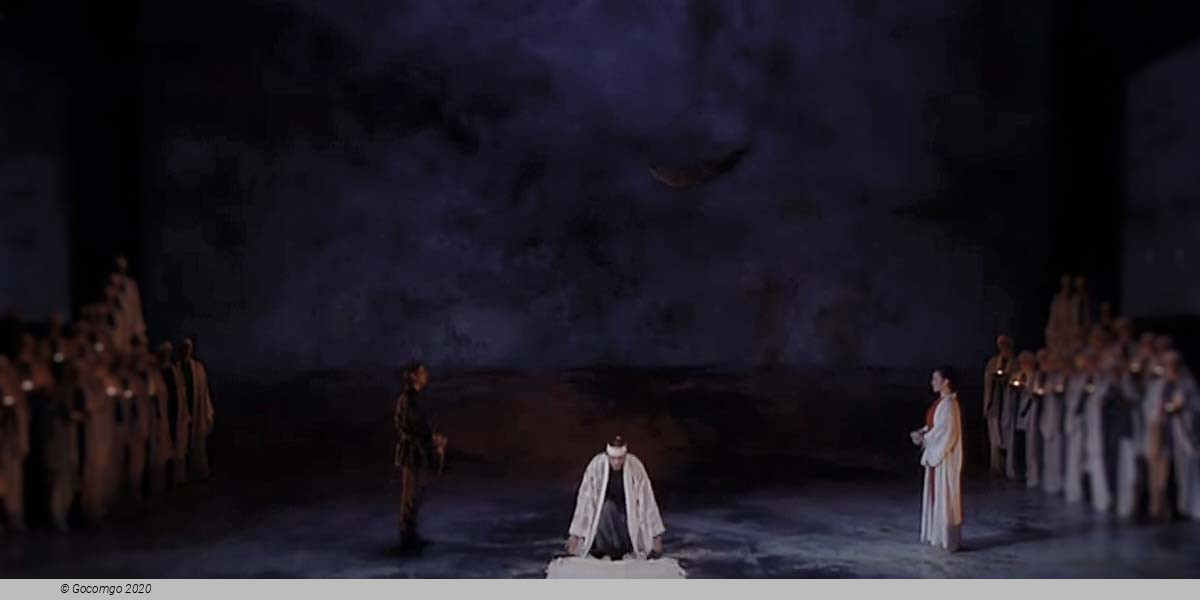
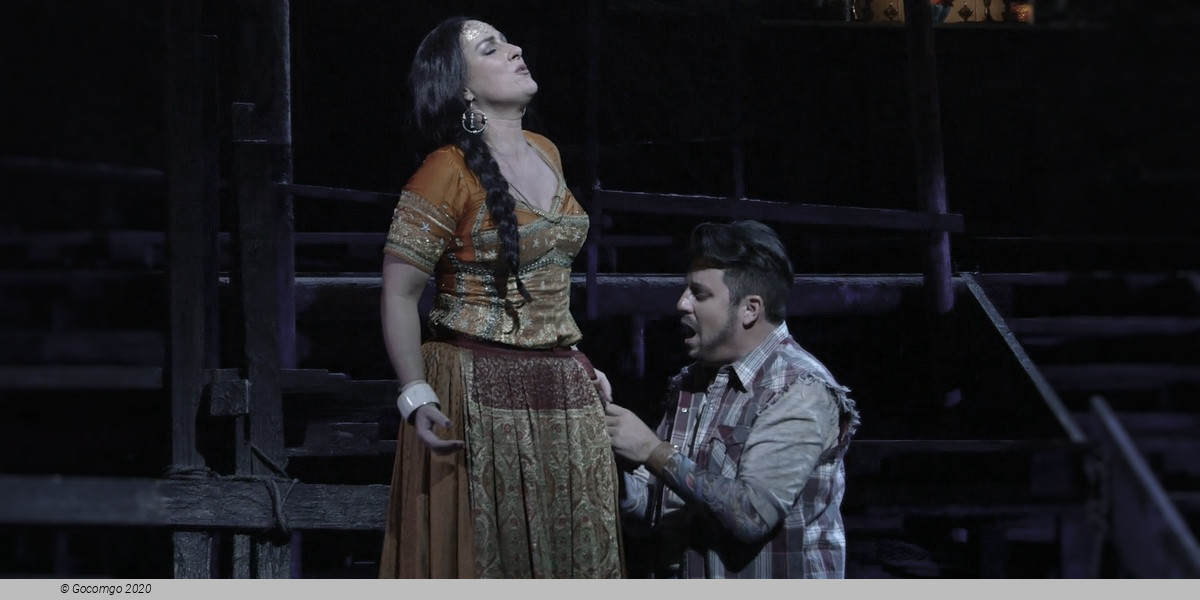
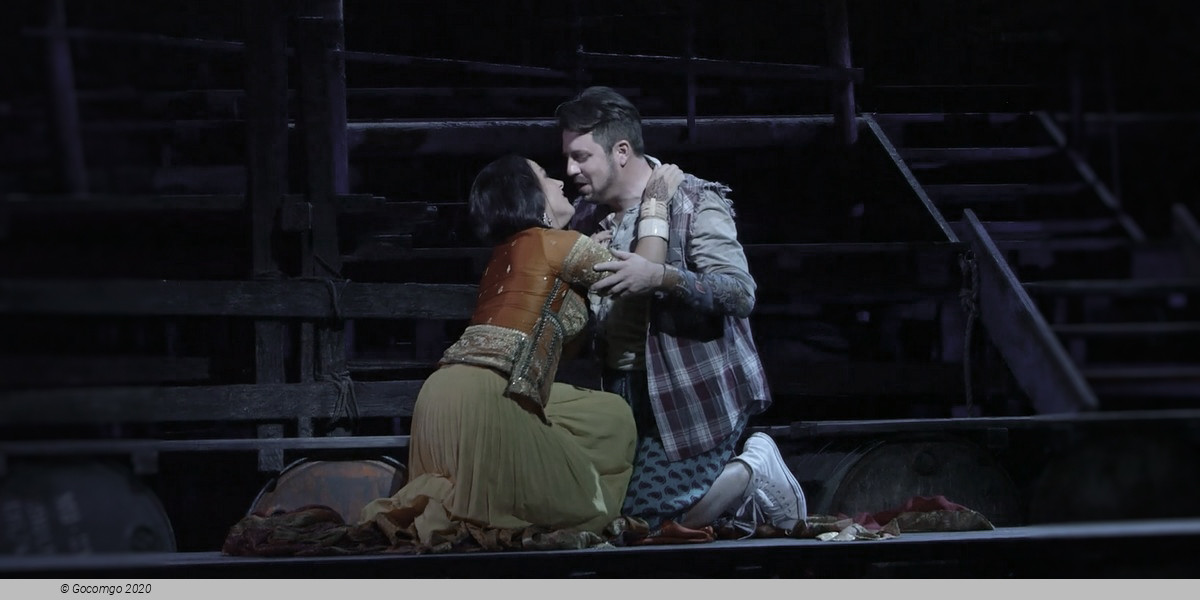
Les pêcheurs de perles (The Pearl Fishers) is an opera in three acts by the French composer Georges Bizet, to a libretto by Eugène Cormon and Michel Carré. It was premiered on 30 September 1863 at the Théâtre Lyrique in Paris, and was given 18 performances in its initial run. Set in ancient times on the island of Ceylon (Sri Lanka), the opera tells the story of how two men's vow of eternal friendship is threatened by their love for the same woman, whose own dilemma is the conflict between secular love and her sacred oath as a priestess. The friendship duet "Au fond du temple saint", generally known as "The Pearl Fishers Duet", is one of the best-known in Western opera.

Synopsis

Place: Ceylon
Time: Ancient times

Act 1
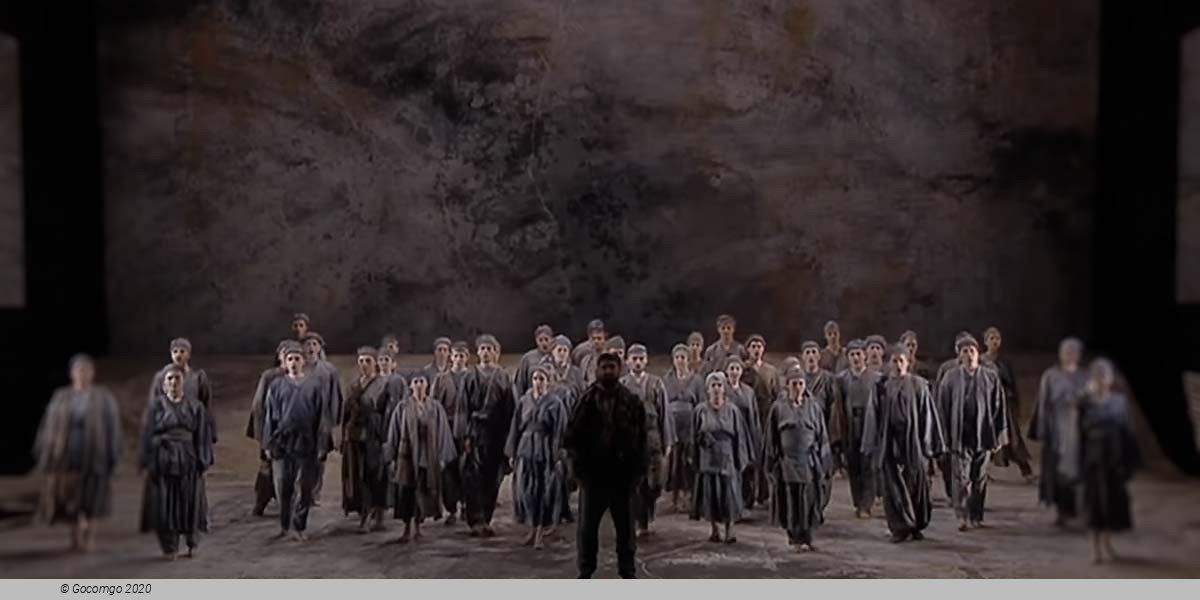
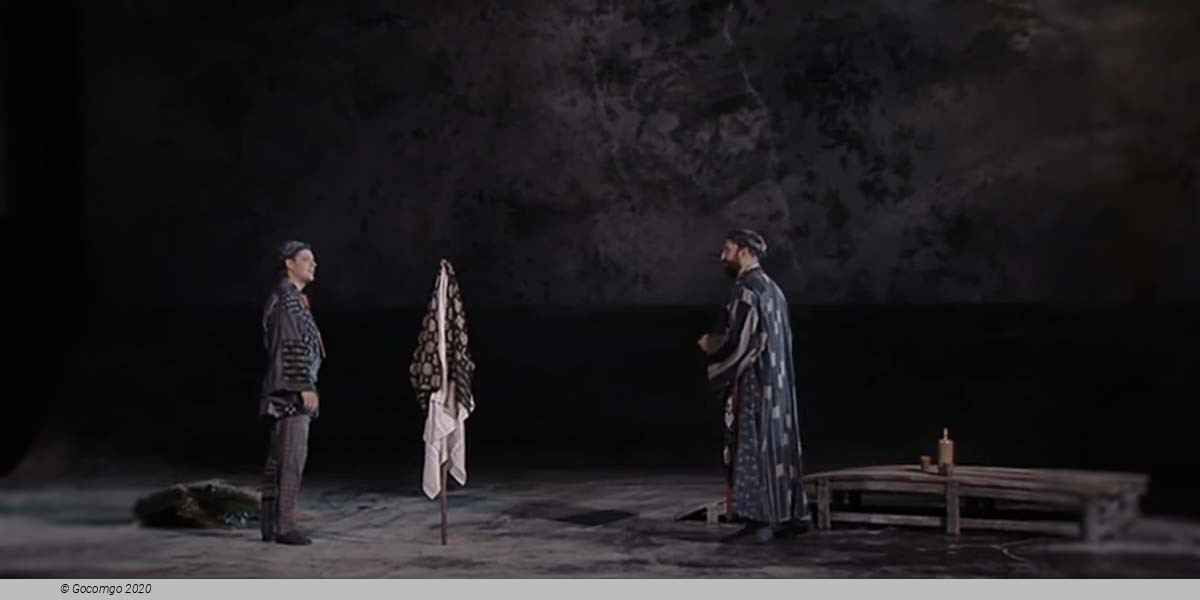
The scene is a desolate seashore, with the ruins of a Hindu temple in the background. A chorus of pearl fishermen sing of the dangerous tasks that lie ahead ("Sur la grève en feu"), and perform ritual dances to drive away evil spirits. They then elect one of their number, Zurga, as their leader, or "king". Nadir enters, and is hailed by Zurga as a long-lost friend. Left alone, the pair reminisce about their past in the city of Kandy, where their friendship was nearly destroyed by their mutual love of a young priestess whose beauty they had glimpsed briefly. They had each renounced their love for this stranger and had sworn to remain true to each other. Now, reunited, they affirm once again that they will be faithful until death ("Au fond du temple saint").

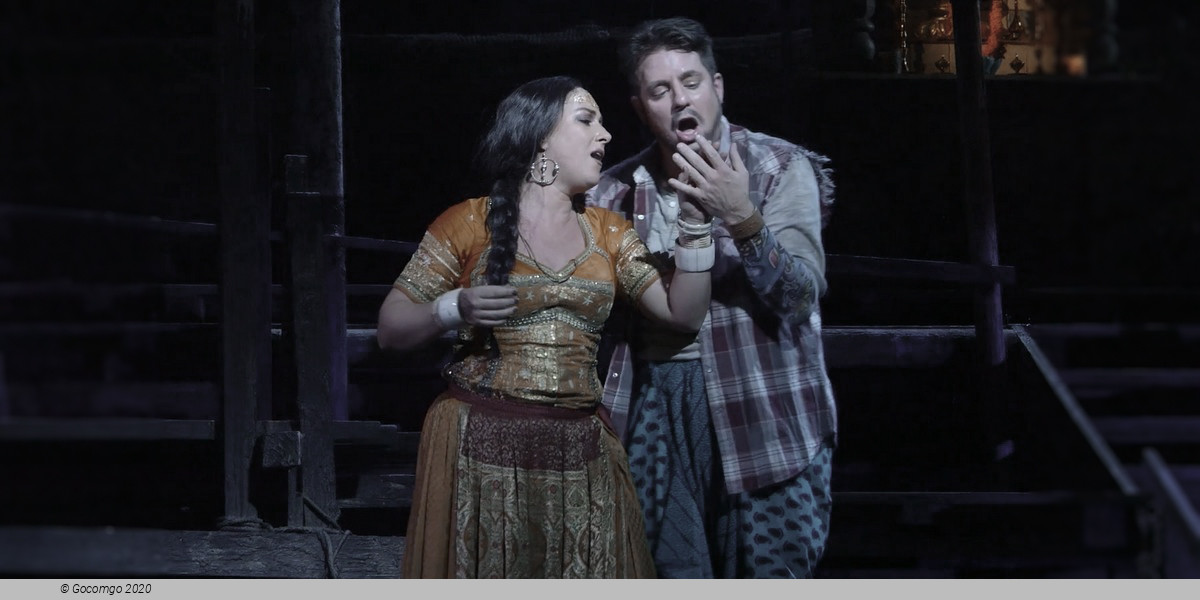
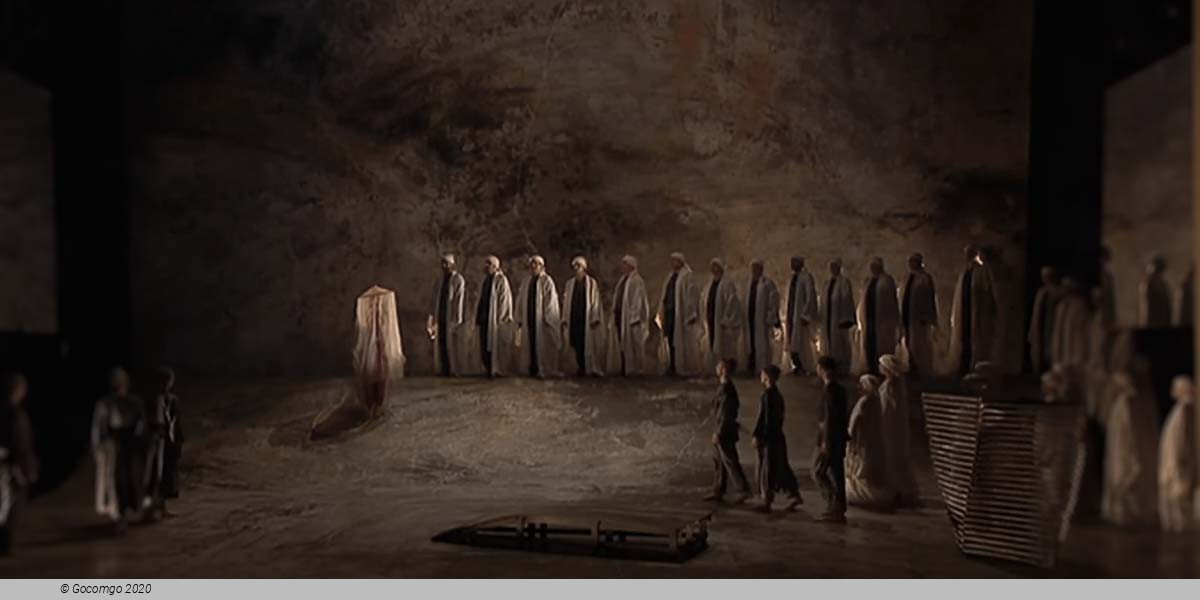
A boat draws up on the beach bearing the veiled figure of Leila, the virgin priestess whose prayers are required to ensure the safety of the fishermen. Although neither Nadir nor Zurga recognises her, she is the woman from Kandy with whom both had been in love. As Zurga is explaining her duties, she recognises Nadir, but she says nothing and shortly afterwards is led up to the temple by the high priest Nourabad. Zurga and the fishermen go down to the sea, leaving Nadir alone. In a troubled soliloquy before he sleeps he recalls how, in Kandy, he had broken his vows to Zurga and pursued his love for the veiled woman ("Je crois entendre encore"). It was the rumour that she might be found in this place that brought him here. Alone in the temple, Leila prays and sings. Nadir wakes and, recognising the voice of his long-desired lover, traces it to the temple. Leila briefly draws her veil aside, he sees it is she and the pair declare their renewed passion. On the beach, the fishermen plead with her to continue protecting them, but she tells Nadir she will sing for him alone ("O Dieu Brahma").

Act 2
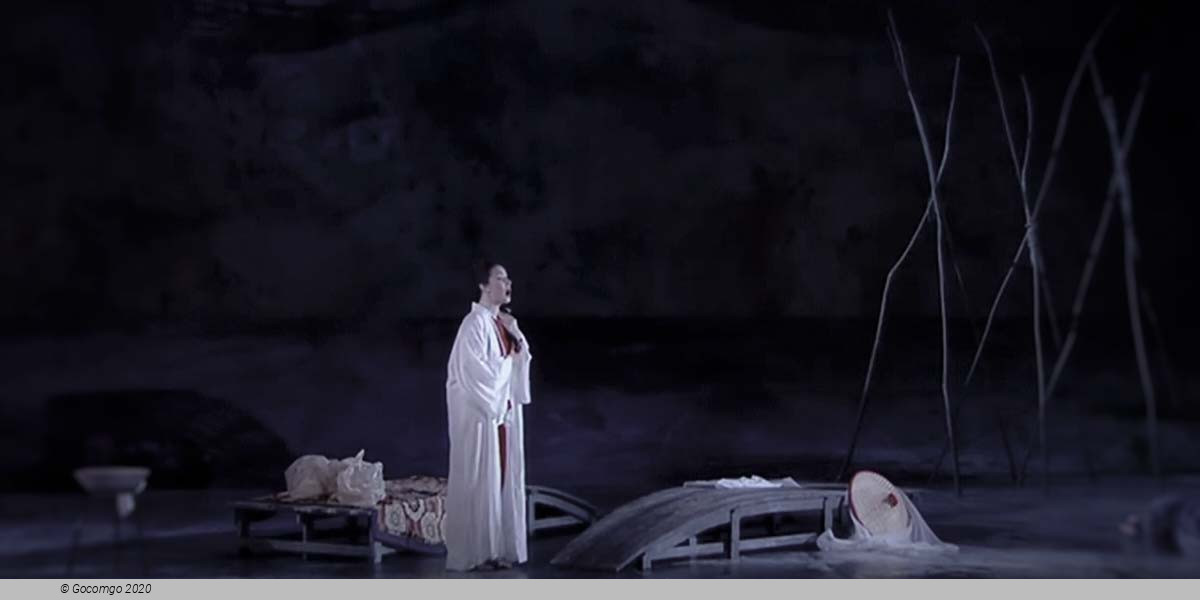
In the temple with Nourabad, Leila expresses fear at being left alone, but Nourabad exhorts her to be brave and to fulfil her vows to Brahma on pain of her own death. She tells him of the courage she once displayed when, as a child, she had hidden a fugitive from his enemies and refused to give him up even when threatened with death ("J'étais encore enfant"). The fugitive had rewarded her with a necklace that he asked her always to wear. She had kept this promise, as she would her vows. On the priest's departure, Leila quietly muses on the former times when she and Nadir would meet together secretly ("Comme autrefois dans la nuit sombre"). Nadir then enters; in her fear of Nourabad's threats Leila begs him to leave, but he remains and the two declare their love in a passionate duet ("Léïla! Léïla!...Dieu puissant, le voilà!"). He goes, promising to return next night, but as he leaves he is captured by the fishermen and brought back to the temple. Zurga, as the fishermen's leader, at first resists the fishermen's calls for Nadir's execution and advocates mercy. However, after Nourabad removes Leila's veil, Zurga recognises her as his former love; consumed by jealousy and rage, he orders that both Nadir and Leila be put to death. A violent storm erupts, as the fishermen unite in singing a hymn to Brahma ("Brahma divin Brahma!").

Act 3
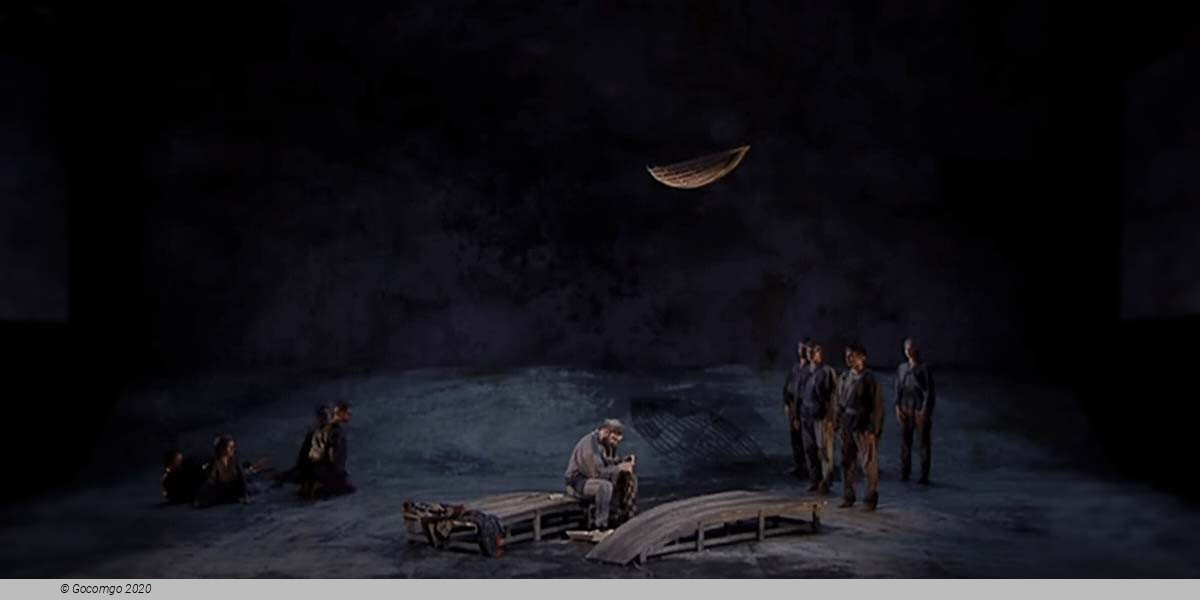
In his tent on the beach, Zurga notes that the storm has abated, as has his rage; he now feels remorse for his anger towards Nadir ("L'orage s'est calmé"). Leila is brought in; Zurga is captivated by her beauty as he listens to her pleas for Nadir's life, but his jealousy is rekindled. He confesses his love for her, but refuses mercy ("Je suis jaloux"). Nourabad and some of the fishermen enter to report that the funeral pyre is ready. As Leila is taken away, Zurga observes her giving one of the fishermen her necklace, asking for its return to her mother. With a shout, Zurga rushes out after the group and seizes the necklace.

Outside the temple, Nadir waits beside the funeral pyre as the crowd, singing and dancing, anticipates the dawn and the coming double execution ("Dès que le soleil"). He is joined by Leila; resigned now to their deaths, the pair sing of how their souls will soon be united in heaven. A glow appears in the sky, and Zurga rushes in to report that the fishermen's camp is ablaze. As the men hurry away to save their homes, Zurga frees Leila and Nadir. He returns the necklace to Leila, and reveals that he is the man she saved when she was a child. He recognises now that his love for her is in vain, and tells her and Nadir to flee. As the couple depart, singing of the life of love that awaits them, Zurga is left alone, to await the fishermen's return ("Plus de crainte...Rêves d'amour, adieu!").

(In the revised version of the ending introduced after the opera's 1886 revival, Nourabad witnesses Zurga's freeing of the prisoners and denounces him to the fishermen, one of whom stabs Zurga to death as the last notes sound of Leila and Nadir's farewell song. In some variations Zurga meets his death in other ways, and his body is consigned to the pyre.)

Venue Info

Teatro Massimo - Palermo
Location   Piazza Verdi

The Teatro Massimo Vittorio Emanuele is an opera house and opera company located on the Piazza Verdi in Palermo, Sicily. It was dedicated to King Victor Emanuel II. It is the biggest in Italy, and one of the largest of Europe (the third after the Opéra National de Paris and the K. K. Hof-Opernhaus in Vienna), renowned for its perfect acoustics.

The Teatro Massimo Vittorio Emanuele in Palermo opened its doors to the public on the evening of 16 May 1897, twenty-two years after the solemn public ceremony of the laying of the first stone. 
This took place on 12 January 1875, and ended a chequered series of vicissitudes with interminable squabbles lasting over ten years.
The international competition for the project and realisation of the opera house had been announced by Palermo Council in 1864, and its prime mover was the mayor, Antonio Starrabba di Rudini. 
For a long time there had been talk of building a big new theatre in Palermo, worthy of the second biggest city in southern Italy after Naples. 
Palermo, in the second half of the nineteenth century, was engaged in getting itself a new identity in the light of the new national unity. 
Cultural life was influenced by the new Italian State and the positive consequences of the activity of enlightened entrepreneurs like the Florios, who also made generous donations to the building of the opera house and for some years were also its no less enlightened managers. 
Intense commercial relations led to the convergence and development in Palermo of interests with a European dimension and brought the city to be continually in touch with different cultural models than its own. This was the start of the Belle Epoque, a time of cultural and economic rebirth for Palermo which would in turn become almost mythical for the future generations and was only to be interrupted by the outbreak of World War I.

The opening night happened on May 16 1897: Giuseppe Verdi's Falstaff was the inaugural opera. The conductor was Leopoldo Mugnone. A ticket in the boxes would then cost 80 liras, one in the gallery just 3. At the time of its first opening, thanks to its surface of 7,730 square metres, the Teatro Massimo was the third in Europe, after the opera houses in Paris and Wien.

From the opening in 1897 to 1935 the opera seasons were put together by private firms, often a different one each year, that would organize the performances.

In 1935 the theatre was officially designated with a Decree from the Italian Ministry of Culture "Ente Teatrale Autonomo", and thus recognized as a public theatre.

In 1974 the theatre was closed for reconstruction works that were supposed to be finished in a relatively short time. It remained closed for 23 years and was reopened with the concert on May 12 1997, conducted by Franco Mannino in the first part and by Claudio Abbado in the second, with the Berliner Philharmoniker.

Important Info
Type: Opera
City: Palermo, Italy
Starts at: 20:00
Acts: 3
Duration: 2h 50min
Top of page