
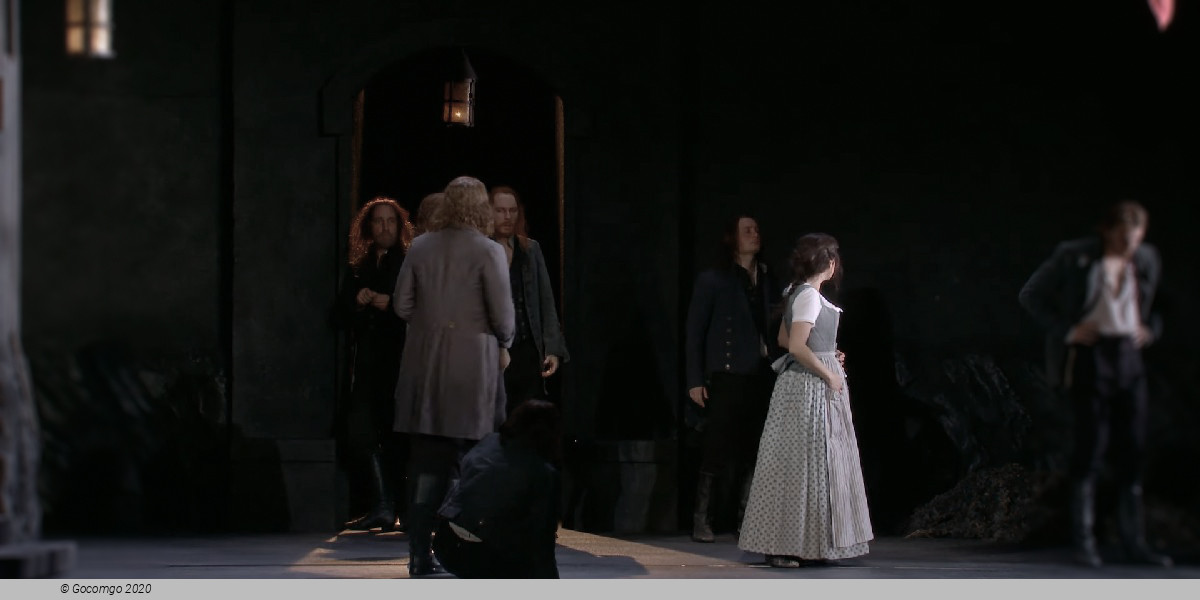
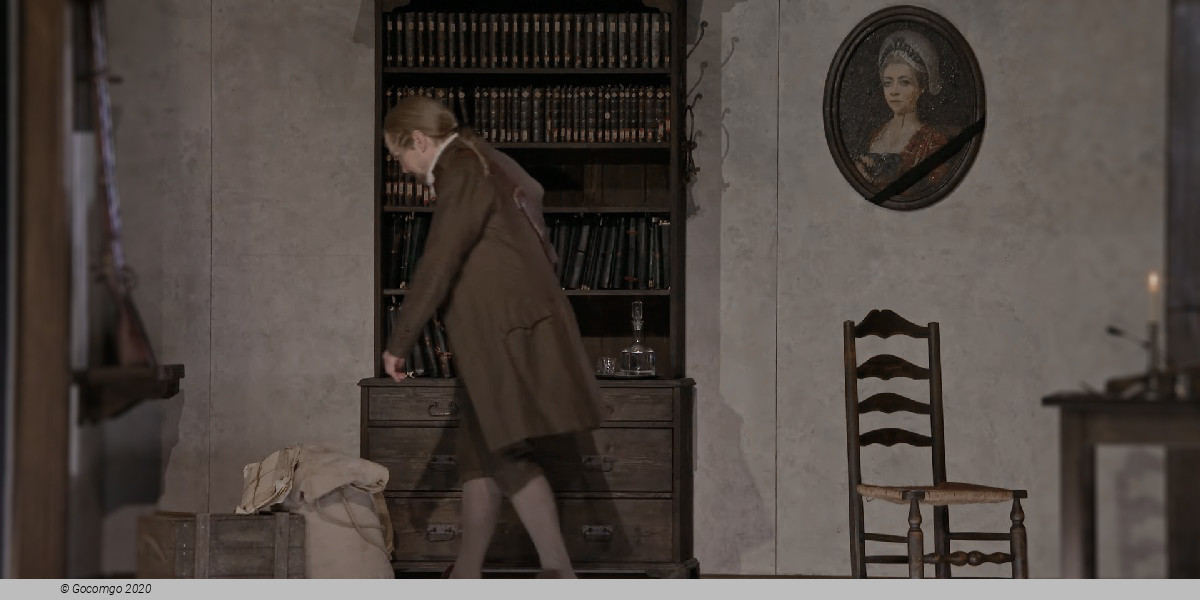
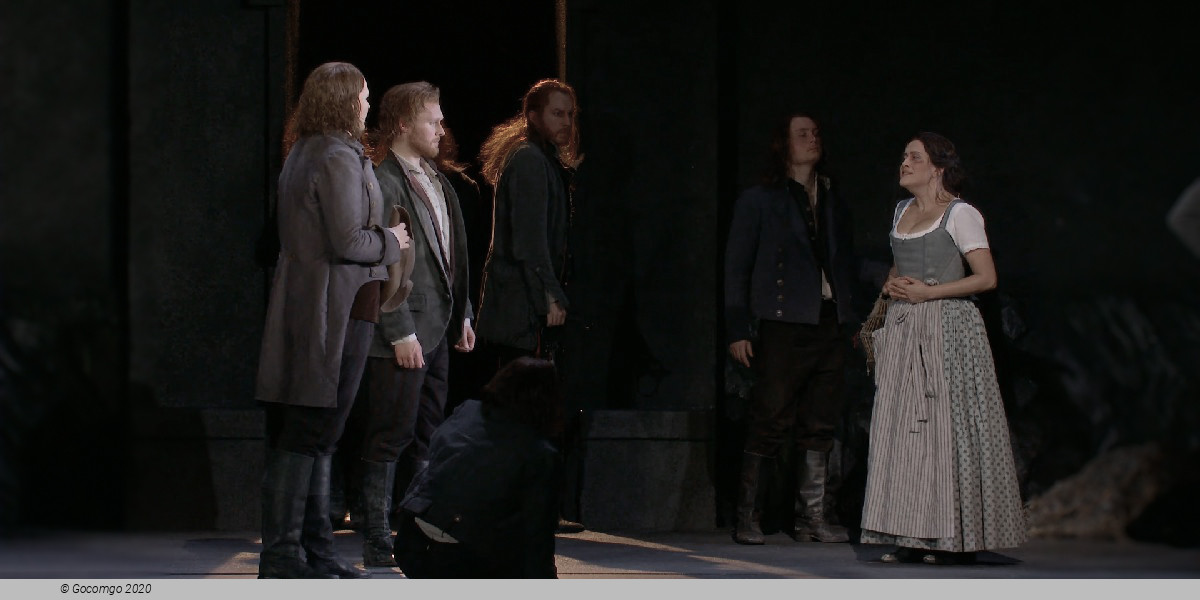
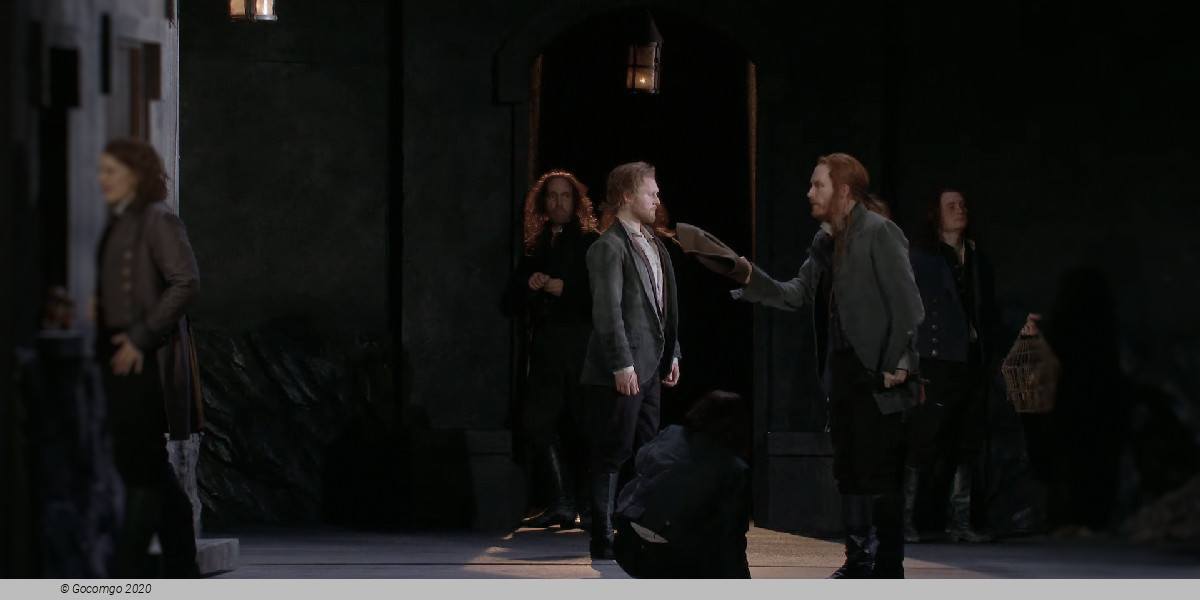
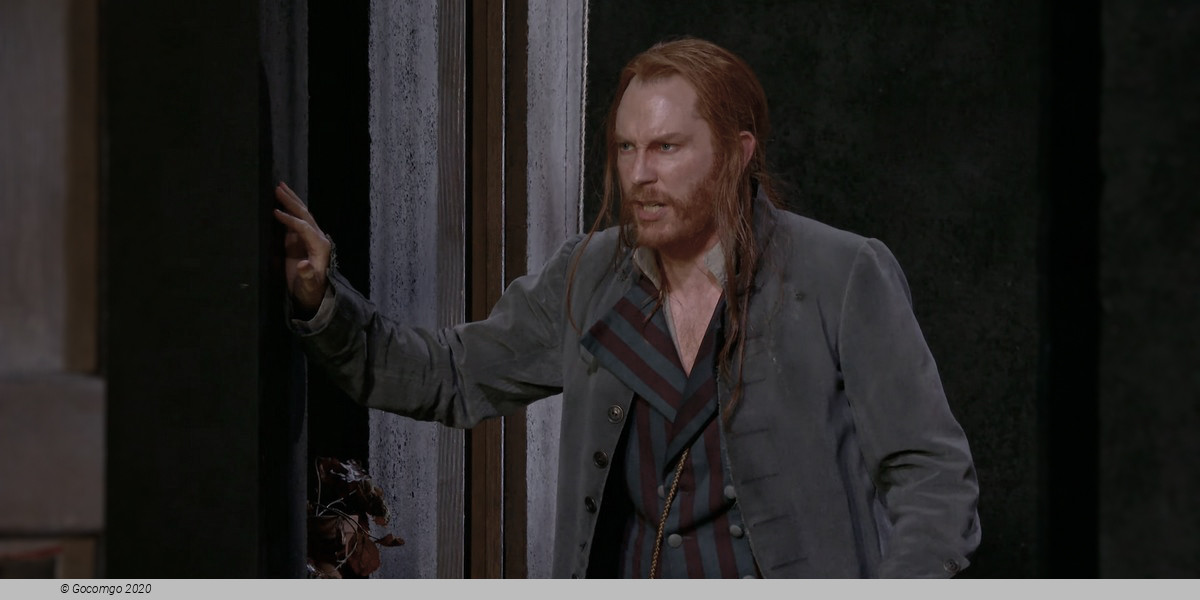
Teatro La Fenice 20 November 2021 - Fidelio | GoComGo.com

Fidelio

Teatro La Fenice, La Fenice Opera House, Venice, Italy
All photos (15)
Select date and time
7 PM

E-tickets: Print at home or at the box office of the event if so specified. You will find more information in your booking confirmation email.

You can only select the category, and not the exact seats.
If you order 2 or 3 tickets: your seats will be next to each other.
If you order 4 or more tickets: your seats will be next to each other, or, if this is not possible, we will provide a combination of groups of seats (at least in pairs, for example 2+2 or 2+3).

Important Info
Type: Opera
City: Venice, Italy
Starts at: 19:00

E-tickets: Print at home or at the box office of the event if so specified. You will find more information in your booking confirmation email.

You can only select the category, and not the exact seats.
If you order 2 or 3 tickets: your seats will be next to each other.
If you order 4 or more tickets: your seats will be next to each other, or, if this is not possible, we will provide a combination of groups of seats (at least in pairs, for example 2+2 or 2+3).

Overview

The only opera composed by Beethoven, Fidelio is based on a libretto by Joseph Sonnleithner and Georg Friedrich Treitschke taken from Jean-Nicolas Bouilly's Léonore, a 1798 text of the then very popular 'à sauvetage' genre, already set to music by several composers. The genesis was complex and tormented, so much so that three versions are known: the first was composed in 1804-5 in three acts and was staged in 1805 in Vienna occupied by French troops. The third and final version, in two acts, dates back to 1814, and debuted at the Kärntnertortheater.

History
Premiere of this production: 20 November 1805, Theater an der Wien, Vienna

Fidelio (originally titled Leonore, oder Der Triumph der ehelichen Liebe; English: Leonore, or The Triumph of Marital Love) is Ludwig van Beethoven's only opera. The German libretto was originally prepared by Joseph Sonnleithner from the French of Jean-Nicolas Bouilly, with the work premiering at Vienna's Theater an der Wien on 20 November 1805.

Synopsis

Two years prior to the opening scene, the Spanish nobleman Florestan has exposed or attempted to expose certain crimes of a rival nobleman, Pizarro. In revenge, Pizarro has secretly imprisoned Florestan in the prison over which he is governor. Simultaneously, Pizarro has spread false rumors about Florestan's death.

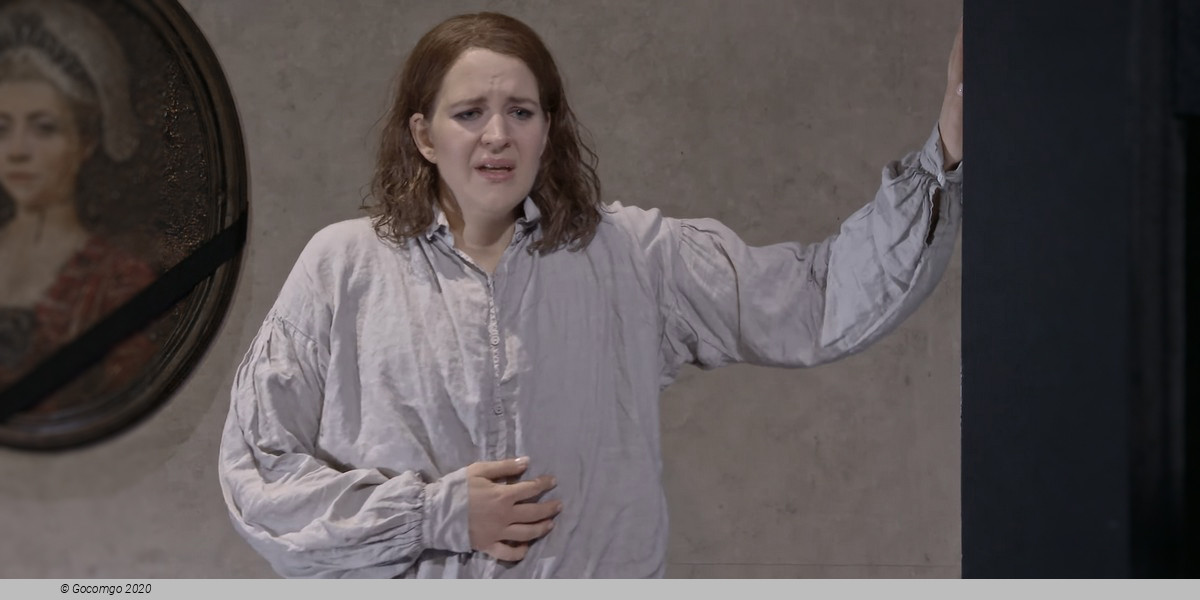
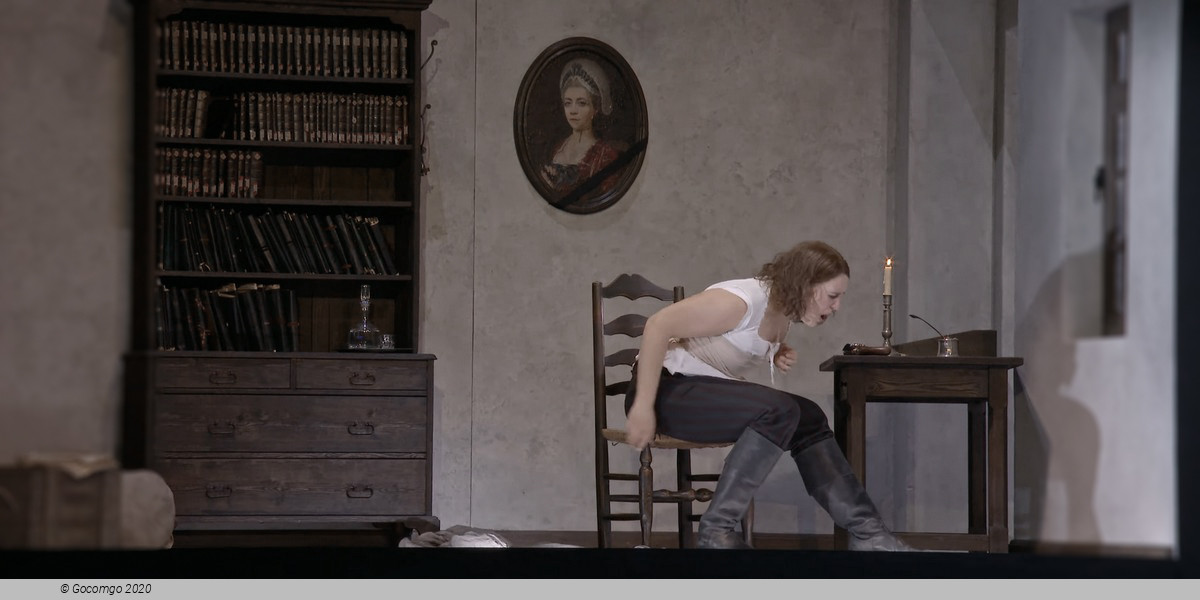
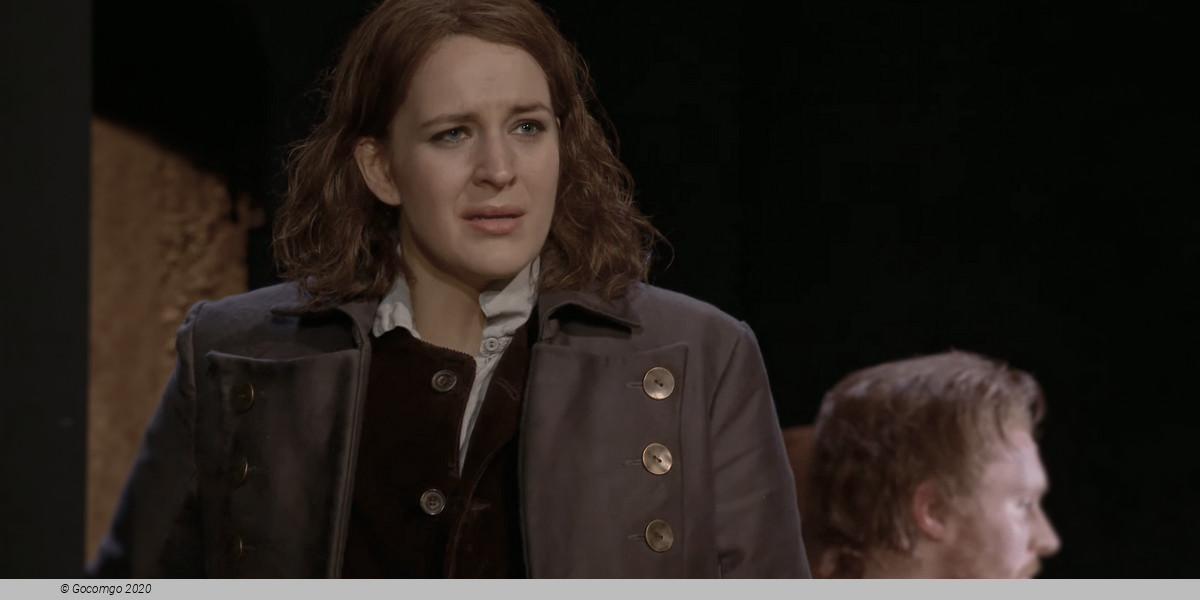
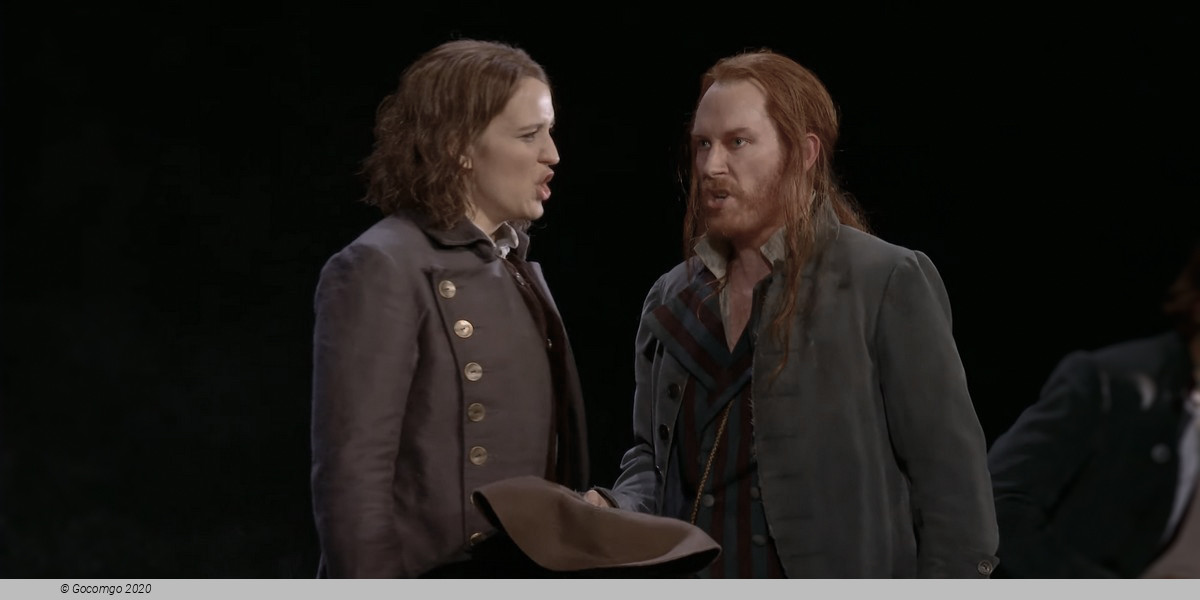
The warden of the prison, Rocco, has a daughter, Marzelline, and an assistant, Jaquino, who is in love with Marzelline. The faithful wife of Florestan, Leonore, suspects that her husband is still alive. Disguised as a boy, under the alias "Fidelio", she gains employment working for Rocco. As the boy Fidelio, she earns the favor of her employer, Rocco, and also the affections of his daughter Marzelline, much to Jaquino's chagrin.

On orders, Rocco has been giving the imprisoned Florestan diminishing rations until he is nearly starved to death.

Place: A Spanish state prison, a few miles from Seville
Time: Late 18th century
Act 1

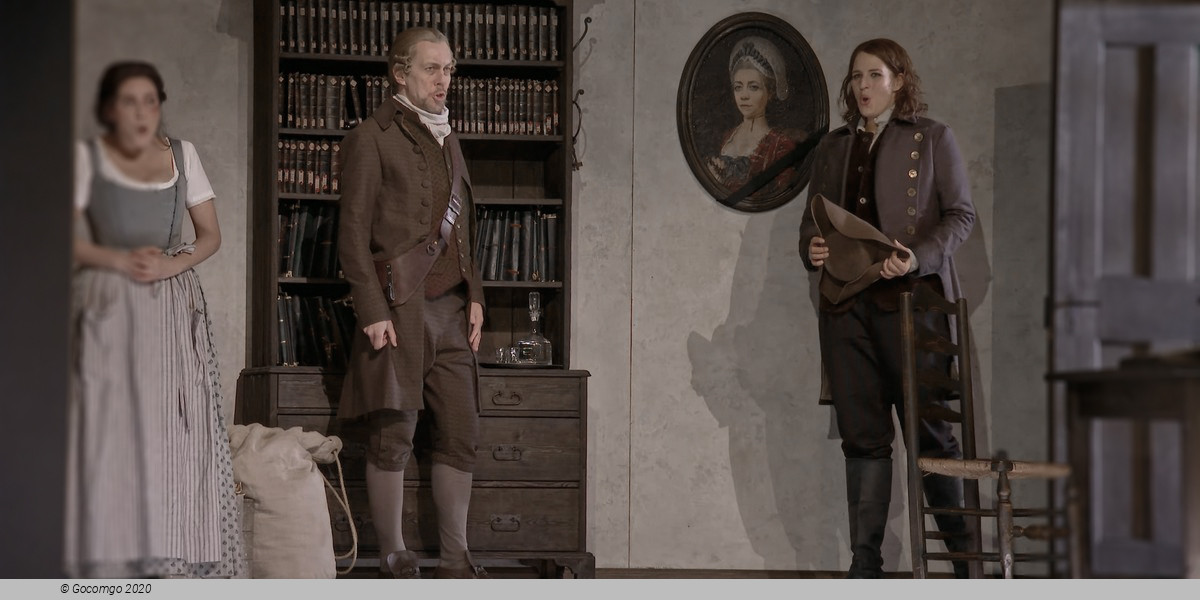
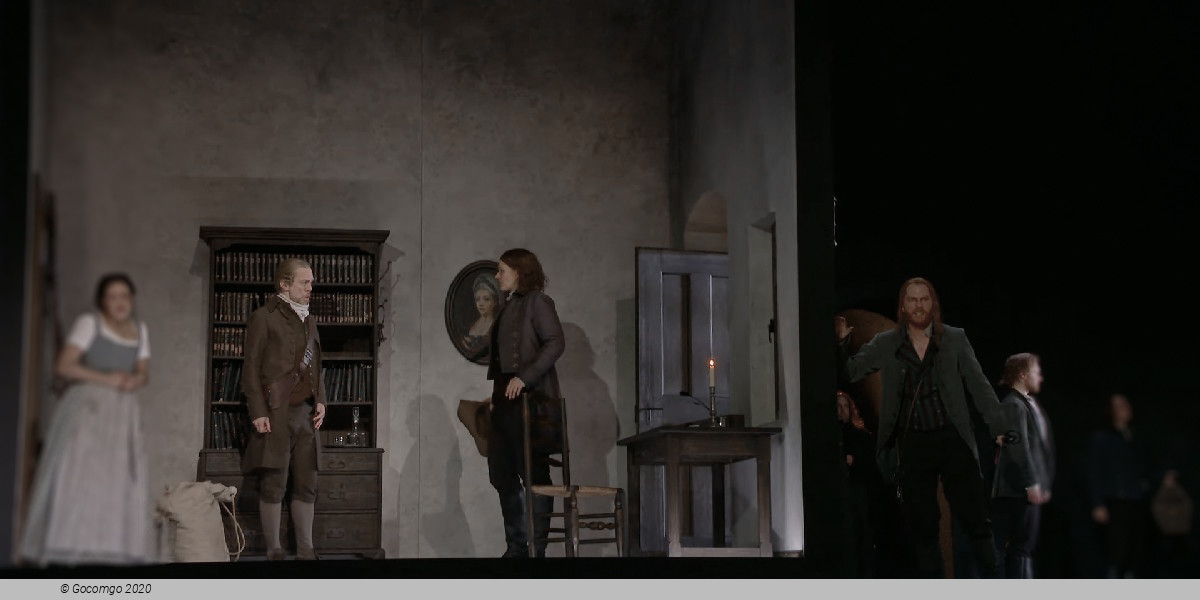
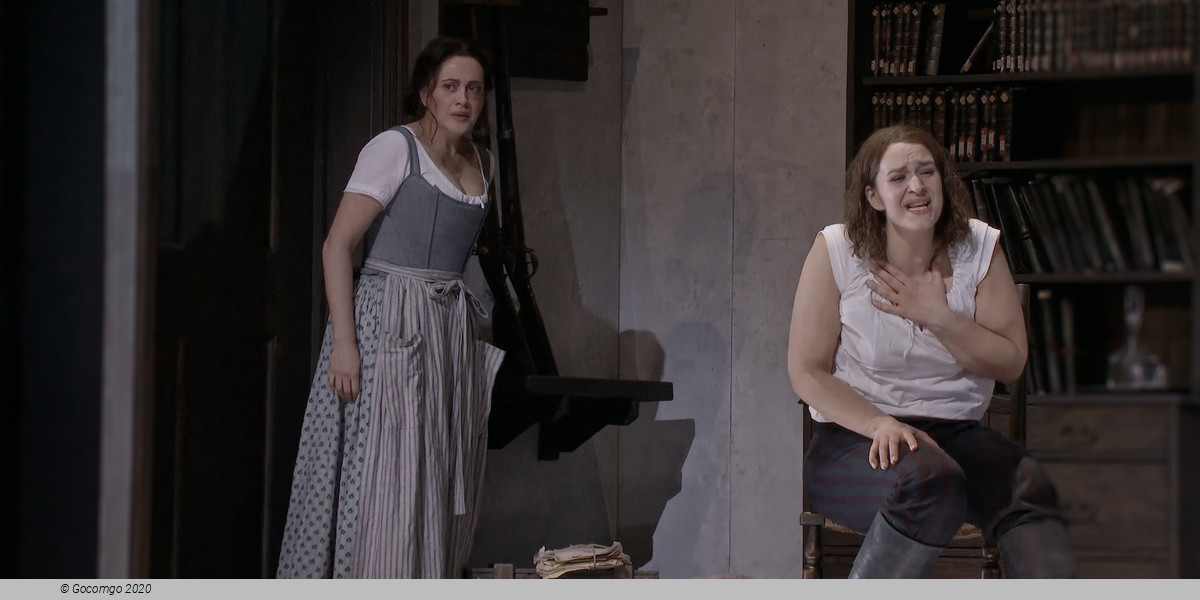
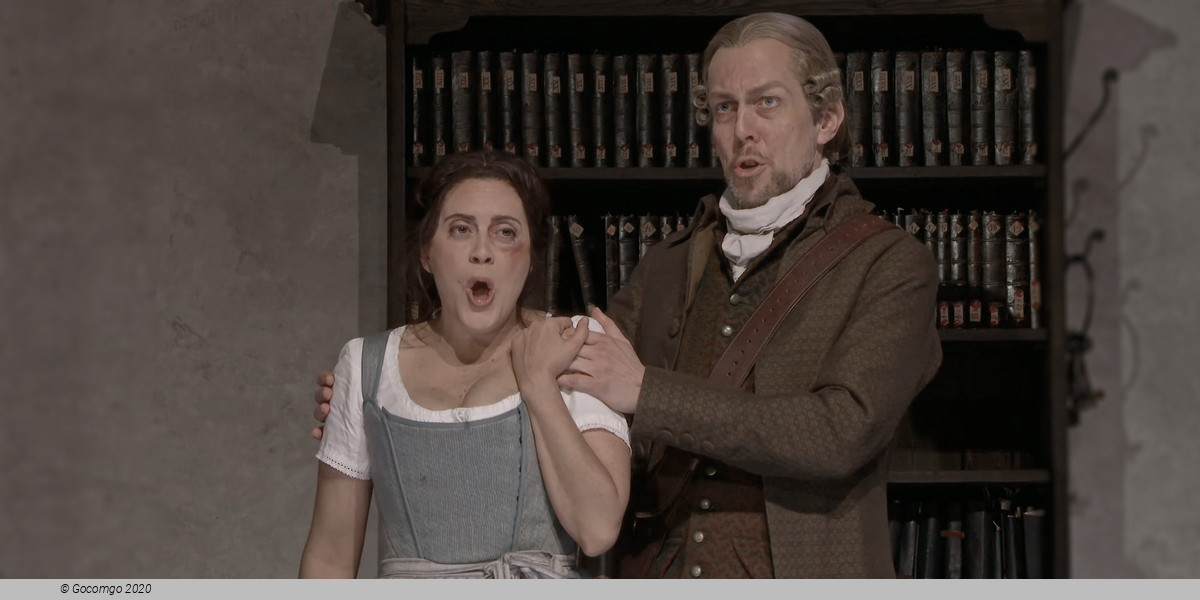
Jaquino and Marzelline are alone in Rocco's house. Jaquino asks Marzelline when she will agree to marry him, but she says that she will never marry him now that she has fallen in love with Fidelio, unaware that Fidelio is actually Leonore in disguise (Jetzt, Schätzchen, jetzt sind wir allein—"Now, darling, now we are alone"). Jaquino leaves, and Marzelline expresses her desire to become Fidelio's wife (O wär ich schon mit dir vereint—"If only I were already united with thee"). Rocco enters, looking for Fidelio, who then enters carrying a heavy load of newly-repaired chains. Rocco compliments Fidelio, and misinterprets her modest reply as hidden attraction to his daughter. Marzelline, Fidelio, Rocco, and Jaquino sing a quartet about the love Marzelline has for Fidelio (Mir ist so wunderbar—"A wondrous feeling fills me", also known as the Canon Quartet).

Rocco tells Fidelio that as soon as the governor has left for Seville, Marzelline and Fidelio can be married. He tells them, however, that unless they have money, they will not be happy. (Hat man nicht auch Gold beineben—"If you don't have any money"). Fidelio demands to know why Rocco will not allow for help in the dungeons, especially as he always seems to return short of breath. Rocco says that there is a dungeon down there where he can never take Fidelio, which houses a man who has been wasting away for two years. Marzelline begs her father to keep Leonore away from such a terrible sight, but Leonore claims courage sufficient to cope with it. Rocco and Leonore sing of courage (Gut, Söhnchen, gut—"All right, sonny, all right"), and Marzelline joins in their acclamations.

All but Rocco leave. A march is played as Pizarro enters with his guards. Rocco warns Pizarro that the minister plans a surprise visit tomorrow to investigate accusations of Pizarro's cruelty. Pizarro exclaims that he cannot let the minister discover the imprisoned Florestan, who has been thought dead. Instead, Pizarro will have Florestan murdered (Ha, welch ein Augenblick—"Hah! What a moment!"). As a signal, Pizarro orders that a trumpet be sounded at the minister's arrival. He offers Rocco money to kill Florestan, but Rocco refuses (Jetzt, Alter, jetzt hat es Eile!—"Now, old man, we must hurry!"). Pizarro says he will kill Florestan himself instead, and orders Rocco to dig a grave for him in the floor of the dungeon. Once the grave is ready, Rocco is to sound the alarm, upon which Pizarro will come into the dungeon and kill Florestan. Fidelio, hearing Pizarro's plot, is agitated, but hopes to rescue Florestan (Abscheulicher! Wo eilst du hin? and Komm, Hoffnung, lass den letzten Stern—"Monster! Where are you off to so fast?" and "Come, hope, let the last star").

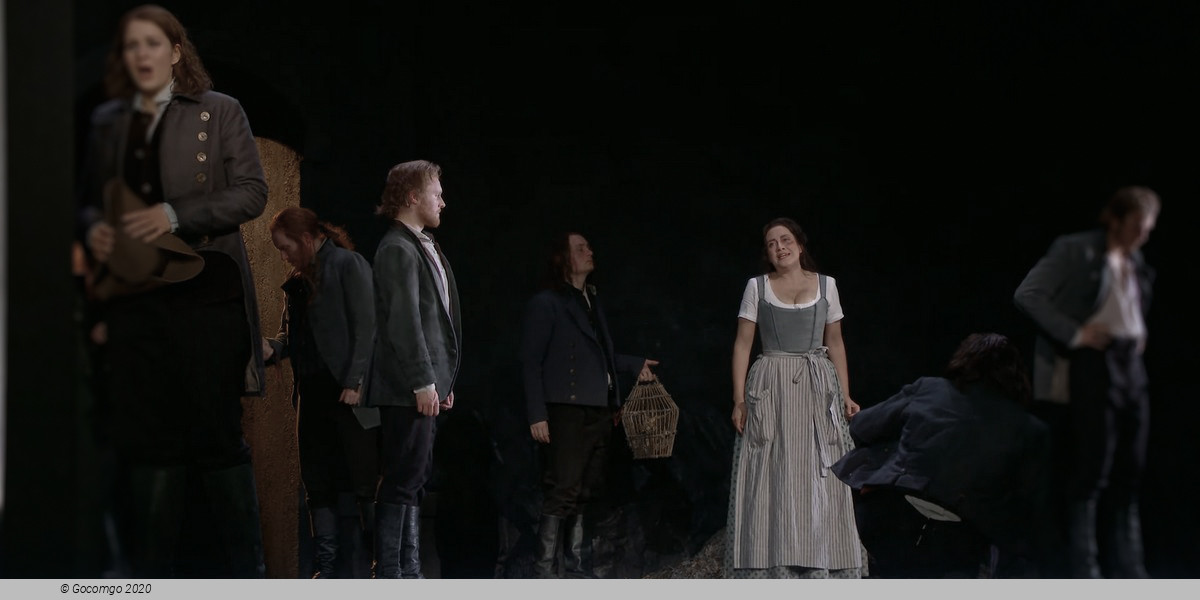
Jaquino once again begs Marzelline to marry him, but she continues to refuse. Fidelio, hoping to discover Florestan, asks Rocco to let the poor prisoners roam in the garden and enjoy the beautiful weather. Marzelline similarly begs him, and Rocco agrees to distract Pizarro while the prisoners are set free. The prisoners, ecstatic at their temporary freedom, sing joyfully (O welche Lust—"O what a joy"), but remembering that they might be caught by the prison's governor Pizarro, are soon quiet.

After meeting with Pizarro, Rocco reenters and tells Fidelio that Pizarro will allow the marriage, and Fidelio will also be permitted to join Rocco on his rounds in the dungeon (Nun sprecht, wie ging's?—"Speak, how did it go?"). Rocco and Fidelio prepare to go to Florestan's cell, with the knowledge that he must be killed and buried within the hour. Fidelio is shaken; Rocco tries to discourage Fidelio from coming, but Fidelio insists. As they prepare to leave, Jaquino and Marzelline rush in and tell Rocco to run, as Pizarro has learned that the prisoners were allowed to roam, and is furious (Ach, Vater, Vater, eilt!—"O, father, father, hurry!").

Before they can leave, Pizarro enters and demands an explanation. Rocco, thinking quickly, answers that the prisoners were given a little freedom in honor of the Spanish king's name day, and quietly suggests that Pizarro should save his anger for the prisoner in the dungeon below. Pizarro tells him to hurry and dig the grave, and then announces that the prisoners will be locked up again. Rocco, Leonore, Jacquino, and Marzelline reluctantly usher the prisoners back to their cells. (Leb wohl, du warmes Sonnenlicht—"Farewell, you warm sunshine").

Act 2

Florestan is alone in his cell, deep inside the dungeons. He sings first of his trust in God, and then has a vision of his wife Leonore coming to save him (Gott! Welch Dunkel hier!—"God! What darkness here" and In des Lebens Frühlingstagen—"In the spring days of life"). Florestan collapses and falls asleep, while Rocco and Fidelio come to dig his grave. As they dig, Rocco urges Fidelio to hurry (Wie kalt ist es in diesem unterirdischen Gewölbe!—"How cold it is in this underground chamber" and Nur hurtig fort, nur frisch gegraben—"Come get to work and dig", the "Gravedigging Duet").

Florestan awakes and Fidelio recognizes him. When Florestan learns that the prison he is in belongs to Pizarro, he asks that a message be sent to his wife, Leonore, but Rocco says that it is impossible. Florestan begs for a drop to drink, and Rocco tells Fidelio to give him one. Florestan does not recognize Fidelio, his wife Leonore in disguise, but tells Fidelio that there will be reward for the good deed in Heaven (Euch werde Lohn in bessern Welten—"You shall be rewarded in better worlds"). Fidelio further begs Rocco to be allowed to give Florestan a crust of bread, and Rocco consents.

Rocco obeys his orders and sounds the alarm for Pizarro, who appears and asks if all is ready. Rocco says that it is, and instructs Fidelio to leave the dungeon, but Fidelio hides instead. Pizarro reveals his identity to Florestan, who accuses him of murder (Er sterbe! Doch er soll erst wissen—"Let him die! But first he should know"). As Pizarro brandishes a dagger, Fidelio leaps between him and Florestan and reveals her identity as Leonore, the wife of Florestan. Pizarro raises his dagger to kill her, but she pulls a gun and threatens to shoot him.

Just then, the trumpet is heard, announcing the arrival of the minister. Jaquino enters, followed by soldiers, to announce that the minister is waiting at the gate. Rocco tells the soldiers to escort Governor Pizarro upstairs. Florestan and Leonore sing to their victory as Pizarro declares that he will have revenge, while Rocco expresses his fear of what is to come (Es schlägt der Rache Stunde—"Revenge's bell tolls"). Together, Florestan and Leonore sing a love duet (O namenlose Freude!—"O unnamed joy!").

Here, the overture "Leonore No. 3" is sometimes played.

The prisoners and townsfolk sing to the day and hour of justice which has come (Heil sei dem Tag!—"Hail to the day!"). The minister, Don Fernando, announces that tyranny has ended. Rocco enters, with Leonore and Florestan, and he asks Don Fernando to help them (Wohlan, so helfet! Helft den Armen!—"So help! Help the poor ones!"). Rocco explains how Leonore disguised herself as Fidelio to save her husband. Previously in love with Fidelio, Marzelline is shocked. Rocco describes Pizarro's murder plot, and Pizarro is led away to prison. Florestan is released from his chains by Leonore, and the crowd sings the praises of Leonore, the loyal savior of her husband (Wer ein holdes Weib errungen—"Who has got a good wife").

Venue Info

Teatro La Fenice - Venice
Location   Campo San Fantin, 1965

Teatro La Fenice is an opera house in Venice. It is one of "the most famous and renowned landmarks in the history of Italian theatre", and in the history of opera as a whole. Especially in the 19th century, La Fenice became the site of many famous operatic premieres at which the works of several of the four major bel canto era composers – Rossini, Bellini, Donizetti, Verdi – were performed.

Its name reflects its role in permitting an opera company to "rise from the ashes" despite losing the use of three theatres to fire, the first in 1774 after the city's leading house was destroyed and rebuilt but not opened until 1792; the second fire came in 1836, but rebuilding was completed within a year. However, the third fire was the result of arson. It destroyed the house in 1996 leaving only the exterior walls, but it was rebuilt and re-opened in November 2004. In order to celebrate this event the tradition of the Venice New Year's Concert started.

Seven old theaters were active in Venice at the end of the eighteenth century, two for the production of plays and the others for music. The grandest of these was the Teatro San Benedetto, which stood on the site currently occupied by the Rossini cinema. Built by the Grimani family in 1755, it was subsequently assigned to the Nobile Società di Palchettisti (Noble Association of Box-holders). However, following a judicial ruling in 1787, this association was expelled and forced to give up the opera house to the noble Venier family, the owners of the land on which it was built. The association immediately proposed building a larger and more sumptuous opera house than the one it had lost, which would become the symbol of their changing fortunes and their capacity for ′rebirth′. It was therefore to be called La Fenice, like the mythical, immortal bird able to rise out of its own ashes, to symbolize the association's splendid rebirth after its misfortunes.

The piece of land between Contrada Santa Maria Zobenigo and Contrada Sant'Angelo was bought for the purpose in 1790 and the private houses on it were demolished. A competition was then announced for the design of the opera house, and the committee of experts selected the work of the architect Giannantonio Selva from the 29 plans submitted. Work began in 1791 and was completed just 18 months later, in April 1792. La Fenice immediately made its mark as one of the leading opera houses, noted in Italy and Europe both for the high artistic quality of its work and the splendour of its building. But, almost as if the name were the bearer of bad omens, on the night of 13 December 1836 the opera house was devastated by a first fire caused by a recently installed Austrian heater. The newspapers said it took three days and three nights to put out the fire and that various hotspots were still smouldering among the debris 18 days later. The flames entirely destroyed the house, and only the foyer and the Sale Apollinee were saved. The association decided to proceed with its immediate reconstruction. It appointed the architect Giambattista Meduna and his engineer brother Tommaso to carry out the work, while Tranquillo Orsi was responsible for the decorations. The work began in February 1837 and performances were temporarily staged in the Teatro Apollo (previously the San Luca, now Goldoni).

Everything was completed in record time. By the evening of 26 December of the same year, the new opera house, reborn in the new artistic style of the age, was opened to the public. The speed of the work, however, led to urgent restoration works to the framework being required as early as 1854 and, again under the direction of Giambattista Meduna, the house was redecorated in a style that remained unchanged until 1996. On 23 July 1935, the box-holder owners ceded their share in the opera house to the Comune di Venezia, so it went from private to public ownership, and in 1937-8 part of the building was subject to further major restorations and alterations by engineer Eugenio Miozzi. On the night of 29 January 1996, during a period of closure for restoration works, a second fire – as the Myth said – this time arson, completely destroyed the house and most of the Sale Apollinee. Once again La Fenice rose again, faithfully reconstructed to a plan by the architect Aldo Rossi, and was reopened on 14 December 2003.

First theatre
In 1774, the Teatro San Benedetto, which had been Venice's leading opera house for more than forty years, burned to the ground. By 1789, with interest from a number of wealthy opera lovers who wanted a spectacular new house, "a carefully defined competition" was organized to find a suitable architect. It was won by Gianantonio Selva who proposed a neoclassical style building with 170 identical boxes in tiers in a traditional horseshoe shaped auditorium, which had been the favoured style since it was introduced as early as 1642 in Venice. The house would face on one side a campo, or small plaza, and on the other a canal, with an entrance which gave direct access backstage and into the theatre.

However, the process was not without controversy especially in regard to the aesthetics of the building. Some thirty responses were received and, as Romanelli accounts, Selva's was designated as the design to be constructed, the actual award for best design went to his chief rival, Pietro Bianchi. However, Selva's design and finished opera house appears to have been of high quality and the one best suited to the limitations of the physical space it was obliged to inhabit.

Construction began in June 1790, and by May 1792 the theatre was completed. It was named "La Fenice", in reference to the company's survival, first of the fire, then of the loss of its former quarters. La Fenice was inaugurated on 16 May 1792, with an opera by Giovanni Paisiello entitled I giuochi d'Agrigento set to a libretto by Alessandro Pepoli.

But no sooner had the opera house been rebuilt than a legal dispute broke out between the company managing it and the owners, the Venier family. The issue was decided in favor of the Veniers.

At the beginning of the 19th century, La Fenice acquired a European reputation. Rossini mounted two major productions there: Tancredi in 1813 and Semiramide in 1823. Two of Bellini's operas were given their premieres there: I Capuleti e i Montecchi in March 1830 and Beatrice di Tenda in March 1833. Donizetti, fresh from his triumphs at La Scala in Milan and at the Teatro di San Carlo in Naples, returned to Venice in 1836 with his Belisario, after an absence of seventeen years.

Second theatre
In December 1836, disaster struck again when the theatre was destroyed by fire. However, it was quickly rebuilt with a design provided by the architect-engineer team of the brothers Tommaso and Giovanni Battista Meduna. The interior displays a late-Empire luxury of gilt decorations, plushy extravagance and stucco. La Fenice once again rose from its ashes to open its doors on the evening of 26 December 1837.

Giuseppe Verdi's association with La Fenice began in 1844, with the premiere performance of Ernani during the carnival season. Over the next 13 years, the premieres of Attila, Rigoletto, La traviata, and Simon Boccanegra took place there.

During the First World War, La Fenice was closed, but it reopened to become the scene of much activity, attracting many of the world's greatest singers and conductors. In 1930, the Venice Biennale initiated the First International Festival of Contemporary Music, which brought such composers as Stravinsky and Britten, and more recently Berio, Nono, and Bussotti, to write for La Fenice.

On 29 January 1996, La Fenice was completely destroyed by fire. Only its acoustics were preserved, since Lamberto Tronchin, an Italian acoustician, had measured the acoustics two months earlier.

Arson was immediately suspected. In March 2001, a court in Venice found two electricians, Enrico Carella and his cousin Massimiliano Marchetti, guilty of setting the fire. They appeared to have set the building ablaze because their company was facing heavy fines over delays in repair work in which they were engaged. Carella, the company's owner, disappeared after a final appeal was turned down. He had been sentenced to seven years in prison. Marchetti surrendered and served a six-year sentence. Ultimately, Carella was arrested in February 2007 at the Mexico-Belize border, was extradited to Italy, and was released on day parole after serving 16 months.

Present theatre
After various delays, reconstruction began in earnest in 2001. In 650 days, a team of 200 plasterers, artists, woodworkers, and other craftsmen succeeded in recreating the ambiance of the old theatre, at a cost of some €90 million. As Gillian Price notes, "This time round, thanks to an enlightened project by late Italian architect Aldo Rossi and the motto 'how it was, where it was', it has been fitted out with extra rehearsal areas and state-of-the-art stage equipment, while the seating capacity has been increased from 840 to 1000."

La Fenice was rebuilt in 19th-century style on the basis of a design by architect Aldo Rossi who, in order to obtain details of its design, used still photographs from the opening scenes of Luchino Visconti's film Senso (1954), which had been filmed in the house. La Fenice reopened on 14 December 2003 with an inaugural concert of Beethoven, Wagner, and Stravinsky. The first staged opera was a production of La traviata, in November 2004.

Critical response to the rebuilt La Fenice was mixed. The music critic of the paper Il Tempo, Enrico Cavalotti, was satisfied. He found the colors a bit bright but the sound good and compact. However, for his colleague Dino Villatico of the La Repubblica, the acoustics of the new hall lacked resonance, and the colours were painfully bright. He found it "kitsch, a fake imitation of the past". He said that "the city should have had the nerve to build a completely new theater; Venice betrayed its innovative past by ignoring it".

Important Info
Type: Opera
City: Venice, Italy
Starts at: 19:00
Top of page