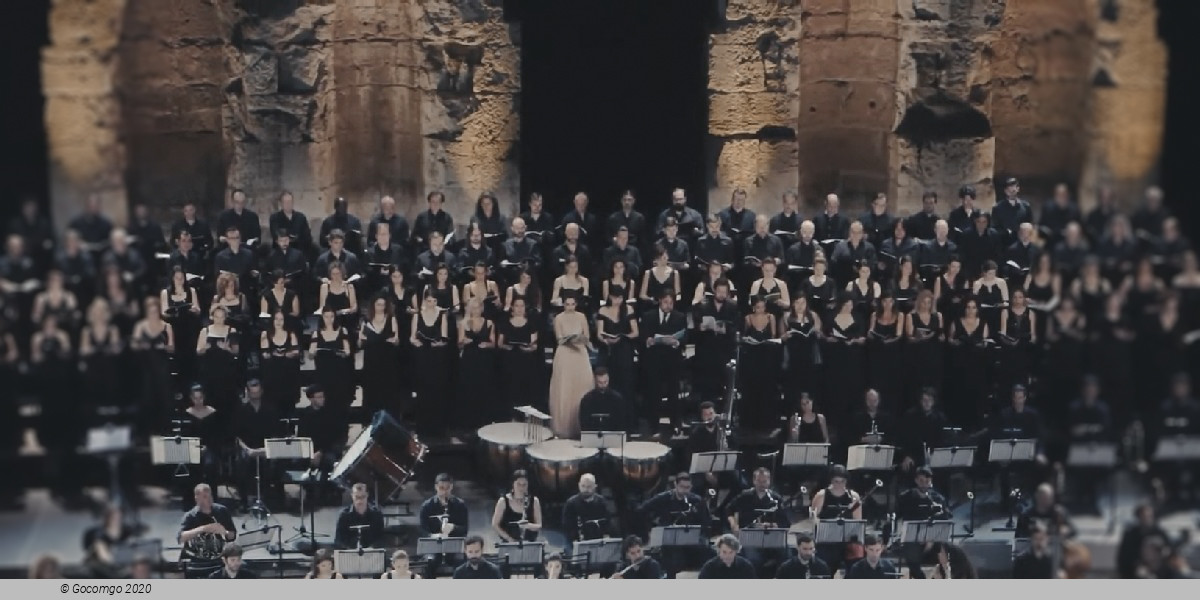
Teatro Alighieri 7 November 2020 - Faust rapsodia | GoComGo.com

Faust rapsodia

Teatro Alighieri, Ravenna, Italy
All photos (2)
Select date and time
9 PM
Important Info
Type: Opera
City: Ravenna, Italy
Starts at: 21:00
Duration:

E-tickets: Print at home or at the box office of the event if so specified. You will find more information in your booking confirmation email.

You can only select the category, and not the exact seats.
If you order 2 or 3 tickets: your seats will be next to each other.
If you order 4 or more tickets: your seats will be next to each other, or, if this is not possible, we will provide a combination of groups of seats (at least in pairs, for example 2+2 or 2+3).

Festival

Ravenna Festival 2020

Ravenna is located on north central Italy, in Emilia-Romagna County. The city holds two music and opera festivals. The first and the longer one  takes place between mid June till mid July and the second  the shorter one is held in November.
The festivals started with concerts and opera plays that were played by the best bands and orchestras. and now, jazz concerts, ethnic music, theater and dance shows were added to the festival events.

Due to the numerous visitors during the festival days and the high demand for tickets and accommodations it is recommended to check hotel rates and book rooms & tickets well in advance.

The shows are held in halls, city squares, Basilica, antique monasteries and archeological sites.

Overview

From heaven to hell

A new production by Ravenna Festival

Italian translation by
Andrea Maffei (1869) enacted scenes
Vittorio Radicati (1896) singing scenes

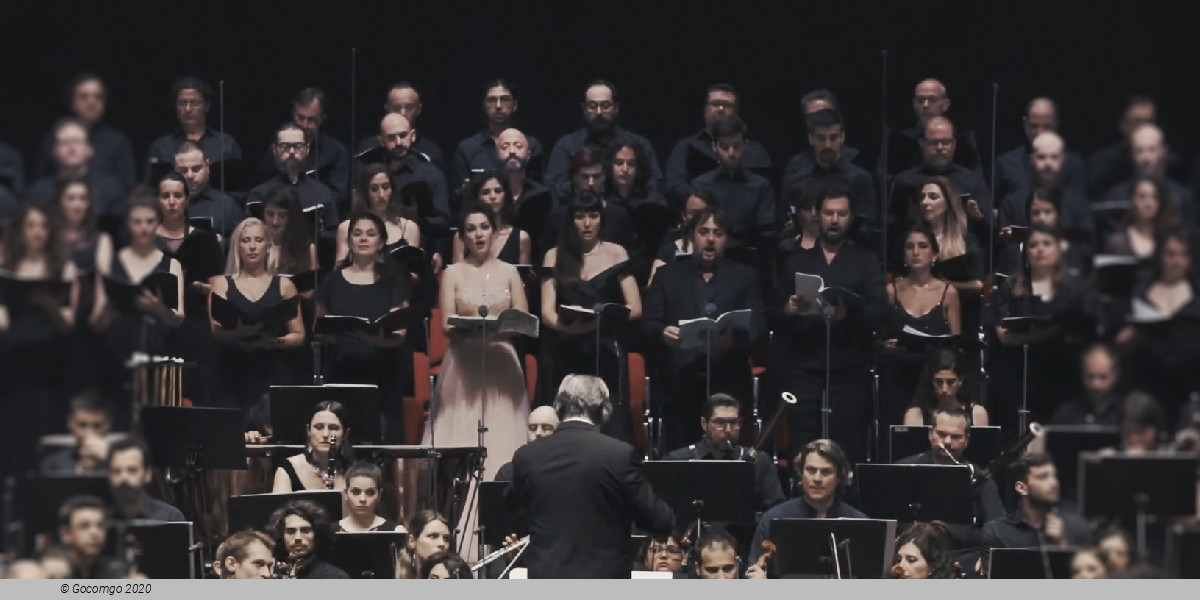
The main character of a rich and varied tale, which originated in Germany in the late Middle Ages, Faust found universal appeal in Goethe’s writings: along his Dantesque journey between Heaven and Hell, Faust experiences the powers of the evil, and redemption with the help of his beloved. In a brand new visionary production, with the stalls turned into an enlarged pit to host the social-distanced orchestra, and the audience in the boxes, gallery, and balcony, Faust rapsodia is a reasoned selection from Schumann’s secular oratorio combined with scenes from Goethe’s tragedy.

The performance in the Alighieri Theatre will be preceded by another performance, around 30 minutes long and accessible with the same ticket of Faust rapsodia: in the Basilica of San Francesco (“the church of Dante”), Quanto in femmina foco d’amor is a “mystery for voices and pilgrim women”, a meditation on the women in the Commedia. The voices of Francesca, Pia, Sapia, Piccarda, and Cunizza weave a women’s prayer, a litany running from Eve to Maria, beginning and end of the world, sung and danced by the Edenic woman, Matelda.

History

Scenes from Goethe's Faust (Szenen aus Goethes Faust) is a musical-theatrical work by composer Robert Schumann. The work has been described as the height of his accomplishments in the realm of dramatic music. The work was written between 1844 and 1853 and is scored for SATB chorus, boys' chorus, orchestra, and a number of solo parts which, even with doubling, require seven solo singers, although eight (three sopranos, two mezzos, one tenor, one baritone, and one bass) is the usual number for a performance. Schumann never saw all three parts of the work performed in the same concert, or published together. Eric Sams comments 'There is no coherence in the orchestration, which audibly dates from two different periods (hand-horns in Part III, valve-horns elsewhere)', leading him to conclude that Schumann did not conceive the work as a whole, although late nineteenth-century ideas of performance mean that in the modern era the piece is predominantly heard with all three parts.

Venue Info

Teatro Alighieri - Ravenna
Location   Via Angelo Mariani, 2

The Teatro Comunale Alighieri is an opera house located at 2 Via Mariani in Ravenna, Italy and designed by the Venetian architects, Tommaso Meduna and his brother, Giambattista who had designed the second La Fenice theatre after the fire of 1836 . The new Teatro Comunale Alighieri was inaugurated on 15 May 1852 with a production of Meyerbeer's Robert le diable, followed by Giovanni Pacini's Medea. It presently offers a program of up to six operas during the season which runs from November to April.

Early nineteenth century: after more than one hundred years of life the Communicative Theatre, made entirely out of wood, was collapsing and the Public Administration decided to build a new facility. The first step was to identify an adequate area: Piazzetta Degli Svizzeri, a squalid square surrounded by slums but placed at the very heart of the city, was the chosen place. In 1838, the project was entrusted to two architects from Veneto, the brothers Tomaso and Giovan Batista Maduna. The former had ministered to the restauration of La Fenice, the most famous theatre in Venice, which had been partially destroyed by a fire. Tomaso Meduna also signed the project of the first railway bridge connecting Venice to the mainland. Under the lead of the two architects, the building which resulted was a neoclassical structure very similar to the Venetian theatre. The apostolic delegate Monsignor Stefano Rossi suggested to dedicate the theatre to Dante Alighieri. The official opening ceremony took place on May 15th 1852 with “Roberto il diavolo” by Giacomo Meyerbeer and the ballets “La Zingara” and “La finta sonnambula” with the étoile Augusta Maywood.

Across almost two centuries of life orchestra pit, stage, and parterre have hosted personalities from all around the world, which makes it impossible to list them all here. However, two curiosities can be mentioned: Benedetto Croce and his partner, Angelina Zampanelli, attended a recital by Ermete Zacconi in 1899. Few years later, on May 27th 1902, Gabriele D’Annunzio and Eleonora Duse came to see “Tristano e Isotta”. On that night all the box office revenues were donated to the Civil Hospital and the Vate offered 100 lire, while a seat in parterre costed 4 lire.

In 1959, the Theatre was closed for restoring. It opened again eight years later, when it began the quality journey that has brought it to the present international notoriety. On February 10th 2004, the “Ridotto” was dedicated to Arcangelo Corelli on the 350th anniversary of his birth in Fusignano.

Important Info
Type: Opera
City: Ravenna, Italy
Starts at: 21:00
Duration:
Top of page