

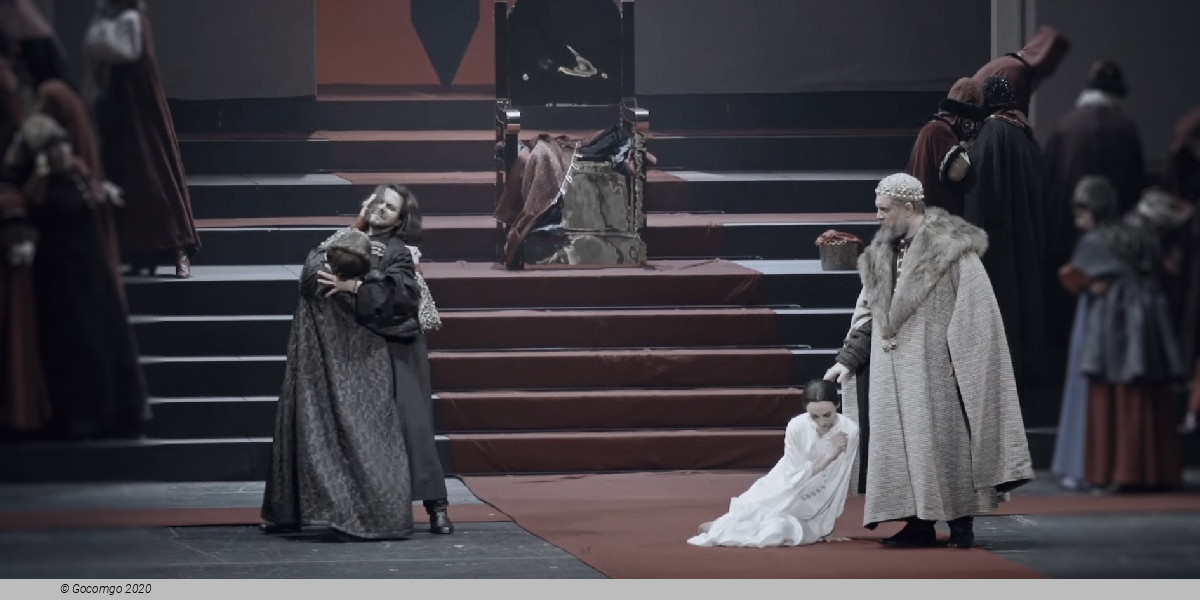
Staatsoper Unter den Linden (Berlin State Opera): The Tsar’s Bride Tickets | Event Dates & Schedule | GoComGo.com

The Tsar’s Bride Tickets

Staatsoper Unter den Linden (Berlin State Opera), Berlin, Germany
All photos (8)
1 / 8
Available Dates: 12 - 20 Jun, 2027 (4 events)
Important Info
Type: Opera
City: Berlin, Germany
Sung in: Russian
Titles in: English,German

E-tickets: Print at home or at the box office of the event if so specified. You will find more information in your booking confirmation email.

You can only select the category, and not the exact seats.
If you order 2 or 3 tickets: your seats will be next to each other.
If you order 4 or more tickets: your seats will be next to each other, or, if this is not possible, we will provide a combination of groups of seats (at least in pairs, for example 2+2 or 2+3).

Cast
Performers
Choose the date to see the peformers
Creators
Composer: Nikolai Rimsky-Korsakov
Director: Dmitri Tcherniakov
Costume designer: Elena Zaytseva
Light: Gleb Filshtinsky
Librettist: Ilya Tyumenev
Chorus Master: Juris Dani
Poet: Lev Mei
Librettist: Nikolai Rimsky-Korsakov
Overview

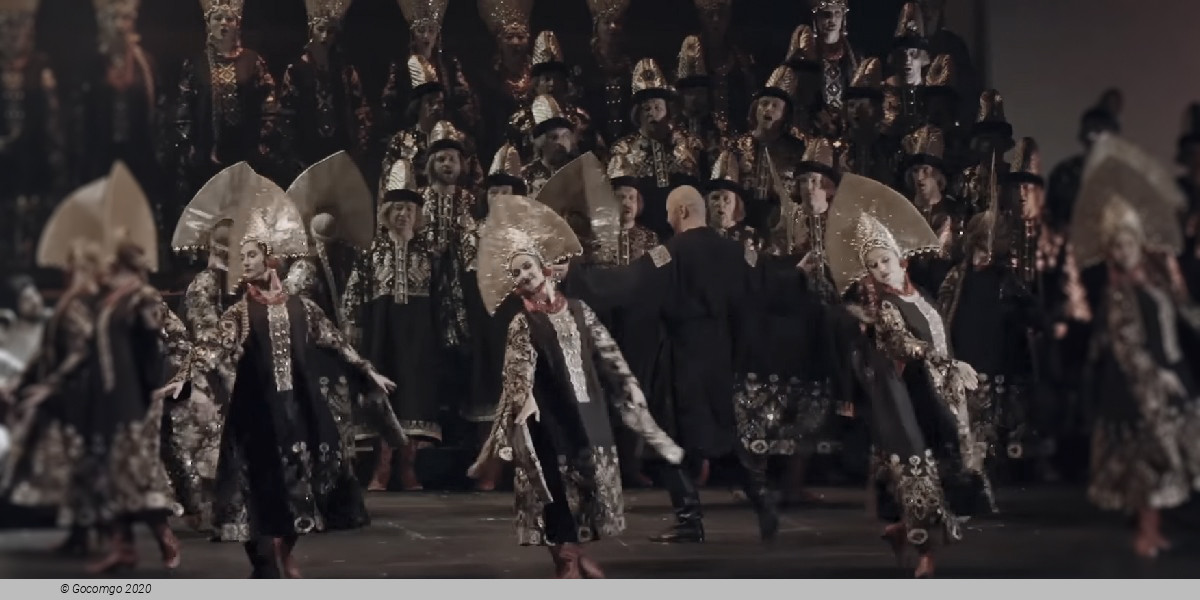
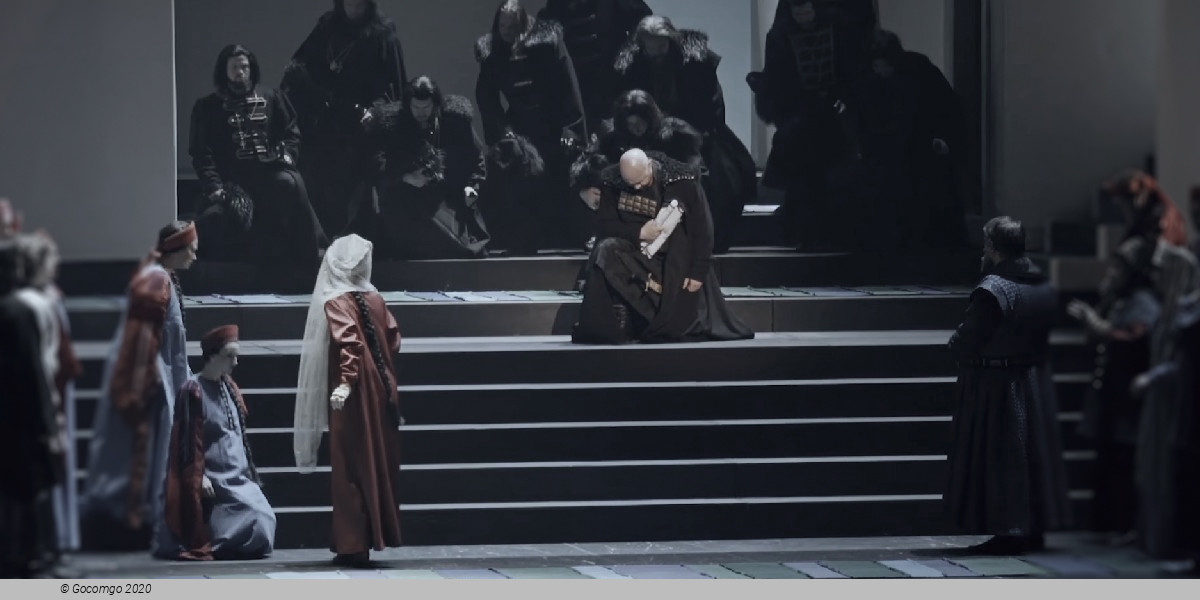
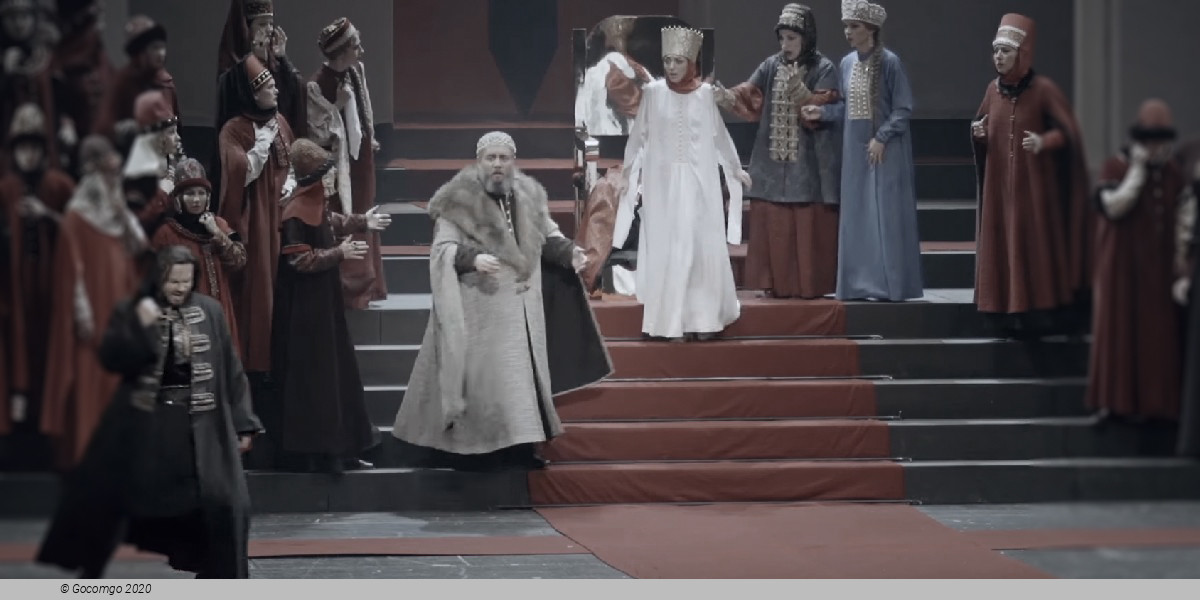
Experience The Tsar's Bride at the Staatsoper Unter den Linden—a richly dramatic opera in four acts by Nikolai Rimsky-Korsakov. Set in the court of Ivan the Terrible, this powerful work blends love, intrigue, and tragedy with lush, evocative music.

The Tsar's Bride, composed by Nikolai Rimsky-Korsakov in 1899, is a compelling opera in four acts that combines historical drama with deeply personal tragedy. Presented at the Staatsoper Unter den Linden, the work transports audiences to the opulent yet perilous world of 16th-century Russia under the rule of Ivan the Terrible.

The story centers on Marfa, a young woman chosen as a bride for the Tsar, and the web of jealousy, love, and manipulation that surrounds her fate. As rival suitors, secret passions, and political power struggles collide, a tragic chain of events unfolds, leading to heartbreak and destruction.

Rimsky-Korsakov’s score is renowned for its vivid orchestration, lyrical beauty, and rich use of Russian musical color. The opera masterfully balances grand historical scenes with intimate emotional moments, creating a deeply immersive and moving theatrical experience.

This production at the Staatsoper Berlin brings to life a rarely performed masterpiece—an opera that explores the fragility of innocence in a world shaped by ambition, obsession, and the forces of destiny.

History
Premiere of this production: Private Opera Society, Moscow

The Tsar's Bride is an opera in four acts by Nikolai Rimsky-Korsakov, the composer's tenth opera. The libretto, by Ilia Tyumenev, is based on the drama of the same name by Lev Mey. Mey's play was first suggested to the composer as an opera subject in 1868 by Mily Balakirev. (Alexander Borodin, too, once toyed with the idea.) However, the opera was not composed until thirty years later, in 1898. The first performance of the opera took place in 1899 at the Moscow theater of the Private Opera of S.I. Mamontov.

Synopsis

Time: Autumn, 1572

Place: Aleksandrovsky settlement, Moscow, Russia

Act 1: The Feast

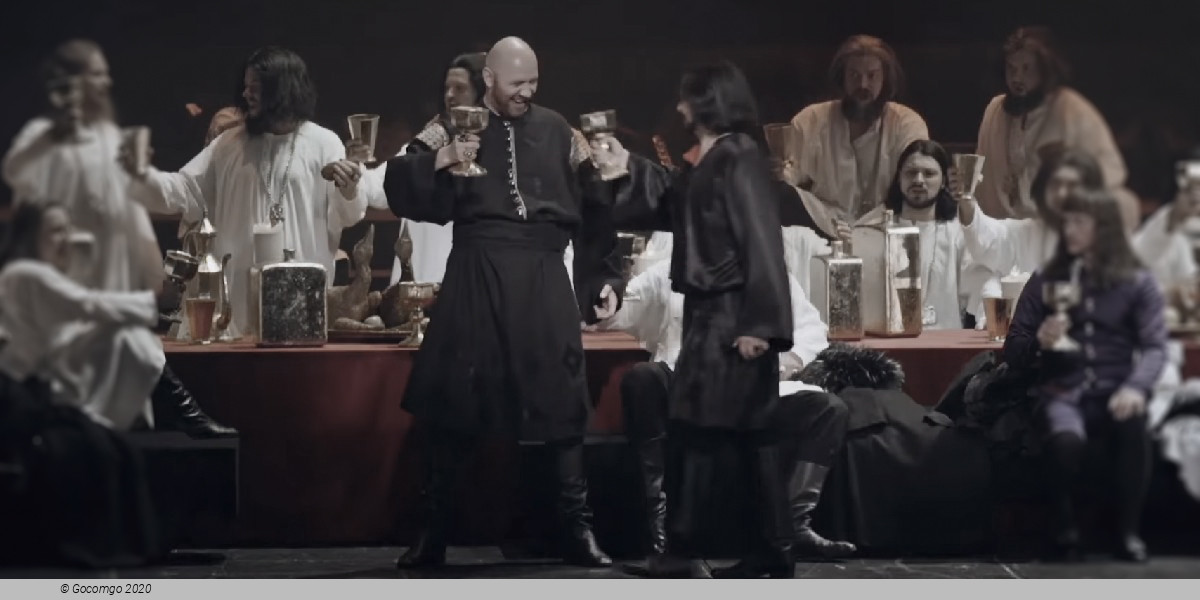
The Oprichnik Gryaznoi loves Marfa, daughter of the merchant Sobakin, even though Gryaznoi already has a mistress, Lyubasha, whom he has neglected of late. Marfa is already beloved of the boyar Lykov. In a jealous rage against Lykov, Gryaznoi arranges to cast a spell on Marfa with a magic potion from Bomelius, the Tsar's physician. Lyubasha has overheard Gryaznoi's request.

Act 2: The Love Philtre

Lyubasha in turn obtains from Bomelius another magic potion with which to cancel any feelings of Gryaznoi for Marfa. Bomelius consents, but at the price of an assignation with Lyubasha for himself.

Act 3: The Best Man

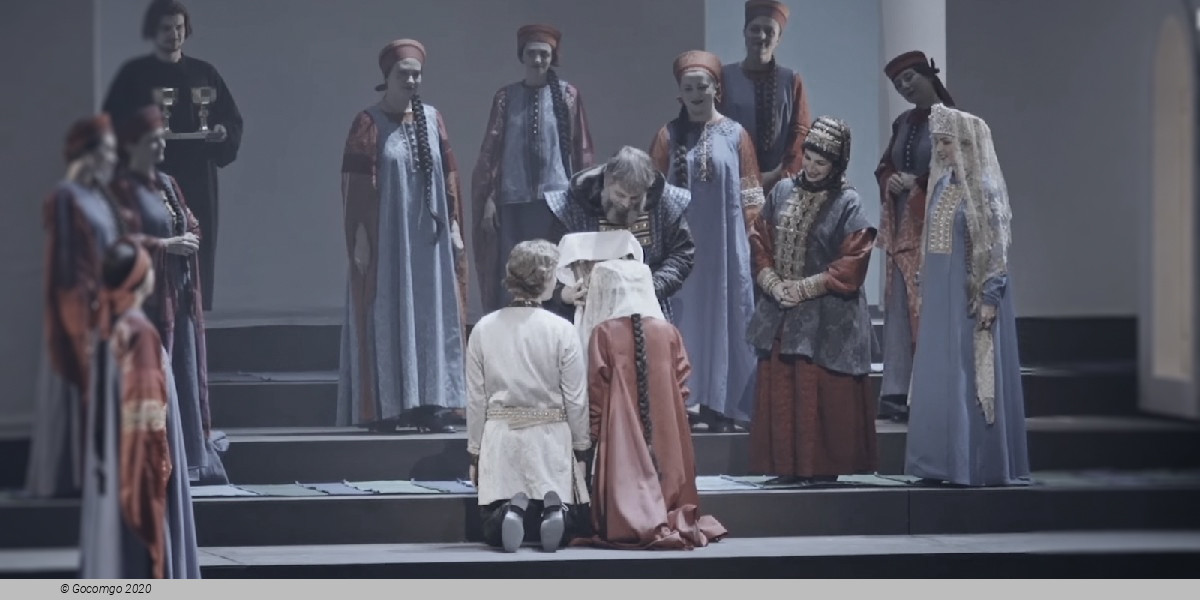
In the meantime, the Tsar of the title, Ivan IV (known as "Ivan the Terrible"), is looking for a new bride from the best aristocratic maidens in Russia. The Tsar settles upon Marfa. At the celebration of the engagement of Marfa to Lykov, everyone is surprised when the news arrives of the Tsar's choice of Marfa as his bride. Gryaznoi had slipped what he thought was the love potion from Bomelius into Marfa's drink at the feast.

Act 4: The Bride

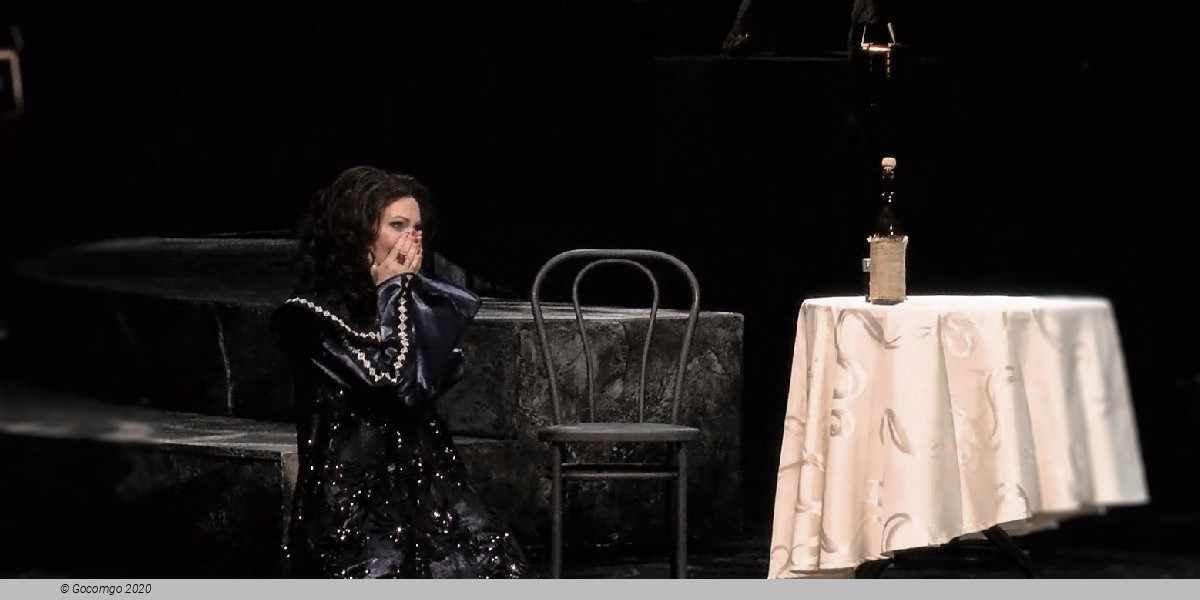
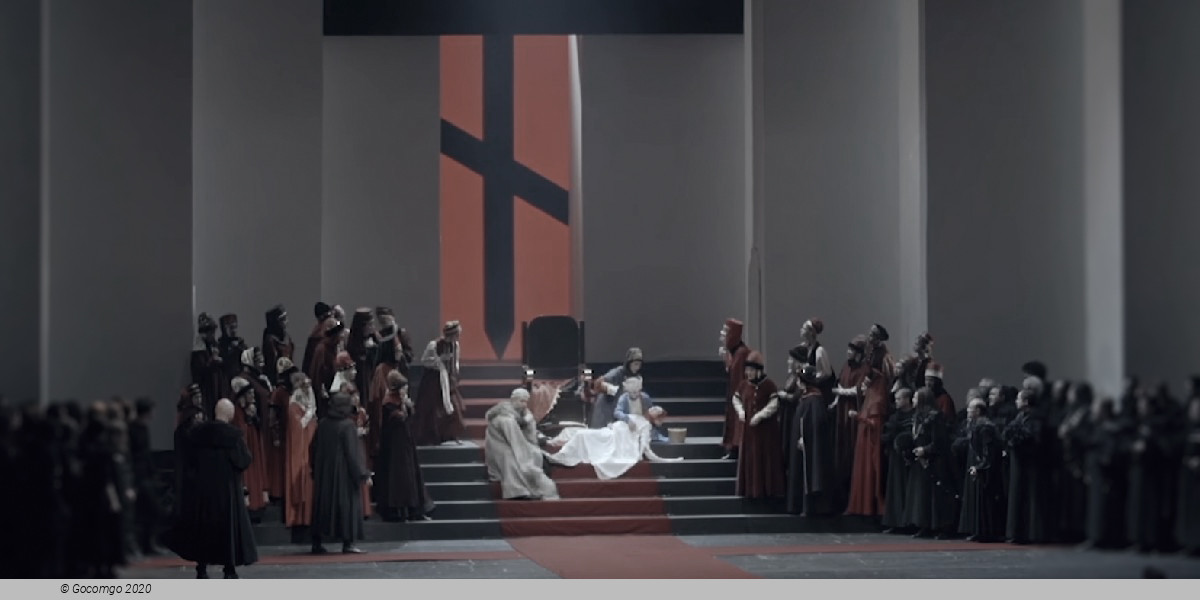
At the Tsar's palace, Marfa has become violently ill. Lykov has been executed, at the instigation of Gryaznoi, on charges of attempting to kill Marfa. When Marfa learns that Lykov is dead, she goes insane. Eventually, Gryaznoi admits that he had slipped a potion into her drink, and after learning that it was poisonous, asks that he himself be executed. Lyubasha then confesses that she had substituted her potion from Bomelius for Gryaznoi's. In a rage, Gryaznoi murders Lyubasha, and is then taken to prison eventually to be executed. In her madness, Marfa mistakes Gryaznoi for Lykov, inviting him to return the next day to visit her, then dies.

Venue Info

Staatsoper Unter den Linden (Berlin State Opera) - Berlin
Location   Unter den Linden 7

The Staatsoper Unter den Linden is one of the oldest and largest musical theaters in Germany. Founded in 1742 as the Royal Court Opera (German: Königliche Hofoper) under Frederick II. Located in Berlin, on the main street Unter den Linden.

King Frederick II of Prussia shortly after his accession to the throne commissioned the original building on the site. Construction work began in July 1741 with what was designed by Georg Wenzeslaus von Knobelsdorff to be the first part of a "Forum Fredericianum" on present-day Bebelplatz. Although not entirely completed, the Court Opera (Hofoper) was inaugurated with a performance of Carl Heinrich Graun's Cesare e Cleopatra on December 7, 1742. This event marked the beginning of the successful, 250-year co-operation between the Staatsoper and the Staatskapelle Berlin, the state orchestra, whose roots trace back to the 16th century.

In 1821, the Berlin Opera—hosted at the Schauspielhaus Berlin—gave the premiere of Weber's Der Freischütz. In 1842, Wilhelm Taubert instituted the tradition of regular symphonic concerts. In the same year, Giacomo Meyerbeer succeeded Gaspare Spontini as General Music Director. Felix Mendelssohn also conducted symphonic concerts for a year.

On August 18, 1843 the Linden Opera was destroyed by fire. The reconstruction of the building was supervised by architect Carl Ferdinand Langhans, and the Königliches Opernhaus (Royal Opera House) was inaugurated the following autumn by a performance of Meyerbeer's Ein Feldlager in Schlesien. In 1849, Otto Nicolai's Die lustigen Weiber von Windsor was premiered at the Royal Opera House, conducted by the composer.

1945: The Lindenoper was once again destroyed on February 3. The concerts were relocated to the Admiralspalast and the Schauspielhaus. On 18 February, Karajan conducted his last symphonic concert with the Staatskapelle in the Beethoven hall.

The second rebuilding took a long time. From 1945, the opera company played in the former Admiralspalast (today's Metropoltheater). From 1949, the company served as the state opera of East Germany. It moved back to its original home after the rebuilding in freely adapted baroque forms was finally completed in 1955. The newly rebuilt opera house was opened, again, with Wagner's Die Meistersinger von Nürnberg. The capacity is now about 1,300. After the Berlin Wall was built in 1961, the Opera was somewhat isolated, but still maintained a comprehensive repertoire that featured the classic and romantic period together with contemporary ballet and operas.

After reunification, the Linden Opera rejoined the operatic world. Important works that had already performed in the past were rediscovered and discussed anew within the framework of a "Berlin Dramaturgy". Baroque Opera in particular was at the center of attention, with Graun's Cleopatra e Cesare, Keiser's Croesus, Florian Leopold Gassmann's L'opera seria and Scarlatti's Griselda. These works were performed by Belgian conductor René Jacobs together with the Akademie für Alte Musik Berlin and the Freiburger Barockorchester on period instruments. In the 1990s, the opera was officially renamed Staatsoper Unter den Linden.

In 1992, the Argentine-Israeli conductor Daniel Barenboim was appointed Music Director. In 2000, the orchestra (according to its official website) elected Barenboim "conductor for life." During the 2002 Festtage, he led a Wagner cycle in ten parts, a production created in collaboration with director Harry Kupfer.

Since 2009, the Berlin State Opera has been undergoing considerable renovation work led by German architect HG Merz. The roof of the opera building was raised and the proscenium prolonged to improve the acoustics. Other renovation and extension works include the director's building, the below-ground connection building and the depot building. The latter will house the new rehearsal center.

The house was reopened in 2017 with premieres of Humperdinck's Hänsel und Gretel and Monteverdi's L'incoronazione di Poppea on one weekend.

Important Info
Type: Opera
City: Berlin, Germany
Sung in: Russian
Titles in: English,German

E-tickets: Print at home or at the box office of the event if so specified. You will find more information in your booking confirmation email.

You can only select the category, and not the exact seats.
If you order 2 or 3 tickets: your seats will be next to each other.
If you order 4 or more tickets: your seats will be next to each other, or, if this is not possible, we will provide a combination of groups of seats (at least in pairs, for example 2+2 or 2+3).

From
$ 111
Top of page