

Staatsoper Unter den Linden (Berlin State Opera) 13 July 2023 - Salome | GoComGo.com

Salome

Staatsoper Unter den Linden (Berlin State Opera), Staatsoper Unter den Linden, Berlin, Germany
All photos (7)
Select date and time
7:30 PM

E-tickets: Print at home or at the box office of the event if so specified. You will find more information in your booking confirmation email.

You can only select the category, and not the exact seats.
If you order 2 or 3 tickets: your seats will be next to each other.
If you order 4 or more tickets: your seats will be next to each other, or, if this is not possible, we will provide a combination of groups of seats (at least in pairs, for example 2+2 or 2+3).

Important Info
Type: Opera
City: Berlin, Germany
Starts at: 19:30
Acts: 1
Duration: 1h 40min
Sung in: German
Titles in: German,English

E-tickets: Print at home or at the box office of the event if so specified. You will find more information in your booking confirmation email.

You can only select the category, and not the exact seats.
If you order 2 or 3 tickets: your seats will be next to each other.
If you order 4 or more tickets: your seats will be next to each other, or, if this is not possible, we will provide a combination of groups of seats (at least in pairs, for example 2+2 or 2+3).

Overview

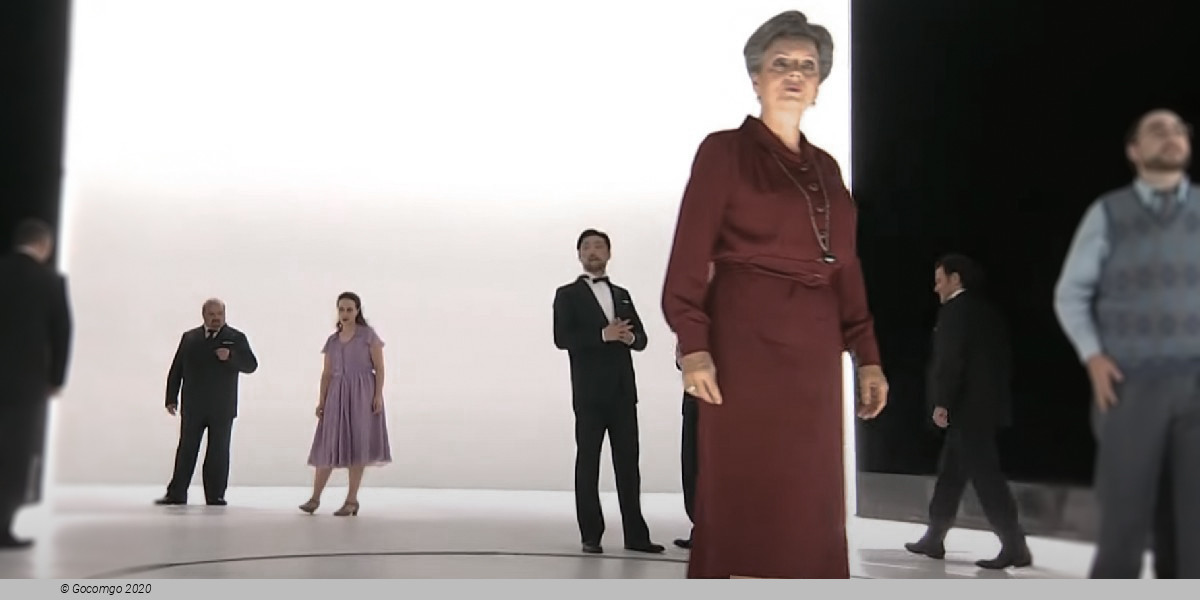
Richard Strauss had his first overwhelming success as an operatic composer with his adaptation of Oscar Wilde’s scandalous and shocking Décadence drama in 1905: it moves between a delicate psychogram and the depiction of intoxicating, unbridled wantonness.

In exhilaratingly ecstatic musical visions, Strauss pours the charged emotions and deep psychological traumas of his eccentric female lead into a shimmering, occasionally also brusque score. In doing so, he captures not only Salome’s mental decline and seductive powers with the sweeping sounds of the orchestra, but also her emotional coldness and Jochanaan’s impassioned accusations in a thrilling and disturbing way.

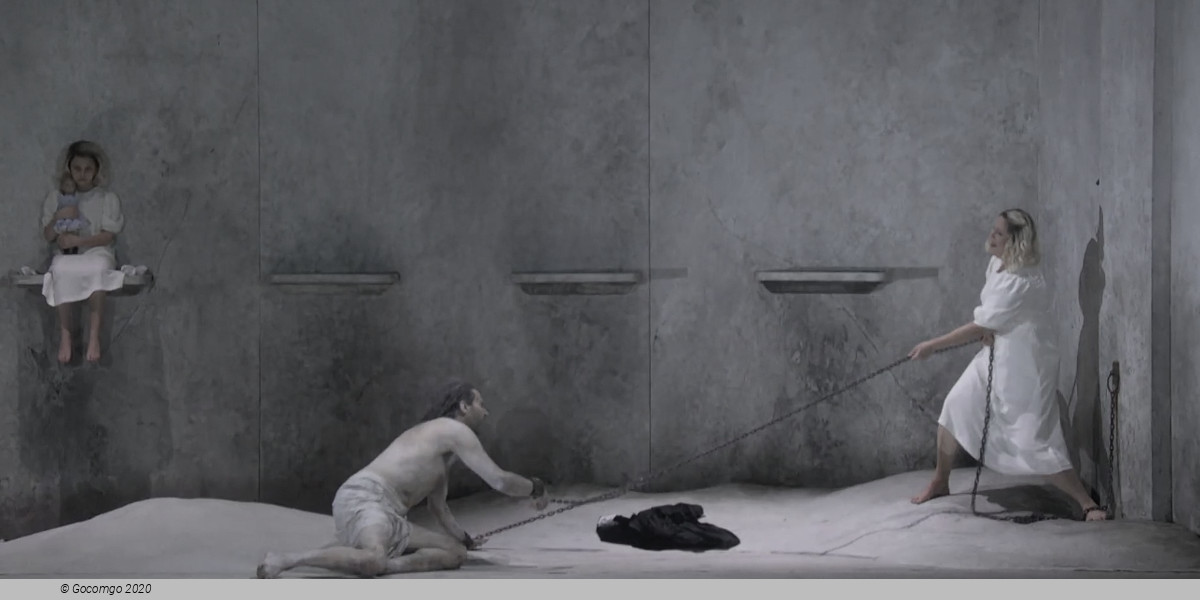
Raised in an environment lacking in moderation and inhibition, the eccentric Princess Salome is fascinated by the otherness of the ethical and ascetic Prophet Jochanaan, whom her mother Herodias and her lecherous stepfather Herod keep imprisoned. When Jochanaan brusquely rejects Salome’s lustful approaches, she becomes downright obsessed with him and uses her stepfather’s lustfulness to enforce her will.

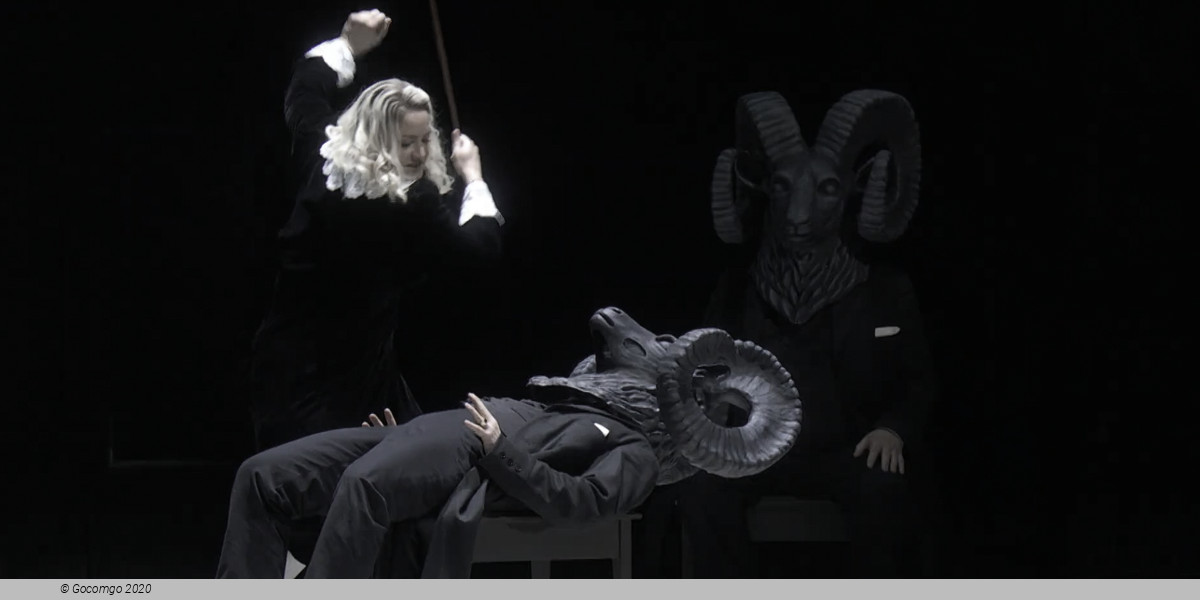
Since Herod promises to fulfil her every wish for the erotic "Dance of The Seven Veils", she demands Jochanaan’s head on a silver platter. In a frenzied delusion, she kisses his lifeless lips, fulfilling her sensual desire – until Herod gives the order to kill Salome.

History
Premiere of this production: 09 December 1905, Königliches Opernhaus, Dresden

Salome is an opera in one act by Richard Strauss. The libretto is Hedwig Lachmann's German translation of the French play Salomé by Oscar Wilde, edited by the composer. Strauss dedicated the opera to his friend Sir Edgar Speyer. The opera is famous (at the time of its premiere, infamous) for its "Dance of the Seven Veils". The final scene is frequently heard as a concert-piece for dramatic sopranos.

Synopsis

A great terrace in the Palace of Herod, set above the banqueting hall. Some soldiers are leaning over the balcony. To the right there is a gigantic staircase, to the left, at the back, an old cistern surrounded by a wall of green bronze. The moon is shining very brightly.

Narraboth gazes from a terrace in Herod's palace into the banquet hall at the beautiful Princess Salome; he is in love with her, and apotheosizes her, much to the disgusted fearfulness of the Page of Herodias. The voice of the Prophet Jochanaan is heard from his prison in the palace cistern; Herod fears him and has ordered that no one should contact him, including Jerusalem's High Priest.

Tired of the feast and its guests, Salome flees to the terrace. When she hears Jochanaan cursing her mother (Herodias), Salome's curiosity is piqued. The palace guards will not honor her petulant orders to fetch Jochanaan for her, so she teasingly works on Narraboth to bring Jochanaan before her. Despite the orders he has received from Herod, Narraboth finally gives in after she promises to smile at him.

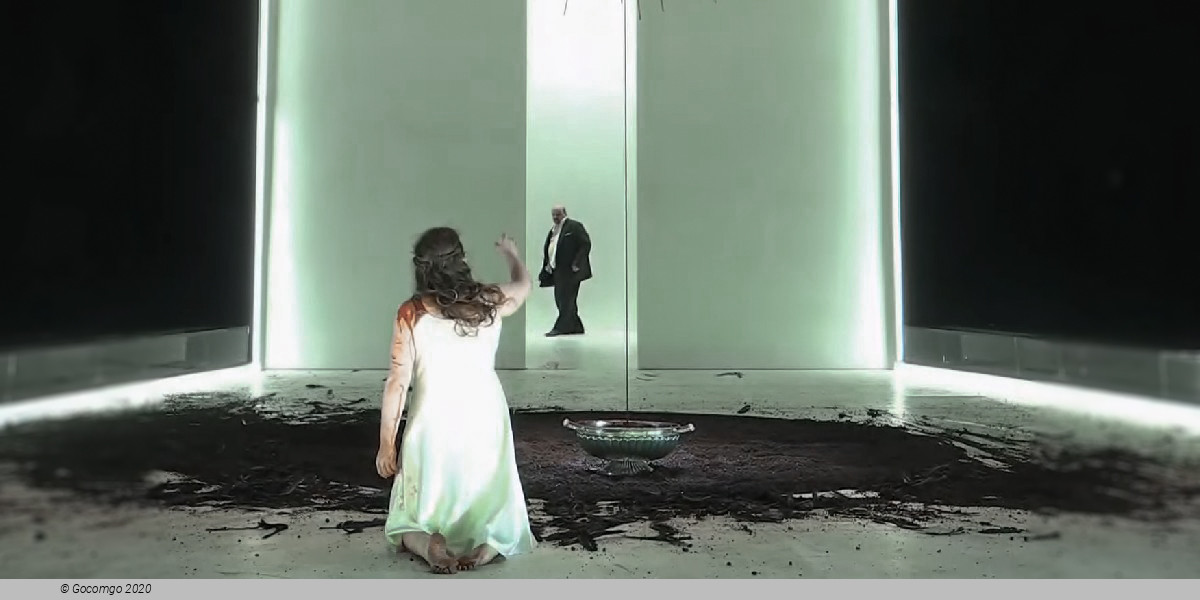
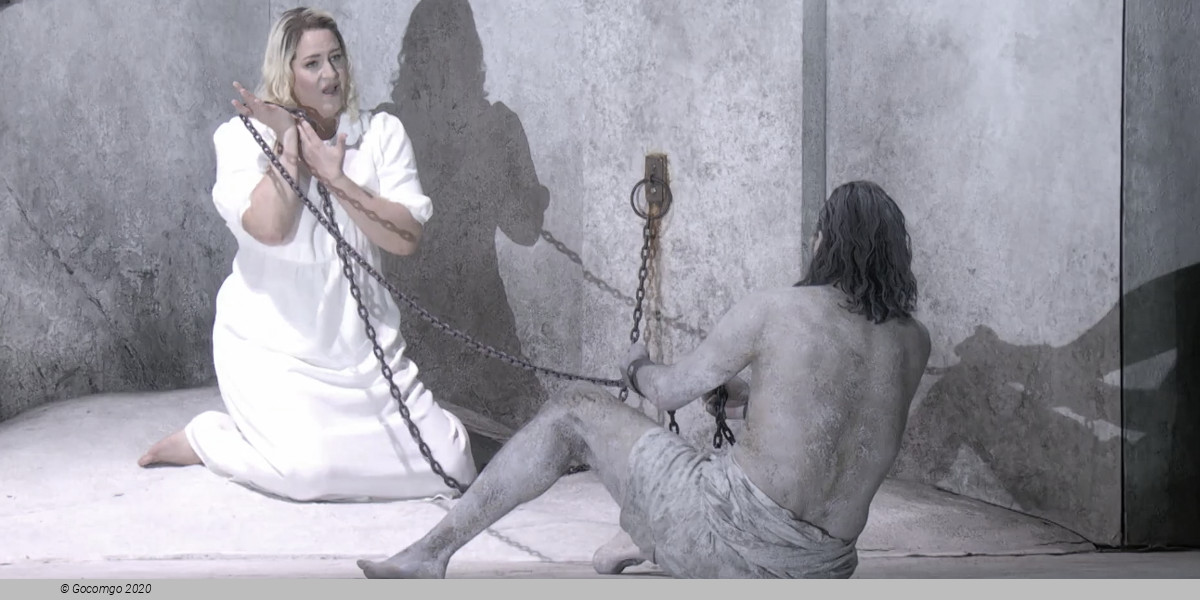
Jochanaan emerges from the cistern and shouts prophecies regarding Herod and Herodias that no one understands, except Salome when the Prophet refers to her mother. Upon seeing Jochanaan, Salome is filled with an overwhelming desire for him, praising his white skin and asking to touch it, but he rejects her. She then praises his black hair, again asking to touch it, but is rejected once more. She finally begs for a kiss from Jochanaan's lips, and Narraboth, who cannot bear to hear this, kills himself. As Jochanaan is returned to the well, he preaches salvation through the Messiah.

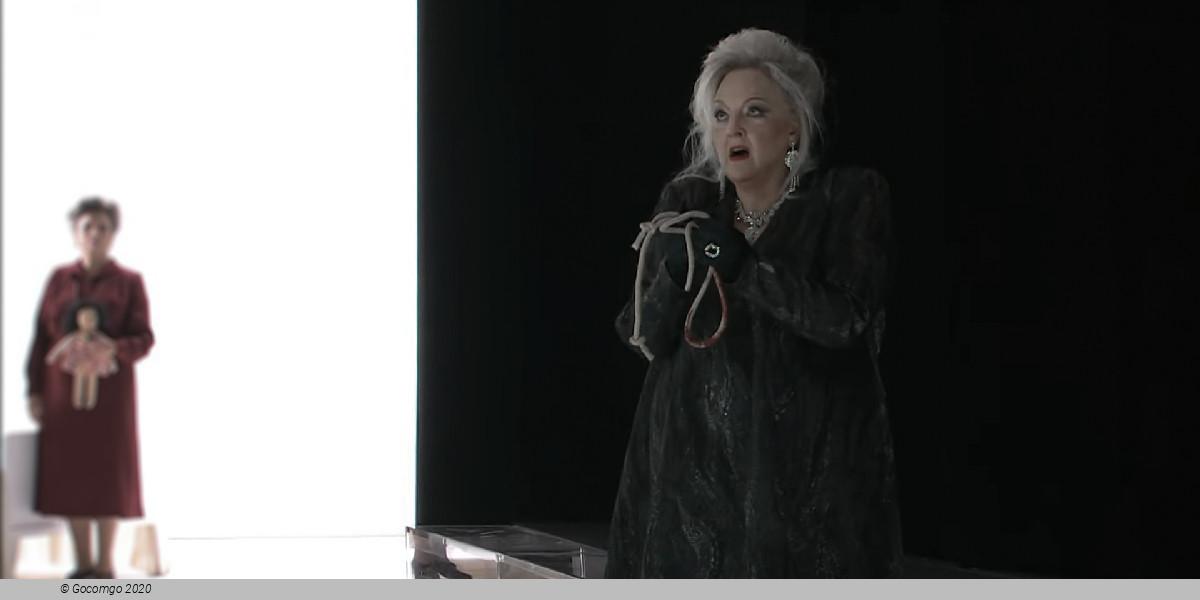
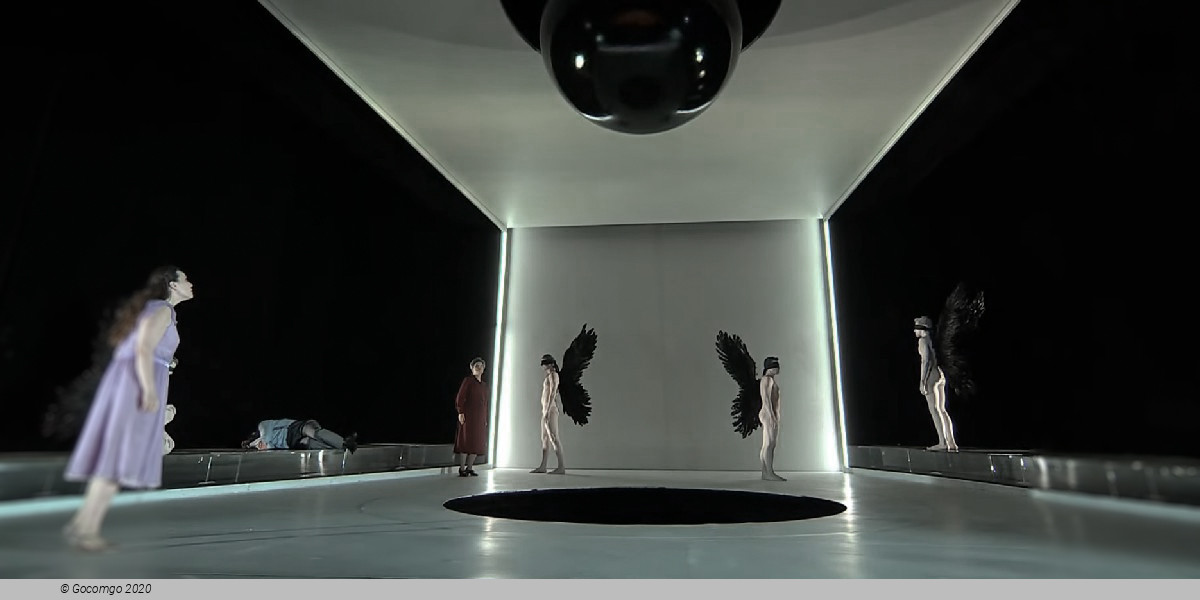
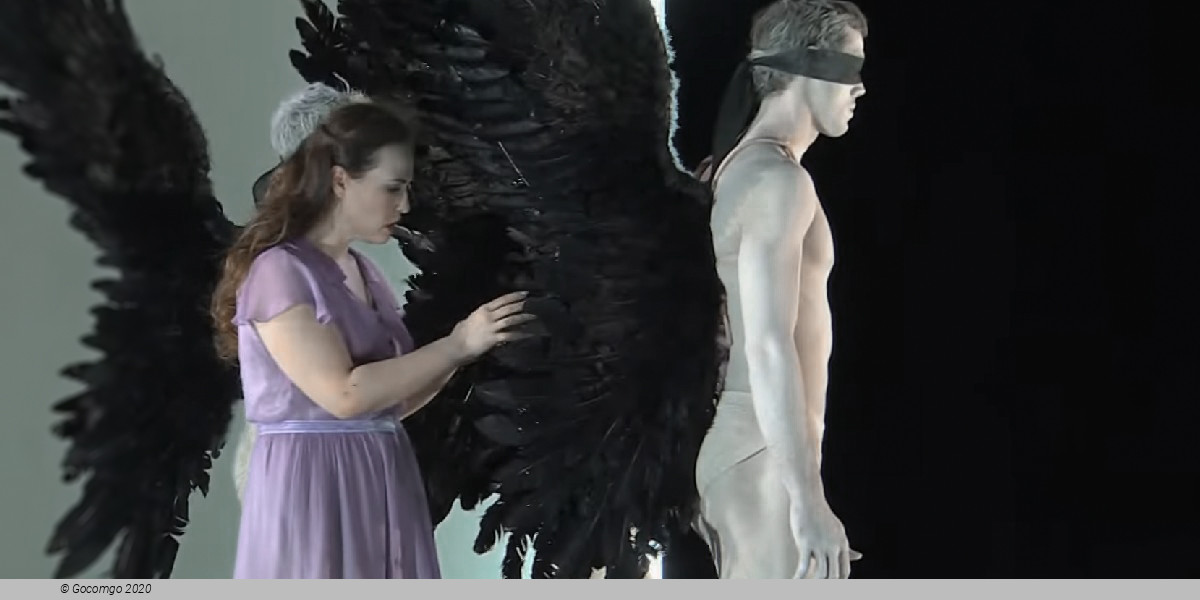
Herod enters, followed by his wife and court. He slips in Narraboth's blood and starts hallucinating. He hears the beating of wings. Despite Herodias' objections, Herod stares lustfully at Salome, who rejects him. Jochanaan harasses Herodias from the well, calling her incestuous marriage to Herod sinful. She demands that Herod silence him. Herod refuses, and she mocks his fear. Five Jews argue concerning the nature of God. Two Nazarenes tell of Christ's miracles; at one point they bring up the raising of Jairus' daughter from the dead, which Herod finds frightening.

Herod asks for Salome to eat with him, drink with him; indolently, she twice refuses, saying she is not hungry or thirsty. Herod then begs Salome to dance for him, Tanz für mich, Salome, though her mother objects. He promises to reward her with her heart's desire – even if it were one half of his kingdom.

After Salome inquires into his promise, and he swears to honor it, she prepares for the "Dance of the Seven Veils". This dance, very oriental in orchestration, has her slowly removing her seven veils, until she lies naked at his feet. Salome then demands the head of the prophet on a silver platter. Her mother cackles in pleasure. Herod tries to dissuade her with offers of jewels, peacocks, and the sacred veil of the Temple. Salome remains firm in her demand for Jochanaan's head, forcing Herod to accede to her demands. After a desperate monologue by Salome, an executioner emerges from the well and delivers the severed head as she requested.

Salome now declares her love for the severed head, caressing it and kissing the prophet's dead lips passionately. Horrified, Herod orders his soldiers, "Kill that woman!" They rush forward and crush Salome under their shields.

Venue Info

Staatsoper Unter den Linden (Berlin State Opera) - Berlin
Location   Unter den Linden 7

The Staatsoper Unter den Linden is one of the oldest and largest musical theaters in Germany. Founded in 1742 as the Royal Court Opera (German: Königliche Hofoper) under Frederick II. Located in Berlin, on the main street Unter den Linden.

King Frederick II of Prussia shortly after his accession to the throne commissioned the original building on the site. Construction work began in July 1741 with what was designed by Georg Wenzeslaus von Knobelsdorff to be the first part of a "Forum Fredericianum" on present-day Bebelplatz. Although not entirely completed, the Court Opera (Hofoper) was inaugurated with a performance of Carl Heinrich Graun's Cesare e Cleopatra on December 7, 1742. This event marked the beginning of the successful, 250-year co-operation between the Staatsoper and the Staatskapelle Berlin, the state orchestra, whose roots trace back to the 16th century.

In 1821, the Berlin Opera—hosted at the Schauspielhaus Berlin—gave the premiere of Weber's Der Freischütz. In 1842, Wilhelm Taubert instituted the tradition of regular symphonic concerts. In the same year, Giacomo Meyerbeer succeeded Gaspare Spontini as General Music Director. Felix Mendelssohn also conducted symphonic concerts for a year.

On August 18, 1843 the Linden Opera was destroyed by fire. The reconstruction of the building was supervised by architect Carl Ferdinand Langhans, and the Königliches Opernhaus (Royal Opera House) was inaugurated the following autumn by a performance of Meyerbeer's Ein Feldlager in Schlesien. In 1849, Otto Nicolai's Die lustigen Weiber von Windsor was premiered at the Royal Opera House, conducted by the composer.

1945: The Lindenoper was once again destroyed on February 3. The concerts were relocated to the Admiralspalast and the Schauspielhaus. On 18 February, Karajan conducted his last symphonic concert with the Staatskapelle in the Beethoven hall.

The second rebuilding took a long time. From 1945, the opera company played in the former Admiralspalast (today's Metropoltheater). From 1949, the company served as the state opera of East Germany. It moved back to its original home after the rebuilding in freely adapted baroque forms was finally completed in 1955. The newly rebuilt opera house was opened, again, with Wagner's Die Meistersinger von Nürnberg. The capacity is now about 1,300. After the Berlin Wall was built in 1961, the Opera was somewhat isolated, but still maintained a comprehensive repertoire that featured the classic and romantic period together with contemporary ballet and operas.

After reunification, the Linden Opera rejoined the operatic world. Important works that had already performed in the past were rediscovered and discussed anew within the framework of a "Berlin Dramaturgy". Baroque Opera in particular was at the center of attention, with Graun's Cleopatra e Cesare, Keiser's Croesus, Florian Leopold Gassmann's L'opera seria and Scarlatti's Griselda. These works were performed by Belgian conductor René Jacobs together with the Akademie für Alte Musik Berlin and the Freiburger Barockorchester on period instruments. In the 1990s, the opera was officially renamed Staatsoper Unter den Linden.

In 1992, the Argentine-Israeli conductor Daniel Barenboim was appointed Music Director. In 2000, the orchestra (according to its official website) elected Barenboim "conductor for life." During the 2002 Festtage, he led a Wagner cycle in ten parts, a production created in collaboration with director Harry Kupfer.

Since 2009, the Berlin State Opera has been undergoing considerable renovation work led by German architect HG Merz. The roof of the opera building was raised and the proscenium prolonged to improve the acoustics. Other renovation and extension works include the director's building, the below-ground connection building and the depot building. The latter will house the new rehearsal center.

The house was reopened in 2017 with premieres of Humperdinck's Hänsel und Gretel and Monteverdi's L'incoronazione di Poppea on one weekend.

Important Info
Type: Opera
City: Berlin, Germany
Starts at: 19:30
Acts: 1
Duration: 1h 40min
Sung in: German
Titles in: German,English
Top of page