
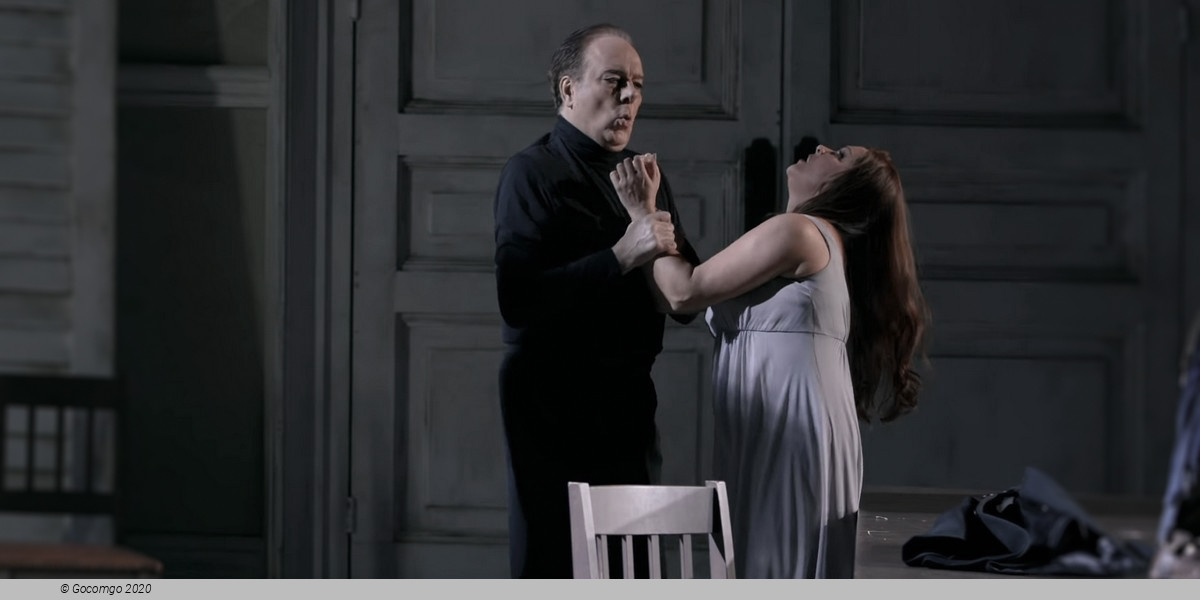
Staatsoper Unter den Linden (Berlin State Opera): La forza del destino Tickets | Event Dates & Schedule | GoComGo.com

La forza del destino Tickets

Staatsoper Unter den Linden (Berlin State Opera), Berlin, Germany
All photos (11)
1 / 11
Available Dates: 22 May - 6 Jun, 2027 (5 events)
Important Info
Type: Opera
City: Berlin, Germany
Duration: 3h 40min
Acts: 4
Sung in: Italian
Titles in: English,German

E-tickets: Print at home or at the box office of the event if so specified. You will find more information in your booking confirmation email.

You can only select the category, and not the exact seats.
If you order 2 or 3 tickets: your seats will be next to each other.
If you order 4 or more tickets: your seats will be next to each other, or, if this is not possible, we will provide a combination of groups of seats (at least in pairs, for example 2+2 or 2+3).

Cast
Performers
Choose the date to see the peformers
Creators
Composer: Giuseppe Verdi
Lighting Designer: Alexander Sivaev
Poet: Ángel de Saavedra
Sets: Christian Schmidt
Librettist: Francesco Maria Piave
Chorus Master: Juris Dani
Stage Director: Vasily Barkhatov
Overview

Experience La forza del destino at the Staatsoper Unter den Linden—a dramatic masterpiece by Giuseppe Verdi. This powerful opera explores fate, love, and redemption through sweeping music and intense storytelling.

La forza del destino, composed by Giuseppe Verdi, is one of the most gripping and emotionally charged works in the operatic repertoire. Presented at the Staatsoper Unter den Linden, this epic drama unfolds a story shaped by destiny, passion, and the search for redemption.

The opera follows Leonora and Don Alvaro, whose love is shattered by a tragic accident that sets off a chain of events marked by vengeance, separation, and suffering. Pursued by Leonora’s brother, Don Carlo, the characters are drawn into a relentless cycle where fate seems impossible to escape.

Verdi’s score is rich with memorable melodies, powerful choruses, and dramatic contrasts, capturing both the grandeur of the story and the intimate emotions of its characters. From moments of lyrical tenderness to scenes of overwhelming intensity, the music drives the narrative forward with irresistible force.

This production at the Staatsoper Berlin brings to life a timeless tale of human struggle against destiny, where love endures amidst chaos, and where the possibility of forgiveness offers a glimmer of hope.

History
Premiere of this production: 10 November 1862, Bolshoi Kamenny Theatre, Saint Petersburg

La forza del destino (The Power of Fate, often translated The Force of Destiny) is an Italian opera by Giuseppe Verdi. The libretto was written by Francesco Maria Piave based on a Spanish drama, Don Álvaro o la fuerza del sino (1835), by Ángel de Saavedra, 3rd Duke of Rivas, with a scene adapted from Friedrich Schiller's Wallensteins Lager.

Synopsis

Place: Spain and Italy
Time: around 1750

Overture
The music begins with the opera's "Fate" motif, an ominous three Es unison in the brass.

Act 1

The mansion of Leonora's family, in Seville

Don Alvaro is a young nobleman from South America (presumably Peru) who is part Indian and who has settled in Seville where he is not very well thought of. He falls in love with Donna Leonora, the daughter of the Marquis of Calatrava, but Calatrava is determined that she shall marry only a man of the highest birth. Despite knowing her father’s aversion to Alvaro, Leonora is deeply in love with him, and she determines to give up her home and country in order to elope with him. In this endeavor, she is aided by her confidante, Curra. (Me pellegrina ed orfana – "Exiled and orphaned far from my childhood home").

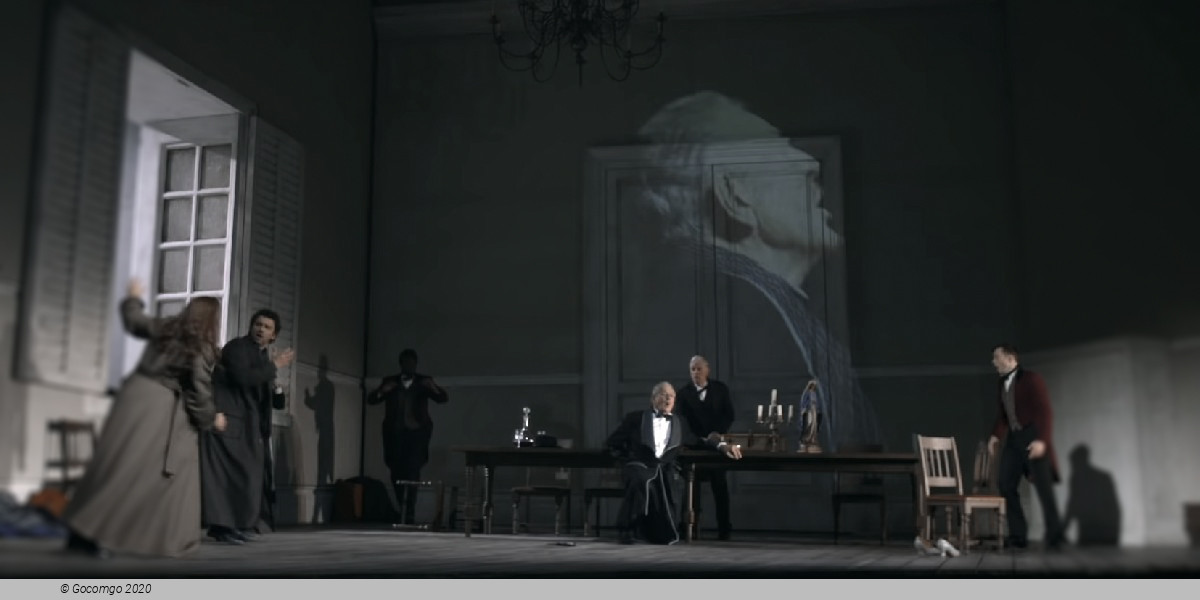
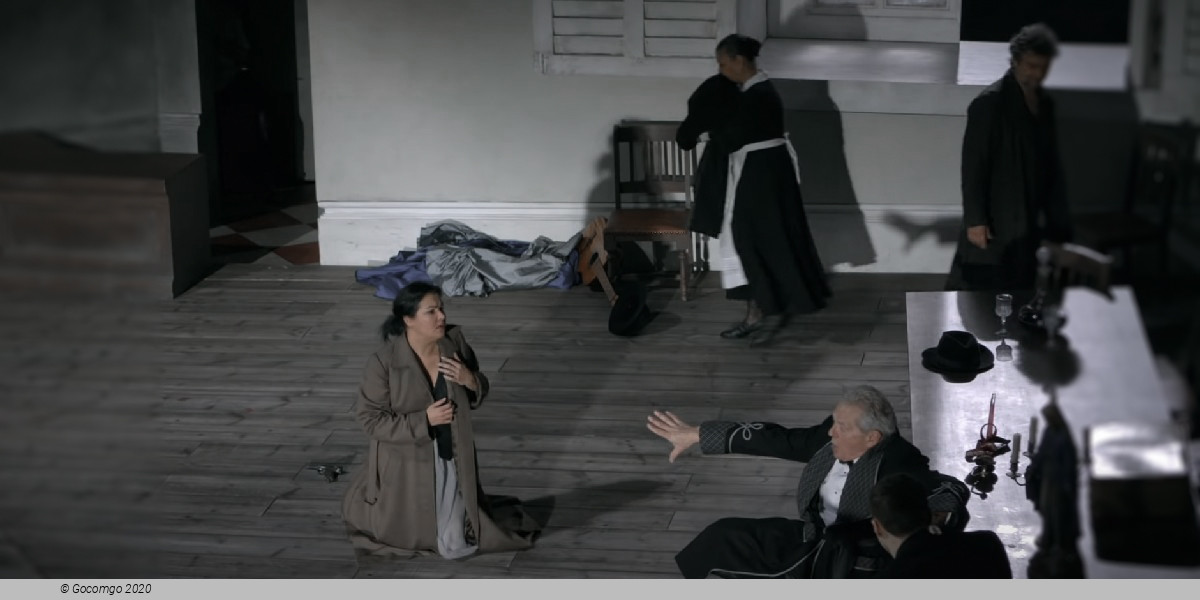
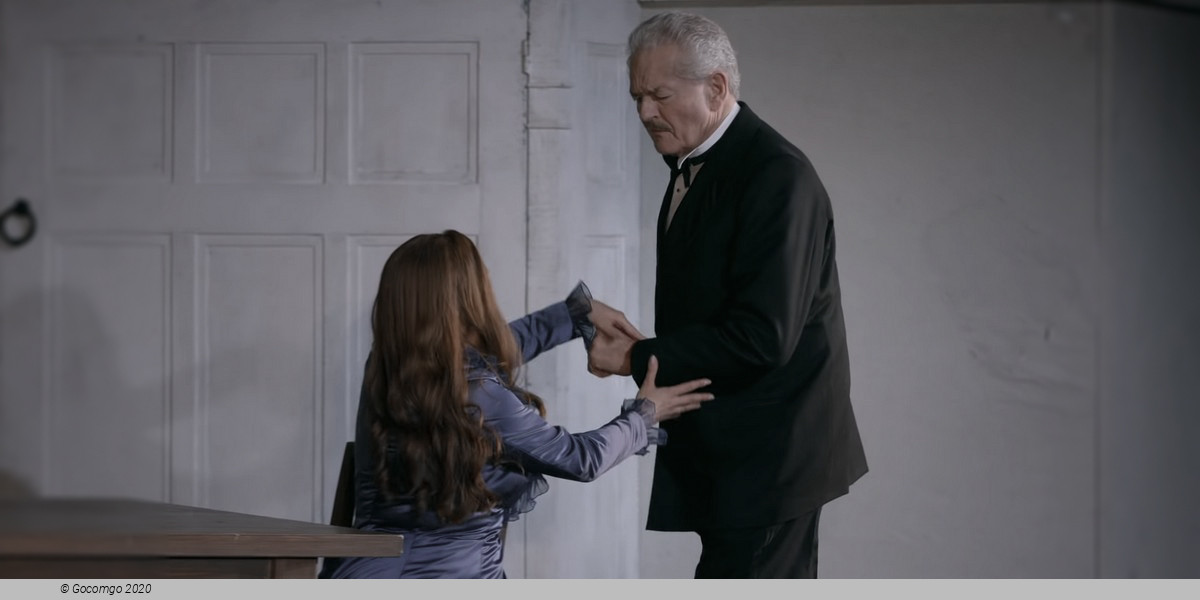
When Alvaro arrives to fetch Leonora, she hesitates: she wants to elope with him, but part of her wants to stay with her father; she eventually pulls herself together, ready for their elopement. However, the Marquis unexpectedly enters and discovers Leonora and Alvaro together. He threatens Alvaro with death, and in order to remove any suspicion as to Leonora’s purity, Alvaro surrenders himself. As he flings down his pistol, it goes off, mortally wounding the Marquis, who dies cursing his daughter.

Act 2

Scene 1: An inn in the village of Hornachuelos

About a year has passed since the death of the Marquis of Calatrava. While fleeing the scene, Leonora and Alvaro became separated, and neither has made any concerted effort to find the other.

In this scene, the Alcalde, several peasant muleteers, Don Carlo of Vargas (the brother of Donna Leonora), and many others are gathered in the kitchen of the inn as dinner is served. Don Carlo, disguised as a student from Salamanca and using the fictitious name Pereda, is now seeking revenge against Alvaro and Leonora for dishonoring the family name. (Son Pereda son ricco d'onore – "I am Pereda, of honorable descent"). During the supper, Preziosilla, a popular young gypsy girl, arrives, and she tells the young men’s fortunes and exhorts them to enlist in the war (Al suon del tamburo – "When side drums rattle") for Italy’s freedom, which all agree to do. Leonora arrives in male attire, on her way to a nearby monastery, but luckily she slips away without being discovered by Carlo.

Scene 2: A monastery nearby

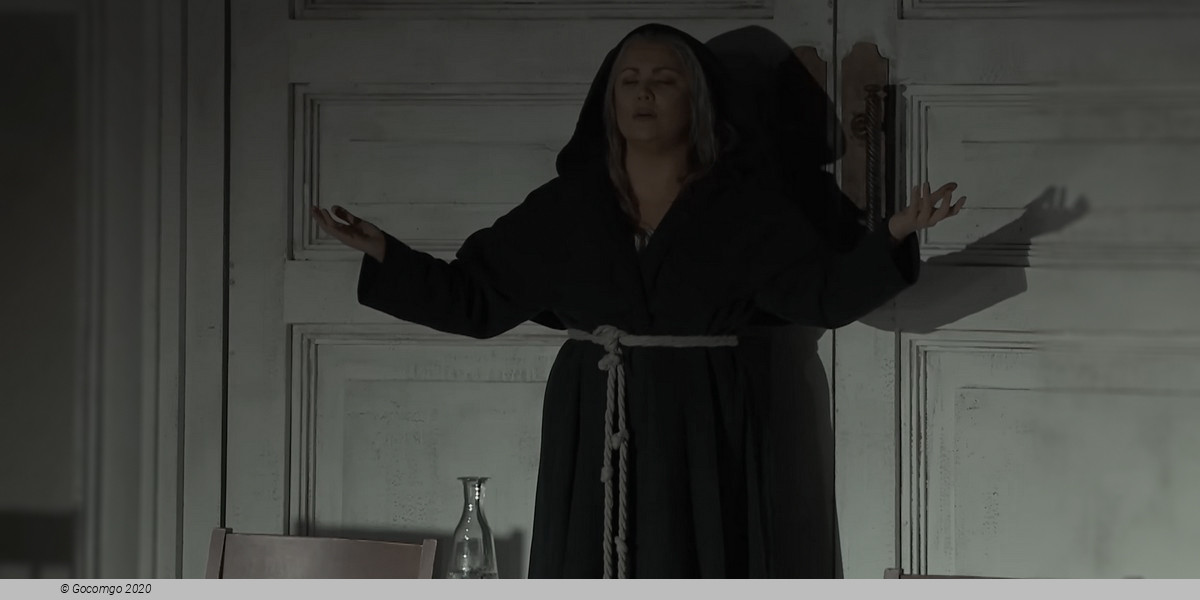
Leonora has come to take refuge in the monastery to live out her remaining days secluded from the rest of mankind. (Son giunta! ... Madre, pietosa Vergine – "I've got here! Oh, thank God!") After a somewhat surly reception by Fra Melitone, she tells the abbot, Padre Guardiano, her true name and her wish to spend the remainder of her life in the monastery's hermitage. The abbot recounts the trials she will have to undergo. Leonora, Padre Guardiano, Fra Melitone, and the other monks join in prayer as she is accepted in the hermitage.

Act 3

Scene 1: A forest near Velletri, in Italy

Meanwhile Don Alvaro has joined the Spanish army under the name of Don Federico Herreros (La vita è inferno all'infelice ... O tu che in seno agli angeli – "Life is a hell to those who are unhappy....Oh, my beloved, risen among the angels"). One night he saves the life of Don Carlo who is serving in the same army under the name of Don Felix Bornos. They become close friends and go side by side into the Battle of Velletri, an historical event which occurred in 1744.

Scene 2: The officers' quarters

In one of these engagements Don Alvaro returns, believing himself to be mortally wounded. He entrusts to Don Carlo’s care a valise containing a bundle of letters which he orders his friend to destroy as soon as Don Alvaro dies: (Solenne in quest'ora – "Swear to me, in this solemn hour"). Don Carlo has sworn not to look at the contents of the letters; but he becomes suspicious of his friend. (Morir! Tremenda cosa! ... Urna fatale del mio destino – "To die! What an awesome thought...Get away, fatal lot sent to my Destiny!"). He opens the valise, finds his sister’s picture, and realizes Alvaro's true identity. At that moment a surgeon brings word that Don Alvaro may recover. Don Carlo is overjoyed at the idea of avenging his father’s death.

Scene 3: A camp near the battleground

Having recovered, Alvaro is confronted by Carlo. They begin to duel, but are pulled away from each other by the soldiers. As they restrain Carlo, the anguished Don Alvaro vows to enter a monastery.

The soldiers gather. Trabucco, the peddler, tries to sell them his wares; Fra Melitone chastises them for their godless ways; and Preziosilla leads them in a chorus in praise of the military life (Rataplan, rataplan, della gloria – "Rum-tum-tum on the drum is the music that makes a soldier's martial spirit rise").

Act 4

Scene 1: The monastery

Impoverished peasants from the region approach Fra Melitone at the monastery at Hornachuelos for food and Padre Guardiano gently scolds Melitone for his less than charitable behavior towards them. Don Carlo then approaches, having learned of the presence of Don Alvaro there. Under the name of Father Raphael, Alvaro has indeed entered the monastery, near which is Leonora’s cave. Don Carlo forces him into a fight (Le minacce, i fieri accenti – "May the winds carry off with them").

Scene 2: A desolate spot near Leonora's hermitage

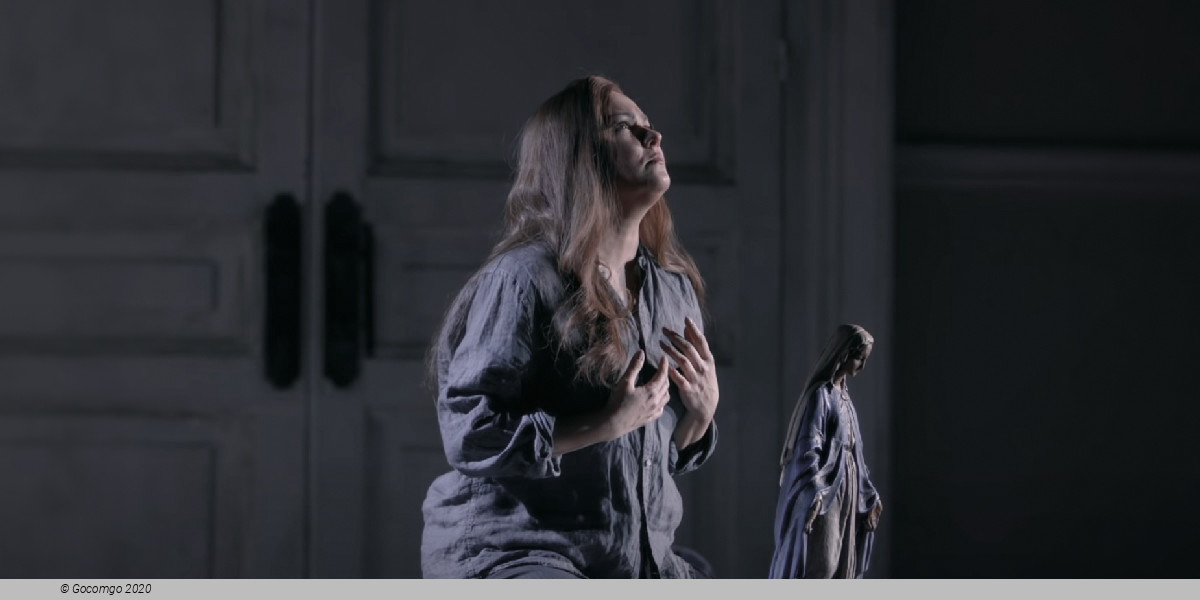
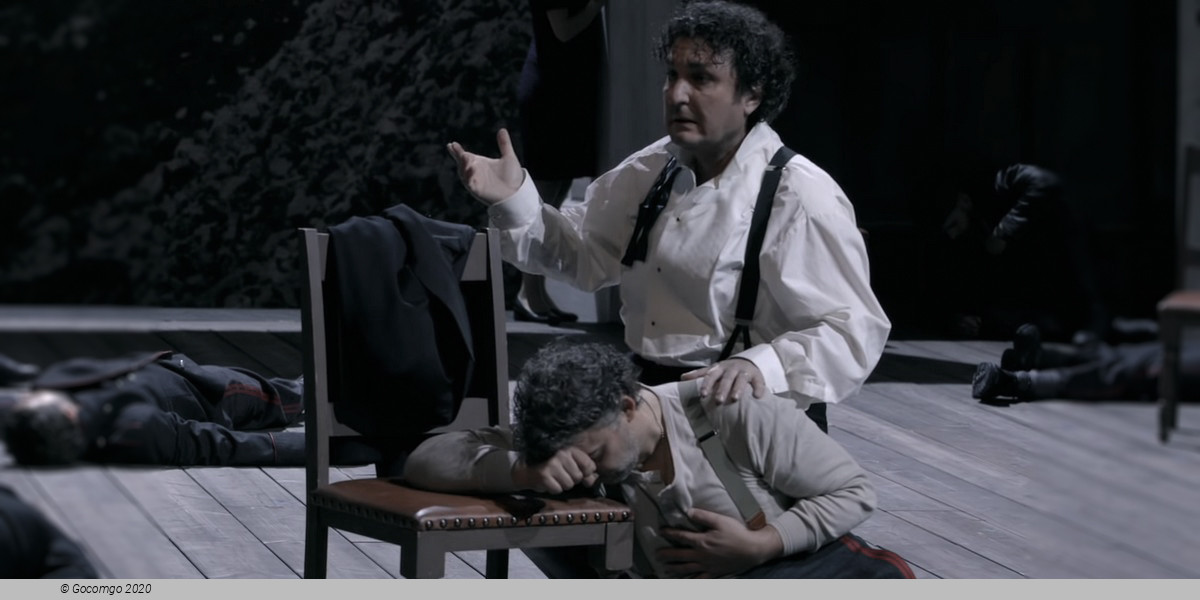
Leonora prays that she may find peace in death (Pace, pace mio Dio! – "Peace, O mighty Father, give me peace!"). Alvaro runs in, calling for help, having mortally wounded Carlo in their duel. The two lovers recognize each other. Leonora seeks her brother and, as she bends over him, he stabs her in the heart. The dying Leonora returns, supported by Padre Guardiano; he and Alvaro pray to heaven as she dies.

Venue Info

Staatsoper Unter den Linden (Berlin State Opera) - Berlin
Location   Unter den Linden 7

The Staatsoper Unter den Linden is one of the oldest and largest musical theaters in Germany. Founded in 1742 as the Royal Court Opera (German: Königliche Hofoper) under Frederick II. Located in Berlin, on the main street Unter den Linden.

King Frederick II of Prussia shortly after his accession to the throne commissioned the original building on the site. Construction work began in July 1741 with what was designed by Georg Wenzeslaus von Knobelsdorff to be the first part of a "Forum Fredericianum" on present-day Bebelplatz. Although not entirely completed, the Court Opera (Hofoper) was inaugurated with a performance of Carl Heinrich Graun's Cesare e Cleopatra on December 7, 1742. This event marked the beginning of the successful, 250-year co-operation between the Staatsoper and the Staatskapelle Berlin, the state orchestra, whose roots trace back to the 16th century.

In 1821, the Berlin Opera—hosted at the Schauspielhaus Berlin—gave the premiere of Weber's Der Freischütz. In 1842, Wilhelm Taubert instituted the tradition of regular symphonic concerts. In the same year, Giacomo Meyerbeer succeeded Gaspare Spontini as General Music Director. Felix Mendelssohn also conducted symphonic concerts for a year.

On August 18, 1843 the Linden Opera was destroyed by fire. The reconstruction of the building was supervised by architect Carl Ferdinand Langhans, and the Königliches Opernhaus (Royal Opera House) was inaugurated the following autumn by a performance of Meyerbeer's Ein Feldlager in Schlesien. In 1849, Otto Nicolai's Die lustigen Weiber von Windsor was premiered at the Royal Opera House, conducted by the composer.

1945: The Lindenoper was once again destroyed on February 3. The concerts were relocated to the Admiralspalast and the Schauspielhaus. On 18 February, Karajan conducted his last symphonic concert with the Staatskapelle in the Beethoven hall.

The second rebuilding took a long time. From 1945, the opera company played in the former Admiralspalast (today's Metropoltheater). From 1949, the company served as the state opera of East Germany. It moved back to its original home after the rebuilding in freely adapted baroque forms was finally completed in 1955. The newly rebuilt opera house was opened, again, with Wagner's Die Meistersinger von Nürnberg. The capacity is now about 1,300. After the Berlin Wall was built in 1961, the Opera was somewhat isolated, but still maintained a comprehensive repertoire that featured the classic and romantic period together with contemporary ballet and operas.

After reunification, the Linden Opera rejoined the operatic world. Important works that had already performed in the past were rediscovered and discussed anew within the framework of a "Berlin Dramaturgy". Baroque Opera in particular was at the center of attention, with Graun's Cleopatra e Cesare, Keiser's Croesus, Florian Leopold Gassmann's L'opera seria and Scarlatti's Griselda. These works were performed by Belgian conductor René Jacobs together with the Akademie für Alte Musik Berlin and the Freiburger Barockorchester on period instruments. In the 1990s, the opera was officially renamed Staatsoper Unter den Linden.

In 1992, the Argentine-Israeli conductor Daniel Barenboim was appointed Music Director. In 2000, the orchestra (according to its official website) elected Barenboim "conductor for life." During the 2002 Festtage, he led a Wagner cycle in ten parts, a production created in collaboration with director Harry Kupfer.

Since 2009, the Berlin State Opera has been undergoing considerable renovation work led by German architect HG Merz. The roof of the opera building was raised and the proscenium prolonged to improve the acoustics. Other renovation and extension works include the director's building, the below-ground connection building and the depot building. The latter will house the new rehearsal center.

The house was reopened in 2017 with premieres of Humperdinck's Hänsel und Gretel and Monteverdi's L'incoronazione di Poppea on one weekend.

Important Info
Type: Opera
City: Berlin, Germany
Duration: 3h 40min
Acts: 4
Sung in: Italian
Titles in: English,German

E-tickets: Print at home or at the box office of the event if so specified. You will find more information in your booking confirmation email.

You can only select the category, and not the exact seats.
If you order 2 or 3 tickets: your seats will be next to each other.
If you order 4 or more tickets: your seats will be next to each other, or, if this is not possible, we will provide a combination of groups of seats (at least in pairs, for example 2+2 or 2+3).

From
$ 99
Top of page