





Staatsoper Hamburg 5 November 2022 - The Winter's Tale | GoComGo.com

The Winter's Tale

Staatsoper Hamburg, Main Stage, Hamburg, Germany
All photos (10)
Select date and time
7:30 PM

E-tickets: Print at home or at the box office of the event if so specified. You will find more information in your booking confirmation email.

You can only select the category, and not the exact seats.
If you order 2 or 3 tickets: your seats will be next to each other.
If you order 4 or more tickets: your seats will be next to each other, or, if this is not possible, we will provide a combination of groups of seats (at least in pairs, for example 2+2 or 2+3).

Important Info
Type: Ballet
City: Hamburg, Germany
Starts at: 19:30
Acts: 3
Intervals: 2
Duration: 2h 45min

E-tickets: Print at home or at the box office of the event if so specified. You will find more information in your booking confirmation email.

You can only select the category, and not the exact seats.
If you order 2 or 3 tickets: your seats will be next to each other.
If you order 4 or more tickets: your seats will be next to each other, or, if this is not possible, we will provide a combination of groups of seats (at least in pairs, for example 2+2 or 2+3).

Overview

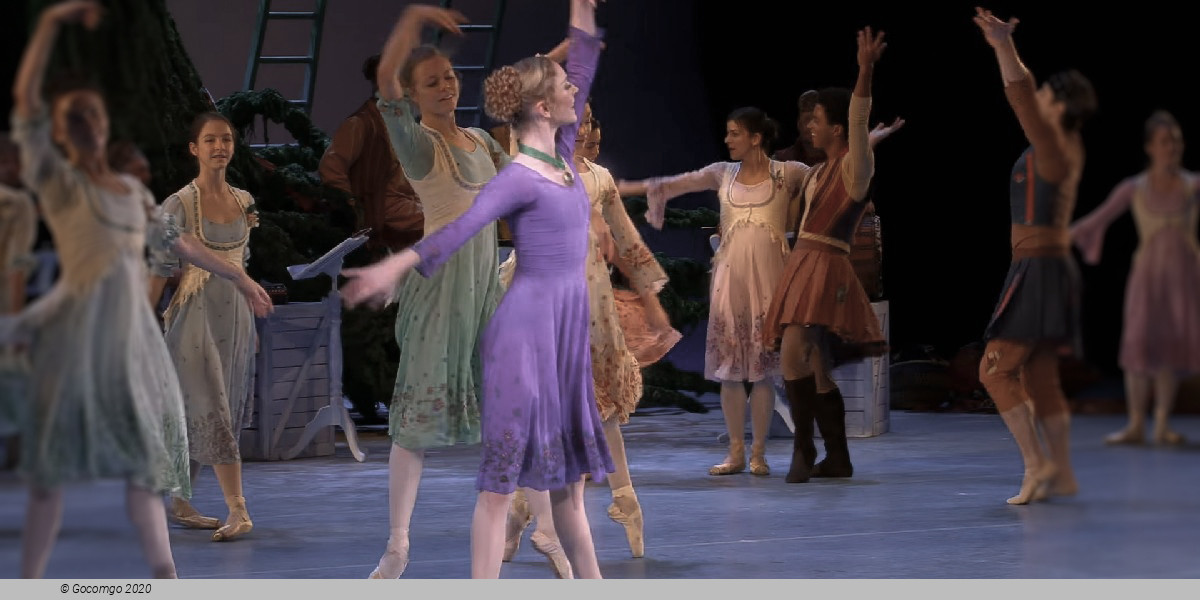
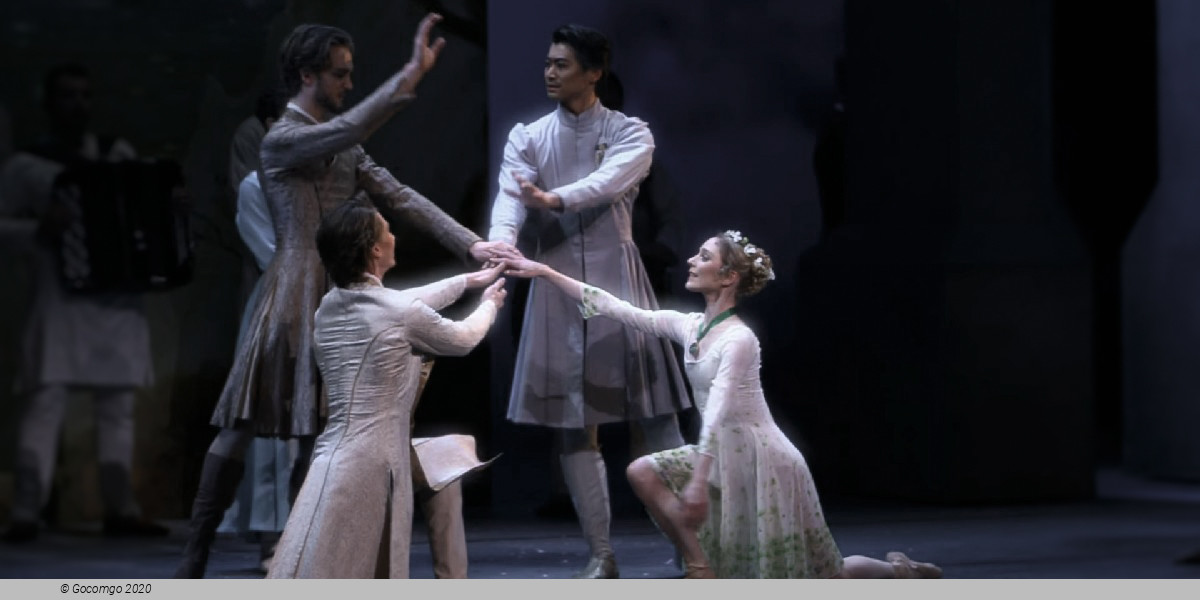
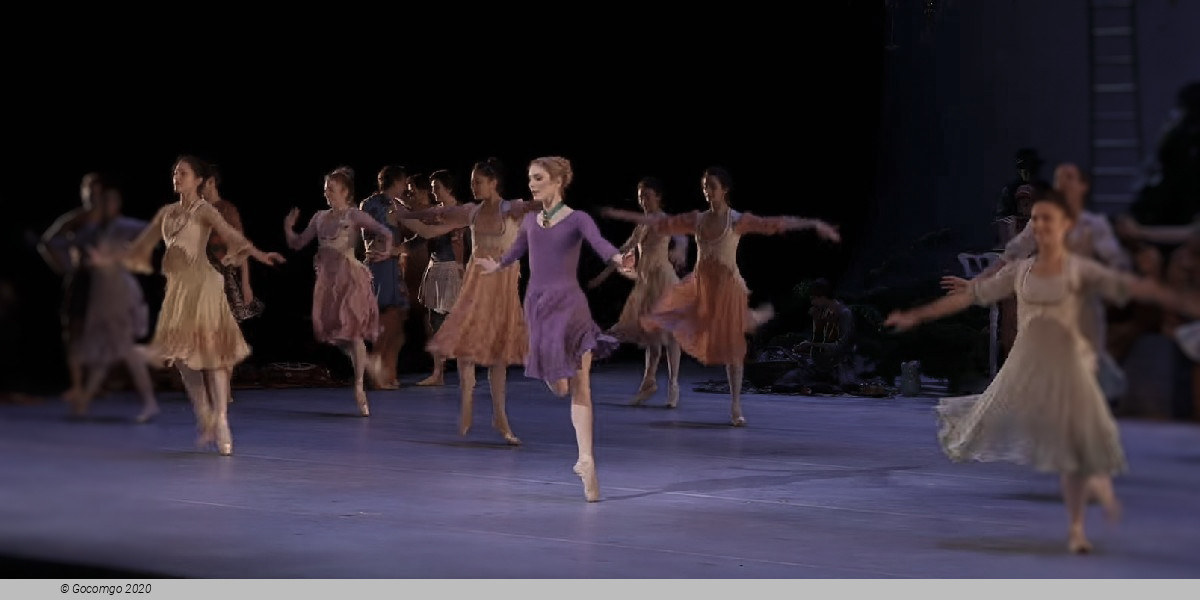
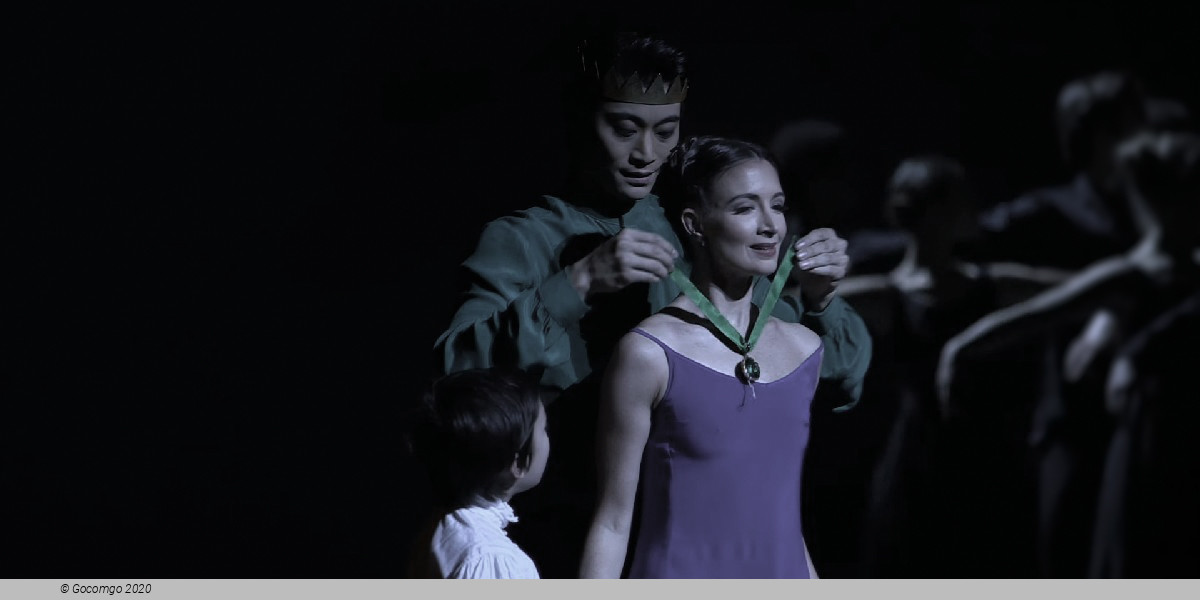
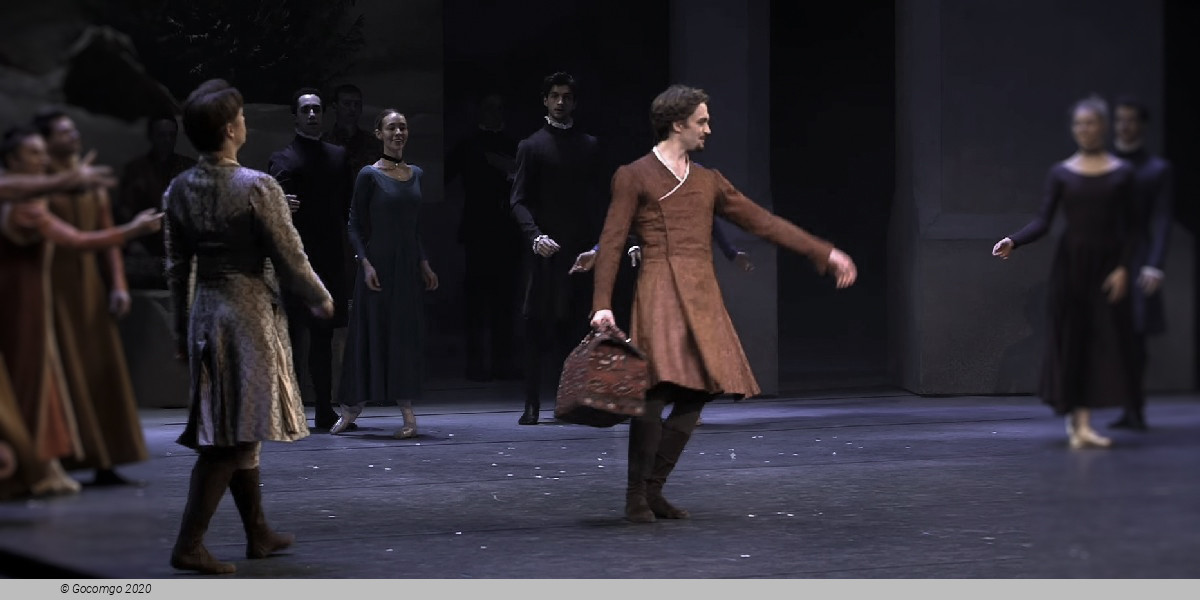
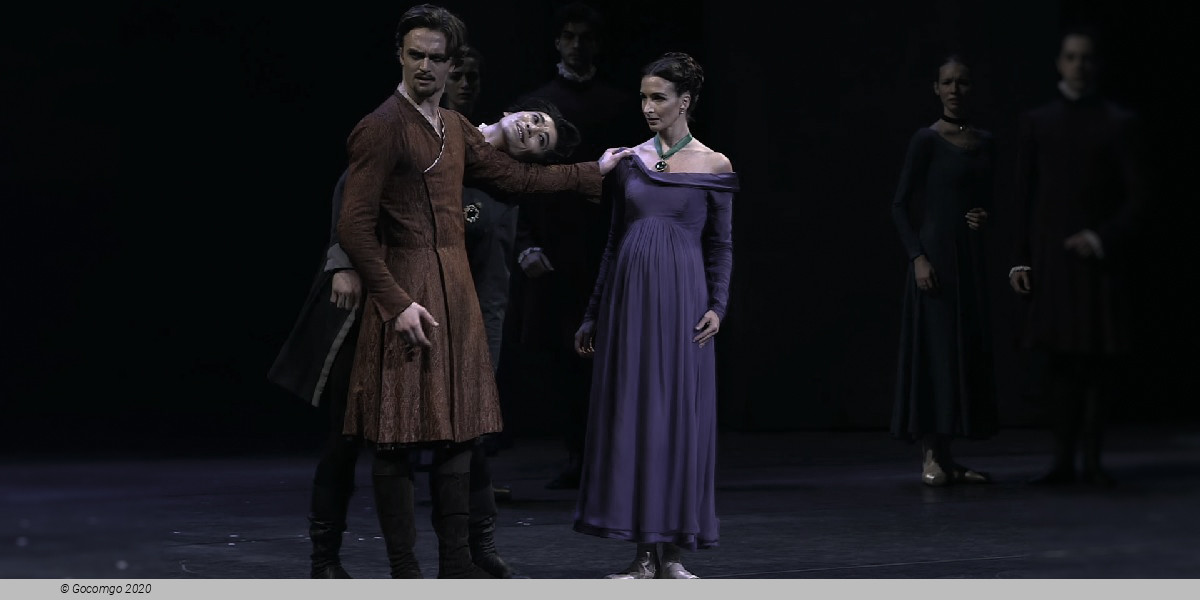
"The Winter's Tale". Wheeldon's ballet about Shakespeare's romance of the same title was created as a co-production of the Royal Ballet and the National Ballet of Canada and was enthusiastically received by audiences and critics. Alastair Macaulay resumed in the New York Times: "Though this is one of the most endlessly moving plays, nothing in Mr. Wheeldon's version is unworthy of the great original."

Supported by the Foundation for the Support of the Hamburg State Opera. The set for this ballet is a generous loan from the Royal Ballet.

Wheeldon's ballet is a dance version of William Shakespeare's play The Winter's Tale (1609–11), considered by scholars one of his "problem plays," difficult to classify as tragedy, comedy, romance, or a combination of all three. The first three of its five acts are filled with intense psychological drama; the last two are lighthearted and comedic, concluding with a happy ending. It tells a complicated story of jealousy, loss, love, joy, redemption, forgiveness, and reconciliation. Shakespeare chose his title to signify to his audiences that the play was like a tale told in company gathered by a fireside on a winter's evening. A fictional invention—not true, but entertaining and morally instructive.

History
Premiere of this production: 10 April 2014, Royal Opera House, London

The Winter's Tale is a ballet in three acts choreographed by Christopher Wheeldon to a commissioned score by Joby Talbot. With scenery and costumes designed by Bob Crowley, lighting designed by Natasha Katz, and special stage effects designed by Daniel Brodie and Basil Twist, it was a co-production of the Royal Ballet and the National Ballet of Canada and was first presented at the Royal Opera House, London, on 10 April 2014.

Synopsis

Following a brief setup scene the play begins with the appearance of two childhood friends: Leontes, King of Sicilia, and Polixenes, the King of Bohemia. Polixenes is visiting the kingdom of Sicilia, and is enjoying catching up with his old friend. However, after nine months, Polixenes yearns to return to his own kingdom to tend to affairs and see his son. Leontes desperately attempts to get Polixenes to stay longer, but is unsuccessful. Leontes then decides to send his wife, Queen Hermione, to try to convince Polixenes. Hermione agrees and with three short speeches is successful. Leontes is puzzled as to how Hermione convinced Polixenes so easily, and so he begins to suspect that his pregnant wife has been having an affair with Polixenes and that the child is Polixenes'. Leontes orders Camillo, a Sicilian Lord, to poison Polixenes. Camillo instead warns Polixenes and they both flee to Bohemia.

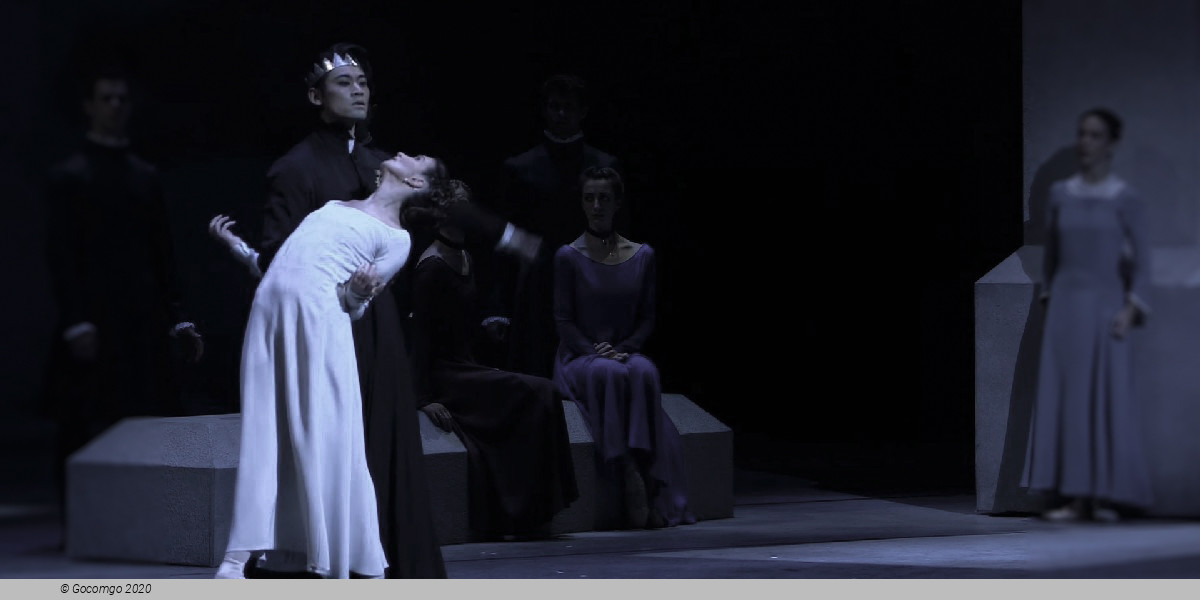
Furious at their escape, Leontes now publicly accuses his wife of infidelity, and declares that the child she is bearing must be illegitimate. He throws her in prison, over the protests of his nobles, and sends two of his lords, Cleomenes and Dion, to the Oracle at Delphos for what he is sure will be confirmation of his suspicions. Meanwhile, the queen gives birth to a girl, and her loyal friend Paulina takes the baby to the king, in the hopes that the sight of the child will soften his heart. He grows angrier, however, and orders Paulina's husband, Lord Antigonus, to take the child and abandon it in a desolate place. Cleomenes and Dion return from Delphos with word from the Oracle and find Hermione publicly and humiliatingly put on trial before the king. She asserts her innocence, and asks for the word of the Oracle to be read before the court. The Oracle states categorically that Hermione and Polixenes are innocent, Camillo is an honest man, and that Leontes will have no heir until his lost daughter is found. Leontes shuns the news, refusing to believe it as the truth. As this news is revealed, word comes that Leontes' son, Mamillius, has died of a wasting sickness brought on by the accusations against his mother. At this, Hermione falls in a swoon, and is carried away by Paulina, who subsequently reports the queen's death to her heartbroken and repentant husband. Leontes vows to spend the rest of his days atoning for the loss of his son, his abandoned daughter, and his queen.

Antigonus, meanwhile, abandons the baby on the coast of Bohemia, reporting that Hermione appeared to him in a dream and bade him name the girl Perdita. He leaves a fardel (a bundle) by the baby containing gold and other trinkets which suggest that the baby is of noble blood. A violent storm suddenly appears, wrecking the ship on which Antigonus arrived. He wishes to take pity on the child, but is chased away in one of Shakespeare's most famous stage directions: "Exit, pursued by a bear." (It is not known whether Shakespeare used a real bear from the London bear-pits, or an actor in bear costume.) Perdita is rescued by a shepherd and his son, also known as "Clown."

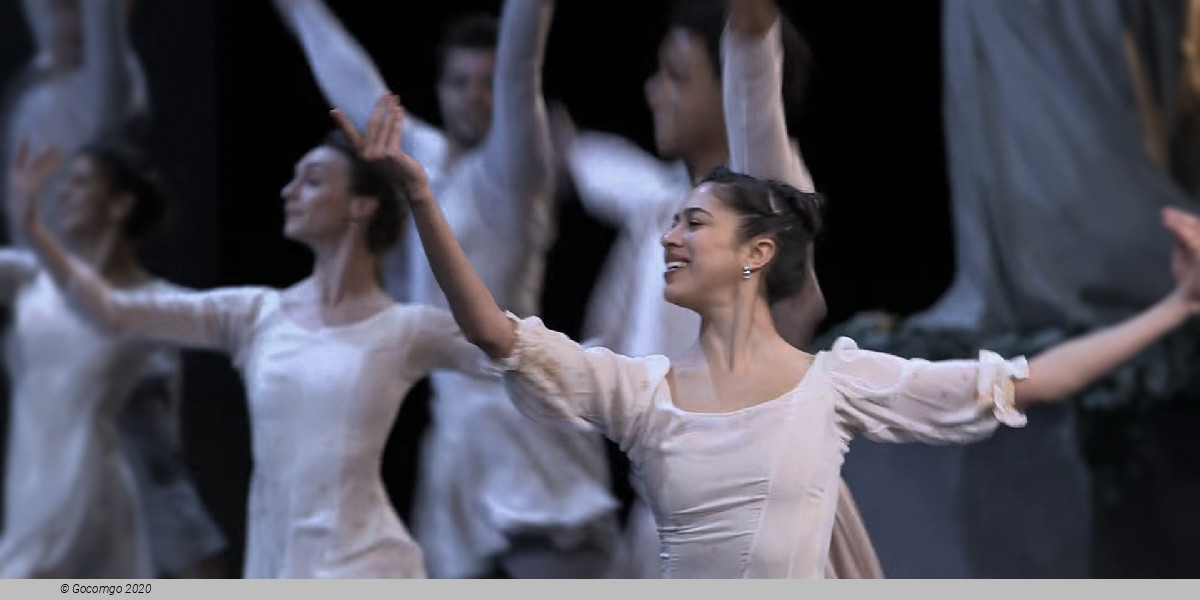
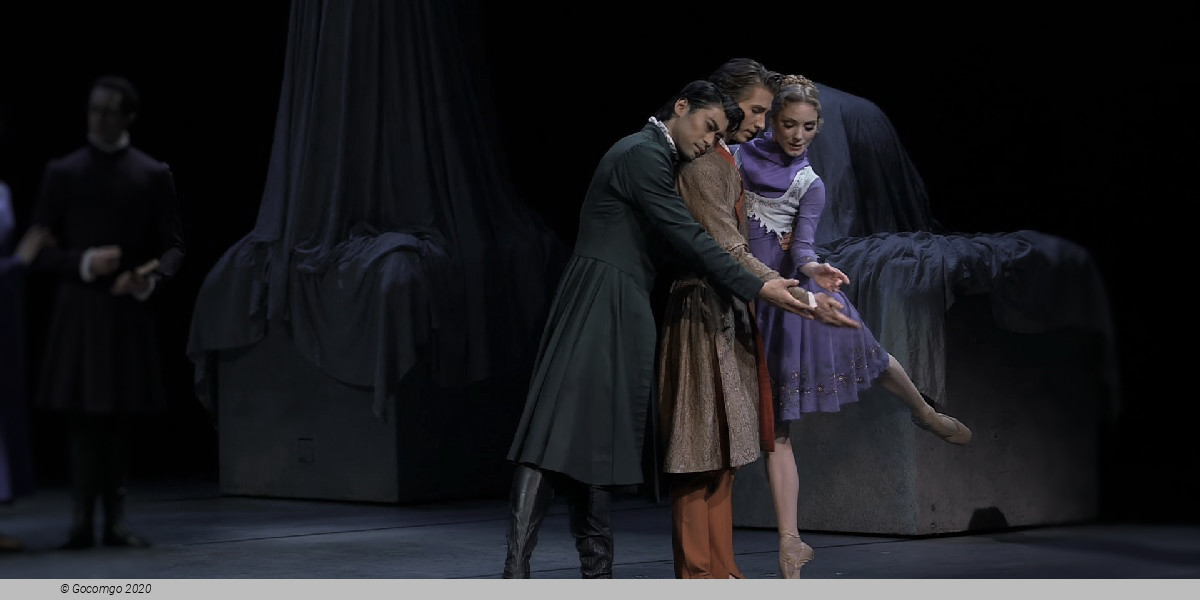
"Time" enters and announces the passage of sixteen years. Camillo, now in the service of Polixenes, begs the Bohemian king to allow him to return to Sicilia. Polixenes refuses and reports to Camillo that his son, Prince Florizel, has fallen in love with a lowly shepherd girl: Perdita. He suggests to Camillo that, to take his mind off thoughts of home, they disguise themselves and attend the sheep-shearing feast where Florizel and Perdita will be betrothed. At the feast, hosted by the Old Shepherd who has prospered thanks to the gold in the fardel, the pedlar Autolycus picks the pocket of the Young Shepherd and, in various guises, entertains the guests with bawdy songs and the trinkets he sells. Disguised, Polixenes and Camillo watch as Florizel (under the guise of a shepherd named Doricles) and Perdita are betrothed. Then, tearing off the disguise, Polixenes angrily intervenes, threatening the Old Shepherd and Perdita with torture and death and ordering his son never to see the shepherd's daughter again. With the aid of Camillo, however, who longs to see his native land again, Florizel and Perdita take ship for Sicilia, using the clothes of Autolycus as a disguise. They are joined in their voyage by the Old Shepherd and his son who are directed there by Autolycus.

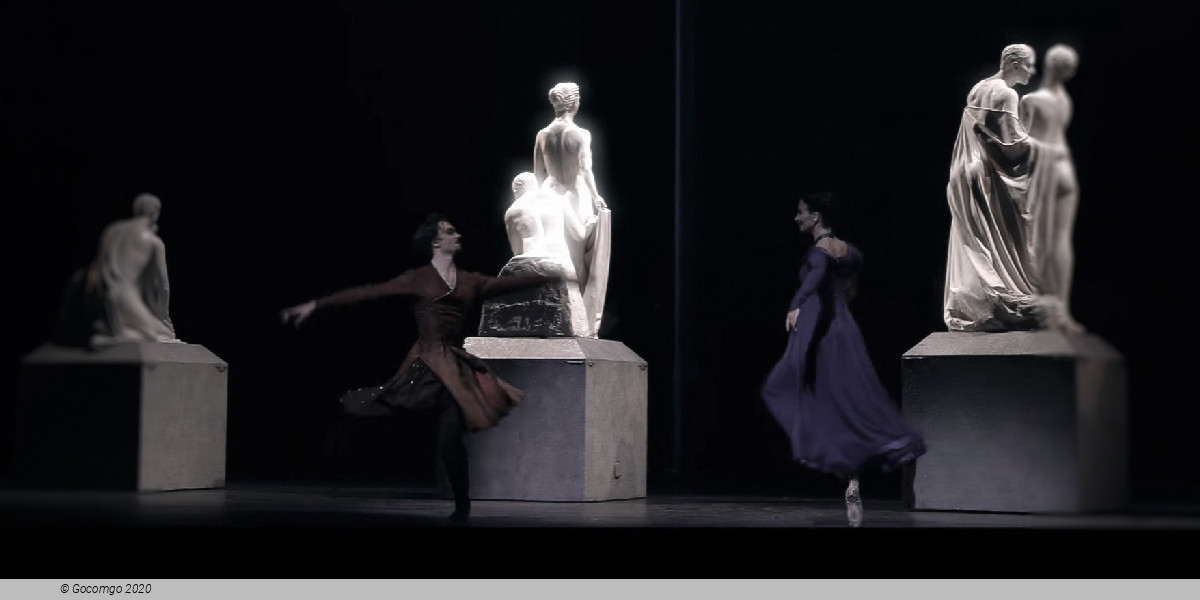
In Sicilia, Leontes is still in mourning. Cleomenes and Dion plead with him to end his time of repentance because the kingdom needs an heir. Paulina, however, convinces the king to remain unmarried forever since no woman can match the greatness of his lost Hermione. Florizel and Perdita arrive, and they are greeted effusively by Leontes. Florizel pretends to be on a diplomatic mission from his father, but his cover is blown when Polixenes and Camillo, too, arrive in Sicilia. The meeting and reconciliation of the kings and princes is reported by gentlemen of the Sicilian court: how the Old Shepherd raised Perdita, how Antigonus met his end, how Leontes was overjoyed at being reunited with his daughter, and how he begged Polixenes for forgiveness. The Old Shepherd and Young Shepherd, now made gentlemen by the kings, meet Autolycus, who asks them for their forgiveness for his roguery. Leontes, Polixenes, Camillo, Florizel and Perdita then go to Paulina's house in the country, where a statue of Hermione has been recently finished. The sight of his wife's form makes Leontes distraught, but then, to everyone's amazement, the statue shows signs of vitality; it is Hermione, restored to life. As the play ends, Perdita and Florizel are engaged, and the whole company celebrates the miracle. Despite this happy ending typical of Shakespeare's comedies and romances, the impression of the unjust death of young prince Mamillius lingers to the end, being an element of unredeemed tragedy, in addition to the years wasted in separation.

Venue Info

Staatsoper Hamburg - Hamburg
Location   Große Theaterstraße 25

Staatsoper Hamburg is the oldest publicly accessible musical theater in Germany, located in Hamburg. It was founded in 1678. With the emergence of the Hamburg Opera House, researchers attribute the formation of a national German opera school.

Opera in Hamburg dates to 2 January 1678 when the Oper am Gänsemarkt was inaugurated with a performance of a biblical Singspiel by Johann Theile. It was not a court theatre but the first public opera house in Germany established by the art-loving citizens of Hamburg, a prosperous member of the Hanseatic League.

The Hamburg Bürgeroper resisted the dominance of the Italianate style and rapidly became the leading musical center of the German Baroque. In 1703, George Friedrich Handel was engaged as violinist and harpsichordist and performances of his operas were not long in appearing. In 1705, Hamburg gave the world première of his opera Nero.

In 1721, Georg Philipp Telemann, a central figure of the German Baroque, joined the Hamburg Opera, and in subsequent years Christoph Willibald Gluck, Johann Adolph Hasse and various Italian companies were among the guests.

To replace the aging wooden structure, the first stone was laid on 18 May 1826 for the Stadt-Theater on the present-day site of the Staatsoper Hamburg. The new theater, with seating for 2,800 guest, was inaugurated less than a year later with Beethoven's incidental music to Egmont.

In 1873, both the exterior and interior of the structure were renovated in the reigning "Gründerzeit" style of the time, and again in 1891, when electric lighting was introduced.

Under the direction of Bernhard Pollini, the house mounted its first complete Ring Cycle in 1879. In 1883, the year of Wagner's death, a cycle comprising nine of his operas commenced. The musical directors Hans von Bülow (from 1887 to 1890) and Gustav Mahler (from 1891 to 1897) also contributed to the fame of the opera house.

In the beginning of the 20th century, opera was an important part of the theatre's repertoire; among the 321 performances during the 1907–08 season, 282 were performances of opera. The Stadt-Theater performed not only established repertoire but also new works, such as Paul Hindemith's Sancta Susanna, Igor Stravinsky's The Soldier's Tale, Ernst Krenek's Jonny spielt auf, and Leoš Janáček's Jenůfa. Ferruccio Busoni's Die Brautwahl (1912) and Erich Wolfgang Korngold's Die tote Stadt (1920) both had their world premieres in Hamburg. In the 1930s, after Hitler came to power, the opera house was renamed Hamburgische Staatsoper.

On the night of 2 August 1943, both the auditorium and its neighbouring buildings were destroyed during air raids by fire-bombing; a low-flying airplane dropped several petrol and phosphorus containers onto the middle of the roof of the auditorium, causing it to erupt into a conflagration.

The current Staatsoper opened on 15 October 1955 with Mozart's Die Zauberflöte. Hamburg continued to devote itself to new works, such as Hans Werner Henze's The Prince of Homburg (1960), Stravinsky's The Flood (1963), Gian Carlo Menotti's Help, Help, the Globolinks! (1968), and Mauricio Kagel's Staatstheater (1971).

In 1967, under the direction of Joachim Hess, the Staatsoper Hamburg became the first company to broadcasts its operas in color on television, beginning with Die Hochzeit des Figaro (a German translation of Le Nozze di Figaro). Ten of these television productions have been released on DVD by ArtHaus Musik as Cult Opera of the 1970s, as well as separately. All of these were performed in German regardless of the original language (six were written in German, one in French, two in English, and one in Italian).

More recently, Hamburg gave the world premières of Wolfgang Rihm's Die Eroberung von Mexico (1992) and Helmut Lachenmann's Das Mädchen mit den Schwefelhölzern (1997), for which it received much international acclaim. The company has won the "Opera House of the Year" award by the German magazine Opernwelt in 1997 and in 2005.

Important Info
Type: Ballet
City: Hamburg, Germany
Starts at: 19:30
Acts: 3
Intervals: 2
Duration: 2h 45min
Top of page