




Staatsoper Hamburg 5 October 2023 - Die Entführung aus dem Serail | GoComGo.com

Die Entführung aus dem Serail

Staatsoper Hamburg, Main Stage, Hamburg, Germany
All photos (8)
Select date and time
7:30 PM

E-tickets: Print at home or at the box office of the event if so specified. You will find more information in your booking confirmation email.

You can only select the category, and not the exact seats.
If you order 2 or 3 tickets: your seats will be next to each other.
If you order 4 or more tickets: your seats will be next to each other, or, if this is not possible, we will provide a combination of groups of seats (at least in pairs, for example 2+2 or 2+3).

Important Info
Type: Opera
City: Hamburg, Germany
Starts at: 19:30
Intervals: 1
Duration: 2h 40min

E-tickets: Print at home or at the box office of the event if so specified. You will find more information in your booking confirmation email.

You can only select the category, and not the exact seats.
If you order 2 or 3 tickets: your seats will be next to each other.
If you order 4 or more tickets: your seats will be next to each other, or, if this is not possible, we will provide a combination of groups of seats (at least in pairs, for example 2+2 or 2+3).

Overview

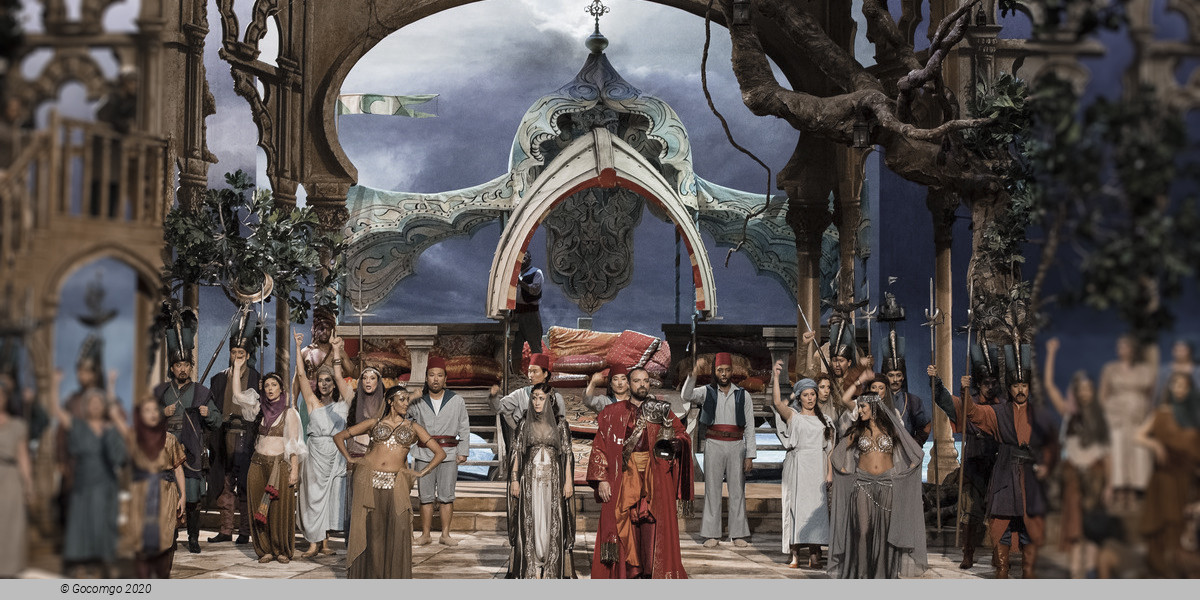
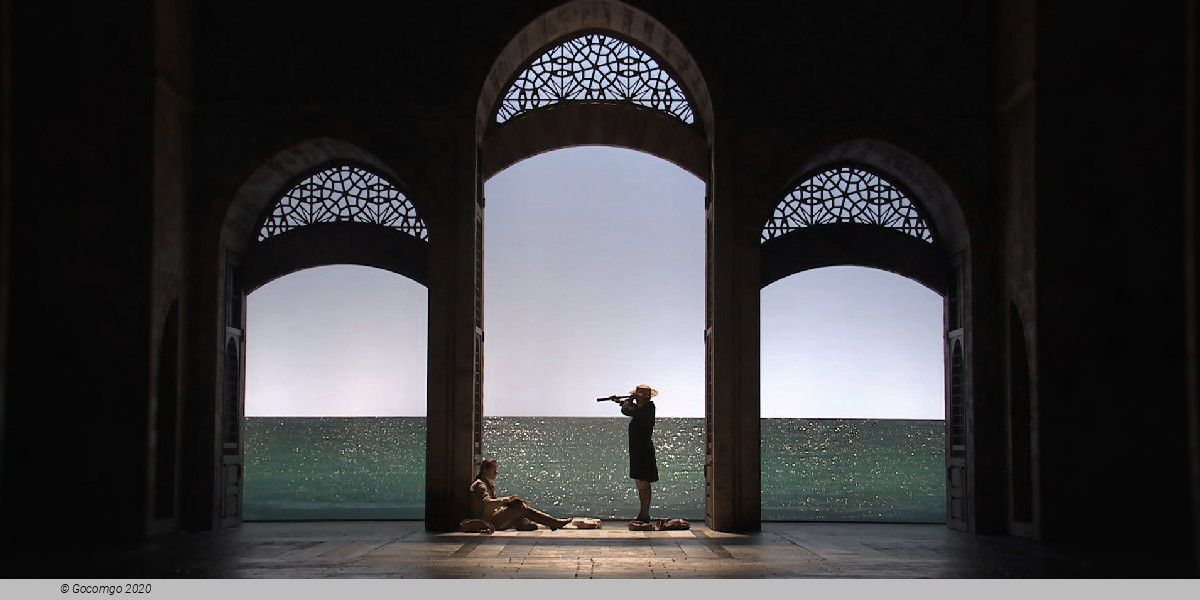
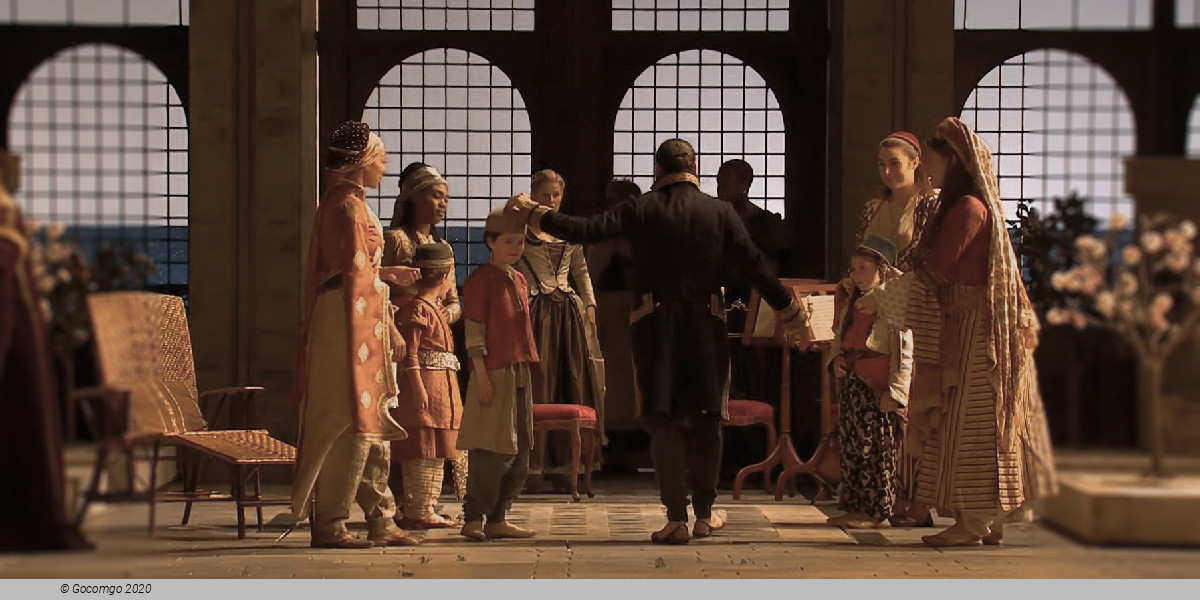
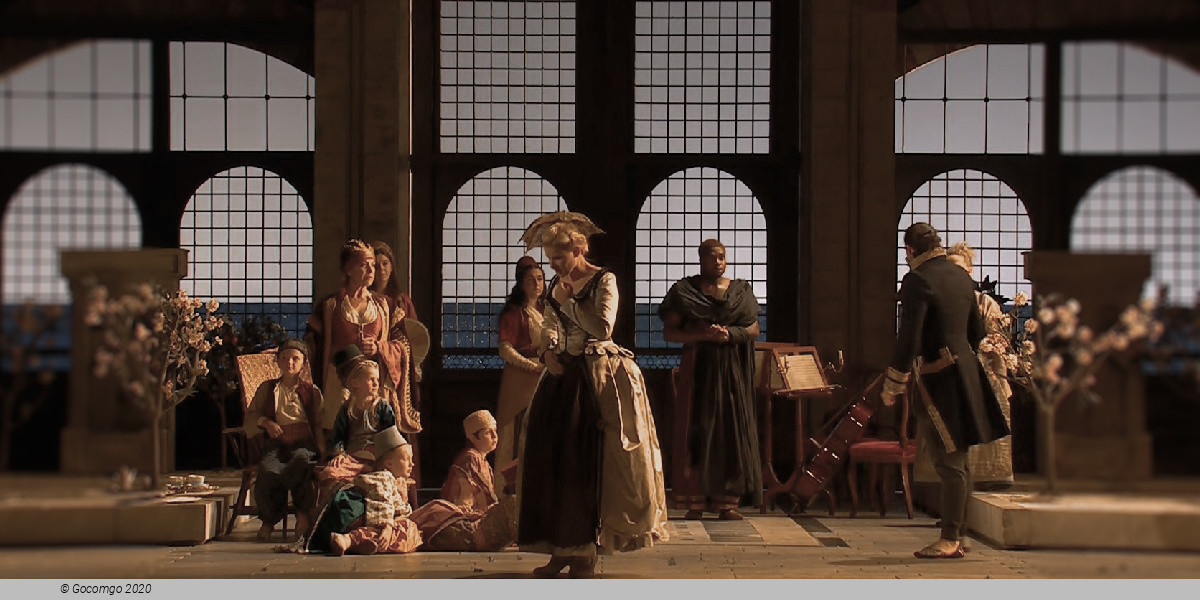
Constance, Blonde and Pedrillo are prisoners of Bassa Selim at the Ottoman court in Istanbul. Belmonte, Constance's groom, plans to free them secretly, but the nocturnal action is discovered. Strangely enough, the punishment fails to materialize, and Bassa Selim lets the two couples go. The reason: Belmonte's father had once deprived the Bassa of office, home and wife when the Christians took over the rule of the country.

History
Premiere of this production: 16 July 1782, Burgtheater, Vienna

Die Entführung aus dem Serail (The Abduction from the Seraglio) is an opera Singspiel in three acts by Wolfgang Amadeus Mozart. The German libretto is by Gottlieb Stephanie, based on Christoph Friedrich Bretzner's Belmont und Constanze, oder Die Entführung aus dem Serail. The plot concerns the attempt of the hero Belmonte, assisted by his servant Pedrillo, to rescue his beloved Konstanze from the seraglio of Pasha Selim. The work premiered on 16 July 1782 at the Vienna Burgtheater, with the composer conducting.

Synopsis

Place: the country house of the Pasha (German "Bassa"), in Turkey
Time: 16th century

Act 1
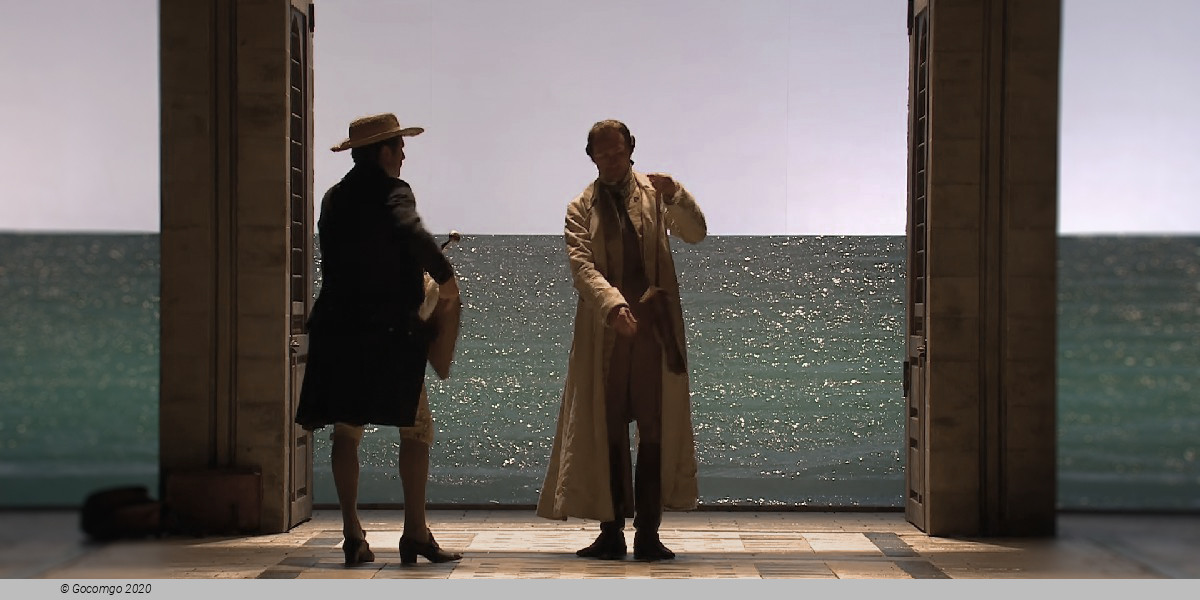
After a lively overture, Belmonte enters, looking for his betrothed, Konstanze, who with her English servant Blonde has fallen into the hands of pirates and been sold to Pasha Selim (Aria: "Hier soll ich dich denn sehen" – "Here surely I must find her"). Osmin, the Pasha's bad-tempered servant, comes to pluck figs in the garden and contemptuously ignores Belmonte's questions (Aria: "Wer ein Liebchen hat gefunden" – "You may think, you've found a maiden"). Belmonte tries to obtain news of his servant, Pedrillo, who has been captured with the women and is serving as a servant in the Pasha's palace. Osmin replies with insults and abuse (Duet: "Verwünscht seist du samt deinem Liede!" – "The devil take you and your song, sir"). Belmonte leaves in disgust. Pedrillo enters and Osmin rages at him, vowing to get him tortured and killed in many different ways (Aria: "Solche hergelaufne Laffen" – "These young men who go a-spying"). Osmin leaves and Belmonte enters and happily reunites with Pedrillo. Together they resolve to rescue Konstanze and Blonde, who is Pedrillo's fiancée (Aria: "Konstanze, Konstanze, dich wiederzusehen … O wie ängstlich" – "Konstanze, Konstanze, to see thee again … Oh what trembling").

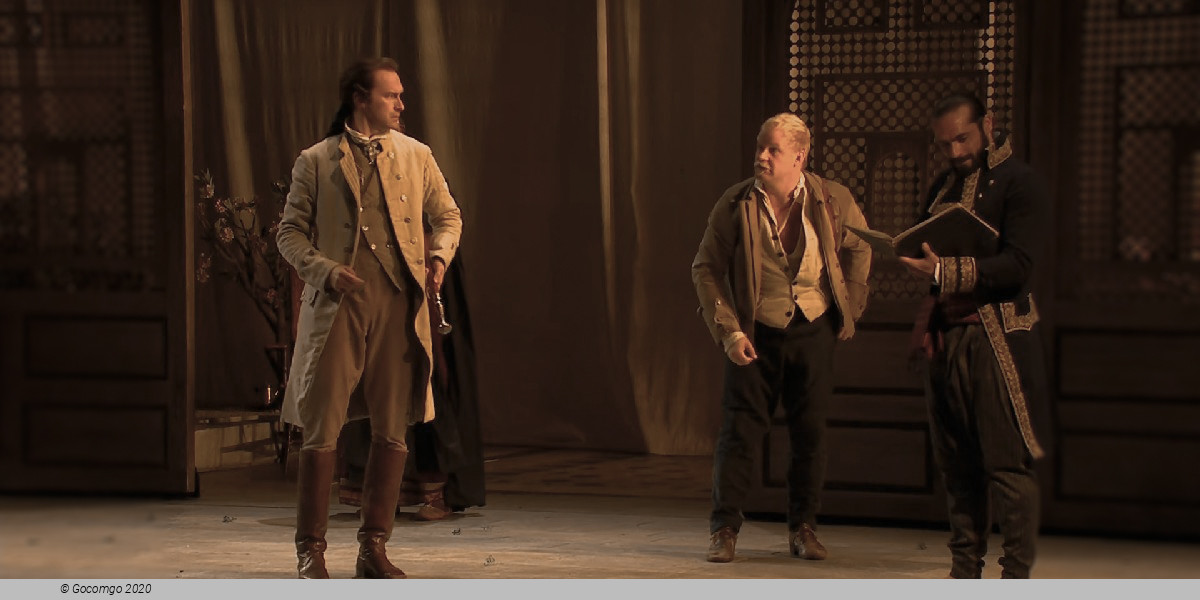
Accompanied by a chorus of Janissaries ("Singt dem großen Bassa Lieder" – "Sing to the mighty Pasha Selim"), Pasha Selim appears with Konstanze, for whose love he strives in vain (Aria of Konstanze: "Ach ich liebte" – "How I loved him"). Pedrillo tricks the Pasha into hiring Belmonte as an architect. When Belmonte and Pedrillo try to enter the palace, Osmin bars their way, but they hurry past him anyway (Terzett: "Marsch! Marsch! Marsch! Trollt euch fort!" – "March! March! March! Clear off!").

Act 2

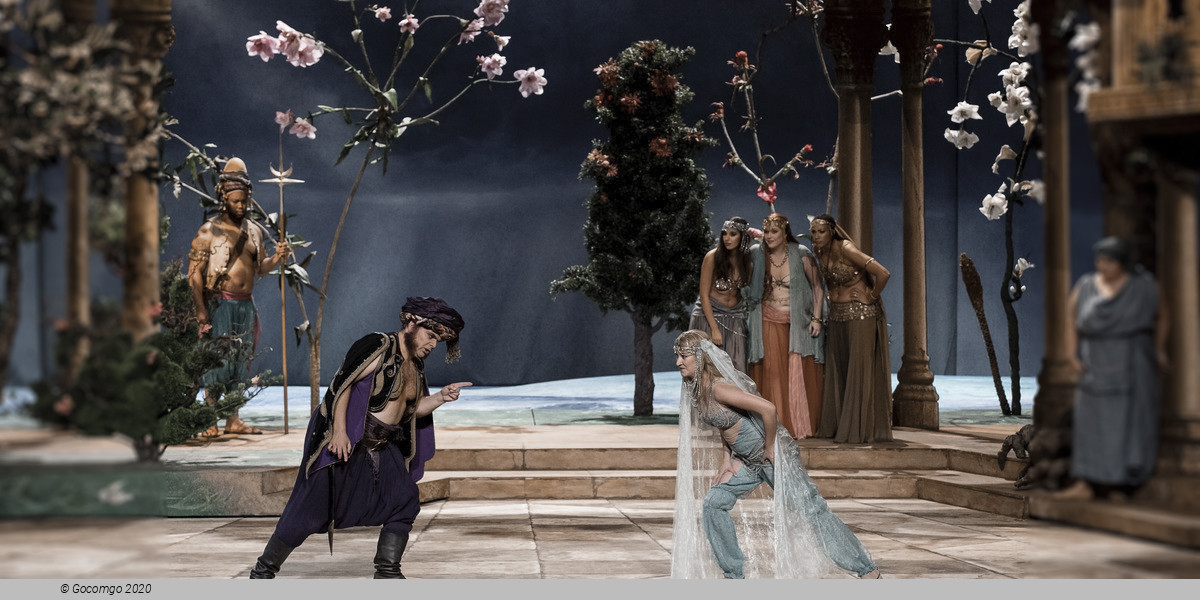
The Pasha has given Blonde to Osmin, to be his slave; however, she defiantly rebuffs her new master's rough lovemaking attempts (Aria: "Durch Zärtlichkeit und Schmeicheln" – "With smiles and kind caresses"), threatens to scratch out his eyes, and chases him out of the room (Duet: "Ich gehe, doch rate ich dir" – "I'm going, but mark what I say"). Konstanze enters and greets Blonde in distress (Aria: "Welcher Wechsel herrscht in meiner Seele … Traurigkeit ward mir zum Lose" – "Oh what sorrow overwhelms my spirit … Endless grief tortures my spirit"). The Pasha enters, demands her love, and threatens to use force, but she resolutely rejects him. (Aria: "Martern aller Arten" – "Tortures unrelenting") Left alone, he muses on her determination to remain chaste, which increases his desire for her.

Pedrillo informs Blonde that Belmonte has come and is planning to rescue them. Blonde is filled with joy. (Aria: "Welche Wonne, welche Lust" – "Oh, the happy, happy day"). After singing a short ditty to boost his courage (Aria: "Frisch zum Kampfe" – "Now Pedrillo, now for battle!"), Pedrillo invites Osmin to drink (Duet: "Vivat Bacchus! Bacchus lebe!" – "Here's to Bacchus, long live Bacchus"). Despite his religious prohibition against alcoholic beverages, Osmin drinks heavily and falls asleep. Konstanze joins Belmonte who declares his love (Aria: "Wenn der Freude Tränen fließen" – "When tears of joy flow"). The two couples reunite (Quartet, Belmonte, Konstanze, Pedrillo, Blonde: "Ach Belmonte! Ach, mein Leben" – "Ah, Belmonte, ah my dear one!"). After their initial expressions of love and joy, Belmonte and Pedrillo both question anxiously whether their respective fiancees have remained faithful during their forced separation; to their delight the women respond with indignation and dismay, and Blonde slaps Pedrillo's face. The two men apologize for their failure of confidence; the women forgive them for the offensive questions.

Act 3

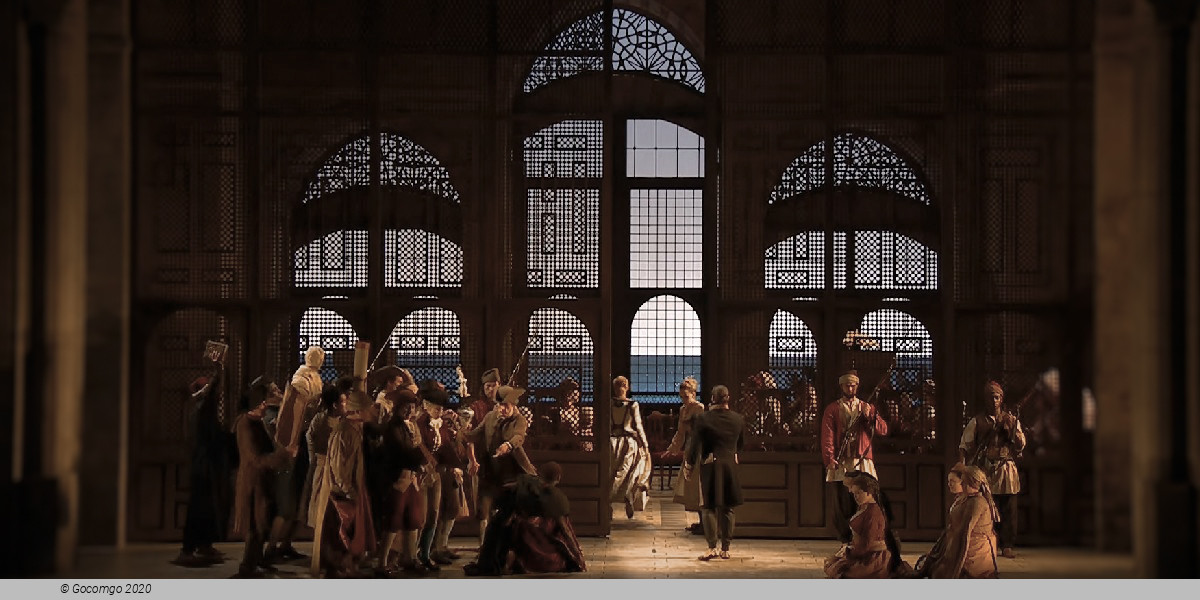
Belmonte and Pedrillo come to the garden with ladders (Aria, Belmonte: "Ich baue ganz auf deine Stärke" – "Love, only love, can now direct me"). Pedrillo gets the attention of the women by singing a ballad about a rescue similar to the one he is planning (Romanze, Pedrillo: "In Mohrenland gefangen war" – "In Moorish lands a maiden fair"). However, Osmin enters, sees the ladders, and rouses the castle. Osmin exults in the prospect of seeing them all hanged (Aria: "O, wie will ich triumphieren" – "My triumphant hour's approaching"). Belmonte pleads for their lives and tells Pasha Selim that his father is a Spanish Grandee and Governor of Oran, named Lostados, and will pay a generous ransom. Unfortunately, Pasha Selim and Lostados are long-standing enemies. The Pasha rejoices in the opportunity to subject his enemy's son to a horrible death. He leaves Belmonte and Konstanze to bid each other a last farewell; they lovingly assure each other that being tortured to death will be a pleasure, so long as they get tortured to death together (Duet: "Welch ein Geschick! O Qual der Seele.... Weh, du soltest für mich sterben" – "What dreadful fate conspires against us.... Woe, you will die because of me"). However, the Pasha decides that he can make a better point against Lostados by showing mercy and releasing Belmonte and his friends. All are set at liberty – much to the dismay of Osmin, who would prefer to see them all brutally executed (Finale: "Nie werd' ich deine Huld verkennen" – "Your noble mercy passes measure").

Venue Info

Staatsoper Hamburg - Hamburg
Location   Große Theaterstraße 25

Staatsoper Hamburg is the oldest publicly accessible musical theater in Germany, located in Hamburg. It was founded in 1678. With the emergence of the Hamburg Opera House, researchers attribute the formation of a national German opera school.

Opera in Hamburg dates to 2 January 1678 when the Oper am Gänsemarkt was inaugurated with a performance of a biblical Singspiel by Johann Theile. It was not a court theatre but the first public opera house in Germany established by the art-loving citizens of Hamburg, a prosperous member of the Hanseatic League.

The Hamburg Bürgeroper resisted the dominance of the Italianate style and rapidly became the leading musical center of the German Baroque. In 1703, George Friedrich Handel was engaged as violinist and harpsichordist and performances of his operas were not long in appearing. In 1705, Hamburg gave the world première of his opera Nero.

In 1721, Georg Philipp Telemann, a central figure of the German Baroque, joined the Hamburg Opera, and in subsequent years Christoph Willibald Gluck, Johann Adolph Hasse and various Italian companies were among the guests.

To replace the aging wooden structure, the first stone was laid on 18 May 1826 for the Stadt-Theater on the present-day site of the Staatsoper Hamburg. The new theater, with seating for 2,800 guest, was inaugurated less than a year later with Beethoven's incidental music to Egmont.

In 1873, both the exterior and interior of the structure were renovated in the reigning "Gründerzeit" style of the time, and again in 1891, when electric lighting was introduced.

Under the direction of Bernhard Pollini, the house mounted its first complete Ring Cycle in 1879. In 1883, the year of Wagner's death, a cycle comprising nine of his operas commenced. The musical directors Hans von Bülow (from 1887 to 1890) and Gustav Mahler (from 1891 to 1897) also contributed to the fame of the opera house.

In the beginning of the 20th century, opera was an important part of the theatre's repertoire; among the 321 performances during the 1907–08 season, 282 were performances of opera. The Stadt-Theater performed not only established repertoire but also new works, such as Paul Hindemith's Sancta Susanna, Igor Stravinsky's The Soldier's Tale, Ernst Krenek's Jonny spielt auf, and Leoš Janáček's Jenůfa. Ferruccio Busoni's Die Brautwahl (1912) and Erich Wolfgang Korngold's Die tote Stadt (1920) both had their world premieres in Hamburg. In the 1930s, after Hitler came to power, the opera house was renamed Hamburgische Staatsoper.

On the night of 2 August 1943, both the auditorium and its neighbouring buildings were destroyed during air raids by fire-bombing; a low-flying airplane dropped several petrol and phosphorus containers onto the middle of the roof of the auditorium, causing it to erupt into a conflagration.

The current Staatsoper opened on 15 October 1955 with Mozart's Die Zauberflöte. Hamburg continued to devote itself to new works, such as Hans Werner Henze's The Prince of Homburg (1960), Stravinsky's The Flood (1963), Gian Carlo Menotti's Help, Help, the Globolinks! (1968), and Mauricio Kagel's Staatstheater (1971).

In 1967, under the direction of Joachim Hess, the Staatsoper Hamburg became the first company to broadcasts its operas in color on television, beginning with Die Hochzeit des Figaro (a German translation of Le Nozze di Figaro). Ten of these television productions have been released on DVD by ArtHaus Musik as Cult Opera of the 1970s, as well as separately. All of these were performed in German regardless of the original language (six were written in German, one in French, two in English, and one in Italian).

More recently, Hamburg gave the world premières of Wolfgang Rihm's Die Eroberung von Mexico (1992) and Helmut Lachenmann's Das Mädchen mit den Schwefelhölzern (1997), for which it received much international acclaim. The company has won the "Opera House of the Year" award by the German magazine Opernwelt in 1997 and in 2005.

Important Info
Type: Opera
City: Hamburg, Germany
Starts at: 19:30
Intervals: 1
Duration: 2h 40min
Top of page