










Staatsoper Hamburg 11 October 2020 - Pierrot lunaire / La voix humaine | GoComGo.com

Pierrot lunaire / La voix humaine

Staatsoper Hamburg, Main Stage, Hamburg, Germany
All photos (10)
Select date and time
6 PM
Request for Tickets
Important Info
Type: Opera
City: Hamburg, Germany
Starts at: 18:00
Duration:

E-tickets: Print at home or at the box office of the event if so specified. You will find more information in your booking confirmation email.

You can only select the category, and not the exact seats.
If you order 2 or 3 tickets: your seats will be next to each other.
If you order 4 or more tickets: your seats will be next to each other, or, if this is not possible, we will provide a combination of groups of seats (at least in pairs, for example 2+2 or 2+3).

Overview

Premiere

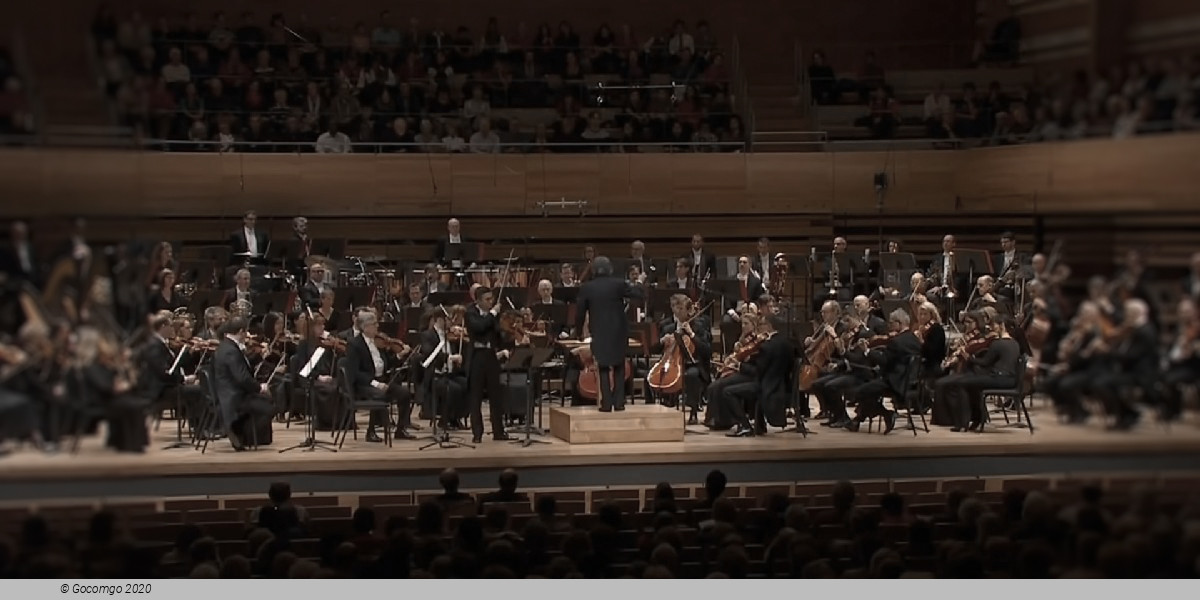
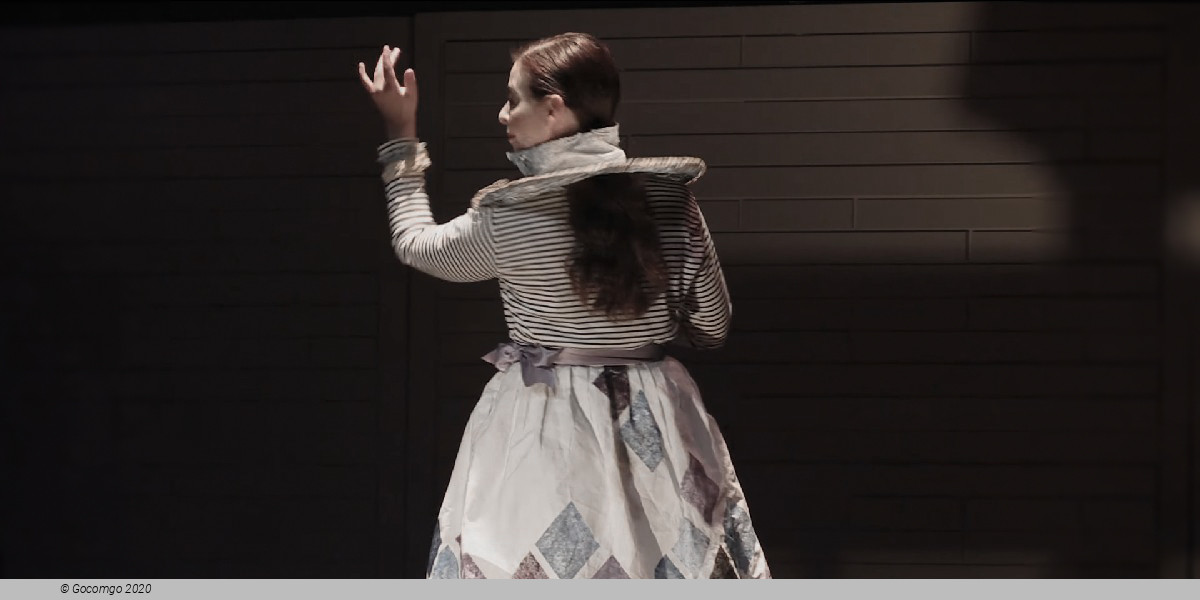
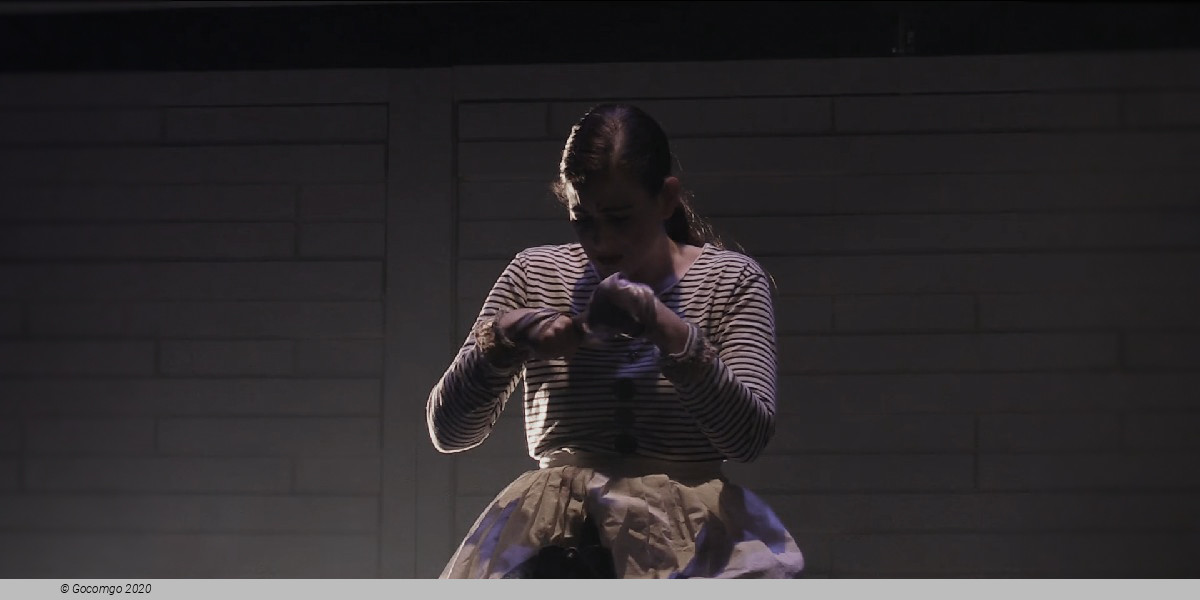
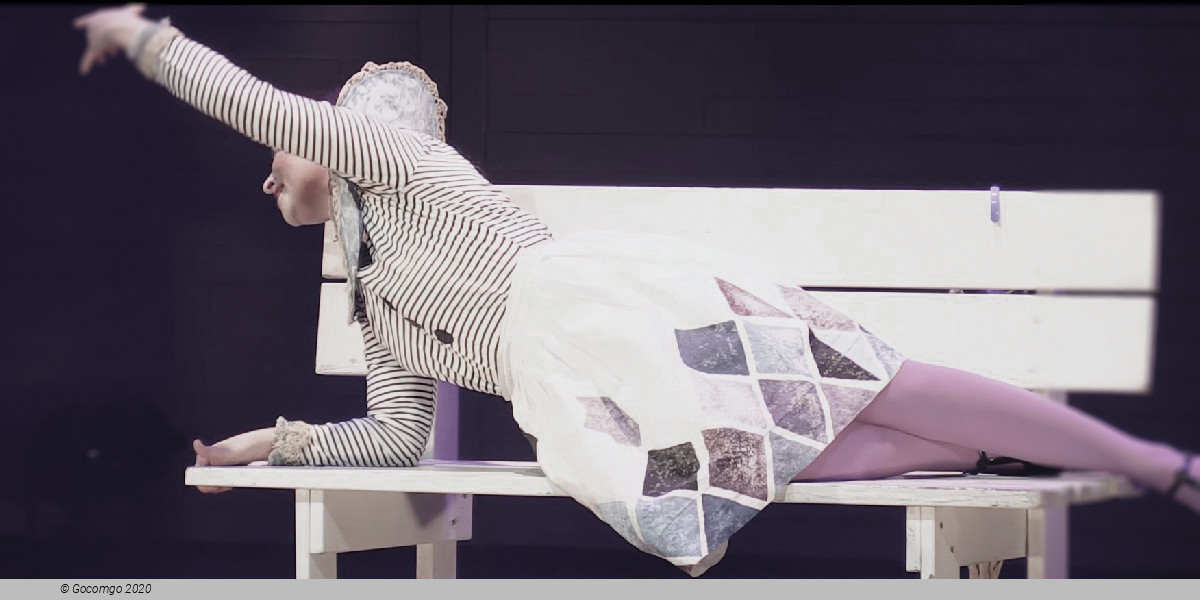
In 1912 Arnold Schönberg set to music in free atonality "Three Times Seven Poems" by the Belgian Albert Giraud. His cycle Pierrot Lunaire: Rondels Bergamasques (1884) is pure French symbolism and traces the naive longings and evil nightmares of the moonstruck Pierrot. Schönberg composed a melodrama, whose rules of declamation, of not speaking but not yet singing, he described very precisely. The states of the fictitious figure Pierrot are varied by several singers and thus rearranged. The programmatic artifi cells of Giraud and Schoenberg are contrasted with the realism of expression of La voix humaine, an opera for soprano and orchestra by Francis Poulenc.

History
Premiere of this production: 16 October 1912, Berlin Choralion-Saal

Dreimal sieben Gedichte aus Albert Girauds "Pierrot lunaire" ("Three times Seven Poems from Albert Giraud's 'Pierrot lunaire'"), commonly known simply as Pierrot lunaire ("Moonstruck Pierrot" or "Pierrot in the Moonlight"), is a melodrama by Arnold Schoenberg. It is a setting of 21 selected poems from Albert Giraud's cycle of the same name as translated into German by Otto Erich Hartleben.

Premiere of this production: 06 February 1959, Opéra-Comique, Paris

La voix humaine (The Human Voice) is a forty-minute, one-act opera for soprano and orchestra composed by Francis Poulenc in 1958. The work is based on the play of the same name by Jean Cocteau, who, along with French soprano Denise Duval, worked closely with Poulenc in preparation for the opera's premiere. Poulenc's tragédie lyrique was first performed at the Théâtre National de l'Opéra-Comique in Paris on 6 February 1959, with Duval singing the female role and Georges Prêtre conducting; the scenery, costumes and direction were by Cocteau.

Synopsis

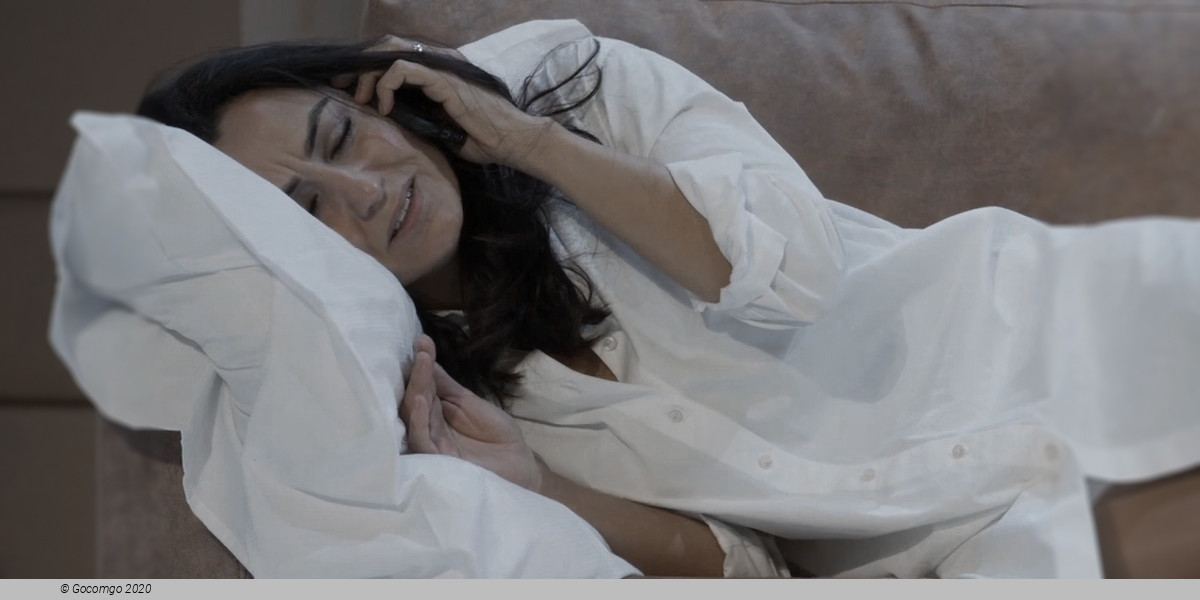
The curtain opens to reveal a bedroom where a woman (Elle) lies unmoving on the ground. She changes position once before finally rising. Although she makes to leave the room, the phone rings and she returns to answer it. The woman receives two wrong numbers before her ex-lover is able to get through to her. She lies to him, saying that she went out with her friend Marthe the previous night, and that she took one pill to help her fall asleep when she returned. The couple discuss their past relationship, and Elle blames herself for their problems, claiming, "Tout est ma faute." Throughout their conversation, they experience numerous telephone problems, and their connection finally cuts out completely. When Elle calls her lover's home phone, she discovers that he is not there and assumes that he is at a restaurant. He calls her back, and Elle reveals that she has lied during their conversation; instead of going out with Marthe the previous night, she took twelve sleeping pills in an attempted suicide. She then called Marthe, who arrived with a doctor to save her. Elle suddenly hears music in the background, and she grows suspicious that her lover is at the home of his new girlfriend. She expresses her suspicions to him several times until the end of the opera, but he never admits to his true location. Elle also reveals her obsession with the telephone, explaining that she has slept with it in her bed for the past two nights. Their connection fails once again, and Elle panics. Her lover calls her back once more, and she informs him that she now has the telephone cord wrapped around her neck. Telling him she loves him over and over, she sinks into her bed and drops the receiver, possibly strangling herself with its cord in the process.

Venue Info

Staatsoper Hamburg - Hamburg
Location   Große Theaterstraße 25

Staatsoper Hamburg is the oldest publicly accessible musical theater in Germany, located in Hamburg. It was founded in 1678. With the emergence of the Hamburg Opera House, researchers attribute the formation of a national German opera school.

Opera in Hamburg dates to 2 January 1678 when the Oper am Gänsemarkt was inaugurated with a performance of a biblical Singspiel by Johann Theile. It was not a court theatre but the first public opera house in Germany established by the art-loving citizens of Hamburg, a prosperous member of the Hanseatic League.

The Hamburg Bürgeroper resisted the dominance of the Italianate style and rapidly became the leading musical center of the German Baroque. In 1703, George Friedrich Handel was engaged as violinist and harpsichordist and performances of his operas were not long in appearing. In 1705, Hamburg gave the world première of his opera Nero.

In 1721, Georg Philipp Telemann, a central figure of the German Baroque, joined the Hamburg Opera, and in subsequent years Christoph Willibald Gluck, Johann Adolph Hasse and various Italian companies were among the guests.

To replace the aging wooden structure, the first stone was laid on 18 May 1826 for the Stadt-Theater on the present-day site of the Staatsoper Hamburg. The new theater, with seating for 2,800 guest, was inaugurated less than a year later with Beethoven's incidental music to Egmont.

In 1873, both the exterior and interior of the structure were renovated in the reigning "Gründerzeit" style of the time, and again in 1891, when electric lighting was introduced.

Under the direction of Bernhard Pollini, the house mounted its first complete Ring Cycle in 1879. In 1883, the year of Wagner's death, a cycle comprising nine of his operas commenced. The musical directors Hans von Bülow (from 1887 to 1890) and Gustav Mahler (from 1891 to 1897) also contributed to the fame of the opera house.

In the beginning of the 20th century, opera was an important part of the theatre's repertoire; among the 321 performances during the 1907–08 season, 282 were performances of opera. The Stadt-Theater performed not only established repertoire but also new works, such as Paul Hindemith's Sancta Susanna, Igor Stravinsky's The Soldier's Tale, Ernst Krenek's Jonny spielt auf, and Leoš Janáček's Jenůfa. Ferruccio Busoni's Die Brautwahl (1912) and Erich Wolfgang Korngold's Die tote Stadt (1920) both had their world premieres in Hamburg. In the 1930s, after Hitler came to power, the opera house was renamed Hamburgische Staatsoper.

On the night of 2 August 1943, both the auditorium and its neighbouring buildings were destroyed during air raids by fire-bombing; a low-flying airplane dropped several petrol and phosphorus containers onto the middle of the roof of the auditorium, causing it to erupt into a conflagration.

The current Staatsoper opened on 15 October 1955 with Mozart's Die Zauberflöte. Hamburg continued to devote itself to new works, such as Hans Werner Henze's The Prince of Homburg (1960), Stravinsky's The Flood (1963), Gian Carlo Menotti's Help, Help, the Globolinks! (1968), and Mauricio Kagel's Staatstheater (1971).

In 1967, under the direction of Joachim Hess, the Staatsoper Hamburg became the first company to broadcasts its operas in color on television, beginning with Die Hochzeit des Figaro (a German translation of Le Nozze di Figaro). Ten of these television productions have been released on DVD by ArtHaus Musik as Cult Opera of the 1970s, as well as separately. All of these were performed in German regardless of the original language (six were written in German, one in French, two in English, and one in Italian).

More recently, Hamburg gave the world premières of Wolfgang Rihm's Die Eroberung von Mexico (1992) and Helmut Lachenmann's Das Mädchen mit den Schwefelhölzern (1997), for which it received much international acclaim. The company has won the "Opera House of the Year" award by the German magazine Opernwelt in 1997 and in 2005.

Important Info
Type: Opera
City: Hamburg, Germany
Starts at: 18:00
Duration:
Top of page