
Staatsoper Hamburg 30 September 2022 - Nabucco | GoComGo.com

Nabucco

Staatsoper Hamburg, Main Stage, Hamburg, Germany
All photos (5)
Select date and time
7 PM

E-tickets: Print at home or at the box office of the event if so specified. You will find more information in your booking confirmation email.

You can only select the category, and not the exact seats.
If you order 2 or 3 tickets: your seats will be next to each other.
If you order 4 or more tickets: your seats will be next to each other, or, if this is not possible, we will provide a combination of groups of seats (at least in pairs, for example 2+2 or 2+3).

Important Info
Type: Opera
City: Hamburg, Germany
Starts at: 19:00
Intervals: 1
Duration: 3h
Sung in: Italian
Titles in: German,English

E-tickets: Print at home or at the box office of the event if so specified. You will find more information in your booking confirmation email.

You can only select the category, and not the exact seats.
If you order 2 or 3 tickets: your seats will be next to each other.
If you order 4 or more tickets: your seats will be next to each other, or, if this is not possible, we will provide a combination of groups of seats (at least in pairs, for example 2+2 or 2+3).

Overview

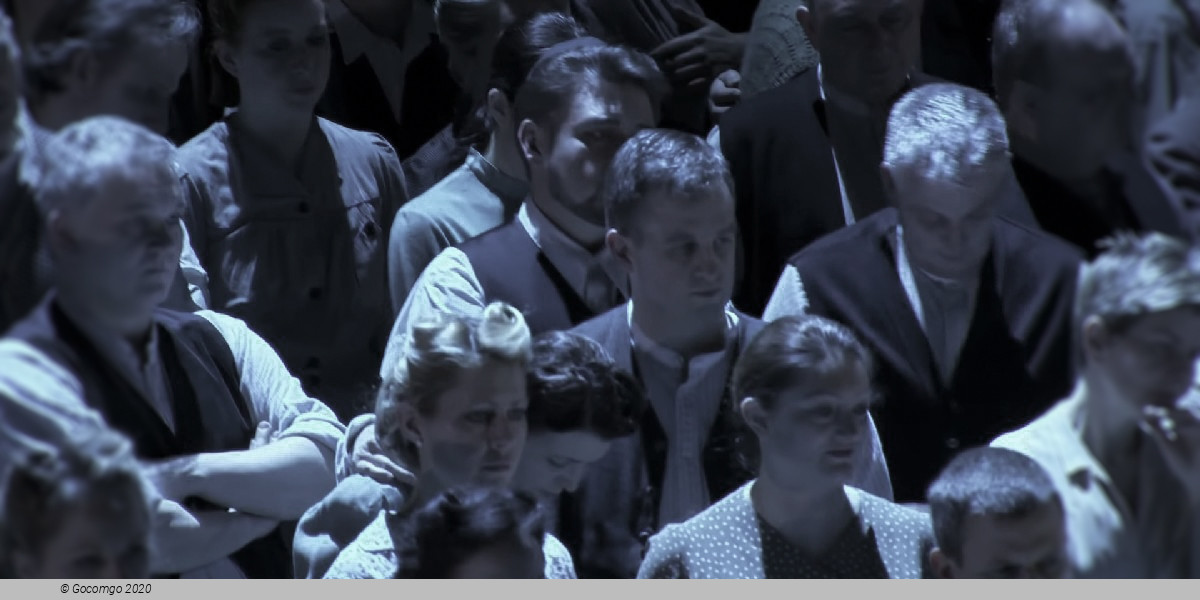
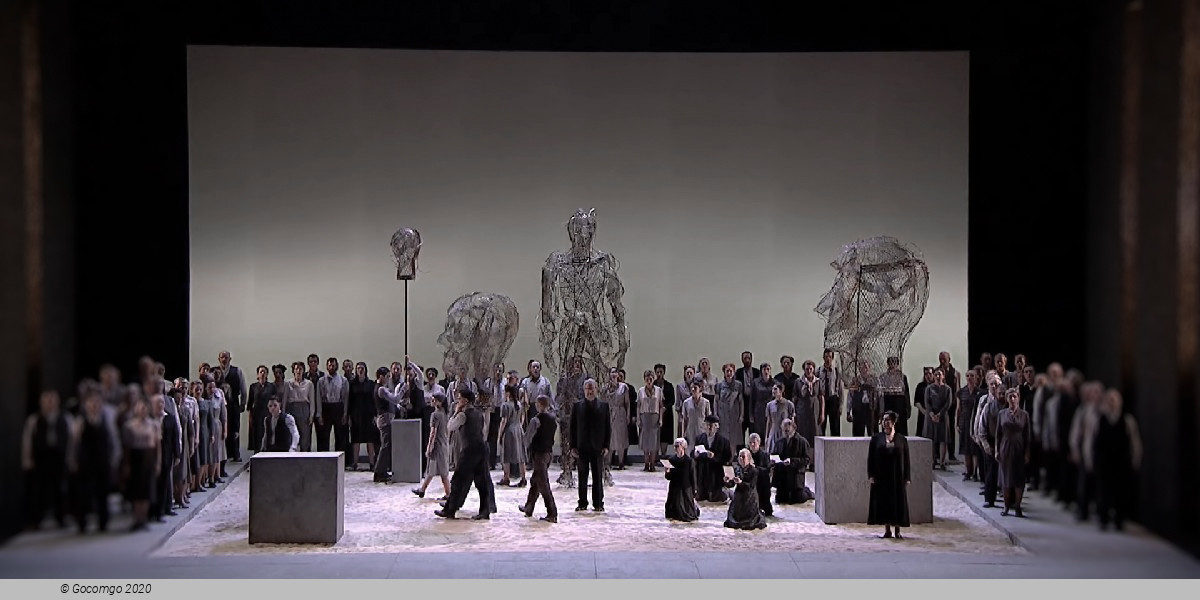
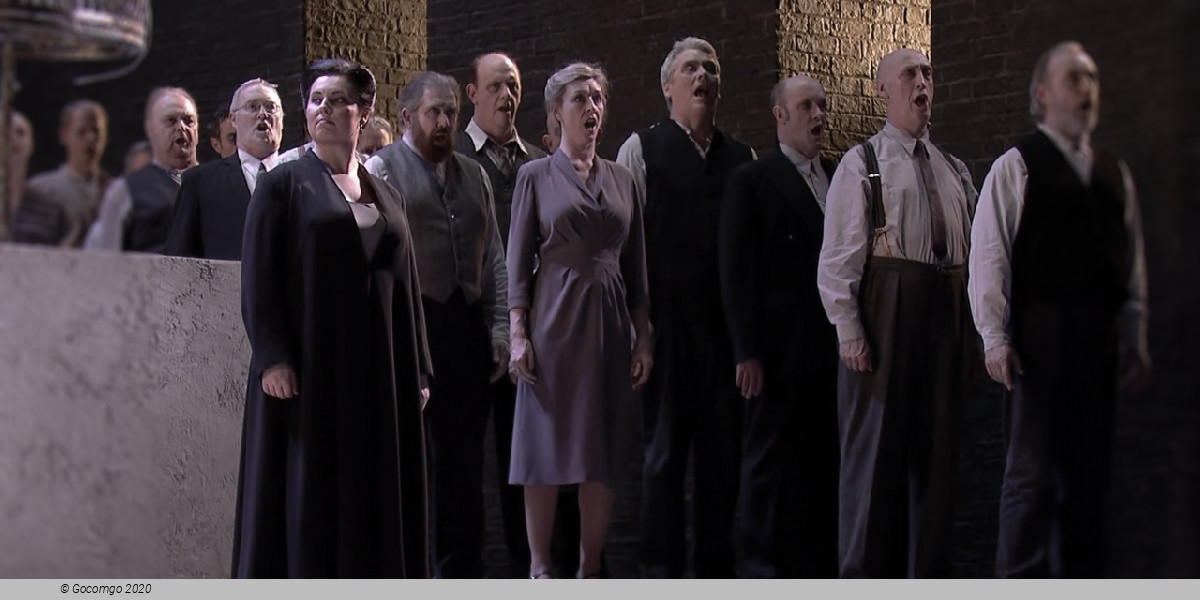
Jerusalem has been occupied, the Jewish temple destroyed, the Hebrew nation abducted to enemy Babylon. In its Babylonian exile, the Jewish people’s struggle for land, faith and freedom continues. Power-hungry, the Babylonian king Nabucco seeks to rule like god himself. Struck with madness, his love for his own daughter is his salvation: a humble call to the god of the Hebrews breaks forth from Nabucco’s lips. Thoughts reach heaven on golden wings. On earth, the search for social belonging and religious identity continues. It is an eternal search, one that has led to violence and oppression even today: millennia after the failed attempt to build a tower of Babel, in the age of an international world language and human rights treaties.

History
Premiere of this production: 09 March 1842, Teatro alla Scala, Milan

Nabucco (short for Nabucodonosor) is an Italian-language opera in four acts composed in 1841 by Giuseppe Verdi to an Italian libretto by Temistocle Solera. The libretto is based on biblical books of Jeremiah and Daniel and the 1836 play by Auguste Anicet-Bourgeois and Francis Cornu, although Antonio Cortese's ballet adaptation of the play (with its necessary simplifications), given at La Scala in 1836, was a more important source for Solera than the play itself.

Synopsis

Time: 587 BC
Place: Jerusalem and Babylon

Act 1: Jerusalem

'Thus saith the Lord, Behold, I shall deliver this city into the hand of the King of Babylon, and he will burn it with fire' (Jeremiah 21:10)
Interior of the Temple of Solomon

The Israelites pray as the Babylonian army advances on their city ("Gli arredi festivi giù cadano infranti" / "Throw down and destroy all festive decorations"). The High Priest Zaccaria tells the people not to despair but to trust in God ("D'Egitto là su i lidi" / "On the shores of Egypt He saved the life of Moses"). The presence of a hostage, Fenena, younger daughter of Nabucco, King of Babylon, may yet secure peace ("Come notte a sol fulgente" / "Like darkness before the sun"). Zaccaria entrusts Fenena to Ismaele, nephew of the King of Jerusalem and a former envoy to Babylon. Left alone, Fenena and Ismaele recall how they fell in love when Ismaele was held prisoner by the Babylonians, and how Fenena helped him to escape to Israel. Nabucco's supposed elder daughter, Abigaille, enters the temple with Babylonian soldiers in disguise. She, too, loves Ismaele. Discovering the lovers, she threatens Ismaele: if he does not give up Fenena, Abigaille will accuse her of treason. If Ismaele returns Abigaille's love, however, Abigaille will petition Nabucco on the Israelites' behalf. Ismaele tells Abigaille that he cannot love her and she vows revenge. Nabucco enters with his warriors ("Viva Nabucco" / "Long live Nabucco"). Zaccaria defies him, threatening to kill Fenena if Nabucco attacks the temple. Ismaele intervenes to save Fenena, which removes any impediment from Nabucco destroying the temple. He orders this, while Zaccaria and the Israelites curse Ismaele as a traitor.

Act 2: The Impious One

'Behold, the whirlwind of the Lord goeth forth, it shall fall upon the head of the wicked' (Jeremiah 30:23)
Scene 1: Royal apartments in Babylon

Nabucco has appointed Fenena regent and guardian of the Israelite prisoners, while he continues the battle against the Israelites. Abigaille has discovered a document that proves she is not Nabucco's real daughter, but the daughter of slaves. She reflects bitterly on Nabucco's refusal to allow her to play a role in the war with the Israelites and recalls past happiness ("Anch'io dischiuso un giorno" / "I too once opened my heart to happiness"). The High Priest of Bel informs Abigaille that Fenena has released the Israelite captives. He plans for Abigaille to become ruler of Babylon, and with this intention has spread the rumour that Nabucco has died in battle. Abigaille determines to seize the throne ("Salgo già del trono aurato" / "I already ascend the golden throne").

Scene 2: A room in the palace

Zaccaria reads over the Tablets of Law ("Vieni, o Levita" / "Come, oh Levite!"), then goes to summon Fenena. A group of Levites accuse Ismaele of treachery. Zaccaria returns with Fenena and his sister Anna. Anna tells the Levites that Fenena has converted to Judaism, and urges them to forgive Ismaele. Abdallo, a soldier, announces the death of Nabucco and warns of the rebellion instigated by Abigaille. Abigaille enters with the High Priest of Bel and demands the crown from Fenena. Unexpectedly, Nabucco himself enters; pushing through the crowd, he seizes the crown and declares himself not only king of the Babylonians but also their god. The high priest Zaccaria curses him and warns of divine vengeance; an incensed Nabucco in turn orders the death of the Israelites. Fenena reveals to him that she has embraced the Jewish religion and will share the Israelites' fate. Nabucco is furious and repeats his conviction that he is now divine ("Non son più re, son dio" / "I am no longer King! I am God!"). There is a crash of thunder and Nabucco promptly loses his senses. The crown falls from his head and is picked up by Abigaille, who pronounces herself ruler of the Babylonians.

Act 3: The Prophecy

'Therefore the wild beasts of the desert with the wild beasts of the islands shall dwell there, and the owls shall dwell therein'. (Jeremiah 50:39)
Scene 1: The Hanging Gardens of Babylon

Abigaille is now Queen of Babylon. The High Priest of Bel presents her with the death warrant for the Israelites, as well as for Fenena. Nabucco, still insane, tries to reclaim the throne without success. Though his consent to the death warrant is no longer necessary, Abigaille tricks him into signing it. When Nabucco learns that he has consigned his (true) daughter to death, he is overcome with grief and anger. He tells Abigaille that he is not in fact her father and searches for the document evidencing her true origins as a slave. Abigaille mocks him, produces the document and tears it up. Realizing his powerlessness, Nabucco pleads for Fenena's life ("Oh di qual onta aggravasi questo mio crin canuto" / "Oh, what shame must my old head suffer"). Abigaille is unmoved and orders Nabucco to leave her.

Scene 2: The banks of the River Euphrates

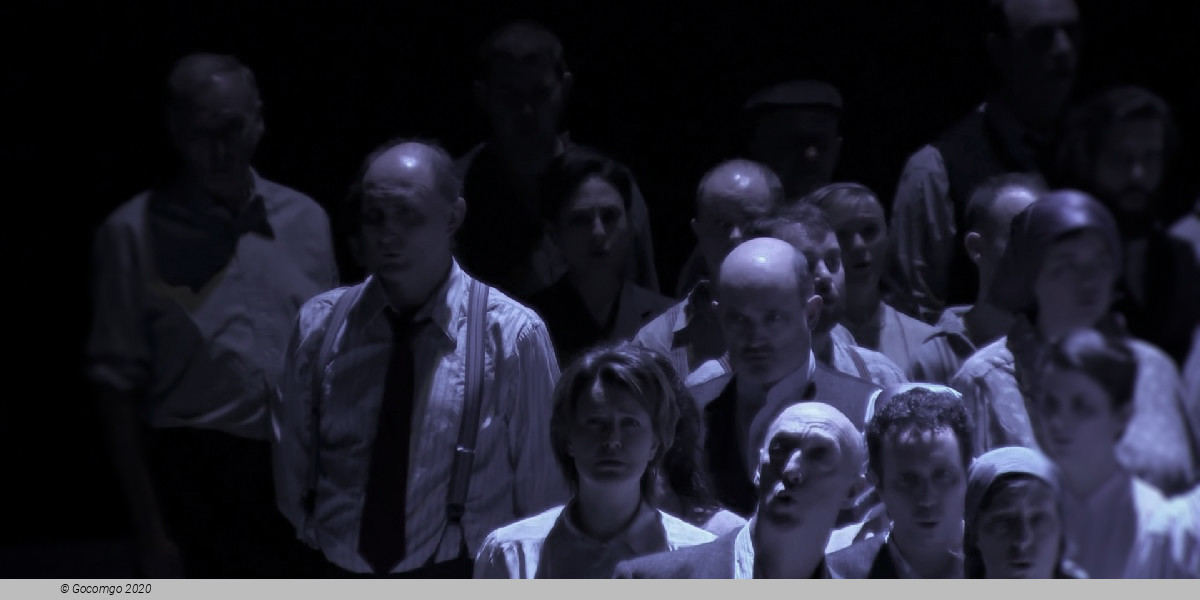
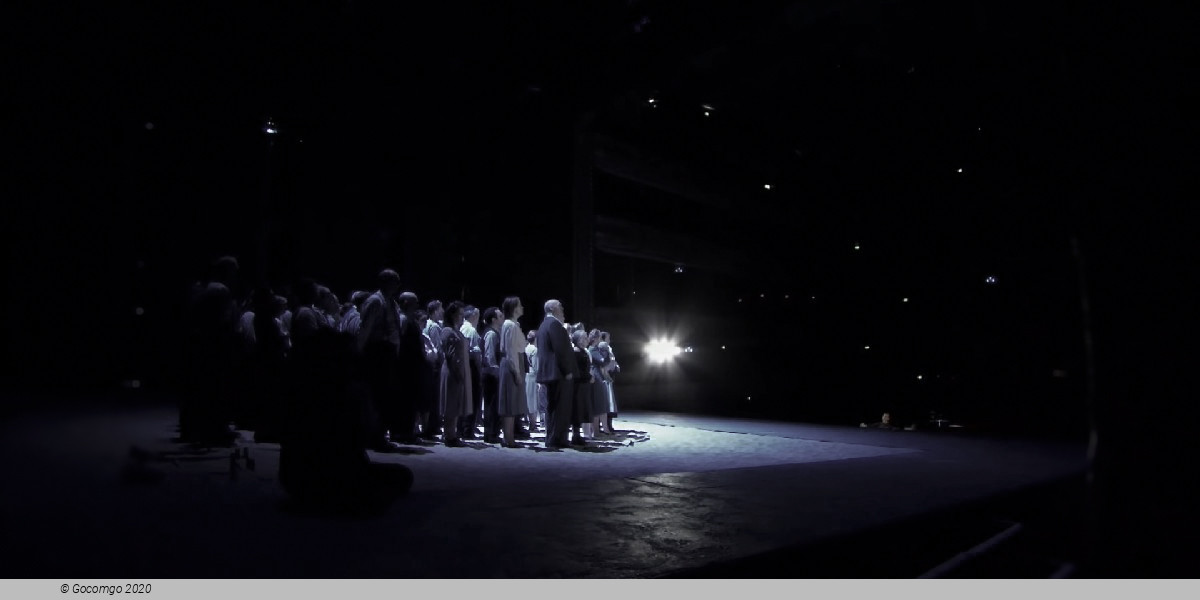
The Israelites long for their homeland ("Va, pensiero, sull'ali dorate" / "Fly, thought, on golden wings"). The high priest Zaccaria once again exhorts them to have faith: God will destroy Babylon. The Israelites are inspired by his words.

Act 4: The Broken Idol

'Bel is confounded, Merodach is broken to pieces; her idols are confounded, her images are broken in pieces.' (Jeremiah 50:2)
Scene 1: The royal apartments, Babylon

Nabucco awakens, still confused and raving. He sees Fenena in chains being taken to her death. In despair, he prays to the God of the Hebrews. He asks for forgiveness, and promises to rebuild the temple in Jerusalem and convert to Judaism if his prayers are answered ("Dio di Giuda" / "God of Judah!"). Miraculously, his strength and reason are immediately restored. Abdallo and loyal soldiers enter to release him. Nabucco resolves to rescue Fenena and the Israelites as well as to punish the traitors.

Scene 2: The Hanging Gardens of Babylon

Fenena and the Israelite prisoners are led in to be sacrificed ("Va! La palma del martirio" / "Go, win the palm of martyrdom"). Fenena serenely prepares for death. Nabucco rushes in with Abdallo and other soldiers. He declares that he will rebuild the Temple of Jerusalem and worship the God of the Israelites, ordering the destruction of the idol of Bel. At his word, the idol falls to the ground of its own accord and shatters into pieces. Nabucco tells the Israelites that they are now free and all join in praise of Jehovah. Abigaille enters, supported by soldiers. She has poisoned herself. She begs forgiveness of Fenena, prays for God's mercy and dies. Zaccaria proclaims Nabucco the servant of God and king of kings.

Venue Info

Staatsoper Hamburg - Hamburg
Location   Große Theaterstraße 25

Staatsoper Hamburg is the oldest publicly accessible musical theater in Germany, located in Hamburg. It was founded in 1678. With the emergence of the Hamburg Opera House, researchers attribute the formation of a national German opera school.

Opera in Hamburg dates to 2 January 1678 when the Oper am Gänsemarkt was inaugurated with a performance of a biblical Singspiel by Johann Theile. It was not a court theatre but the first public opera house in Germany established by the art-loving citizens of Hamburg, a prosperous member of the Hanseatic League.

The Hamburg Bürgeroper resisted the dominance of the Italianate style and rapidly became the leading musical center of the German Baroque. In 1703, George Friedrich Handel was engaged as violinist and harpsichordist and performances of his operas were not long in appearing. In 1705, Hamburg gave the world première of his opera Nero.

In 1721, Georg Philipp Telemann, a central figure of the German Baroque, joined the Hamburg Opera, and in subsequent years Christoph Willibald Gluck, Johann Adolph Hasse and various Italian companies were among the guests.

To replace the aging wooden structure, the first stone was laid on 18 May 1826 for the Stadt-Theater on the present-day site of the Staatsoper Hamburg. The new theater, with seating for 2,800 guest, was inaugurated less than a year later with Beethoven's incidental music to Egmont.

In 1873, both the exterior and interior of the structure were renovated in the reigning "Gründerzeit" style of the time, and again in 1891, when electric lighting was introduced.

Under the direction of Bernhard Pollini, the house mounted its first complete Ring Cycle in 1879. In 1883, the year of Wagner's death, a cycle comprising nine of his operas commenced. The musical directors Hans von Bülow (from 1887 to 1890) and Gustav Mahler (from 1891 to 1897) also contributed to the fame of the opera house.

In the beginning of the 20th century, opera was an important part of the theatre's repertoire; among the 321 performances during the 1907–08 season, 282 were performances of opera. The Stadt-Theater performed not only established repertoire but also new works, such as Paul Hindemith's Sancta Susanna, Igor Stravinsky's The Soldier's Tale, Ernst Krenek's Jonny spielt auf, and Leoš Janáček's Jenůfa. Ferruccio Busoni's Die Brautwahl (1912) and Erich Wolfgang Korngold's Die tote Stadt (1920) both had their world premieres in Hamburg. In the 1930s, after Hitler came to power, the opera house was renamed Hamburgische Staatsoper.

On the night of 2 August 1943, both the auditorium and its neighbouring buildings were destroyed during air raids by fire-bombing; a low-flying airplane dropped several petrol and phosphorus containers onto the middle of the roof of the auditorium, causing it to erupt into a conflagration.

The current Staatsoper opened on 15 October 1955 with Mozart's Die Zauberflöte. Hamburg continued to devote itself to new works, such as Hans Werner Henze's The Prince of Homburg (1960), Stravinsky's The Flood (1963), Gian Carlo Menotti's Help, Help, the Globolinks! (1968), and Mauricio Kagel's Staatstheater (1971).

In 1967, under the direction of Joachim Hess, the Staatsoper Hamburg became the first company to broadcasts its operas in color on television, beginning with Die Hochzeit des Figaro (a German translation of Le Nozze di Figaro). Ten of these television productions have been released on DVD by ArtHaus Musik as Cult Opera of the 1970s, as well as separately. All of these were performed in German regardless of the original language (six were written in German, one in French, two in English, and one in Italian).

More recently, Hamburg gave the world premières of Wolfgang Rihm's Die Eroberung von Mexico (1992) and Helmut Lachenmann's Das Mädchen mit den Schwefelhölzern (1997), for which it received much international acclaim. The company has won the "Opera House of the Year" award by the German magazine Opernwelt in 1997 and in 2005.

Important Info
Type: Opera
City: Hamburg, Germany
Starts at: 19:00
Intervals: 1
Duration: 3h
Sung in: Italian
Titles in: German,English
Top of page