
Staatsoper Hamburg 6 April 2024 - Lucia di Lammermoor | GoComGo.com

Lucia di Lammermoor

Staatsoper Hamburg, Main Stage, Hamburg, Germany
All photos (5)
Select date and time
7:30 PM

E-tickets: Print at home or at the box office of the event if so specified. You will find more information in your booking confirmation email.

You can only select the category, and not the exact seats.
If you order 2 or 3 tickets: your seats will be next to each other.
If you order 4 or more tickets: your seats will be next to each other, or, if this is not possible, we will provide a combination of groups of seats (at least in pairs, for example 2+2 or 2+3).

Important Info
Type: Opera
City: Hamburg, Germany
Starts at: 19:30
Intervals: 1
Duration: 3h
Sung in: Italian
Titles in: German,English

E-tickets: Print at home or at the box office of the event if so specified. You will find more information in your booking confirmation email.

You can only select the category, and not the exact seats.
If you order 2 or 3 tickets: your seats will be next to each other.
If you order 4 or more tickets: your seats will be next to each other, or, if this is not possible, we will provide a combination of groups of seats (at least in pairs, for example 2+2 or 2+3).

Overview

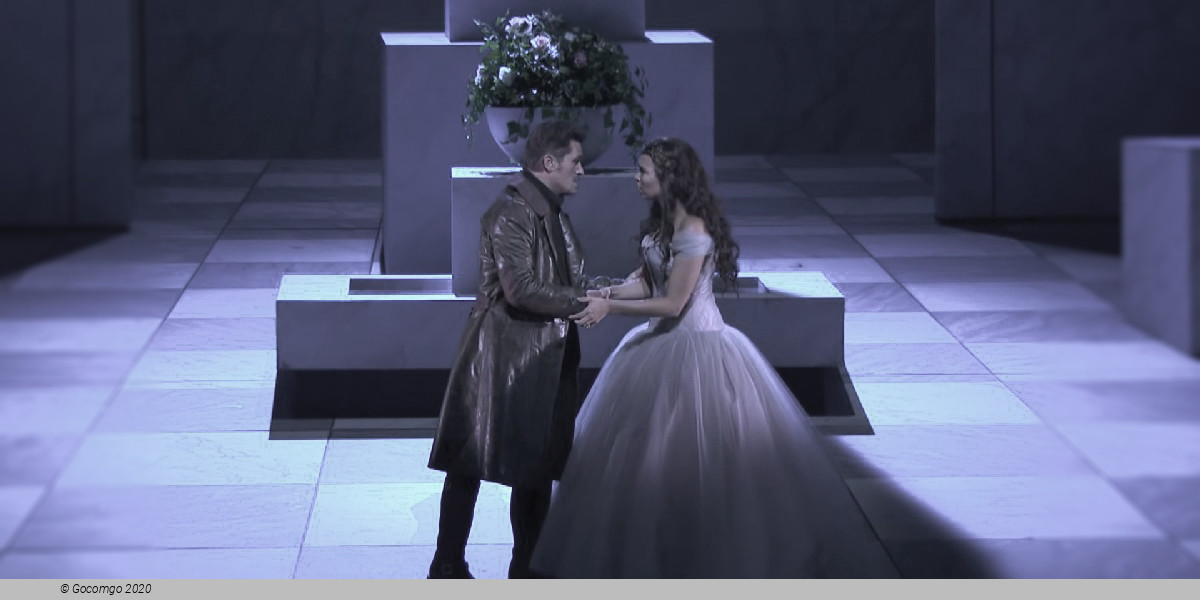
Lucia loves Edgard, the last heir of the house of Ravenswood, her family’s enemy clan. They are in danger, as Lucia’s dreams reveal: she sees a dead woman, and the fountain into which her corpse was thrown runs red as blood. Lucia, however, refuses to betray her love, not even when Edgard has to leave the country, she is confronted with false proof of his faithlessness and is urged to marry Lord Arthur for political reasons. Yet she signs the wedding contract – and suddenly Edgard is back and told to renounce his love. A ring falls to the floor, the nightmare begins – the nocturnal sky fills with lightning and thunder, madness and blood reign, there is a corpse, then another and yet another. What time may heal these wounds?

History
Premiere of this production: 26 September 1835, Teatro di San Carlo, Naples

Lucia di Lammermoor is a dramma tragico (tragic opera) in three acts by Gaetano Donizetti. Salvadore Cammarano wrote the Italian-language libretto loosely based upon Sir Walter Scott's historical novel The Bride of Lammermoor.

Synopsis

Time: Early 18th century
Place: Scotland

Act 1

Scene 1: The gardens of Ravenswood Castle

Normanno, captain of the castle guard, and other retainers are searching for an intruder. He tells Enrico that he believes that the man is Edgardo of Ravenswood, and that he comes to the castle to meet Enrico's sister, Lucia. It is confirmed that Edgardo is indeed the intruder. Enrico reaffirms his hatred for the Ravenswood family and his determination to end the relationship.

Scene 2: By a fountain at the entrance to the park, beside the castle

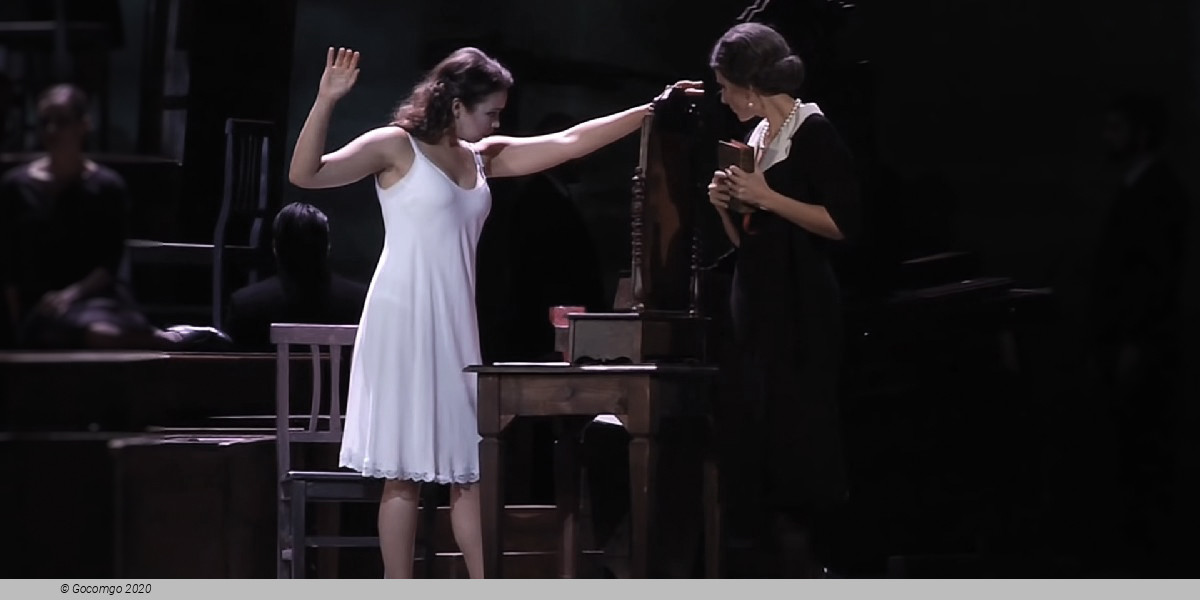
Lucia waits for Edgardo. In her famous aria "Regnava nel silenzio", Lucia tells her maid Alisa that she has seen the ghost of a girl killed on the very same spot by a jealous Ravenswood ancestor. Alisa tells Lucia that the apparition is a warning and that she must give up her love for Edgardo. Edgardo enters; for political reasons, he must leave immediately for France. He hopes to make his peace with Enrico and marry Lucia. Lucia tells him this is impossible, and instead they take a sworn vow of marriage and exchange rings. Edgardo leaves.

Act 2

Scene 1: Lord Ashton's apartments

Preparations have been made for the imminent wedding of Lucia to Arturo. Enrico worries about whether Lucia will really submit to the wedding. He shows his sister a forged letter seemingly proving that Edgardo has forgotten her and taken a new lover. Enrico leaves Lucia to further persuasion, this time by Raimondo, Lucia's chaplain and tutor, that she should renounce her vow to Edgardo, for the good of the family, and marry Arturo.

Scene 2: A hall in the castle

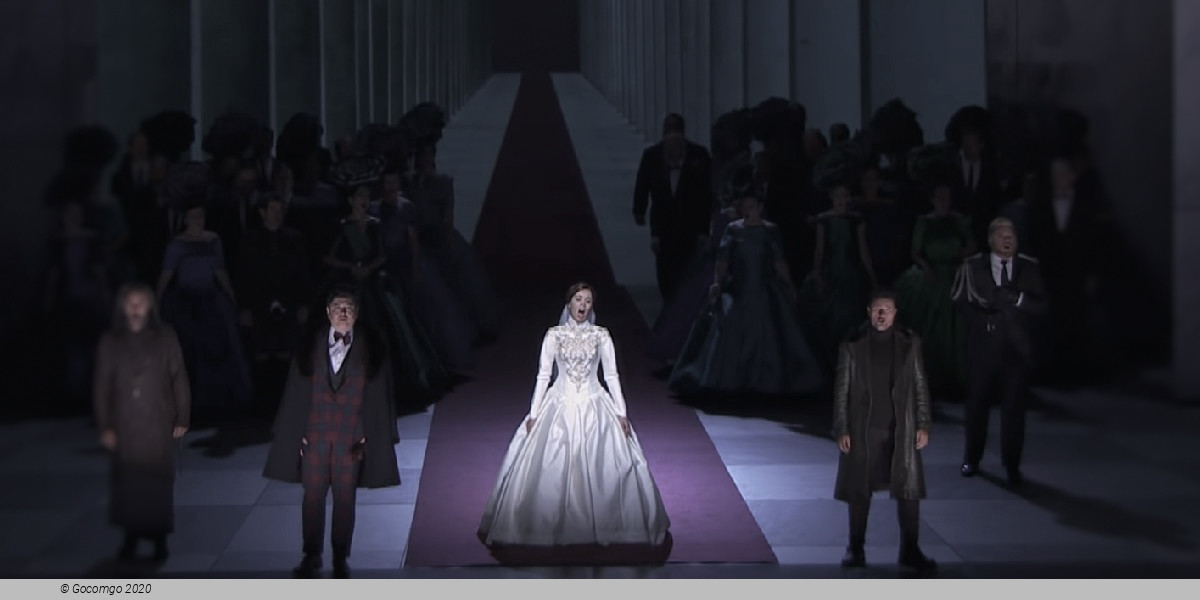
Arturo arrives for the marriage. Lucia acts strangely, but Enrico explains that this is due to the death of her mother. Arturo signs the marriage contract, followed reluctantly by Lucia. At that point Edgardo suddenly appears in the hall. Raimondo prevents a fight, but he shows Edgardo Lucia's signature on the marriage contract. Edgardo curses her, demanding that they return their rings to each other. He tramples his ring on the ground, before being forced out of the castle.

Act 3

Scene 1: Wolfcrag

Enrico visits Edgardo to challenge him to a duel. He tells him that Lucia is already enjoying her bridal bed. Edgardo agrees to fight him. They will meet later by the graveyard of the Ravenswoods, near the Wolf's Crag.

Scene 2: A Hall

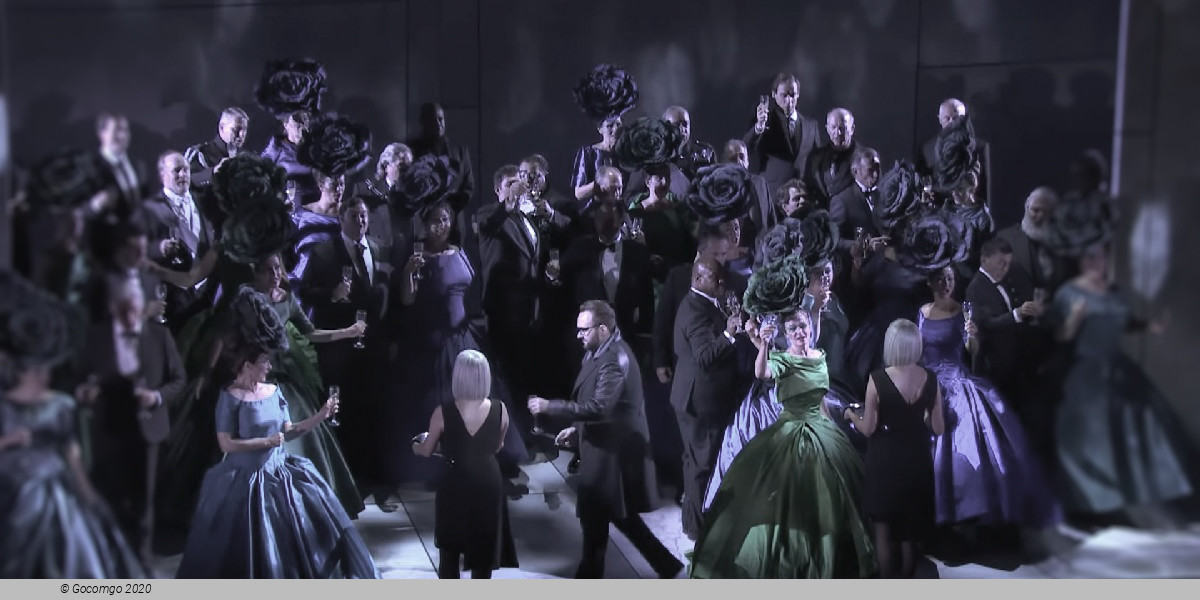
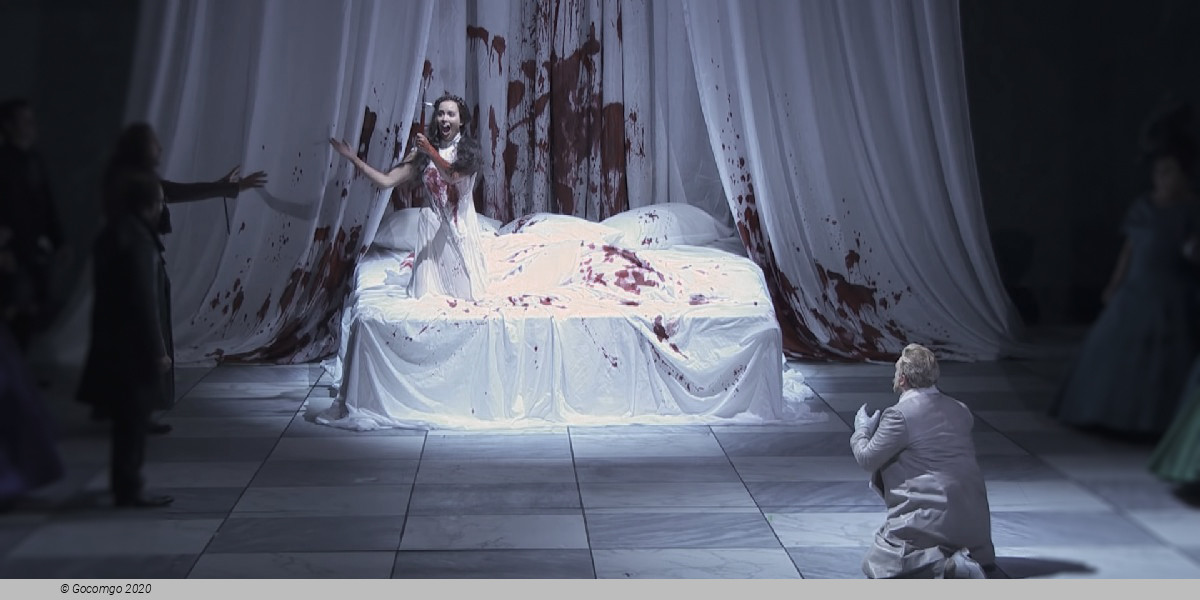
Raimondo interrupts the marriage celebrations to tell the guests that Lucia has gone mad and killed her bridegroom Arturo. Lucia enters. In the aria "Il dolce suono" she imagines being with Edgardo, soon to be happily married. Enrico enters and at first threatens Lucia but later softens when he realizes her condition. Lucia collapses. Raimondo blames Normanno for precipitating the whole tragedy.

Scene 3: The graveyard of the Ravenswood family

Edgardo is resolved to kill himself on Enrico's sword. He learns that Lucia is dying and then Raimondo comes to tell him that she has already died. Edgardo stabs himself with a dagger, hoping to be reunited with Lucia in heaven.

Venue Info

Staatsoper Hamburg - Hamburg
Location   Große Theaterstraße 25

Staatsoper Hamburg is the oldest publicly accessible musical theater in Germany, located in Hamburg. It was founded in 1678. With the emergence of the Hamburg Opera House, researchers attribute the formation of a national German opera school.

Opera in Hamburg dates to 2 January 1678 when the Oper am Gänsemarkt was inaugurated with a performance of a biblical Singspiel by Johann Theile. It was not a court theatre but the first public opera house in Germany established by the art-loving citizens of Hamburg, a prosperous member of the Hanseatic League.

The Hamburg Bürgeroper resisted the dominance of the Italianate style and rapidly became the leading musical center of the German Baroque. In 1703, George Friedrich Handel was engaged as violinist and harpsichordist and performances of his operas were not long in appearing. In 1705, Hamburg gave the world première of his opera Nero.

In 1721, Georg Philipp Telemann, a central figure of the German Baroque, joined the Hamburg Opera, and in subsequent years Christoph Willibald Gluck, Johann Adolph Hasse and various Italian companies were among the guests.

To replace the aging wooden structure, the first stone was laid on 18 May 1826 for the Stadt-Theater on the present-day site of the Staatsoper Hamburg. The new theater, with seating for 2,800 guest, was inaugurated less than a year later with Beethoven's incidental music to Egmont.

In 1873, both the exterior and interior of the structure were renovated in the reigning "Gründerzeit" style of the time, and again in 1891, when electric lighting was introduced.

Under the direction of Bernhard Pollini, the house mounted its first complete Ring Cycle in 1879. In 1883, the year of Wagner's death, a cycle comprising nine of his operas commenced. The musical directors Hans von Bülow (from 1887 to 1890) and Gustav Mahler (from 1891 to 1897) also contributed to the fame of the opera house.

In the beginning of the 20th century, opera was an important part of the theatre's repertoire; among the 321 performances during the 1907–08 season, 282 were performances of opera. The Stadt-Theater performed not only established repertoire but also new works, such as Paul Hindemith's Sancta Susanna, Igor Stravinsky's The Soldier's Tale, Ernst Krenek's Jonny spielt auf, and Leoš Janáček's Jenůfa. Ferruccio Busoni's Die Brautwahl (1912) and Erich Wolfgang Korngold's Die tote Stadt (1920) both had their world premieres in Hamburg. In the 1930s, after Hitler came to power, the opera house was renamed Hamburgische Staatsoper.

On the night of 2 August 1943, both the auditorium and its neighbouring buildings were destroyed during air raids by fire-bombing; a low-flying airplane dropped several petrol and phosphorus containers onto the middle of the roof of the auditorium, causing it to erupt into a conflagration.

The current Staatsoper opened on 15 October 1955 with Mozart's Die Zauberflöte. Hamburg continued to devote itself to new works, such as Hans Werner Henze's The Prince of Homburg (1960), Stravinsky's The Flood (1963), Gian Carlo Menotti's Help, Help, the Globolinks! (1968), and Mauricio Kagel's Staatstheater (1971).

In 1967, under the direction of Joachim Hess, the Staatsoper Hamburg became the first company to broadcasts its operas in color on television, beginning with Die Hochzeit des Figaro (a German translation of Le Nozze di Figaro). Ten of these television productions have been released on DVD by ArtHaus Musik as Cult Opera of the 1970s, as well as separately. All of these were performed in German regardless of the original language (six were written in German, one in French, two in English, and one in Italian).

More recently, Hamburg gave the world premières of Wolfgang Rihm's Die Eroberung von Mexico (1992) and Helmut Lachenmann's Das Mädchen mit den Schwefelhölzern (1997), for which it received much international acclaim. The company has won the "Opera House of the Year" award by the German magazine Opernwelt in 1997 and in 2005.

Important Info
Type: Opera
City: Hamburg, Germany
Starts at: 19:30
Intervals: 1
Duration: 3h
Sung in: Italian
Titles in: German,English
Top of page