




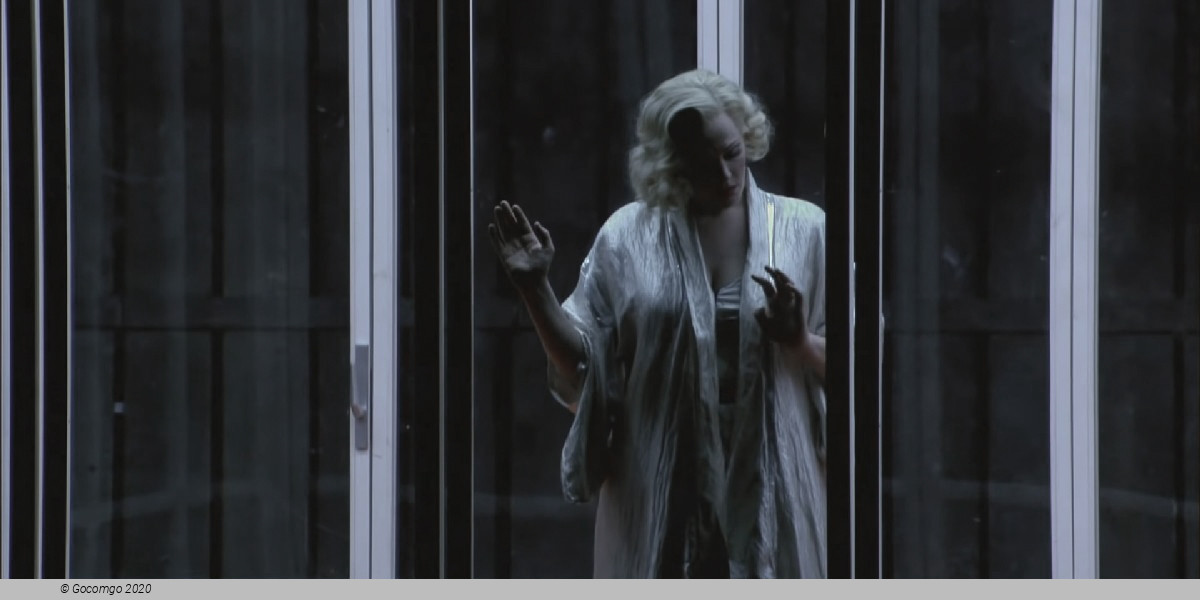
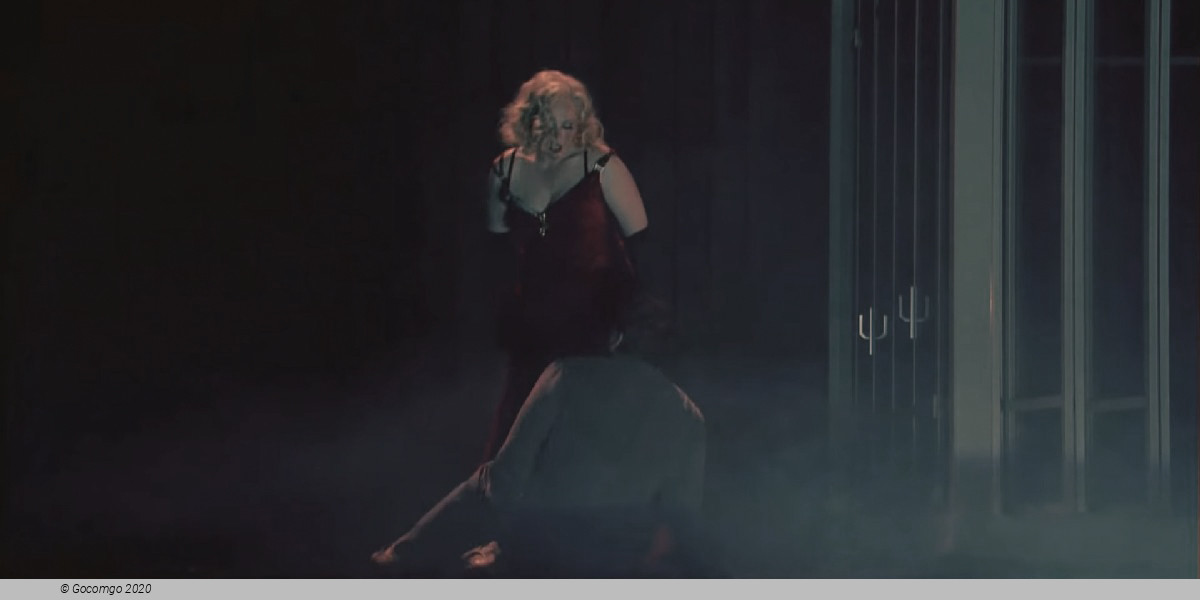
Staatsoper Hamburg 18 May 2024 - Lady Macbeth of Mtsensk | GoComGo.com

Lady Macbeth of Mtsensk

Staatsoper Hamburg, Main Stage, Hamburg, Germany
All photos (8)
Select date and time
7 PM

E-tickets: Print at home or at the box office of the event if so specified. You will find more information in your booking confirmation email.

You can only select the category, and not the exact seats.
If you order 2 or 3 tickets: your seats will be next to each other.
If you order 4 or more tickets: your seats will be next to each other, or, if this is not possible, we will provide a combination of groups of seats (at least in pairs, for example 2+2 or 2+3).

Important Info
Type: Opera
City: Hamburg, Germany
Starts at: 19:00
Intervals: 1
Duration: 3h 15min
Sung in: Russian
Titles in: German,English

E-tickets: Print at home or at the box office of the event if so specified. You will find more information in your booking confirmation email.

You can only select the category, and not the exact seats.
If you order 2 or 3 tickets: your seats will be next to each other.
If you order 4 or more tickets: your seats will be next to each other, or, if this is not possible, we will provide a combination of groups of seats (at least in pairs, for example 2+2 or 2+3).

Overview

A woman becomes a murderess, but still the 26-year-old composer Shostakovich has sympathy for her.

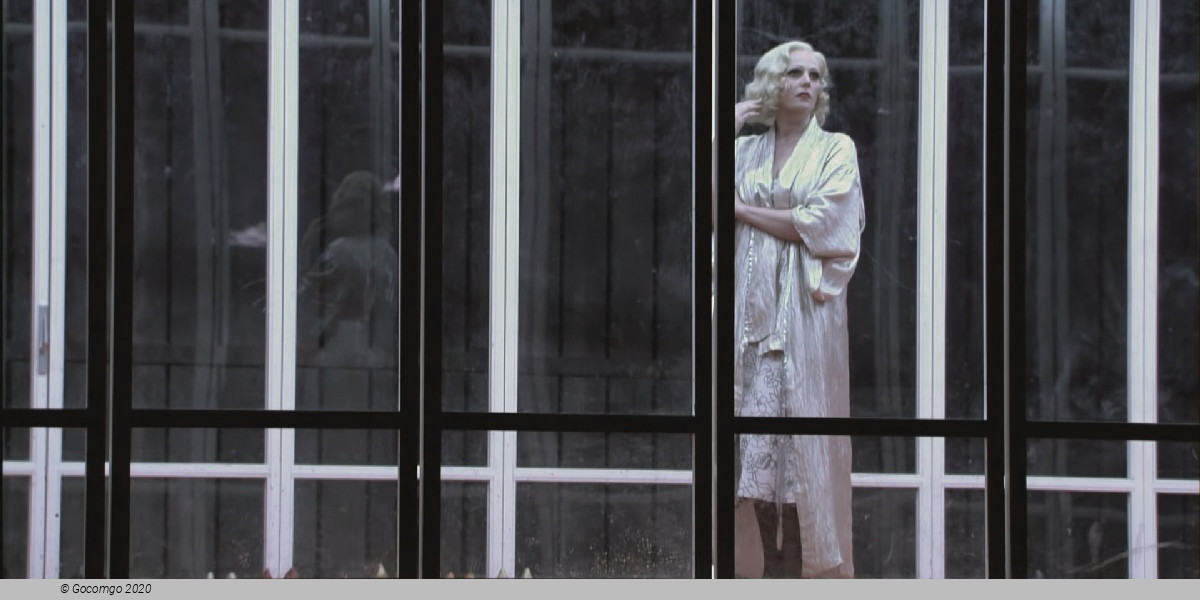
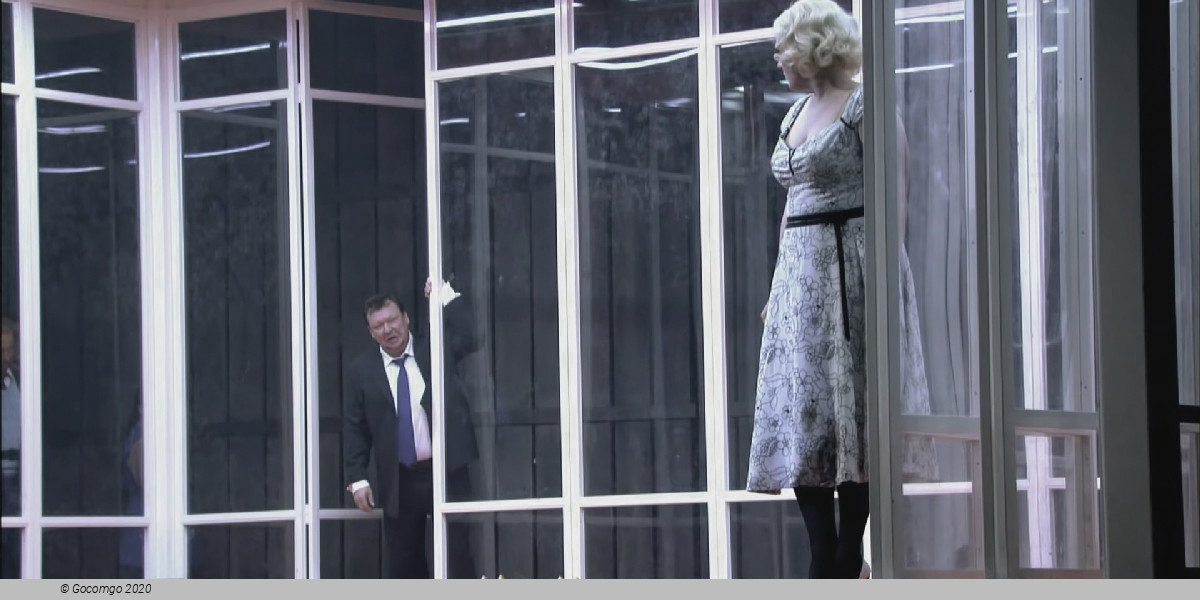
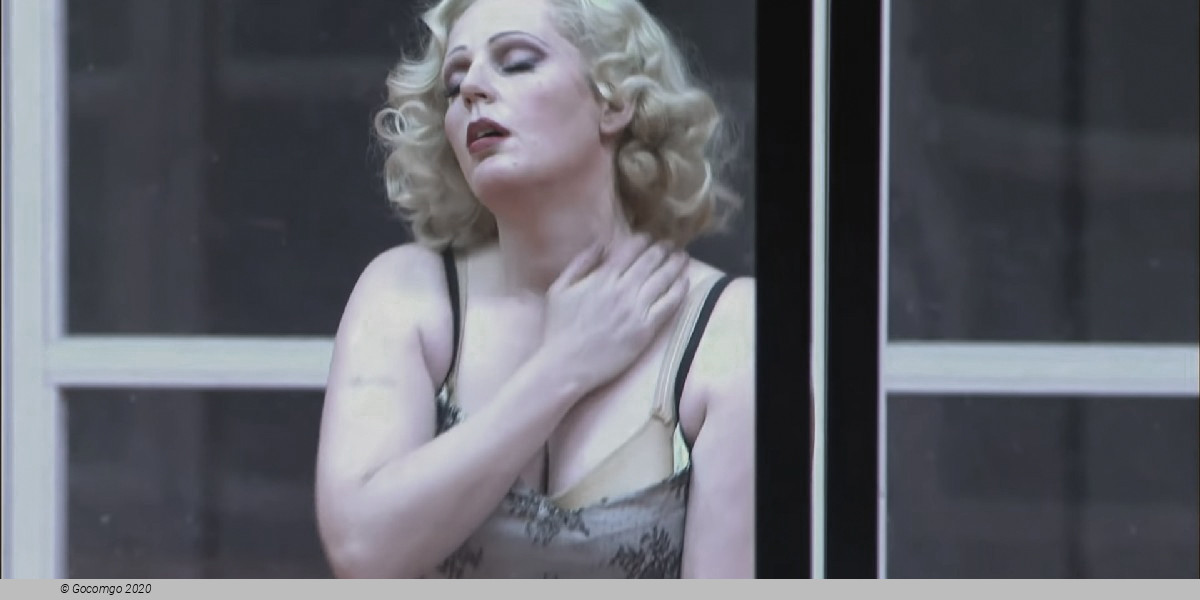
Katerina Ismailova - killer and victim at the same time - frees herself from a business world full of dullness, greed and cruelty by poisoning her husband in order to be able to live with her lover. This is accompanied by music of radical vitality that vehemently expresses the right to one's own desire, to recklessly lived freedom. The international success from Leningrad to New York, from Stockholm to Zurich was abruptly ended when Stalin expressed his disapproval. Lady Macbeth of Mtsensk also became a work of fate for the composer.

History
Premiere of this production: 22 January 1934, Leningrad Maly Operny

Lady Macbeth of the Mtsensk District is an opera in four acts and nine scenes by Dmitri Shostakovich. The libretto, jointly written by Alexander Preys and the composer, is based on the novella of the same name by Nikolai Leskov. (The opera is generally translated in English as Lady Macbeth of Mtsensk.) Dedicated by Shostakovich to his first wife, physicist Nina Varzar, the roughly 160-minute opera was first performed on 22 January 1934 at the Leningrad Maly Operny, and on 24 January 1934 in Moscow. It incorporates elements of expressionism and verismo, telling the story of a lonely woman in 19th-century Russia who falls in love with one of her husband's workers and is driven to murder.

Synopsis

Although the opera shares the basic characters and outline of the play, it has a number of differences from the original story in terms of plot and emphasis. One example is in the convoy after Katerina gives Sergei her stockings: in the opera, all the women mock Katerina, whereas in the story, Sergei and Sonya mock her while Fiona and Gordyushka shame them in response to their cruelty toward her.

Act 1
Scene 1: Katerina's room

Katerina is unhappily married to Zinovy, a provincial flour-merchant. She complains to herself of her loneliness. Her father-in-law Boris, angered at her attitude in response to his saying that mushrooms are his favourite dish, says it is her fault for not producing an heir. She replies that Zinovy cannot give her a child – which Boris disdains; he then threatens her if she decides to seduce some youthful lover. Zinovy is called away on business, and Boris – against his son's inclinations – makes Katerina swear before an icon to be faithful. A servant, Aksinya, tells Katerina about the womanising new clerk, Sergei.

Scene 2: The Izmailovs' yard

Sergei and his comrades are sexually harassing Aksinya. Katerina intervenes. She berates him for his machismo and asserts that women are as brave and capable as men. Sergei is willing to prove her wrong and they wrestle; she is thrown down and Sergei falls on top of her. Boris appears. She says that she tripped and Sergei in trying to help her, fell down also. The other peasants back her up. Boris however is suspicious and roars at the peasants, telling them to get back to work before ordering Katerina to fry some mushrooms for him and threatening to tell Zinovy all about her behaviour.

Scene 3: Katerina's room

Katerina prepares to go to bed. Sergei knocks on her door with the excuse that he wants to borrow a book because he cannot sleep, but Katerina has none; she cannot read. As she is about to close the door he continues attempting to seduce her by remembering their wrestling match earlier that day. He gets into the room and forces himself on her. After this is done, she tells him to leave, but he refuses and she agrees to embark on an affair with him. Boris knocks on the door and confirms that Katerina is in bed and locks her in. Sergei is trapped in the room, and the two make love.

Act 2
Scene 4: The yard

One night a week later. Boris, unable to sleep due to unease about thieves being on the prowl, is walking in the courtyard in the pre-dawn darkness. He, remembering his own youthful days as a rake and knowing Zinovy's low libido, is considering seducing Katerina himself to fulfill his son's marital duties. He spots Sergei climbing out of Katerina's window. He catches him and publicly whips him as a burglar, then has him locked up. Katerina witnesses this but cannot stop him because she remains locked in her room. When finally she manages to climb down the eavestrough-drainpipe the other servants restrain her on Boris' order. After being exhausted by beating Sergei, Boris demands some dinner, saying that he will whip Sergei again the next day and dispatches a servant to call Zinovy back, saying that Zinovy is to be told that there's trouble at home. Katerina adds rat-poison to some mushrooms and gives them to him. As he is dying, calling for a priest, she retrieves the keys to free Sergei. The priest, called by the arriving morning shift of workers who find Boris in agony, arrives: Boris vainly tries to tell him that he was poisoned and falls back dead pointing at Katerina. Katerina, weeping crocodile tears, convinces him that Boris has accidentally eaten poisonous mushrooms and he says a prayer over Boris' body.

Scene 5: Katerina's room

Katerina and Sergei are together. Sergei querulously says that their affair will have to end due to Zinovy's impending return and wishes he and Katerina could marry – Katerina assures him that they'll marry but refuses to tell him how she'll arrange it. Sergei then falls asleep; Katerina is then tormented by Boris' ghost and cannot sleep. Later she hears Zinovy returning. He has been called back by one of the servants with the news of his father's death. Although Sergei hides, Zinovy sees Sergei's trousers and belt and guesses the truth. As he and Katerina quarrel, he whips her with the belt. Hearing Katerina's cries, Sergei emerges and confronts Zinovy, who then tries to escape and call the servants. Katerina stops Zinovy: she and Sergei then proceed to strangle Zinovy, who's finally finished off by Sergei with a blow on the head with a heavy candlestick. The lovers hide the corpse in the wine-cellar.

Act 3
Scene 6: Near the cellar

Following Zinovy's disappearance he has been presumed dead. Katerina and Sergei prepare to get married, but she is tormented by the fact that Zinovy's corpse is hidden in the wine cellar. Sergei reassures her and they leave for the wedding ceremony. A drunken peasant breaks into the cellar, finds Zinovy's body and goes to fetch the police.

Scene 7: The police station

The police are complaining about not being invited to the wedding and vainly try to distract themselves by tormenting a "nihilist" schoolteacher because of atheism when the peasant arrives and gives them the opportunity for revenge.

Scene 8: The Izmailov garden

Everyone is drunk at the wedding. Katerina sees that the cellar door is open, but the police arrive as she and Sergei are trying to escape.

Act 4
Scene 9. A temporary convict camp near a bridge

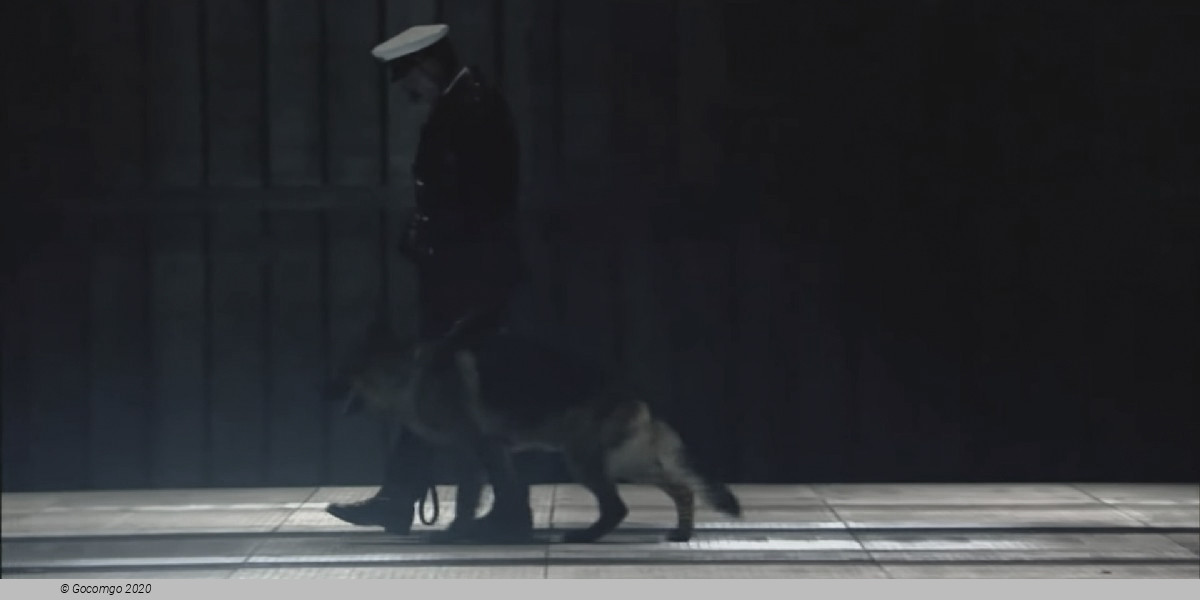
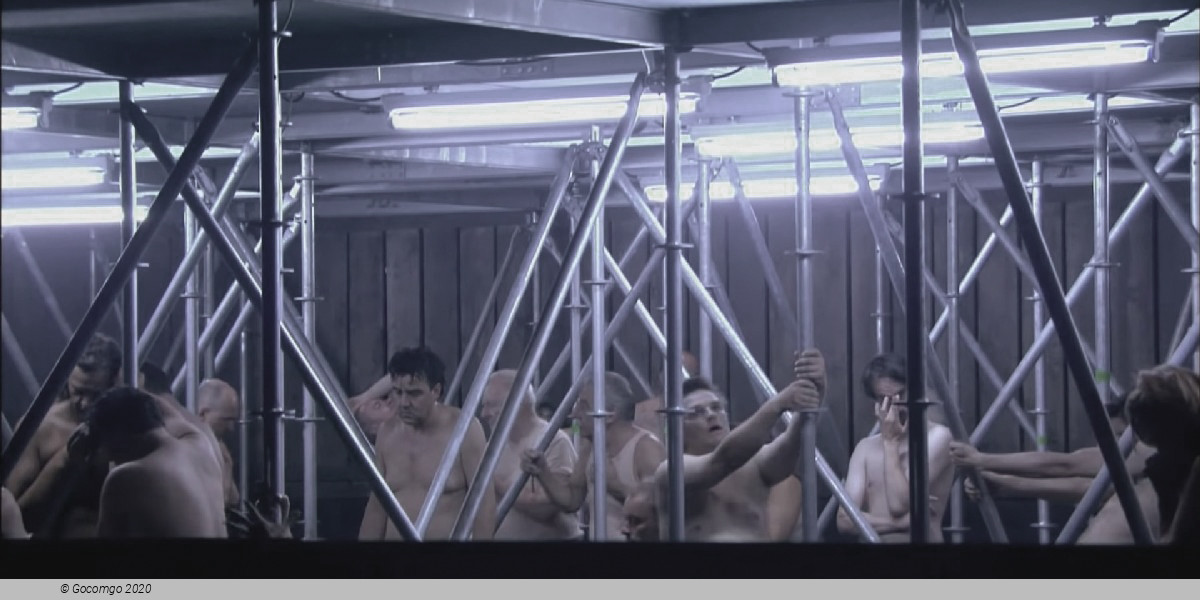
On the way to penal labour to Siberia, Katerina bribes a guard to allow her to meet Sergei. He blames her for everything. After she leaves, Sergei tries to seduce another convict, Sonyetka. She demands a pair of stockings as her price. Sergei tricks Katerina into giving him hers, whereupon he gives them to Sonyetka. Sonyetka and the other convicts taunt Katerina, who pushes Sonyetka into an icy river – also, herself, falling in. They are swept away and the convict train moves on.

Venue Info

Staatsoper Hamburg - Hamburg
Location   Große Theaterstraße 25

Staatsoper Hamburg is the oldest publicly accessible musical theater in Germany, located in Hamburg. It was founded in 1678. With the emergence of the Hamburg Opera House, researchers attribute the formation of a national German opera school.

Opera in Hamburg dates to 2 January 1678 when the Oper am Gänsemarkt was inaugurated with a performance of a biblical Singspiel by Johann Theile. It was not a court theatre but the first public opera house in Germany established by the art-loving citizens of Hamburg, a prosperous member of the Hanseatic League.

The Hamburg Bürgeroper resisted the dominance of the Italianate style and rapidly became the leading musical center of the German Baroque. In 1703, George Friedrich Handel was engaged as violinist and harpsichordist and performances of his operas were not long in appearing. In 1705, Hamburg gave the world première of his opera Nero.

In 1721, Georg Philipp Telemann, a central figure of the German Baroque, joined the Hamburg Opera, and in subsequent years Christoph Willibald Gluck, Johann Adolph Hasse and various Italian companies were among the guests.

To replace the aging wooden structure, the first stone was laid on 18 May 1826 for the Stadt-Theater on the present-day site of the Staatsoper Hamburg. The new theater, with seating for 2,800 guest, was inaugurated less than a year later with Beethoven's incidental music to Egmont.

In 1873, both the exterior and interior of the structure were renovated in the reigning "Gründerzeit" style of the time, and again in 1891, when electric lighting was introduced.

Under the direction of Bernhard Pollini, the house mounted its first complete Ring Cycle in 1879. In 1883, the year of Wagner's death, a cycle comprising nine of his operas commenced. The musical directors Hans von Bülow (from 1887 to 1890) and Gustav Mahler (from 1891 to 1897) also contributed to the fame of the opera house.

In the beginning of the 20th century, opera was an important part of the theatre's repertoire; among the 321 performances during the 1907–08 season, 282 were performances of opera. The Stadt-Theater performed not only established repertoire but also new works, such as Paul Hindemith's Sancta Susanna, Igor Stravinsky's The Soldier's Tale, Ernst Krenek's Jonny spielt auf, and Leoš Janáček's Jenůfa. Ferruccio Busoni's Die Brautwahl (1912) and Erich Wolfgang Korngold's Die tote Stadt (1920) both had their world premieres in Hamburg. In the 1930s, after Hitler came to power, the opera house was renamed Hamburgische Staatsoper.

On the night of 2 August 1943, both the auditorium and its neighbouring buildings were destroyed during air raids by fire-bombing; a low-flying airplane dropped several petrol and phosphorus containers onto the middle of the roof of the auditorium, causing it to erupt into a conflagration.

The current Staatsoper opened on 15 October 1955 with Mozart's Die Zauberflöte. Hamburg continued to devote itself to new works, such as Hans Werner Henze's The Prince of Homburg (1960), Stravinsky's The Flood (1963), Gian Carlo Menotti's Help, Help, the Globolinks! (1968), and Mauricio Kagel's Staatstheater (1971).

In 1967, under the direction of Joachim Hess, the Staatsoper Hamburg became the first company to broadcasts its operas in color on television, beginning with Die Hochzeit des Figaro (a German translation of Le Nozze di Figaro). Ten of these television productions have been released on DVD by ArtHaus Musik as Cult Opera of the 1970s, as well as separately. All of these were performed in German regardless of the original language (six were written in German, one in French, two in English, and one in Italian).

More recently, Hamburg gave the world premières of Wolfgang Rihm's Die Eroberung von Mexico (1992) and Helmut Lachenmann's Das Mädchen mit den Schwefelhölzern (1997), for which it received much international acclaim. The company has won the "Opera House of the Year" award by the German magazine Opernwelt in 1997 and in 2005.

Important Info
Type: Opera
City: Hamburg, Germany
Starts at: 19:00
Intervals: 1
Duration: 3h 15min
Sung in: Russian
Titles in: German,English
Top of page