









Staatsoper Hamburg 28 February 2021 - La Belle Hélène | GoComGo.com

La Belle Hélène

Staatsoper Hamburg, Main Stage, Hamburg, Germany
All photos (11)
Select date and time
3 PM
Request for Tickets
Important Info
Type: Opera
City: Hamburg, Germany
Starts at: 15:00
Acts: 3
Intervals: 2
Duration: 2h 50min
Sung in: French
Titles in: German

E-tickets: Print at home or at the box office of the event if so specified. You will find more information in your booking confirmation email.

You can only select the category, and not the exact seats.
If you order 2 or 3 tickets: your seats will be next to each other.
If you order 4 or more tickets: your seats will be next to each other, or, if this is not possible, we will provide a combination of groups of seats (at least in pairs, for example 2+2 or 2+3).

Overview

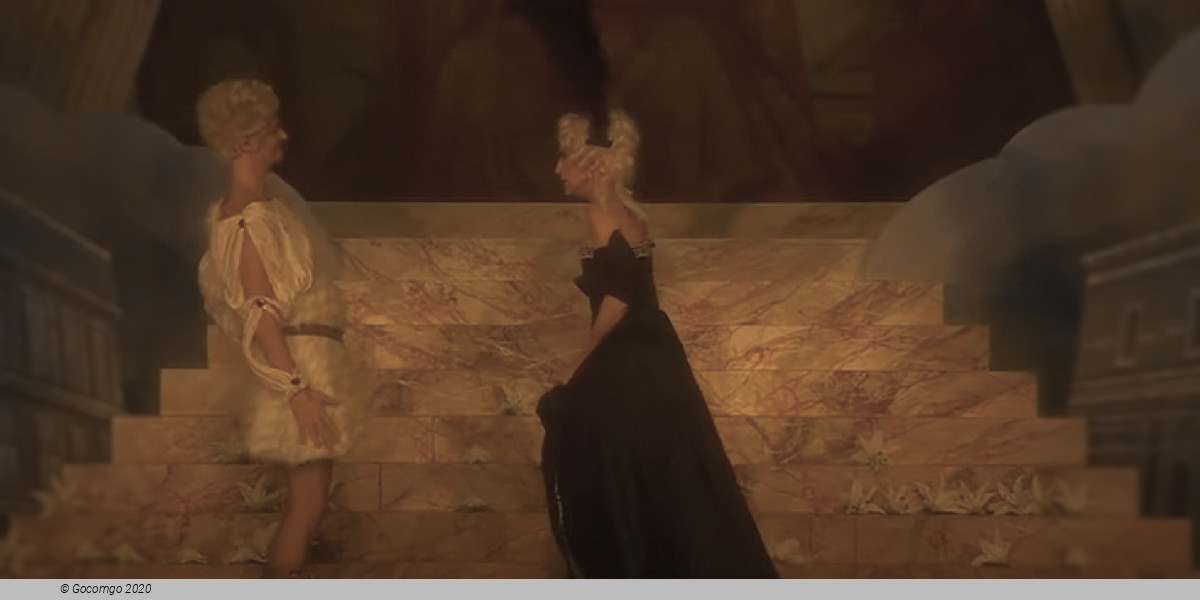
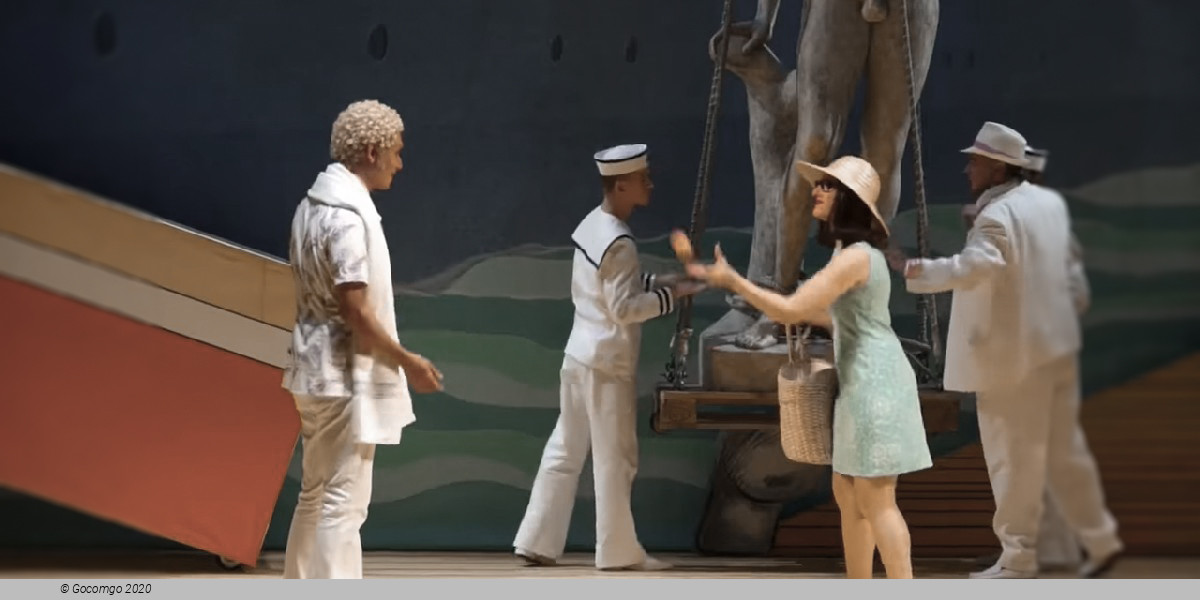
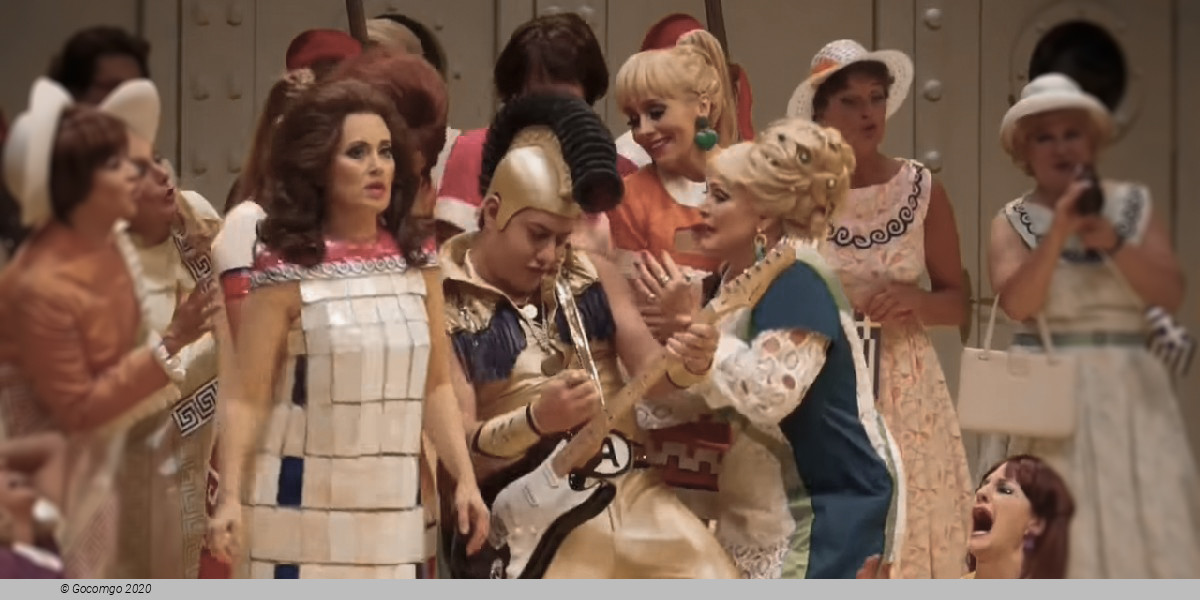
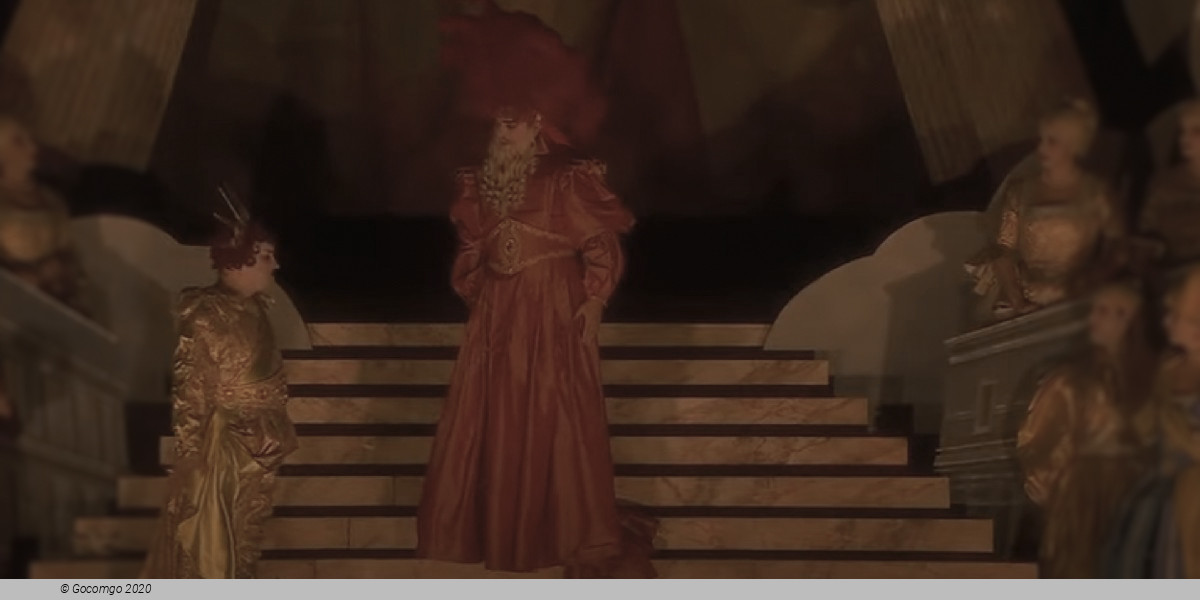
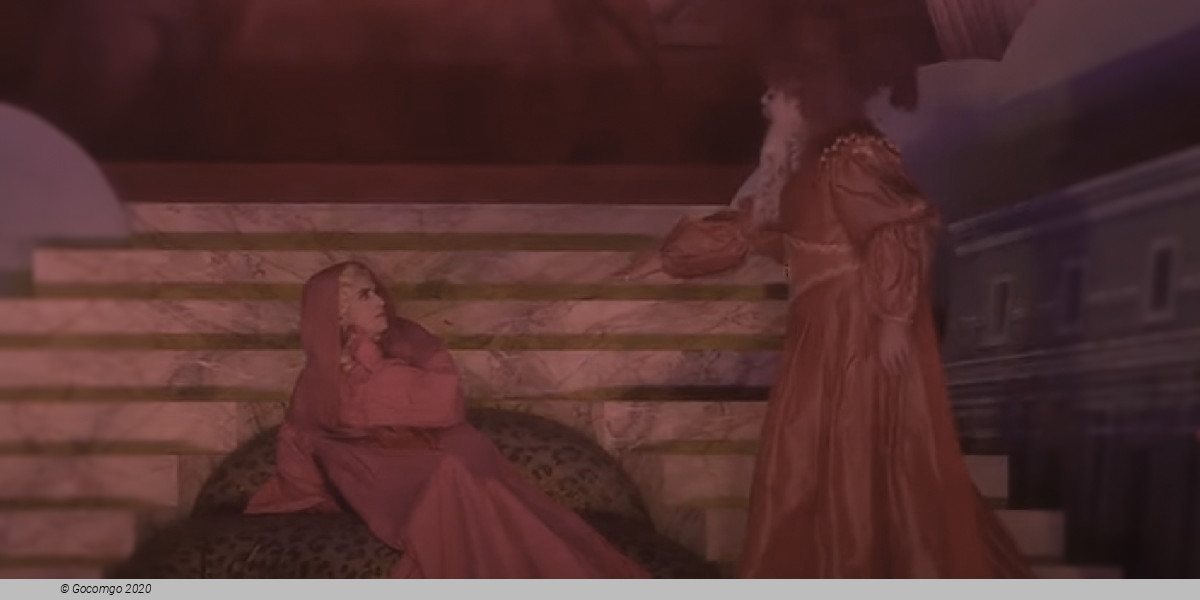
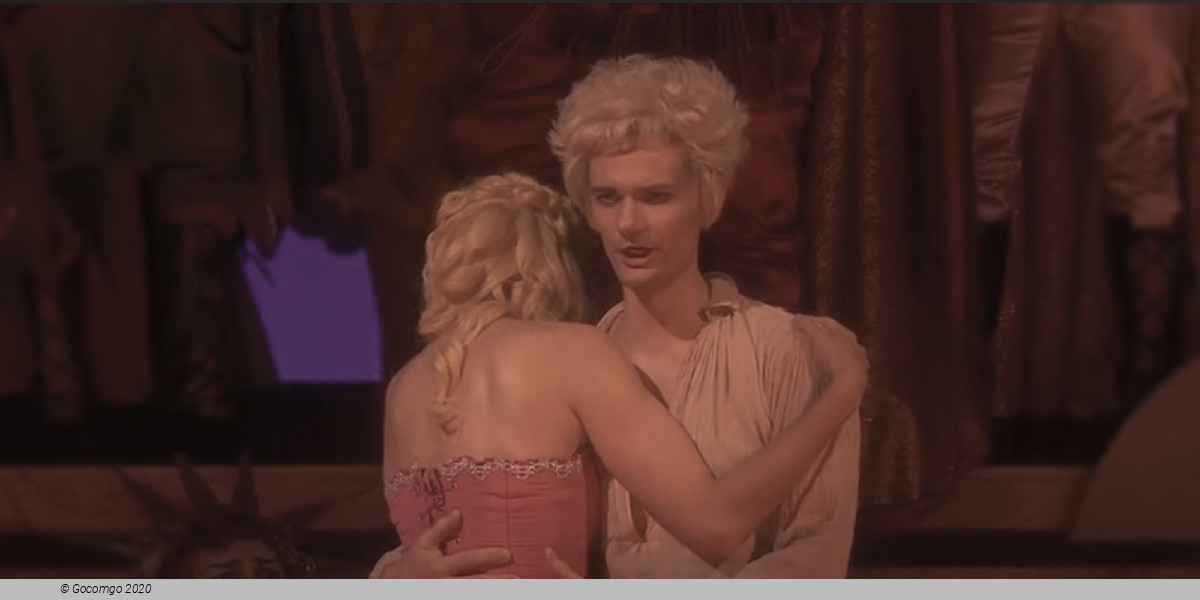
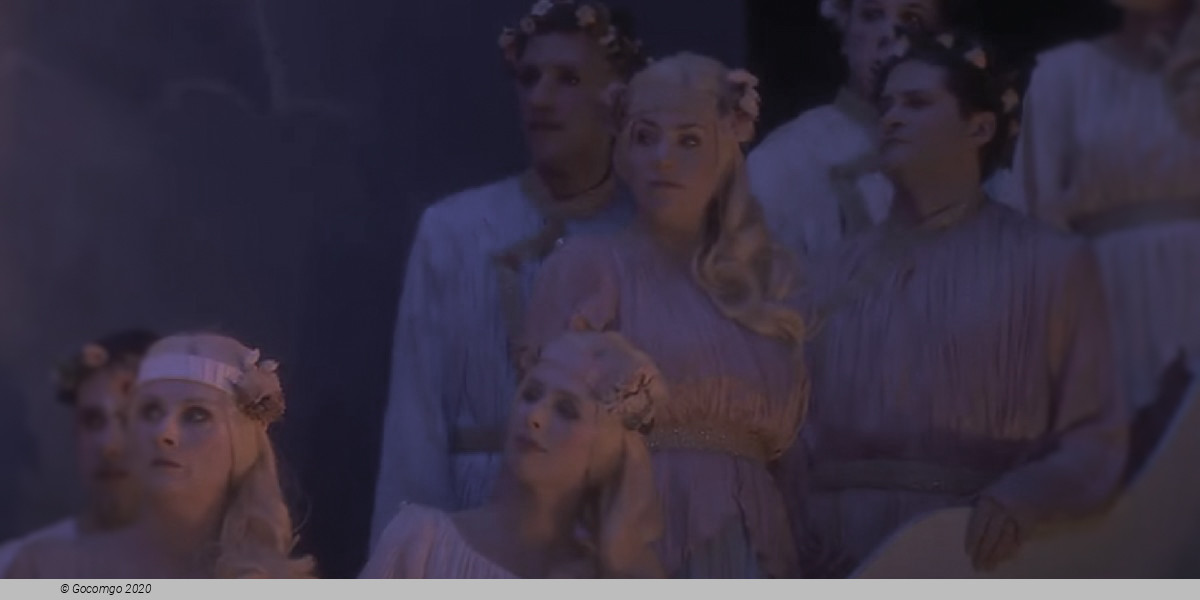
André Barbe and Renaud Doucet, the directors of this production, have moved the action to a cruise ship during the 1960s: their imaginative, witty production is sure to lift your spirits!

Jacques Offenbach’s stage work includes 102 scores – his opéra bouffe “La Belle Hélène” is one of his greatest successes. Unhappy in her marriage to the elderly King Ménélas, Hélène, the most beautiful woman in the world, longs for passion. During a tournament, she notices Pâris, disguised as a shepherd. He comes to her during the night and they succumb to passion. Ménélas surprises the two adulterers, but Pâris and Hélène manage to escape… At its premiere in Paris in 1864, Offenbach’s operetta caused a massive scandal, because the performer playing Hélène wore a costume considered frivolous. Under the mantle of parody Offenbach was able to include numerous erotic innuendos and explicit scenes in his operettas, which would have otherwise been cut by the censors. As a satire, “La Belle Hélène” takes aim at the bourgeoisie and its bigotry.

History
Premiere of this production: 17 December 1864, Théâtre des Variétés, Paris

La belle Hélène (The Beautiful Helen), is an opéra bouffe in three acts, with music by Jacques Offenbach and words by Henri Meilhac and Ludovic Halévy. The piece parodies the story of Helen's elopement with Paris, which set off the Trojan War.

Synopsis

Because of a small mishap while on shore, a passenger on a cruise ship returns as a different woman than the one who went on board…

Act I

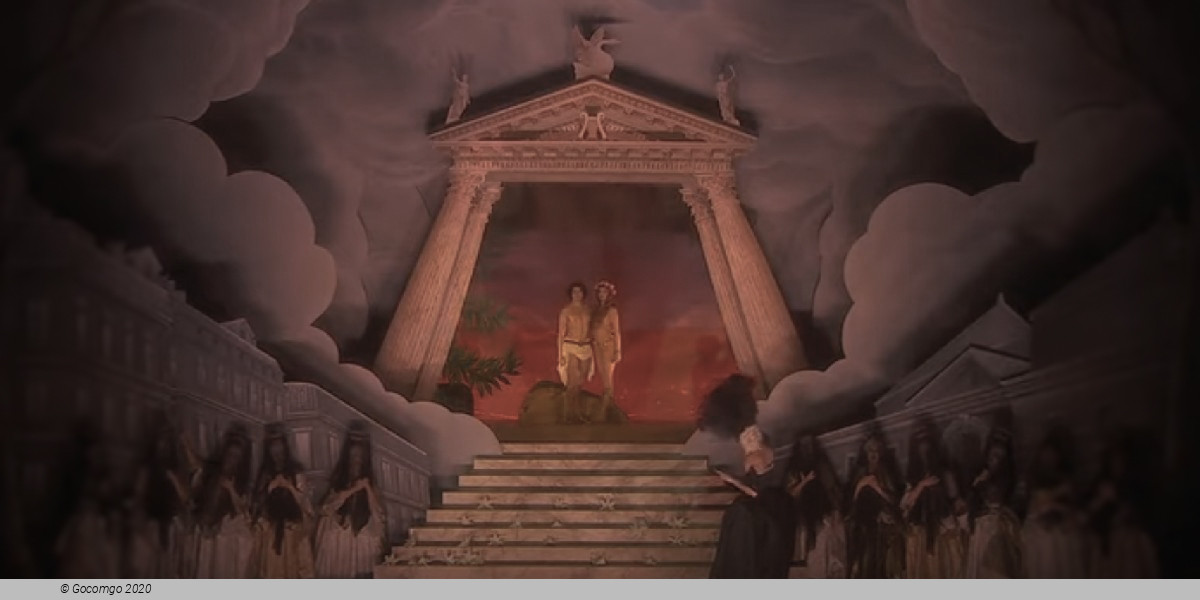
During the sacrifices at the altar of Jupiter Stator, the populace displays a lack of respect. Calchas, the Grand Augur, fears that the authority of the Gods is declining. Hélène appears, accompanied by women in mourning. They lament the death of the beautiful youth Adonis – yet another, who can no longer give them the love they long for so much. It is no wonder that they are frustrated, since Helen is married to King Ménélas, who shows little interest in her.
Hélène asks Calchas about the story of Mount Ida: did not Vénus promise the most beautiful woman in the world to the young shep-herd Pâris there? Moreover, is she not herself the most beautiful woman in the world? What a twist of fate!
Oreste, the son of the Greek King Agamemnon and Hélène’s nephew, appears in the company of two ladies, Parthœnis and Léœna, with whom he spent a fortune of daddy’s money the previous day. Calchas doesn’t approve of such a happy-go-lucky attitude – at least so he says.
The next visitor is a young shepherd. Didn’t Calchas receive his letter? The carrier pigeon arrives on cue and brings an order in writing from Vénus: Calchas is to present the young shepherd to Hélène, since he is none other than Paris, the son of King Priam of Troy. He recounts once more that in his judgement on Mount Ida he did not give the prize apple to the goddesses Minerva or Juno, but to Vénus.
Hélène and Pâris meet each other and desire strikes them like lightening. First, however, Agamemnon calls out a contest of intellects. The Greek heroes present themselves: the two named Ajax, Achille, Agamemnon and Ménélas. One of the heroes should be able to solve the word-riddle. However, the winner is the shep-herd, who reveals himself as Paris and is idolized as the „man with the apple“. Hélène invites him to dinner –now she only has to get rid of Ménélas. Calchas arranges for the troublesome husband to be sent away. He proclaims the oracle of Jupiter: Ménélas must travel to Crete for a month. Urged by the crowd, Ménélas follows his orders.

Act II

Hélène dresses in high-necked clothing in order to conceal her charms while her husband is away. However, how she looks underneath is only one man’s business: namely, Paris’s. In any case, so she reasons, Vénus herself has apparently made the decision in this matter. Also, wasn’t her mother, Leda, herself the victim of a godly subterfuge?
Pâris, too, aims to employ a trick to reach his goal with a resisting Hélène. The intimate and quite promising tête-à-tête between them is interrupted by the royal company. In high spirits, they play the „Goose Board Game“. Calchas is caught cheating and is nearly lynched.
In order to return to Hélène’s good graces, Calchas is to provide her with a dream: a sweet dream of love with Pâris. What a twist of fate!
Indeed, Pâris appears and both surrender to the dream of love. Suddenly Ménélas bursts in and demands vengeance as a betrayed husband. Hélène tries to explain that it is his own fault: Why did he come back from his trip without warning? Ménélas’s Greek relations take his side and chase Pâris away. Pâris swears to return and takes Hélène away with him.

Act III

Lead by Oreste the people celebrate the fires of love, which Venus has now ignited in everybody’s heart. Hélène once again defends herself before Ménélas: In the end, it was only a dream!
Agamemnon and Calchas demand that Ménélas put an end to the immoral scourge of Vénus by sacrificing himself for Greece. However, Ménélas refuses. He has a better idea and sends a messenger to Cythera, the island of Vénus. A Grand Augur of Vénus is to come and remove the curse from Greece.
The Grand Augur of Vénus appears right away. He preaches the cult of exuberance and enjoy-ment of life. Vénus must be appeased by sacrifices. First, Hélène herself must bring a hundred white heifers, accompanied, of course, by the Grand Augur. Ménélas agrees – if that’s all that is necessary, then so be it! Once again, fate steps in: Hélène flees with the Grand Augur, who reveals himself as Pâris. Off to Cythera…!

Translation: Mark Bruce

Place: Sparta and the shores of the sea
Time: Before the Trojan War.

Act 1
Paris, son of Priam, arrives with a missive from the goddess Venus to the high priest Calchas, commanding him to procure for Paris the love of Helen, promised him by Venus when he awarded the prize of beauty to her in preference to Juno and Minerva.

Paris arrives, disguised as a shepherd, and wins three prizes at a "contest of wit" (outrageously silly wordgames) with the Greek kings under the direction of Agamemnon, whereupon he reveals his identity. Helen, who was trying to settle after her youthful adventure and aware of Paris's backstory, decides that fate has sealed her fate. The Trojan prince is crowned victor by Helen, to the disgust of the lout Achilles and the two bumbling Ajaxes. Paris is invited to a banquet by Helen's husband Menelaus, the king of Sparta. Paris has bribed Calchas to "prophesise" that Menelaus must at once proceed to Crete, which he agrees to reluctantly under general pressure.

Act 2
While the Greek kings party in Menelaus's palace in his absence, and Calchas is caught cheating at a board game, Paris comes to Helen at night. After she sees off his first straightforward attempt at seducing her, he returns when she has fallen asleep. Helen has prayed for some appeasing dreams and appears to believe that this is one, and so resists him not much longer. Menelaus unexpectedly returns and finds the two in each other's arms. Helen, exclaiming 'la fatalité, la fatalité', tells him that it is all his fault: A good husband knows when to come and when to stay away. Paris tries to dissuade him from kicking up a row, but to no avail. When all the kings join the scene, berating Paris and telling him to go back where he came from, Paris departs, vowing to return and finish the job.

Act 3
The kings and their entourage have moved to Nauplia for the summer season, and Helen is sulking and protesting her innocence. Venus has retaliated for the treatment meted out to her protégé Paris by making the whole population giddy and amorous, to the despair of the kings. A high priest of Venus arrives on a boat, explaining that he has to take Helen to Cythera where she is to sacrifice 100 heifers for her offences. Menelaus pleads with her to go with the priest, but she refuses initially, saying that it is he, and not she, who has offended the goddess. However, when she realises that the priest is Paris in disguise, she embarks and they sail away together.

Venue Info

Staatsoper Hamburg - Hamburg
Location   Große Theaterstraße 25

Staatsoper Hamburg is the oldest publicly accessible musical theater in Germany, located in Hamburg. It was founded in 1678. With the emergence of the Hamburg Opera House, researchers attribute the formation of a national German opera school.

Opera in Hamburg dates to 2 January 1678 when the Oper am Gänsemarkt was inaugurated with a performance of a biblical Singspiel by Johann Theile. It was not a court theatre but the first public opera house in Germany established by the art-loving citizens of Hamburg, a prosperous member of the Hanseatic League.

The Hamburg Bürgeroper resisted the dominance of the Italianate style and rapidly became the leading musical center of the German Baroque. In 1703, George Friedrich Handel was engaged as violinist and harpsichordist and performances of his operas were not long in appearing. In 1705, Hamburg gave the world première of his opera Nero.

In 1721, Georg Philipp Telemann, a central figure of the German Baroque, joined the Hamburg Opera, and in subsequent years Christoph Willibald Gluck, Johann Adolph Hasse and various Italian companies were among the guests.

To replace the aging wooden structure, the first stone was laid on 18 May 1826 for the Stadt-Theater on the present-day site of the Staatsoper Hamburg. The new theater, with seating for 2,800 guest, was inaugurated less than a year later with Beethoven's incidental music to Egmont.

In 1873, both the exterior and interior of the structure were renovated in the reigning "Gründerzeit" style of the time, and again in 1891, when electric lighting was introduced.

Under the direction of Bernhard Pollini, the house mounted its first complete Ring Cycle in 1879. In 1883, the year of Wagner's death, a cycle comprising nine of his operas commenced. The musical directors Hans von Bülow (from 1887 to 1890) and Gustav Mahler (from 1891 to 1897) also contributed to the fame of the opera house.

In the beginning of the 20th century, opera was an important part of the theatre's repertoire; among the 321 performances during the 1907–08 season, 282 were performances of opera. The Stadt-Theater performed not only established repertoire but also new works, such as Paul Hindemith's Sancta Susanna, Igor Stravinsky's The Soldier's Tale, Ernst Krenek's Jonny spielt auf, and Leoš Janáček's Jenůfa. Ferruccio Busoni's Die Brautwahl (1912) and Erich Wolfgang Korngold's Die tote Stadt (1920) both had their world premieres in Hamburg. In the 1930s, after Hitler came to power, the opera house was renamed Hamburgische Staatsoper.

On the night of 2 August 1943, both the auditorium and its neighbouring buildings were destroyed during air raids by fire-bombing; a low-flying airplane dropped several petrol and phosphorus containers onto the middle of the roof of the auditorium, causing it to erupt into a conflagration.

The current Staatsoper opened on 15 October 1955 with Mozart's Die Zauberflöte. Hamburg continued to devote itself to new works, such as Hans Werner Henze's The Prince of Homburg (1960), Stravinsky's The Flood (1963), Gian Carlo Menotti's Help, Help, the Globolinks! (1968), and Mauricio Kagel's Staatstheater (1971).

In 1967, under the direction of Joachim Hess, the Staatsoper Hamburg became the first company to broadcasts its operas in color on television, beginning with Die Hochzeit des Figaro (a German translation of Le Nozze di Figaro). Ten of these television productions have been released on DVD by ArtHaus Musik as Cult Opera of the 1970s, as well as separately. All of these were performed in German regardless of the original language (six were written in German, one in French, two in English, and one in Italian).

More recently, Hamburg gave the world premières of Wolfgang Rihm's Die Eroberung von Mexico (1992) and Helmut Lachenmann's Das Mädchen mit den Schwefelhölzern (1997), for which it received much international acclaim. The company has won the "Opera House of the Year" award by the German magazine Opernwelt in 1997 and in 2005.

Important Info
Type: Opera
City: Hamburg, Germany
Starts at: 15:00
Acts: 3
Intervals: 2
Duration: 2h 50min
Sung in: French
Titles in: German
Top of page