



Staatsoper Hamburg 10 February 2023 - Il Turco in Italia | GoComGo.com

Il Turco in Italia

Staatsoper Hamburg, Main Stage, Hamburg, Germany
All photos (8)
Select date and time
7 PM

E-tickets: Print at home or at the box office of the event if so specified. You will find more information in your booking confirmation email.

You can only select the category, and not the exact seats.
If you order 2 or 3 tickets: your seats will be next to each other.
If you order 4 or more tickets: your seats will be next to each other, or, if this is not possible, we will provide a combination of groups of seats (at least in pairs, for example 2+2 or 2+3).

Important Info
Type: Opera
City: Hamburg, Germany
Starts at: 19:00
Acts: 2
Intervals: 1
Duration: 3h 15min
Sung in: Italian
Titles in: German

E-tickets: Print at home or at the box office of the event if so specified. You will find more information in your booking confirmation email.

You can only select the category, and not the exact seats.
If you order 2 or 3 tickets: your seats will be next to each other.
If you order 4 or more tickets: your seats will be next to each other, or, if this is not possible, we will provide a combination of groups of seats (at least in pairs, for example 2+2 or 2+3).

Overview

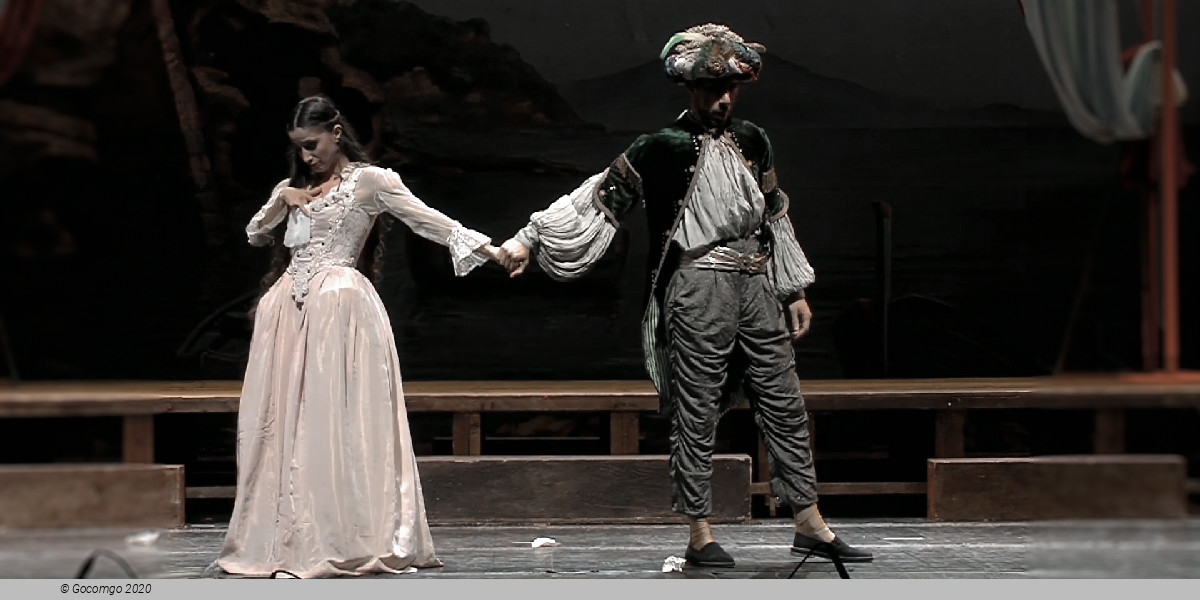
What does a novelist do when he can’t think of a story? Hoping for inspiration, he studies the people around him. And the people around him are ensnared in all kinds of sentimentalities as soon as the handsome “Turk in Italy” arrives, to the writer’s delight. Zaida loves the Turk Selim, who in turn has fallen for Fiorilla, but unfortunately she is married to Don Geronio and has an ardent admirer in Don Narciso. So who ends up with whom? For the poet Prosdocimo and for the audience, it is an intriguing and amusing affair.

History
Premiere of this production: 14 August 1814, La Scala, Milan

Il turco in Italia (The Turk in Italy) is an opera in two acts by Gioachino Rossini. The Italian-language libretto was written by Felice Romani. It was a re-working of a libretto by Caterino Mazzolà set as an opera (with the same title) by the German composer Franz Seydelmann in 1788.

Synopsis

Time: 18th Century
Place: In and around Naples

Act 1

By the sea shore near Naples

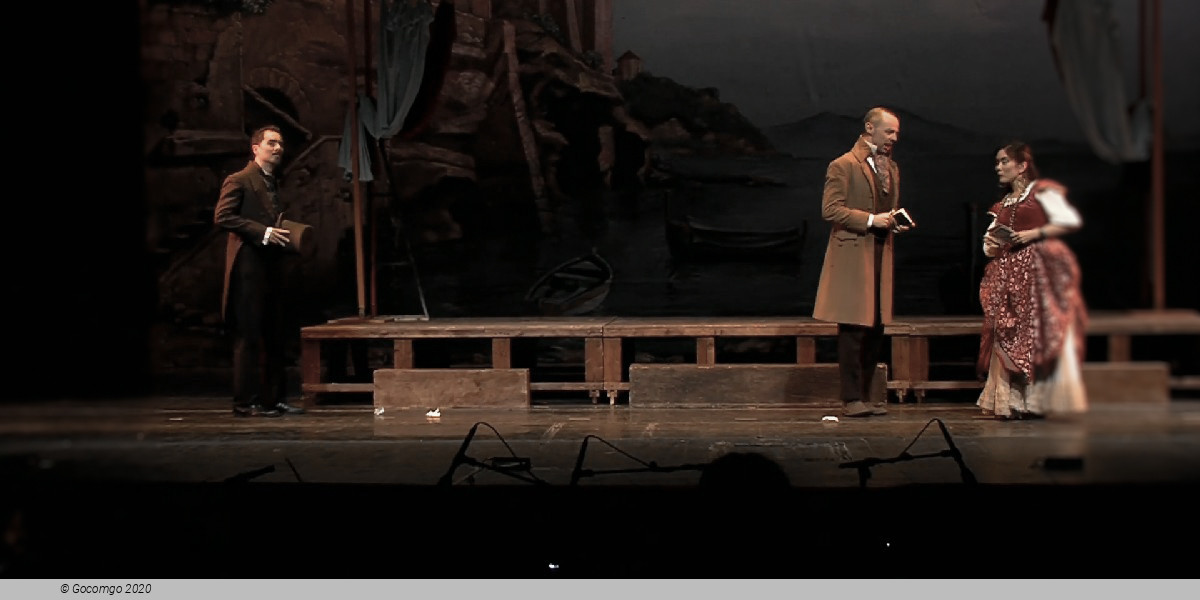
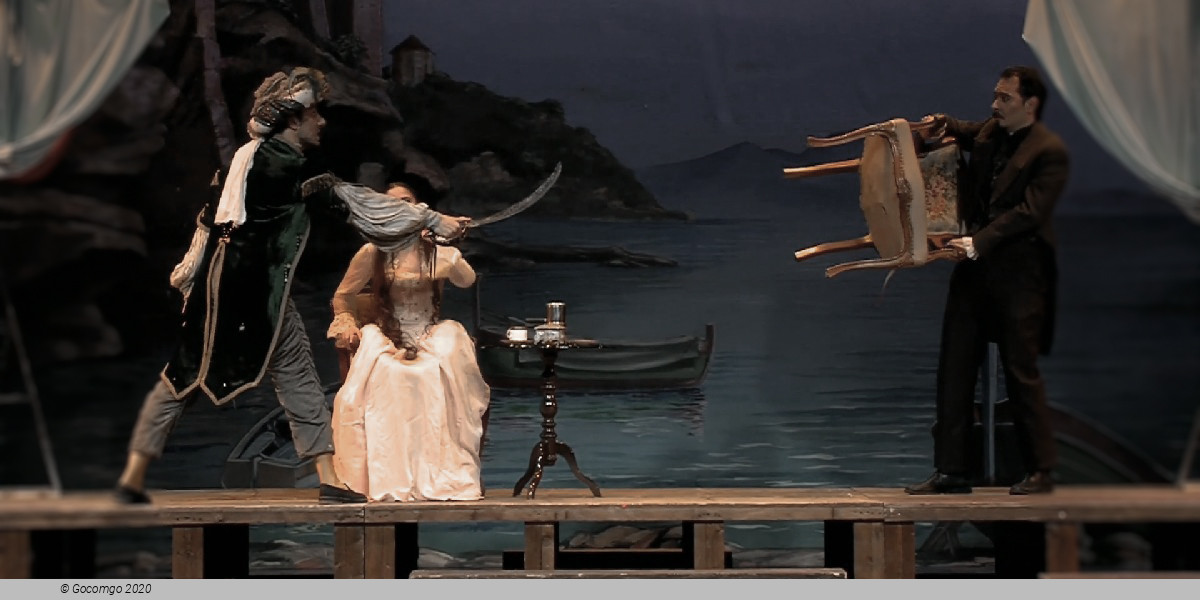
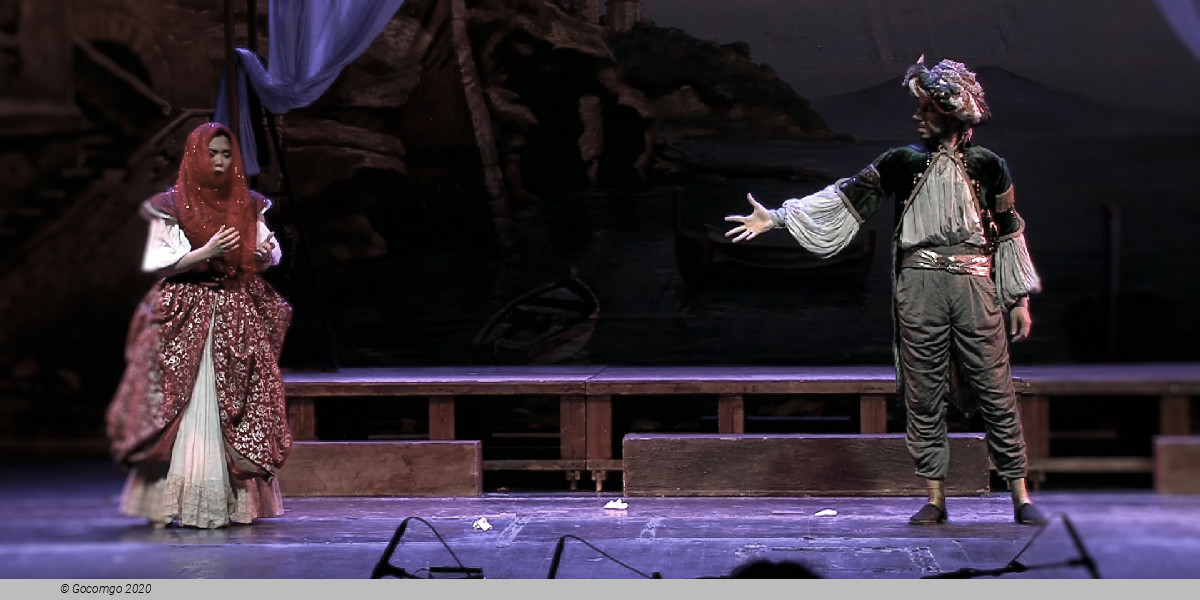
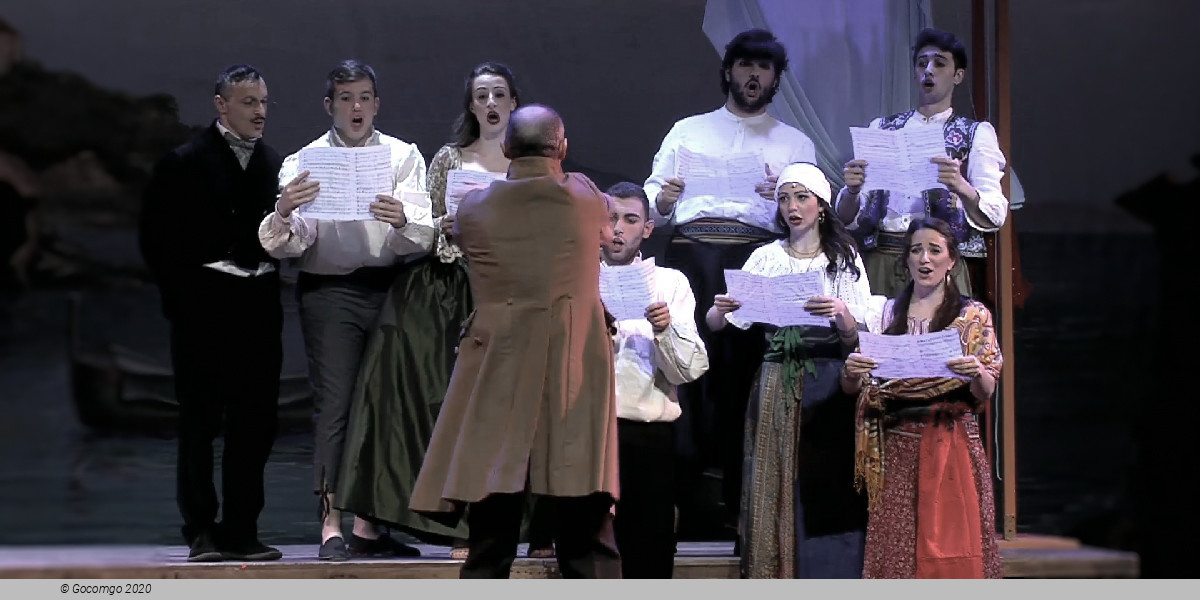
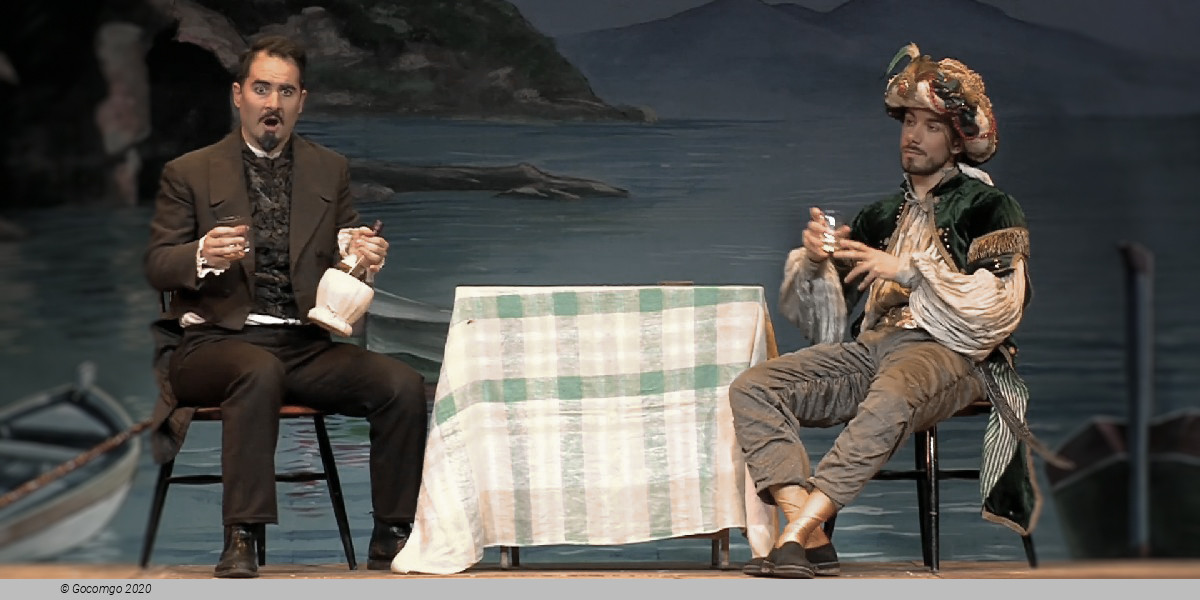
The poet Prosdocimo (baritone) is searching for a plot for a drama buffo. He meets a band of Gypsies, including the beautiful but unhappy Zaida (mezzo-soprano) and her confidant Albazar (tenor). Perhaps the Gypsies can provide some ideas? Prosdocimo's friend, the obstinate and sometimes foolish Geronio (bass), is looking for a fortune teller to advise him on his marital problems, but the Gypsies tease him. Zaida tells Prosdocimo that she is from a Turkish harem. She and her master, Prince Selim, were in love, but jealous rivals accused her of infidelity and she had to flee for her life, accompanied by Albazar. Nevertheless, she still loves only one man and that man is Selim. Prosdocimo knows that a Turkish prince will shortly be arriving in Italy. Perhaps he can help? Geronio's capricious young wife Fiorilla (soprano) enters singing (in contrast to Zaida) of the joys of free and unfettered love. A Turkish ship arrives and the prince disembarks. It is Selim (bass) himself. Fiorilla is immediately attracted to the handsome Turk, and a romance rapidly develops. Narciso (tenor) appears in her pursuit. He is an ineffectual admirer of Fiorilla posing as a friend of her husband. Geronio follows, horrified to learn that Fiorilla is taking the Turk home to drink his coffee!

Geronio's house

Fiorilla and Selim are flirting. Geronio enters timidly and Selim is initially impressed by his unexpected meekness, however Narciso noisily scolds Geronio. The domestic menage irritates Selim and he leaves after quietly arranging to meet Fiorilla again by his ship. Geronio tells Fiorilla he will not allow any more Turks - or Italians - in his house. She sweetly undermines his complaints, and then, when he softens, threatens to punish him by enjoying herself even more wildly.

The sea shore at night

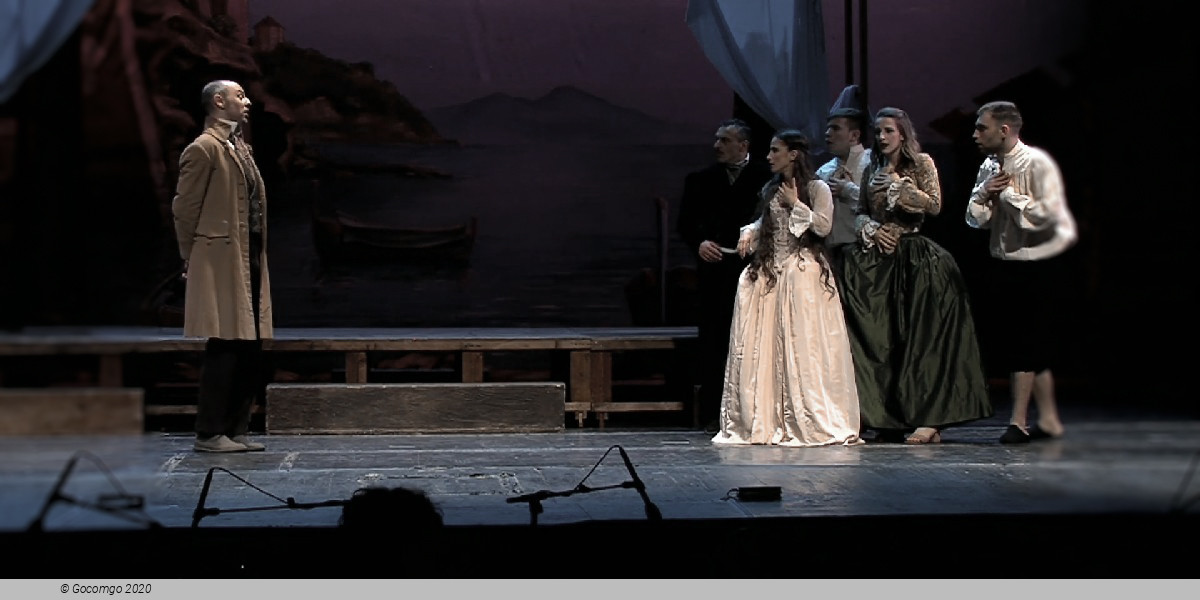
Selim is waiting for Fiorilla. Instead he meets Zaida. The former lovers are shocked and delighted, and declare once more their mutual love. Narciso re-appears, followed by Fiorilla in disguise, with Geronio in pursuit. Selim confuses the veiled Fiorilla with Zaida and the two women come suddenly face to face. Fiorilla accuses Selim of betrayal. Zaida confronts Fiorilla. Geronio tells his wife to go home. There is a stormy finale.

Act 2

At an inn

Selim approaches Geronio amicably, offering to buy Fiorilla. That way Geronio can be rid of his problems and also make some money. Geronio refuses. Selim vows to steal her instead. After they leave, Fiorilla and a group of her friends appear, followed by Zaida. Fiorilla has set up a meeting between them and Selim, so that the Turk will be forced to decide between the two women. In the event he is indecisive, not wishing to lose either of them. Zaida leaves in disgust. Selim and Fiorilla quarrel but are eventually reconciled. As the poet tells Geronio, there is going to be a party. Fiorilla will be there to meet Selim, who will be masked. Geronio should also go - disguised as a Turk! Narciso overhears this, and decides to take advantage of the situation to take Fiorilla himself, in revenge for her former indifference. Geronio laments his destiny, that he should have such a terrible, crazy wife. Albazar passes by holding a costume - for Zaida!

A ballroom with masqueraders and dancers

Fiorilla mistakes Narciso for Selim and Narciso leads her away. Meanwhile, Selim enters with Zaida, under the impression that she is Fiorilla. Geronio is in utter despair at finding two couples and two Fiorillas! Narciso and Selim both entreat their partners to leave with them. Confused and angry, Geronio attempts to stop both couples, but they eventually escape.

Back at the inn

Prosdocimo meets Geronio. They now know that Selim was with Zaida and guess that Fiorilla was with Narciso. Albazar confirms that Selim will definitely stay with Zaida. Prosdocimo advises Geronio to have his revenge on Fiorilla by pretending to divorce her and threatening to send her back to her family.

Having discovered Narciso's deception, Fiorilla tries to find Selim, but he has already left with Zaida. She returns home only to find the divorce letter, and her belongings being removed from the house. She is devastated by shame, and promptly deserted by her friends.

The beach

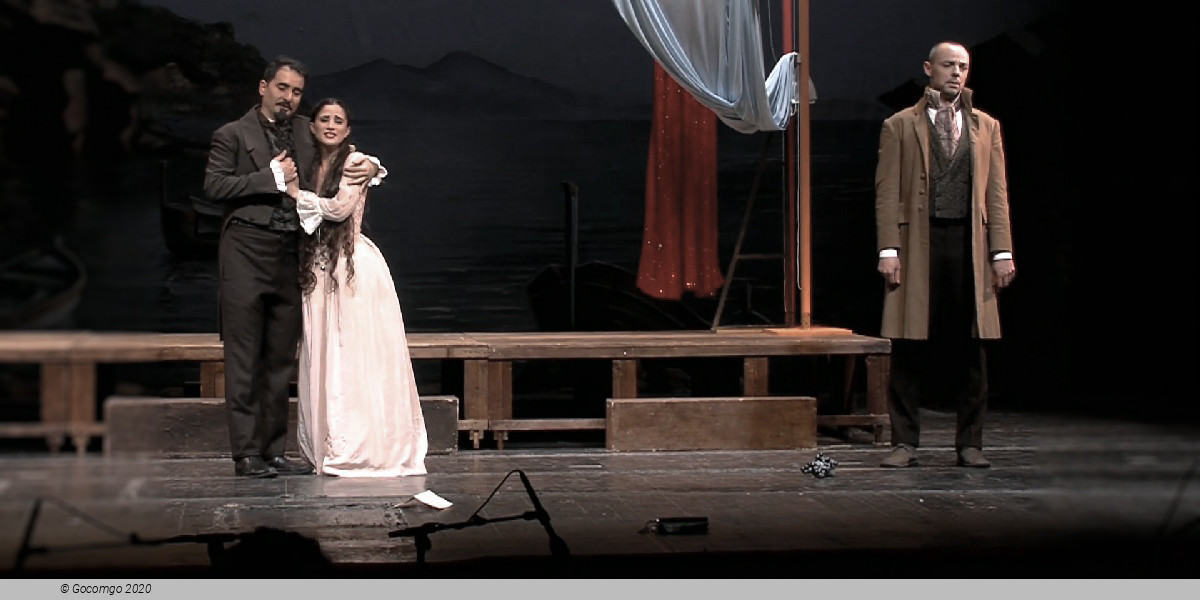
Selim and Zaida are about to set sail for Turkey, while Fiorilla is looking for a boat to take her back to her home town. Geronio finds and forgives her. They are affectionately reconciled. Both couples are now reunited and Prosdocimo is delighted with his happy ending.

Venue Info

Staatsoper Hamburg - Hamburg
Location   Große Theaterstraße 25

Staatsoper Hamburg is the oldest publicly accessible musical theater in Germany, located in Hamburg. It was founded in 1678. With the emergence of the Hamburg Opera House, researchers attribute the formation of a national German opera school.

Opera in Hamburg dates to 2 January 1678 when the Oper am Gänsemarkt was inaugurated with a performance of a biblical Singspiel by Johann Theile. It was not a court theatre but the first public opera house in Germany established by the art-loving citizens of Hamburg, a prosperous member of the Hanseatic League.

The Hamburg Bürgeroper resisted the dominance of the Italianate style and rapidly became the leading musical center of the German Baroque. In 1703, George Friedrich Handel was engaged as violinist and harpsichordist and performances of his operas were not long in appearing. In 1705, Hamburg gave the world première of his opera Nero.

In 1721, Georg Philipp Telemann, a central figure of the German Baroque, joined the Hamburg Opera, and in subsequent years Christoph Willibald Gluck, Johann Adolph Hasse and various Italian companies were among the guests.

To replace the aging wooden structure, the first stone was laid on 18 May 1826 for the Stadt-Theater on the present-day site of the Staatsoper Hamburg. The new theater, with seating for 2,800 guest, was inaugurated less than a year later with Beethoven's incidental music to Egmont.

In 1873, both the exterior and interior of the structure were renovated in the reigning "Gründerzeit" style of the time, and again in 1891, when electric lighting was introduced.

Under the direction of Bernhard Pollini, the house mounted its first complete Ring Cycle in 1879. In 1883, the year of Wagner's death, a cycle comprising nine of his operas commenced. The musical directors Hans von Bülow (from 1887 to 1890) and Gustav Mahler (from 1891 to 1897) also contributed to the fame of the opera house.

In the beginning of the 20th century, opera was an important part of the theatre's repertoire; among the 321 performances during the 1907–08 season, 282 were performances of opera. The Stadt-Theater performed not only established repertoire but also new works, such as Paul Hindemith's Sancta Susanna, Igor Stravinsky's The Soldier's Tale, Ernst Krenek's Jonny spielt auf, and Leoš Janáček's Jenůfa. Ferruccio Busoni's Die Brautwahl (1912) and Erich Wolfgang Korngold's Die tote Stadt (1920) both had their world premieres in Hamburg. In the 1930s, after Hitler came to power, the opera house was renamed Hamburgische Staatsoper.

On the night of 2 August 1943, both the auditorium and its neighbouring buildings were destroyed during air raids by fire-bombing; a low-flying airplane dropped several petrol and phosphorus containers onto the middle of the roof of the auditorium, causing it to erupt into a conflagration.

The current Staatsoper opened on 15 October 1955 with Mozart's Die Zauberflöte. Hamburg continued to devote itself to new works, such as Hans Werner Henze's The Prince of Homburg (1960), Stravinsky's The Flood (1963), Gian Carlo Menotti's Help, Help, the Globolinks! (1968), and Mauricio Kagel's Staatstheater (1971).

In 1967, under the direction of Joachim Hess, the Staatsoper Hamburg became the first company to broadcasts its operas in color on television, beginning with Die Hochzeit des Figaro (a German translation of Le Nozze di Figaro). Ten of these television productions have been released on DVD by ArtHaus Musik as Cult Opera of the 1970s, as well as separately. All of these were performed in German regardless of the original language (six were written in German, one in French, two in English, and one in Italian).

More recently, Hamburg gave the world premières of Wolfgang Rihm's Die Eroberung von Mexico (1992) and Helmut Lachenmann's Das Mädchen mit den Schwefelhölzern (1997), for which it received much international acclaim. The company has won the "Opera House of the Year" award by the German magazine Opernwelt in 1997 and in 2005.

Important Info
Type: Opera
City: Hamburg, Germany
Starts at: 19:00
Acts: 2
Intervals: 1
Duration: 3h 15min
Sung in: Italian
Titles in: German
Top of page