








Staatsoper Hamburg 20 April 2023 - A Midsummer Night's Dream | GoComGo.com

A Midsummer Night's Dream

Staatsoper Hamburg, Main Stage, Hamburg, Germany
All photos (14)
Select date and time
7:30 PM

E-tickets: Print at home or at the box office of the event if so specified. You will find more information in your booking confirmation email.

You can only select the category, and not the exact seats.
If you order 2 or 3 tickets: your seats will be next to each other.
If you order 4 or more tickets: your seats will be next to each other, or, if this is not possible, we will provide a combination of groups of seats (at least in pairs, for example 2+2 or 2+3).

Important Info
Type: Ballet
City: Hamburg, Germany
Starts at: 19:30
Acts: 2
Intervals: 1
Duration: 2h 30min

E-tickets: Print at home or at the box office of the event if so specified. You will find more information in your booking confirmation email.

You can only select the category, and not the exact seats.
If you order 2 or 3 tickets: your seats will be next to each other.
If you order 4 or more tickets: your seats will be next to each other, or, if this is not possible, we will provide a combination of groups of seats (at least in pairs, for example 2+2 or 2+3).

Overview

"And sleep, that sometimes shuts up sorrow's eye,
Steal me awhile from mine own company."
A Midsummer Night's Dream, Act III, Scene 2

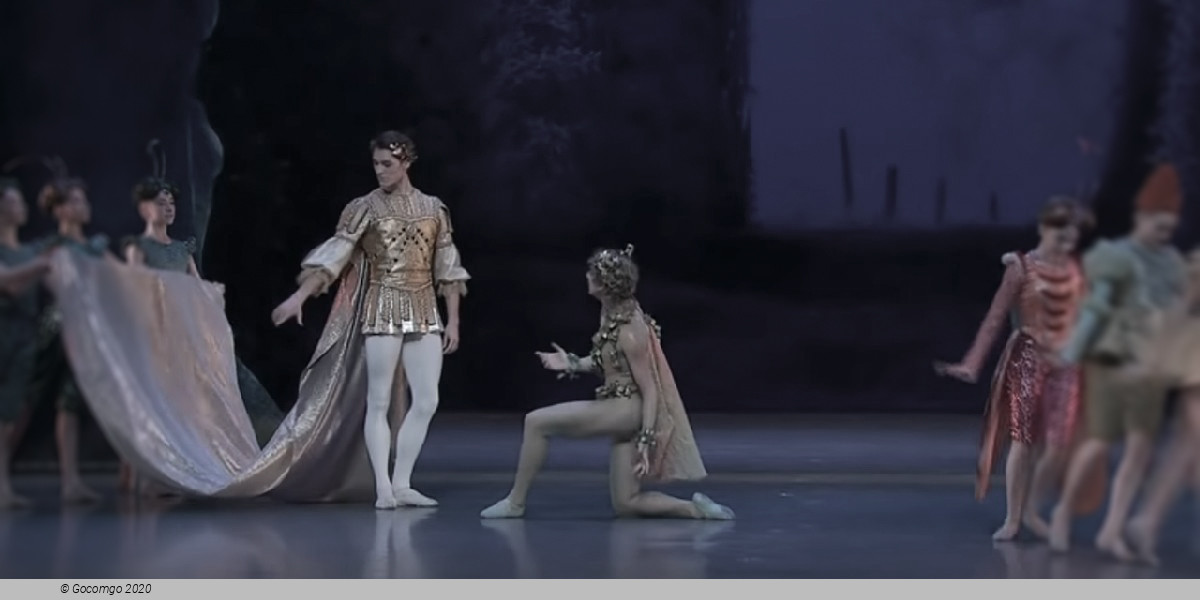
The "Three Worlds" of Shakespeare's play are the aristocratic world of Duke Theseus and his court; the fairy world of Oberon, Titania an Puck; and the world of the mechanicals Bottom and his friends.
The music chosen by John Neumeier is in "Three Styles", and distinguishes the "Three Worlds". Thus, Mendelssohn for the aristocrats, Ligeti for the mysterious fairy world, and barrel organ music for the mechanicals.

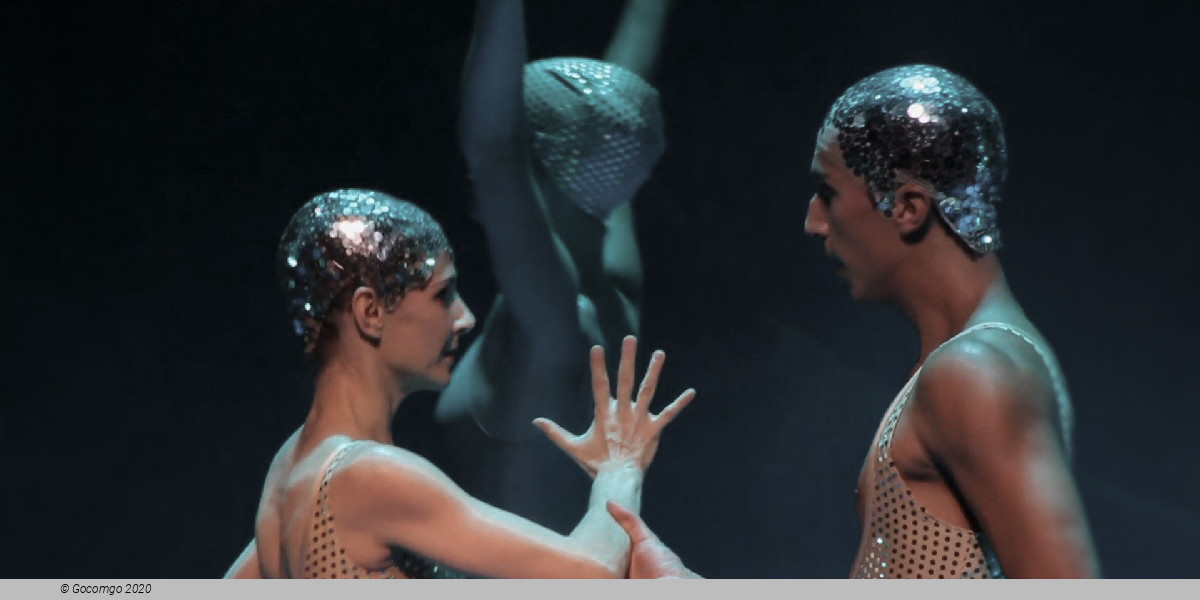
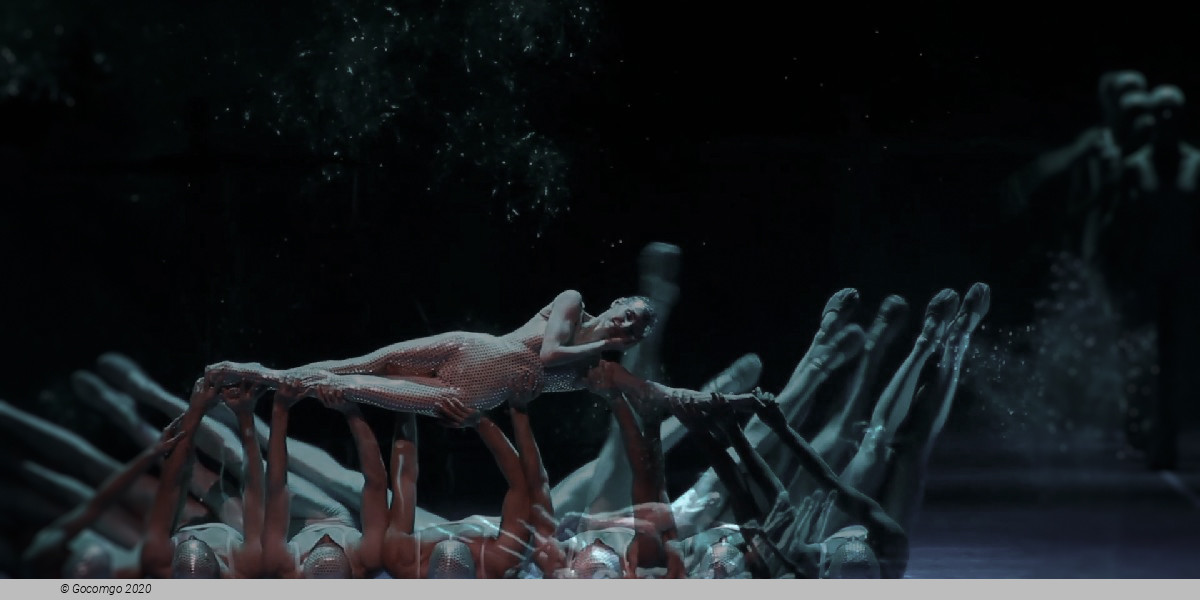
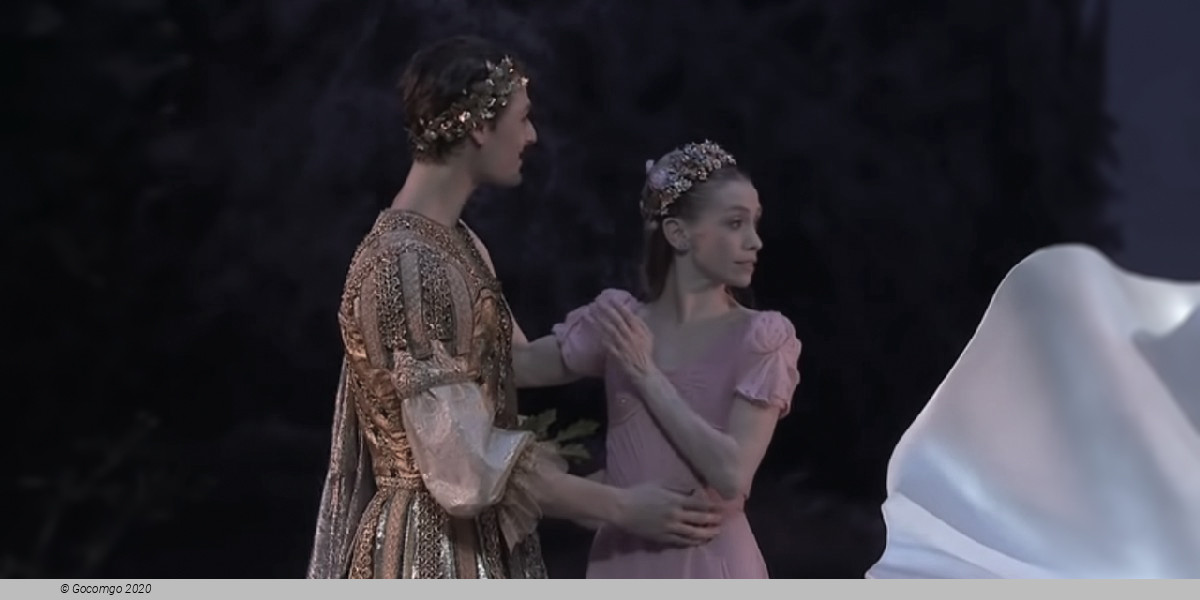
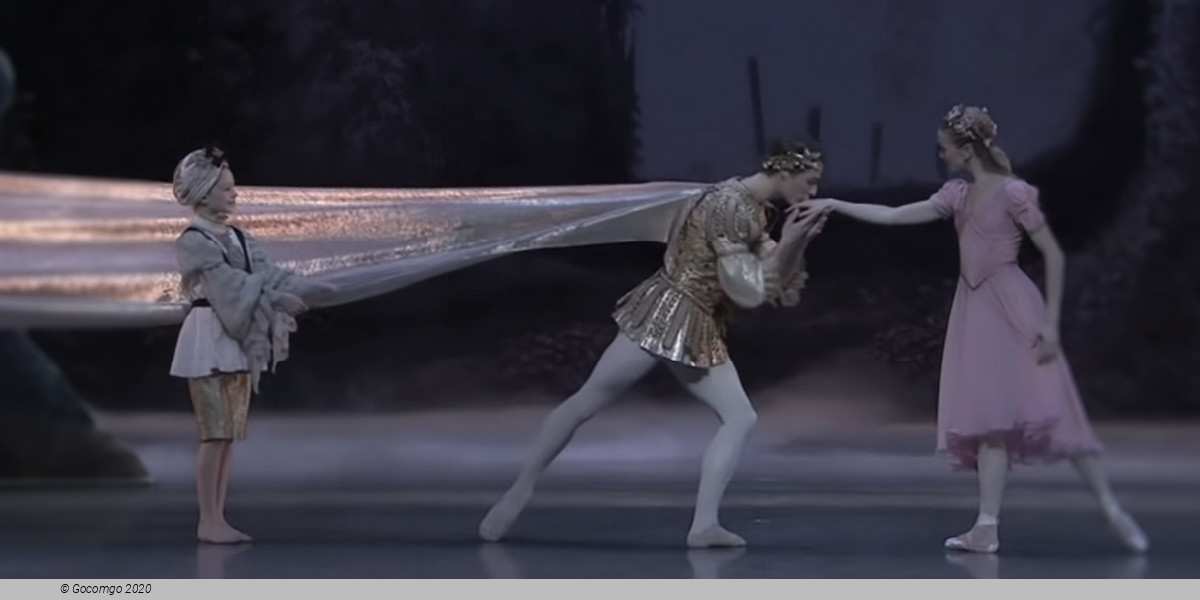
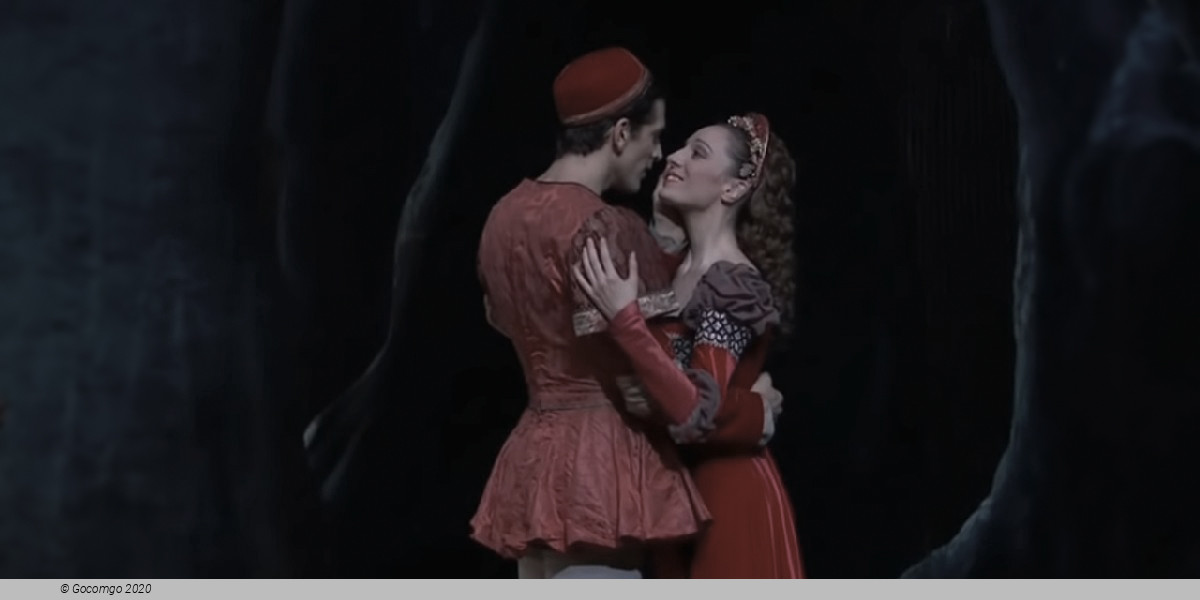
In John Neumeier's ballet version, it becomes an elegant game of illusion and reality.

History
Premiere of this production: 17 January 1962, New York City Ballet, City Center of Music and Drama, New York

A Midsummer Night's Dream is a two-act ballet (in original production) choreographed by George Balanchine to Felix Mendelssohn's music to Shakespeare's play of the same name. In addition to the incidental music, Balanchine incorporated other Mendelssohn works into the ballet, including the Overtures to Athalie, Son and Stranger, and The Fair Melusine, the "String Symphony No. 9 in C minor" and The First Walpurgis Night.

Synopsis

PROLOGUE

Hippolyta's Room

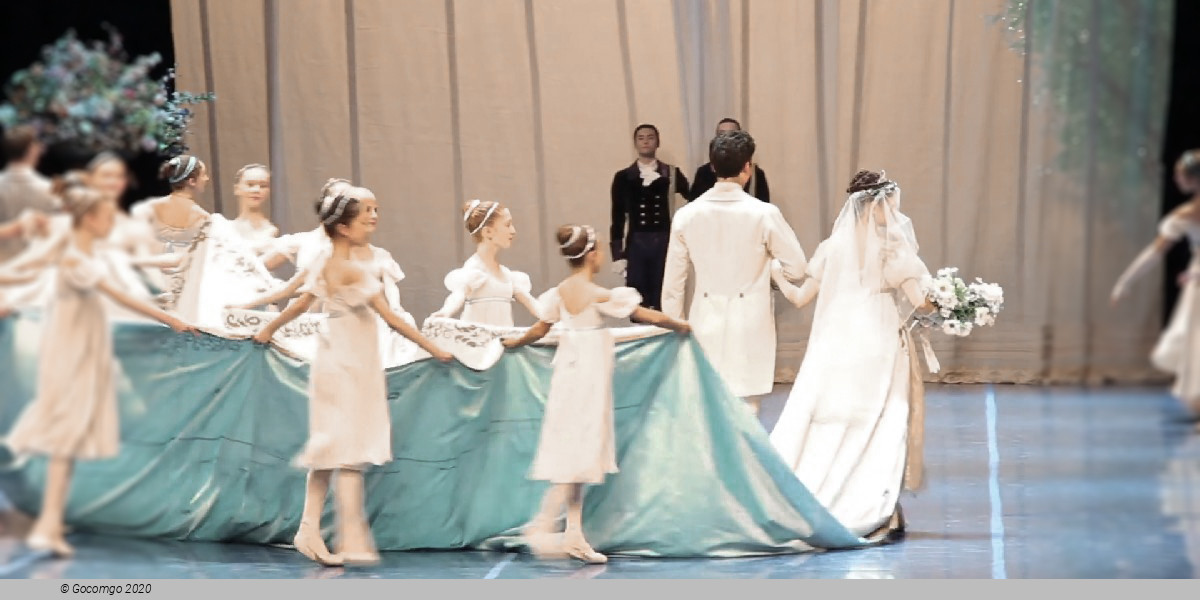
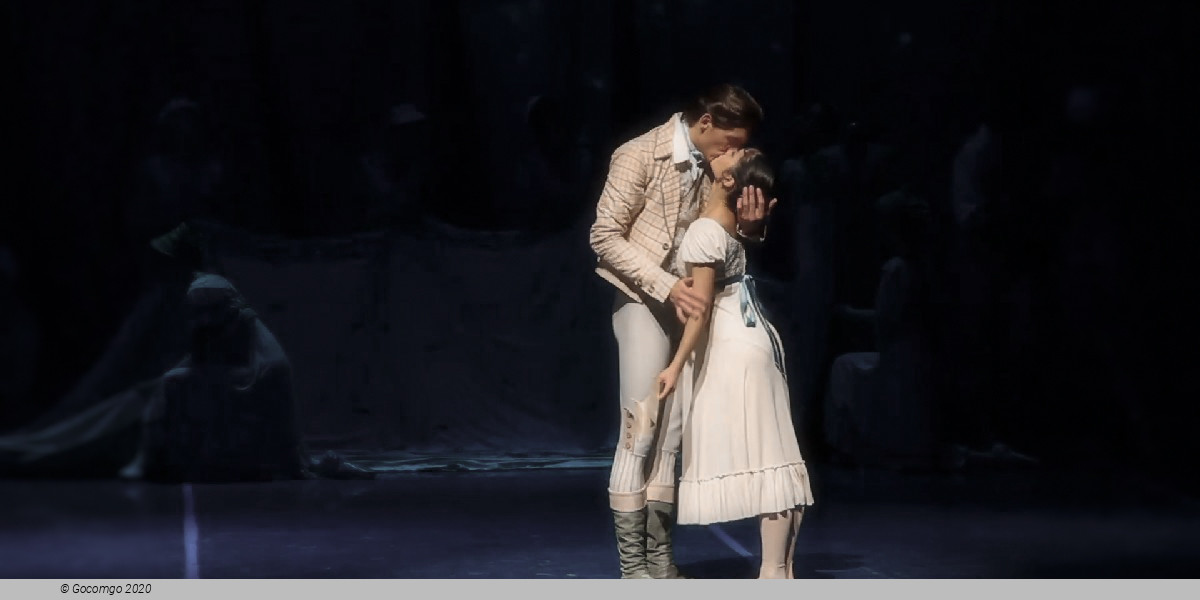
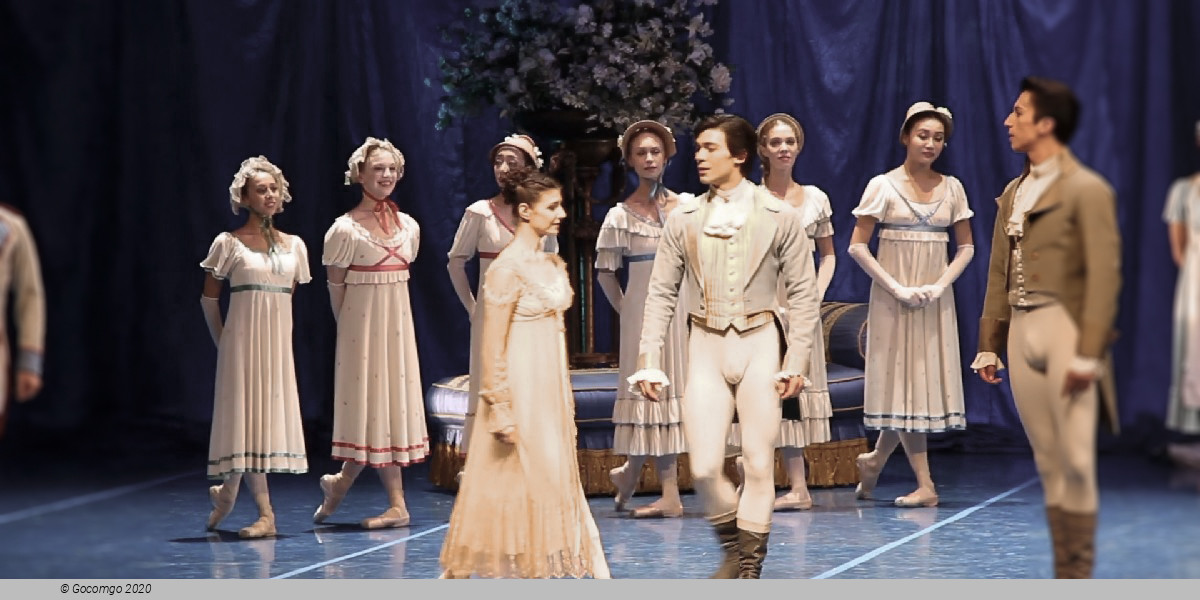
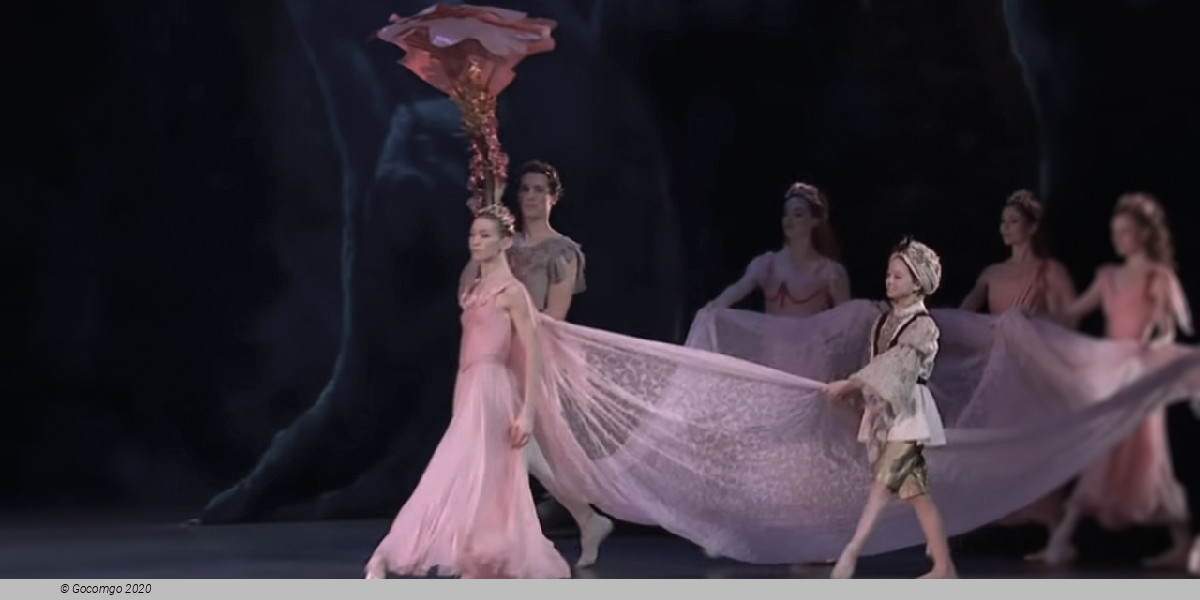
It is the evening before the wedding of Hippolyta and Theseus, Duke of Athens. Last minute preparations are being made, supervised by Philostrat, Master of the Revels at Theseus' court. Hippolyta's friends, Helena and Hermia, are helping put finishing touches to her bridal gown. The Court Treasurer presents the bridal jewels to Hippolyta. He is accompanied by the officer, Demetrius, Helena's former fiancé, who is now intent on winning Hermia's attentions – unsuccessfully. Helena still loves Demetrius. The gardener Lysander arrives bringing Hippolyta's wedding flowers. He loves Hermia, and his love is returned. He secretly gives her a letter asking her to meet him in the wood under an olive tree. Helena finds the letter and shows it to Demetrius. A group of rustics, lead by the weaver Bottom present Hippolyta with their text for a play "Pyramus and Thisbe" which they wish to perform for the marriage festivities. Theseus arrives to visit Hippolyta. Although he brings her a rose, Hippolyta is aware of his flirting with the ladies of the court. Left alone, Hippolyta finds and reads Lysander's love letter to Hermia. Pensive, she falls asleep with Theseus’ rose in her hand. She dreams...

ACT I

Night - In the Wood
The Realm of the Fairies


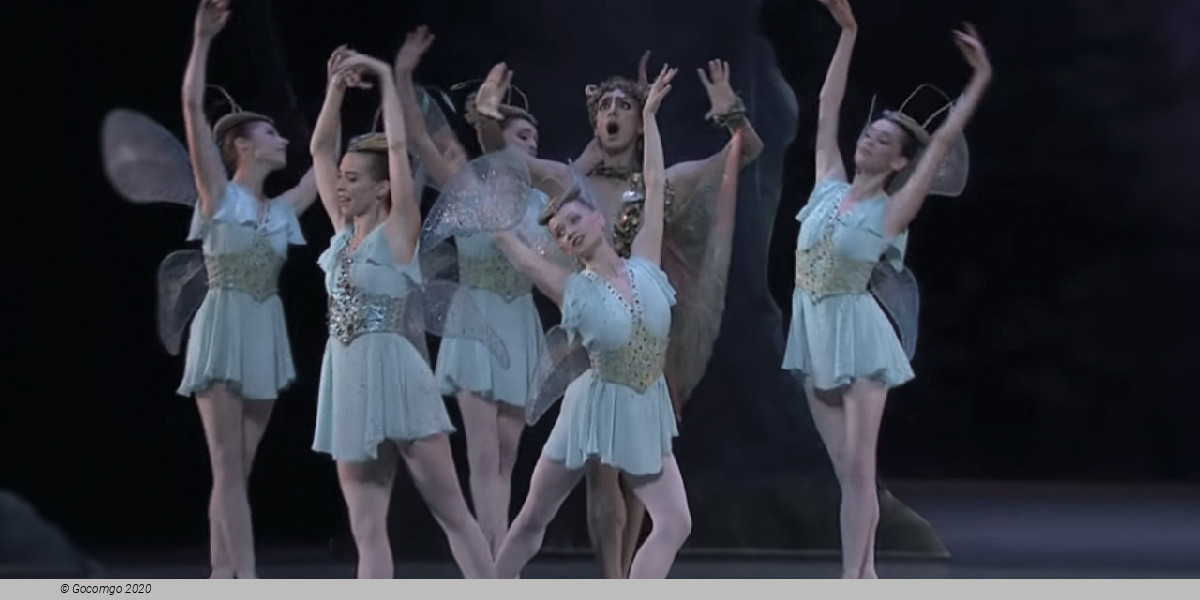
Titania, Queen of the Fairies, argues with Oberon, King of the Elves. In his anger Oberon gives Puck, a flower which has magical powers. If shaken over the eyes of someone asleep, that person will fall in love with the first person seen when he awakens. Oberon's orders Puck to use the love-flower on Titania. Lysander and Hermia meet in the wood. Demetrius looks for Hermia, followed by Helena. All are observed by Oberon.

Taking pity on Helena, Oberon orders Puck to use the love-flower on Demetrius, so that he will love return her love.

Lysander and Hermia are lost in the wood, and lie down to sleep. Mistaking him for Demetrius, Puck shakes the love-flower over Lysander. Helena accidentally awakens Lysander and he at once falls passionately in love with her. Confused by his attentions, she flees from him. Hermia awakens and searches for Lysander.

Bottom and his companions are looking for a spot in the woods to rehearse their play. The place found, roles are distributed, and Bottom leads the rehearsal. They are observed by Puck who transforms Bottom's head into that of an ass. Freightened at his appearance, the other rustics run away.

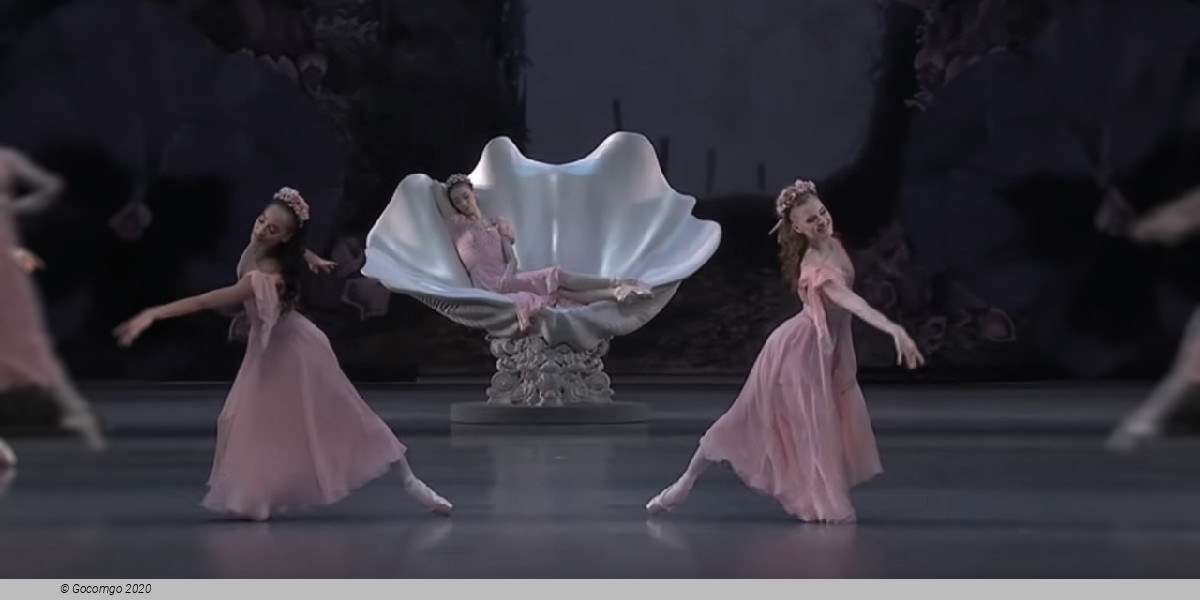
Titania and her followers fall asleep and Puck now uses the love-flower on her. She is accidentally awakened by Bottom, and is suddenly consumed with desire for him. Observing Demetrius, whose affections are still directed towards Hermia, Oberon realizes that Puck has made a mistake. He orders Puck to use the flower on the sleeping Demetrius. Helena, pursued by Lysander, stumbles over and awakens Demetrius. He also falls madly in love with her.
Confusion reigns. Oberon commands Puck to bring all the relationship in order. The elf arranges the sleeping lovers in their proper combinations and once again uses the love-flower on them all

ACT II

Dawn in the Woods

The lovers awaken and are united – Hermia with Lysander – Helena with Demetrius.
The rustics find Bottom.

Hippolyta's Room

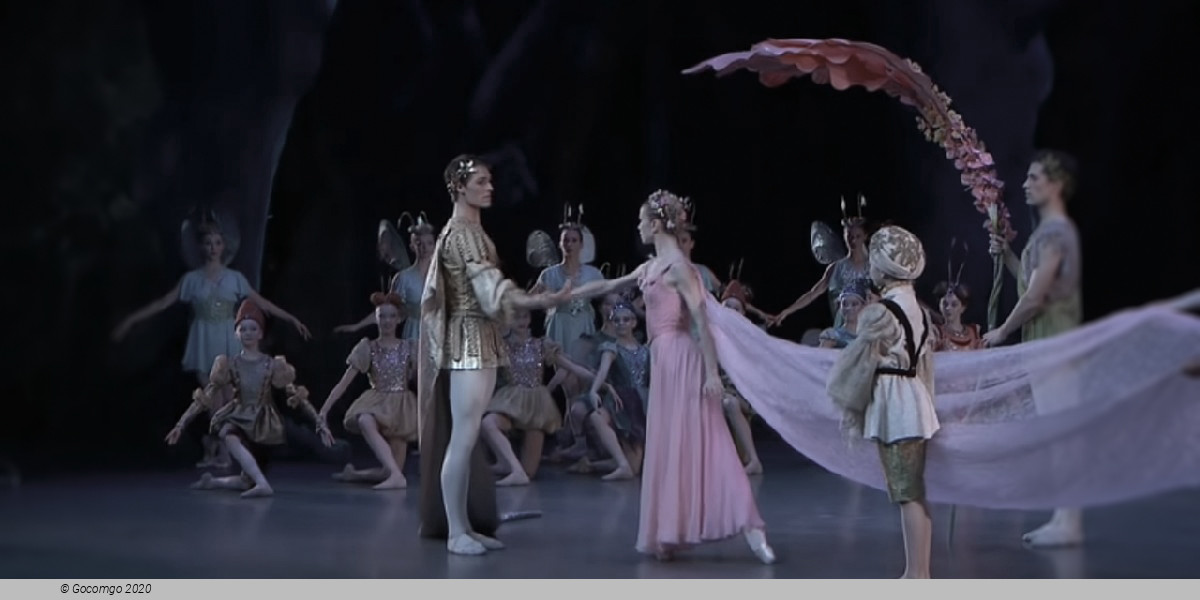
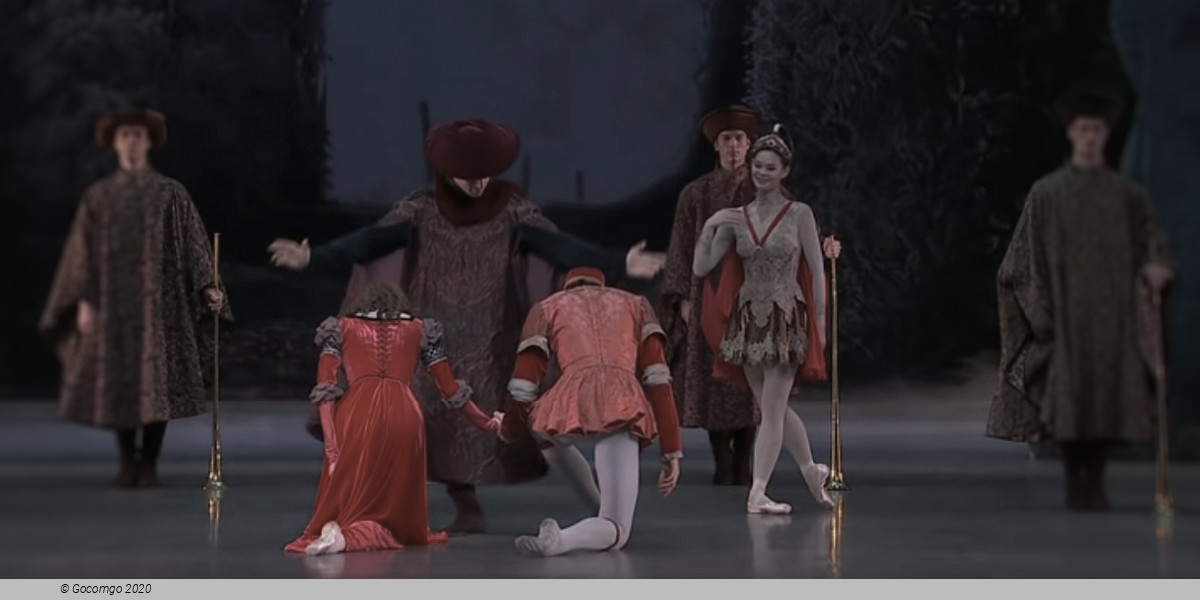
After quietly observing the sleeping Hippolyta – dreaming upon her couch – Theseus gently awakens her. A love develops between them. Both pairs of lovers enter and beg Theseus' permission to wed. The Duke of Athens blesses their unions.

A Festive Room in Theseus' Ducal Palace

The Wedding ceremonies begin. The rustics perform their piece, "Pyramus and Thisbe". After the wedding guests have left, Oberon and Titania are again united in love.

Venue Info

Staatsoper Hamburg - Hamburg
Location   Große Theaterstraße 25

Staatsoper Hamburg is the oldest publicly accessible musical theater in Germany, located in Hamburg. It was founded in 1678. With the emergence of the Hamburg Opera House, researchers attribute the formation of a national German opera school.

Opera in Hamburg dates to 2 January 1678 when the Oper am Gänsemarkt was inaugurated with a performance of a biblical Singspiel by Johann Theile. It was not a court theatre but the first public opera house in Germany established by the art-loving citizens of Hamburg, a prosperous member of the Hanseatic League.

The Hamburg Bürgeroper resisted the dominance of the Italianate style and rapidly became the leading musical center of the German Baroque. In 1703, George Friedrich Handel was engaged as violinist and harpsichordist and performances of his operas were not long in appearing. In 1705, Hamburg gave the world première of his opera Nero.

In 1721, Georg Philipp Telemann, a central figure of the German Baroque, joined the Hamburg Opera, and in subsequent years Christoph Willibald Gluck, Johann Adolph Hasse and various Italian companies were among the guests.

To replace the aging wooden structure, the first stone was laid on 18 May 1826 for the Stadt-Theater on the present-day site of the Staatsoper Hamburg. The new theater, with seating for 2,800 guest, was inaugurated less than a year later with Beethoven's incidental music to Egmont.

In 1873, both the exterior and interior of the structure were renovated in the reigning "Gründerzeit" style of the time, and again in 1891, when electric lighting was introduced.

Under the direction of Bernhard Pollini, the house mounted its first complete Ring Cycle in 1879. In 1883, the year of Wagner's death, a cycle comprising nine of his operas commenced. The musical directors Hans von Bülow (from 1887 to 1890) and Gustav Mahler (from 1891 to 1897) also contributed to the fame of the opera house.

In the beginning of the 20th century, opera was an important part of the theatre's repertoire; among the 321 performances during the 1907–08 season, 282 were performances of opera. The Stadt-Theater performed not only established repertoire but also new works, such as Paul Hindemith's Sancta Susanna, Igor Stravinsky's The Soldier's Tale, Ernst Krenek's Jonny spielt auf, and Leoš Janáček's Jenůfa. Ferruccio Busoni's Die Brautwahl (1912) and Erich Wolfgang Korngold's Die tote Stadt (1920) both had their world premieres in Hamburg. In the 1930s, after Hitler came to power, the opera house was renamed Hamburgische Staatsoper.

On the night of 2 August 1943, both the auditorium and its neighbouring buildings were destroyed during air raids by fire-bombing; a low-flying airplane dropped several petrol and phosphorus containers onto the middle of the roof of the auditorium, causing it to erupt into a conflagration.

The current Staatsoper opened on 15 October 1955 with Mozart's Die Zauberflöte. Hamburg continued to devote itself to new works, such as Hans Werner Henze's The Prince of Homburg (1960), Stravinsky's The Flood (1963), Gian Carlo Menotti's Help, Help, the Globolinks! (1968), and Mauricio Kagel's Staatstheater (1971).

In 1967, under the direction of Joachim Hess, the Staatsoper Hamburg became the first company to broadcasts its operas in color on television, beginning with Die Hochzeit des Figaro (a German translation of Le Nozze di Figaro). Ten of these television productions have been released on DVD by ArtHaus Musik as Cult Opera of the 1970s, as well as separately. All of these were performed in German regardless of the original language (six were written in German, one in French, two in English, and one in Italian).

More recently, Hamburg gave the world premières of Wolfgang Rihm's Die Eroberung von Mexico (1992) and Helmut Lachenmann's Das Mädchen mit den Schwefelhölzern (1997), for which it received much international acclaim. The company has won the "Opera House of the Year" award by the German magazine Opernwelt in 1997 and in 2005.

Important Info
Type: Ballet
City: Hamburg, Germany
Starts at: 19:30
Acts: 2
Intervals: 1
Duration: 2h 30min
Top of page