
Semperoper Dresden 28 November 2022 - Rusalka | GoComGo.com

Rusalka

Semperoper Dresden, Semperoper Dresden, Dresden, Germany
All photos (5)
Select date and time
7 PM

E-tickets: Print at home or at the box office of the event if so specified. You will find more information in your booking confirmation email.

You can only select the category, and not the exact seats.
If you order 2 or 3 tickets: your seats will be next to each other.
If you order 4 or more tickets: your seats will be next to each other, or, if this is not possible, we will provide a combination of groups of seats (at least in pairs, for example 2+2 or 2+3).

Important Info
Type: Opera
City: Dresden, Germany
Starts at: 19:00
Acts: 3
Sung in: Czech
Titles in: German,English

E-tickets: Print at home or at the box office of the event if so specified. You will find more information in your booking confirmation email.

You can only select the category, and not the exact seats.
If you order 2 or 3 tickets: your seats will be next to each other.
If you order 4 or more tickets: your seats will be next to each other, or, if this is not possible, we will provide a combination of groups of seats (at least in pairs, for example 2+2 or 2+3).

Overview

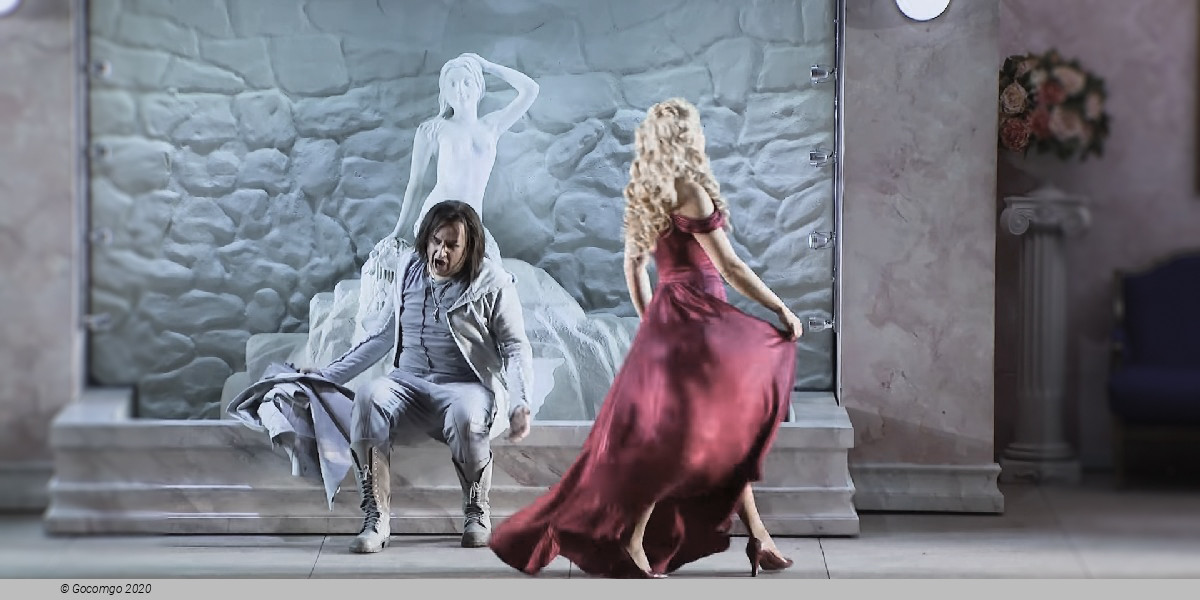
The international stage director Christoph Loy will make his debut at the Semperoper with this allegorical study of the significance of one’s own identity and the meaning of the human soul, illustrated by the transformation of the main character Rusalka from a romantic water nymph to a suffering, loving human who lacks a real home.

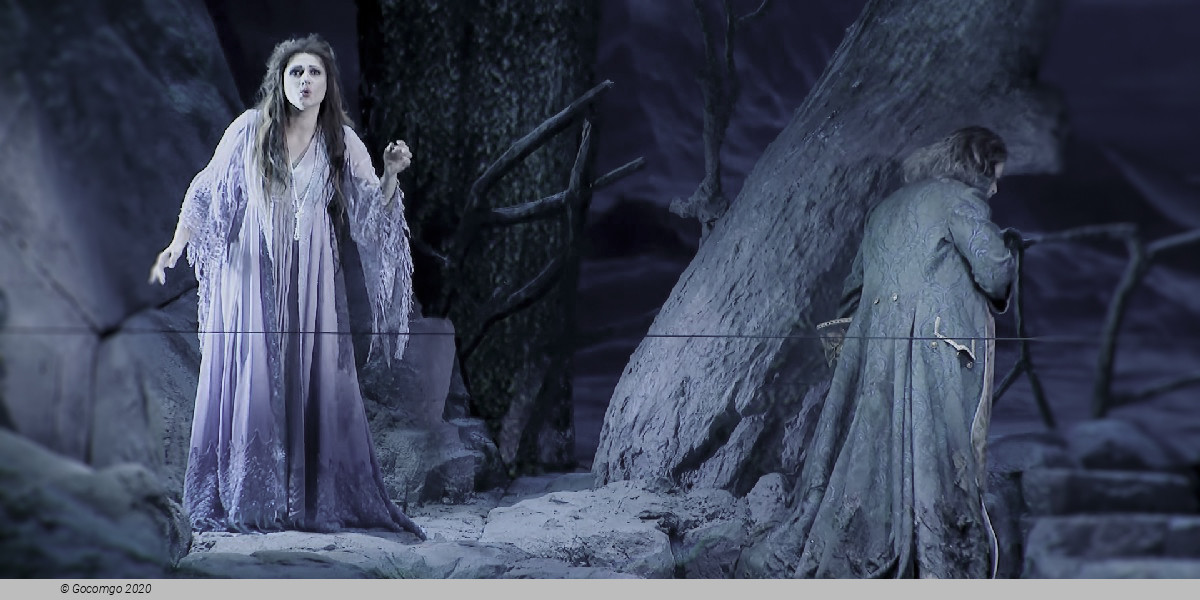
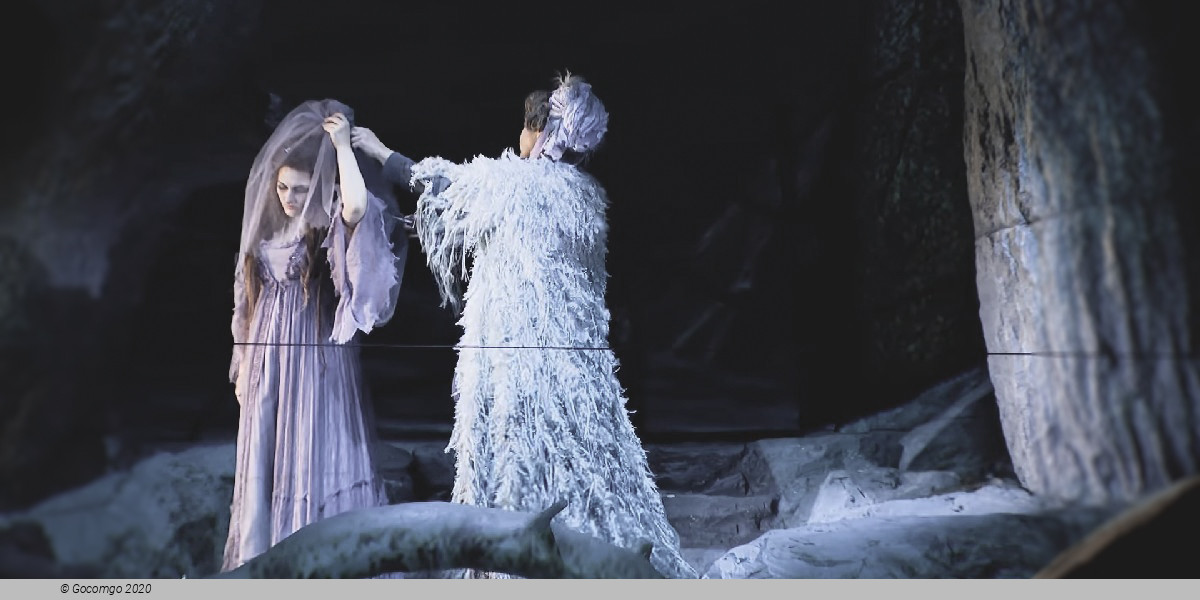
Having fallen in love with the Prince, the water nymph Rusalka wishes to become human in order to be with him forever. The witch Ježibaba demands that Rusalka give up her voice for this transformation, whereupon she leaves her home and family. Arriving in the world of the humans, Rusalka initially enraptures the prince; yet the magical, voiceless creature remains something of a stranger in this new society, and eventually her lover turns away from her – which means death for him and banishment for her. With great dramatic feeling, Dvořák’s music for his fairy-tale opera (which premiered in Prague in 1901) contrasts the world of the ghostly, swirling underwater kingdom with the stiff formalities of the royal court.

A co-production with the Teatro Real Madrid, the Teatro Comunale Bologna, the Gran Teatre del Liceu Barcelona and the Palau de les Arts Reina Sofía, Valencia

History
Premiere of this production: 31 March 1901, Prague

Rusalka is an opera by Antonín Dvořák. The Czech libretto was written by the poet Jaroslav Kvapil (1868–1950) based on the fairy tales of Karel Jaromír Erben and Božena Němcová. A rusalka is a water sprite from Slavic mythology, usually inhabiting a lake or river. Rusalka is one of the most successful Czech operas and represents a cornerstone of the repertoire of Czech opera houses.

Synopsis

Act 1

A meadow by the edge of a lake

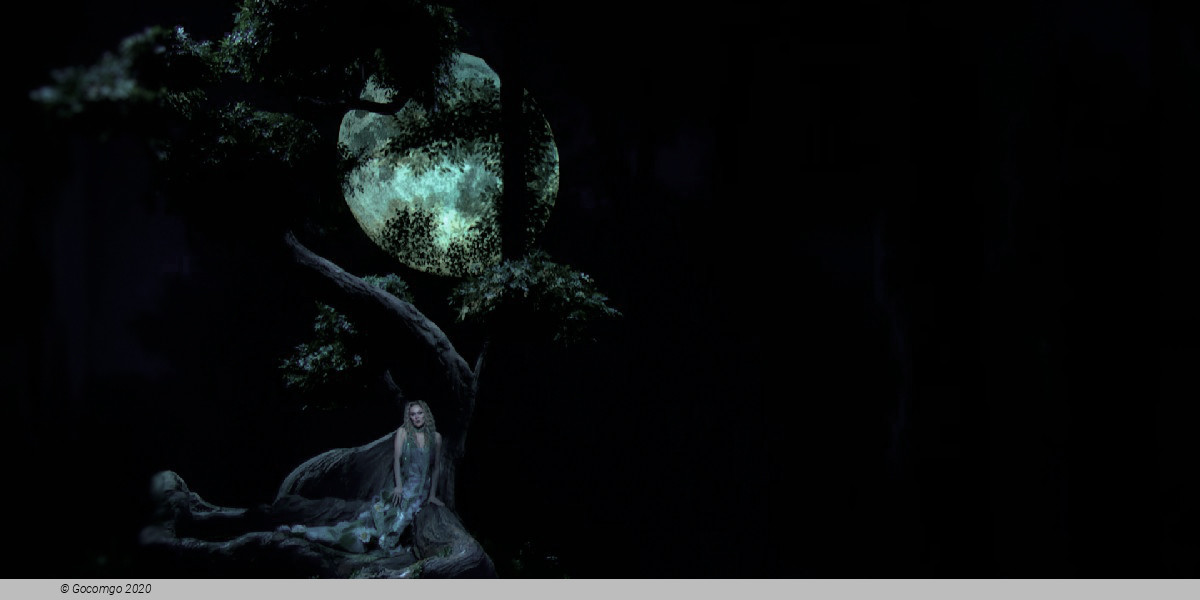
Three wood-sprites tease the Water-Gnome, ruler of the lake. Rusalka, the Water-Nymph, tells her father she has fallen in love with a human Prince who comes to hunt around the lake, and she wants to become human to embrace him. He tells her it is a bad idea, but nonetheless steers her to a witch, Ježibaba, for assistance. Rusalka sings her "Song to the Moon", asking it to tell the Prince of her love. Ježibaba tells Rusalka that, if she becomes human, she will lose the power of speech and immortality; moreover, if she does not find love with the Prince, he will die and she will be eternally damned. Rusalka agrees to the terms and drinks a potion. The Prince, hunting a white doe, finds Rusalka, embraces her, and leads her away, as her father and sisters lament.

Act 2

The garden of the Prince's castle

A Gamekeeper and his nephew, the Kitchen-Boy, note that the Prince is to be married to a mute and nameless bride. They suspect witchcraft and doubt it will last, as the Prince is already lavishing attentions on a Foreign Princess who is a wedding guest. The Foreign Princess, jealous, curses the couple. The prince rejects Rusalka. Rusalka then goes back to the lake with her father the Water Gnome. Though she has now won the Prince's affections, the Foreign Princess is disgusted by the Prince's fickleness and betrayal and she scorns him, telling him to follow his rejected bride to Hell.

Act 3

A meadow by the edge of a lake

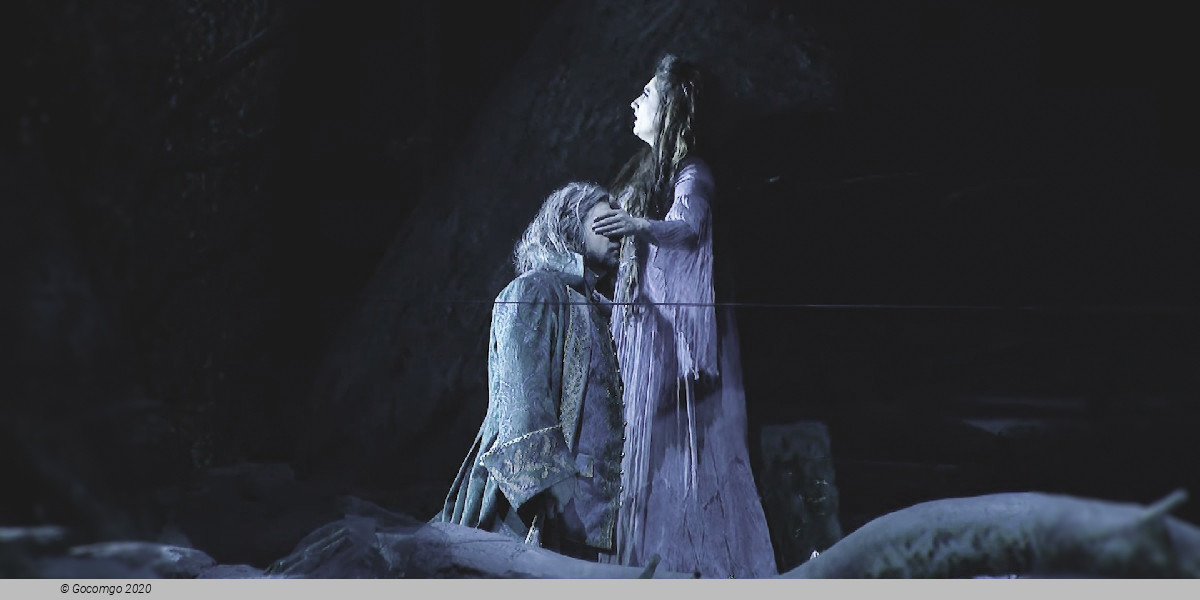
Rusalka asks Ježibaba for a solution to her woes and is told she can save herself if she kills the Prince with the dagger she is given. Rusalka rejects this, throwing the dagger into the lake. Rusalka becomes a bludička, a spirit of death living in the depths of the lake, emerging only to lure humans to their deaths. The Gamekeeper and the Kitchen Boy consult Ježibaba about the Prince, who, they say, has been betrayed by Rusalka. The Water-Goblin says that it was actually the Prince that betrayed Rusalka. The wood-sprites mourn Rusalka's plight. The Prince, searching for his white doe, comes to the lake, senses Rusalka, and calls for her. He asks her to kiss him, even knowing her kiss means death and damnation. They kiss and he dies; and the Water-Goblin comments that "All sacrifices are futile." Rusalka thanks the Prince for letting her experience human love, commends his soul to God, and returns to her place in the depths of the lake as a demon of death.

Venue Info

Semperoper Dresden - Dresden
Location   Theaterplatz 2

Not only one of the most beautiful opera houses in the world, the Semperoper is renowned both in Germany and abroad for the brilliant star-studded performances by Saxon State Opera as well as numerous international guest artists.

This is the home of the Staatskapelle Dresden, an orchestra which looks back on 460 years of uninterrupted music-making. The State Opera Chorus was founded by Carl Maria von Weber in 1817. Operatic history has been written here, with the Semperoper playing host to numerous important premieres, such as Richard Wagner’s "Rienzi", "Der fliegende Holländer" and "Tannhäuser". There is also an indissoluble link to Richard Strauss, nine of whose 15 operas were premiered in Dresden, including "Salome", "Der Rosenkavalier" and "Elektra". The small venue Semper Zwei provides space for diverse forms of music theatre as well as theatrical experiments, and is also the venue for performances of Semperoper Junge Szene.

The magnificent Semperoper dominates the Theaterplatz be-side the river Elbe, forming the centrepiece of the historic old city. The original building opened its doors in 1841, constructed to a design by Gottfried Semper which combined a late Classical style with Renaissance elements. Following a devastating fire in 1869, the citizens of Dresden immediately set about rebuilding their beloved opera house. This was completed in 1878, also to a design by Semper. In 1945, during the final months of World War II, the Semperoper was once again razed to the ground.

After a second reconstruction was successfully completed in 1985, the reopening of one of Europe’s most beautiful opera houses was celebrated with a performance of Carl Maria von Weber’s "Freischütz".
The dazzling interiors were painstakingly reconstructed by local craftsmen and artists according to original plans, with state-of-the art stage machinery and technical fittings in the auditorium. A modern annex was added to house the administrative offices and rehearsal rooms. Internationally renowned for its brilliant acoustics and incomparable performances, audiences from around the world continue to flock here to enjoy unforgettable experiences at the Semperoper Dresden.

Important Info
Type: Opera
City: Dresden, Germany
Starts at: 19:00
Acts: 3
Sung in: Czech
Titles in: German,English
Top of page