Semperoper Dresden 5 March 2023 - La Bayadère | GoComGo.com

La Bayadère

Semperoper Dresden, Semperoper Dresden, Dresden, Germany
All photos (8)
Select date and time
7 PM

E-tickets: Print at home or at the box office of the event if so specified. You will find more information in your booking confirmation email.

You can only select the category, and not the exact seats.
If you order 2 or 3 tickets: your seats will be next to each other.
If you order 4 or more tickets: your seats will be next to each other, or, if this is not possible, we will provide a combination of groups of seats (at least in pairs, for example 2+2 or 2+3).

Important Info
Type: Ballet
City: Dresden, Germany
Starts at: 19:00
Acts: 2
Intervals: 1
Duration: 2h 30min

E-tickets: Print at home or at the box office of the event if so specified. You will find more information in your booking confirmation email.

You can only select the category, and not the exact seats.
If you order 2 or 3 tickets: your seats will be next to each other.
If you order 4 or more tickets: your seats will be next to each other, or, if this is not possible, we will provide a combination of groups of seats (at least in pairs, for example 2+2 or 2+3).

Overview

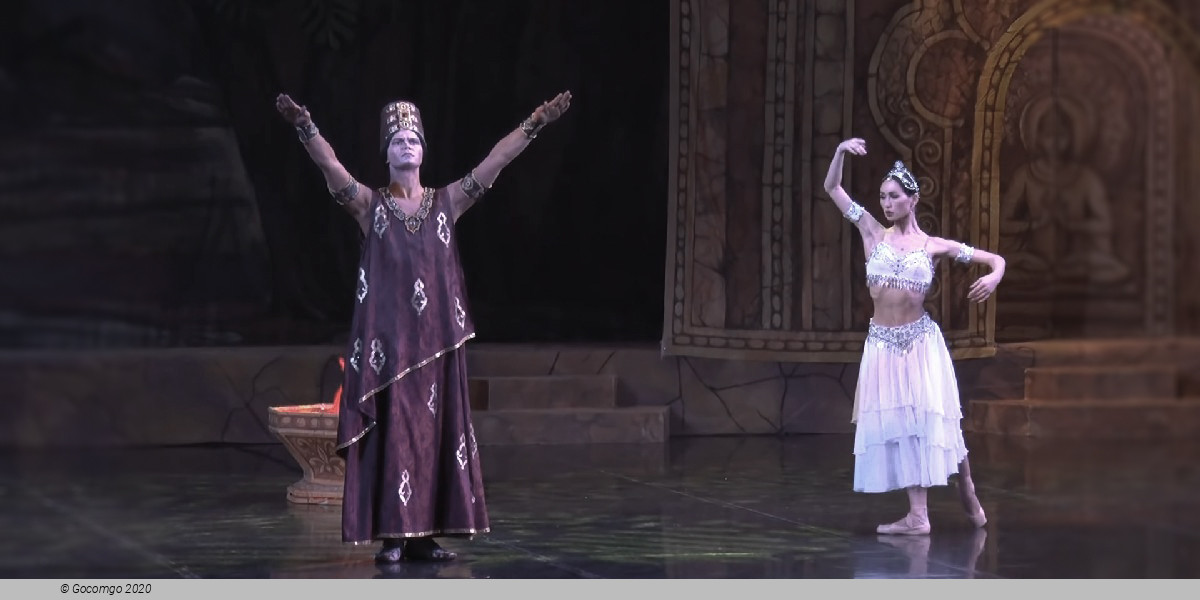
The temple dancer Nikiya and Prince Solor have secretly sworn eternal fidelity beside the holy fire. But then Solor is chosen to wed the daughter of the mighty Rajah. When the Bayadère Nikiya is forced to dance at the wedding celebrations, she kills herself in front of her horrified lover. He seeks oblivion in opium, and in his intoxication has a vision of his beloved in multiple reflections.

"La Bayadère" is a milestone of ballet literature. Its now legendary final act, the "Kingdom of the Shades", approximately half an hour of "ballet blanc", has gone down in dance history: The purest dancing, totally self-sufficient, with no dramatic link to the story, which presents a vision of ballet in the 20th century. Together with it, furthermore, a ballet type took shape that followed a very specific formula in a production that takes advantage of all available technical and personal possibilities and that could not be grand and spectacular enough: The romantic "Grand Ballet" with a Russian influence – as an artistic reflection of the ornateness of the Tzar’s court. It conformed to a technique that was forced by Petipa to ever greater virtuosity, which required one thing above all, from the corps de ballet to the ballerina: dancing perfection.

Marius Petipa had already been at the service of the czar for three decades when he wrote "Bajaderka", which premiered in 1877 in St. Petersburg. The story line contains the obligatory love story, with all its typical romantic conflicts – jealousy, intrigue, murder and revenge. At the end, the soul of a loving woman releases the guilt-ridden man from his earthly entanglements. It is no coincidence that there are similarities to "Giselle", which was written in 1841 in Paris: As a young dancer, Petipa assisted Jules Perrot, who wrote the ballet and rehearsed it at the Tzar’s court. The subject of Indian temple dancers, which Petipa used in his ballet, was nothing new. Since the beginning of the 19th century, they were one of the fixed characters of European music theaters, where they inspired their viewers’ fantasy, which originated mainly in the spirit of European colonial aesthetics. It is no surprise, however, that Hindi temple dancing girls became one of the most popular figures of the Romantic period; after all, the dancers completely fulfilled the female ideal of this epoch. Their dual nature as priests and dancers corresponds to the characteristic dichotomy in the Romantic view of women: saint and sinner, unattainable and desirable at the same time. 

The Dresden Watkin version, for which conductor David Coleman rearranged the music of Ludwig Minkus, in which stage designer Arne Walther lets Old India rise again and for which costume designer Erik Västhed prowled through the Indian textiles markets in London, is presented in only two acts. 

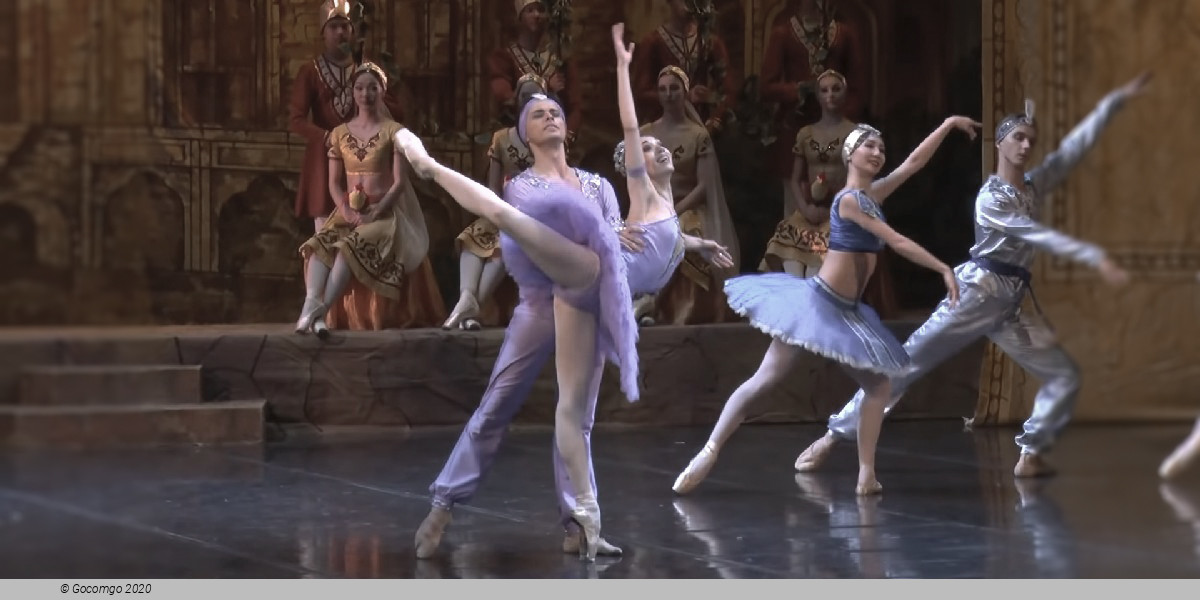
For the Semperoper, Aaron S. Watkin reworked Marius Petipa’s classic narrative piece "La Bayadère" from 1877, creating a visionary and opulent oriental ballet. The highlight of the work is the dream sequence with its trance-like image of female dancers executing the arabesque penchée. "La Bayadère" combines the ideals of the Romantic era with the dream of the Orient to create a sophisticated Gesamtkunstwerk of dance. 

Aaron S. Watkin has a clear view of his ballet: "Authentic. Classic. Elegant. Exotic. The complete richness of India – its brilliance, its colors, its secret, its scent.

History
Premiere of this production: 23 January 1877, Imperial Bolshoi Kamenny Theatre in St. Petersburg, Russia

La Bayadère (en. The Temple Dancer) is a ballet, originally staged in four acts and seven tableaux by French choreographer Marius Petipa to the music of Ludwig Minkus. The ballet was staged especially for the benefit performance of the Russian Prima ballerina Ekaterina Vazem, who created the principal role of Nikiya.

Synopsis

Act I

In front of an Indian temple
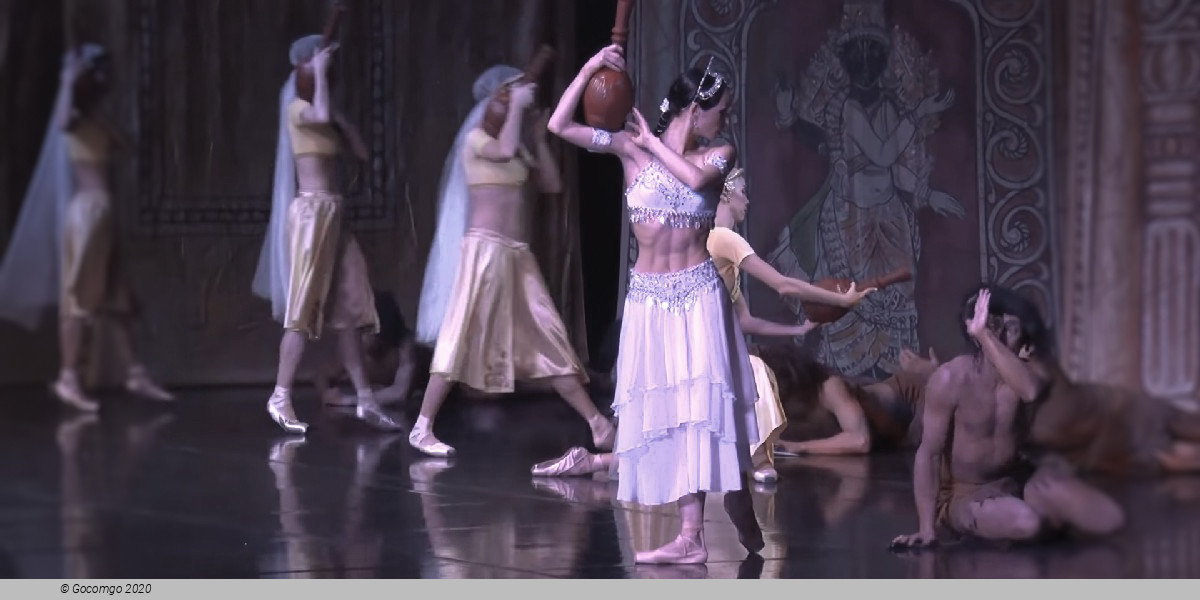
Solor, the noblest warrior in the land, wishes to offer a tiger as a gift to the powerful Rajah. He sends his best friend Ekavir along with his Kshatriya warriors off hunting. Once alone he asks the fakir Madhavan for a rendez-vous with the temple dancer Nikiya. They are interrupted by the arrival of the High Brahmana Kanj who orders Madhavan to prepare the festivities to honour the Sacred Fire. The Devadasis appear and among them is Nikiya, the holiest of the temple dancers. Kanj has long been overwhelmed by her beauty and confesses his love to her who rejects his advances as he is a man of God, and he is deeply hurt. Madhavan informs Nikiya of Solor’s message. Nikiya agrees to meet him. Solor and Nikiya swear their eternal love to each other in front of the Sacred Fire. Unbeknown to them, Kanj is watching the secret love and swears revenge on Solor.

In the palace of the Rajah
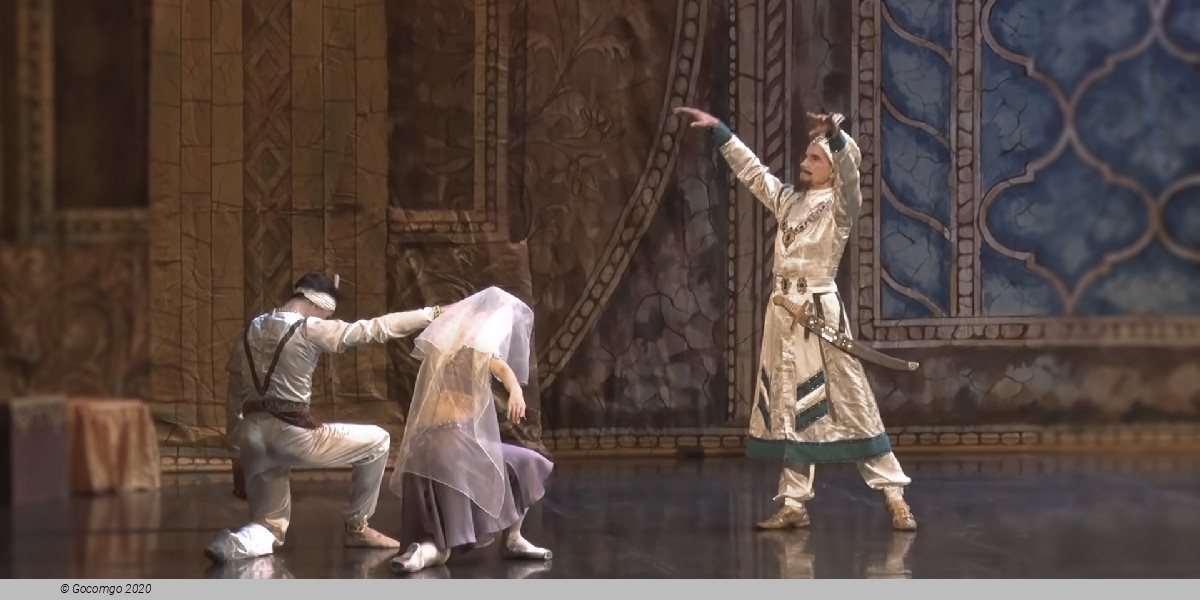
With festivities the Rajah and Rani Dugmanta of Golconda announce the upcoming wedding between their daughter Hamsatti and Solor. Unexpectedly, Kanj appears and tells the Rajah that Solor has sworn his eternal love to the Bayadère Nikiya in front of the Sacred Fire, hoping that the Rajah would dispose of Solor. However, in a blind fury the Rajah declares that it is Nikiya who must die and that the wedding between Solor and Hamsatti, who have been betrothed since childhood, will go ahead as planned. Hamsatti overhears their conversation and sends for Nikiya. She tries to impress her by offering her gifts of jewels, which Nikiya humbly refuses.  Hamsatti, irritated and realizing that her attempts are of no avail, tells Nikiya that Solor is betrothed to her and they will marry. Nikiya shocked by this sudden news and in a fit of rage, grabs the Rajah’s dagger and charges towards Hamsatti. Just before stabbing her she stops herself horrified at what she has done and runs from the palace. Hamsatti swears to the Bayadère’s death.

"Misri"*– The Engagement Ceremony of Hamsatti and Solor
In the Palace Gardens
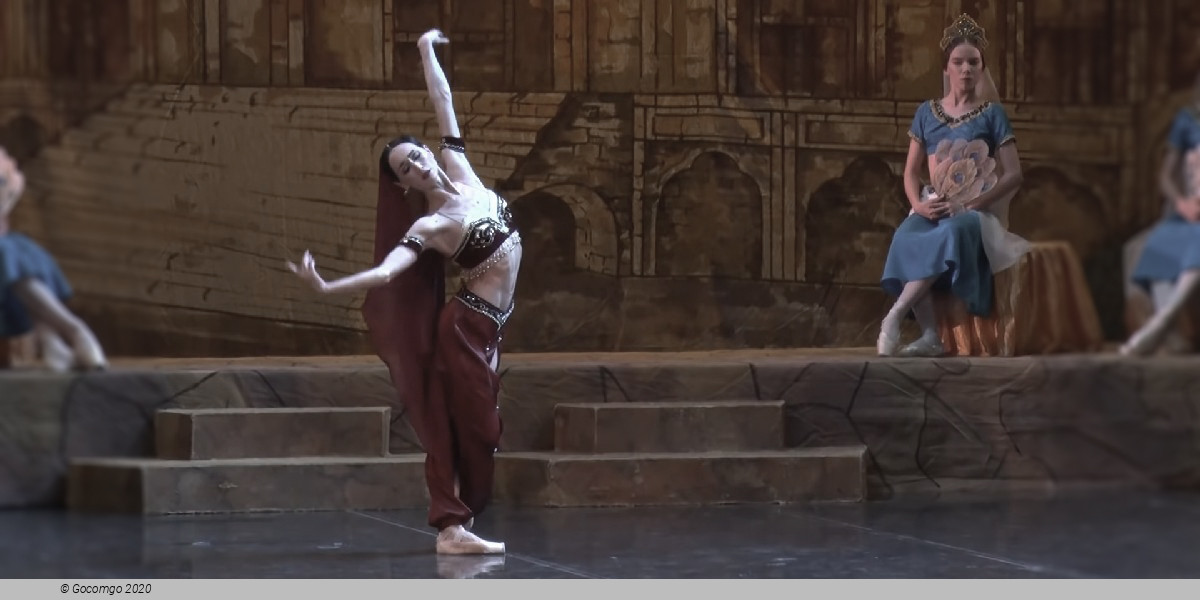
Festivities are presented in honour of the engagement of Hamsatti and Solor. Upon orders from Hamsatti, Kanj brings Nikiya to dance at the celebration. A basket of flowers, apparently sent by Solor, is handed over to Nikiya and her spirit brightens. However, a poisonous snake is hidden among the flowers, which were actually sent by the Rajah  and Hamsatti. Nikiya is bitten by the snake. Kanj offers her an antidote to the poison, but Nikiya sees Solor being led away by Hamsatti and she decides that she would rather die than live without his love. Kanj rushes to Nikiya, ridden with guilt at what he has provoked.

ACT II

Solor’s Tent
Despondent and depressed by Nikiya‘s death, Solor smokes opium, given to him by Madhavan to numb his grief.

The Kingdom of the Shades
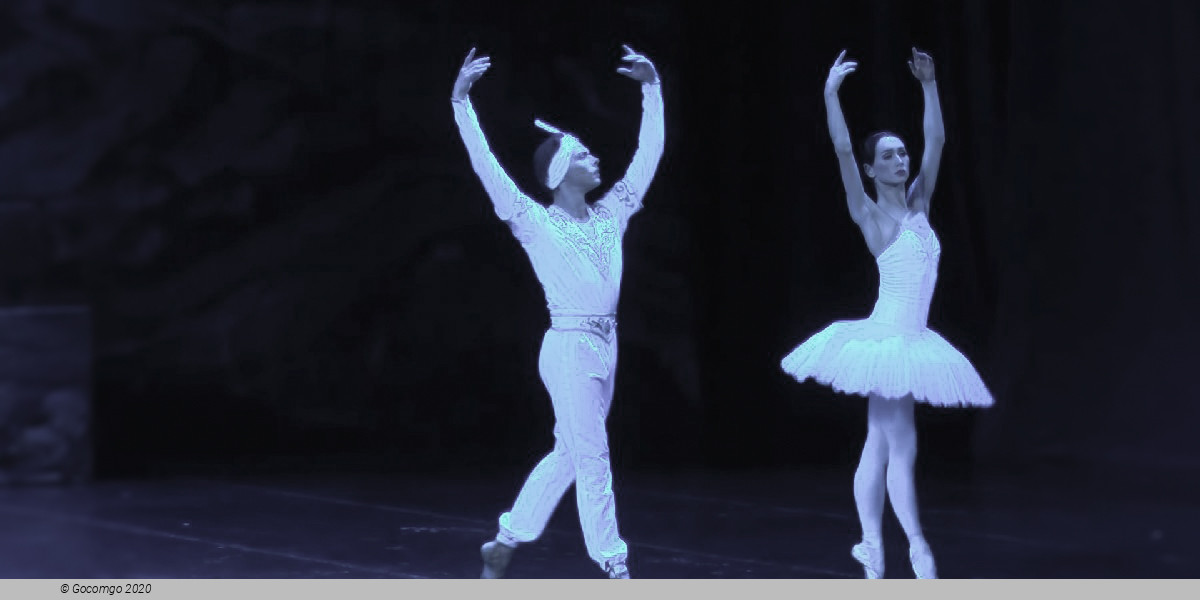
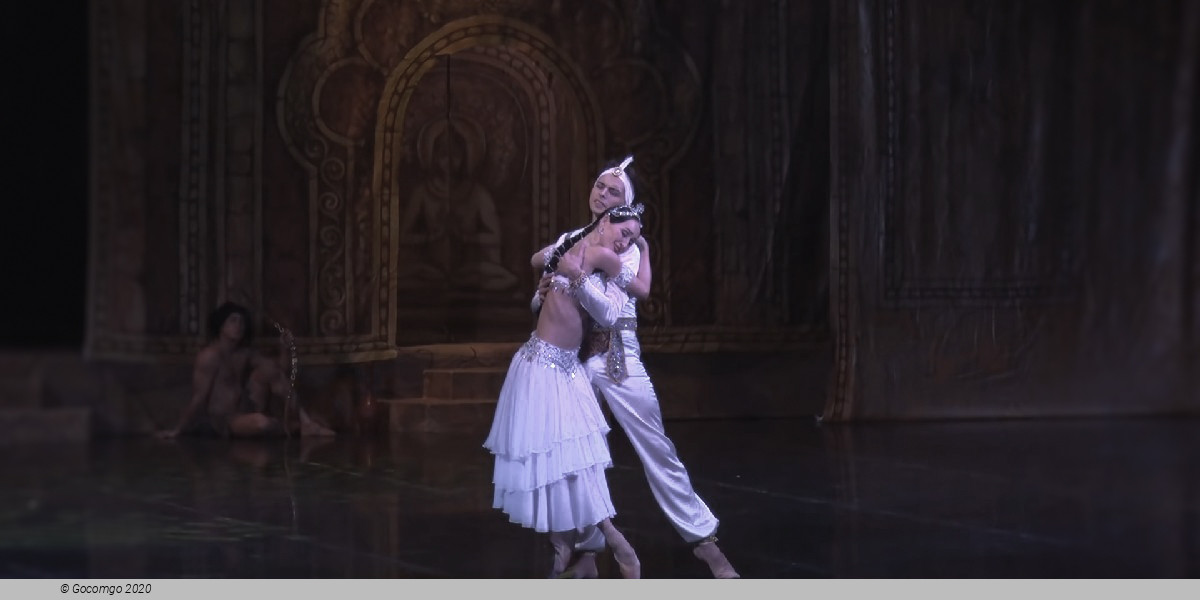
Solor in his dream-like euphoria hallucinates and conjures a vision of Nikiya’s shade (spirit) a thousend times among a star-lit sky in the kingdom of the shades. Solor reminisces about their dance of love by the Sacred Fire.

Solor’s Tent
Waking from his trance, the wedding preparations can no longer be stopped. His friend Ekavir tells him he needs to hurry. But Solor’s thoughts are only with Nikiya. He attends the preparations absentmindedly. Hamsatti, who has not failed to notice Solor’s condition, tries to calm him to ensure that the wedding takes place as planned.

"Shaadi"** – The Wedding Ritual 
In front of the Temple

The Brahmanas prepare everything for the wedding ritual, a golden idol dances to honour the gods. But Solor can not escape his thoughts of Nikiya. A vision of her appears to him repeatedly and keeps interrupting the ritual. Mysteriously Nikiya’s deathly basket of flowers appears, shocking everyone.
Hamsatti, nervous that Solor will figure out she is responsible for Nikiya’s death, urges her father to complete the wedding ceremony. The Rajah orders Kanj to finish the wedding ritual immediately. When Kanj joins the hands of Solor and Hamsatti under the Mandap***, the infuriated gods take vengeance for Nikiya‘s death by destroying the temple with a cyclone and burying everyone under its ruins. 

Apotheosis
Nikiya’s spirit forgives and embraces Solor’s with all her love. Joined together forever in love, they head to nirvana. 

Set in the Royal India of the past, La Bayadère is a story of eternal love, mystery, fate, vengeance, and justice.  The ballet relates the drama of a temple dancer (bayadère), Nikiya, who is loved by Solor, a noble warrior.  She is also loved by the High Brahmin, but does not love him in return, as she does Solor.

Act I

Scene I, Outside Temple in the Sacred Forest.

The High Brahmin, priests, and temple dancers are celebrating the Indian Ritual of Fire.  Nikiya, the most beautiful of the bayadères, has been chosen to be consecrated the lead temple dancer.  The High Brahmin declares his love for Nikiya, but is rejected by her.  Nikiya meets secretly with Solor later that evening.  They dance together and swear eternal love over the Sacred Fire, but are discovered by the jealous High Brahmin, who vows to kill Solor.

Scene II, A Room in the Palace.

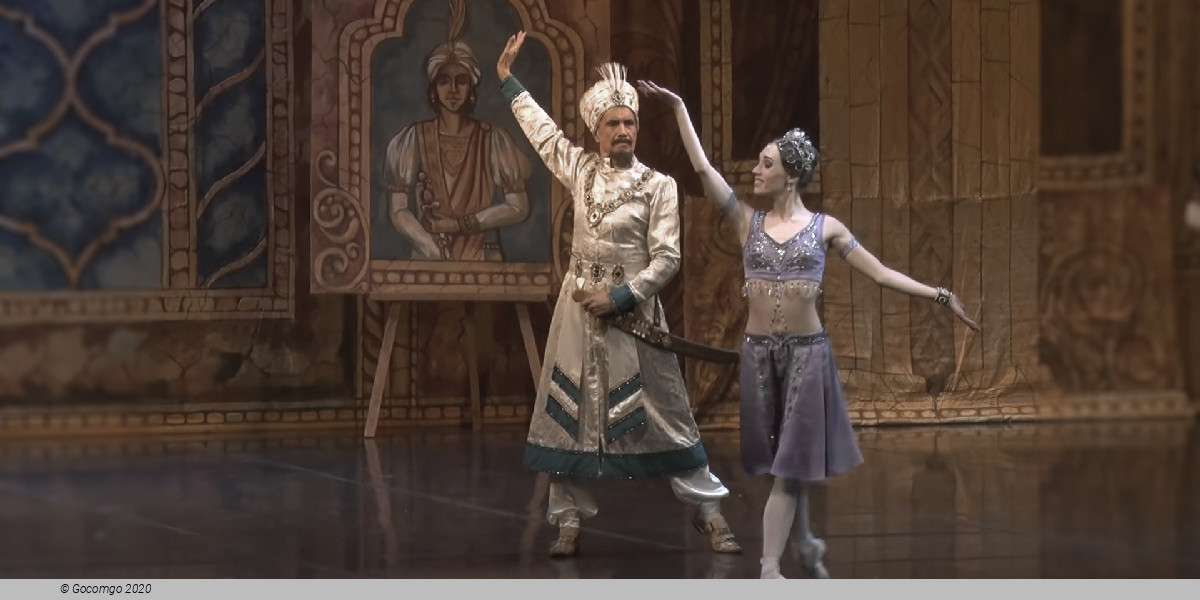
The Rajah has decided to reward Solor’s valor and decrees that the warrior will marry his daughter, Gamzatti.  Gamzatti falls in love with Solor’s portrait, and when they meet, he is overwhelmed by her beauty.  Even though he has sworn eternal love to Nikiya, he cannot defy the wishes of the Rajah and agrees to marry Gamzatti.  The High Brahmin informs the Rajah of Nikiya and Solor’s secret love, hoping that the Rajah will do away with Solor.  Instead, the Rajah decides to kill Nikiya.

This conversation is overhead by Gamzatti, who summons Nikiya to her rooms and attempts to bribe Nikiya to give up Solor.  Refusing, Nikiya frantically attempts to kill  Gamzatti.  Nikiya flees and Gamzatti swears to destroy her.

Scene III, The Garden of the Palace.

At the betrothal of Solor and Gamzatti, Nikiya is commanded to dance.  Gamzatti presents her with a basket of flowers that Nikiya believes to be from Solor, and which conceals a deadly snake.  Nikiya is bitten, and when Solor leaves with Gamzatti, she refuses the proffered antidote and dies.

Act II. The Tent of Solor.

Solor, grief‑stricken and under the influence of opium, dreams of being reunited with Nikiya in the Kingdom of the Shades.  Awakening, he realizes that he must prepare to marry Gamzatti.

Act III. The Temple.

The vision of Nikiya remains with Solor as the wedding ceremony begins at the Sacred Temple.  As Solor and Gamzatti say their vows and are blessed by the High Brahmin, the vengeance of the gods is unleashed, and the temple and all the celebrants are destroyed.  Nikiya and Solor are once again united in eternal love.

Venue Info

Semperoper Dresden - Dresden
Location   Theaterplatz 2

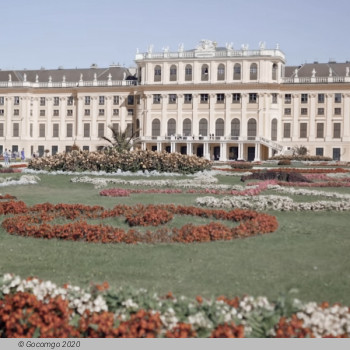
Not only one of the most beautiful opera houses in the world, the Semperoper is renowned both in Germany and abroad for the brilliant star-studded performances by Saxon State Opera as well as numerous international guest artists.

This is the home of the Staatskapelle Dresden, an orchestra which looks back on 460 years of uninterrupted music-making. The State Opera Chorus was founded by Carl Maria von Weber in 1817. Operatic history has been written here, with the Semperoper playing host to numerous important premieres, such as Richard Wagner’s "Rienzi", "Der fliegende Holländer" and "Tannhäuser". There is also an indissoluble link to Richard Strauss, nine of whose 15 operas were premiered in Dresden, including "Salome", "Der Rosenkavalier" and "Elektra". The small venue Semper Zwei provides space for diverse forms of music theatre as well as theatrical experiments, and is also the venue for performances of Semperoper Junge Szene.

The magnificent Semperoper dominates the Theaterplatz be-side the river Elbe, forming the centrepiece of the historic old city. The original building opened its doors in 1841, constructed to a design by Gottfried Semper which combined a late Classical style with Renaissance elements. Following a devastating fire in 1869, the citizens of Dresden immediately set about rebuilding their beloved opera house. This was completed in 1878, also to a design by Semper. In 1945, during the final months of World War II, the Semperoper was once again razed to the ground.

After a second reconstruction was successfully completed in 1985, the reopening of one of Europe’s most beautiful opera houses was celebrated with a performance of Carl Maria von Weber’s "Freischütz".
The dazzling interiors were painstakingly reconstructed by local craftsmen and artists according to original plans, with state-of-the art stage machinery and technical fittings in the auditorium. A modern annex was added to house the administrative offices and rehearsal rooms. Internationally renowned for its brilliant acoustics and incomparable performances, audiences from around the world continue to flock here to enjoy unforgettable experiences at the Semperoper Dresden.

Important Info
Type: Ballet
City: Dresden, Germany
Starts at: 19:00
Acts: 2
Intervals: 1
Duration: 2h 30min
Top of page