Semperoper Dresden 30 March 2023 - Arabella | GoComGo.com

Arabella

Semperoper Dresden, Semperoper Dresden, Dresden, Germany
All photos (5)
Select date and time
7 PM

E-tickets: Print at home or at the box office of the event if so specified. You will find more information in your booking confirmation email.

You can only select the category, and not the exact seats.
If you order 2 or 3 tickets: your seats will be next to each other.
If you order 4 or more tickets: your seats will be next to each other, or, if this is not possible, we will provide a combination of groups of seats (at least in pairs, for example 2+2 or 2+3).

Important Info
Type: Opera
City: Dresden, Germany
Starts at: 19:00
Acts: 3
Intervals: 1
Duration: 3h 15min
Sung in: German
Titles in: German,English

E-tickets: Print at home or at the box office of the event if so specified. You will find more information in your booking confirmation email.

You can only select the category, and not the exact seats.
If you order 2 or 3 tickets: your seats will be next to each other.
If you order 4 or more tickets: your seats will be next to each other, or, if this is not possible, we will provide a combination of groups of seats (at least in pairs, for example 2+2 or 2+3).

Overview

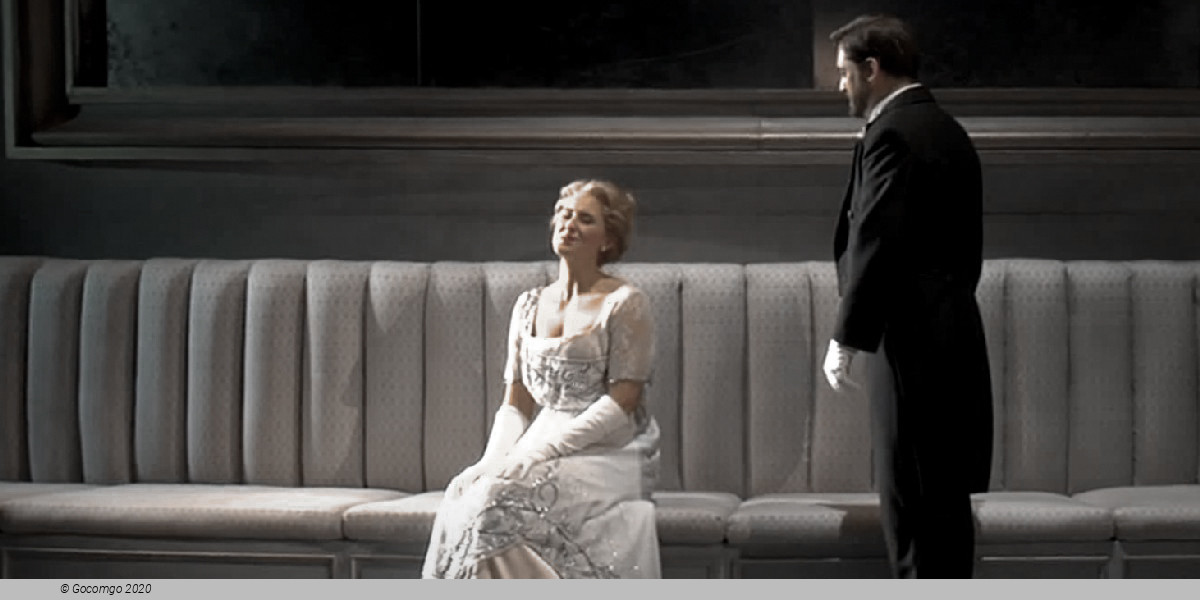
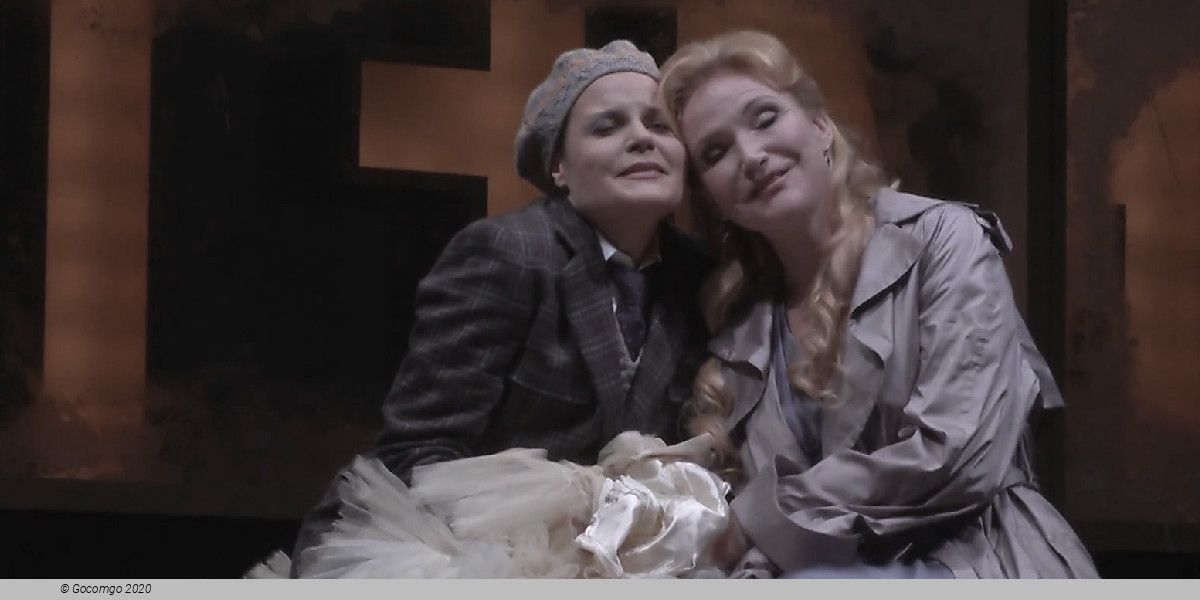
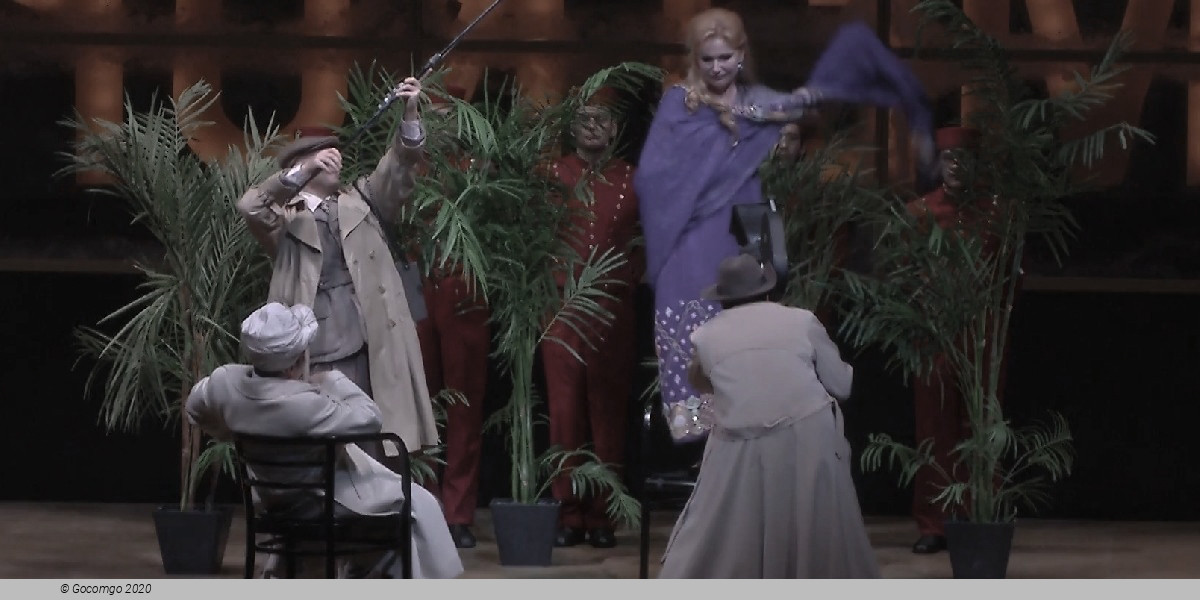
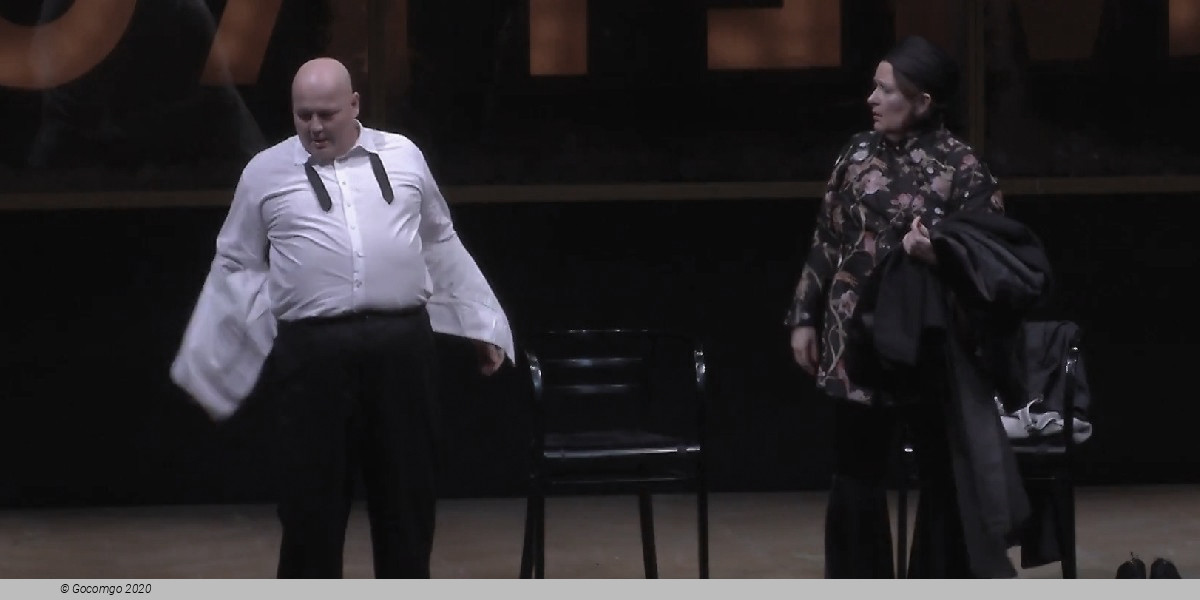
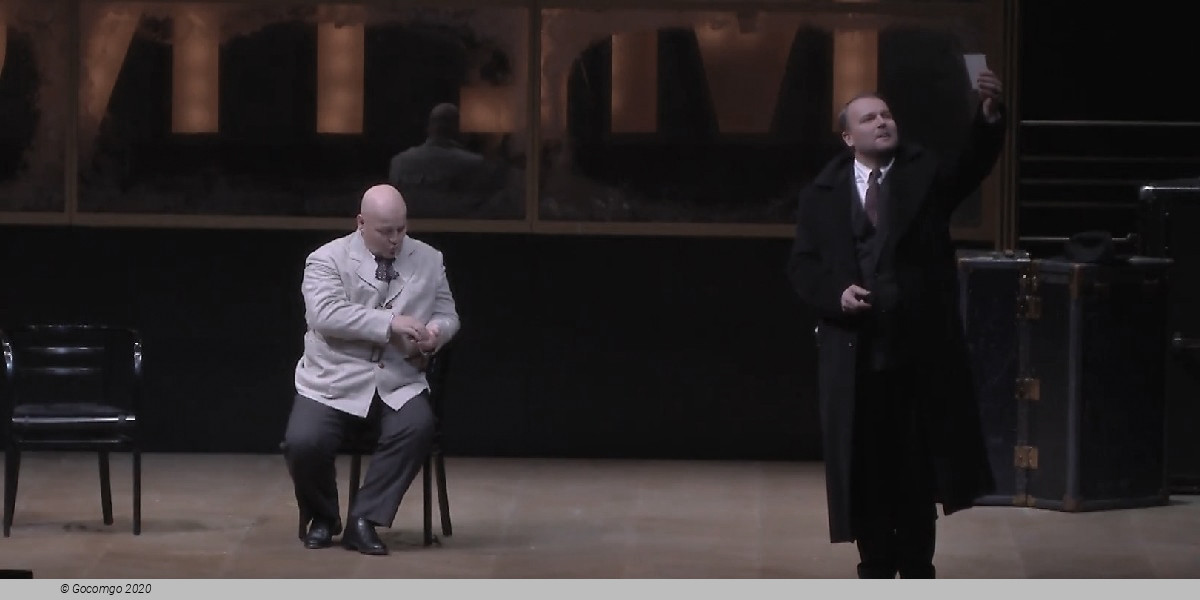
"Arabella", which premiered in Dresden on 1 July 1933, tells the story of Count Waldner and his family, who are on the brink of financial ruin. For this reason, the older daughter Arabella is to be married as quickly as possible to some rich admirer, while her younger sister Zdenka is forced to disguise herself as a young man. Although the wealthy landowner Mandryka seems to be the ideal match for Arabella, an amorous entanglement between the officer Matteo, who is head over heels in love with Arabella, and Zdenka, causes great confusion, before finally resolving in peace and harmony. In this last collaboration tion between Richard Strauss and Hugo von Hofmannsthal, lush orchestration provides the backdrop to the unmasking of an illusory and decrepit society. In this co-production with the Salzburg Easter Festival, which premiered to great acclaim in 2014, director Florentine Klepper tells the story of two strong women fighting for self-determination in matters of the heart.

A co-production with the Salzburg Easter Festival

History
Premiere of this production: 01 July 1933, Sächsisches Staatstheater, Dresden

Arabella is a lyric comedy, or opera, in three acts by Richard Strauss to a German libretto by Hugo von Hofmannsthal, their sixth and last operatic collaboration.

Synopsis

Time: 1860s
Place: Vienna

Act 1

In a hotel in Vienna

As the curtain opens, Countess Adelaide is having her fortune told. The fortune teller predicts Arabella will marry a man from far away, but that trouble may be in store. The Waldners have a second daughter, Zdenka, but since they cannot afford two daughters marrying, they have indulged her tomboyishness by pretending she is a boy, whom they present as "Zdenko." Zdenka secretly loves Matteo, a penniless officer who loves Arabella. To prevent him from committing suicide, Zdenka writes him love letters she signs with Arabella's name. Zdenka reproaches Arabella for her unsympathetic treatment of Matteo, but Arabella says that she is hoping for the "Right Man," to whom she can give her heart completely. Meanwhile, Arabella is wooed by three suitors, Elemer, Dominik and Lamoral, and acknowledges that she may have to accept one of them, but has fallen in love at first sight with a stranger she passed in the street.

Count Waldner, in dire straits, has written to all his friends for financial help, to no avail. He was hopeful for an answer from an old and immensely wealthy Croatian friend of his, Mandryka, even sending him a portrait of Arabella in hopes of a marriage. A visitor announced as Mandryka arrives and Waldner is surprised to see that it is not his friend. The man explains he is Mandryka's nephew, also named Mandryka. His uncle is dead, and as his only heir, he has acquired his fortune; he also received the letter and portrait. From seeing the portrait, he has fallen in love with Arabella. He offers to marry her and gives Waldner money.

A carnival ball is to be held that night. Matteo asks "Zdenko," his supposedly male friend, when he will receive another letter from Arabella; "Zdenko" answers that he will have one that very evening at the ball. Arabella continues to muse about the strange man she noticed, but when Count Elemer arrives to be her escort for the evening, she tries to banish these thoughts and look forward to the excitement of the Fasching.

Act 2

In a ballroom (The Coachman's Ball)

Arabella meets Mandryka, who turns out to be her fascinating stranger. Mandryka tells her about his life and his country's customs, in which young women offer their fiancés a glass of water as a token of agreeing to be married. Mandryka tells Arabella that she will be mistress of all the things he owns, and that she will be the only thing ranked above him besides the Emperor himself; Arabella happily agrees to marry him, saying, "I give myself to you, for eternity." Then Mandryka agrees to Arabella's request that she be allowed to stay for another hour to say farewell to her girlhood, during which she thanks her suitors for their interest in her and bids them goodbye.

Meanwhile, Zdenka gives Matteo a letter with the key to the room next to Arabella's, saying that it is Arabella's room and promising that Arabella will meet him there that night. Mandryka overhears this conversation and, mad with jealousy and disappointment (after first trying to evade these feelings), raises a commotion, flirting with the Fiakermilli, the ball's mascot. Since Arabella is nowhere to be found, the Waldners insist that he meet Arabella to talk things out, and they head for the hotel.

Act 3

A lobby in the hotel

A passionate orchestral prelude depicts the lovemaking of Matteo and Zdenka.

Arabella enters the lobby and comes across Matteo. As Matteo is in love with Arabella and thinks it is she with whom he has just made love in a darkened room, their conversation is at once confused and emotional. The Count, the Countess, and Mandryka arrive and further the misunderstanding. After Mandryka accuses Arabella of infidelity and plans to go back to his land, Zdenka rushes in, no longer in disguise and in her negligee (making it clear that it was she who had the encounter with Matteo). She declares her intention to drown herself in disgrace. The situation is finally cleared up. Matteo learns that the letters were forged by Zdenka and that it was she and not Arabella in the room. He suddenly realizes he is in love with Zdenka, whom he agrees to marry. Mandryka begs forgiveness, and Arabella tells him they will think no more of the night's events. Arabella asks his servant to bring her a glass of water, and Mandryka thinks she has requested it for her refreshment. Arabella goes upstairs and Mandryka, ruminating on his indecorous behavior and blaming himself, stays downstairs. Arabella comes down the stairs and, seeing that he has stayed and having forgiven him, offers him the glass of water, signifying reconciliation and marriage. They happily kiss and Arabella goes up the stairs to her room.


Venue Info

Semperoper Dresden - Dresden
Location   Theaterplatz 2

Not only one of the most beautiful opera houses in the world, the Semperoper is renowned both in Germany and abroad for the brilliant star-studded performances by Saxon State Opera as well as numerous international guest artists.

This is the home of the Staatskapelle Dresden, an orchestra which looks back on 460 years of uninterrupted music-making. The State Opera Chorus was founded by Carl Maria von Weber in 1817. Operatic history has been written here, with the Semperoper playing host to numerous important premieres, such as Richard Wagner’s "Rienzi", "Der fliegende Holländer" and "Tannhäuser". There is also an indissoluble link to Richard Strauss, nine of whose 15 operas were premiered in Dresden, including "Salome", "Der Rosenkavalier" and "Elektra". The small venue Semper Zwei provides space for diverse forms of music theatre as well as theatrical experiments, and is also the venue for performances of Semperoper Junge Szene.

The magnificent Semperoper dominates the Theaterplatz be-side the river Elbe, forming the centrepiece of the historic old city. The original building opened its doors in 1841, constructed to a design by Gottfried Semper which combined a late Classical style with Renaissance elements. Following a devastating fire in 1869, the citizens of Dresden immediately set about rebuilding their beloved opera house. This was completed in 1878, also to a design by Semper. In 1945, during the final months of World War II, the Semperoper was once again razed to the ground.

After a second reconstruction was successfully completed in 1985, the reopening of one of Europe’s most beautiful opera houses was celebrated with a performance of Carl Maria von Weber’s "Freischütz".
The dazzling interiors were painstakingly reconstructed by local craftsmen and artists according to original plans, with state-of-the art stage machinery and technical fittings in the auditorium. A modern annex was added to house the administrative offices and rehearsal rooms. Internationally renowned for its brilliant acoustics and incomparable performances, audiences from around the world continue to flock here to enjoy unforgettable experiences at the Semperoper Dresden.

Important Info
Type: Opera
City: Dresden, Germany
Starts at: 19:00
Acts: 3
Intervals: 1
Duration: 3h 15min
Sung in: German
Titles in: German,English
Top of page