



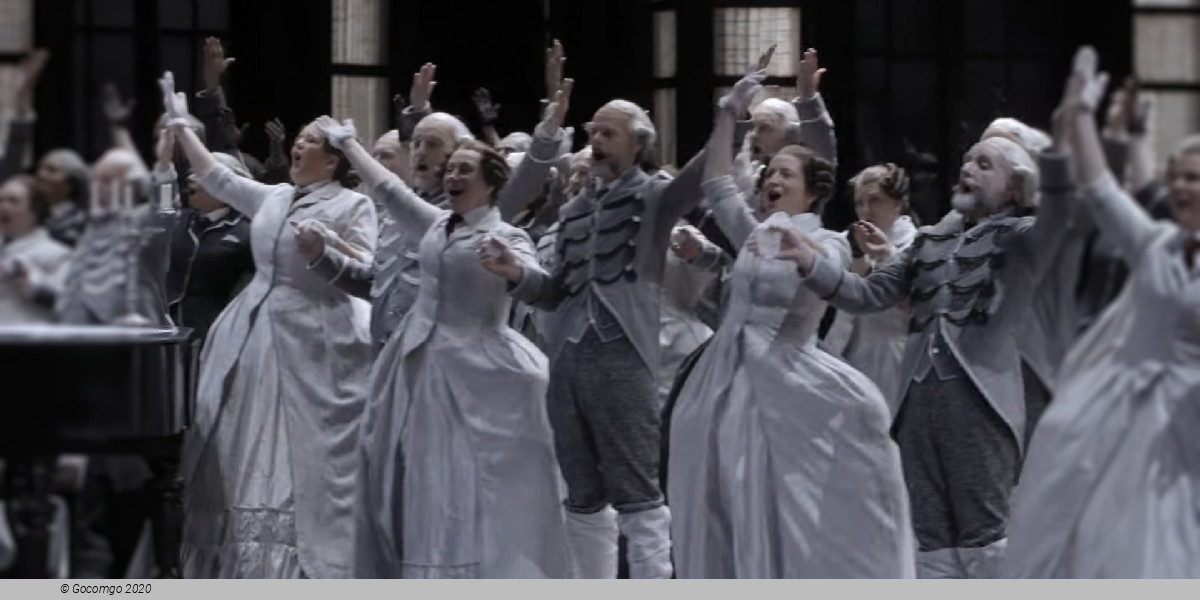
Royal Swedish Opera 6 April 2023 - The Queen of Spades (concert performance) | GoComGo.com

The Queen of Spades (concert performance)

Royal Swedish Opera, Stockholm, Sweden
All photos (10)
Select date and time
6 PM

E-tickets: Print at home or at the box office of the event if so specified. You will find more information in your booking confirmation email.

You can only select the category, and not the exact seats.
If you order 2 or 3 tickets: your seats will be next to each other.
If you order 4 or more tickets: your seats will be next to each other, or, if this is not possible, we will provide a combination of groups of seats (at least in pairs, for example 2+2 or 2+3).

Important Info
Type: Opera
City: Stockholm, Sweden
Starts at: 18:00
Intervals: 1
Duration: 3h
Sung in: Russian
Titles in: Swedish

E-tickets: Print at home or at the box office of the event if so specified. You will find more information in your booking confirmation email.

You can only select the category, and not the exact seats.
If you order 2 or 3 tickets: your seats will be next to each other.
If you order 4 or more tickets: your seats will be next to each other, or, if this is not possible, we will provide a combination of groups of seats (at least in pairs, for example 2+2 or 2+3).

Overview

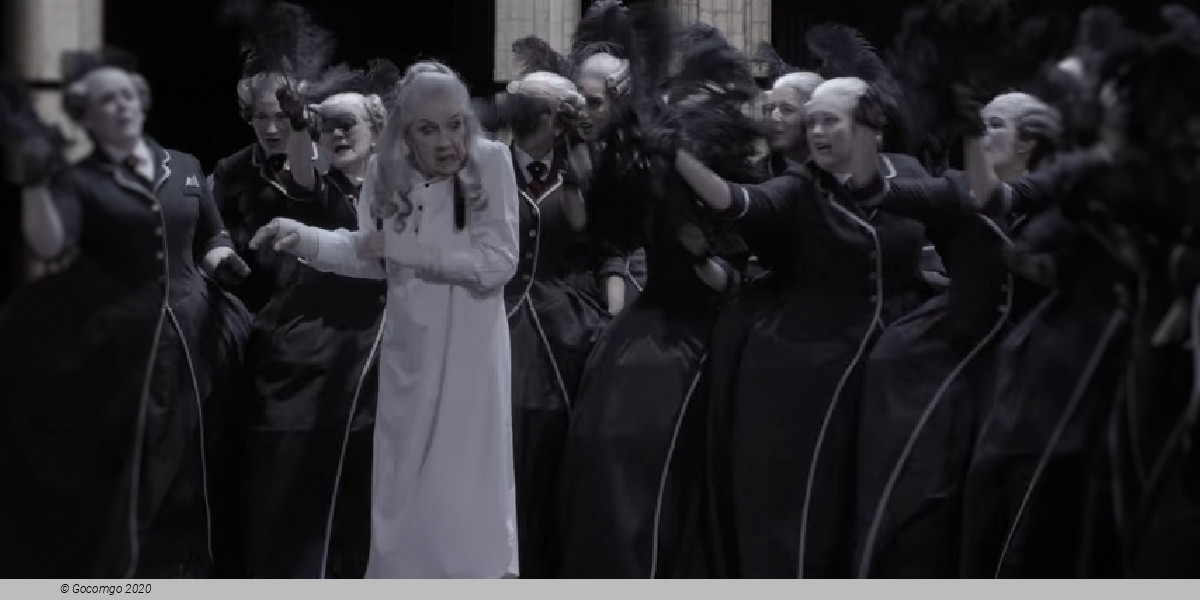
Tchaikovsky’s opera The Queen of Spades is a dark tale of love and a passion for gambling. An old countess holds the formula for the three magic cards. In her youth she sold her virtue in exchange for the deadly secret that allows you to win games. The rich and congenial Prince Yeletzky is deeply in love with the countess’s young protégée Lisa, but Lisa loves the officer and gambling addict Hermann, who in turn is obsessed by the countess’s secret …

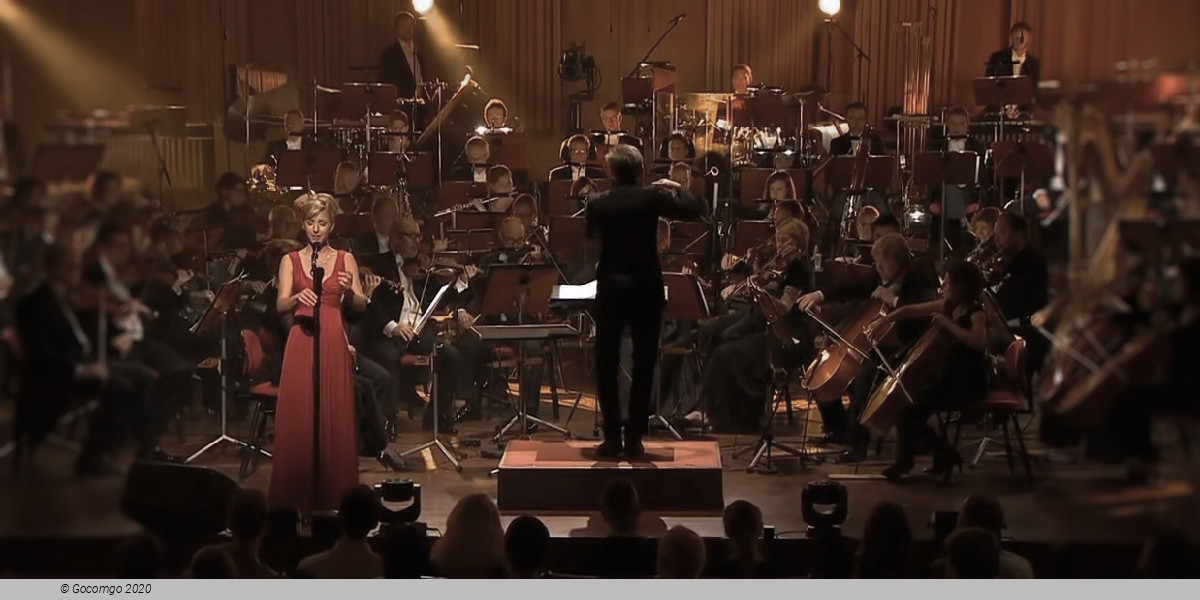
The Queen of Spades is a real feast of singing, with dazzlingly beautiful arias and glorious choruses. Inspired by the Russian national poet Alexander Pushkin’s poem about curious mysteries in 18th-century Petersburg, Tchaikovsky has created exceptionally beautiful music for the demonic and at times surreal intrigue. A masterpiece that is all too rarely performed in Sweden, the most recent occasion being in 2009 at the Royal Swedish Opera. The internationally lauded and acclaimed mezzo-soprano Anne Sofie von Otter plays the countess, and the Royal Swedish Opera’s Music Director Alan Gilbert conducts.

History
Premiere of this production: 29 March 1890, Mariinsky Theatre, St. Petersburg

The Queen of Spades is an opera in three acts (seven scenes) by Pyotr Ilyich Tchaikovsky to a Russian libretto by the composer's brother Modest Tchaikovsky, based on a short story of the same name by Alexander Pushkin, but with a dramatically altered plot. The premiere took place in 1890 in St. Petersburg (at the Mariinsky Theatre), Russia.

Synopsis

Time: The close of the 18th century

Place: St. Petersburg, Russia

Act 1

Scene 1

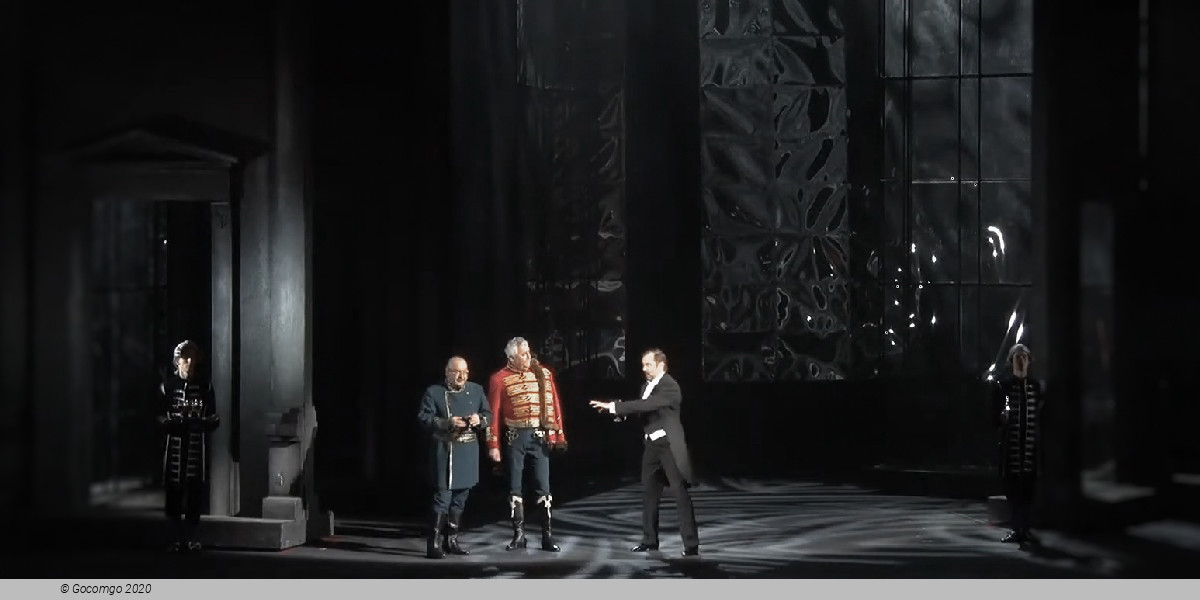
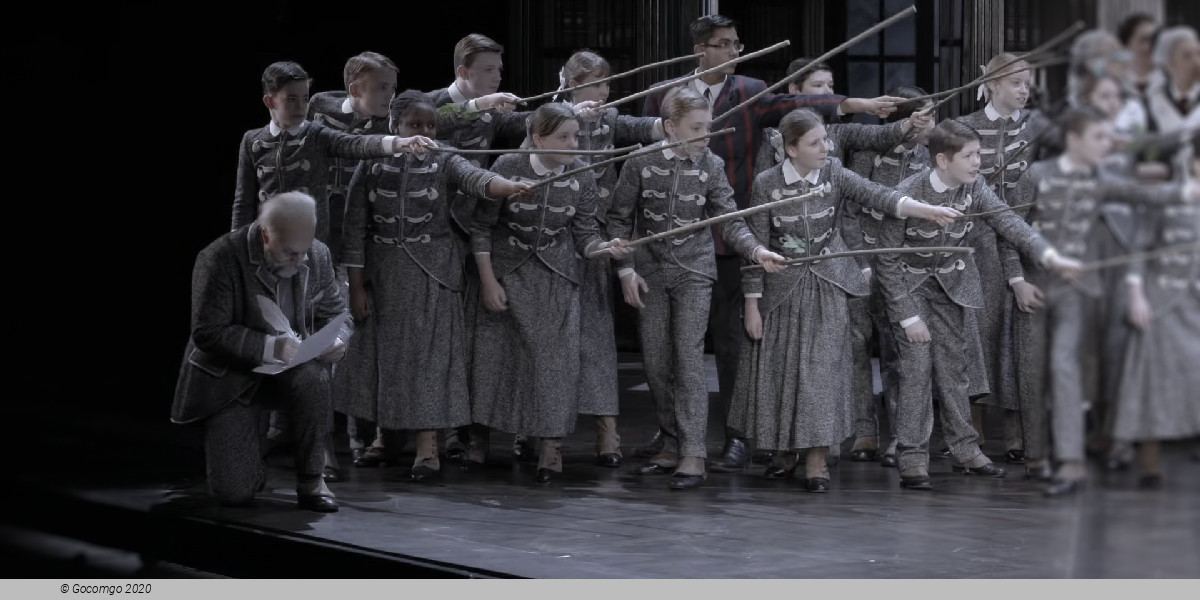
During the reign of Catherine the Great (1762–96), children are at play in St. Petersburg's Summer Garden pretending to be soldiers. Two officers — Tsurin and Chekalinsky — enter, the former complaining about his bad luck at gambling. They remark that another officer, Herman, seems obsessed with the gaming table but never bets, being frugal and methodical. Herman appears with Tomsky, who remarks that his friend hardly seems like his old self: is anything bothering him? Herman admits he is in love with a girl above his station whose name he does not even know. When Prince Yeletsky, an officer, strolls into the park, Chekalinsky congratulates him on his recent engagement. Yeletsky declares his happiness while Herman, aside, curses him enviously. Yeletsky points out his fiancée, Liza, who has just appeared with her grandmother, the old Countess. Catching sight of Herman, the two women note they have seen him before, staring at them with frightening intensity. Herman realizes that Liza is his unknown beloved. When Yeletsky and the women leave, Herman is lost in thought as the other officers discuss the Countess: known as the Queen of Spades and formerly as the Muscovite Venus, due to her beauty, she succeeded at gambling in her youth by trading amorous favors for the winning formula of Count St. Germain in Paris. Tomsky says only two men, her husband and, later on, her young lover, ever learned the secret of playing three special cards, because she was warned by an apparition to beware a "third suitor" who would kill her trying to force it from her. Musing on the winning sequence of three cards, the others lightly suggest that this might be the way for Herman to win without risking any money. Threatened by approaching thunder, all leave except Herman, who vows to learn the Countess's secret.

Scene 2

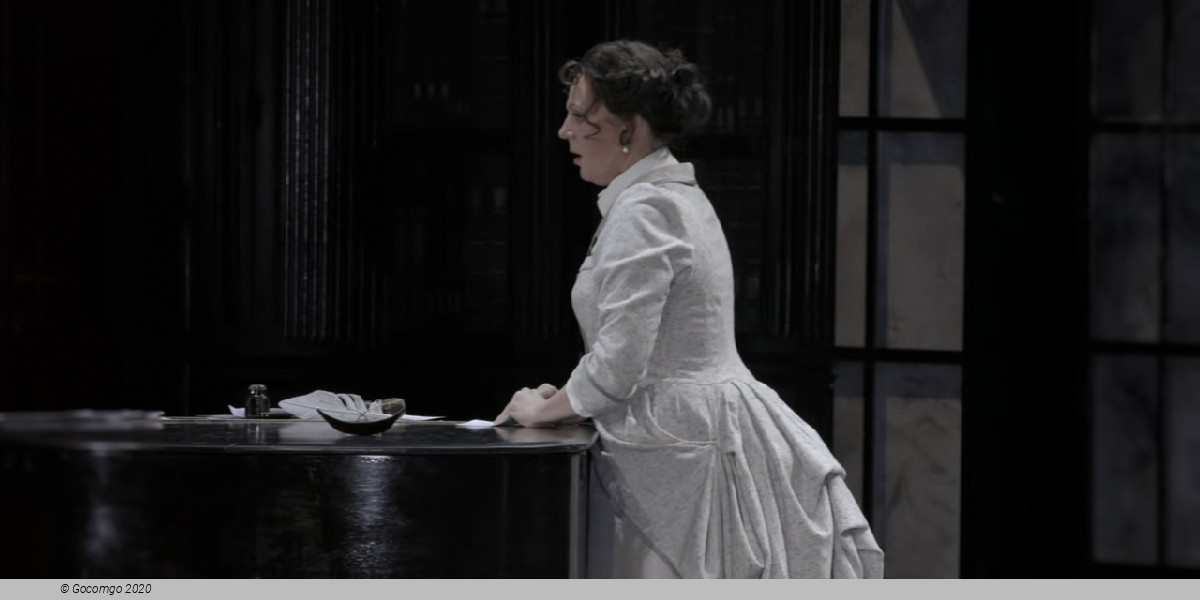
At home, Liza plays the spinet as she and her friend Pauline sing a duet about evening in the countryside. Their girlfriends ask to hear more, so Pauline launches into a sad ballad, followed by a dancelike song. As the merriment increases, Liza remains pensively apart. A Governess chides the girls for indulging in unbecoming folk dancing and asks the visitors to leave. Pauline, the last to go, urges Liza to cheer up; Liza replies that after a storm there is a beautiful night and asks the maid, Masha, not to close the French windows to the balcony. Alone, Liza voices her unhappiness with her engagement; she has been stirred by the romantic look of the young man in the park. To her shock, Herman appears on the balcony. Claiming he is about to shoot himself over her betrothal to another, he begs her to take pity on him. When the Countess is heard knocking, Liza hides Herman and opens the door to the old woman, who tells her to shut the windows and go to bed. After the Countess retires, Liza asks Herman to leave but is betrayed by her feelings and falls into his embrace.

Act 2

Scene 1

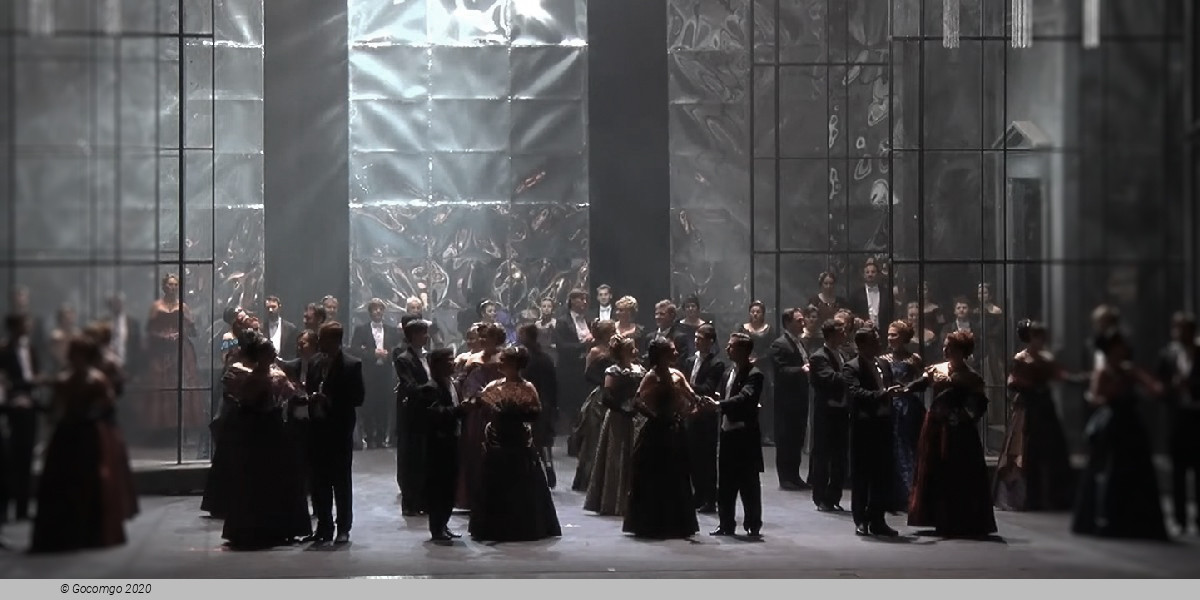
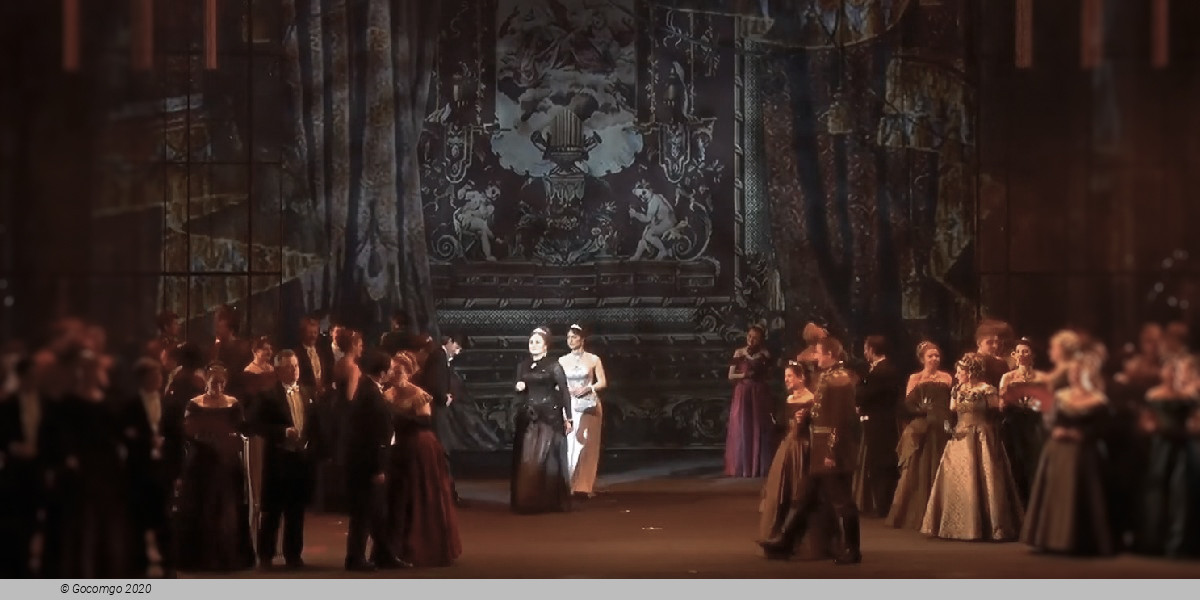
Not long afterward, at a masked ball, Herman's comrades comment on his obsession with the secret of the winning cards. Yeletsky passes with Liza, noting her sadness and reassuring her of his love ("Ya vas lyublyu" "I love you"). Herman receives a note from Liza, asking him to meet her later. Tsurin and Chekalinsky sneak up behind him with the intent of playing a joke on him, muttering he is the "third suitor" who will learn the Countess's secret, then melt into the crowd as Herman wonders whether he is hearing things. The master of ceremonies announces a tableau of shepherdesses. Liza slips Herman the key to her grandmother's room, saying the old woman will not be there the next day, but Herman insists on coming that very night. Thinking fate is handing him the Countess's secret, he leaves. The guests' attention turns to the imminent arrival of Catherine the Great, for which a polonaise by Osip Kozlovsky is played and sung in greeting.

Scene 2

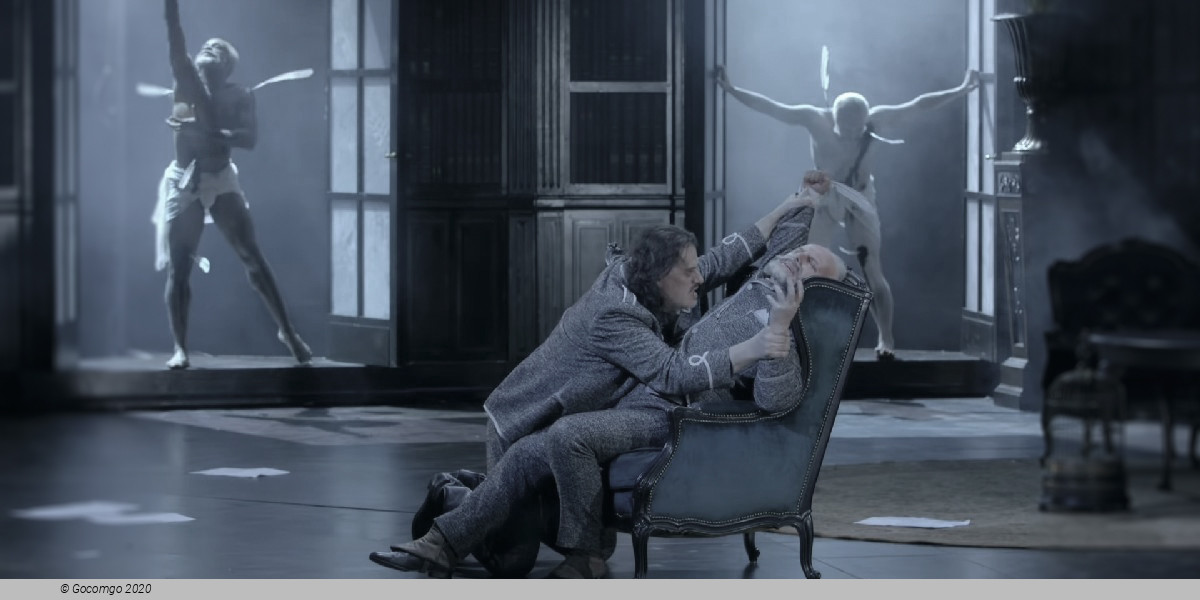
Herman slips into the Countess's room and looks in fascination at her portrait as the "Muscovite Venus"; musing how their fates, he feels, are linked: one of them will die because of the other. He lingers too long before he can go to Liza's room and hears the Countess's retinue coming, so he conceals himself as the old lady approaches. The Countess deplores the manners of the day and reminisces about the better times of her youth, when she sang in Versailles "Je crains de lui parler la nuit" (Laurette's Aria) from André Grétry's opera Richard Cœur-de-Lion before the Pompadour herself. As she dozes off, Herman stands before her. She awakens in horror as he pleads with her to tell him her secret. When she remains speechless, he grows desperate and threatens her with a pistol — at which she dies of fright. Liza rushes in, only to learn that the lover to whom she gave her heart was more interested in the Countess's secret. She orders him out and falls sobbing.

Act 3

Scene 1

In his room at the barracks, as the winter wind howls, Herman reads a letter from Liza, who wants him to meet her at midnight by the river bank. He imagines he hears the chorus chanting at the old Countess's funeral, then is startled by a knock at the window. The old woman's ghost appears, announcing that against her will she must tell him the secret so that he can marry and save Liza. Dazed, Herman repeats the three cards she tells him — three, seven, ace.

Scene 2

By the Winter Canal, Liza waits for Herman: it is already near midnight, and though she clings to a forlorn hope that he still loves her, she sees her youth and happiness swallowed in darkness. At last he appears, but after uttering words of reassurance, he starts to babble wildly about the Countess and her secret. No longer even recognizing Liza, he rushes away. Realizing that all is lost, she commits suicide.

Scene 3

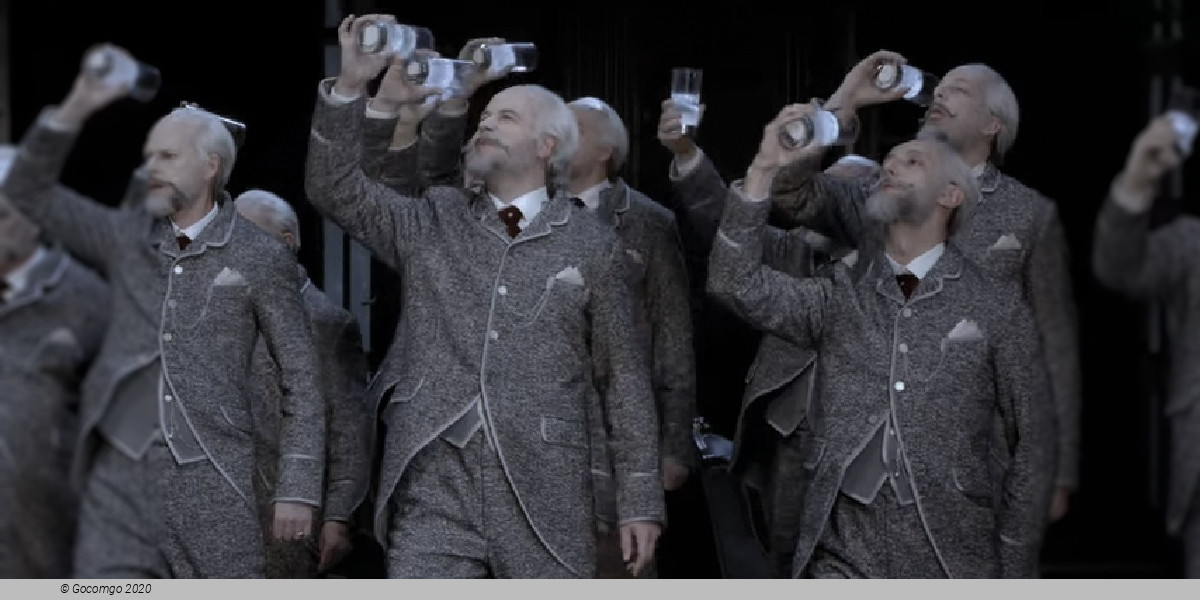
At a gambling house, Herman's fellow officers are finishing supper and getting ready to play faro. Yeletsky, who has not gambled before, joins the group because his engagement has been broken: "unlucky in love, lucky at cards". Tomsky entertains the others with a song. Then Chekalinsky leads a traditional gamblers' song. Settling down to play, they are surprised when Herman arrives, wild and distracted. Yeletsky senses a confrontation and asks Tomsky to be his second if a duel should result. Herman, intent only on betting, starts with a huge bet of 40,000 rubles. He bets the three and wins, upsetting the others with his maniacal expression. Next he bets the seven and wins again. At this he takes a wine glass and declares that life is but a game. Yeletsky accepts his challenge to bet on the next round. Herman bets everything he has on the ace but when he shows his card he is told he is holding the queen of spades. Seeing the Countess's ghost laughing at her vengeance, Herman takes his own life and asks Yeletsky's and Liza's forgiveness. The others pray for his tormented soul.

Venue Info

Royal Swedish Opera - Stockholm
Location   Gustav Adolfs torg 2

Royal Swedish Opera is Sweden's major national stage for opera and ballet. Famous singers who have been part of the opera's ensemble have included Jussi Björling, Gösta Winbergh, Nicolai Gedda, Peter Mattei, Jenny Lind, Birgit Nilsson, Elisabeth Söderström, Fritz Arlberg, Anne Sofie von Otter, Katarina Dalayman and Nina Stemme.

The orchestra of the Royal Swedish Opera, the Royal Swedish Orchestra, Kungliga Hovkapellet, dates back to 1526. Royal housekeeping accounts from 1526 mention twelve musicians including wind players and a timpanist but no string players. Consequently, the Royal Swedish Orchestra is one of the oldest orchestras in Europe.

Armas Järnefelt was on the music staff from 1905, rising to become chief conductor between 1923–1933 and 1938–1946. The Royal Swedish Ballet, Kungliga Baletten, was founded by Gustav III of Sweden in 1773.

The building is located in the center of Sweden's capital Stockholm in the borough of Norrmalm, on the eastern side of Gustav Adolfs torg across from the former Arvfurstens Palats, now Ministry for Foreign Affairs. It lies on the north side of the Norrström river and is connected to the Royal Palace through the Norrbro bridge.

The opera company was founded by King Gustav III and its first performance, Thetis and Phelée with Carl Stenborg and Elisabeth Olin, was given on January 18, 1773; this was the first native speaking opera performed in Sweden.

But the first opera house was not opened until 1782 and served for a century before being replaced at the end of the 19th century. Both houses are officially called the "Royal Opera", however the terms "The Gustavian Opera" and "The Oscarian Opera", or the "Old" and "New" Opera are used when distinction is needed.

The Gustavian Opera
The original Stockholm Opera House, the work of architect Carl Fredrik Adelcrantz was commissioned by King Gustav III, a strong adherent of the ideal of an enlightened absolutism and as such was a great patron of the arts. The Swedish Opera company had first been located in Bollhuset, but there was a need to separate the Opera from the theatre and give them separate buildings. Construction began in 1775 and the theatre was inaugurated on 30 September 1782 with a performance of the German composer Johann Gottlieb Naumann's Cora och Alonzo. It was also the place for public masquerade balls, events inspired from the famous opera-balls in Paris, which was open for everyone wearing a mask at a cheap cost and somewhat ill-reputed.

The building was very imposing with its centre Corinthian tetrastyle portico supporting four statues and topped by the royal crown. The four-tiered auditorium was oval in shape, had excellent acoustics and sight lines. The sumptuous foyer contained neoclassic medallions and pilasters.

It was in the foyer of the opera house where the king met his fate: during a masquerade on March 16, 1792, he was shot by Jacob Johan Anckarström, and died 7 days later. (In turn, this event inspired the operas Gustave III by Daniel Auber and Un ballo in maschera by Verdi.) Following the assassination, the opera house was closed until 1 November 1792, when it was opened again, which by some was considered shocking. The son of Gustav III, King Gustav IV Adolf of Sweden, did not like the Opera, possibly because of the murder of his father, and disliked the fact that the scene of his father's murder was used as a place of amusement and leisure, and when a frivolous play was performed for his queen Frederica of Baden in 1806, he decided to close it down. It remained closed until 1809, and when the king was deposed, it took until May 1812, before it was organised enough to be fully opened again.

The Oscarian Opera, Operan

The old opera was demolished in 1892 to give way to the construction of a new Opera drawn by Axel Johan Anderberg, which was finished seven years later and inaugurated by King Oscar II with a production of a Swedish opera (that tradition having been quite firmly established during the 19th century), Franz Berwald's Estrella de Soria.

The new house had the letters Kungl. Teatern, literally "Royal Theatre" (which caused the later-founded Royal Dramatic Theatre to add the distinction "dramatic" to its name). The building is now simply called Operan ("The Opera"), written in golden letters above the middle arch on the front facade. It is a majestic neo-classical building with a magnificent gold foyer (Guldfoajén) and elegant marble grand staircase leading to a three-tiered auditorium somewhat smaller than the old theatre. It presently seats 1,200. Most productions are now sung in the original language (with Swedish subtitles), with only a few in Swedish.

The Royal Swedish Family of King Carl XVI Gustaf keeps the Royal Box reserved, located in the first tier in the auditorium above the orchestra pit.

The current general manager of the Royal Swedish Opera is the Swedish mezzo-soprano Birgitta Svendén. In November 2011, the Dutch conductor Lawrence Renes was named the next chief conductor of the company, as of the 2012–13 season, with an initial contract through the 2016–17 season.

Important Info
Type: Opera
City: Stockholm, Sweden
Starts at: 18:00
Intervals: 1
Duration: 3h
Sung in: Russian
Titles in: Swedish
Top of page