
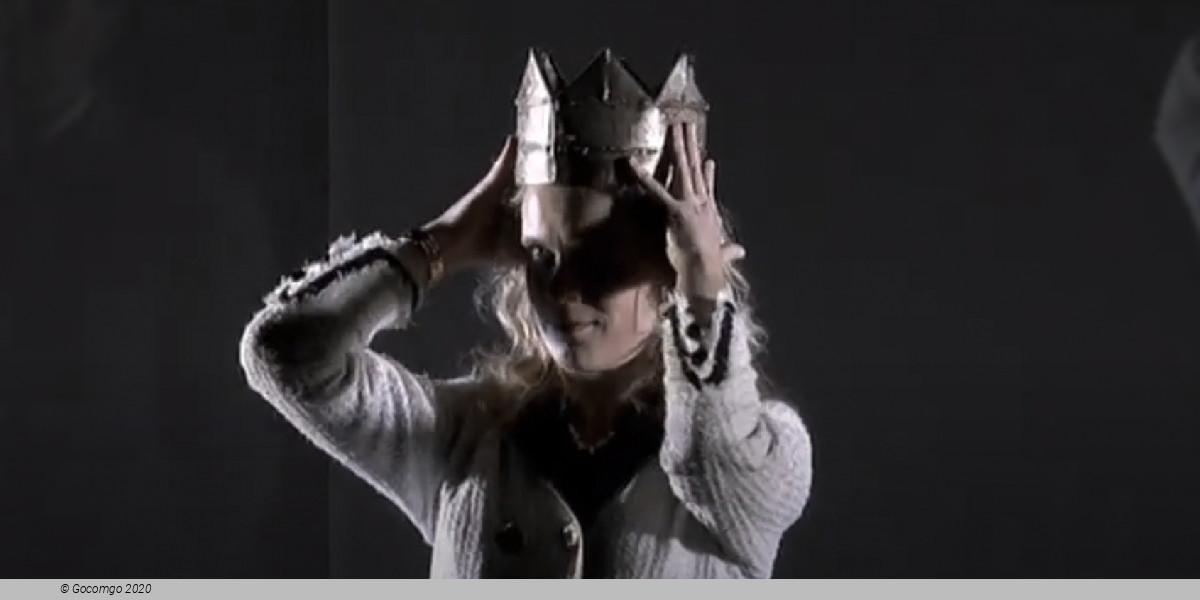
Royal Opera of Versailles (Palace of Versailles) 24 November 2023 - Mitridate, re di ponto (Opera in concert version) | GoComGo.com

Mitridate, re di ponto (Opera in concert version)

Royal Opera of Versailles (Palace of Versailles), Royal Opera, Paris, France
All photos (7)
Select date and time
8 PM

E-tickets: Print at home or at the box office of the event if so specified. You will find more information in your booking confirmation email.

You can only select the category, and not the exact seats.
If you order 2 or 3 tickets: your seats will be next to each other.
If you order 4 or more tickets: your seats will be next to each other, or, if this is not possible, we will provide a combination of groups of seats (at least in pairs, for example 2+2 or 2+3).

Important Info
Type: Opera
City: Paris, France
Starts at: 20:00
Duration: 1h 30min

E-tickets: Print at home or at the box office of the event if so specified. You will find more information in your booking confirmation email.

You can only select the category, and not the exact seats.
If you order 2 or 3 tickets: your seats will be next to each other.
If you order 4 or more tickets: your seats will be next to each other, or, if this is not possible, we will provide a combination of groups of seats (at least in pairs, for example 2+2 or 2+3).

Overview
History

Mitridate, re di Ponto (Mithridates, King of Pontus) is an early opera seria in three acts by Wolfgang Amadeus Mozart. The libretto is by Vittorio Amedeo Cigna-Santi, after Giuseppe Parini's Italian translation of Jean Racine's play Mithridate.

Synopsis

Place: around the Crimean port of Nymphæum
Time: 63BC during the conflict between Rome and Pontus

Prologue
Mitridate, having suffered a heavy defeat in battle, is presumed dead. This false news is passed by Arbate, the Governor, to Aspasia (Mitridate's fiancée) and to Farnace and Sifare (Mitridate's sons).

Act 1
Scene 1
Arbate, the governor of Nymphæum, welcomes Sifare. We learn that Sifare resents his brother, Farnace, because of his brother’s strong ties with their enemies, the Romans. Arbate pledges his loyalty to Sifare. Aspasia pleads for Sifare to help her against advances by Farnace. He accepts her plea and reveals his love for her.

Scene 2
Farnace makes his advances to Aspasia. She refuses, supported by Sifare, who protects her from his forceful brother. News arrives that Mitridate is alive and is approaching the city. Arbate urges the brothers to conceal their differences and greet their father. The brothers agree to hide their feelings for Aspasia. Farnace conspires with Marzio, Roman legionary officer, against Mitridate.

Scene 3
Mitridate arrives on the shores of Nymphæaum with Princess Ismene, daughter of his ally the King of Parthia. Mitridate wants Farnace to marry Ismene, his promised bride. Ismene is in love with Farnace but senses problems and is worried about her future. Arbate tells Mitridate that Farnace is pursuing Aspasia, not mentioning Sifare. The jealous Mitridate swears revenge on Farnace.

Act 2
Scene 1
Farnace scorns and threatens Ismene. She tells Mitridate, who suggests that she should marry Sifare. Mitridate asks Aspasia for immediate marriage but she hesitates, proving to him that she is unfaithful. Aspasia confesses love to Sifare but they both agree to part to save their honour. Sifare plans to leave and Aspasia is troubled by the conflict between love and duty.

Scene 2
Mitridate is aware of Farnace's plot against him with the Romans; he plans his revenge, despite Marzio’s offer of peace, and arrests Farnace to execute him. Ismene rescues the prince, who admits his treachery but implicates Sifare. Mitridate tricks Aspasia into admitting her love for Sifare and swears revenge. Aspasia and Sifare wish to die together, in fear of Mitridate’s threats.

Act 3
Scene 1
Ismene, still in love with Farnace, tries to convince Mitridate to forgive Aspasia. The Romans attack and Mitridate leaves for battle. Aspasia contemplates suicide by poison. Sifare also wants to die, and joins his father in the battle.

Scene 2
Marzio liberates Farnace and promises him the rule of Nymphæum. Farnace changes his mind, deciding to side with Mitridate.

Scene 3
Defeated, Mitridate commits suicide, avoiding captivity. Before he dies he gives his blessing to Sifare and Aspasia and forgives Farnace, who now agrees to marry Ismene. All four pledge to free the world from Rome.

Venue Info

Royal Opera of Versailles (Palace of Versailles) - Paris
Location   3 Place Léon Gambetta, Versailles

The Royal Opera of Versailles is the main theatre and opera house of the Palace of Versailles. The Royal Opera is one of the greatest works by the architect Ange-Jacques Gabriel. Inaugurated in 1770 during the reign of Louis XV, it was at the time the largest concert hall in Europe, and was also a great technical achievement and an impressive feat of decorative refinement. A theatre for monarchic and then republican life, it has hosted celebrations, shows and parliamentary debates.

Designed by Ange-Jacques Gabriel, it is also known as the Théâtre Gabriel. The interior decoration by Augustin Pajou is constructed almost entirely of wood, painted to resemble marble in a technique known as faux marble. The excellent acoustics of the opera house is at least partly due to its wooden interior.

The house is located at the northern extremity of the north wing of the palace. General public access to the theater is gained through the two-story vestibule. Some parts of the Opéra, such as the King's Loge and the King's Boudoir represent some of the earliest expressions of what would become known as the Louis XVI style.

Lully’s Persée — written in 1682, the year Louis XIV moved into the palace — inaugurated the Opéra on 16 May 1770 in celebration of the marriage of the dauphin — the future Louis XVI — to Marie Antoinette.

The Opéra Royal can serve either as a theater for opera, stage plays, or orchestral events, when it can accommodate an audience of 712 or as a ballroom when the floor of the orchestra level of the auditorium can be raised to the level of the stage. On these occasions, the Opéra can accommodate 1,200.

Important Info
Type: Opera
City: Paris, France
Starts at: 20:00
Duration: 1h 30min
Top of page