Royal Opera of Versailles (Palace of Versailles) 22 January 2023 - Cosi Fan Tutte | GoComGo.com

Cosi Fan Tutte

Royal Opera of Versailles (Palace of Versailles), Royal Opera, Paris, France
All photos (6)
Select date and time
3 PM

E-tickets: Print at home or at the box office of the event if so specified. You will find more information in your booking confirmation email.

You can only select the category, and not the exact seats.
If you order 2 or 3 tickets: your seats will be next to each other.
If you order 4 or more tickets: your seats will be next to each other, or, if this is not possible, we will provide a combination of groups of seats (at least in pairs, for example 2+2 or 2+3).

Important Info
Type: Opera
City: Paris, France
Starts at: 15:00
Acts: 2
Intervals: 1
Duration: 3h 30min
Sung in: Italian

E-tickets: Print at home or at the box office of the event if so specified. You will find more information in your booking confirmation email.

You can only select the category, and not the exact seats.
If you order 2 or 3 tickets: your seats will be next to each other.
If you order 4 or more tickets: your seats will be next to each other, or, if this is not possible, we will provide a combination of groups of seats (at least in pairs, for example 2+2 or 2+3).

Overview

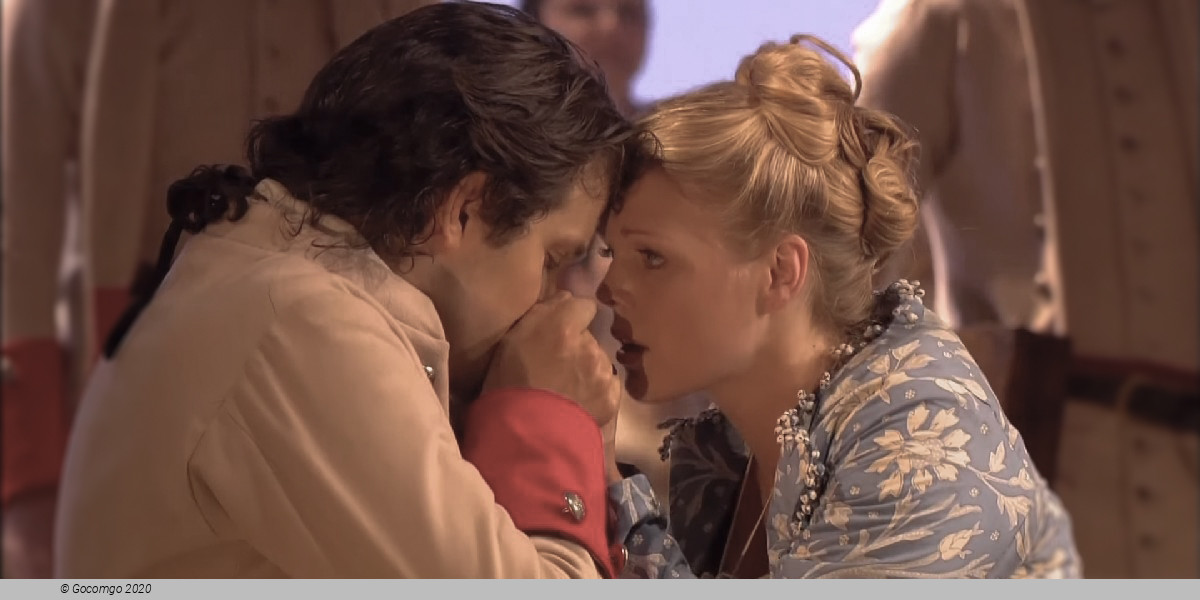
It is perhaps, along with Wagner's Tetralogy, the most famous cycle in opera: between 1786 and 1790, Mozart and Da Ponte signed their famous Trilogy comprising three major operas, The Marriage of Figaro (1786), Don Giovanni (1787), and Così fan tutte (1790). In truth, in Mozart's vast output, these three works are perhaps the most accomplished, thanks to his librettist Lorenzo Da Ponte. The latter, a key figure in Vienna, not only brought Mozart success, but also librettos tailored for the composer's genius. For music is at its most beautiful, and the three works give the listener no rest, with a succession of situations, arias, duets and sumptuous ensembles.

Their common points are very powerful: three Italian operas, in the buffa style, three "drama giocoso", intended for the troupe of the Vienna Opera; each  presents the action condensed in a single day, a guarantee of urgency and brilliance; the French influence is evident everywhere: Figaro inspired by Beaumarchais, Don Giovanni echoing the rebellious and flamboyant character illustrated by Molière, and Così in a style drawn from Marivaux and the French comic opera that was very popular in Vienna. Finally, it is the spirit of freedom that unites these three works and still speaks to us today, although in its time it was particularly daring. The heroes of the Trilogy are certainly libertines: in politics for Figaro who, like Beaumarchais, breaks social barriers and leads the game, in religion for Don Giovanni who defies God as "the great lord who has turned into an evil man" he is, and lastly in love all the time, especially in Così, whose four protagonists play a game that is as entertaining as it is imprudent....

Così fan tutte, or The School for Lovers, is the last joint opera buffa by Mozart and Da Ponte. Emperor Joseph II, who had enjoyed their Marriage of Figaro, commissioned a new work, inspired by a news item that had amused the whole of Vienna: in Trieste, two officers had swapped wives! The libretto and score were written in a month in December 1789, and the premiere took place at the end of January 1790, but the death of the Emperor interrupted the run after five performances. This Neapolitan-style comedy (the action is set in Naples!), but very much inspired by French comic opera, and in particular by Femmes Vengées composed by Philidor in 1775 to a libretto by Sedaine (which was performed in Vienna), where two women wanting to teach their husbands a lesson exchange their roles by cross-dressing... in order to seduce them and confuse them better! Twenty years later, Mozart and Da Ponte found exceptional inspiration for this comedy of manners in the spirit of Marivaux, where love, beauty and cruelty are subtly intertwined, until all hell breaks loose for some anthological moments!    

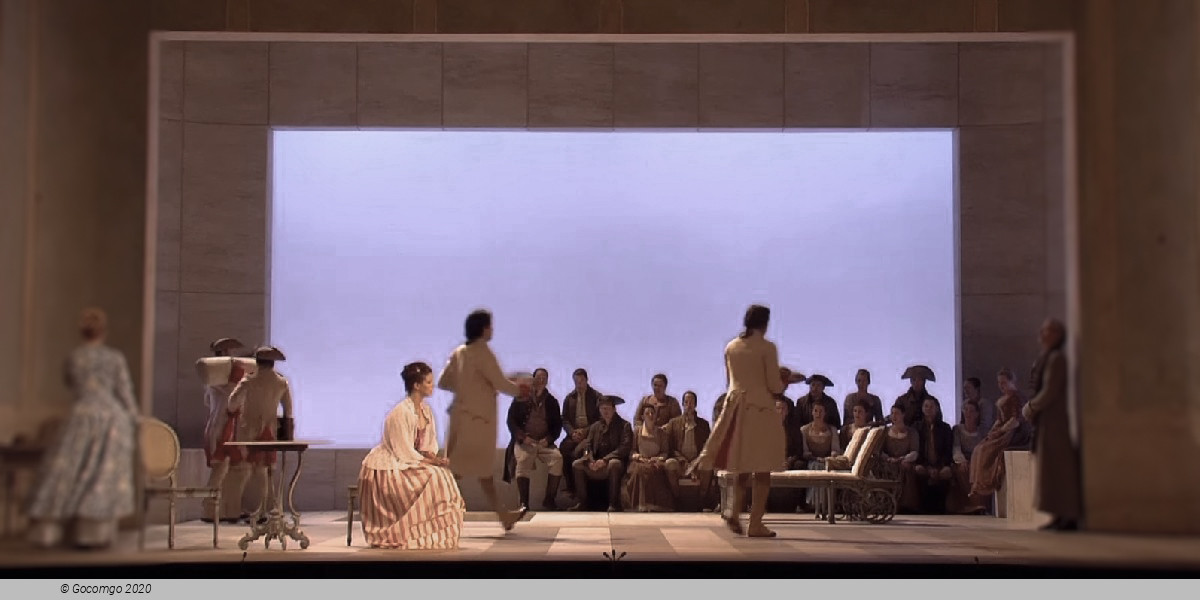
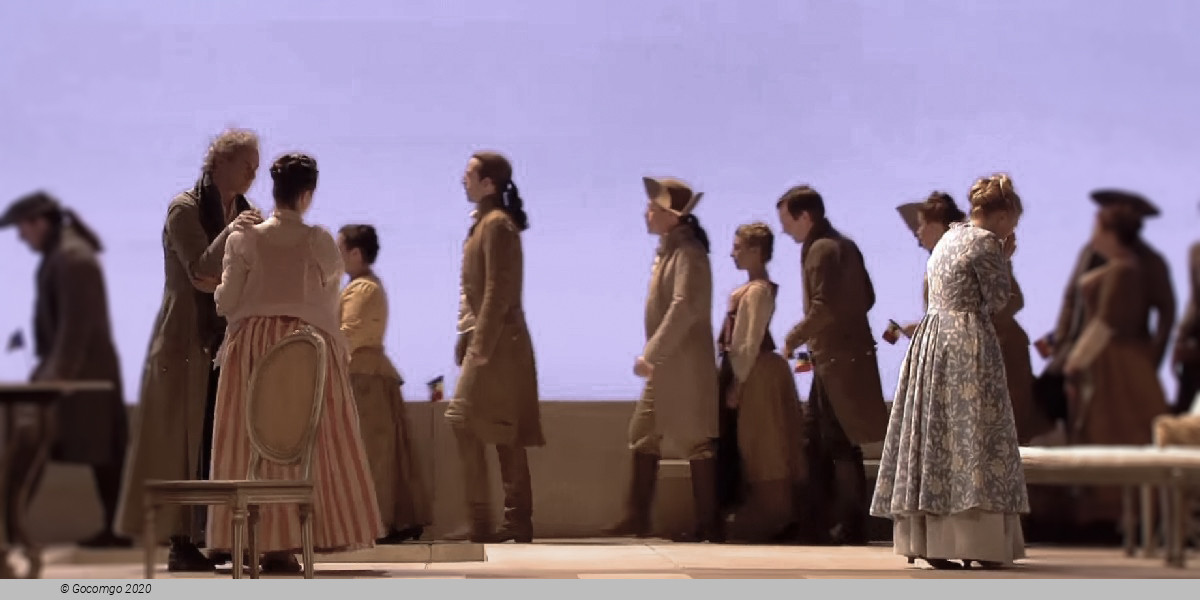
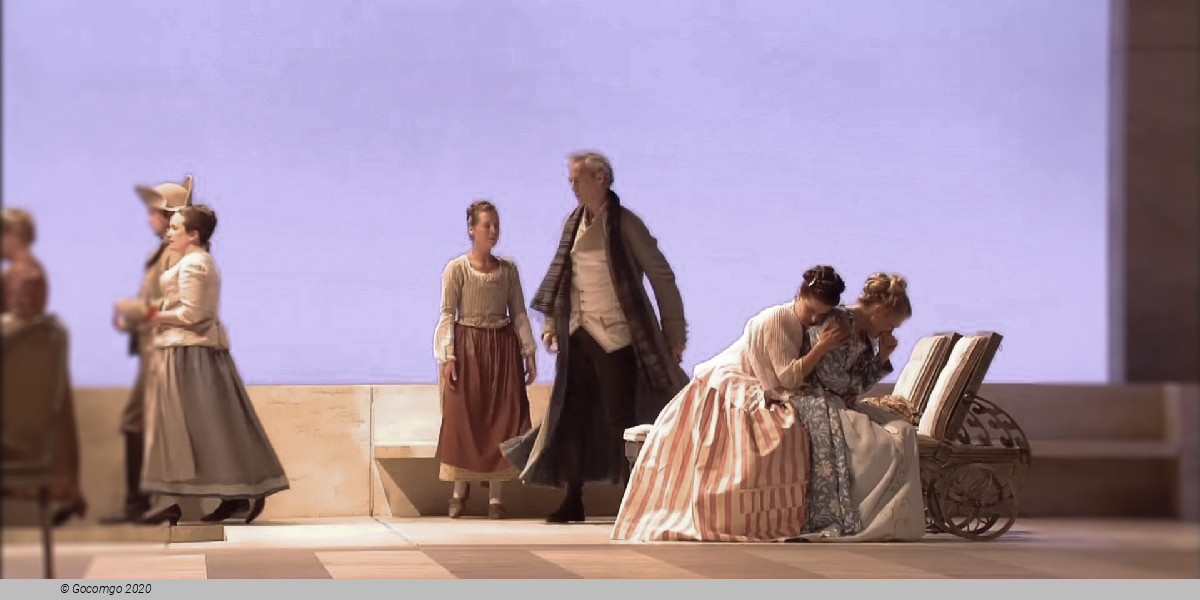
The three operas of this famous Trilogy are presented here together over three days, in the order of their composition. The characters (and their interpreters) travel from one work to the next, as so many bonds of love and power run through these three emblematic operas, to the point of imagining that they could be three acts of an exceptional whole. In any case, this is the vision selected by Ivan Alexander and Marc Minkowski, in the flexible set of trestles and sails designed by Antoine Fontaine for the stage of the Drottningholm Historical Theatre and the Royal Opera of Versailles. The great challenge of this "complete" project is for the singers to have nearly 9 hours of music in their heads and in their voices, without being able to rehearse or rest between each evening... The ace team brought together for this project with the Musiciens du Louvre, will bring it to a climax! And the challenge for the spectator is obviously here, to see the three operas in three successive days, to be more than ever dazzled by an absolute concentrate of Mozart’s genius!

Original production : an  Opéra Royal / Château de Versailles Spectacles, Drottningholms Slottsteater coproduction
Coproduction of the Trilogie : Opéra National de Bordeaux, Fundació del Gran Teatre del Liceu, Opéra Royal / Château de Versailles Spectacles

History
Premiere of this production: 26 January 1790, Burgtheater, Vienna

Così fan tutte, ossia La scuola degli amanti (All Women Do It, or The School for Lovers), is an Italian-language opera buffa in two acts by Wolfgang Amadeus Mozart first performed on 26 January 1790 at the Burgtheater in Vienna, Austria. The libretto was written by Lorenzo Da Ponte who also wrote Le nozze di Figaro and Don Giovanni.

Synopsis

Mozart and Da Ponte use the theme of "fiancée swapping", which dates back to the 13th century; notable earlier versions are found in Boccaccio's Decameron and Shakespeare's play Cymbeline. Elements from Shakespeare's The Taming of the Shrew are also present. Furthermore, it incorporates elements of the myth of Procris as found in Ovid's Metamorphoses, vii.

Place: Naples
Time: the 18th century

Act 1
Scene 1: A coffeehouse

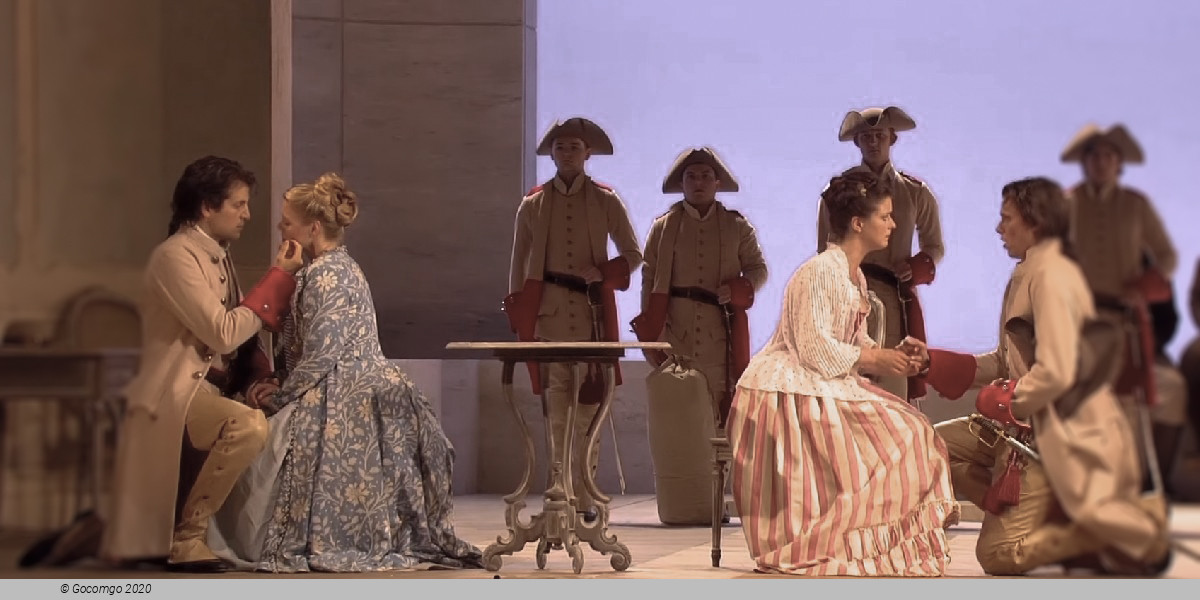
In a cafe, Ferrando and Guglielmo (two officers) express certainty that their fiancées (Dorabella and Fiordiligi, respectively) will be eternally faithful. Don Alfonso expresses skepticism and claims that there is no such thing as a faithful woman. He lays a wager with the two officers, claiming he can prove in a day's time that those two, like all women, are fickle. The wager is accepted: the two officers will pretend to have been called off to war; soon thereafter they will return in disguise and each attempt to seduce the other's lover. The scene shifts to the two women, who are praising their men (duet: "Ah guarda sorella"—"Ah look sister"). Alfonso arrives to announce the bad news: the officers have been called off to war. Ferrando and Guglielmo arrive, brokenhearted, and bid farewell (quintet: "Sento, o Dio, che questo piede è restio"—"I feel, oh God, that my foot is reluctant"). As the boat with the men sails off to sea, Alfonso and the sisters wish them safe travel (trio: "Soave sia il vento"—"May the wind be gentle"). Alfonso, left alone, gloatingly predicts that the women (like all women) will prove unfaithful (arioso: "Oh, poverini, per femmina giocare cento zecchini?"—"Oh, poor little ones, to wager 100 sequins on a woman").

Scene 2: A room in the sisters' home

Despina, the maid, arrives and asks what is wrong. Dorabella bemoans the torment of having been left alone (aria: "Smanie implacabili"—"Torments implacable"). Despina mocks the sisters, advising them to take new lovers while their betrotheds are away (aria: "In uomini, in soldati, sperare fedeltà?"—"In men, in soldiers, you hope for faithfulness?"). After they leave, Alfonso arrives. He fears Despina will recognize the men through their disguises, so he bribes her into helping him to win the bet. The two men then arrive, dressed as mustachioed Albanians (sextet: "Alla bella Despinetta"—"Meet the pretty Despinetta"). The sisters enter and are alarmed by the presence of strange men in their home. The "Albanians" tell the sisters that they were led by love to them (the sisters). However, the sisters refuse to give in. Fiordiligi asks the "Albanians" to leave and pledges to remain faithful (aria: "Come scoglio"—"Like a rock"). The "Albanians" continue the attempt to win over the sisters' hearts, Guglielmo going so far as to point out all of his manly attributes (aria: "Non siate ritrosi"—"Don't be shy"), but to no avail. Ferrando, left alone and sensing victory, praises his love (aria: "Un'aura amorosa"—"A loving breath").

Scene 3: A garden

The sisters are still pining. Despina has asked Don Alfonso to let her take over the seduction plan. Suddenly, the "Albanians" burst in the scene and threaten to poison themselves if they are not allowed the chance to woo the sisters. As Alfonso tries to calm them, they drink the "poison" and pretend to pass out. Soon thereafter, a "doctor" (Despina in disguise) arrives on the scene and, using magnet therapy, is able to revive the "Albanians". The men, pretending to hallucinate, demand a kiss from Dorabella and Fiordiligi (whom the "Albanians" call goddesses) who stand before them. The sisters refuse, even as Alfonso and the doctor (Despina) urge them to acquiesce.

Act 2
Scene 1: The sisters' bedroom

Despina urges them to succumb to the "Albanians"' overtures (aria: "Una donna a quindici anni"—"A fifteen year old woman"). After she leaves, Dorabella confesses to Fiordiligi that she is tempted, and the two agree that a mere flirtation will do no harm and will help them pass the time while they wait for their lovers to return (duet: "Prenderò quel brunettino"—"I will take the brunette one").

Scene 2: The garden

Dorabella and the disguised Guglielmo pair off, as do the other two. The conversation is haltingly uncomfortable, and Ferrando departs with Fiordiligi. Now alone, Guglielmo attempts to woo Dorabella. She does not resist strongly, and soon she has given him a medallion (with Ferrando's portrait inside) in exchange for a heart-shaped locket (duet: "Il core vi dono"—"I give you my heart"). Ferrando is less successful with Fiordiligi (Ferrando's aria: "Ah, lo veggio"—"Ah, I see it" and Fiordiligi's aria: "Per pietà, ben mio, perdona"—"Please, my beloved, forgive"), so he is enraged when he later finds out from Guglielmo that the medallion with his portrait has been so quickly given away to a new lover. Guglielmo at first sympathises with Ferrando (aria: "Donne mie, la fate a tanti"—"My ladies, you do it to so many"), but then gloats, because his betrothed is faithful.

Scene 3: The sisters' room

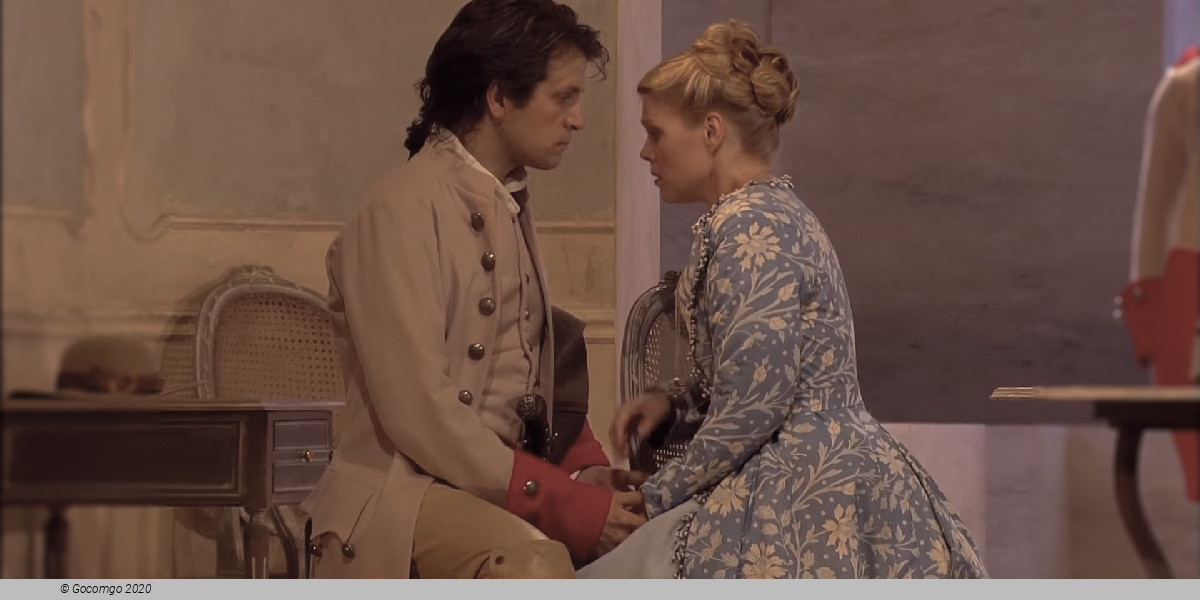
Dorabella admits her indiscretion to Fiordiligi ("È amore un ladroncello"—"Love is a little thief"). Fiordiligi, upset by this development, decides to go to the army and find her betrothed. Before she can leave, though, Ferrando arrives and continues his attempted seduction. Fiordiligi finally succumbs and falls into his arms (duet: "Fra gli amplessi"—"In the embraces"). Guglielmo is distraught while Ferrando turns Guglielmo's earlier gloating back on him. Alfonso, winner of the wager, tells the men to forgive their fiancées. After all: "Così fan tutte"—"All women are like that".

Scene 4:

The scene begins as a double wedding for the sisters and their "Albanian" grooms. Despina, in disguise as a notary, presents the marriage contract, which all sign. Directly thereafter, military music is heard in the distance, indicating the return of the officers. Alfonso confirms the sisters' fears: Ferrando and Guglielmo are on their way to the house. The "Albanians" hurry off to hide (actually, to change out of their disguises). They return as the officers, professing their love. Alfonso drops the marriage contract in front of the officers, and, when they read it, they become enraged. They then depart and return moments later, half in Albanian disguise, half as officers. Despina has been revealed to be the notary, and the sisters realize they have been duped. All is ultimately forgiven, as the entire group praises the ability to accept life's unavoidable good times and bad times.


Venue Info

Royal Opera of Versailles (Palace of Versailles) - Paris
Location   3 Place Léon Gambetta, Versailles

The Royal Opera of Versailles is the main theatre and opera house of the Palace of Versailles. The Royal Opera is one of the greatest works by the architect Ange-Jacques Gabriel. Inaugurated in 1770 during the reign of Louis XV, it was at the time the largest concert hall in Europe, and was also a great technical achievement and an impressive feat of decorative refinement. A theatre for monarchic and then republican life, it has hosted celebrations, shows and parliamentary debates.

Designed by Ange-Jacques Gabriel, it is also known as the Théâtre Gabriel. The interior decoration by Augustin Pajou is constructed almost entirely of wood, painted to resemble marble in a technique known as faux marble. The excellent acoustics of the opera house is at least partly due to its wooden interior.

The house is located at the northern extremity of the north wing of the palace. General public access to the theater is gained through the two-story vestibule. Some parts of the Opéra, such as the King's Loge and the King's Boudoir represent some of the earliest expressions of what would become known as the Louis XVI style.

Lully’s Persée — written in 1682, the year Louis XIV moved into the palace — inaugurated the Opéra on 16 May 1770 in celebration of the marriage of the dauphin — the future Louis XVI — to Marie Antoinette.

The Opéra Royal can serve either as a theater for opera, stage plays, or orchestral events, when it can accommodate an audience of 712 or as a ballroom when the floor of the orchestra level of the auditorium can be raised to the level of the stage. On these occasions, the Opéra can accommodate 1,200.

Important Info
Type: Opera
City: Paris, France
Starts at: 15:00
Acts: 2
Intervals: 1
Duration: 3h 30min
Sung in: Italian
Top of page