
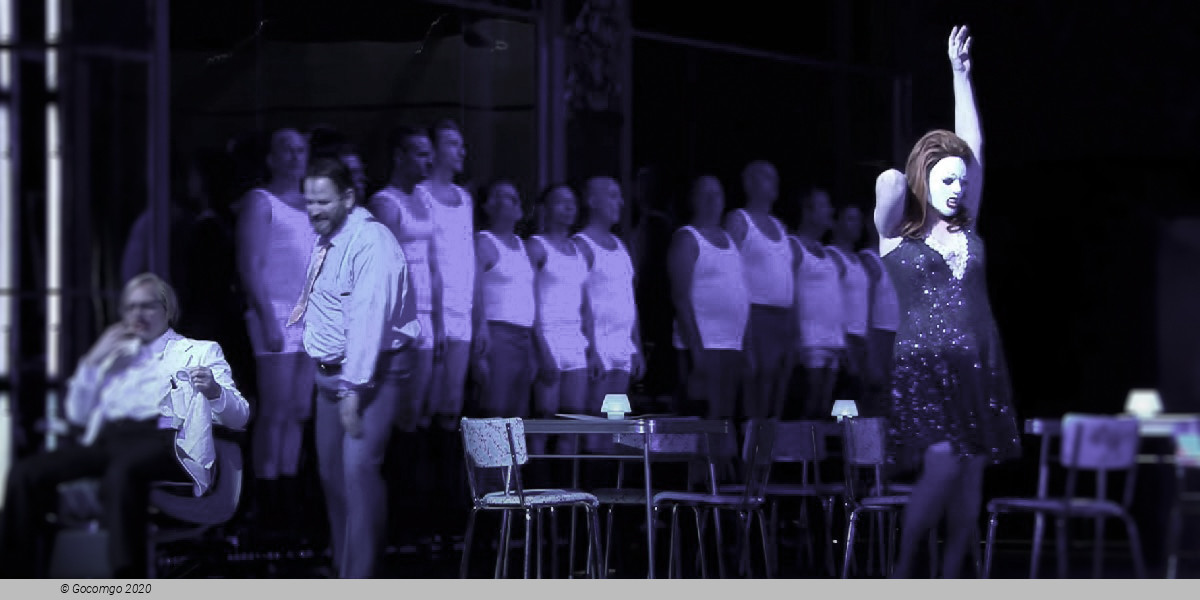
Royal Opera House (Covent Garden) 7 June 2023 - Wozzeck | GoComGo.com

Wozzeck

Royal Opera House (Covent Garden), Main Stage, London, Great Britain
All photos (7)
Select date and time
7:30 PM

E-tickets: Print at home or at the box office of the event if so specified. You will find more information in your booking confirmation email.

You can only select the category, and not the exact seats.
If you order 2 or 3 tickets: your seats will be next to each other.
If you order 4 or more tickets: your seats will be next to each other, or, if this is not possible, we will provide a combination of groups of seats (at least in pairs, for example 2+2 or 2+3).

Important Info
Type: Opera
City: London, Great Britain
Starts at: 19:30
Sung in: German
Titles in: English

E-tickets: Print at home or at the box office of the event if so specified. You will find more information in your booking confirmation email.

You can only select the category, and not the exact seats.
If you order 2 or 3 tickets: your seats will be next to each other.
If you order 4 or more tickets: your seats will be next to each other, or, if this is not possible, we will provide a combination of groups of seats (at least in pairs, for example 2+2 or 2+3).

Overview

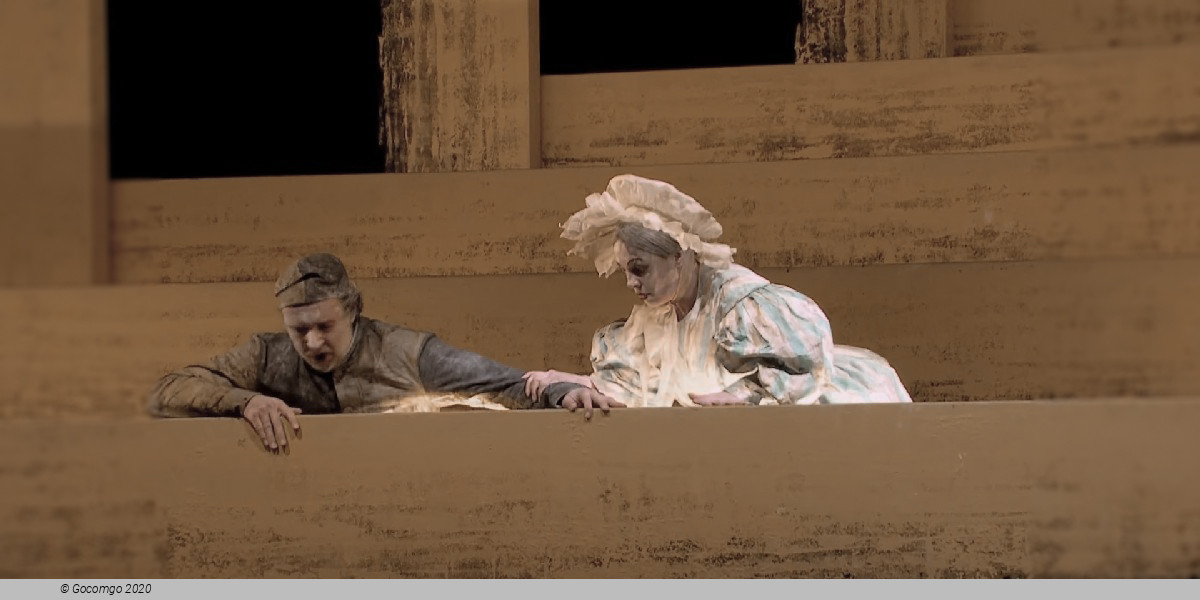
Award-winning director Deborah Warner creates a vivid new staging of Berg's opera.

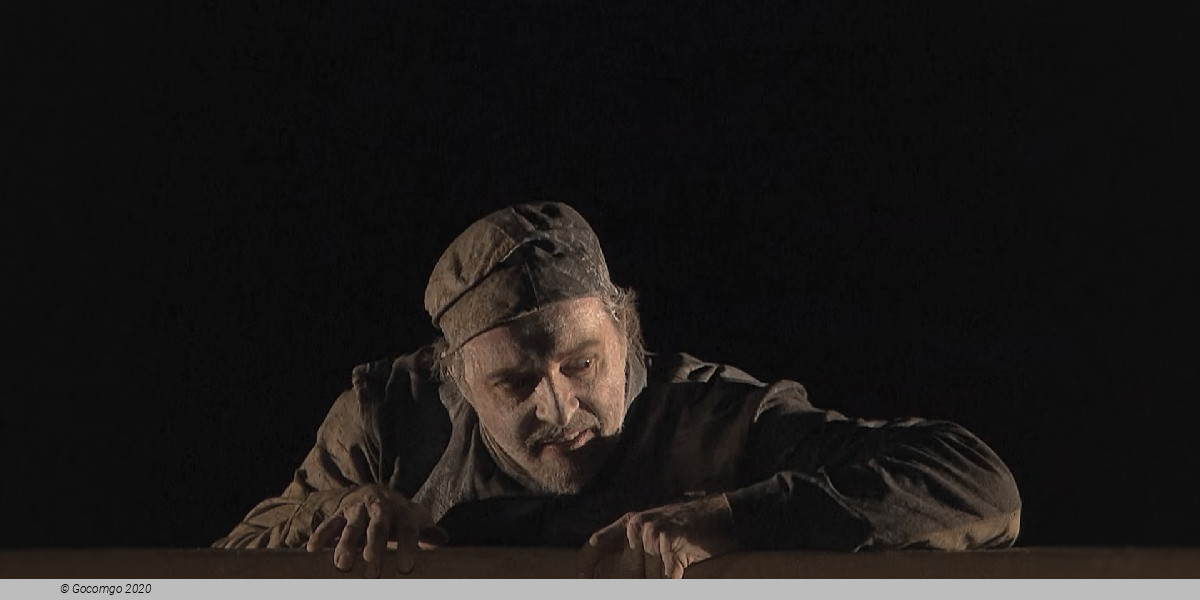
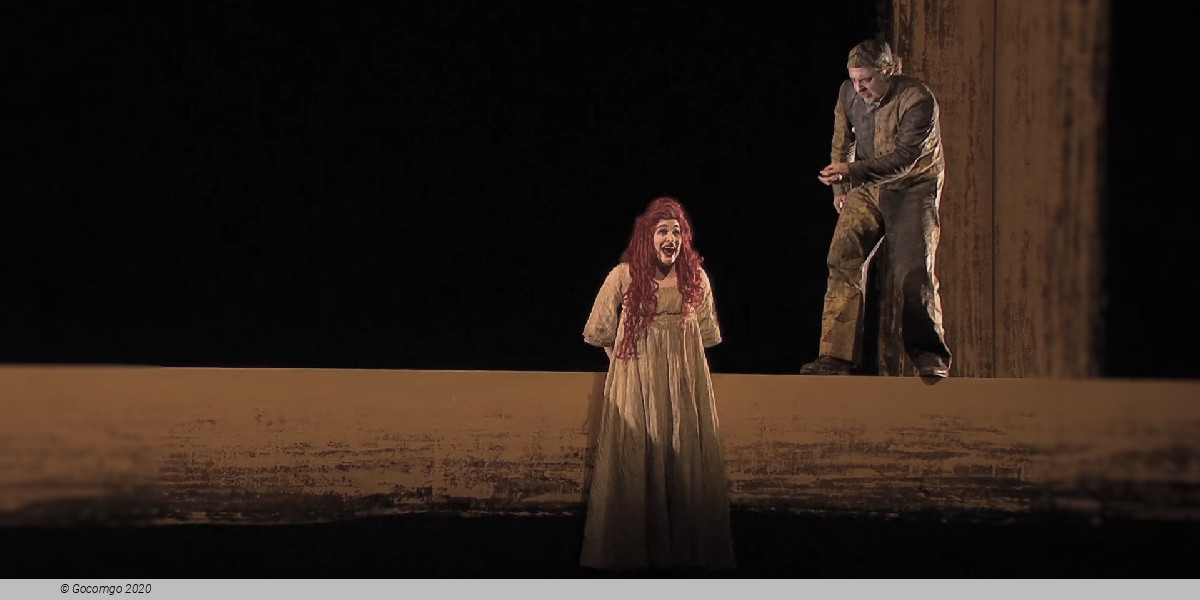
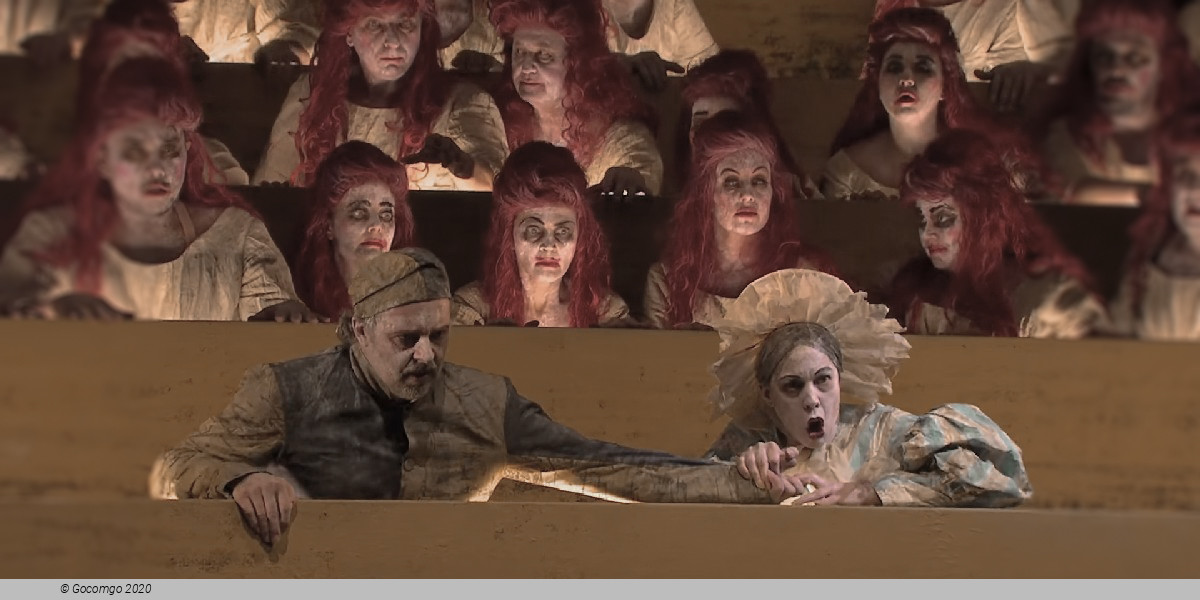
Violence seethes beneath the surface of an impoverished community. Taunted and exploited by his superiors, Wozzeck is driven to madness and revenge when he learns of his mistress’s infidelity. Trapped in a brutal, and brutalising system, who can hope for dignity?

Alban Berg’s searing operatic masterpiece caused a scandal at its 1925 premiere. Suppressed during the Nazi era, it has retained all its relevance today, telling a gripping story with monumental musical forces. Christian Gerhaher returns to Covent Garden, starring in a vivid new staging by award-winning director Deborah Warner (Peter GrimesBilly Budd).

History
Premiere of this production: 14 December 1925, Berlin State Opera

Wozzeck is the first opera by the Austrian composer Alban Berg. It was composed between 1914 and 1922 and first performed in 1925. The opera is based on the drama Woyzeck, which was left incomplete by the German playwright Georg Büchner at his death.

Synopsis

Act 1
Scene 1 (Suite)

Wozzeck is shaving the Captain, who lectures him on the qualities of a "decent man" and taunts him for living an immoral life. Wozzeck slavishly replies, "Jawohl, Herr Hauptmann" ("Yes sir, Captain") repeatedly to the Captain's abuse. But when the Captain scorns Wozzeck for having a child "without the blessing of the Church", Wozzeck protests that it is difficult to be virtuous when one is poor, and entreats the Captain to remember the lesson from the gospel, "Lasset die Kleinen zu mir kommen!" ("Suffer the little children to come unto me," Mark 10:14). The Captain is confounded by Wozzeck's theological knowledge and anxiously squeaks, "What do you mean? And what sort of curious answer is that? You make me quite confused!" Wozzeck continues the discussion by positing that it would be easy to be moral if he were wealthy and that, if the poor ever "got to Heaven, we'd all have to manufacture thunder!" The flustered Captain, unable to comprehend Wozzeck, finally concedes that he is "a decent man, only you think too much!" The Captain concludes the discussion, saying it has "quite fatigued" him and again chides Wozzeck to walk slowly before finally exiting.

Scene 2 (Rhapsody and Hunting Song)

Wozzeck and Andres are cutting sticks as the sun is setting. Wozzeck has frightening visions and Andres tries unsuccessfully to calm him.

Scene 3 (March and Lullaby)

A military parade passes by outside Marie's room. Margret taunts Marie for flirting with the soldiers. Marie shuts the window and sings a lullaby to her son. Wozzeck then comes by and tells Marie of the terrible visions he has had, promptly leaving without seeing their son, much to Marie's dismay. She laments being poor.

Scene 4 (Passacaglia)

The Doctor scolds Wozzeck for not following his instructions regarding diet and behavior. But when the Doctor hears of Wozzeck's mental aberrations, he is delighted and congratulates himself on the success of his experiment.

Scene 5 (Rondo)

Marie admires the Drum Major outside her room. He makes advances on her, which she first rejects but then accepts after a short struggle.

Act 2
Scene 1 (Sonata-Allegro)

Marie is telling her child to go to sleep while admiring earrings the Drum Major gave her. She is startled when Wozzeck arrives. He asks where she got the earrings, and she says she found them. Though not convinced, Wozzeck gives her some money and leaves. Marie chastises herself for her behavior.

Scene 2 (Fantasia and Fugue on 3 Themes)

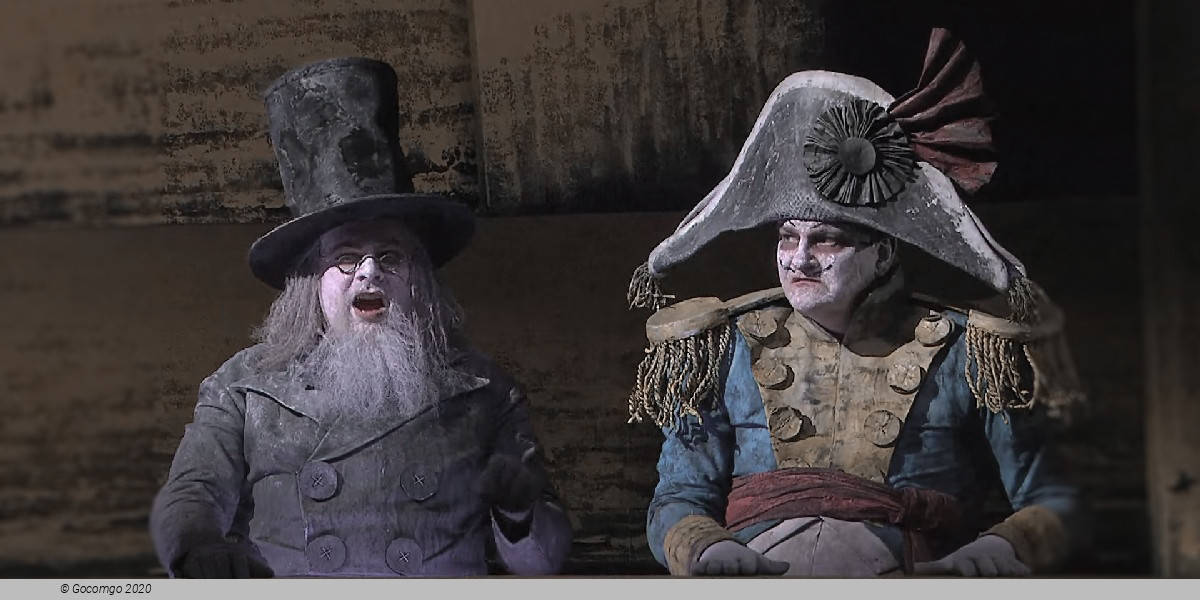
The Doctor rushes by the Captain in the street, who urges him to slow down. The Doctor then proceeds to scare the Captain by speculating about what afflictions he may have. When Wozzeck comes by, they insinuate that Marie is being unfaithful to him.

Scene 3 (Largo)

Wozzeck confronts Marie, who does not deny his suspicions. Enraged, Wozzeck is about to hit her when she stops him, saying even her father never dared lay a hand on her. Her statement "better a knife in my belly than your hands on me" plants in Wozzeck's mind the idea for his revenge.

Scene 4 (Scherzo)

Among a crowd, Wozzeck sees Marie dancing with the Drum Major. After a brief hunter's chorus, Andres asks Wozzeck why he is sitting by himself. An Apprentice delivers a drunken sermon, then an Idiot approaches Wozzeck and cries out that the scene is "Lustig, lustig...aber es riecht ...Ich riech, ich riech Blut!" ("joyful, joyful, but it reeks...I smell, I smell blood").

Scene 5 (Rondo)

In the barracks at night, Wozzeck, unable to sleep, is keeping Andres awake. The Drum Major comes in, intoxicated, and rouses Wozzeck out of bed to fight with him.

Act 3
Scene 1 (Invention on a Theme)

In her room at night, Marie reads to herself from the Bible. She cries out that she wants forgiveness.

Scene 2 (Invention on a Single Note (B))

Wozzeck and Marie are walking in the woods by a pond. Marie is anxious to leave, but Wozzeck restrains her. As a blood-red moon rises, Wozzeck says that if he can't have Marie, no one else can, and stabs her.

Scene 3 (Invention on a Rhythm)

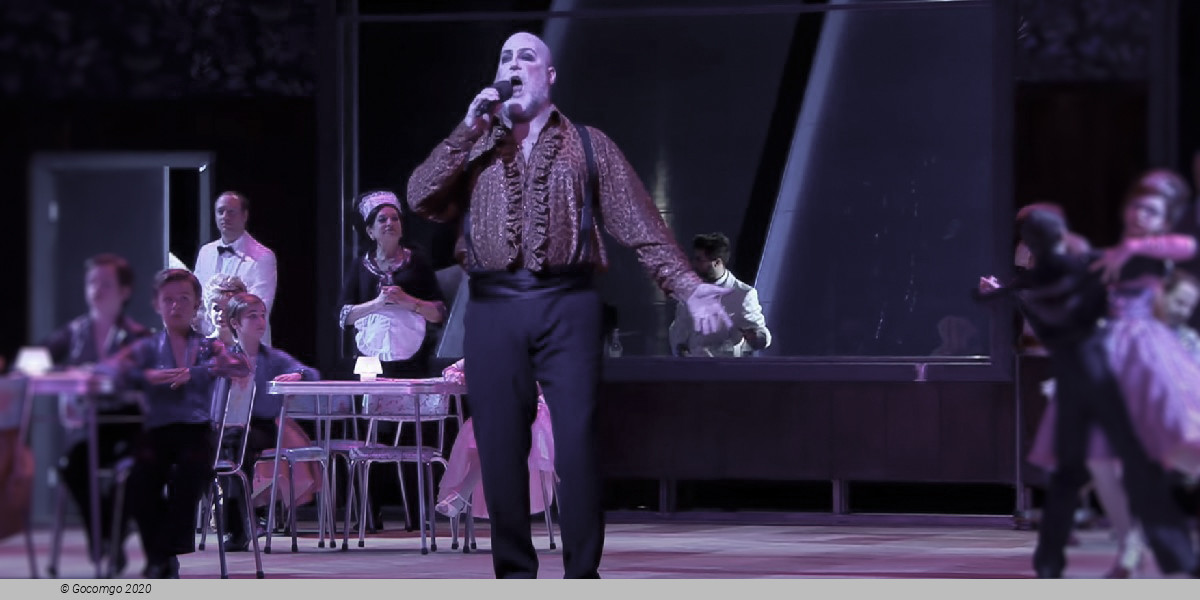
People are dancing in a tavern. Wozzeck enters, and upon seeing Margret, dances with her and pulls her onto his lap. He insults her, and then asks her to sing him a song. She sings, but then notices blood on his hand and elbow; everyone begins shouting at him, and Wozzeck, agitated and obsessed with the blood, rushes out of the tavern.

Scene 4 (Invention on a Hexachord)

Having returned to the murder scene, Wozzeck becomes obsessed with the thought that the knife he killed Marie with will incriminate him, and throws it into the pond. When the blood-red moon appears again, Wozzeck, fearing that he has not thrown the knife far enough from shore and also wanting to wash away the blood staining his clothing and hands, wades into the pond and drowns. The Captain and the Doctor, passing by, hear Wozzeck moaning and rush off in fright.

Interlude (Invention on a Key (D minor))

This interlude leads to the finale.

Scene 5 (Invention on an Eighth-Note moto perpetuo, quasi toccata)

The next morning, children are playing in the sunshine. The news spreads that Marie's body has been found, and they all run off to see, except for Marie's son, who after an oblivious moment, follows after the others.

Venue Info

Royal Opera House (Covent Garden) - London
Location   Bow St, Covent Garden

The Royal Opera House (ROH) is an opera house and major performing arts venue in London and Great Britain. It is the home of The Royal Opera, The Royal Ballet, and the Orchestra of the Royal Opera House.

The large building is often referred to as simply "Covent Garden", after a previous use of the site of the opera house's original construction in 1732. It is the home of The Royal Opera, The Royal Ballet, and the Orchestra of the Royal Opera House. Originally called the Theatre Royal, it served primarily as a playhouse for the first hundred years of its history. In 1734, the first ballet was presented. A year later, Handel's first season of operas began. Many of his operas and oratorios were specifically written for Covent Garden and had their premieres there.

The current building is the third theatre on the site following disastrous fires in 1808 and 1856. The façade, foyer, and auditorium date from 1858, but almost every other element of the present complex dates from an extensive reconstruction in the 1990s. The main auditorium seats 2,256 people, making it the third largest in London, and consists of four tiers of boxes and balconies and the amphitheatre gallery. The proscenium is 12.20 m wide and 14.80 m high. The main auditorium is a Grade I listed building.

The Royal Opera, under the direction of Antonio Pappano, is one of the world’s leading opera companies. Based in the iconic Covent Garden theatre, it is renowned both for its outstanding performances of traditional opera and for commissioning new works by today’s leading opera composers, such as Harrison Birtwistle, Mark-Anthony Turnage and Thomas Adès.

The Royal Ballet is one of the world’s greatest ballet companies. Under the directorship of Kevin O’Hare, the Company unites tradition and innovation in world-class performances at our Covent Garden home.

The Company’s extensive repertory embraces 19th-century classics, the singular legacy of works by Founder Choreographer Frederick Ashton and Principal Choreographer Kenneth MacMillan and a compelling new canon by Resident Choreographer Wayne McGregor and Artistic Associate Christopher Wheeldon.

The Orchestra performs in concerts of their own, including performances at the Royal Opera House with Antonio Pappano. They have also performed at venues worldwide including Symphony Hall (Birmingham), Cadogan Hall, the Vienna Konzerthaus and on tour with The Royal Opera.

Members of the Orchestra play an active role in events across the Royal Opera House, including working with the Learning and Participation teams. The Orchestra accompanies performances that are streamed all over the world, including through cinema screenings and broadcasts. They appear on many CDs and DVDs including Pappano’s acclaimed studio recording of Tristan und Isolde with Plácido Domingo and Nina Stemme.

The Orchestra of the Royal Opera House was founded in 1946 when the Royal Opera House reopened after World War II.

Important Info
Type: Opera
City: London, Great Britain
Starts at: 19:30
Sung in: German
Titles in: English
Top of page