Place: A barge on the Seine in Paris.
Time: 1910.
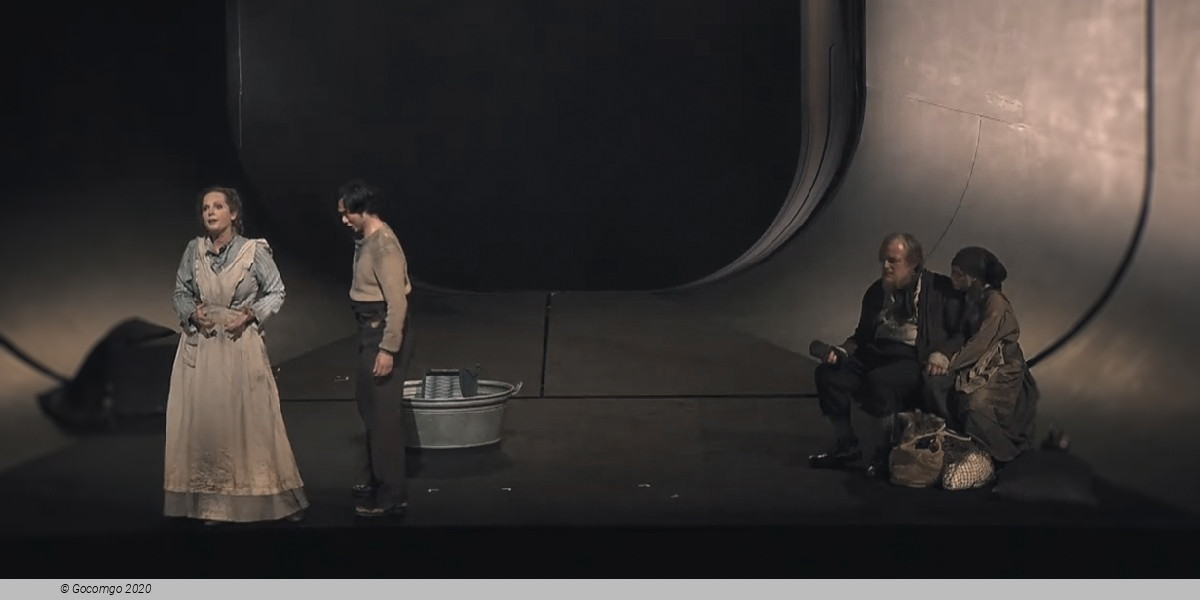
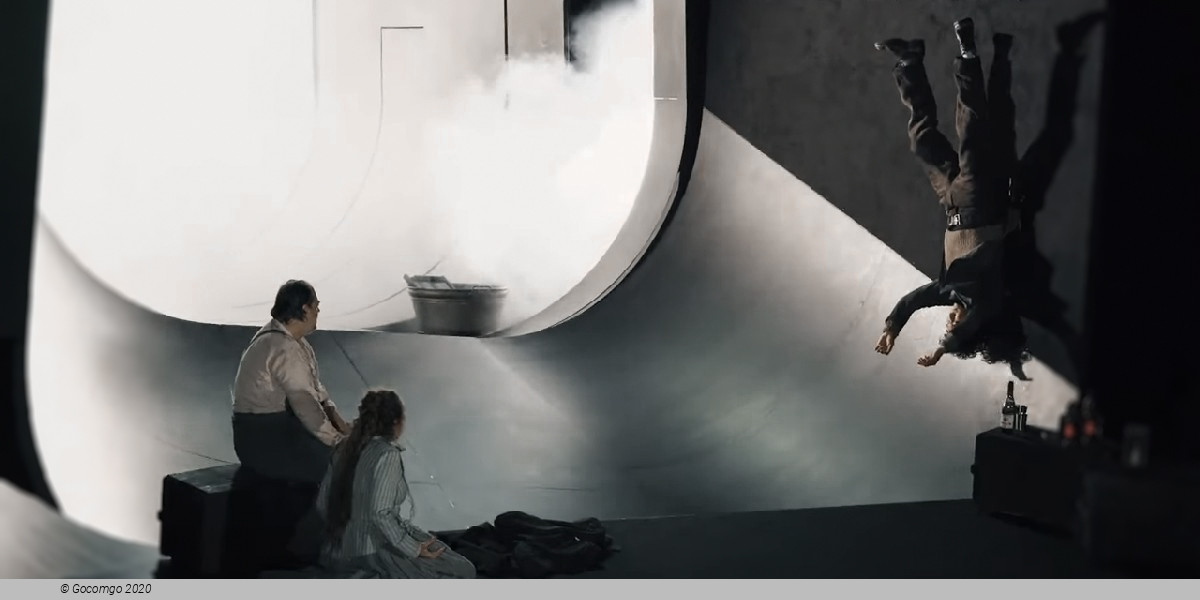
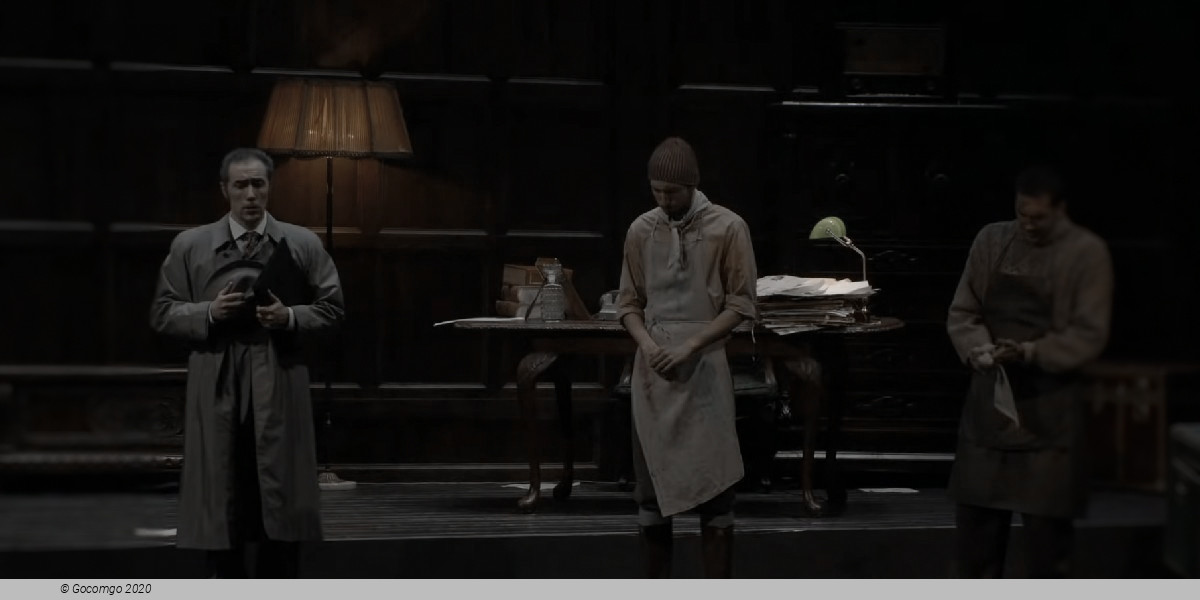
It is close to sundown in Paris, and the stevedores work unloading Michele's barge. Giorgetta, Michele's wife, asks her husband if she can bring wine to the workers. He agrees but does not join them because she refuses his kiss. The stevedores start dancing to the music of a nearby organ grinder and one of them steps on Giorgetta's foot. Luigi, a stevedore, dances with her, and it is evident that there is something between them. Upon hearing of Michele's return the stevedores' gathering breaks up.
Work is getting scarce and Giorgetta and Michele discuss which of the stevedores should be dismissed; she prefers that it be anyone other than Luigi despite him being Michele's first choice. Soon the conversation turns into a fight. La Frugola enters, looking for Talpa, her husband and one of the stevedores. She shows everyone the fruits of her scavenging in Paris and scolds the men for their drinking. Luigi laments his lot in life, and La Frugola sings of her wish to one day buy a house in the country where she and her husband can retire. Giorgetta and Luigi sing a duet about the town where they were both born.
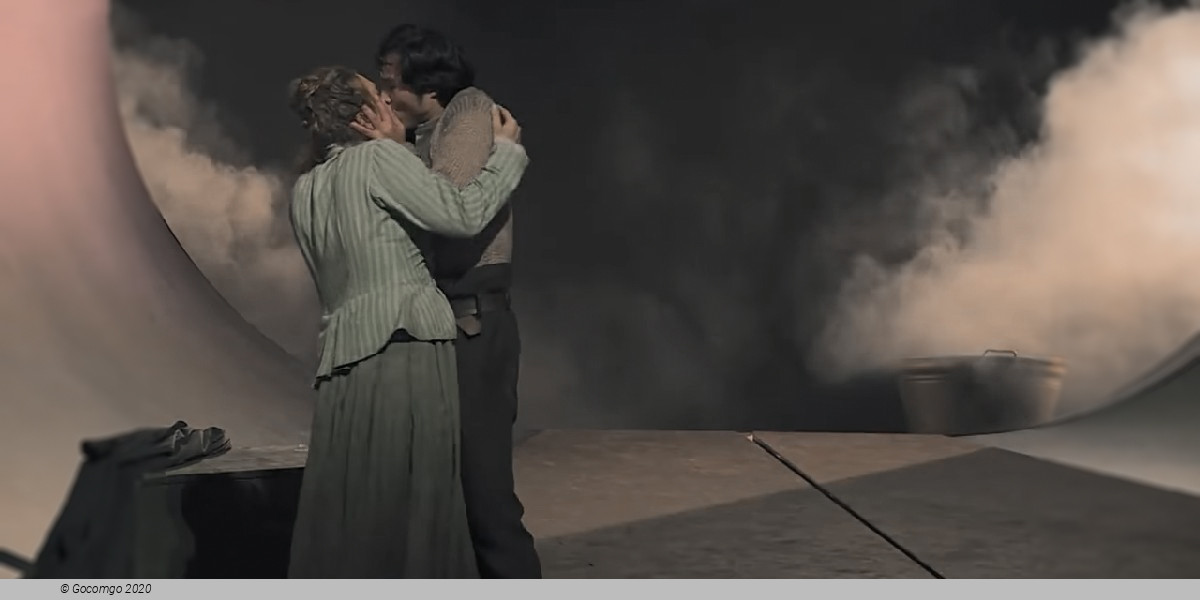
The stevedores depart except for Luigi, who asks Michele to dismiss him and let him off in Rouen, but Michele convinces him against this, saying there is not enough work in Rouen. When they are alone, Giorgetta asks Luigi why he requested to be dismissed; the pair acknowledge their love. They plan to meet later that evening upon the signal of a match being lit on board. By now Luigi seems determined to kill Michele and flee with Giorgetta.
Michele later reminisces with Giorgetta of the days before their child died and how he could cover the two of them under his cloak. He is distressed about being twice her age; she comforts him but she still will not kiss him, and goes off.
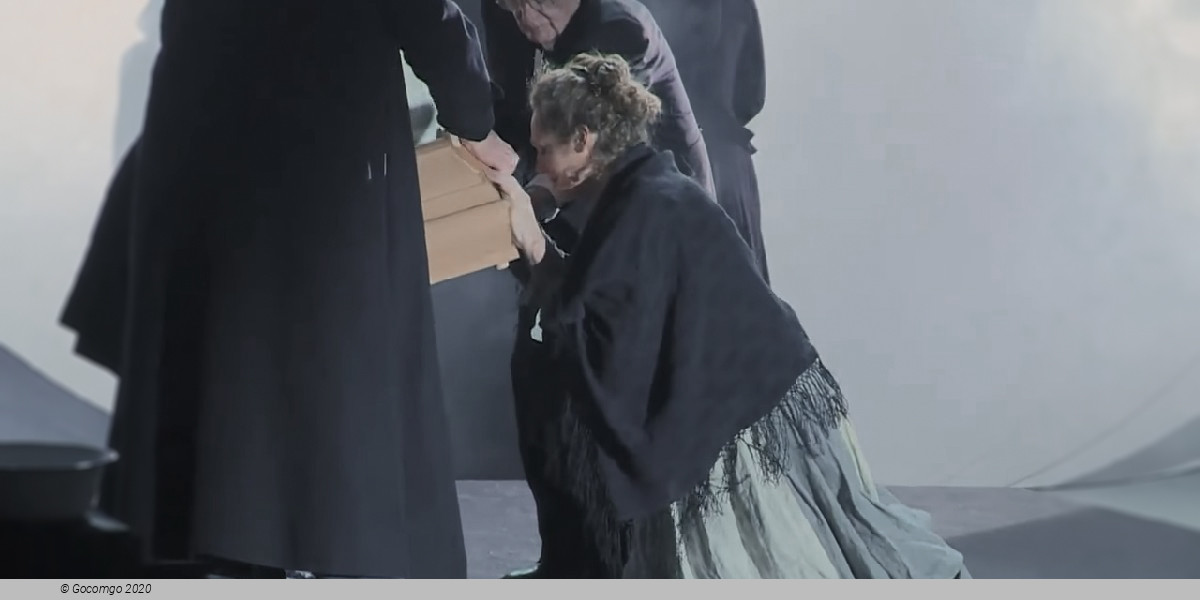
Michele wonders aloud if Giorgetta is still faithful to him and ponders who might have changed her so much. He reviews the list of men who have shared in their lives but dismisses each of them as improbable. Michele lights his pipe and Luigi, seeing it from afar, thinks that it is Giorgetta's signal. He returns to the barge and is confronted by Michele. In the ensuing fight, Michele gets the upper hand and forces Luigi to confess his affair before killing him and hiding the body under his cloak. Giorgetta returns to the barge, feigning remorse, and Michele opens wide the cloak to reveal her dead lover.
Place: A convent in Italy
Time: The latter part of the 17th century
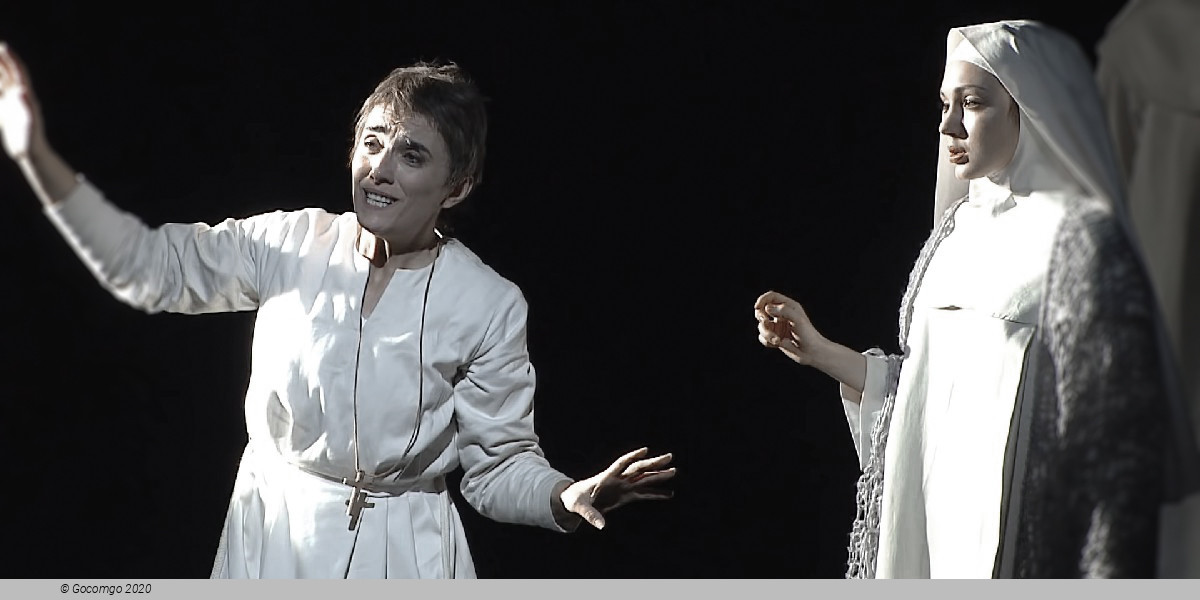
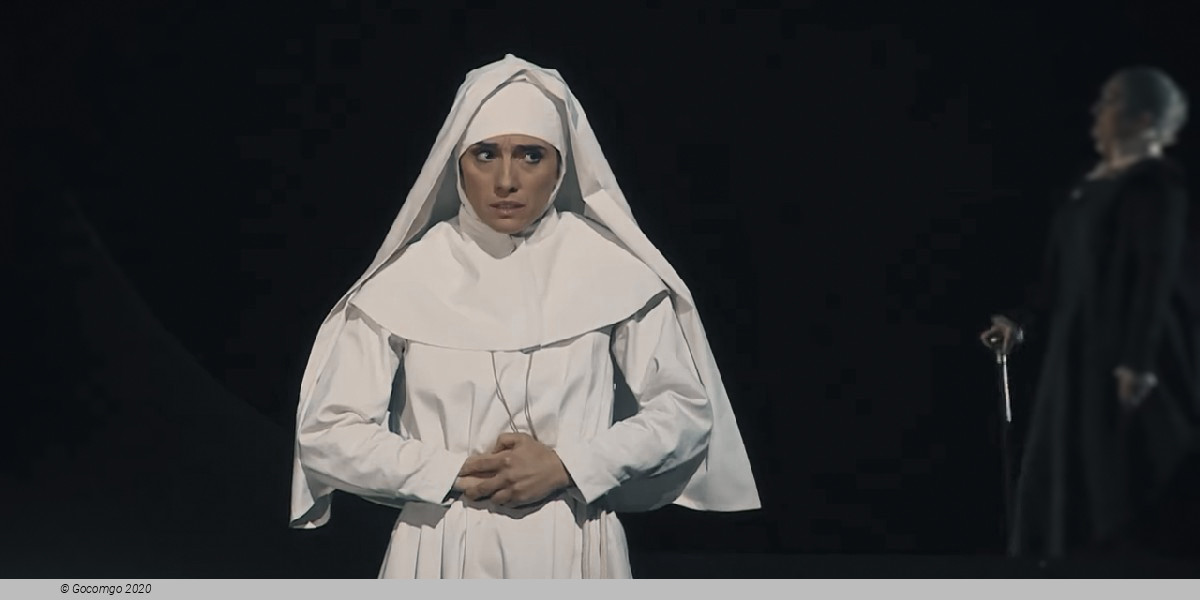
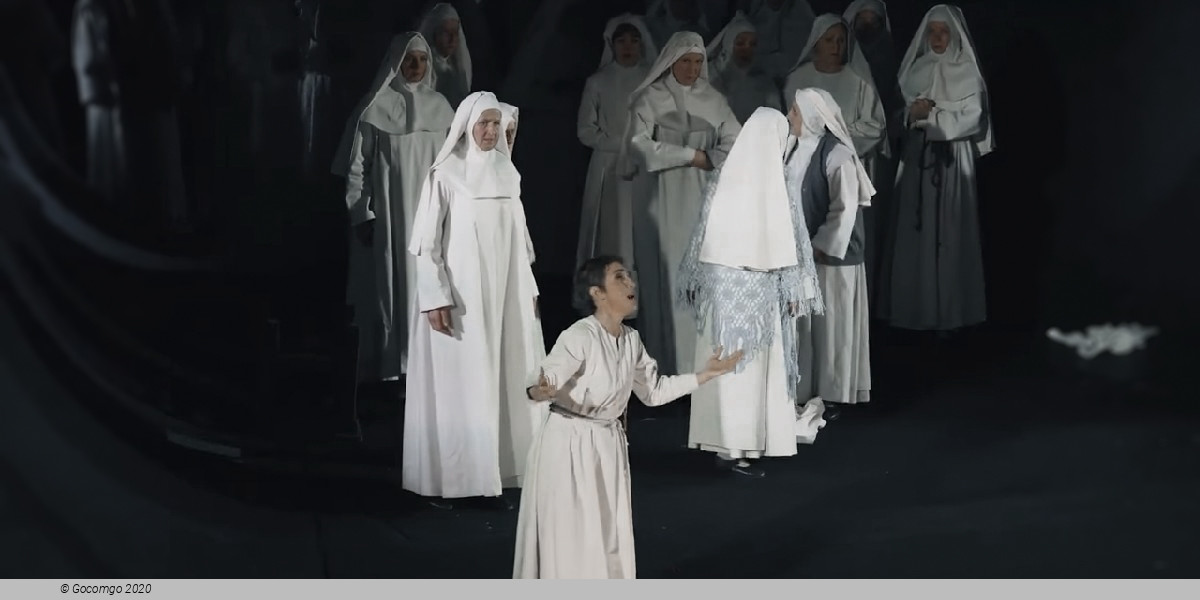
The opera opens with scenes showing typical aspects of life in the convent – all the sisters sing hymns, the Monitor scolds two lay-sisters, everyone gathers for recreation in the courtyard. The sisters rejoice because, as the mistress of novices explains, this is the first of three evenings that occur each year when the setting sun strikes the fountain so as to turn its water golden. This event causes the sisters to remember Bianca Rosa, a sister who has died. Sister Genevieve suggests they pour some of the "golden" water onto her tomb.
The nuns discuss their desires. While the Monitor believes that any desire at all is wrong, Sister Genevieve confesses that she wishes to see lambs again because she used to be a shepherdess when she was a girl, and Sister Dolcina wishes for something good to eat. Sister Angelica claims to have no desires, but as soon as she says so, the nuns begin gossiping – Sister Angelica has lied, because her true desire is to hear from her wealthy, noble family, whom she has not heard from in seven years. Rumors are that she was sent to the convent in punishment.
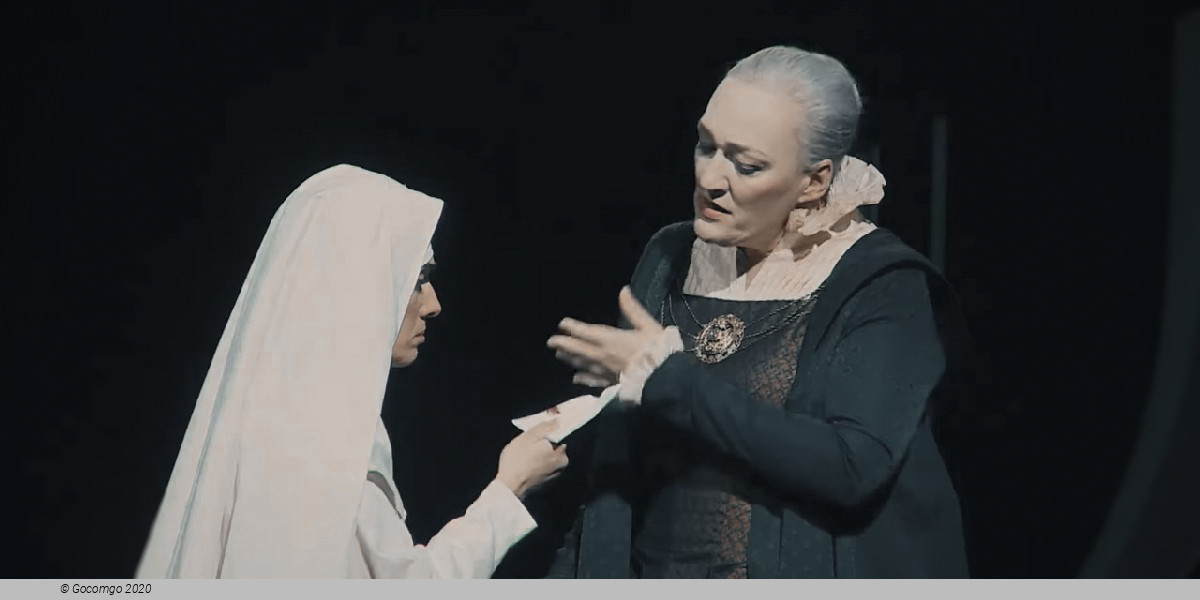
The conversation is interrupted by the Infirmary Sister, who begs Sister Angelica to make a herbal remedy, her specialty. Two tourières arrive, bringing supplies to the convent, and news that a grand coach is waiting outside. Sister Angelica becomes nervous and upset, thinking rightly that someone in her family has come to visit her. The Abbess chastises Sister Angelica for her inappropriate excitement and announces the visitor, the Princess, Sister Angelica's aunt.
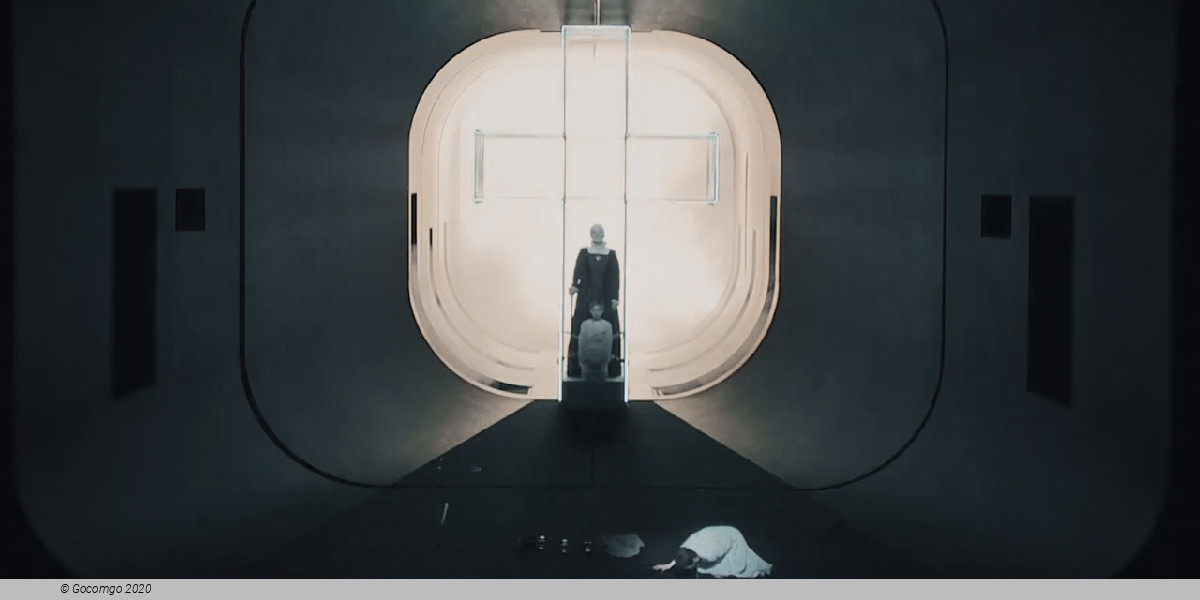
The Princess explains that Angelica's sister is to be married and that Angelica must sign a document renouncing her claim to her inheritance. Angelica replies that she has repented for her sin, but she cannot offer up everything in sacrifice to the Virgin – she cannot forget the memory of her illegitimate son, who was taken from her seven years ago. The Princess at first refuses to speak, but finally informs Sister Angelica that her son died of fever two years ago. Sister Angelica, devastated, signs the document and collapses in tears. The Princess leaves.
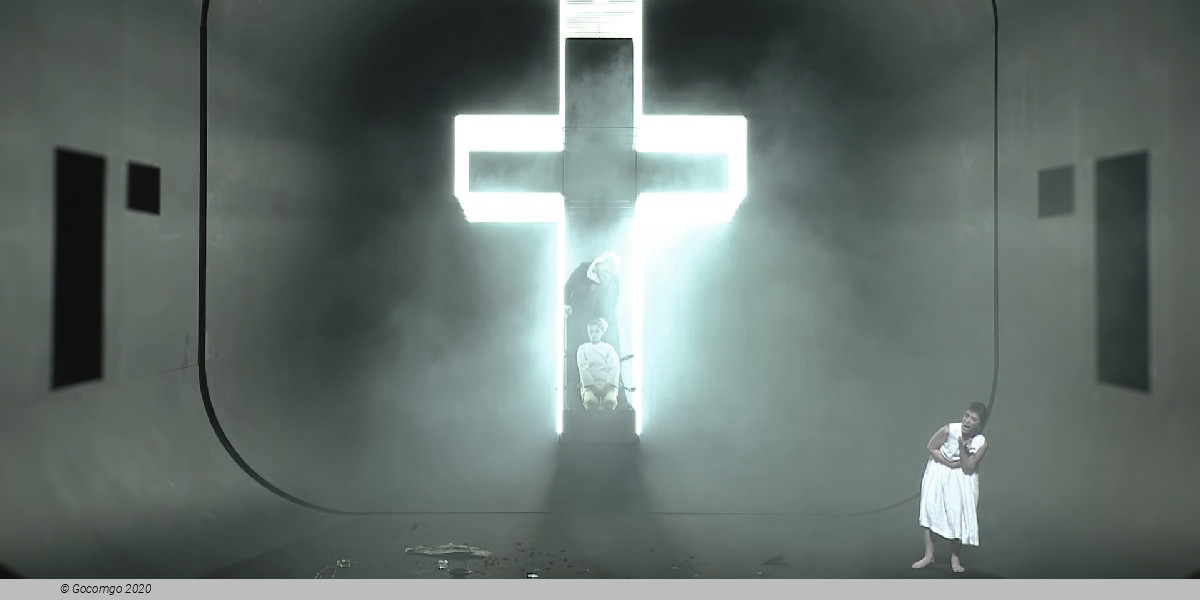
Sister Angelica is seized by a heavenly vision – she believes she hears her son calling for her to meet him in paradise. She makes a poison and drinks it, but realizes that in committing suicide, she has committed a mortal sin and has damned herself to eternal separation from her son. She begs the Virgin Mary for mercy and, as she dies, she sees a miracle: the Virgin Mary appears, along with Sister Angelica's son, who runs to embrace her.
Place: Florence
Time: 1299
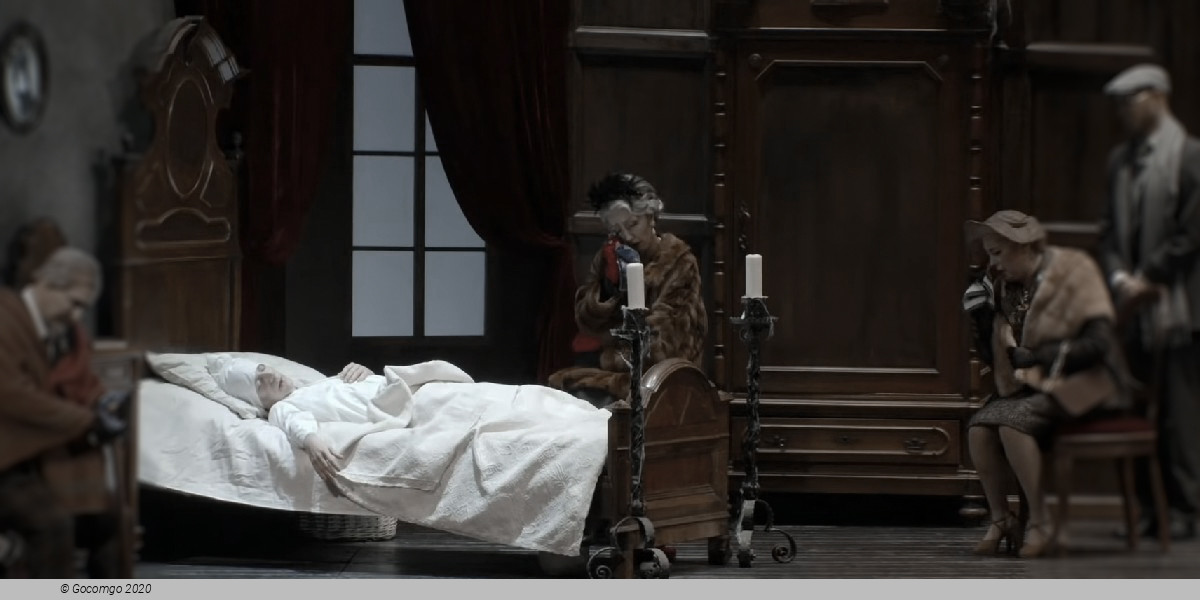
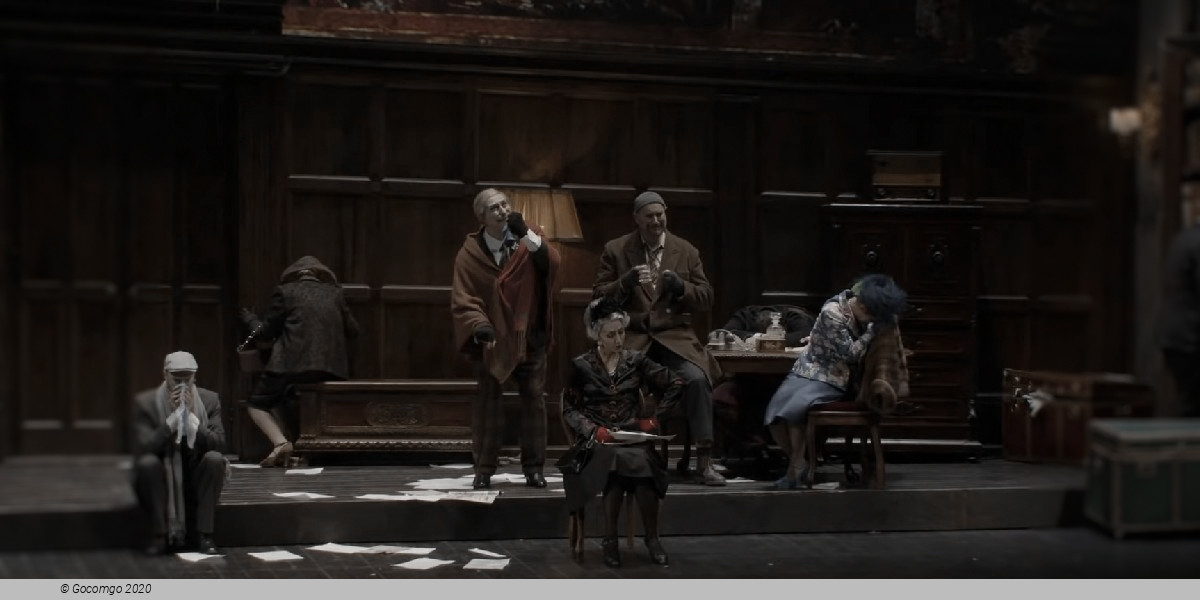
As Buoso Donati lies dead in his curtained four-poster bed, his relatives gather round to mourn his passing, but are really more interested in learning the contents of his will. Among those present are his cousins Zita and Simone, his poor-relation brother-in-law Betto, and Zita's nephew Rinuccio. Betto mentions a rumour he has heard that Buoso has left everything to a monastery; this disturbs the others and precipitates a frantic search for the will. The document is found by Rinuccio, who is confident that his uncle has left him plenty of money. He withholds the will momentarily and asks Zita to allow him to marry Lauretta, daughter of Gianni Schicchi, a newcomer to Florence. Zita replies that if Buoso has left them rich, he can marry whom he pleases; she and the other relatives are anxious to begin reading the will. A happy Rinuccio sends little Gherardino to fetch Schicchi and Lauretta.
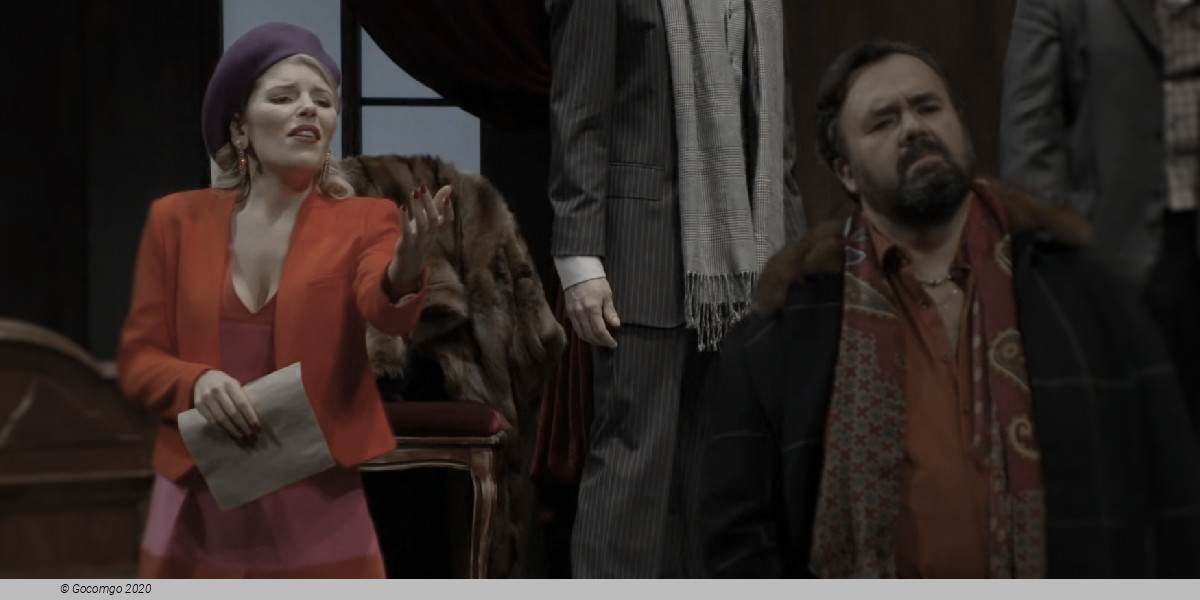
As they read, the relatives' worst fears are soon realised; Buoso has indeed bequeathed his fortune to the monastery. They break out in woe and indignation and turn to Simone, the oldest present and a former mayor of Fucecchio, but he can offer no help. Rinuccio suggests that only Gianni Schicchi can advise them what to do, but this is scorned by Zita and the rest, who sneer at Schicchi's humble origins and now say that marriage to the daughter of such a peasant is out of the question. Rinuccio defends Schicchi in an aria "Avete torto" (You're mistaken), after which Schicchi and Lauretta arrive. Schicchi quickly grasps the situation, and Rinuccio begs him for help, but Schicchi is rudely told by Zita to "be off" and take his daughter with him. Rinuccio and Lauretta listen in despair as Schicchi announces that he will have nothing to do with such people. Lauretta makes a final plea to him with "O mio babbino caro" (Oh, my dear papa), and he agrees to look at the will. After twice scrutinizing it and concluding that nothing can be done, an idea occurs to him. He sends his daughter outside so that she will be innocent of what is to follow.
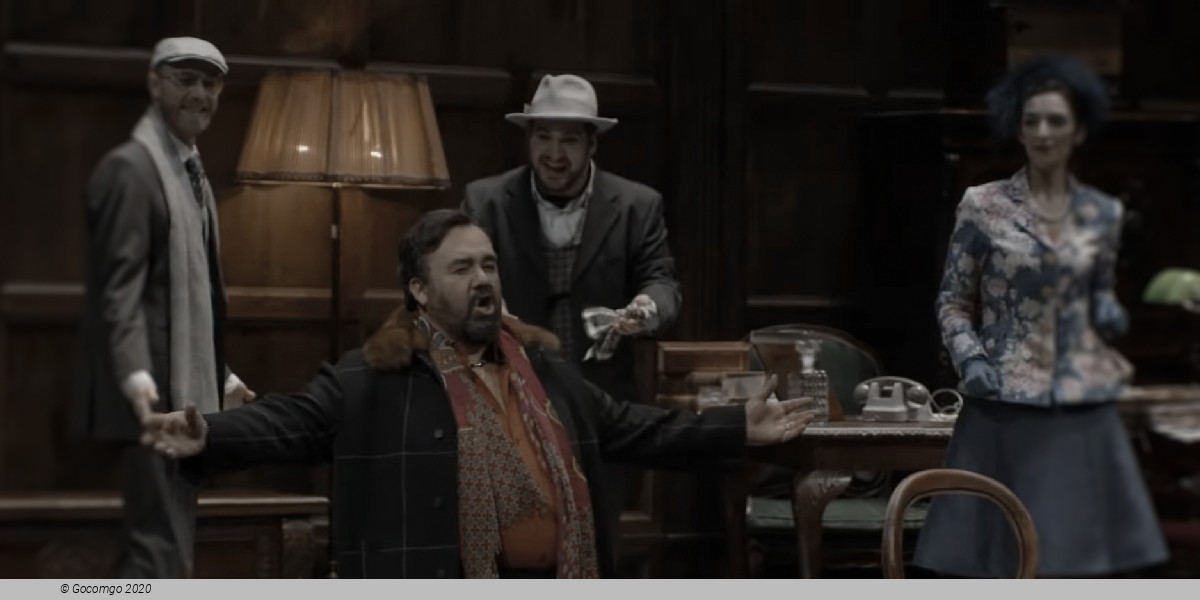
First, Schicchi establishes that no one other than those present knows that Buoso is dead. He then orders the body removed to another room. A knock announces the arrival of the doctor, Spinelloccio. Schicchi conceals himself behind the bed curtains, mimics Buoso's voice and declares that he's feeling better; he asks the doctor to return that evening. Boasting that he has never lost a patient, Spinelloccio departs. Schicchi then unveils his plan in the aria "Si corre dal notaio" (Run to the notary); having established in the doctor's mind that Buoso is still alive, Schicchi will disguise himself as Buoso and dictate a new will. All are delighted with the scheme, and importune Schicchi with personal requests for Buoso's various possessions, the most treasured of which are "the mule, the house and the mills at Signa". A funeral bell rings, and everyone fears that the news of Buoso's death has emerged, but it turns out that the bell is tolling for the death of a neighbour's Moorish servant. The relatives agree to leave the disposition of the mule, the house and the mills to Schicchi, though each in turn offers him a bribe. The women help him to change into Buoso's clothes as they sing the lyrical trio "Spogliati, bambolino" (Undress, little boy). Before taking his place in the bed, Schicchi warns the company of the grave punishment for those found to have falsified a will: exile from Florence together with the loss of a hand.
The notary arrives, and Schicchi starts to dictate the new will, declaring any prior will null and void. To general satisfaction he allocates the minor bequests, but when it comes to the mule, the house and the mills, he orders that these be left to "my devoted friend Gianni Schicchi". Incredulous, the family can do nothing while the lawyer is present, especially when Schicchi slyly reminds them of the penalties that discovery of the ruse will bring. Their outrage when the notary leaves is accompanied by a frenzy of looting as Schicchi chases them out of what is now his house.
Meanwhile, Lauretta and Rinuccio are rapt in a love duet, "Lauretta mia" - there is no bar to their marriage since Schicchi can provide a respectable dowry. Schicchi, returning, stands moved at the sight of the two lovers. He turns to the audience and asks them to agree that no better use could be found for Buoso's wealth: although the poet Dante has condemned him to hell for this trick, Schicchi asks the audience to forgive him in light of "extenuating circumstances."



 Bow St, Covent Garden