






Royal Danish Theatre 29 September 2023 - The Turn of the Screw | GoComGo.com

The Turn of the Screw

Royal Danish Theatre, The Old Stage, Copenhagen, Denmark
All photos (10)
Select date and time
8 PM

E-tickets: Print at home or at the box office of the event if so specified. You will find more information in your booking confirmation email.

You can only select the category, and not the exact seats.
If you order 2 or 3 tickets: your seats will be next to each other.
If you order 4 or more tickets: your seats will be next to each other, or, if this is not possible, we will provide a combination of groups of seats (at least in pairs, for example 2+2 or 2+3).

Important Info
Type: Opera
City: Copenhagen, Denmark
Starts at: 20:00
Intervals: 1
Duration: 2h 15min
Sung in: English
Titles in: Danish

E-tickets: Print at home or at the box office of the event if so specified. You will find more information in your booking confirmation email.

You can only select the category, and not the exact seats.
If you order 2 or 3 tickets: your seats will be next to each other.
If you order 4 or more tickets: your seats will be next to each other, or, if this is not possible, we will provide a combination of groups of seats (at least in pairs, for example 2+2 or 2+3).

Overview

Experience Benjamin Britten’s masterstroke of a horror opera at the Old Stage.

A young governess arrives at a remote estate, where she is to oversee the upbringing of two orphans on behalf of their wealthy uncle, who wishes no contact with neither the governess nor the children. 

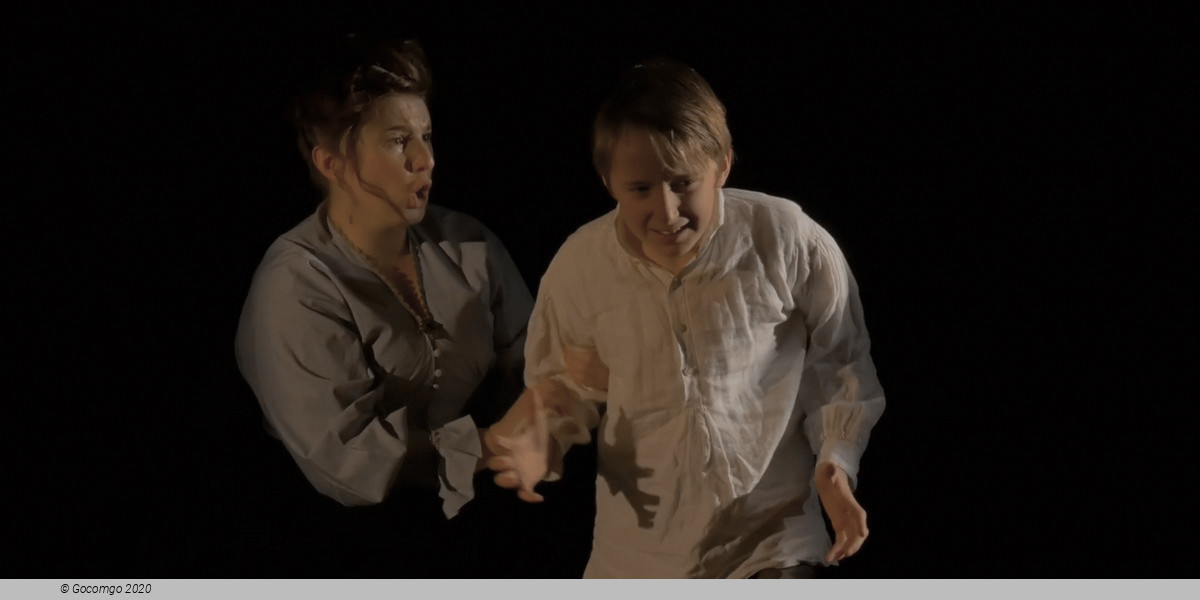
The housekeeper, Mrs. Grose, and the two children warmly welcome the young woman, who soon settles in. But during a walk in the park, she discovers that an unknown man is watching her from the estate ... Britten’s eerie opera is based on the 1898 novella by Henry James in which hidden demons and unredeemed souls lurk beneath the surface in the form of a ghost or two.

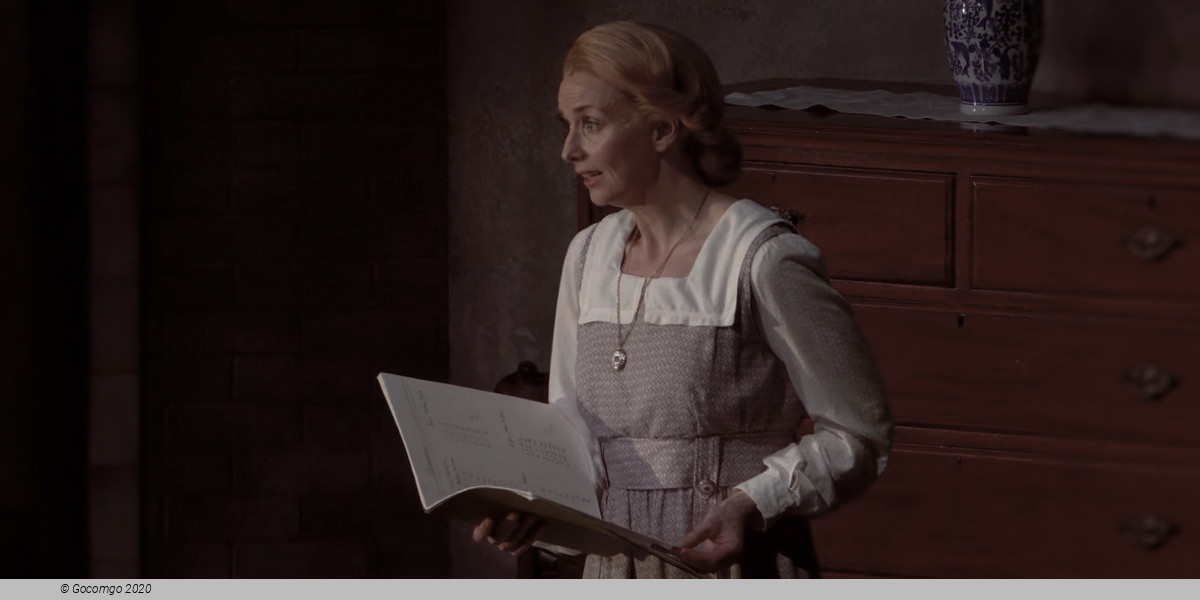
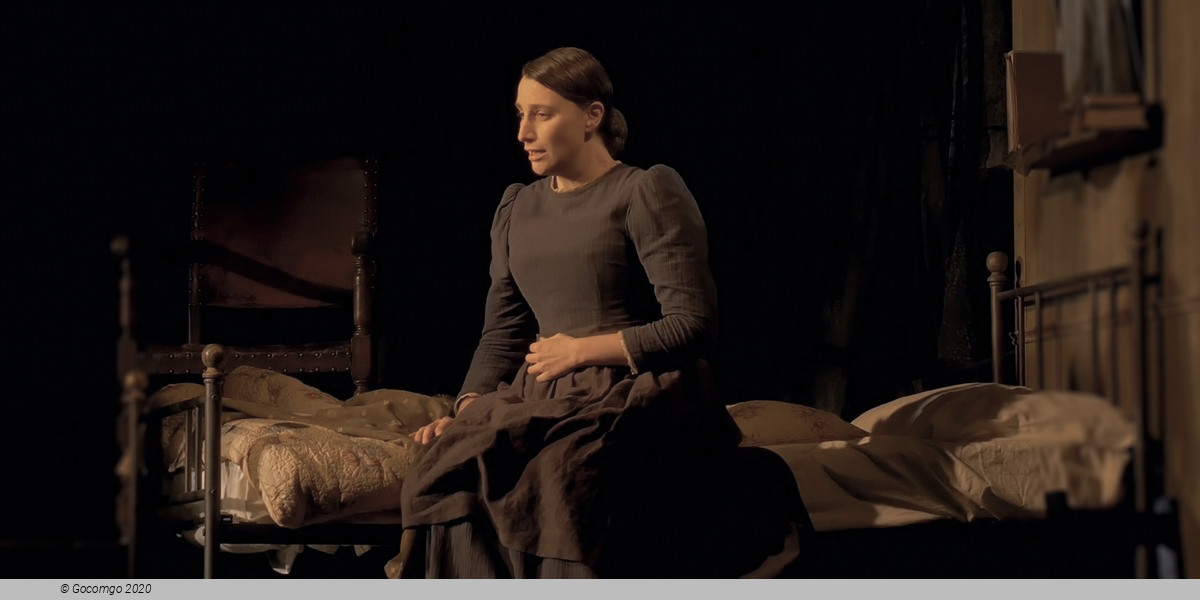
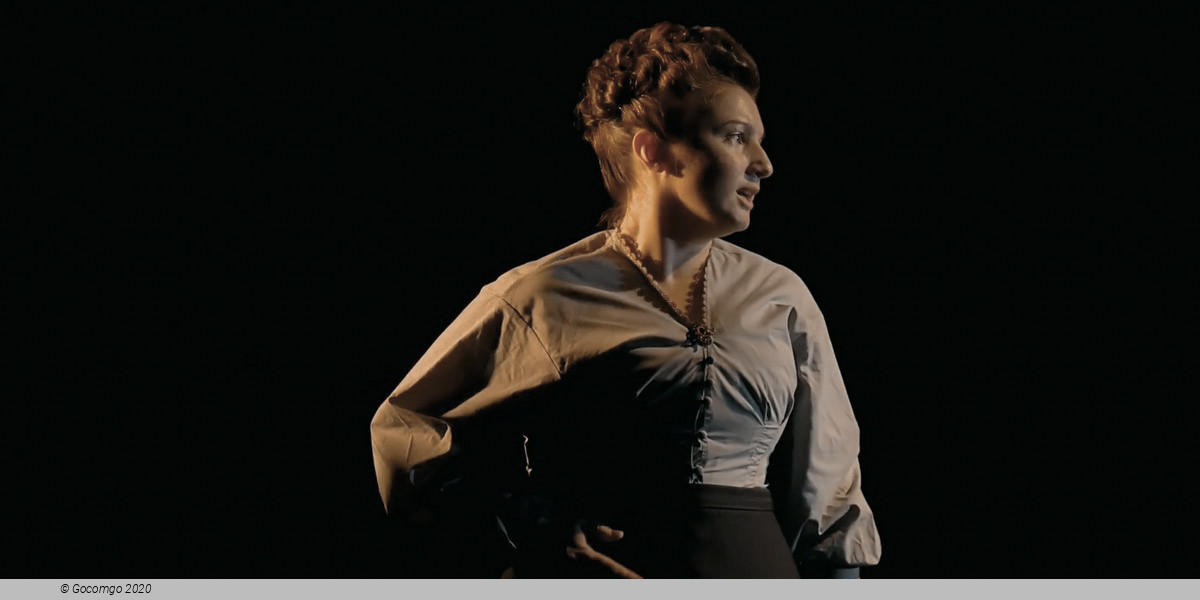
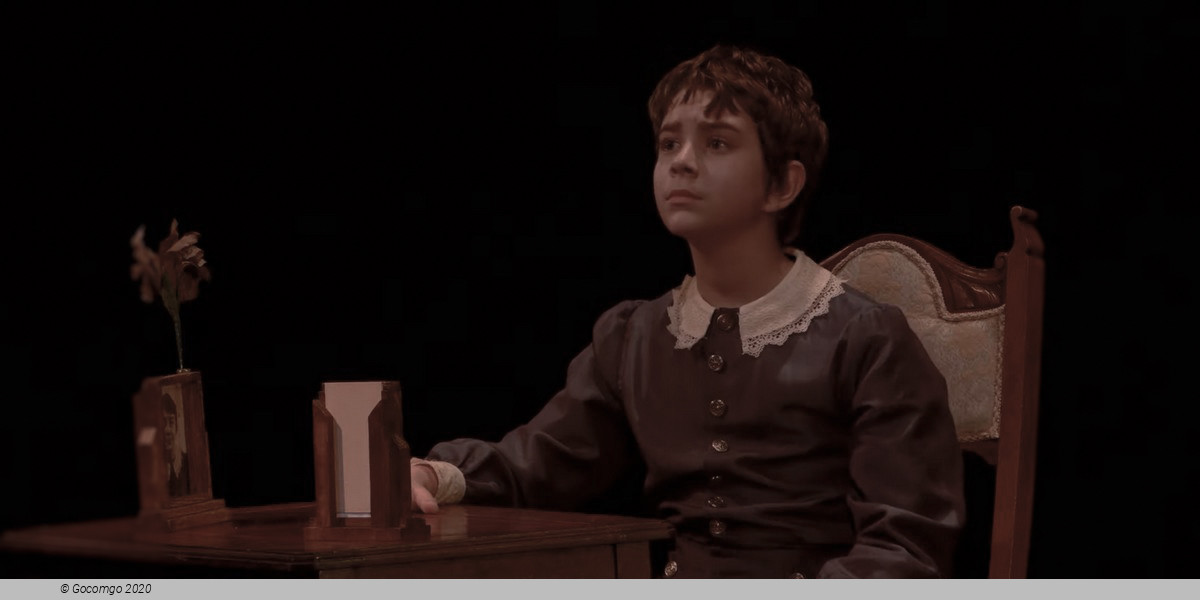
Taking centre stage is the Royal Danish Opera’s ensemble of soloists: Léonie Sonning Talent Award-winning young soprano Clara Cecilie Thomsen embodies the role of the governess, Johanne Bock plays the housekeeper, and Gisela Stille the restless Miss Jessel. The Turn of the Screw is staged by young British opera director Anthony Almeida, who together with set and costume designer Rosanna Vize won the European Opera-Directing Award 2021 for their concept for this particular staging of Britten’s chamber opera. 

In collaboration with Opera Europa/Camerata Nuova.

History
Premiere of this production: 14 September 1954, Teatro La Fenice, Venice

The Turn of the Screw is a 20th-century English chamber opera composed by Benjamin Britten with a libretto by Myfanwy Piper, "wife of the artist John Piper, who had been a friend of the composer since 1935 and had provided designs for several of the operas". The libretto is based on the novella The Turn of the Screw by Henry James. The opera was commissioned by the Venice Biennale and given its world premiere on 14 September 1954, at the Teatro La Fenice, Venice. The original recording was made during that year, with the composer conducting.

Synopsis

Time: The middle of the nineteenth century
Place: Bly, an English country house

Prologue

A singer known as Prologue tells about a young governess (who remains unnamed throughout the opera) he once knew who cared for two children at Bly House. She had been hired by their uncle and guardian, who lived in London and was too busy to care for them. After hiring her, he laid three stipulations on the Governess: Never to write to him about the children, never to inquire about the history of Bly House, and never to abandon the children.

Act 1

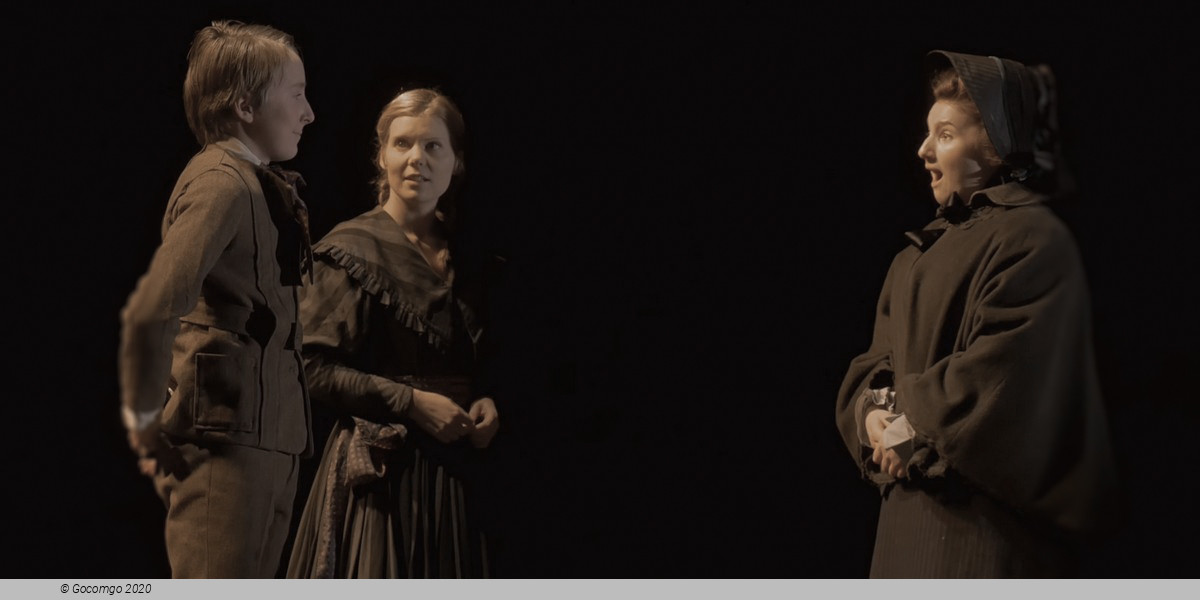
The Governess is apprehensive about her new position. When she arrives at Bly House, the housekeeper, Mrs. Grose, and the children greet her. When the Governess sees Miles, the little boy, their eyes lock and the Governess feels as if she has a strange connection with Miles. Mrs. Grose interrupts their reverie and leads the Governess off to explore the beautiful land around the house. The Governess sings that all her fears are now gone. A letter from Miles' school arrives, advising the Governess that the boy has been expelled but giving no reason. The Governess is sure that Miles, like his sister Flora, is too innocent to have done anything bad enough for expulsion. Encouraged by Mrs. Grose, she decides to ignore the letter.

The Governess sings about her wonderful position at the house and the beautiful children she has in her care. But she is troubled by footsteps she has heard outside her door and cries in the night. Suddenly, she spots a pale-faced man perched on a tower of the house. When the man disappears, she becomes frightened and wonders if she has seen a ghost. Her mind is put at ease by the playing of the children, and their singing of the nursery rhyme "Tom, Tom, the Piper's Son". Later she sees the same man looking in through a window. She decides to ask Mrs. Grose about the man. Based on her description the housekeeper tells the Governess about Peter Quint, the former valet at Bly House. Mrs. Grose implies that Quint may have been a pederast who preyed on Miles, and that he had a sexual relationship with Miss Jessel, the young and beautiful previous governess. Mrs. Grose hints that Miss Jessel, too, had a relationship to the children that seemed inappropriately close. The housekeeper did nothing, since Quint intimidated her, and she explains "it wasn't my place". Miss Jessel left the house and eventually died. Shortly thereafter, Quint died under mysterious circumstances on an icy road near Bly House. The Governess rededicates herself to protecting the children. The next morning, the Governess is teaching Miles Latin, when he suddenly enters into a trance-like state and sings a song, "Malo".

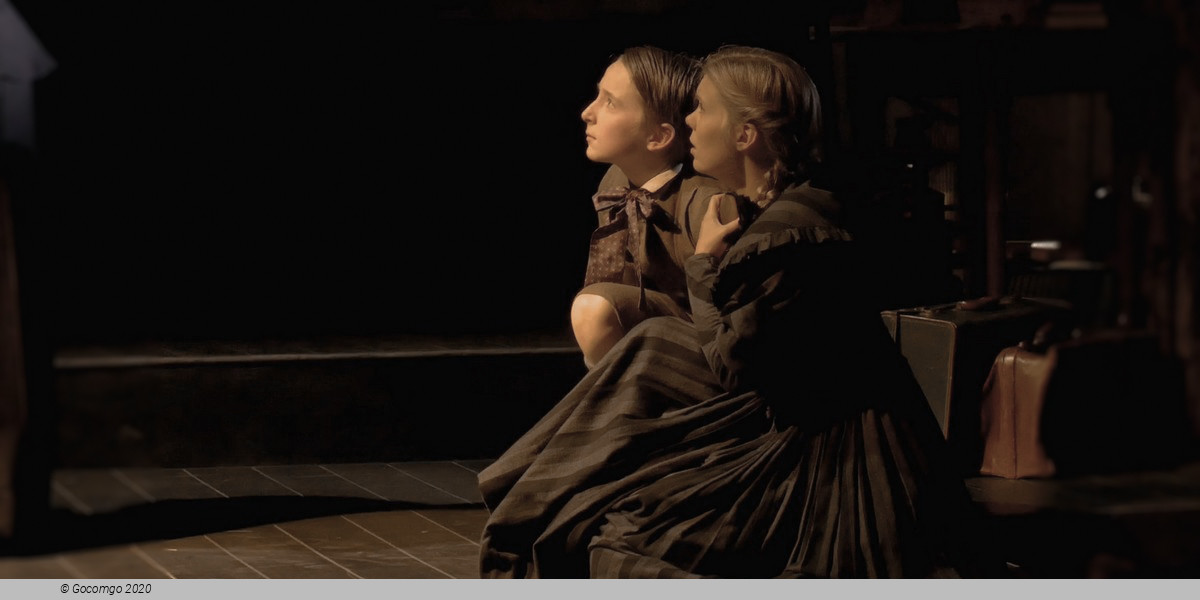
Later that day, the Governess sits by the side of a lake with Flora. Flora recites the names of the seas of the world, finishing with the Dead Sea. Flora's comparison of the Dead Sea with Bly House unsettles the Governess. As Flora plays on the shore with her doll, the Governess suddenly sees a strange woman across the lake who seems to be watching Flora. The horrified Governess realises that the woman is a ghost — the ghost of Miss Jessel, who has returned to claim Flora. The Governess hurries Flora home to safety.

That night, Miles and Flora slip out into the woods to meet Miss Jessel and Peter Quint. The children fantasize about a world where dreams come true. The Governess and Mrs. Grose arrive as the children are about to be possessed, and the spirits depart. Miles sings a haunting song about how he has been a bad boy.

Act 2

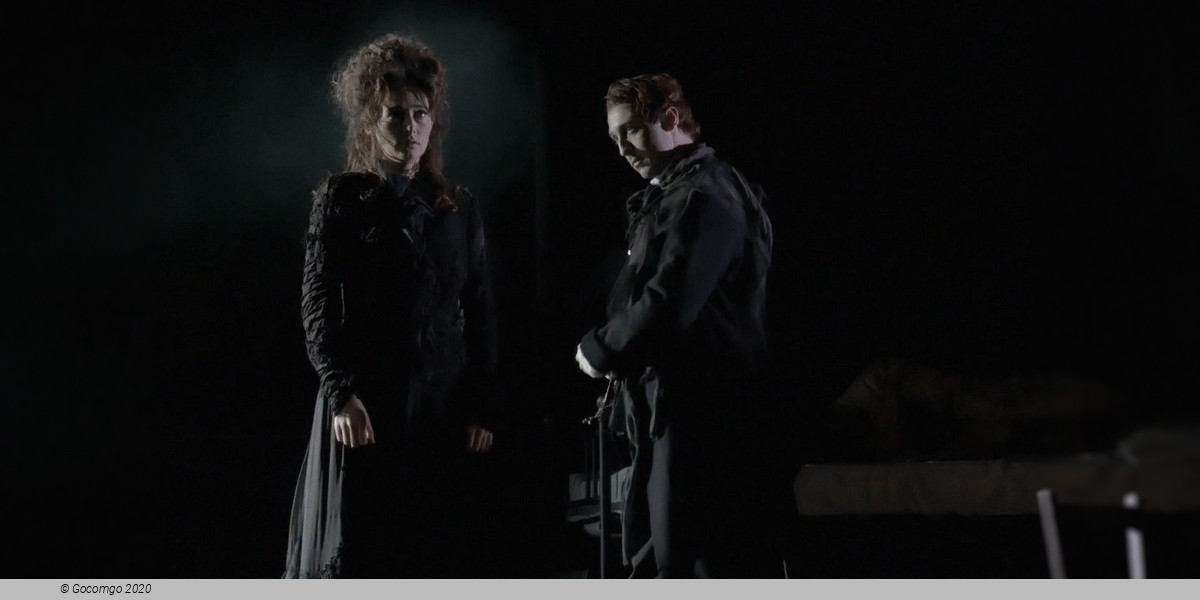
The ghosts of Peter Quint and Miss Jessel reappear. They argue about who harmed whom first when they were alive, and accuse one another of not acting quickly enough to possess the children. In her room, the Governess worries about the evil she feels in the house.

The next morning, the family goes to church. The children sing a song which sounds similar to a psalm. Mrs. Grose declares that nothing can be wrong if the children are as sweet as this. The Governess tells her of Miles' unearthly day-dream song and Flora's bizarre behaviour. Alarmed, Mrs. Grose advises the Governess to write to their employer in London. At first, the Governess declines, recalling her employer's admonitions before she took the job. But when Miles mentions the ghosts of Quint and Jessel, the Governess realises things are much more dire than they seem. She resolves to leave Bly House.

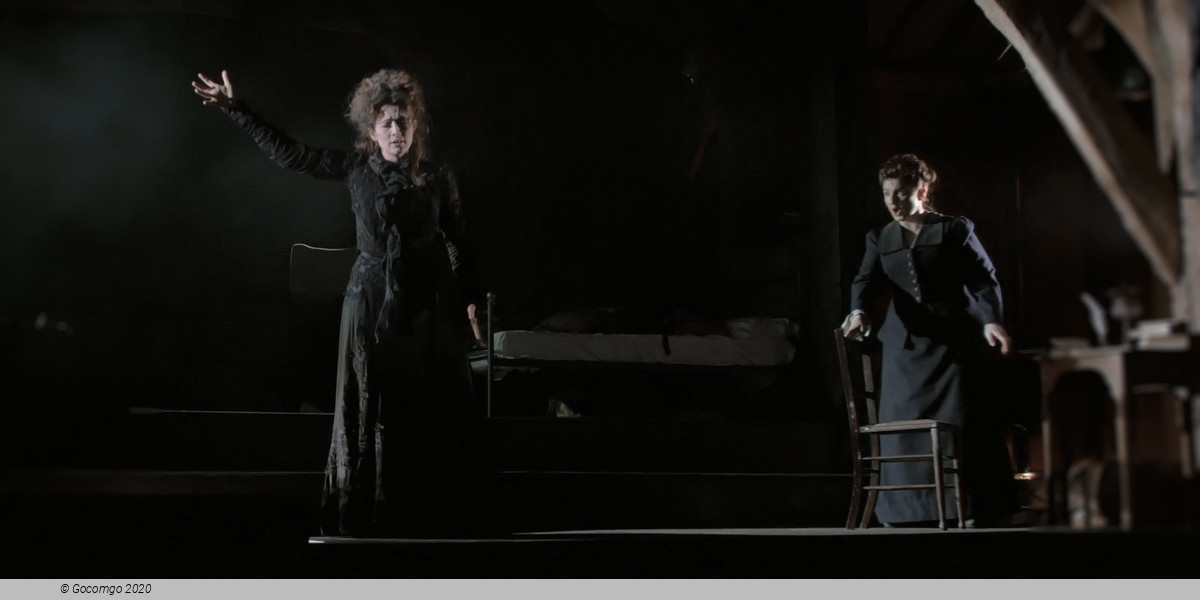
After church, the family returns home. The Governess goes into the children's schoolroom where she sees the ghost of Miss Jessel seated at the teacher's desk. The spectre bemoans her fate, and sings about how she suffers in the afterlife. The Governess confronts the spirit, which vanishes. Believing the ghosts may not yet have the upper hand, the Governess changes her mind, deciding to stay at Bly House after all. Instead, she writes to the children's uncle, informing him that she must speak with him.

That night, the Governess tells Miles that she has written to his uncle about the spirits haunting Bly House. She departs. The voice of Quint calls out to Miles, terrifying him. The lights go out, and the ghost hovers over the terrified child. Quint tells Miles to steal the letter. The boy goes to the schoolroom, finds the letter, and takes it back to his room.

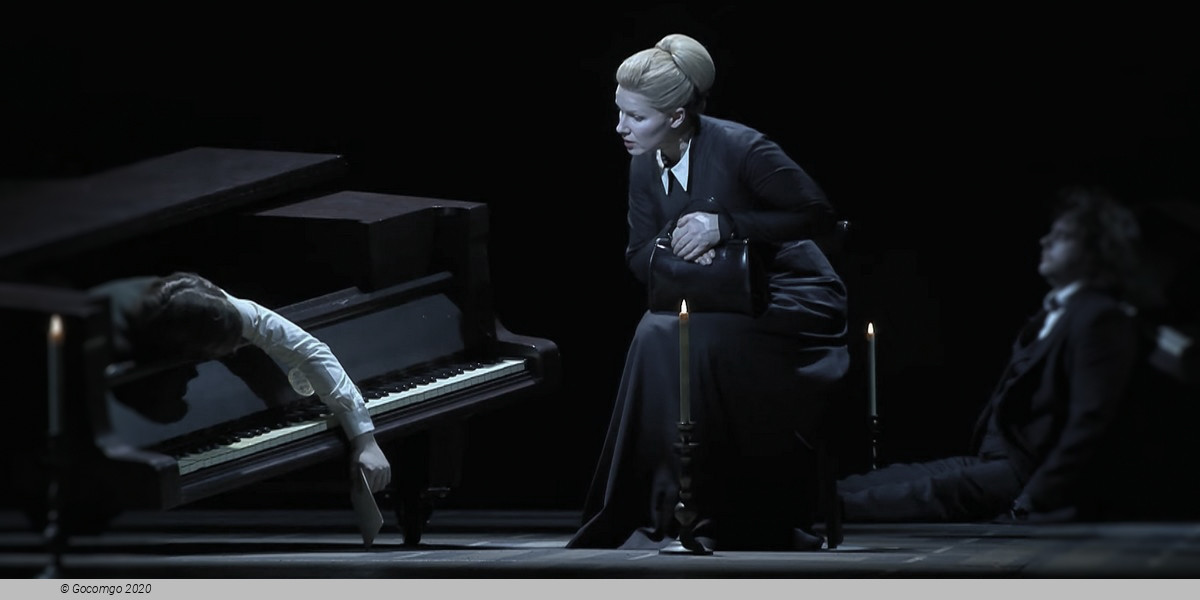
The next morning, Miles plays the piano for the Governess and Mrs. Grose. While the Governess is distracted by his performance, Flora slips off to go to the lake. When the two women realise Flora is gone, they search for her. Finding the girl at the lake, the Governess sees the spectre of Miss Jessel nearby—but Mrs. Grose sees nothing. The Governess tries to force Flora to admit that the apparition is there, but Flora denies seeing anything and hurls invective at the Governess. Mrs. Grose, convinced the Governess has gone too far, angrily takes Flora home. The Governess feels betrayed by Mrs. Grose.

That night, Flora begins to rant and rave about committing unspeakable horrors. Mrs. Grose agrees to take Flora away from the house. The housekeeper tells the Governess that the letter was never mailed and that Miles must have taken it. The Governess confronts Miles alone. As she questions him, the ghost of Quint pressures Miles not to betray him. Hysterical, Miles confesses that he took the letter. The Governess demands to know who put Miles up to it. Miles blurts out Quint's name. At the mention of his name, Quint's ghost vanishes and Miles falls dead on the floor. A weeping Governess cradles the dead child in her arms, singing aloud of her grief and wondering if she did the right thing after all.

Venue Info

Royal Danish Theatre - Copenhagen
Location   August Bournonvilles Passage 2-8

The Royal Danish Theatre is the major opera house in Denmark. It has been located at Kongens Nytorv in Copenhagen since 1748, originally designated as the king's theatre but with public access. The theatre presents opera, the Royal Danish Ballet, classical music concerts (by the Royal Danish Orchestra, which dates back to 1448), and drama in several locations.

The Royal Danish Theatre organization is under the control of the Danish Ministry of Culture, and its objectives are to ensure the staging of outstanding performances that do justice to the various stages that it controls.

The first edifice on the site was designed by court architect Nicolai Eigtved, who also masterminded Amalienborg Palace. In 1774, the old theatre seating 800 theatergoers were reconstructed by architect C.F. Harsdorff to accommodate a larger audience.

During the theatre's first seasons the staffing was modest. Originally, the ensemble consisted of eight actors, four actresses, two male dancers, and one female dancer. Gradually over the following decades, the Royal Danish Theatre established itself as the kind of multi-theatre we know today, home to drama, opera, ballet, and concerts – all under the same roof and management.

An important prerequisite for the theatre's artistic development is its schools. The oldest is the ballet school, established at the theatre in 1771. Two years later, a vocal academy was established as a forerunner for the opera academy. A number of initiatives were considered regarding a drama school, which was established much later.

King Frederik VI, who ascended the throne in 1808, is probably the monarch who most actively took part in the management of the Royal Danish Theatre, not as an arbiter of taste but as its supreme executive chef.

The theatre's bookkeeping accounts of these years show numerous endorsements where the king took personal decisions on everything from wage increases and bonuses to the purchase of shoelaces for the ballerinas. Indeed, the Royal Danish Theatre became the preoccupation of an introverted nation, following the English Wars had suffered a state bankruptcy. "In Denmark, there is only one city and one theatre," as philosopher Søren Kierkegaard put it.

This was the theatre to which the 14-year-old fairytale storyteller Hans Christian Andersen devoted his early ambition. This was also the theatre that became the social and artistic focal point of the many brilliant artists of Denmark's Golden Age.

After the abolition of absolute monarchy in 1849, the Royal Danish Theatre's status as "the city's theatre" fell into decline. No longer enjoying a monopoly within the performing arts, the Royal Danish Theatre was now required by its new owner, the state, to serve the entire nation. The dilapidated building at Kongens Nytorv also found it hard to compete with the splendor of the new popular stage that was rapidly emerging across town. The solution was to construct a brand new theatre building. It was designed in the Historicist style of the times by architects William Dahlerup and Ove Pedersen and situated alongside the old theatre, which was subsequently demolished.

The inauguration of what we today call the Old Stage took place on 15 October 1874. Here opera and ballet were given ample scope. But due to the scale of the building, the auditorium was less suited for spoken drama, which is why a new playhouse was required.

The Royal Danish Theatre has over the past decade undergone the most extensive transformation ever in its over 250-year history. The Opera House in Copenhagen was inaugurated in January 2005, donated by the AP Møller and Chastine Mc-Kinney Møller Foundation, and designed by architect Henning Larsen. And the Royal Danish Playhouse was completed in 2008. Located by Nyhavn Canal across from the Opera House, the playhouse is designed by architects Boje Lundgaard and Lene Tranberg.

Today, the Royal Danish Theatre comprises the Old Stage, located by Kongens Nytorv, the Opera House, and the Royal Danish Playhouse. 

Important Info
Type: Opera
City: Copenhagen, Denmark
Starts at: 20:00
Intervals: 1
Duration: 2h 15min
Sung in: English
Titles in: Danish
Top of page