
Royal Danish Theatre 7 May 2022 - The Nose | GoComGo.com

The Nose

Royal Danish Theatre, The Opera House - Main Stage, Copenhagen, Denmark
All photos (6)
Select date and time
8 PM

E-tickets: Print at home or at the box office of the event if so specified. You will find more information in your booking confirmation email.

You can only select the category, and not the exact seats.
If you order 2 or 3 tickets: your seats will be next to each other.
If you order 4 or more tickets: your seats will be next to each other, or, if this is not possible, we will provide a combination of groups of seats (at least in pairs, for example 2+2 or 2+3).

Important Info
Type: Opera
City: Copenhagen, Denmark
Starts at: 20:00
Intervals: 1
Duration: 2h 15min

E-tickets: Print at home or at the box office of the event if so specified. You will find more information in your booking confirmation email.

You can only select the category, and not the exact seats.
If you order 2 or 3 tickets: your seats will be next to each other.
If you order 4 or more tickets: your seats will be next to each other, or, if this is not possible, we will provide a combination of groups of seats (at least in pairs, for example 2+2 or 2+3).

Overview

The young Shostakovich’s first opera is based on Gogol’s satirical story of a nose that runs away from its owner. Experience a comical opera, written by an ingenious 22-year-old, breaking all the rules of the opera handbook.

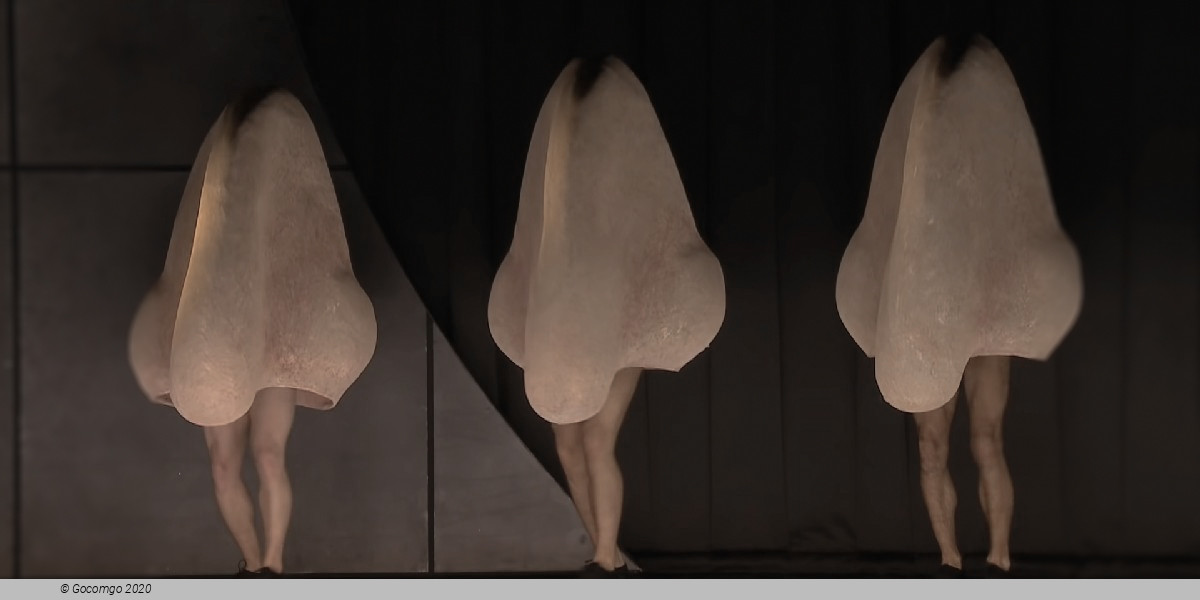
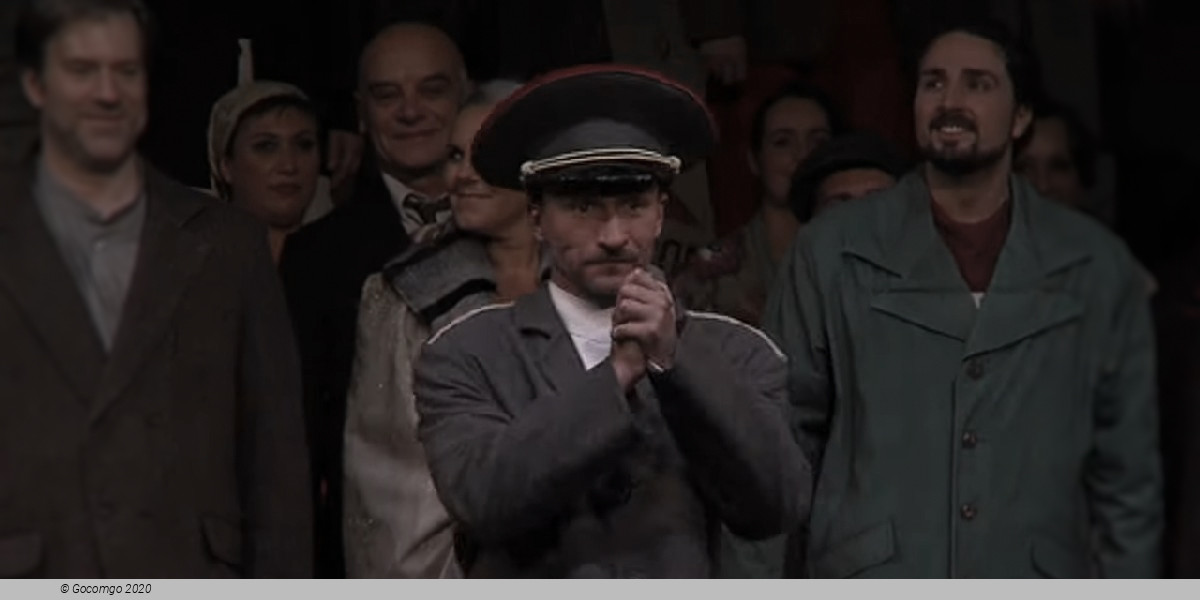
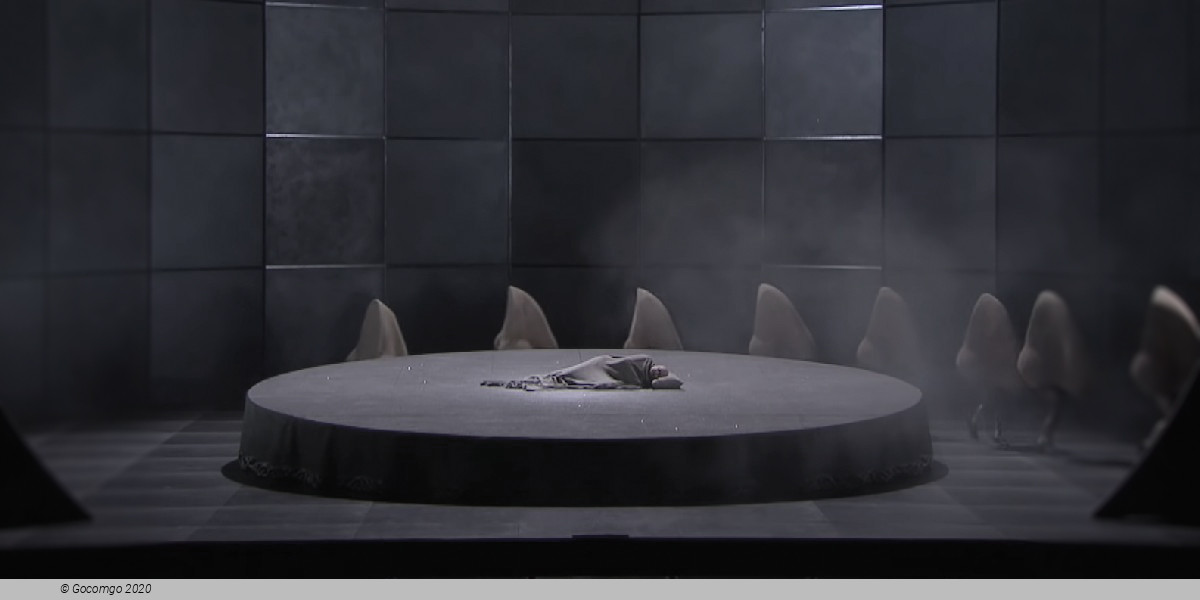
Dmitri Shostakovich’s opera The Nose, a milestone musical drama from 1928, can now be experienced in a visually spectacular staging by an artistic team affiliated with the Spanish theatre group La Fura dels Baus. The merely 22-year-old composer wrote the libretto for The Nose himself based on Nikolai Gogol’s short story of the same title.

The Nose is both hilarious and whimsical. While checking for a pimple he had discovered the night before, the owner of the nose learns to his disbelief that his nose has disappeared. He becomes entangled in a struggle against the nose and a state bureaucracy that implodes when faced with this grotesque incidence.

With this work, Shostakovich rejected the common rulebook and shattered the classical framework for the opera genre. Even when applying common musical forms, he turns them on their head, such as when he incorporates a canon for eight contrabasses and an interlude for 10 untuned percussion instruments.

The opera was composed during the heyday of silent movies, in the spirit of Charlie Chaplin, by a young man who was to become one of the greatest of our time, completing 15 symphonies. He also grew to cherished fame as a masterly film score composer.

History
Premiere of this production: 18 January 1930, Leningrad Maly Operny

The Nose is Dmitri Shostakovich's first opera, a satirical work completed in 1928 based on Nikolai Gogol's story of the same name (1836).

Synopsis

Opera in 3 acts and 10 scenes, without intermission

Act 1

Prologue

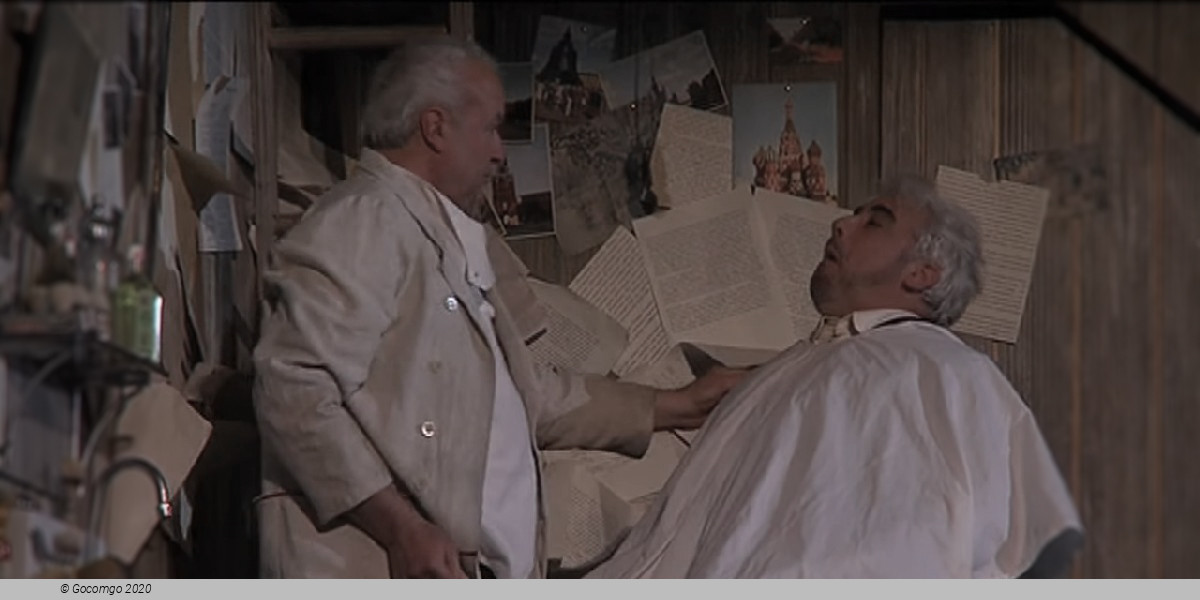
St Petersburg. Kovalyov, a Collegiate Assessor is being shaved by Ivan Yakovlevich (a barber). He is one of Yakovlevich's regular customers.

The next morning, Yakovlevich finds a nose in his bread. His wife, believing he has cut off one of his customers' noses, requests him to dispose of it. He tries to dispose of it in the street, but is foiled by running into people he knows, then he throws it into the Neva River, but he is seen by a police officer and taken away for questioning. Meanwhile, Kovalyov wakes and finds his nose missing. His first reaction is disbelief, then shock, and he sets out to find it. He later sees his nose praying in the Kazan Cathedral, now the size of a human being. Since the nose has acquired a higher rank (State Councillor) than he, it refuses to have any dealings with him, and leaves.

Act 2

In his search, Kovalyov finds himself at the Chief of Police's apartment, but he is not at home. Next he visits the newspaper office to place an advertisement about the loss of his nose, where they are dealing with a missing dog. After explaining his loss, his request is refused on the grounds of the newspaper's reputation. Upon demonstrating his loss, the clerk suggests he tell his story. Kovalyov feels insulted and leaves.

He returns to his apartment, where his servant is playing the balalaika, he dismisses him and wallows in self-pity.

Act 3

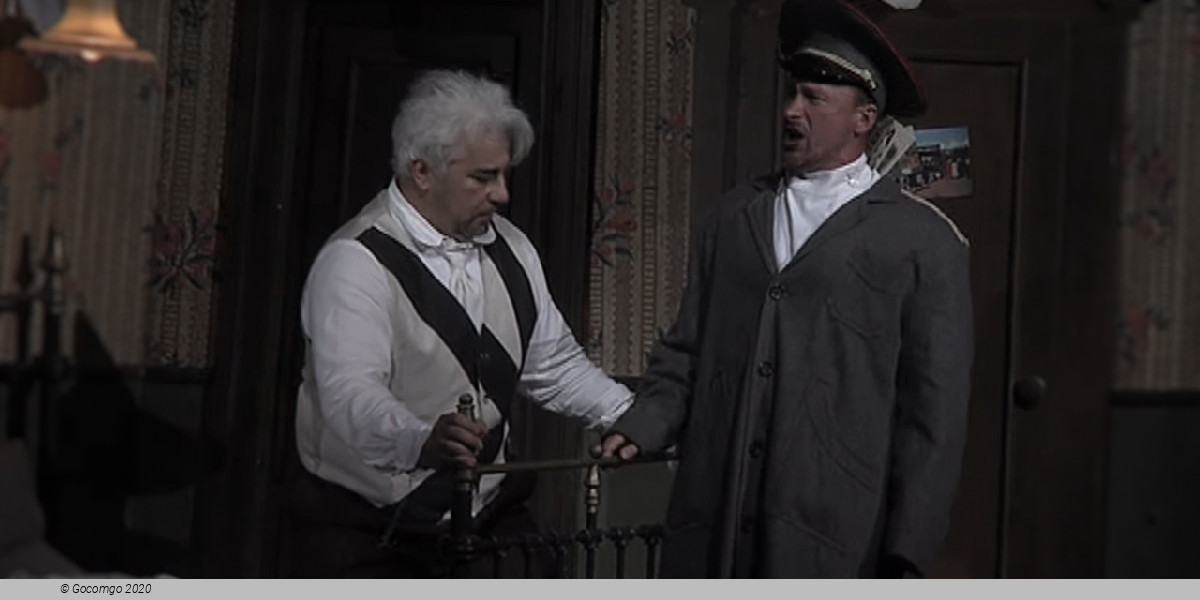
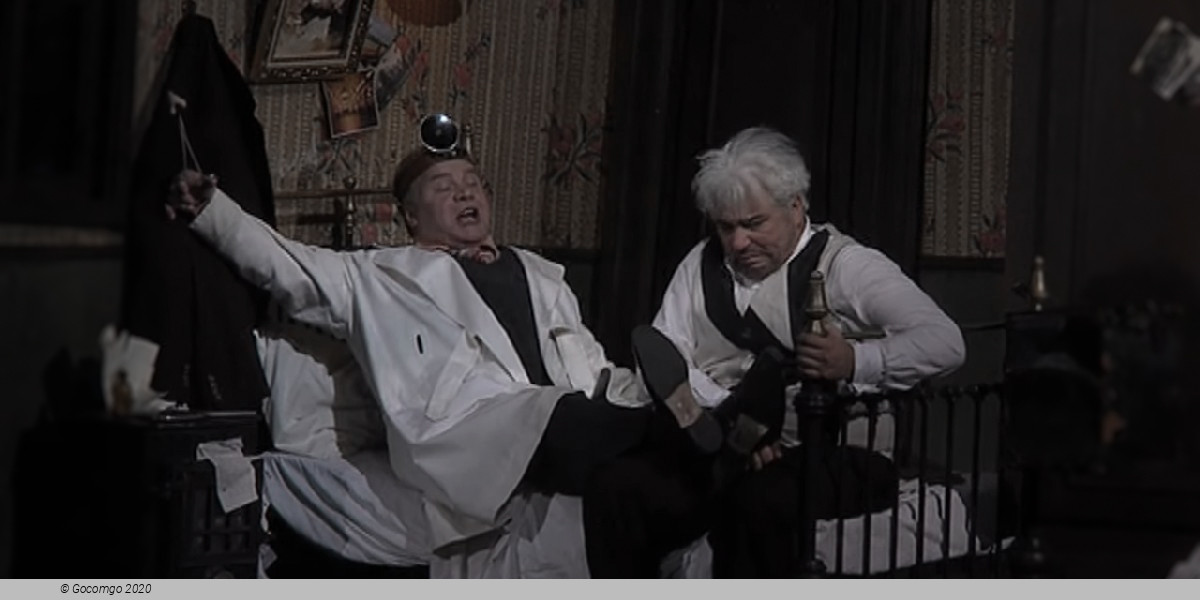
The police take up the search. A group of policemen are at a railway station, in order to prevent the nose from escaping, where an inspector rallies them. The nose runs in and tries to stop the train, and a general pursuit ensues, resulting in its capture. The nose is then beaten into its normal size, wrapped and returned to Kovalyov by the inspector, but Kovalyov is unable to reattach it. Nor can a doctor. He then suspects that he has been placed under a spell by a woman called Madame Podtochina, because he would not marry her daughter. He writes to ask her to undo the spell, but she misinterprets the letter as a proposal to her daughter. She convinces him that she is innocent. In the city, crowds fuelled by rumours gather in search of the nose till the police restore order.

Epilogue

Kovalyov wakes up with his nose reattached, and dances a polka in joy. Yakovlevich has been released from prison and arrives to shave him. Afterwards Kovalyov wanders along Nevsky Prospekt greeting acquaintances, while people discuss the story.

Venue Info

Royal Danish Theatre - Copenhagen
Location   August Bournonvilles Passage 2-8

The Royal Danish Theatre is the major opera house in Denmark. It has been located at Kongens Nytorv in Copenhagen since 1748, originally designated as the king's theatre but with public access. The theatre presents opera, the Royal Danish Ballet, classical music concerts (by the Royal Danish Orchestra, which dates back to 1448), and drama in several locations.

The Royal Danish Theatre organization is under the control of the Danish Ministry of Culture, and its objectives are to ensure the staging of outstanding performances that do justice to the various stages that it controls.

The first edifice on the site was designed by court architect Nicolai Eigtved, who also masterminded Amalienborg Palace. In 1774, the old theatre seating 800 theatergoers were reconstructed by architect C.F. Harsdorff to accommodate a larger audience.

During the theatre's first seasons the staffing was modest. Originally, the ensemble consisted of eight actors, four actresses, two male dancers, and one female dancer. Gradually over the following decades, the Royal Danish Theatre established itself as the kind of multi-theatre we know today, home to drama, opera, ballet, and concerts – all under the same roof and management.

An important prerequisite for the theatre's artistic development is its schools. The oldest is the ballet school, established at the theatre in 1771. Two years later, a vocal academy was established as a forerunner for the opera academy. A number of initiatives were considered regarding a drama school, which was established much later.

King Frederik VI, who ascended the throne in 1808, is probably the monarch who most actively took part in the management of the Royal Danish Theatre, not as an arbiter of taste but as its supreme executive chef.

The theatre's bookkeeping accounts of these years show numerous endorsements where the king took personal decisions on everything from wage increases and bonuses to the purchase of shoelaces for the ballerinas. Indeed, the Royal Danish Theatre became the preoccupation of an introverted nation, following the English Wars had suffered a state bankruptcy. "In Denmark, there is only one city and one theatre," as philosopher Søren Kierkegaard put it.

This was the theatre to which the 14-year-old fairytale storyteller Hans Christian Andersen devoted his early ambition. This was also the theatre that became the social and artistic focal point of the many brilliant artists of Denmark's Golden Age.

After the abolition of absolute monarchy in 1849, the Royal Danish Theatre's status as "the city's theatre" fell into decline. No longer enjoying a monopoly within the performing arts, the Royal Danish Theatre was now required by its new owner, the state, to serve the entire nation. The dilapidated building at Kongens Nytorv also found it hard to compete with the splendor of the new popular stage that was rapidly emerging across town. The solution was to construct a brand new theatre building. It was designed in the Historicist style of the times by architects William Dahlerup and Ove Pedersen and situated alongside the old theatre, which was subsequently demolished.

The inauguration of what we today call the Old Stage took place on 15 October 1874. Here opera and ballet were given ample scope. But due to the scale of the building, the auditorium was less suited for spoken drama, which is why a new playhouse was required.

The Royal Danish Theatre has over the past decade undergone the most extensive transformation ever in its over 250-year history. The Opera House in Copenhagen was inaugurated in January 2005, donated by the AP Møller and Chastine Mc-Kinney Møller Foundation, and designed by architect Henning Larsen. And the Royal Danish Playhouse was completed in 2008. Located by Nyhavn Canal across from the Opera House, the playhouse is designed by architects Boje Lundgaard and Lene Tranberg.

Today, the Royal Danish Theatre comprises the Old Stage, located by Kongens Nytorv, the Opera House, and the Royal Danish Playhouse. 

Important Info
Type: Opera
City: Copenhagen, Denmark
Starts at: 20:00
Intervals: 1
Duration: 2h 15min
Top of page